Can Americans Get a Digital Nomad Visa for Croatia?
Thinking about moving to a new country and keeping your job? For many Americans, the dream of living abroad while working remotely seems almost too good to be true, especially when eyeing a stunning place like Croatia. You've probably heard whispers about digital nomad visas and wondered if that's even an option for US citizens. This guide is here to cut through the confusion and tell you exactly how Americans can seize the incredible opportunity to live and work from the sun-drenched shores or historic cities of Croatia.
The Short Answer: Yes, Americans Can Get a Croatian Digital Nomad Permit!
Let's get straight to the point: Yes, absolutely! American citizens are eligible for Croatia's digital nomad permit. This fantastic initiative, launched in late 2020 and fully implemented in 2021, was designed specifically to attract remote workers from non-EU/EEA countries, and that includes you, my American friends. It's a genuine game-changer for anyone who has dreamt of swapping their cubicle view for Adriatic sea views or ancient cityscapes.
Understanding Croatia's Digital Nomad Initiative
Croatia was one of the first countries in the EU to officially introduce a digital nomad visa, recognizing the growing trend of remote work and the value it could bring to their economy and vibrant culture. When the news broke, it was met with immense excitement in the expat community, and for good reason! This permit allows you to legally reside in Croatia for up to a year, focusing entirely on your remote work, without needing to navigate complex work permit schemes tied to Croatian employers. It’s about leveraging your existing foreign employment or self-employment to contribute to Croatia's local economy through your daily spending, rather than competing in the Croatian job market. The Croatian government truly wanted to roll out the welcome mat, and they did a pretty great job, all things considered.
Why Croatia is a Top Choice for American Nomads
So, why Croatia specifically? Well, if you’ve spent any time researching or dreaming, you already know a big part of the answer. Croatia offers an incredible quality of life at a cost that is often significantly lower than many parts of the United States. Imagine enjoying fresh, locally sourced food, stunning national parks, pristine beaches, and vibrant city life, all without breaking the bank. The internet infrastructure is surprisingly robust, especially in major cities like Zagreb, Split, and Rijeka, making remote work genuinely feasible.
Beyond the practicalities, there's the lifestyle. Croatians are generally warm and welcoming, and English is widely spoken, especially among younger generations and in tourist areas. The pace of life can be a refreshing change from the often-hectic American grind, encouraging a better work-life balance. Plus, its central location in Europe makes it an ideal base for exploring the rest of the continent when you're not busy working or soaking up the local culture. For many Americans, this blend of affordability, natural beauty, and cultural richness makes Croatia an undeniable front-runner for their digital nomad adventure.
Eligibility Requirements for American Digital Nomads
Alright, so you're eligible in principle. Now, let's talk about the nitty-gritty of who qualifies and what you need to show. The Croatian digital nomad permit has clear criteria, and understanding these is your first step towards making this dream a reality. You want to make sure you tick all the boxes before diving deep into the application process.
The Core Criteria: Who Qualifies?
First and foremost, as an American, you fit the primary requirement: you are a non-EU/EEA citizen. This permit is specifically designed for people like you.
The absolute most crucial aspect is your employment situation. You must be working for a foreign company, or own your own business and have clients who are not based in Croatia. This isn't a visa to come and find a job in Croatia; it's strictly for remote workers whose income comes from outside the country. This means you can't be employed by a Croatian company, nor can you be providing services to Croatian entities. The whole point is to bring in foreign income that then gets spent in Croatia.
You'll also need to prove you have sufficient funds to support yourself, secure accommodation for your stay, and hold comprehensive health insurance. Lastly, like most visa applications, a clean criminal record is a must. These are the foundational pillars of your application. If any of these are shaky, you’ll likely face issues. For a broader view of moving to Croatia as a non-EU citizen, you might find our guide The Expat Guide to Moving to Croatia from a Non-EU Country (2027) helpful.
Financial Proof: How Much is Enough?
This is often the part that makes people pause. Croatia, like many countries, requires applicants to demonstrate they have stable and sufficient financial means to support themselves without becoming a burden on the state. The specific amount required is tied to the average Croatian net salary from the previous year. As of early 2024, the minimum monthly income requirement for a single applicant is typically 2.5 times the average gross salary, which usually translates to approximately €2,800 to €3,000 per month (or roughly HRK 20,000 – HRK 22,000), depending on the exact calculation at the time of your application. This amount then increases by 10% for each additional family member you plan to bring with you. For instance, if you bring your spouse, you’d need to show €3,000 + 10% (€300) = €3,300 per month.
You'll need to prove this consistently for the duration of your intended stay, or at least for the first year. Acceptable forms of proof include bank statements showing regular deposits, pay stubs from your employer, or a letter from your foreign employer confirming your salary. For freelancers or business owners, showing consistent client invoices and bank transfers can also work. It can be a bit of a hurdle, especially if your income fluctuates, so it's wise to start saving and tracking your finances well in advance to ensure you meet this benchmark.
Health Insurance: A Crucial Step
Let's be clear: comprehensive health insurance is not just a good idea; it's a mandatory requirement for your digital nomad permit. You absolutely must have private travel health insurance that covers your entire stay in Croatia. This means finding a policy that provides coverage for at least one year and is valid in Croatia. The public health insurance system, HZZO, is generally not an option for digital nomad permit holders in the same way it is for those with standard work or residence permits.
This insurance needs to cover things like emergency medical care, hospital stays, and ideally, repatriation. Don't skimp on this! It’s for your own peace of mind, and the MUP (Ministry of Interior) will scrutinize it. Many expats opt for international private health insurance providers that specialize in coverage for those living abroad. Companies like Cigna Global offer robust plans that are well-recognized and often preferred for such applications. Make sure your policy explicitly states its validity in Croatia and the dates of coverage. For more details on your options, you'll want to read our comprehensive guide on Understanding Private Health Insurance Plans in Croatia. Getting this sorted early can save you a lot of headaches later on.
Step-by-Step Application Process for US Citizens
Now that you know you qualify and what you need, let's walk through the actual application process. It can feel like navigating a maze, but breaking it down into manageable steps makes it much less daunting. Trust me, I've been there with Croatian bureaucracy, and patience is your best friend.
Gathering Your Documents: The Paperwork Mountain
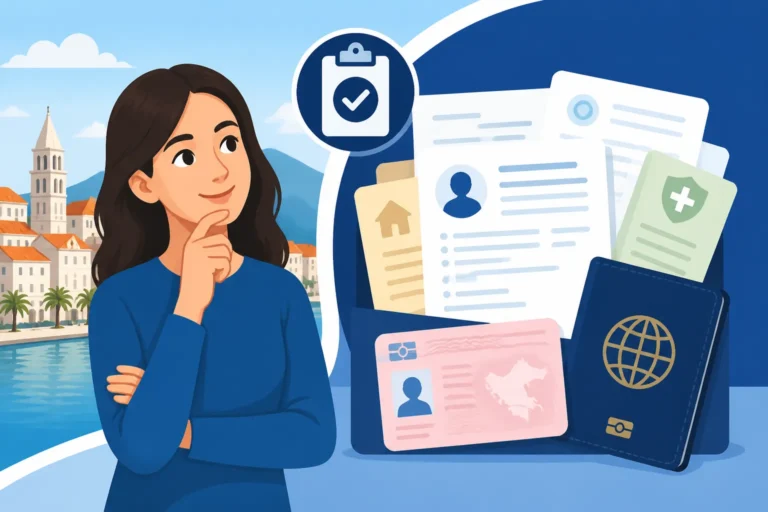
This is where the real work begins. You'll need an array of documents, and they all need to be meticulously prepared. Here's a general list, but always check the official MUP website for the most current requirements:
- Valid Passport: Make sure it's valid for at least three months beyond your intended stay.
- OIB (Personal Identification Number): This is Croatia's equivalent of a tax ID. You can apply for this at the tax administration office (Porezna Uprava) in Croatia or sometimes through the embassy/consulate. You'll definitely need one, so get on this early. Our article How Do I Get an OIB (Personal Identification Number) in Croatia can guide you.
- Proof of Remote Work: This could be an employment contract with a foreign company, a letter from your employer confirming your remote status, or if self-employed, registration documents for your foreign company and client contracts.
- Financial Proof: As discussed, bank statements, pay stubs, etc., showing consistent income.
- Proof of Accommodation: A rental agreement or a statement from the property owner if you're staying with friends/family. This needs to cover your initial stay.
- Health Insurance: Proof of comprehensive private health insurance covering your entire stay in Croatia. See our discussion above.
- Criminal Background Check: This is usually required from your home country (the US, in your case) and must be apostilled or super-legalized, and then translated by a sworn court interpreter in Croatia. This can be one of the more time-consuming steps, so don't delay.
- Application Form: The official MUP application form, completed and signed.
A crucial detail: any documents not originally in Croatian must be translated into Croatian by a sworn court interpreter (sudski tumač). This isn't something you can do yourself; it has to be an official translator. This adds to the cost and time, but it's non-negotiable. For a more exhaustive list of documents, you might want to consult What Documents Do I Need for a Croatian Residence Permit?. Embrace the paperwork, it's just part of the expat journey!
Where to Apply: Embassy, Consulate, or MUP?
You have a couple of options here, and each has its pros and cons:
- From Outside Croatia (via a Croatian Embassy or Consulate in the US): This is often the recommended route for non-EU citizens. You submit your application and all supporting documents to the Croatian embassy or consulate responsible for your state in the US. The advantage is that you get the permit before you even arrive in Croatia, giving you peace of mind. The downside can be longer processing times and potentially more limited appointment availability.
- From Within Croatia (at a local MUP station): You can also apply once you've entered Croatia, provided you do so while still within your allowed tourist stay (e.g., within 90 days for US citizens). You would visit the local MUP (Ministry of Interior) office in the city or town where you plan to reside. The benefit here is that you're already on the ground, which can make arranging accommodation and OIB easier. However, it can be a race against the clock if your tourist visa is expiring, and if your application is rejected, you might have to leave the country quickly. It’s also often harder to get a MUP appointment without significant waiting times, especially in larger cities like Zagreb or Split. If you're planning to go this route, figuring out How Do I Book a MUP Appointment for My Residence Application? is essential.
Whichever option you choose, be prepared for potential delays and follow-ups. The MUP processes a high volume of applications, and sometimes things move at their own unique, Croatian pace.
The Waiting Game and Beyond
Once you've submitted your application, the waiting game begins. Processing times can vary significantly depending on the time of year, the MUP office's workload, and the completeness of your application. It could be anywhere from a few weeks to a couple of months. While you wait, resist the urge to constantly call or visit the MUP; this rarely speeds things up and can sometimes be counterproductive.
If your application is approved, congratulations! You'll then be issued a biometric residence card (boravišna iskaznica) which serves as your official ID and proof of residence in Croatia. This card typically needs to be picked up in person at the MUP office.
It's important to remember that the digital nomad permit is issued for a maximum of one year. Crucially, it is not renewable directly. If you wish to stay longer, you must leave Croatia for at least six months before you can apply for another digital nomad permit. This permit also does not lead to permanent residency or citizenship. It’s truly designed as a temporary stay for remote workers. For general insights into how long these processes take, our article How Long Does It Take to Get a Croatian Residence Permit? can provide some context.
| Feature | Applying from Outside Croatia (Embassy/Consulate) | Applying from Within Croatia (MUP) |
|---|---|---|
| Pros | Permit secured before arrival; more certainty. | Already on the ground to handle logistics (accommodation, OIB). |
| Cons | Potentially longer processing times; limited appointments; need to plan well in advance. | Race against tourist visa expiry; MUP appointments can be difficult to secure; potential need to leave quickly if rejected. |
| Recommended For | Those who prefer certainty and have ample time before moving. | Those already in Croatia and comfortable with navigating local bureaucracy. |
| Key Tip | Start early, be meticulous with documents. | Apply well before tourist visa expires, book MUP appointment ASAP. |
Life as an American Digital Nomad in Croatia: Practical Considerations
So, you've got your permit, you're officially a digital nomad in Croatia. What next? Beyond the initial administrative hurdles, there are practical aspects of daily life you'll need to consider, especially as an American.
Tax Implications for US Citizens
This is a really important point: one of the biggest benefits of the Croatian digital nomad permit is that you are generally exempt from paying Croatian income tax on the income you earn from your foreign employer or clients. This is huge! You declare your foreign income, but you don't pay tax on it in Croatia. This makes Croatia a very attractive destination for digital nomads.
However, as an American citizen, you are still subject to US tax laws, no matter where you live in the world. This means you’ll still need to file US tax returns and comply with IRS regulations. The good news is that the US has provisions like the Foreign Earned Income Exclusion (FEIE) and foreign tax credits, which can significantly reduce or even eliminate your US tax liability on foreign income. It's crucial to understand these and other reporting requirements like FATCA and FBAR. My advice? Don't try to navigate this alone. Consult with a tax professional who specializes in US expat taxation. They can help ensure you remain compliant with both US and Croatian regulations. For a deeper dive into Croatia's tax system in general, our pillar guide The Complete Guide to Taxes in Croatia for Expats (2027) is a must-read.
Cultural Integration and Community
While many Croatians, especially in tourist areas and among younger generations, speak excellent English, making an effort to learn some basic Croatian phrases will go a long way. Croatians genuinely appreciate it when foreigners try to speak their language, and it helps with daily interactions, whether you're at the market or dealing with administrative tasks. Don't be shy about practicing! There are many resources, including online courses and local language schools, to help you get started. You can check out Learning Croatian: A Complete Guide to Language Courses and Levels for options.
You'll also find thriving expat communities in major cities like Zagreb, Split, Rijeka, and Dubrovnik. These communities are invaluable for sharing tips, finding social connections, and navigating the nuances of Croatian life. Joining online groups or attending expat meetups can help you settle in faster and build a support network. Croatians are known for their hospitality, and once you break through the initial reserved exterior, you'll find lifelong friends who will happily share their coffee culture and traditions with you.
Exploring Croatia: Beyond Your Laptop Screen
Once you've got your remote work setup dialled in, the real fun begins. Croatia is a country begging to be explored. From the ancient Roman ruins in Split to the stunning Plitvice Lakes National Park, the vibrant streets of Zagreb, or the untouched beauty of its thousands of islands, there's always something new to discover. Your digital nomad permit grants you the freedom to move around and truly experience the diverse landscapes and cultures Croatia has to offer.
With the stability of your permit, you can really settle in and integrate. Take a cooking class, join a local hiking group, or explore the incredible food and wine scene. The ability to legally live here for a year allows you to immerse yourself deeply, not just scratch the surface as a tourist. Plus, with Croatia being part of the Schengen Area, you have incredibly easy access to explore other European countries, making it an ideal base for broader travel. If you're still planning your move, consider checking out moving services like Sirelo to help you transport your belongings seamlessly.
Living as an American digital nomad in Croatia truly offers a unique blend of professional flexibility and an enriched lifestyle. It’s an adventure, sometimes a challenging one with bureaucracy, but always rewarding.
Disclaimer
The information provided in this guide is for general informational purposes only and does not constitute legal, financial, or immigration advice. While we strive to keep the information accurate and up-to-date, laws and regulations in Croatia can change rapidly. It is essential to consult with relevant Croatian authorities (such as the Ministry of Interior – MUP, or the Tax Administration – Porezna Uprava) or seek professional advice from a qualified immigration lawyer, accountant, or financial advisor for your specific situation before making any decisions related to your move or residence in Croatia.