How Do I Apply for a Student Residence Permit in Croatia?
Moving to a new country for studies is exciting, but let's be real – the paperwork can feel like trying to solve a Rubik's cube blindfolded. Applying for a student residence permit in Croatia can be particularly daunting, with forms, appointments, and a seemingly endless list of requirements. This guide is here to cut through the confusion, offering a clear, empathetic roadmap to help you secure your Croatian student residence permit and focus on what truly matters: your education and experience in this beautiful country.
Navigating the Initial Requirements for Your Student Residence Permit
Before you even think about stepping foot into a MUP office, it's crucial to understand the foundational requirements. This isn't just a bureaucratic hurdle; it's the gateway to your academic adventure in Croatia. Getting these initial steps right will save you a world of headaches down the line.
Who Needs a Student Residence Permit?
The first thing to clarify is whether you actually need one. This largely depends on your citizenship.
If you're an EU/EEA or Swiss citizen, the good news is you don't need a residence permit in the same way non-EU citizens do. You generally have the right to reside in Croatia for more than 90 days if you're a student, but you still need to register your presence with the local police (MUP) within a reasonable timeframe after arriving. Think of it as a notification, not an application for permission. You'll typically register your address and purpose of stay, and they'll issue you a confirmation or a residence certificate. It's a much simpler process, focusing more on administrative record-keeping than proving your eligibility to enter and reside.
Now, if you're a non-EU/EEA citizen, this is where the privremeni boravak u svrhu studiranja (temporary residence for study purposes) comes into play. You absolutely need this permit to legally reside and study in Croatia for periods longer than 90 days within any 180-day period. This permit acts as your official permission slip, allowing you to stay for the duration of your studies, typically renewed annually. It’s important to remember that even if you initially entered Croatia on a tourist visa, you cannot simply switch to a student permit while inside the country if you are from a non-visa-free country. In most cases, you’ll need to apply from your home country or a country where you have valid residence, at a Croatian embassy or consulate. However, there are exceptions, particularly for those from visa-free countries, who might be able to apply directly at a MUP office in Croatia, though this is always subject to change and best confirmed directly with the MUP or embassy. This distinction is vital for avoiding potential issues with overstaying or invalidating your application.
Key Documents to Prepare
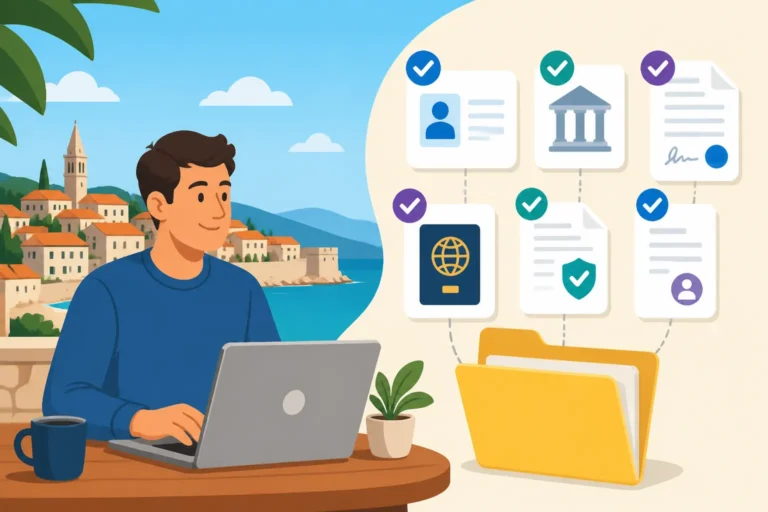
This is where things can get a bit overwhelming, so let's break down the "Big Six" documents you'll almost certainly need, regardless of where you apply. Think of these as your core arsenal.
First, your valid passport. It sounds obvious, but ensure it has sufficient validity – ideally, it should be valid for at least three months beyond your intended stay in Croatia. It's not uncommon for MUP officials to ask for passports with even longer validity, sometimes up to a year, especially if you're applying for an annual permit. Make sure you have photocopies of all relevant pages, including your personal data page and any pages with stamps or visas.
Second, the proof of enrolment from a Croatian educational institution. This is your golden ticket. It needs to be an official document, typically an acceptance letter or a certificate of enrolment, clearly stating that you have been accepted into a recognized study program in Croatia. This usually includes your name, the program name, start and end dates, and the duration of your studies. If you're coming for an exchange program, your letter should specify this. The document often needs to be stamped and signed by the university registrar, proving its authenticity.
Third, proof of accommodation in Croatia. This can be tricky if you don't have a permanent address yet. Ideally, it's a rental contract (ugovor o najmu stana/sobe) with your landlord, officially notarized if possible, or at least signed by both parties. If you're staying in a student dormitory, an official confirmation from the dorm administration will suffice. For those still looking, a temporary booking for a hostel or Airbnb for the initial weeks might be accepted by some MUP offices, but they will expect you to provide a long-term solution soon after. The MUP wants to ensure you won't be sleeping on the streets, so a concrete plan is essential. Remember, any rental agreement needs to be in your name or include your name as an occupant.
Fourth, proof of sufficient financial means. Croatia wants to know you can support yourself without becoming a burden on the state. For students, this usually means a bank statement showing a certain amount of funds in your account. The exact amount can vary, but generally, it's around €1,000 per month of your intended stay, or a lump sum that covers at least a year. So, for a one-year permit, expect to show proof of at least €12,000. This could be your own bank account, a scholarship letter, or a notarized statement of support from a parent or guardian, accompanied by their bank statements. If a parent is supporting you, the statement should clearly say they will cover your expenses, and their bank statements should reflect the necessary funds. Sometimes, a combination of scholarship and personal funds works.
Fifth, health insurance. This is non-negotiable. If you're from an EU/EEA country, your European Health Insurance Card (EHIC) typically covers you for medically necessary treatment, but for residence permits, you’ll often need to prove long-term coverage. For non-EU/EEA citizens, you'll need private health insurance that covers you for the entire duration of your stay in Croatia. This insurance should, at minimum, cover emergency medical treatment and repatriation. Many international students opt for providers like Cigna Global, which offers comprehensive expat health insurance plans that are generally accepted by Croatian authorities. Make sure the policy document is in English or Croatian and clearly states the coverage period and sum. It's often required that the coverage minimum is €30,000.
Sixth, proof of no criminal record (police clearance certificate). This certificate is typically required from your home country and any country you've resided in for more than six months in the past year or two. It usually needs to be apostilled or superlegalized and translated into Croatian by a sworn court interpreter. This process can take time, so start it well in advance. Some countries, like the U.S. for example, issue FBI background checks, which need further authentication for international use. This document is crucial for showing you're a responsible member of society and not a risk to public safety.
Understanding Financial Proof
Let's dive a little deeper into this whole "proof of sufficient financial means" thing, because it trips up a lot of expats, not just students. The MUP isn't just asking for a random number; they want assurance you can genuinely live here without undue hardship.
For students, the baseline, as mentioned, is roughly €1,000 per month. This figure is not set in stone across all MUP offices, but it’s a good benchmark. So, if you're applying for a 12-month permit, you're looking at needing to show roughly €12,000. This amount is meant to cover your basic living expenses – rent, food, transport, and a little bit for leisure. It doesn’t mean you have to spend that exact amount every month, but it’s what the authorities deem reasonable for self-sufficiency. You can find more details on general living costs in Croatia in our guide on The Complete Guide to Cost of Living in Croatia for Expats (2026).
Now, how do you prove this? The most common method is a recent bank statement (issued within the last 30 days, usually). It should be from an account in your name, showing the required balance. If the funds are in a foreign currency, the MUP will calculate the Euro equivalent based on the current exchange rate. If you're lucky enough to have a scholarship, a letter from the scholarship provider detailing the amount and duration of the scholarship will work. This letter should be on official letterhead, stamped, and signed.
What if your parents or guardians are supporting you? This is a common scenario. In this case, you'll need a notarized statement of support (izjava o uzdržavanju) from them, explicitly stating they will financially support you for the duration of your studies in Croatia. This statement should be accompanied by their bank statements, demonstrating they have the necessary funds. Both the statement of support and their bank statements will likely need to be apostilled or superlegalized and then officially translated into Croatian. This can add a layer of complexity and cost, so factor that into your planning. Always double-check the exact requirements with the specific MUP office where you'll be applying, as regional interpretations can sometimes differ.
The Step-by-Step Application Journey
Alright, you've got your documents ready (or you're well on your way!). Now comes the actual process of getting that stamp of approval. This part involves interactions with Croatian bureaucracy, which can be… an experience, to say the least. Patience, a good sense of humor, and plenty of copies are your best friends here.
Gathering Your Documentation
Before you even think about setting an appointment, ensure every single document is not just collected but prepared correctly. This isn't a suggestion; it's a golden rule for navigating Croatian bureaucracy.
Firstly, ensure all foreign documents are properly authenticated. This means getting them apostilled or superlegalized, depending on whether your home country is a signatory to the Hague Apostille Convention. For example, if you have a birth certificate or a police clearance from the US, it will need an apostille. If it’s from a country not part of the convention, it might need superlegalization through the Croatian embassy in that country. This step is critical because without it, your documents are essentially considered invalid in Croatia. Once authenticated, these documents must be translated into Croatian by a sworn court interpreter (sudski tumač). You cannot just use any translator; it has to be one officially recognized by Croatian courts. These interpreters can be found online or through your university's international office. This alone can add a few days or even weeks to your timeline and a fair chunk to your budget.
Secondly, make multiple copies of everything. When I say multiple, I mean at least two full sets of copies for yourself, in addition to the originals. The MUP will often ask for copies, and having them ready means you won't have to scramble to find a copy shop, which can be a mission in itself in some smaller towns. Also, always bring your originals; they will be inspected and then returned to you. Organizing your documents neatly in a folder, perhaps with tabs for each category, can make a positive impression and streamline the process during your appointment. Imagine the MUP officer seeing a well-organized file versus a crumpled pile – it can subtly influence the efficiency of your visit!
Lastly, remember the administrative fee. You’ll need to pay an administrative fee (upravna pristojba) for the residence permit application. The exact amount can vary, but it's typically around €31. This fee is usually paid via a uplatnica (payment slip) at the post office or bank, which you'll then bring back to the MUP as proof of payment. Sometimes, there's a possibility to pay directly at the MUP with a card, but don't count on it – cash at the post office is the safest bet. Make sure you understand how to fill out the uplatnica correctly, as a small error can lead to a rejected payment. If you're unsure, ask someone at the post office or the MUP staff for help, though the latter can be hit or miss depending on their workload.
Submitting Your Application at the MUP (or Embassy/Consulate)
This is the big day! Where you submit your application depends on your citizenship and whether you need a Type D (long-stay) visa.
If you need a visa to enter Croatia (non-visa-free countries): You'll typically apply for your residence permit at the Croatian embassy or consulate in your home country (or a country where you hold long-term residence). They will process your visa and residence permit application concurrently. Once approved, they will issue you a Type D visa, which allows you to enter Croatia and then obtain your physical residence card at the local MUP. It’s crucial to follow their specific instructions, as each embassy might have slightly different procedures or require additional documents. The initial waiting period for approval can be several weeks or even months, so apply well in advance of your desired travel date.
If you are from a visa-free country or already legally in Croatia: You will apply directly at the MUP (Ministry of Interior) in the city where your university is located. For instance, if you're studying at the University of Zagreb, you'd go to the MUP office in Zagreb. It’s highly recommended to How to Book an Appointment at the MUP for Immigration Matters in advance, as walk-in queues can be incredibly long, and some offices don't even accept walk-ins for residence permit applications anymore. When you go, be prepared for a wait, even with an appointment. Bring a book, your phone, and a snack. The MUP experience often involves multiple windows, forms, and sometimes confusing instructions, so maintain a calm demeanor and be polite – it goes a long way. They will review your documents, ask questions, and take your fingerprints and photograph on the spot.
Once your application is submitted, you’ll usually receive a confirmation of your application (potvrda o podnesenom zahtjevu). This document is important because it proves you have a pending application and are legally allowed to stay in Croatia while it's being processed. Do not lose it! It’s your temporary lifeline.
The Biometrics Appointment and Residence Card Issuance
So, you've submitted your application and survived the MUP. What's next? The waiting game. After your application is approved, there are usually a couple more steps before you hold that coveted residence card in your hands.
First, the biometrics appointment. Sometimes, this happens during your initial application submission, especially if you apply directly at the MUP. However, if you applied via an embassy or if the MUP was particularly busy, you might be given a separate appointment to provide your fingerprints and digital photograph. This information is essential for your biometric residence card (boravišna iskaznica). Make sure you attend this appointment punctually, as missing it can delay your entire process. The staff will capture your biometric data, which will then be incorporated into your physical residence card.
Once your biometrics are taken and your application is fully approved, you’ll be notified that your residence card is ready for pick-up. This notification might come via SMS, email, or a phone call, but often, it's a matter of checking back with the MUP after a certain period (they might tell you "come back in two weeks"). The waiting period for the physical card can vary significantly – from a couple of weeks to over a month. When you go to pick up your card, remember to bring your passport and the confirmation of application. They will verify your identity one last time before handing over your brand-new Croatian residence card. This card is your official proof of residence and should be carried with you at all times. It acts as your ID within Croatia and your travel document within the Schengen Area. Ensure all the details on the card are correct before you leave the MUP office!
Life After Applying: What to Expect and Common Pitfalls
Getting your residence permit is a huge milestone, but it's not the end of your administrative journey in Croatia. As an expat student, there are ongoing responsibilities and things to be aware of to ensure your stay remains smooth and legal.
Processing Times and Staying Legal While You Wait
Ah, processing times. This is perhaps one of the most unpredictable aspects of Croatian bureaucracy. There's no single, definitive answer for how long it will take, and it can vary wildly depending on the MUP office, the time of year (summers and pre-holiday periods are often slower), and even the individual case worker handling your file. Typically, for a student residence permit, you can expect processing to take anywhere from 2 to 8 weeks, sometimes longer if there are complications or requests for additional documents. If you applied from abroad, factor in embassy processing times on top of that.
While you're waiting for your permit to be approved, remember the potvrda o podnesenom zahtjevu (confirmation of application) we talked about earlier. This document is your proof that your application is pending and that you are legally allowed to stay in Croatia beyond the initial 90-day tourist period. Always carry this document with you. It effectively extends your legal stay until a decision is made on your permit. However, this confirmation generally does not allow you to leave and re-enter Croatia. If you leave the Schengen Area while your application is pending and only have this confirmation, you might have trouble re-entering. Plan any international travel carefully around your application timeline. You might need to wait until you have your physical biometric residence card to travel freely within the Schengen zone.
A common pitfall is assuming that because you've applied, everything is fine. It often is, but if the MUP needs additional documents or clarification, they will contact you. Sometimes this contact is a letter to your registered address (which is why having stable accommodation is key), or a phone call. Missing these requests can significantly delay your application or even lead to rejection. So, monitor your mail and phone, and respond promptly to any requests.
Renewing Your Student Residence Permit
Your student residence permit won't last forever; it's typically valid for one year, or for the duration of your academic year if it’s shorter. This means you'll need to renew it annually for multi-year programs. The good news is that renewing is generally less complex than the initial application, as you've already established your presence and provided most of your core documents.
The golden rule for renewal is: apply early! You should initiate your renewal process at the MUP at least 30-60 days before your current permit expires. Do not wait until the last minute. The MUP offices can get busy, and you don’t want to be caught in a situation where your permit expires while your renewal is still pending, which can lead to complications and even fines.
For renewal, you'll generally need:
- A new proof of enrolment for the upcoming academic year.
- Updated proof of financial means.
- Updated health insurance for the next period (consider options like Cigna Global again).
- Your current residence card and passport.
- Another administrative fee payment.
- Sometimes, an updated proof of accommodation, especially if you've moved.
The process is similar to the initial application: you gather your documents, make an appointment at the MUP, submit your paperwork, and await a new residence card. Any major changes in your situation (like changing your study program or university) should be clearly communicated to the MUP during the renewal process, as they might require additional documentation or a different type of permit.
Healthcare and Other Student Essentials
Once your residence permit is in hand, you'll feel a significant weight lift, but there are still other practicalities to sort out. One of the biggest is healthcare. As a student with a valid residence permit, you are generally eligible to register with the Croatian Health Insurance Fund (HZZO) for public health insurance. This is a critical step, as it provides access to the public healthcare system. Our guide on Registering with HZZO in Croatia: The Complete Expat Guide (2027) walks you through this process. You'll need your OIB (Personal Identification Number) and your residence card to do so. For those coming from non-EU countries, having robust private health insurance like Cigna Global initially is paramount until your HZZO coverage kicks in. Even with HZZO, many expats opt for supplementary private health insurance (dopunsko osiguranje) to cover co-payments, which can be significant.
Beyond healthcare, you'll want to sort out your finances. Opening a local bank account is usually much easier once you have your residence card and OIB. Our guide on How to Open a Bank Account at a Croatian Bank as a Foreigner can help. You'll need it for daily expenses, receiving scholarships, and paying rent. Speaking of rent, ensure your accommodation is properly registered. Your landlord is legally obligated to register your stay (prijava boravišta) with the MUP, and you should receive a confirmation of this. This is separate from your residence permit but equally important.
For getting settled in your new student accommodation, you'll also need to consider utility hook-ups. Check out The Expat Guide to Setting Up Utilities in Croatia for comprehensive advice on electricity, water, and internet. Moving your belongings can also be a challenge, especially if you're coming from far away. Services like Sirelo offer comparison tools for international movers, which can be invaluable for finding reliable and affordable shipping options for your books, clothes, and other essentials. They can help connect you with moving companies that understand the logistics of international student moves.
Lastly, make sure you have your OIB. This personal identification number is your key to almost everything in Croatia, from banking to healthcare to officially registering your residence. You can learn more about it in our guide: How to Get an OIB (Personal Identification Number) in Croatia.
Here’s a quick summary table of key documents and their preparation notes:
| Document Category | Specific Document Examples | Preparation Notes |
|---|---|---|
| Identity & Entry | Valid Passport | Minimum 3 months validity beyond stay. Photocopies of all relevant pages. |
| Study Proof | Acceptance/Enrolment Letter | Official university document, stamped/signed, with program details and duration. |
| Accommodation | Rental Contract, Dorm Confirmation | In your name, specify duration, notarized if possible. |
| Financial Means | Bank Statement, Scholarship Letter, Sponsor Statement | Minimum €1,000/month or €12,000/year. Recent (30 days), apostilled/translated if from sponsor. |
| Health Insurance | Private Insurance Policy, EHIC | Covers minimum €30,000 for emergency/repatriation. In English/Croatian. |
| Background Check | Police Clearance Certificate | From home country and any country resided over 6 months. Apostilled/translated. |
| Administrative | Application Form, Passport Photos, Fee | Fill forms accurately. Standard passport photos. Administrative fee paid via uplatnica. |
This whole process can feel like a marathon, not a sprint. There will be moments of frustration, questions without immediate answers, and possibly long waits. But remember why you’re doing it: to study and experience life in Croatia. Keep your documents meticulously organized, stay polite and patient with the MUP staff, and don’t hesitate to ask your university’s international office for help. They are usually well-versed in assisting foreign students with these procedures.
Disclaimer
The information provided in this article is for general guidance and informational purposes only, and does not constitute legal, financial, or immigration advice. While we strive to keep the information up-to-date and accurate, laws, regulations, and procedures in Croatia can change frequently. You should always consult with official government sources, legal professionals, or immigration experts for advice tailored to your specific situation. Reliance on any information on this site is solely at your own risk.