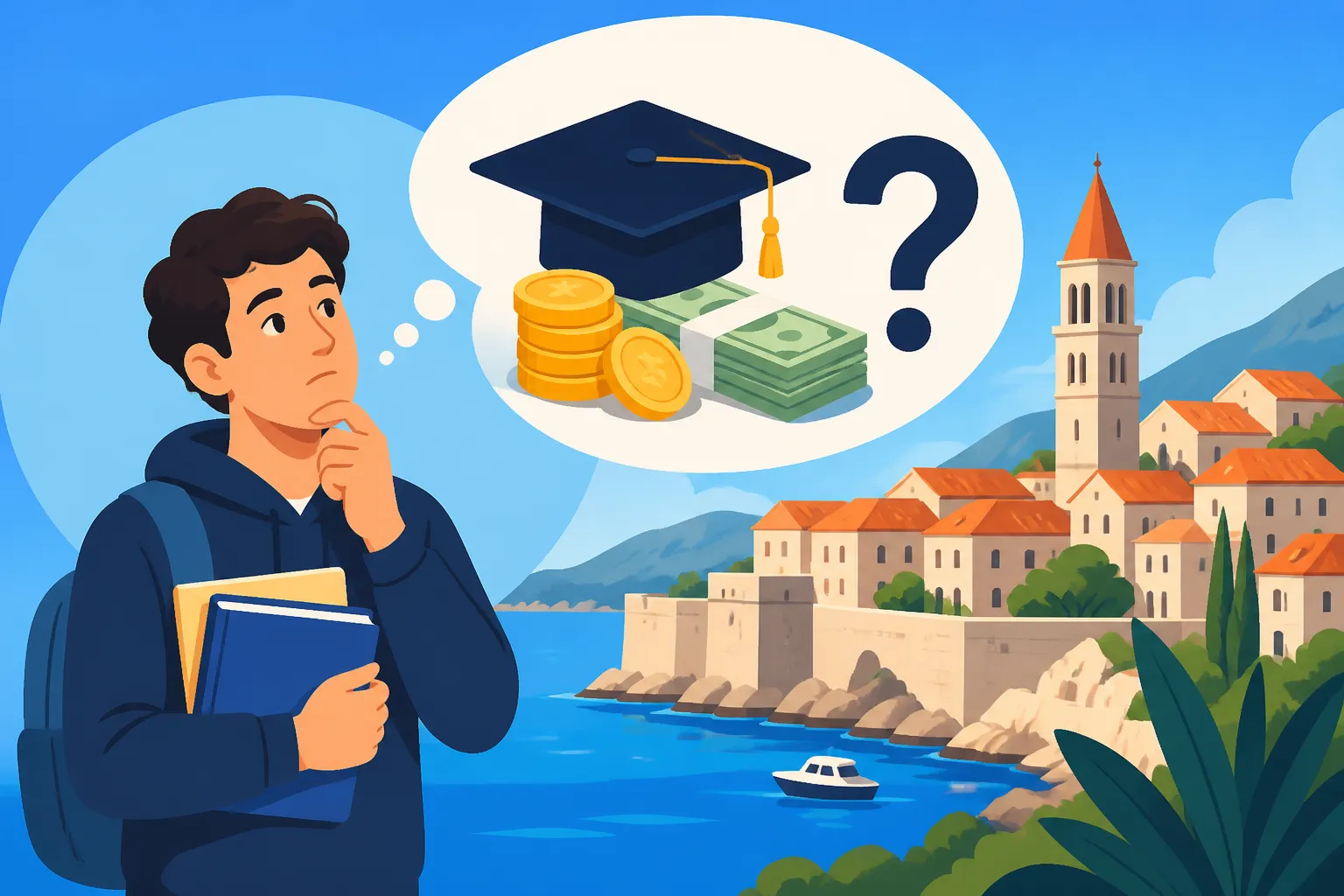
Do International Students Pay Tuition Fees in Croatia?
Thinking about pursuing your education in Croatia? It's an absolutely fantastic decision – the country offers a unique blend of vibrant culture, stunning landscapes, and growing academic opportunities. But let's be honest, for any international student, the first big question often revolves around finances, especially the confusing topic of tuition fees. Navigating the cost of higher education when you're moving to an entirely new country can feel like a daunting task, fraught with uncertainty and administrative hurdles. This comprehensive guide is here to cut through that confusion, providing you with a realistic, detailed breakdown of tuition fees for international students in Croatia, empowering you to plan your academic journey with clarity and confidence.
Understanding Tuition Fees for International Students in Croatia
When you're dreaming of studying in Croatia, one of the most immediate practical considerations is, of course, how much it's actually going to cost. It's not always as straightforward as it might seem, especially when differentiating between students from within the European Union/European Economic Area and those from further afield. You might hear whispers about free education, but for most international students, that's simply not the reality.
The General Rule: Yes, Tuition Fees Apply
For the vast majority of international students in Croatia, tuition fees are indeed a part of the academic package. Unlike some Nordic countries, public higher education here is not free for everyone. When we talk about "international students," we're generally referring to anyone who doesn't hold Croatian citizenship. While the Croatian government heavily subsidizes its public universities, this support is primarily directed towards its own citizens and, thanks to EU agreements, other EU/EEA nationals.
If you're a non-EU/EEA citizen, prepare for the expectation that you will be paying tuition. This is fairly standard practice globally, and Croatia is no exception. These fees help cover the costs of your education, from faculty salaries and facilities to administrative support. It’s a necessary contribution, ensuring the quality of the programs offered. The specific amount can vary wildly, depending on a host of factors we'll explore shortly, but rest assured, it's a significant component of your overall student budget.
EU/EEA Students vs. Non-EU/EEA Students: A Tale of Two Fee Structures
This is where the distinction becomes absolutely critical, and it often catches prospective students off guard. If you are a citizen of an EU or EEA member state (which includes Iceland, Liechtenstein, and Norway), you generally benefit from the same tuition fee structure as Croatian citizens. What does this mean in practice? Often, it means significantly reduced fees, or even no fees at all, provided you meet certain academic criteria, such as passing all your exams within the standard timeframe.
For example, at a public university like the University of Zagreb or the University of Split, an EU/EEA student might pay a nominal administrative fee or a small tuition charge per academic year, perhaps a few hundred euros, if they don't achieve the required ECTS credits or if it's a specific, highly competitive program. This is a massive advantage compared to students from outside this economic bloc.
However, if you're a non-EU/EEA student, the picture changes quite dramatically. You will almost certainly be subject to higher tuition fees. These fees are set by individual universities and often reflect the market value of the program, particularly for popular fields of study taught in English. It's a fundamental aspect of funding higher education for those outside the immediate European framework. Understanding this distinction from the outset is vital for accurately budgeting your studies.
Factors Influencing Tuition Costs
The tuition you'll actually end up paying in Croatia isn't a single, fixed number. It's a dynamic figure influenced by several key factors. You need to consider these elements as you research your options, as they can lead to substantial differences in your financial commitment.
Firstly, the university itself plays a huge role. Croatia has several excellent public universities, each with its own fee policies. The University of Zagreb, being the largest and oldest, often has a different fee structure compared to, say, the University of Rijeka or the University of Osijek. Private institutions, though less common for undergraduate studies, will naturally have their own, generally higher, fee schedules.
Secondly, your chosen study program makes a significant difference. Programs in fields like medicine, dentistry, pharmacy, or certain engineering disciplines are almost always more expensive than those in humanities, social sciences, or arts. This isn't unique to Croatia; it's a global trend reflecting the higher costs associated with specialized equipment, laboratories, and teaching staff in these fields. For instance, a medical program taught in English can easily run several thousands of euros per year, while a philosophy program might be considerably less.
Thirdly, the language of instruction is a crucial factor. Programs taught in Croatian tend to be more affordable, and in many cases, if you're an EU/EEA student studying in Croatian, you might even qualify for a tuition-free spot if you meet academic requirements. However, if you opt for a program taught entirely in English, which many international students do, you're almost certainly going to pay a higher premium. These English-language programs are specifically designed to attract and accommodate international students, and their pricing reflects that.
Finally, the level of study also impacts the cost. Bachelor's, Master's, and PhD programs often have different fee structures. Generally, PhDs can sometimes have lower or even waived fees, especially if you secure a research grant or teaching assistantship, whereas Master's and Bachelor's degrees usually come with a clearer tuition price tag.
Before you commit, it's absolutely essential to dive deep into the specific university and program websites. Don't rely on general assumptions. Every institution will have detailed information about fees for EU/EEA and non-EU/EEA students. For general advice on applications, take a look at our guide on How to Apply to a Croatian University as an International Student.
Navigating the Full Financial Picture: Beyond Tuition
Alright, so we've established that tuition fees are a reality for most international students in Croatia. But let's be clear: tuition is just one piece of a much larger financial puzzle. When you're budgeting for your studies, you need to think holistically about all the expenses that come with living and studying abroad. Ignoring these other costs can lead to unpleasant surprises down the line.
Typical Tuition Ranges by Program and University
To give you a clearer picture, let's talk numbers. Please remember these are general ranges, and exact figures can change year-to-year, so always double-check with your chosen university directly.
For non-EU/EEA students, especially in public universities offering English-taught programs:
- Humanities, Social Sciences, Economics, Arts: You might be looking at annual fees anywhere from €2,000 to €6,000. For example, some programs at the University of Zagreb or the University of Zadar could fall within this range.
- Engineering, Computer Science, Natural Sciences: These tend to be a bit pricier, often ranging from €3,000 to €8,000 per year. Universities like the Faculty of Electrical Engineering and Computing (FER) in Zagreb or the Technical University of Split would be good places to research specific programs.
- Medicine, Dentistry, Pharmacy: These are consistently the most expensive programs, and in Croatia, they can be quite competitive. Expect to pay anywhere from €8,000 to €15,000 per year, particularly for programs taught in English. The medical faculties at the University of Zagreb, University of Split, and University of Rijeka are prime examples.
For EU/EEA students:
Generally, if you’re an EU/EEA citizen, you'll benefit from significantly lower fees. In many cases, if you meet the academic requirements (like passing enough ECTS credits each year), you might even study for free, only paying administrative enrolment fees (often a few hundred euros per year). If you don't meet these requirements, or for certain specialized programs, you might pay fees comparable to a Croatian citizen who repeats a year, which could be around €500 to €2,500 per year.
| Program Type (Non-EU/EEA) | University of Zagreb (Approx. Annual Fee) | University of Split (Approx. Annual Fee) | University of Rijeka (Approx. Annual Fee) |
|---|---|---|---|
| Humanities/Social Sciences | €2,000 – €4,000 | €1,800 – €3,500 | €1,500 – €3,000 |
| Engineering/IT | €3,000 – €6,000 | €2,500 – €5,500 | €2,500 – €5,000 |
| Medicine/Dentistry | €10,000 – €12,000 | €9,000 – €11,000 | €8,000 – €10,000 |
| EU/EEA Students | €0 – €2,500 (depending on program/performance) | €0 – €2,000 (depending on program/performance) | €0 – €1,800 (depending on program/performance) |
(Note: These figures are indicative and subject to change. Always consult the official university websites for the most current and accurate information.)
Beyond Tuition: Other Compulsory Fees and Living Expenses
As an expat who's been here a while, I can tell you that the true cost of living here extends far beyond just what you pay for your classes. There are numerous other compulsory fees and, of course, your daily living expenses to account for.
First, you'll encounter registration fees and administrative fees at the university level. These are typically one-off or annual payments that cover things like student ID cards, access to university systems, and enrolment processing. While not as high as tuition, they add up. Some universities might also have a student union fee or similar small charges.
Then, there are the everyday living expenses. This is where your personal lifestyle and location really start to impact your budget.
- Accommodation: This will likely be your largest expense after tuition. Rent in Zagreb or Split will be significantly higher than in smaller cities like Osijek or Varaždin. A shared apartment or a room in a student dormitory (if available for international students) will be cheaper than a studio or one-bedroom apartment on your own. Expect anywhere from €250-€500+ for a room in a shared apartment, or €400-€700+ for a studio/one-bedroom in a city like Zagreb.
- Utilities: Electricity, water, gas (if applicable), internet, and mobile phone. These can add another €100-€200 per month, depending on usage and season (winter heating can be costly!).
- Groceries: Cooking at home is always cheaper than eating out. Budget around €200-€350 per month for food, depending on your diet and where you shop. Local markets (like Dolac in Zagreb) can be great for fresh, affordable produce.
- Transportation: Public transport is generally affordable, especially with a student pass. In Zagreb, a monthly student pass for ZET (trams and buses) is very reasonable. If you choose to walk or bike, costs will be minimal.
- Personal Expenses: This covers everything from toiletries and clothing to entertainment, social outings, and travel. This budget is highly personal but don't underestimate how quickly it can add up when you're exploring a new country!
- Books and Study Materials: While many resources are digital, some programs require specific textbooks that might not be readily available in libraries or could be expensive to purchase.
You really need to get a clear picture of what it costs to simply exist here before you even factor in your education. For a more detailed breakdown of everyday expenses, you might want to read our full guide on The Complete Guide to Cost of Living in Croatia for Expats (2026).
The Importance of Health Insurance
This isn't a "nice-to-have"; it's a mandatory requirement for your residence permit. You cannot move to Croatia as an international student without adequate health insurance. This is an additional cost that you absolutely must factor into your budget.
For non-EU/EEA students, you'll typically need to secure private health insurance for your initial residence permit application. This insurance must cover you for the entire period of your stay and meet certain minimum coverage requirements. Once you have a valid temporary residence permit, you may become eligible to register with the Croatian Health Insurance Fund (HZZO), the public system. However, there are often waiting periods and specific conditions for this, and many non-EU students continue with private insurance for simplicity or if they don't meet HZZO criteria.
EU/EEA students can generally use their European Health Insurance Card (EHIC) for initial care, but for long-term study, they are typically expected to register with HZZO, often paying contributions or being covered if their home country's social security system covers them while studying abroad. This is a complex area, and it's essential to understand your obligations. You can find much more detailed information on options and requirements in our article on Health Insurance in Croatia: Mandatory, Supplementary and Private Options Explained. Deciding between public and private options is a big choice, so also consider checking out Public vs Private Healthcare in Croatia: Which Should Expats Choose?.
Opportunities for Financial Relief and Support
While the costs might seem daunting at first glance, don't despair! There are avenues for financial relief and support that can help make studying in Croatia more accessible. It takes a bit of digging and proactivity, but these opportunities can significantly lighten your financial load.
Scholarships and Grants for International Students
Croatia, like many countries, offers various scholarships and grants designed to attract international talent and support students in need. These can come from several sources:
- Croatian Government Scholarships: The Ministry of Science and Education (Ministarstvo znanosti i obrazovanja) occasionally offers scholarships for international students, often through bilateral programs or specific calls. These are highly competitive and may target specific fields or countries. Keep an eye on their official website and the local Croatian embassy in your home country.
- University-Specific Scholarships: Many Croatian universities have their own scholarship programs. These might be based on academic merit, financial need, or specific research areas. It's crucial to check the international relations or scholarship pages of the universities you're applying to – often, these opportunities are program-specific. For instance, some faculties might offer reduced fees or stipends for PhD candidates or Master's students in high-demand fields.
- Erasmus+ Program: If you're an EU/EEA student, or if your home institution has a partnership with a Croatian university, the Erasmus+ program is a fantastic opportunity. It provides grants for study and traineeship periods abroad, covering a portion of your living costs. While it doesn't typically cover full tuition for non-EU/EEA students, it can make a substantial difference for those eligible.
- Other International Organizations: Don't limit your search to Croatia alone. Look into scholarship programs from your home country's government, international foundations, or organizations that support study abroad.
Applying for scholarships takes time, effort, and usually a compelling application, but it's absolutely worth exploring every potential avenue. Our guide on Understanding Scholarships for International Students in Croatia offers more detailed tips.
Student Work Opportunities and Regulations
Many international students aim to work part-time to help cover their expenses. Thankfully, this is often possible in Croatia, but there are important regulations you need to be aware of.
For non-EU/EEA students on a student residence permit, your ability to work is generally tied to your permit. Historically, strict limitations were in place, but recent changes have made it easier. You can usually work part-time (often up to 20 hours a week) with an employer that registers your student work contract through student service centers (like Student Servis in Zagreb). This isn't a full work permit in the traditional sense, but a streamlined process for students. However, always confirm the current regulations with the Croatian Ministry of Interior (MUP) or your university's international office, as rules can change. Finding these student jobs often involves looking for positions in hospitality, retail, or language tutoring, especially in bigger cities.
For EU/EEA students, the situation is simpler. You generally have the same right to work as Croatian citizens, meaning you can work part-time or even full-time (outside of study hours) without needing a separate work permit. You’ll still need to register as a worker and ensure your employer processes your contract correctly, usually through a student service center.
Remember, any income you earn will have tax implications. While students might be subject to different tax thresholds, it's wise to be informed. You might want to refer to resources like our guide on Understanding Income Tax in Croatia: The Full Expat Guide or consult with specialists like Taxes for Expats to understand your obligations. Also, gaining official employment means you will also need a How to Get a Work Permit and Residence Permit in Croatia if you're a non-EU citizen.
Language Proficiency and Fee Reductions
While many sought-after programs for international students are taught in English, having a grasp of Croatian can open up additional opportunities and, in some cases, even lead to lower fees.
As mentioned earlier, programs taught entirely in Croatian are often significantly cheaper, or even free for EU/EEA students who meet academic performance requirements. If you're serious about long-term study in Croatia and want to minimize costs, investing time in learning the language could pay dividends. Many universities offer Croatian language courses, and there are external language schools as well. Plus, speaking Croatian will vastly improve your daily life and integration!
Consider platforms like iTalki for online language tutors, which can be a flexible and affordable way to start learning Croatian before you even arrive. Additionally, look into official language centers like Croaticum at the University of Zagreb, which offer intensive courses. For more information on learning the local language, check out Learning Croatian: A Complete Guide to Language Courses and Levels or How to Enrol in a Croatian Language Course (Croaticum). The better your Croatian, the more doors might open – not just academically, but socially and professionally too.
Ultimately, studying in Croatia as an international student is an enriching experience, and while tuition fees are a factor, with careful planning, research into scholarships, and an understanding of work regulations, it's an achievable dream. Just remember to gather all your necessary documentation for your stay; our guide on The Expat Guide to Temporary Residence (Privremeni Boravak) in Croatia is a good starting point, and for specific student permits, make sure to check How to Apply for a Student Residence Permit in Croatia.
Disclaimer
Please remember that the information provided in this guide is for general informational purposes only and does not constitute legal or financial advice. Regulations regarding tuition fees, scholarships, visas, and living costs in Croatia can change frequently. It is imperative to consult the official websites of Croatian universities, the Croatian Ministry of Science and Education, the Ministry of Interior (MUP), and relevant embassies or consulates for the most up-to-date and accurate information specific to your nationality and chosen program of study. Always verify critical details directly with the authoritative sources before making any decisions.