How Do I Write a CV That Works for Croatian Employers?
Moving to Croatia and landing that perfect job can feel like navigating a maze, especially when it comes to presenting yourself on paper. You’ve probably spent countless hours perfecting your CV for your home country or other international markets, only to find that Croatian employers have their own set of expectations and nuances. This guide is here to demystify the process, helping you craft a CV that truly resonates with the local hiring landscape and avoids common expat pitfalls.
Understanding the Croatian CV Standard
When you’re applying for jobs back home, you might have a certain format or style in mind. Here in Croatia, things can be a little different, and overlooking these distinctions can sometimes put your application at a disadvantage. It’s not just about translating your existing CV; it’s about understanding the underlying cultural and professional expectations that shape how Croatian employers view your qualifications.
Essential Components of a Croatian CV
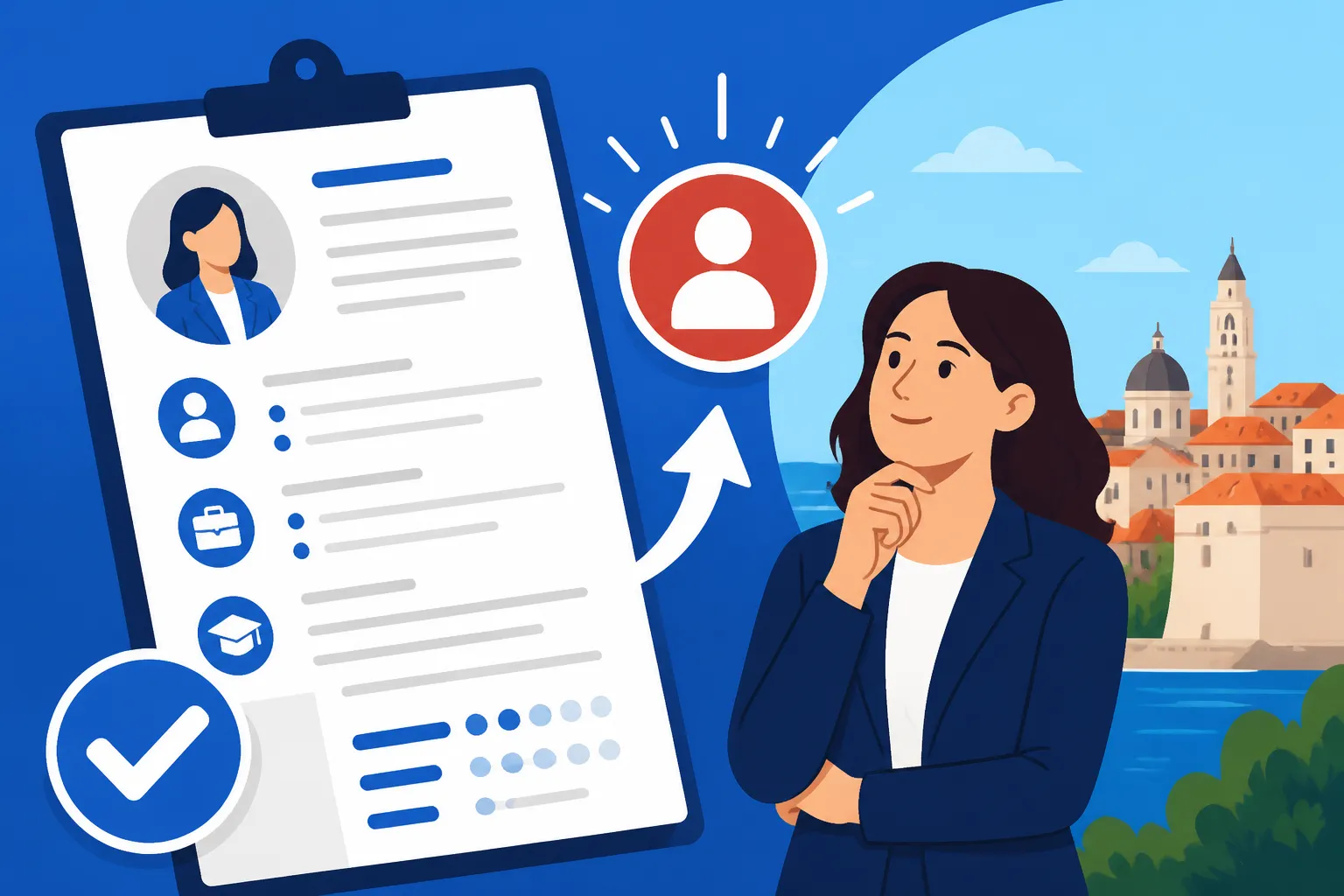
A Croatian CV, or životopis, shares many similarities with its Western counterparts, but it often includes additional details that might surprise you. These are not necessarily deal-breakers if omitted, but including them shows you understand the local professional culture.
First off, your contact information should be clear and concise. This usually includes your full name, phone number (with the international dialling code, because not everyone realizes you’re local yet!), email, and your current city and country of residence. What might be new for you is the OIB. This is your personal identification number, similar to a social security number or tax ID. While you might not have one yet if you’re still in the early stages of relocating, it's something employers will eventually need for official registration and payroll purposes. If you have it, it's good to include. If you don't, don't sweat it for the initial application, but be aware you'll need one once you start down the path of getting a work permit. You can learn more about How to Get an OIB (Personal Identification Number) in Croatia.
Then there's the personal photo. In many Western countries, including a photo on your CV is a big no-no, often due to concerns about bias. In Croatia, however, it’s quite common and even expected, especially in service-oriented roles. A professional, clear headshot is the standard. Don’t use a selfie from your last beach holiday, no matter how good the lighting was!
Beyond your photo, some Croatian CVs still include more extensive personal data than you might be used to. This can range from your date of birth, marital status, and even nationality. While modern HR practices are leaning towards omitting some of these to reduce discrimination, you’ll still see them frequently. For an expat, including your nationality can sometimes be helpful, especially if you’re from an EU country, as it immediately clarifies your work permit status. If you’re from outside the EU, you’ll want to be prepared to discuss your How to Get a Work Permit and Residence Permit in Croatia situation.
Your work experience section should, like elsewhere, be in reverse chronological order. Be detailed but not verbose. Focus on your responsibilities and, crucially, your achievements. Croatian employers appreciate a clear understanding of what you actually did and the impact you made. Don't just list tasks; describe outcomes. For example, instead of "Managed social media," try "Increased social media engagement by 20% over six months through targeted content campaigns."
For education, list your degrees, the institutions, and the dates of attendance. If you have a foreign degree, it's worth understanding the process of How to Get Your Foreign Degree Recognised in Croatia: The AZVO Guide. While not always mandatory for the initial application, having it recognized can streamline the process down the line, especially for regulated professions.
Finally, dedicate a section to skills. This covers everything from language proficiency (more on this in a bit!), technical skills (software, programming languages, etc.), and soft skills (teamwork, communication, problem-solving). As for references, it's usually sufficient to state "Available upon request" (Dostupno na zahtjev). Employers will ask if they need them.
What NOT to Include (or to be cautious about)
Just as important as what to include is what to leave out, or at least approach with caution. While your personality is important, your CV isn't the place for overly informal language or excessive personal anecdotes. Keep it professional and focused on your career.
You might be tempted to list every single hobby you’ve ever had, but unless it directly relates to the job or showcases a desirable trait (like leadership in a sports team), keep those to yourself for the interview stage. No one needs to know you collect rare stamps unless you're applying to work at the philatelic society.
Also, be mindful of length. While Croatian CVs can sometimes be a bit more expansive than the ultra-short résumés favoured in some countries, don't let it become a novel. Aim for 2-3 pages maximum for experienced professionals. Fresh graduates or those with less experience should stick to one page. Recruiters in Croatia, just like everywhere else, are busy, and they appreciate conciseness.
Tailoring Your Experience for the Croatian Market
One of the biggest hurdles expats face is translating their diverse international experience into something tangible and appealing for a Croatian employer. Your background is a huge asset, but it needs to be framed in a way that highlights its relevance to the local context and the specific job you're applying for.
Highlighting Relevant Skills and Achievements
It's not enough to just list your previous roles. You need to connect the dots for the employer. Think about the job description you're applying to and identify keywords and core competencies. Then, go through your experience and find instances where you demonstrated those very skills or achieved something relevant.
Quantify your achievements wherever possible. Numbers speak louder than words. Did you manage a budget? What was its size? Did you improve efficiency? By how much? Did you lead a team? How many people? Even if you’re dealing with different currencies or market sizes, the ability to show measurable impact is universal.
Beyond technical skills, soft skills are highly valued in Croatia. The ability to work well in a team (timski rad), adaptability (prilagodljivost), strong communication (komunikacijske vještine), and problem-solving (rješavanje problema) are often highly sought after. If you’ve worked in diverse, multicultural environments, that’s a fantastic soft skill to highlight – it shows you can navigate different work cultures and communicate effectively across boundaries, which is incredibly useful for companies with international clients or aspirations. For a general overview of job searching, check out The Expat Guide to Finding a Job in Croatia (2027).
Addressing Language Proficiency
This is often the elephant in the room for many expats. "Do I really need to speak Croatian to get a job?" The answer, honestly, often depends on the role and the company. For many positions, especially in international companies, IT, or tourism, English might be sufficient. However, for roles that involve extensive interaction with the local public, administrative tasks, or within smaller, purely Croatian companies, some level of Croatian will almost certainly be required. You can dive deeper into this question with Do I Need to Speak Croatian to Get a Job in Croatia?.
Regardless of the requirement, showcasing your language skills effectively is key. Use the Common European Framework of Reference for Languages (CEFR) levels (A1, A2, B1, B2, C1, C2) if you have any official certification. If you’re actively learning, state your current level and mention that you are "actively studying" (aktivno učim hrvatski). This shows initiative and commitment, which employers appreciate.
When it comes to learning Croatian, immersion is fantastic, but structured learning can really accelerate your progress. Platforms like iTalki can be a game-changer for expats. They allow you to connect with native Croatian tutors for one-on-one lessons, helping you build confidence and tailor your learning to practical conversations, including professional scenarios. Even just being able to say a few polite phrases or understand basic instructions can go a long way in an interview and on the job. Learning the local language also shows a commitment to integrating, which is viewed very positively. If you're serious about mastering the language, our guide on Learning Croatian: A Complete Guide to Language Courses and Levels has plenty of resources.
| CV Section | Typical Western Approach | Common Croatian Approach |
|---|---|---|
| Length | Often 1 page, concise | 1-3 pages, more detailed |
| Photo | Generally discouraged due to bias concerns | Often expected, professional headshot |
| Personal Details | Name, contact info only | Name, contact, OIB (if available), date of birth, marital status, nationality often included |
| Language Skills | List proficiency, often CEFR levels | List proficiency, often CEFR levels, may include "actively studying" if applicable |
| Achievements | Quantified results, strong focus on impact | Quantified results, strong focus on impact |
| Hobbies | Usually omitted unless highly relevant | Sometimes included, but keep it brief and relevant |
| References | "Available upon request" is standard | "Available upon request" is standard |
| Cover Letter | Often optional, but always recommended | Almost always expected and highly valued |
Practical Tips for a Standout Croatian CV
Now that we’ve covered the content, let’s talk about presentation. Even the most impressive experience can fall flat if your CV is poorly formatted or difficult to read. In Croatia, professionalism and clarity are highly valued.
Formatting and Presentation
Think clean, professional design. You don't need a overly flashy or graphically intense CV unless you're specifically applying for a design role. A well-organized layout with clear headings, bullet points, and consistent formatting will make your CV easy to scan and digest. Choose a readable font, and ensure there's enough white space so it doesn't look cluttered.
While conciseness is good, don't sacrifice detail completely. As mentioned, Croatian employers tend to prefer a more comprehensive view of your experience. Aim for a balance where you provide enough information without overwhelming the reader.
Always, always save and submit your CV in PDF format. This ensures that your formatting remains intact, regardless of the software the employer uses to open it. Sending a Word document can lead to layout disasters and might make you look less professional. Also, name your file professionally, e.g., "ImePrezime_CV.pdf" (FirstNameLastName_CV.pdf).
The Power of a Strong Cover Letter
In many parts of the world, cover letters are becoming less common, sometimes even optional. Not in Croatia. Here, a cover letter (motivacijsko pismo) is almost always expected and is often your first real opportunity to make a personal connection. Think of it as your chance to tell your story, beyond the bullet points of your CV.
Your cover letter should briefly introduce yourself, state which position you're applying for, and most importantly, explain why you are interested in this specific role and this specific company. Don't send a generic cover letter; employers can spot those from a mile away. Research the company, understand its mission, and tailor your letter to reflect that. Connect your skills and experience to the company’s needs and values. Show genuine enthusiasm for the opportunity to Work in Croatia as a Foreigner.
It's also a good place to address any potential questions an employer might have about your background as an expat – for example, briefly explaining your visa status if you're a non-EU citizen or expressing your eagerness to learn Croatian if you're not yet fluent. This proactive approach can alleviate concerns and demonstrate your commitment.
Navigating the Application Process and Beyond
Getting your CV right is a massive step, but it’s just one part of the journey. Understanding how applications are typically handled in Croatia and what to expect afterward can save you a lot of anxiety and help you prepare for the next stages.
Submitting Your Application
Most job applications in Croatia are handled online. Popular job portals include MojPosao.hr and Posao.hr. Many larger companies also list openings directly on their websites, often with online application forms. When applying through email, ensure your email is professional, concise, and includes your CV and cover letter as attachments. Again, use clear file names!
It’s worth noting that networking can also be incredibly powerful. Many opportunities are still found through personal connections (veze). Attending industry events, joining expat groups, and even leveraging LinkedIn can open doors. You can find more tips in our guide on How to Network Professionally in Croatia.
Understanding Croatian Employment Norms
Once your application is in, the waiting game begins. Croatian employers might not always have the fastest turnaround times, so patience is key. Don't be surprised if it takes a few weeks to hear back, especially for larger organizations. A polite follow-up email after a week or two is generally acceptable if you haven't heard anything, but avoid pestering.
If you get called for an interview, remember that punctuality is highly valued. Dress professionally, even if the company culture seems casual. First impressions matter. Be prepared to discuss your experience in detail and ask insightful questions about the role and the company. Show your enthusiasm and your willingness to learn and adapt to a new environment.
Once you land the job, understanding Croatian employment contracts and your rights as an employee is crucial. Things like probation periods (probni rad) and notice periods (otkazni rok) are standard, but the specific terms can vary. Our guide on Understanding Croatian Employment Contracts: A Complete Guide can walk you through the specifics. And, of course, once you start earning, you'll need to wrap your head around The Complete Guide to Taxes in Croatia for Expats (2027) – it's a whole other adventure!
Writing a CV for Croatian employers isn't just a bureaucratic task; it's an exercise in cultural understanding. By paying attention to these local nuances, you're not only increasing your chances of getting an interview, but you're also showing potential employers that you're serious about building a life and career here. Sretno! (Good luck!)
Disclaimer
This article is intended for informational purposes only and does not constitute legal, financial, or immigration advice. While we strive to provide accurate and up-to-date information, rules and regulations in Croatia can change rapidly. Always consult with qualified professionals for personalized advice regarding your specific situation.