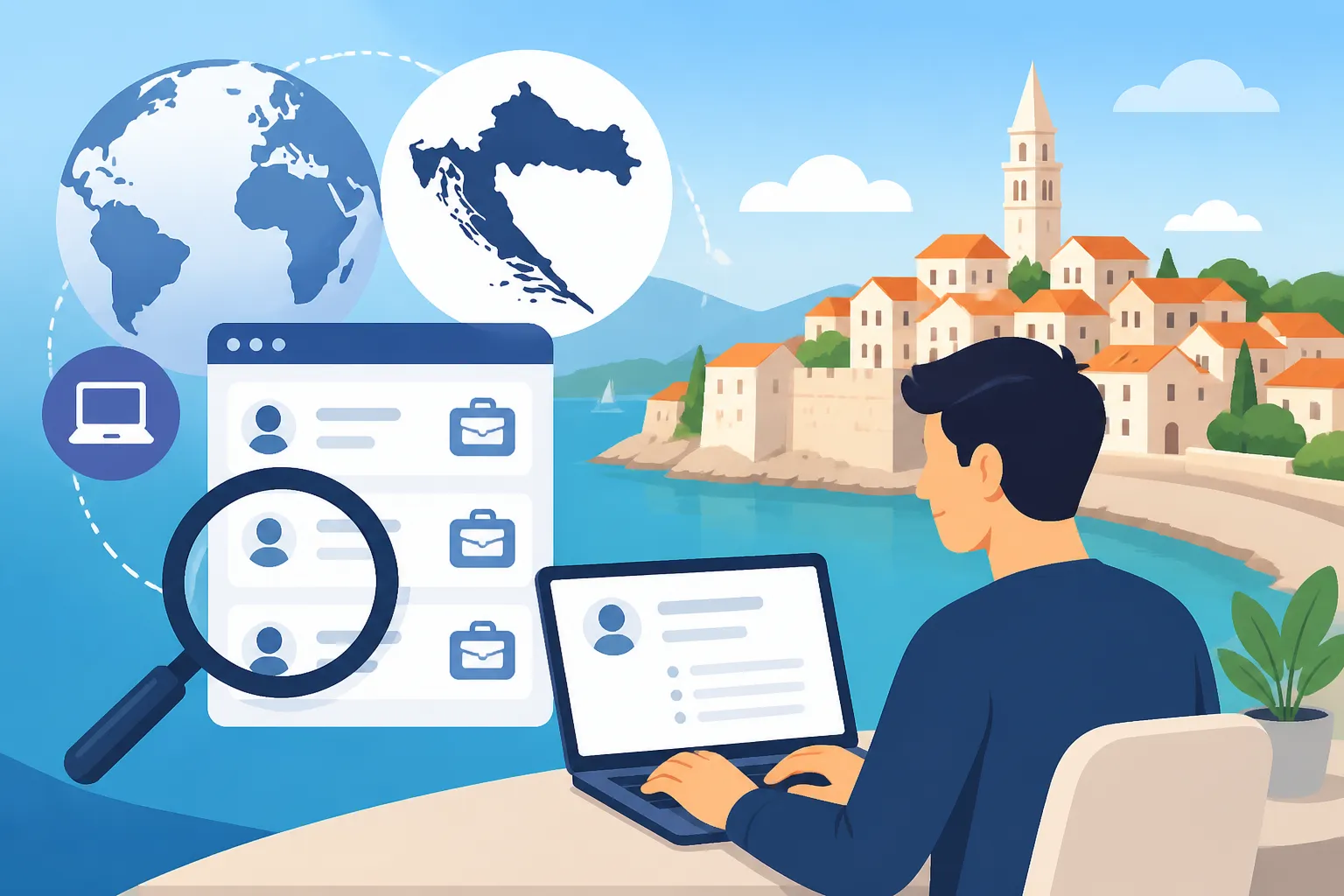
How Do I Find Remote Tech Jobs Based in Croatia?
It's incredibly exciting to dream of combining your tech career with the stunning Croatian lifestyle, isn't it? Many of us expats have been there – poring over job boards, wondering if our skills will translate, and trying to figure out how to make that work-life balance a reality in this beautiful country. The good news is, the remote tech scene here is buzzing, and this guide will walk you through exactly how to find those elusive remote tech jobs while living your best life in Croatia.
Understanding the Croatian Tech Scene and Remote Work Landscape
Croatia might not be the first country that comes to mind when you think of global tech hubs, but believe me, things are changing fast. For expats looking to base themselves here and continue their tech careers, understanding this landscape is crucial.
The Growth of Croatia's Tech Sector
Over the past decade, Croatia's tech sector has quietly but steadily grown into a vibrant ecosystem. You'll find pockets of innovation and dynamic companies popping up all over the country. Zagreb, of course, is the main capital and the largest tech hub, brimming with startups, established IT firms, and co-working spaces. But don't overlook cities like Split, which has become a magnet for digital nomads and boasts a thriving tech community, or Rijeka and Osijek, which are also developing their own impressive tech scenes.
What's driving this growth? A mix of factors. There's a strong pool of talented, often English-speaking, developers and IT professionals. The government has also recognized the potential and has been implementing initiatives to support innovation and attract foreign investment, including the much-lauded digital nomad visa. You'll find a blend of homegrown success stories like Infobip, a global leader in cloud communications, or companies like Bellabeat and Photomath, alongside international firms that are setting up development centers or hiring remote talent directly. This diverse environment means more opportunities for those looking for flexibility.
Why Remote from Croatia, Not Just for Croatia?
This is an important distinction for many expats. When you think "remote tech job based in Croatia," it can mean two main things:
- Working remotely for a Croatian company.
- Living in Croatia and working remotely for a company based anywhere else in the world.
While there are certainly fantastic Croatian companies offering remote positions, many expats find themselves drawn to the second option. Why? Because it often allows for a truly global salary while enjoying Croatia's significantly lower cost of living compared to major Western European or North American cities. Imagine earning a Silicon Valley-level income but paying Croatian rent and grocery prices! It's a game-changer for quality of life.
The appeal here is undeniable: beautiful natural scenery, a relaxed Mediterranean pace, a rich cultural heritage, and a generally high quality of life. However, it's not without its nuances. Salaries at purely Croatian-based companies, while competitive for the local market, might not always match what you'd expect from a company in London or New York. Plus, while many Croatian tech companies operate in English, some roles might still lean on local language skills for internal communication or client interaction. It’s about finding the right fit for your skills, expectations, and desired lifestyle.
Key Platforms and Strategies for Your Remote Tech Job Search
Finding that perfect remote tech role in Croatia often requires a multi-pronged approach, casting a wide net across various platforms and tapping into different networks.
Global Remote Job Boards: Your First Stop
For many, the easiest way to tap into high-paying remote tech jobs that allow you to work from Croatia is through global remote-specific job boards. These platforms specialize in aggregating positions that are location-independent or offer flexibility across different time zones. Sites like Remote.co, We Work Remotely, and FlexJobs are excellent starting points. You'll also find a wealth of opportunities on niche boards like Remote OK, which focuses heavily on tech roles from development and design to product management and DevOps.
When using these platforms, don't just search for "Croatia." Often, companies will list roles as "Europe (Remote)," "EMEA Remote," or simply "Worldwide Remote." Use filters to narrow down by your specific tech stack (e.g., Python, JavaScript, AWS, UI/UX), role (Software Engineer, Data Scientist, Product Manager), and desired time zone overlap. Remember, your resume and cover letter should reflect your remote work readiness – highlight self-discipline, excellent communication skills, and experience with remote collaboration tools. Tailoring these documents for each application, emphasizing how your skills and experience are perfectly suited for a distributed team, will significantly boost your chances.
Local Croatian Job Boards and Professional Networks
If your heart is set on working directly for a Croatian company, even if remotely, then you'll need to dive into local resources. The main Croatian job portals are MojPosao.hr and Posao.hr. While these primarily list traditional in-office roles, you'll increasingly find positions marked with "rad na daljinu" (remote work) or "hibridni model" (hybrid model). You’ll need to put in specific search terms like "remote developer" or "IT remote" in English, or even "udaljeni rad" (remote work) in Croatian, to filter these out.
Beyond generic job boards, LinkedIn is an invaluable tool here. Not only do many Croatian companies post their vacancies directly on LinkedIn, but it's also your gateway to professional networking. Join Croatian tech groups, follow prominent Croatian tech companies and their recruiters, and connect with local professionals in your field. Often, the best opportunities are found through connections, referrals, or by simply being visible within the local professional community. You might also want to explore local tech communities and meetups. Cities like Zagreb have events organized by groups like Zagreb Tech, while Split boasts a vibrant ecosystem through initiatives like Split Tech City. Even if you can't attend in person immediately, many of these groups have online forums or social media presence where opportunities are shared.
Direct Company Websites and Talent Pools
Another powerful strategy is to directly target Croatian tech companies that are known for their innovation, growth, or remote-friendly policies. Research companies like Infobip, which has a global presence and diverse opportunities; Bellabeat, a health tech company; Nanobit, a successful mobile game developer; or Photomath, an educational app developer. Many of these companies have dedicated careers pages on their websites where they list open positions, often before they hit general job boards.
Beyond just applying, consider creating a strong online portfolio that showcases your work. For developers, a well-maintained GitHub profile with interesting projects is a must. Designers should have a portfolio on Behance or a personal website. Even for roles like product management or project management, demonstrating past successes and problem-solving skills through a well-articulated personal website or detailed LinkedIn profile can make a huge difference. Building your personal brand online and having easily accessible examples of your expertise can attract recruiters even when you're not actively applying.
Navigating the Legal and Financial Side of Remote Work in Croatia
So, you've landed that remote tech job – congratulations! Now comes the critical part: making sure you're legally compliant and financially sound while living in Croatia. This isn't just bureaucracy; it's about protecting yourself and ensuring a smooth transition to your new life.
Residence Permits and Legal Status
This is arguably the most crucial step. You can't just move to Croatia and start working remotely without the proper legal basis. For many remote tech workers, especially those working for foreign companies, the How to Get a Croatian Digital Nomad Permit: The Full Guide (2027) is often the golden ticket. This permit allows non-EU/EEA citizens to live in Croatia and work remotely for companies outside of Croatia, with certain tax benefits. It’s specifically designed for people like you! However, it's temporary and typically doesn't lead to permanent residency, nor does it allow you to work for Croatian companies directly.
If the digital nomad permit isn't suitable, perhaps you plan to be self-employed (e.g., as a freelancer or consultant). In that case, you might look into The Expat Guide to Temporary Residence (Privremeni Boravak) in Croatia based on self-employment through opening an obrt (trade business). This pathway has different requirements and tax implications. If you're employed directly by a Croatian company, even if you work remotely, they will typically handle your work and residence permit application, fitting under the standard work permit categories. It’s absolutely essential to consult with the Ministry of Interior (MUP) or a legal expert to ensure you choose the correct path and have all your ducks in a row. Don't underestimate the MUP process – it can be intricate and sometimes test your patience, but it's entirely doable with proper preparation.
Understanding Croatian Taxes and Contributions
Once you have your legal residence sorted, the next big hurdle is understanding how Croatian taxes and social contributions apply to you. This is where things can get a bit complex, depending on your chosen residence status. For digital nomads, the current tax regime is quite favorable, often allowing you to be exempt from Croatian income tax for the duration of your permit. However, this is specific, and rules can change, so always stay updated.
If you're self-employed through an obrt, you'll be subject to Croatian income tax and mandatory social contributions (pension and health insurance). A popular option for many freelancers and small business owners is the paušalni obrt, which offers a simplified, flat-rate taxation system, especially beneficial for those with lower incomes. Understanding How Much Tax Does a Paušalni Obrt Pay in Croatia in 2026? is vital if you go this route. Regardless of your status, it's crucial to determine your tax residency. Even if you're not paying income tax in Croatia under a specific permit, you might still need to report your worldwide income in your home country or navigate double taxation agreements. For a deep dive into the overall tax landscape, you should explore The Complete Guide to Taxes in Croatia for Expats (2027). The service "Taxes for Expats" can be a lifesaver in navigating these intricacies, providing expert advice tailored to your specific situation and ensuring you remain compliant. This is not the place to guess or assume.
Let's look at a simplified overview of some common remote worker statuses and their general tax and contribution considerations:
| Remote Worker Status | Primary Tax Implication | Health Insurance Contribution | Pension Contribution | Notes |
|---|---|---|---|---|
| Digital Nomad | Often exempt from HR tax | Private insurance required | Usually none in HR | Must work for non-HR company. Limited duration. |
| Paušalni Obrt | Flat-rate income tax | Mandatory (via Obrt) | Mandatory (via Obrt) | Simplified system for self-employed. Income limits apply. |
| Standard Obrt | Progressive income tax | Mandatory (via Obrt) | Mandatory (via Obrt) | More complex; allows higher income/deductions. |
| Croatian Employee | Standard HR income tax | Mandatory (employer pays) | Mandatory (employer pays) | Employer handles all contributions. |
It’s also important to understand Understanding Health Coverage for Self-Employed (Obrt) Workers in Croatia and how it ties into your overall social security contributions. Healthcare is a big topic for expats, and your legal status will determine your access to Croatia’s public healthcare system.
Setting Up Your Financial Life in Croatia
Once you've sorted out your residence permit and understand your tax obligations, you'll need to set up your practical finances. This almost always starts with opening a Croatian bank account. While you might continue to receive your income in a foreign account if you're working for an international company, having a local account for daily expenses, rent, and utility payments is essential. Banks like Zagrebačka Banka, PBZ, or Erste Bank are popular choices with branches across the country. Check out The Expat Guide to Opening a Bank Account in Croatia for a detailed walkthrough.
When working for a foreign employer, you’ll also need to consider how to efficiently transfer money internationally without losing a chunk to fees and unfavorable exchange rates. Services like Wise (formerly TransferWise) or Revolut are popular among expats for this very reason, offering competitive rates for currency conversion and international transfers. Getting an OIB (Personal Identification Number) is also a foundational step for almost any administrative task in Croatia, including banking and taxes. You'll likely acquire this as part of your residence permit application, but if not, it’s one of your first priorities.
Essential Skills and Considerations for Remote Tech Success in Croatia
Beyond the technical skills that land you the job, thriving as a remote tech professional in Croatia also requires adaptability, a proactive approach to integration, and a clear understanding of the nuances of distributed work.
Language Skills: More Important Than You Think
While many Croatian tech companies, especially those targeting international markets or with foreign employees, operate primarily in English, learning some Croatian will significantly enhance your experience. For global remote roles, English is usually sufficient for your work tasks. However, daily life in Croatia, whether it's dealing with landlords, shopping at local markets, navigating public transport, or simply engaging with neighbors, becomes infinitely easier and more rewarding when you can communicate in the local tongue. Croatians are generally very appreciative of any effort you make to speak their language.
Even a basic understanding can smooth out bureaucratic processes, help you find local services, and deepen your connection to your new home. There are numerous resources available for learning Croatian, from online courses to in-person classes in larger cities. If you're looking for flexible, online options, platforms like iTalki connect you with native Croatian tutors for one-on-one lessons, making it easy to fit language learning into your schedule. For a more comprehensive overview of learning Croatian, refer to Learning Croatian: A Complete Guide to Language Courses and Levels. It's an investment that pays dividends in comfort and connection.
Building a Strong Remote Presence and Network
Being a successful remote worker is about more than just your technical abilities; it's about how effectively you manage your time, communicate, and stay connected with your team and the wider professional community. Self-discipline is paramount when your office is your home or a local café. Establish a routine, create a dedicated workspace, and set clear boundaries between work and personal life. Tools like Slack, Zoom, and project management software become your lifelines, so mastering them is key.
Networking, even in a remote setting, is still vital. Continue to optimize your LinkedIn profile, showcasing your remote-friendly skills and experience. Participate in online tech forums, webinars, and virtual conferences relevant to your field. If you're based in a city with an active tech scene, consider attending local meetups or co-working spaces. These can provide a sense of community, opportunities for collaboration, and even lead to new job prospects. While Croatian workplaces are generally quite welcoming, understanding some basic cultural nuances – for instance, valuing direct communication combined with personal respect – can further enhance your professional relationships, even in a remote context.
The Lifestyle Factor: Why Croatia is Perfect for Remote Tech
Ultimately, the decision to seek a remote tech job in Croatia is often driven by the desire for a better quality of life. And Croatia truly delivers. Imagine finishing your workday and being just minutes away from crystal-clear Adriatic waters, stunning national parks, or vibrant city centers with excellent food and coffee culture. The work-life balance here is generally highly valued, and the pace of life, particularly outside of Zagreb, tends to be more relaxed.
For many, the lower cost of living compared to traditional tech hubs means your salary stretches further, allowing for more experiences, travel, or simply more financial freedom. The country offers a blend of bustling urban life and serene natural beauty, catering to all preferences. Whether you prefer the historic charm of Split, the cultural richness of Zagreb, or the coastal tranquility of places like Zadar or Rijeka, you'll find a community and an environment that supports a high-quality remote work lifestyle. It's a place where you can advance your tech career without sacrificing your well-being or your passion for exploration.
Disclaimer
Please note that while we strive to provide accurate and up-to-date information for expats in Croatia, immigration laws, tax regulations, and administrative procedures are subject to change. This guide is intended for informational purposes only and does not constitute legal, financial, or professional advice. We strongly recommend consulting with relevant Croatian authorities, legal professionals, or tax advisors for personalized guidance regarding your specific situation.