What Is the Phone Number for Emergency Services in Croatia?
Feeling a sudden pang of panic when a medical emergency strikes or you witness an accident is already stressful enough, but when you're in a foreign country like Croatia, that stress can amplify tenfold, especially when you're not sure which number to even dial for help. I've been there, fumbling with my phone, trying to recall snippets of information, and trust me, it's not a fun experience. This guide is designed to cut through that confusion, providing you with the essential emergency numbers and practical advice to navigate urgent situations in Croatia with as much calm and clarity as possible.
The Universal Emergency Number: 112
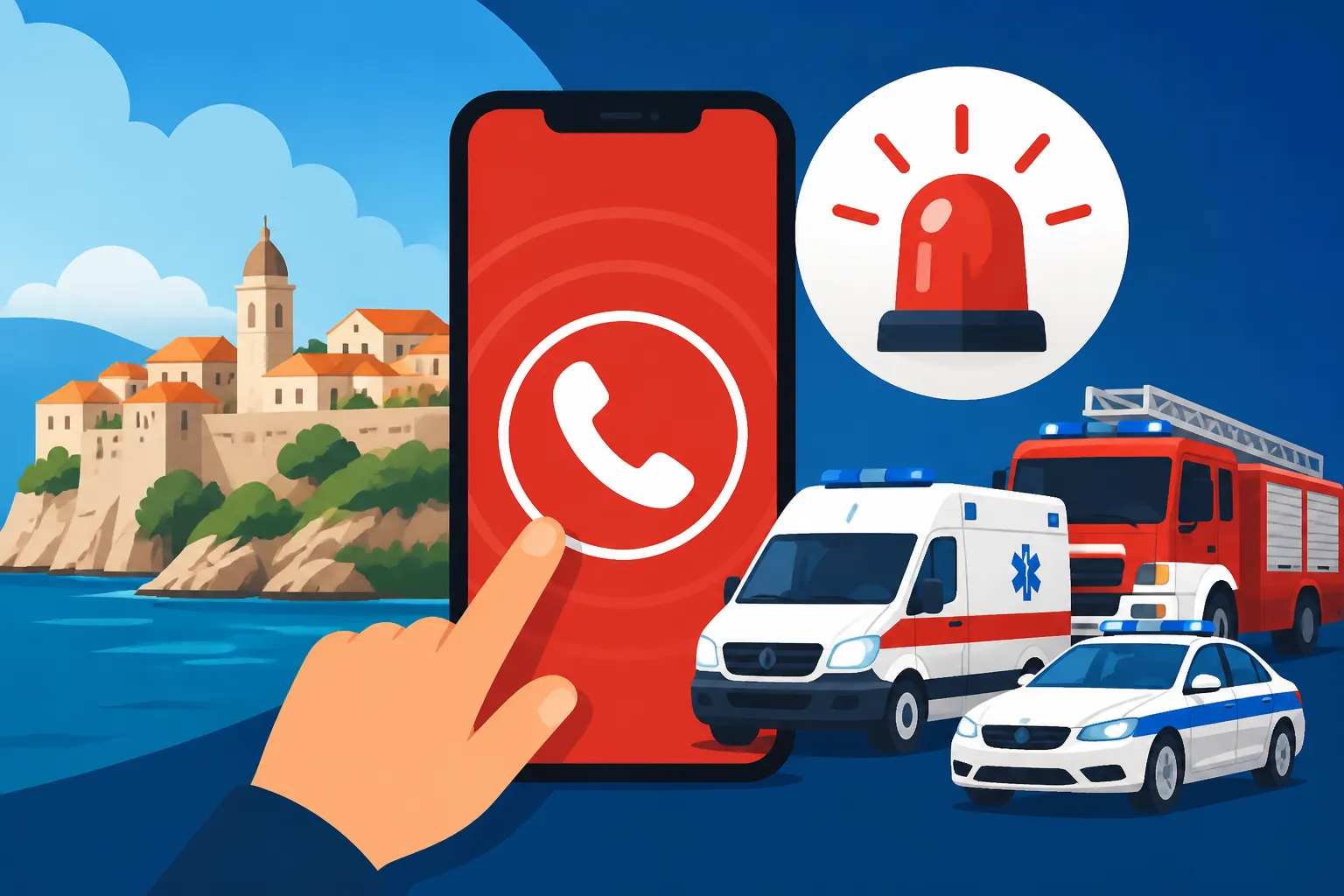
Let's get straight to the most crucial piece of information you need: Croatia, like many EU countries, uses 112 as its universal emergency number. This single number connects you to all emergency services – police, fire department, and emergency medical assistance. It's truly a lifesaver, designed to simplify things when every second counts, and it works from any phone, mobile or landline, free of charge. You don't need to add any country codes or special prefixes; just dial 1-1-2. When you call 112, you'll reach a central dispatch center where operators are trained to assess your situation and connect you to the appropriate service or dispatch multiple services simultaneously if needed. This integrated approach is incredibly efficient and cuts down on the time you'd otherwise spend trying to figure out if you need an ambulance or the police first. It's a huge relief not to have to memorize separate numbers, especially if you're feeling flustered or disoriented.
Why 112 is Your Go-To
The beauty of 112 is its comprehensive nature. Imagine you're driving along the beautiful coastal roads near Split and witness a car accident where there's a fire and injured people. Instead of trying to decide whether to call the fire department or an ambulance first, you simply dial 112. The operator will gather the necessary information and coordinate the response, ensuring that paramedics, firefighters, and police are all on their way. This multi-agency dispatch saves critical time and ensures a coordinated effort. Many expats, myself included, have found this system far more straightforward than juggling different numbers for different emergencies, which is common in some other countries. It really streamlines the process, taking some of the burden off your shoulders when you're already dealing with a difficult situation.
What to Expect When Calling 112
When you dial 112, an operator will answer, usually in Croatian, but often with English-speaking capabilities. Don't panic if they start in Croatian; simply state "English, please" or "Govorite li engleski?" (Do you speak English?) if you remember it. They are accustomed to dealing with foreigners and tourists. The most important thing is to clearly and calmly convey the following information:
- What happened? Briefly describe the nature of the emergency (e.g., "car accident," "person collapsed," "fire").
- Where are you? Provide the exact location. This is absolutely critical. Use street names, house numbers, prominent landmarks, or even GPS coordinates if you have them. If you're on a highway, look for kilometer markers. Near Dubrovnik, for instance, you might mention a specific hotel or a well-known historical site.
- Who is involved? How many people are injured? Are they conscious? What are their apparent injuries?
- Are there any immediate dangers? (e.g., "smoke," "spilled fuel," "aggressive person").
- Your contact number. They may need to call you back for more information.
Remember to stay on the line until the operator tells you it’s okay to hang up. They might need additional details or instructions. It's a natural human reaction to want to get off the phone quickly, but staying connected can literally be the difference between life and death for someone in need. It's crucial not to guess information if you're unsure; it's better to say "I don't know" than provide incorrect details that could mislead emergency responders.
Specific Emergency Service Numbers (Beyond 112)
While 112 is your primary contact for all emergencies, Croatia does have specific direct lines for individual services. These are generally used for non-critical situations or if you specifically need only one service and know exactly which one you require without the need for multi-agency coordination. However, for most foreigners, especially in a true emergency, sticking with 112 is still the safest and most recommended approach. It avoids any potential confusion or delays.
Here’s a quick rundown of the main direct numbers, though again, for emergencies, stick to 112:
| Service | Direct Number (Non-Emergency/Specific Use) | Notes |
|---|---|---|
| General Emergency | 112 | Always your first call for any immediate, life-threatening situation. Free and accessible everywhere. |
| Police (Policija) | 192 | For reporting non-urgent crimes, thefts, or general police inquiries. |
| Fire Department (Vatrogasci) | 193 | For direct fire brigade contact, typically for large, known fires where 112 might also be busy. |
| Ambulance (Hitna Medicinska Pomoć) | 194 | For direct medical emergencies if you are certain only medical help is needed. |
| Roadside Assistance (HAK) | 1987 | For vehicle breakdowns, towing, and road information. Membership often required for full services. |
You might wonder why these direct numbers even exist if 112 is so universal. Well, sometimes you might need police for a non-urgent matter, like a stolen wallet that's already been reported, or you just have a general question. For tourists, it's particularly important to remember that for situations like a lost passport or reporting a minor incident that's not life-threatening, 192 might be the more appropriate number to avoid overwhelming the 112 system with less critical calls. However, when in doubt, default to 112. There's no harm in using the universal number; the operators are trained to redirect calls appropriately.
Roadside Assistance: HAK 1987
A quick note on roadside assistance. If you're touring Croatia by car, especially along the beautiful coastal roads or through national parks, having car trouble can be a real headache. The Croatian Auto Club (Hrvatski Autoklub, or HAK) provides excellent roadside assistance. Their number, 1987, is specifically for vehicle breakdowns, towing, and general road information. While not a "life-or-death" emergency, a breakdown on a deserted road, especially with kids in tow, can feel pretty urgent. HAK offers services whether you're a member or not, though members get priority and free services. If you have international travel insurance like SafetyWing, make sure to check if they offer any roadside assistance benefits or if they cover the costs of HAK services, which could be a huge relief if you're stuck somewhere remote. It's always a good idea to have local roadside assistance information handy, even if your travel insurance covers some of these eventualities.
Preparing for an Emergency as an Expat or Tourist
Being prepared is half the battle when it comes to emergencies. Living in or visiting Croatia means understanding a few local nuances that can make a big difference when urgent situations arise. Don't assume everything works exactly like it does back home; a little preparation can save you a lot of grief. For example, knowing the exact address of your accommodation is paramount, and having it written down or saved on your phone can prevent fumbling in a crisis.
Keeping Your Information Handy
Beyond just knowing the number 112, here are some practical tips that I've found incredibly useful during my time here:
- Emergency Contact List: Keep a physical and digital list of emergency contacts, including your embassy or consulate, family members, and your travel insurance provider (like SafetyWing) with policy numbers. This ensures that even if your phone dies or you lose it, you have a backup.
- Medical Information: If you have any serious medical conditions, allergies, or are on specific medications, carry this information with you in both English and Croatian. A simple "Medical Information Card" in your wallet can be invaluable for paramedics. You could also carry a translated list of your prescription medications and pharmacies in Croatia might even have them available.
- Exact Address: Always know your current exact address. If you're renting an apartment, ask your landlord for the full, precise address, including street name, number, city, and even the closest major intersection or landmark. This is especially true if you are staying in a smaller, less-known town or a remote villa.
- Local Language Phrases: Learning a few basic phrases can be incredibly helpful. "Hitna pomoć" (emergency medical help), "Policija" (police), "Vatra" (fire), "Nesreća" (accident), and "Pomozite!" (Help!) can go a long way. Even if the operator speaks English, having these words can speed up communication.
- Offline Maps: Download offline maps of the areas you'll be in. If you lose signal or data, you'll still be able to pinpoint your location for emergency services. Google Maps allows you to download regions for offline use, which is a fantastic feature for travelers.
Having a robust travel insurance plan is another layer of crucial preparation. Many comprehensive travel insurance policies, such as those offered by SafetyWing, cover emergency medical expenses, emergency dental treatment, and even emergency medical evacuation. While HZZO, Croatia's public health insurance fund, covers many things for residents, tourists and even some temporary residents will need private insurance for full peace of mind. Check the specifics of your plan to know exactly what's covered for "Emergency Medical Care in Croatia: What Every Expat Needs to Know."
Understanding Basic Healthcare Access
While this guide focuses on immediate emergencies, it's worth noting that for non-life-threatening health issues, you'd typically seek care at a local Dom Zdravlja (health center) or a private polyclinic. Knowing how to access these services is part of being prepared. For instance, if you need to How to Find an English-Speaking Doctor in Croatia, you might start by asking your accommodation provider or checking expat forums for recommendations. Understanding where the nearest 24-hour pharmacies are can also be incredibly useful for unexpected minor ailments, as they can sometimes provide basic advice or over-the-counter solutions.
Scenarios and Actionable Advice
Let's walk through a few common scenarios that could arise and how you would apply the knowledge of Croatia's emergency services. These are the moments where all this information really clicks into place. From a simple sprained ankle to something far more serious, knowing what to do and what to expect is paramount.
Scenario 1: Medical Emergency (Person Collapsed)
You're enjoying a coffee in a café in Zagreb and someone at a nearby table suddenly collapses, unconscious.
Action:
- Assess the situation: Is the person breathing? Are they responsive? Is there any immediate danger to you or them?
- Dial 112 immediately.
- Clearly state: "Medical emergency, person unconscious."
- Give your exact location: "We are at [Street Name, Number], near [Prominent Landmark, e.g., Ban Jelačić Square]."
- Describe the person's condition: "Adult male/female, unconscious, not responsive, breathing/not breathing."
- Stay on the line. The operator will guide you through what to do, which might include performing CPR if you are trained and the situation calls for it.
Scenario 2: Car Accident
You're driving on the highway near Zadar, and you're involved in a fender bender, or you witness another accident.
Action:
- Ensure safety: If it's a minor incident and you can, move your vehicle to the side of the road to avoid further collisions. Turn on your hazard lights. If it's a serious accident, do not move the vehicles unless absolutely necessary for safety.
- Check for injuries: Assess yourself and others involved for any injuries.
- Dial 112.
- Clearly state: "Car accident on the highway, near kilometer marker [number] heading towards [city]."
- Describe the situation: "Two vehicles involved, [number] injured, one person complaining of neck pain, no visible fire."
- Provide your contact number.
- Take photos: If it's safe to do so, document the scene with photos for insurance purposes. This is especially important for Understanding Private Health Insurance Plans in Croatia and making claims later.
Scenario 3: Lost Child or Theft
You're at a crowded market in Rijeka, and your child wanders off, or your wallet is stolen.
Action:
- For a lost child: Immediately search the immediate vicinity. If after a few minutes you can't find them, dial 112 or 192 (Police). This is borderline, as a lost child can quickly become a serious matter.
- For theft: If you're not in immediate danger, you can call 192 (Police). If you feel threatened or the situation is escalating, dial 112.
- Clearly state: "Lost child" or "My wallet has been stolen."
- Provide your location: "I am at [Market Name], near [Specific Stall/Landmark]."
- Describe the child: Their appearance, what they are wearing, last seen direction.
- Describe the stolen item/incident: What was taken, when, any description of suspects.
- Head to the nearest police station (Policijska Postaja) to file an official report. You'll need this for any insurance claims, including those with providers like SafetyWing, or for replacing documents.
Remember, the Croatian emergency services are there to help you, and they are generally very professional and efficient. While language can be a barrier, the 112 operators are trained to handle calls in multiple languages, making it easier for expats and tourists to get the help they need. Don't hesitate to call if you think it's an emergency. It's always better to be safe than sorry, and waiting can sometimes make a bad situation much worse. This guide should hopefully empower you to act quickly and confidently, even when faced with the unexpected. If you need to delve deeper into the healthcare system, you might find guides like Navigating the Croatian Healthcare System: An Expat's Roadmap (2027) extremely useful for understanding how things work beyond immediate emergencies.
Disclaimer
Please note that while this guide provides comprehensive information, emergency procedures and contact details can change. Always verify critical information. This content is for informational purposes only and does not constitute professional medical, legal, or emergency advice. In an actual emergency, dial 112 immediately.