Navigating the Croatian Healthcare System: An Expat’s Roadmap (2027)
Moving to a new country like Croatia is an adventure, but let's be honest, figuring out the healthcare system can feel like trying to decipher an ancient map written in a language you barely understand. Many expats arrive feeling overwhelmed by the bureaucratic maze, uncertain where to even begin with health insurance or finding a doctor. This comprehensive guide is designed to cut through that confusion, providing you with a clear roadmap to successfully navigate Croatian healthcare, from registration to emergency care.
Understanding the Foundation: Public, Private, and Mandatory Insurance
Alright, let's start with the absolute basics, because understanding the core structure of healthcare in Croatia is like understanding the rules of a game before you even pick up the ball. It's not always straightforward, and what might seem logical from your home country's perspective can be completely different here.
The Croatian Health Insurance Fund (HZZO)
At the heart of Croatia's public healthcare system is the Croatian Health Insurance Fund, or HZZO (Hrvatski zavod za zdravstveno osiguranje). Think of HZZO as the central hub that manages public health insurance for almost everyone legally residing and working in Croatia. It’s a mandatory system for most residents, funded through contributions from salaries, pensions, and other income sources. Once you're properly registered with HZZO, you become eligible for a wide range of medical services, including visits to your general practitioner, specialist consultations (with a referral), hospital stays, and a portion of medication costs.
The journey to getting your HZZO card can be a bit of a marathon, not a sprint. You'll likely spend some time gathering documents, waiting in queues, and wondering if you've missed a crucial step. It's a common expat rite of passage, so know that you're not alone in that frustration. The system, while comprehensive, requires a certain level of patience and persistence to navigate effectively. It’s designed to provide universal coverage, but that often comes with its own set of administrative hoops. Many people assume they can just walk in and sign up, but there's a specific process, often starting with obtaining a residence permit and an OIB, which we'll get into shortly.
Public vs. Private Healthcare Systems
This is a crucial distinction for expats, and it’s where many misunderstandings arise. Croatia has a dual system: a public healthcare system run by HZZO, and a growing private sector.
The public system is your primary point of contact once you're registered with HZZO. It includes public hospitals (like the large KBC – Klinički bolnički centar facilities in major cities), Domovi zdravlja (health centers with GPs, pediatricians, and sometimes other specialists), and public pharmacies. The biggest advantages are comprehensive coverage and lower out-of-pocket costs, especially if you also have supplementary insurance. However, the public system is often characterized by longer waiting lists for specialist appointments and non-emergency procedures, and sometimes, older facilities or equipment. Communication can also be a challenge, as not all staff will speak English, particularly outside of major tourist areas.
The private sector, on the other hand, offers an alternative. Private clinics and polyclinics (poliklinike) operate independently of HZZO. Here, you pay for services directly out of pocket or through private health insurance. The benefits are clear: significantly shorter waiting times, the ability to choose your doctor without a referral, access to modern facilities and equipment, and a much higher likelihood of finding English-speaking medical professionals. The downside, of course, is the cost. A single specialist consultation can range from €50 to €150, and procedures can quickly add up. Many expats use the private system for routine check-ups or when they need quick access to a specialist without the wait, even if they are covered by HZZO. This allows them to bypass some of the bureaucracy inherent in the public system.
Mandatory vs. Supplementary Insurance
When you're dealing with HZZO, you'll encounter two main types of insurance: mandatory (obvezno) and supplementary (dopunsko).
Mandatory health insurance is what you get through HZZO once you’ve met the eligibility requirements, typically through employment, self-employment, or as a registered resident. This covers a significant portion of your healthcare costs, but crucially, it doesn't cover everything. There are participacija (co-payments) for doctor visits, specialist appointments, hospital stays, and prescription medications. These co-payments can range from a small fee for a GP visit to a percentage of the cost for more expensive procedures or hospital care, up to a maximum annual limit. The specific percentage and maximums can change, so it's always good to check the latest HZZO information.
This is where supplementary health insurance (dopunsko zdravstveno osiguranje) comes into play. Dopunsko is a voluntary type of insurance that covers the participacija fees left over by your mandatory HZZO insurance. For a relatively small monthly premium (usually around €10-20), it essentially makes most HZZO-covered services free at the point of use, eliminating those irritating co-payments. This can save you a significant amount of money over the year, especially if you have chronic conditions or visit the doctor frequently. Several insurance companies offer dopunsko, including Croatia Osiguranje, Uniqa, and HZZO itself. Many expats find that getting dopunsko is a no-brainer once they are settled into the HZZO system, as it provides a much smoother experience. Understanding Dopunsko Zdravstveno Osiguranje (Supplementary Insurance) in Croatia is key to truly maximizing your public healthcare benefits.
Getting Your Foot in the Door: OIB and Initial Registration
Before you can even dream of seeing a doctor or getting your HZZO card, there are a couple of fundamental administrative hurdles you need to clear. These are your foundational steps, and without them, the rest of the healthcare system remains a locked door.
Obtaining Your OIB
The OIB (Osobni identifikacijski broj), or personal identification number, is absolutely non-negotiable for almost any administrative task in Croatia, and healthcare is no exception. Think of it as your unique ID number, similar to a social security number or tax ID in other countries. You'll need it for everything from opening a bank account to registering your residence, and, yes, for getting health insurance. You can't get far without it.
You typically obtain your OIB through the local tax administration office (Porezna Uprava). The process is usually quite straightforward: you'll need your passport (and sometimes a copy), a completed application form, and proof of your address. While it's generally one of the quicker administrative tasks, ensuring all your documents are in order beforehand will save you a lot of grief. Some expats have reported getting it on the spot, while others had to wait a few days. The good news is, once you have it, you have it for life, and it simplifies many future interactions. Knowing What Documents Do I Need to Get an OIB in Croatia? can really streamline this initial step.
Initial HZZO Registration Steps
Once you have your OIB and your residence permit (Privremeni Boravak or Stalni Boravak), you can finally tackle HZZO registration. This is often where the real fun begins, complete with potential paperwork puzzles and multiple office visits.
The first step is typically to visit your local HZZO office. If you're in Zagreb, there are several, but the main one often sees long queues. You'll need to bring a substantial pile of documents. While the exact list can vary slightly depending on your situation (e.g., employed, self-employed, family member), generally you'll need:
- Your passport
- Your residence permit (or proof of application)
- Your OIB
- Proof of your current address in Croatia (e.g., a rental agreement, vlasnički list)
- Proof of the legal basis for your residence (e.g., work contract, proof of self-employment, digital nomad permit decision)
- Any previous health insurance documents from your home country (especially if you're coming from the EU/EEA and wish to transfer rights).
- A completed application form (often available at the HZZO office or online, though filling it out in Croatian can be a challenge).
It's always a good idea to bring originals and copies of everything. The HZZO staff will review your documents. Be prepared for potential questions or requests for additional paperwork. Don't be surprised if you're told to come back with something else; it's a common part of the process. How to Register for HZZO Health Insurance as a Foreigner in Croatia provides a detailed walkthrough.
Waiting Periods and Provisional Coverage
A common misconception among new arrivals is that once they apply for HZZO, they're immediately covered. This isn't always the case, and it's a critical point to understand, especially if you're coming from a non-EU/EEA country.
For some categories of expats, particularly those from non-EU countries establishing their first residence, there might be a waiting period before full HZZO coverage kicks in. This waiting period is typically a few weeks or even months, depending on the specifics of your residence permit and how quickly your application is processed. During this time, you are often required to have private health insurance to cover any medical needs. This is where international travel and health insurance providers like SafetyWing can be incredibly useful, providing a safety net for those initial weeks or months until your HZZO registration is finalized. You absolutely don't want to be caught without coverage during this transitional period.
Even after you submit all your documents to HZZO, it can take some time for your official health insurance card (your zdravstvena iskaznica) to be issued and delivered. In the interim, HZZO often provides you with a provisional certificate (potvrda) that proves you are in the process of registration and are covered. This certificate is crucial and should be carried with you, as it allows you to access services before your physical card arrives. Don't leave the HZZO office without asking for it if they don't offer it. What Happens If I Get Sick Before My HZZO Registration Is Complete? highlights the importance of understanding this period.
The Public System: HZZO Coverage, Doctors, Specialists
Once you're finally in the HZZO system, the next step is learning how to actually use it. This means understanding who your primary contact is, how to see specialists, and what those pesky co-payments are all about. It’s a bit like learning the local language; it takes practice, but it becomes second nature over time.
Finding Your Family Doctor (Obiteljski Liječnik)
Your obiteljski liječnik, or family doctor (also known as a general practitioner or GP), is the cornerstone of the Croatian public healthcare system. This will be your first point of contact for almost all non-emergency medical issues. You cannot simply walk into any clinic; you must register with a specific GP. Your chosen GP will manage your primary care, issue prescriptions, provide referrals to specialists, and grant sick leave.
The process of choosing and registering with a GP can feel a bit daunting. Ideally, you want to find a doctor who is accepting new patients and, if possible, speaks English. Word-of-mouth from other expats is often the best way to find a good GP. You might also ask friends, colleagues, or expat groups for recommendations. Once you've identified a potential GP, you'll need to visit their practice, often located within a Dom Zdravlja (health centre) or a private practice contracted with HZZO. You'll present your HZZO card (or provisional certificate) and fill out a form to formally register. They usually have set hours for patient registration. It's wise to call ahead to confirm their current availability and required documents. How to Choose and Register with a GP (Liječnik Opće Prakse) in Croatia will give you more specific steps.
Finding a GP who genuinely understands the expat experience and can communicate clearly in English is invaluable. Don't hesitate to "interview" a few if you have the option. A good GP will not only handle your medical needs but also help you navigate the system, explaining referrals and medication protocols.
Accessing Specialist Care and Referrals
This is often where expats encounter the most frustration with the public system: accessing specialist care. Unlike some countries where you can self-refer or directly book with a specialist, in Croatia's public system, a referral (uputnica) from your obiteljski liječnik is almost always required.
Once your GP determines you need to see a specialist (e.g., a dermatologist, cardiologist, or orthopedist), they will issue an e-uputnica (electronic referral). This digital referral is then sent to the HZZO system. You then, either personally or through your GP's office, need to book an appointment with a specialist in a public hospital or polyclinic. This booking can often involve significant waiting times, especially for non-urgent conditions. For highly sought-after specialists or common procedures, waits can stretch from several weeks to many months. This is a common point of frustration for expats accustomed to faster access. Understanding e-Uputnica (E-Referrals) Work for Specialist Appointments in Croatia can help demystify this process.
If you're facing an unacceptably long wait time in the public system, you have a few options. Firstly, you can ask your GP if they know of any public facilities with shorter wait times (sometimes smaller towns have better availability). Secondly, you can consider using the private healthcare system, where you can book an appointment directly with a specialist without a referral or significant wait, provided you pay out of pocket or use private health insurance. Many expats combine both systems: using their GP and HZZO for routine matters, but going private for urgent specialist consultations to avoid long queues.
Understanding Co-Payments (Participacija)
We briefly touched on participacija, but let's delve a bit deeper, as it's a concept that often catches new expats off guard. Participacija refers to the co-payments or deductibles that you are required to pay for certain services even if you have mandatory HZZO insurance. These fees are your contribution to the cost of your treatment.
The amount of participacija varies depending on the type of service. For example, a visit to your GP might have a small fixed co-payment, while a specialist consultation or diagnostic procedure could have a higher fixed amount or a percentage of the service cost, usually capped at a certain maximum per service and an overall annual maximum. Hospital stays also incur a daily co-payment, again up to a maximum. These caps are in place to prevent individuals from facing exorbitant costs in the event of serious illness or long-term care.
Here’s a simplified breakdown of typical participacija charges (these are indicative and subject to change by HZZO, so always verify current rates):
| Service Type | Typical HZZO Co-payment (without Dopunsko) |
|---|---|
| Visit to GP / Dentist / Pediatrician | €1.33 |
| Specialist Consultation | €3.31 |
| Diagnostic Procedure | €3.31 – €33.18 (depending on complexity) |
| Prescription Medication | Variable (percentage of cost, or fixed fee) |
| Hospital Stay (per day) | €13.27 |
| Maximum per single bill | €663.61 |
| Annual Maximum | €5,308.91 (for all participacija charges) |
As you can see, these charges can add up, especially if you have multiple appointments or need a hospital stay. This is precisely why supplementary health insurance (dopunsko) is so popular. By paying a monthly premium for dopunsko, you effectively cover all these participacija fees, making most HZZO services free at the point of care. It provides peace of mind and simplifies the payment process. Understanding Participacija (Co-Payments) in the Croatian Health System is essential for managing your healthcare costs effectively.
Private Healthcare Options: When and Why Expats Choose It
Even with HZZO coverage, many expats find themselves turning to the private healthcare sector in Croatia. It’s not about rejecting the public system, but rather about supplementing it, seeking out options that align more with their expectations or immediate needs.
Private Clinics and Polyclinics
Croatia has a robust and growing private healthcare sector, particularly in major cities like Zagreb, Split, Rijeka, and Dubrovnik. Private clinics and polyclinics (poliklinike) offer a wide array of services, often boasting modern equipment, comfortable facilities, and a strong emphasis on patient comfort and efficiency. These institutions are entirely separate from HZZO, meaning you pay directly for all services.
The main draw of private clinics is speed and convenience. You can typically get an appointment with a specialist within days, sometimes even on the same day, without needing a referral from a GP. This is a huge advantage if you're worried about a specific symptom and don't want to endure the public system's waiting lists. Furthermore, many private clinics employ English-speaking staff and doctors, making communication much easier for expats who are still learning Croatian. This reduces stress and helps ensure you fully understand your diagnosis and treatment plan.
Popular services sought out in the private sector include specialist consultations (dermatology, cardiology, gynaecology, orthopaedics), advanced diagnostics (MRI, CT scans, ultrasounds), and certain surgical procedures. The costs, as mentioned, are higher. A basic specialist consultation might run you €50-150, while an MRI could be €150-300 or more. While this might seem steep, for many, the trade-off in terms of time saved, ease of communication, and peace of mind is well worth it. Understanding Private Polyclinics (Poliklinike) in Croatia can help you evaluate if this is the right choice for you.
Private Health Insurance Benefits
For many expats, especially those not covered by HZZO (like some digital nomads in their first year) or those who simply want faster, more convenient access to care, private health insurance becomes a necessity or a highly desirable option. Private health insurance in Croatia can be broadly categorized into two types: local Croatian private insurance and international private health insurance.
Local Croatian private insurance is offered by companies like Croatia Osiguranje, Uniqa, or Triglav. These plans often act as an upgrade to HZZO, covering services not fully reimbursed by the public system, or providing faster access to specialists within their network of private clinics. They can also cover dental or optical care more comprehensively than HZZO. The plans vary widely in what they cover and their price points, so it's essential to read the fine print.
International private health insurance is typically offered by global providers and is designed for individuals living abroad. These plans are often more comprehensive and flexible, providing coverage not just in Croatia but potentially globally, which is a huge benefit for frequent travelers or those who might move to another country later. They are particularly appealing to digital nomads or those on residence permits that initially require private health insurance. Companies like SafetyWing offer plans specifically tailored for digital nomads and remote workers, which can bridge gaps in coverage or serve as primary insurance. These plans are designed with flexibility in mind, often allowing you to purchase and manage coverage easily online, which is a significant plus when dealing with the complexities of international living. Understanding Private Health Insurance Plans in Croatia can help you weigh your options.
The Role of International Insurers
For many expats, particularly those coming from outside the EU/EEA, international insurers play a critical role, especially during the initial stages of their move to Croatia. As previously noted, when you first apply for a Croatian residence permit, you are almost always required to demonstrate proof of adequate health insurance. For non-EU citizens, this often means showing a private travel or health insurance policy that covers medical emergencies, repatriation, and other health-related risks for the duration of your permit's validity or until your HZZO coverage begins.
This is precisely where providers like SafetyWing come into their own. They offer plans that meet the visa and residence permit requirements for many countries, including Croatia. Their Nomad Insurance, for instance, is built for people living and working remotely, offering coverage that starts when you need it and can be extended easily. This kind of flexibility is a lifesaver when dealing with the often-unpredictable timelines of immigration processes. Rather than relying on a traditional, long-term policy that might be overkill for initial coverage, international insurers provide targeted solutions.
Even after you're integrated into the HZZO system, some expats choose to maintain an international private policy. This could be for continued global coverage, access to a wider network of private English-speaking doctors, or simply for peace of mind, knowing they have an additional layer of protection. For instance, if you're a digital nomad, having an international plan from SafetyWing allows you to travel freely across Europe or even globally, knowing your health insurance moves with you, a flexibility that HZZO, by its nature, cannot provide outside of certain EU arrangements.
Emergency and Urgent Care: What to Do in a Crisis
No one wants to think about a medical emergency, but knowing what to do and who to call can make all the difference when seconds count. Croatia has a well-structured emergency system, but knowing the specific numbers and protocols is vital.
When to Call 112/Emergency Room
In Croatia, the unified emergency number for all emergencies – medical, fire, police, mountain rescue – is 112. This number is free to call from any phone, mobile or landline, and is the one you should dial for life-threatening situations, severe accidents, or any medical crisis where immediate professional medical intervention is required. When you call 112, you will be connected to an operator who will dispatch the appropriate emergency services, including an ambulance (hitna pomoć).
For direct medical emergencies where an ambulance is specifically needed, you can also dial 194. This connects you directly to the emergency medical service. However, 112 is the universal number if you're unsure which service you need.
If you suspect you or someone else is having a heart attack, stroke, severe bleeding, difficulty breathing, major injury, or any condition that could be life-threatening, do not hesitate to call these numbers. Be prepared to clearly state your location (street address, city, any landmarks), the nature of the emergency, and the condition of the patient. If you don't speak Croatian, try to explain your situation in English; many emergency operators will have some English speakers available or access to translation services. Emergency Medical Care in Croatia: What Every Expat Needs to Know is a crucial resource to review.
For less severe but still urgent situations that are clearly not life-threatening but require prompt medical attention, you should head to the emergency room (hitna služba) of the nearest major hospital or a dedicated urgent care clinic.
Urgent Care Centers (Hitna Pomoć)
Beyond calling for an ambulance for critical emergencies, Croatia also has a network of urgent care centers, often referred to as Hitna Pomoć or emergency departments, located at major hospitals (especially the larger KBCs). These centers are equipped to handle urgent but not life-threatening conditions that cannot wait for a regular GP appointment.
Examples of situations that warrant a visit to an urgent care center include:
- Sudden severe pain (e.g., abdominal pain, severe headache)
- High fever that doesn't respond to home remedies
- Minor injuries like cuts that might need stitches, sprains, or suspected fractures (but not open, severe fractures)
- Sudden allergic reactions (unless severe and causing breathing difficulties, then call 112)
- Acute infections or illnesses that have worsened rapidly
When you arrive at an urgent care center, you will be triaged, meaning medical staff will assess your condition to determine the severity and prioritize treatment. Patients with more critical conditions will always be seen first, regardless of arrival order. This means you might face a significant wait if your condition is deemed less urgent, even if you feel quite unwell. Be prepared to show your HZZO card or provisional certificate. If you don't have HZZO coverage, you will be charged for the services rendered.
Navigating the Emergency Process
Navigating an emergency, especially in a foreign country, can be incredibly stressful. Here are some tips for expats:
- Stay Calm: Easier said than done, but remaining as calm as possible will help you communicate more effectively.
- Language: If you don't speak Croatian, start with "Govorite li engleski?" (Do you speak English?). Many healthcare professionals, especially in larger cities and younger generations, will have some English proficiency. If not, try to use simple words, gestures, or even a translation app. Having a Croatian-speaking friend or neighbor's number on speed dial for emergencies is highly recommended.
- Documents: Always carry your HZZO card (or provisional certificate), your OIB, your ID (passport/residence permit), and any supplementary or private insurance details. If you have a list of current medications or known allergies, have that ready too.
- Know Your Location: Be aware of the nearest major hospital or Dom Zdravlja with urgent care facilities in your area. If you live in Zagreb, you might go to KBC Rebro, KBC Sestre Milosrdnice, or KB Dubrava. In Split, it's KBC Split.
- Follow Instructions: Once medical personnel take over, follow their instructions carefully. Don't be afraid to ask for clarification if you don't understand something.
- Costs: If you have HZZO and dopunsko insurance, most emergency care will be covered. If you only have mandatory HZZO, you'll pay participacija. If you have no HZZO, you will be billed for the full cost. Keep all receipts for potential reimbursement if you have private insurance.
Knowing these steps will give you a significant advantage in handling a stressful situation.
Medications and Pharmacies: Your Local Ljekarna
Getting your prescriptions filled and understanding what's available over-the-counter is another essential part of managing your health in Croatia. The pharmacy system here is efficient, but has its own nuances.
Prescriptions (e-Recept) and Pharmacies (Ljekarne)
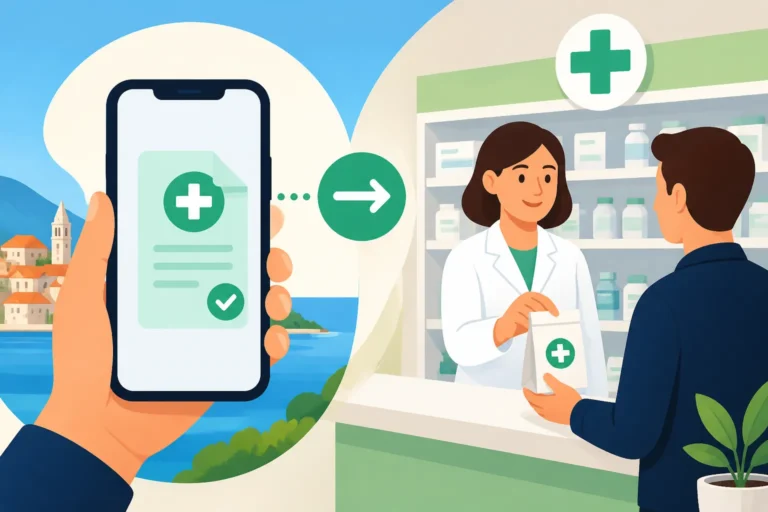
In Croatia, pharmacies are called ljekarne. They are easily recognizable by a green cross sign. For prescription medications, Croatia primarily uses an electronic prescription system called e-Recept. This means your doctor (GP or specialist) will issue a prescription electronically, and it will be digitally sent to the central HZZO system. You don't get a physical paper prescription in most cases.
When you go to a ljekarna to pick up your medication, you simply present your HZZO health insurance card (or OIB). The pharmacist will access your e-Recept and dispense your medication. This system is designed for convenience and to prevent errors. Prescription Medications and Pharmacies in Croatia: The Complete Guide offers a deep dive into this topic.
Most pharmacies are open during standard business hours (roughly 8 AM to 8 PM on weekdays, shorter hours on Saturdays, and usually closed on Sundays). However, every major city and even smaller towns will have at least one designated "dežurna ljekarna" (24-hour duty pharmacy) that rotates to ensure continuous access to medications outside of regular hours. These pharmacies usually display a schedule or a sign indicating the nearest duty pharmacy. It's a good idea to know where your nearest 24-hour ljekarna is, just in case.
Over-the-Counter Medications
Many common medications that might require a prescription in your home country are available over-the-counter (bez recepta) in Croatia, and vice-versa. Pharmacists in Croatia are highly trained and play a more significant advisory role than in some other countries. If you have a minor ailment – a cold, headache, upset stomach, or need basic first-aid supplies – you can often go directly to a ljekarna and consult with the pharmacist. They can recommend appropriate non-prescription medications and offer advice.
Common over-the-counter medications include pain relievers (like ibuprofen, paracetamol), cold and flu remedies, antacids, certain allergy medications, and basic wound care products. If you are unsure whether a medication requires a prescription, simply ask the pharmacist. They are a valuable resource for minor health concerns. However, always remember that for persistent or severe symptoms, you should consult your GP.
Understanding Medication Costs and Coverage
The cost of prescription medications in Croatia, particularly those covered by HZZO, is generally quite affordable, especially if you have dopunsko insurance.
If you have mandatory HZZO insurance only, you will pay a participacija for your prescription medications. This can either be a fixed fee per prescription item (a few Euros) or a percentage of the medication's cost, depending on how "highly prioritized" the medication is by HZZO. Some medications are fully covered by HZZO, especially if they are deemed essential for certain chronic conditions. Others are partially covered, and some are not covered at all, meaning you pay the full price.
If you have supplementary HZZO insurance (dopunsko), it will typically cover the participacija portion of your prescription medications that are covered by mandatory HZZO. This means you effectively pay nothing out of pocket for most of your prescribed drugs. This is another major benefit of having dopunsko, as it makes accessing necessary medications very straightforward and inexpensive.
For medications not covered by HZZO at all, or if you don't have HZZO insurance, you will pay the full retail price. Prices for these medications are generally regulated but can vary slightly between pharmacies. It’s always good to be aware of what your specific insurance covers. If you are on a specific medication from your home country, it's worth checking with a Croatian GP or pharmacist if an equivalent is available and covered here. You can also explore options for How Do I Get an e-Recept Filled at a Pharmacy in Croatia?
Special Considerations for Expats: Families, Digital Nomads, Self-Employed
Expat life comes in many forms, and your healthcare needs and how you access them will vary significantly based on your specific situation.
Disclaimer
This article is for general informational purposes only and does not constitute professional advice. Laws, prices and regulations vary by location and change over time. Consult a qualified professional for guidance on your specific situation.