Can I See a Specialist Privately and Still Use HZZO for Surgery?
One of the trickiest parts of living in Croatia, especially when you're dealing with something as personal and vital as your health, is understanding how the system actually works – and doesn't. Many of us expats find ourselves in a frustrating dance between the public HZZO system, which often comes with waiting lists, and the private polyclinics, which offer speed and convenience but at a cost. A common question that pops up, particularly when faced with a potential surgery, is whether you can get a quick diagnosis or specialist opinion privately, and then swing back to the public HZZO system for the actual operation to save money. This guide is here to shed some realistic light on that very situation, giving you the lowdown on what's truly possible in Croatia.
The Croatian Healthcare Maze: HZZO and Private Options
When you first land in Croatia, healthcare quickly becomes a topic you need to understand. It's a dual system, much like many other European countries, but with its own unique quirks and challenges that can leave even seasoned expats scratching their heads.
Navigating HZZO: The Public System's Strengths and Weaknesses
Croatia boasts a generally accessible public healthcare system, primarily funded and managed by the Hrvatski Zavod za Zdravstveno Osiguranje, or HZZO. If you're officially employed or self-employed here, or a resident on certain types of permits, you'll likely be contributing to and covered by HZZO, which is your mandatory health insurance. This system covers a wide array of services, from visits to your assigned family doctor, also known as your obiteljski liječnik, to specialist consultations, hospital stays, and even some prescription medications.
The primary strength of the HZZO system is its comprehensive coverage for those enrolled. Once you're in, a significant portion of your medical costs, including major procedures like surgery, are covered, often with only a small co-payment, or participacija, required. However, the major weakness, and indeed the source of much expat frustration, lies in accessibility and waiting times. Getting an appointment with a specialist through the public system often means long waits, sometimes months, for non-emergency conditions. This is particularly true for popular specialists or specific diagnostic procedures. Imagine needing to see a dermatologist for a suspicious mole, only to be told the first available appointment is in six months – it's enough to make anyone anxious. You'll typically need an e-uputnica (e-referral) from your general practitioner to even get on these waiting lists. Understanding how the Croatian Health Insurance Fund (HZZO) Works: A Full Overview is crucial for all new residents.
The Allure of Private Polyclinics: Why Expats Go Private
Given the waiting lists in the public system, it's no wonder that private polyclinics and hospitals are a booming business in Croatia, especially in larger cities like Zagreb, Split, and Rijeka. These private institutions offer a stark contrast: quick appointments, often within a day or two, more direct access to specialists without a GP referral, and frequently, a higher chance of finding English-speaking staff. For expats, the ability to communicate clearly in English about health concerns is a massive relief, especially when dealing with complex medical issues. You can often find an English-speaking doctor in Croatia in these private facilities.
Private polyclinics cover almost every medical specialty you can imagine, from cardiology and orthopaedics to gynaecology and diagnostics. They pride themselves on modern equipment, comfortable waiting rooms, and a more personalized patient experience. The downside, of course, is the cost. While the initial consultation might seem manageable, repeated visits, diagnostics like MRIs or extensive blood tests, and certainly any surgical procedures can quickly add up to a significant sum. For instance, a private specialist consultation can range from €50 to €100 or more, and an MRI could easily set you back €200-400 or higher. This is where many expats start to wonder about blending the two systems. You can read more about Public vs Private Healthcare in Croatia: Which Should Expats Choose? for a deeper dive into the comparison.
The Hybrid Approach: Private Consultations and Public Surgeries
This is the million-dollar question for many expats: can you leverage the speed and convenience of a private specialist for diagnosis and then switch to the HZZO system for a more affordable surgery? The answer, like much of Croatian bureaucracy, is "it's complicated," but generally, yes, with significant caveats and often no guarantee.
The Reality of Referrals: Can a Private Doctor Refer You to HZZO for Surgery?
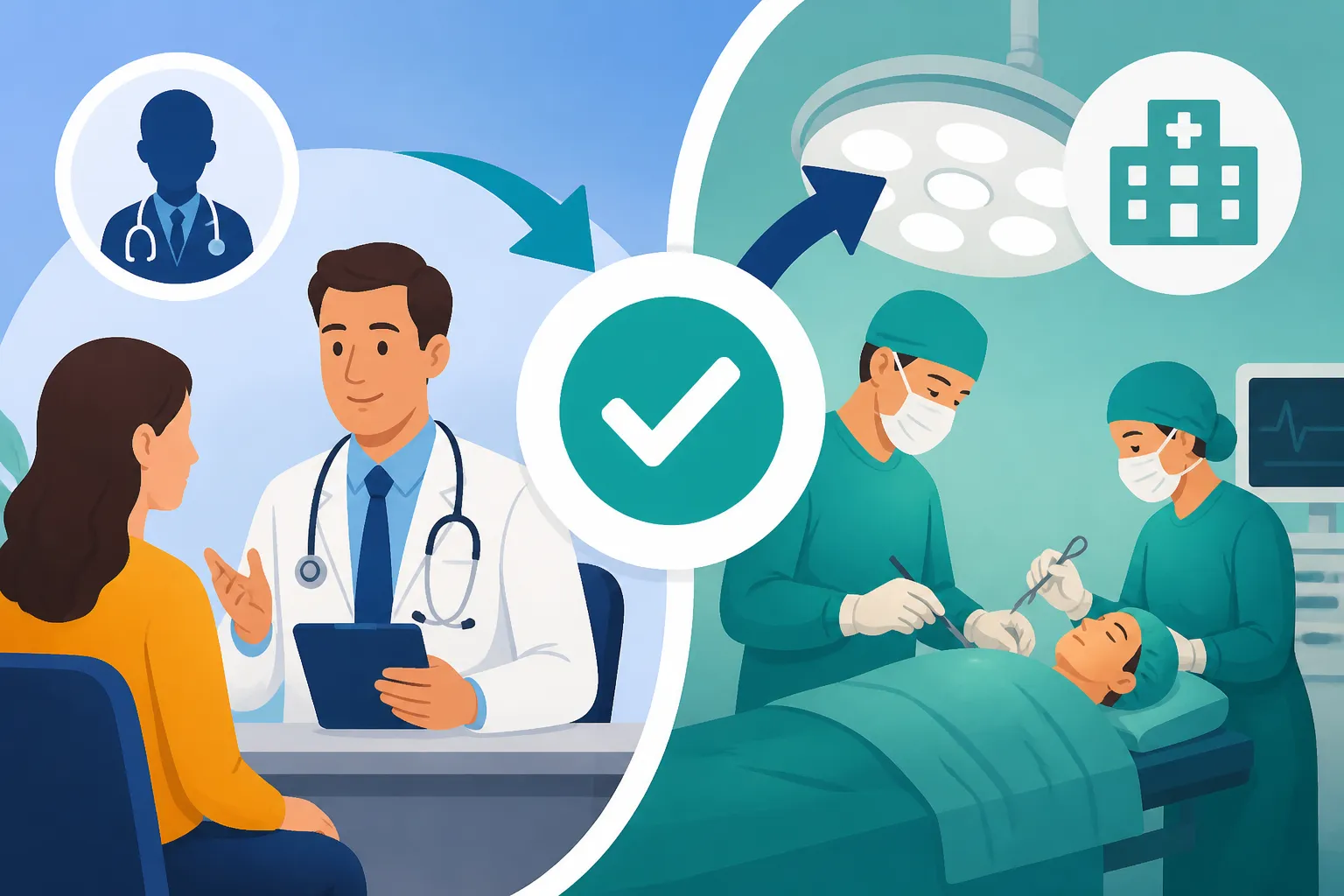
In theory, and sometimes in practice, a private specialist can issue a medical opinion or a recommendation for a surgical procedure. However, this private recommendation generally does not directly translate into an HZZO referral (e-uputnica) for surgery within the public system. The public HZZO system operates on referrals originating from within its own network.
Here's how it typically plays out:
- Private Consultation: You go to a private polyclinic, see a specialist, get diagnosed, and they recommend surgery. They might provide you with a detailed medical report, including imaging results and a clear diagnosis.
- Back to Your GP: You then take this private medical report to your assigned family doctor (obiteljski liječnik) in the HZZO system. Your GP is the gatekeeper for public specialist care and hospital referrals.
- GP's Discretion: Your GP will review the private specialist's findings. They have the discretion to accept or reject the recommendation. In most cases, if the private report is comprehensive and the medical necessity is clear, your GP should be willing to issue an e-uputnica for the necessary public specialist or a hospital for the surgery. However, they might also insist on their own HZZO-system specialist review or additional tests within the public system before issuing the final referral. This could, unfortunately, reintroduce the very waiting times you were trying to avoid. They might also prioritize public specialist opinions over private ones if there's any ambiguity.
- Specialist or Hospital Admission: Once you have the HZZO referral from your GP, you then enter the public system's waiting list for the surgery, which could still be substantial depending on the procedure and the hospital's capacity. Understanding Hospital Care at a KBC (Clinical Hospital Centre) in Croatia can give you an idea of what to expect in a public hospital setting.
It's important to manage your expectations here. While your GP might accept the diagnosis, they are unlikely to grant you a "fast pass" to the front of the public surgery queue just because you went private for the initial consult. The e-uputnica system for specialist appointments in Croatia aims to manage demand within the public network, not expedite entry from external sources.
Essential Documentation: What You'll Need to Bridge the Gap
To maximize your chances of a smooth transition from a private diagnosis to a public surgery referral, you need to be meticulously organized with your paperwork. The Croatian system loves its stamps and signatures, so ensure everything is official.
Here’s a checklist of what you should gather:
- Comprehensive Medical Report: The private specialist should provide a detailed report (medicinski nalaz) outlining your diagnosis, the recommended treatment (surgery type), and the medical justification. It should ideally be in Croatian or include an official translation if your GP doesn't speak English.
- All Diagnostic Results: This includes X-rays, MRI scans, CT scans, ultrasound reports, lab results, and any other relevant tests. The actual images (on CD or digital format) along with the written reports are crucial.
- Recommendation Letter: A specific letter from the private specialist, clearly stating their recommendation for surgery and explaining why it's necessary, can be very helpful. Again, in Croatian or officially translated.
- Your HZZO Card: This is your proof of public health insurance coverage.
- Your OIB: Your personal identification number is essential for all administrative processes in Croatia. How to Get Your OIB and Why It Matters for Healthcare Access details why this is so important.
When you present these documents to your family doctor, treat it like an official application. Be polite, clear, and ready to explain everything. It helps immensely if you have a good relationship with your GP, or if you can bring a Croatian speaker with you to help navigate the conversation. Remember, your GP is acting as a liaison, and their comfort with the private diagnosis will dictate how easily they issue the necessary public referral.
Weighing Your Options: Pros, Cons, and Crucial Considerations
Deciding whether to pursue a hybrid approach for specialist consultations and HZZO surgery involves a careful balance of time, money, and personal comfort. It's not a decision to be taken lightly, and understanding the potential pitfalls is just as important as knowing the benefits.
Financial Implications and Unexpected Costs
While the appeal of getting HZZO to cover the bulk of a surgery is strong, the hybrid approach isn't without its own financial outlays.
Potential Costs:
- Private Consultations and Diagnostics: As mentioned, these aren't cheap. You're paying out of pocket for every private specialist visit, every MRI, every blood test. These upfront costs can quickly accumulate, even if HZZO eventually covers the surgery.
- Official Translations: If your private medical reports aren't in Croatian, you might need to pay for official court-certified translations, which adds another layer of expense.
- Repeat Public System Diagnostics: There's a chance your HZZO GP or the public specialist they refer you to might want to repeat some diagnostics within the public system, even if you have fresh private results. This isn't always the case, but it can happen, leading to more waiting time and potentially additional co-payments if you don't have supplementary insurance.
- Supplementary Insurance Gaps: Even with HZZO, you'll likely incur participacija fees (co-payments) for certain services or hospital stays. Having dopunsko zdravstveno osiguranje (supplementary health insurance) is highly recommended to cover these co-payments, but you'd need to have it in place before receiving care. If you don't, these can add up. Understanding Dopunsko Zdravstveno Osiguranje (Supplementary Insurance) in Croatia explains this in detail.
- Travel and Accommodation: If the public hospital where your surgery is scheduled is far from your home, factor in travel and potentially accommodation costs for yourself or family members, especially for follow-up appointments.
| Cost Item | Private System (Out-of-Pocket) | Public System (HZZO Covered, with Participacija) |
|---|---|---|
| Initial Specialist Consultation | €50 – €150 | Covered by HZZO (GP referral needed), small participacija if no dopunsko |
| Diagnostic Tests (MRI, CT) | €200 – €500+ | Covered by HZZO (GP referral needed), small participacija if no dopunsko |
| Lab Tests | €30 – €100+ | Covered by HZZO (GP referral needed), small participacija if no dopunsko |
| Specialist Follow-ups | €50 – €100 | Covered by HZZO (GP referral needed), small participacija if no dopunsko |
| Surgical Procedure | €2,000 – €10,000+ | Covered by HZZO, small participacija for hospital stay (max €132.72/yr) |
| Official Translations | €30 – €60 per page | N/A (unless foreign documents) |
| Private Medical Report | Included in consult fee | N/A |
This table illustrates that while private costs are higher upfront, the public system, even with participacija, is significantly more affordable for major procedures like surgery, if you can navigate the waiting lists.
Finding the Right Balance for Your Health Journey
Ultimately, the decision to pursue a hybrid healthcare strategy depends on your personal circumstances, urgency, and financial situation.
When a hybrid approach might work for you:
- Urgency for Diagnosis, Not Immediate Surgery: If you suspect a serious condition and need a quick diagnosis to alleviate anxiety or start initial treatment, but the surgery itself is not acutely life-threatening and can wait.
- Second Opinion: You've had a public diagnosis but want a quick, private second opinion to feel more confident before committing to a major procedure.
- Language Barrier: You struggle to communicate complex medical details in Croatian and value an English-speaking private specialist for clarity in diagnosis and understanding your condition. How to Find an English-Speaking Doctor in Croatia is a valuable resource.
- Time vs. Money: You're willing to pay for speed in diagnosis and initial consultation but want to save significant funds on the actual surgery.
When a hybrid approach might NOT be ideal:
- Acute Emergency: For genuine emergencies, you should head straight to a public emergency room (Hitna pomoć). Your HZZO coverage is designed for this. Emergency Medical Care in Croatia: What Every Expat Needs to Know is a must-read.
- Very Long-Term Chronic Conditions: For ongoing management of chronic conditions, it's usually best to fully integrate into either the public or private system for consistent care.
- Strict Budget: If you're on a very tight budget, even the private diagnostic costs can be prohibitive.
- Complex or Rare Conditions: For very niche or complex conditions, finding a top specialist might mean sticking to one system if that's where their expertise lies, or accepting that a seamless crossover isn't guaranteed.
Sometimes, the simplest path is to fully embrace one system. If speed and language are paramount, and you have adequate private health insurance (like from a provider such as SafetyWing, which offers flexible and travel-friendly health insurance options, though always check their specific coverage for surgical procedures and pre-existing conditions), going entirely private might be your best bet. If cost is the absolute priority, then be prepared for the HZZO waiting lists, work closely with your family doctor, and get your supplementary insurance in order.
Essential Tips for Expats Navigating Healthcare in Croatia
Navigating any new healthcare system as an expat is a challenge, and Croatia is no exception. A bit of preparation and understanding can save you a lot of headaches, frustration, and money.
Communication is Key: Overcoming Language Barriers
This cannot be stressed enough. The language barrier is one of the biggest hurdles expats face in the Croatian healthcare system. While many younger doctors and those in private clinics might speak English, it's not a guarantee, especially in public institutions or with older practitioners.
Strategies for Success:
- Learn Basic Croatian Medical Terms: Even a few key phrases can make a difference.
- Bring a Croatian Speaker: If you have a trusted friend, partner, or colleague who can accompany you to appointments, especially with your GP or for specialist visits, it's invaluable. They can help translate nuances and ask clarifying questions you might miss.
- Use Translation Apps (with caution): Google Translate or similar apps can be useful for simple phrases, but they are unreliable for complex medical information.
- Prepare Questions in Advance: Write down your symptoms and questions clearly, and try to translate them into Croatian if possible.
- Request an English-Speaking Doctor: When booking appointments, always ask if an English-speaking doctor is available. Private polyclinics are generally more accommodating in this regard. This is particularly important when trying to explain a complex diagnosis from a private doctor to your HZZO GP.
Supplementary Insurance and Other Safety Nets
Relying solely on mandatory HZZO for every aspect of your healthcare journey, particularly if you're exploring hybrid options, leaves you exposed to the participacija fees. These co-payments, while individually small (usually €1-€13, depending on the service), can add up quickly during a period of intense medical care, such as diagnostics, specialist visits, and a hospital stay.
Why Supplementary Insurance (Dopunsko Osiguranje) is a Must-Have:
- Covers Participacija: This type of insurance, offered by companies like HZZO itself, Croatia Osiguranje, and others, covers the co-payment fees that HZZO doesn't cover. It's affordable, typically costing around €10-20 per month.
- Peace of Mind: Knowing these smaller fees are covered allows you to focus on your health, not worrying about every little charge. You can apply for supplementary insurance through HZZO directly or other providers. Understanding the Cost of Healthcare in Croatia: A Complete Breakdown for Foreigners (2026) will provide more context on these expenses.
Considering Private Health Insurance:
If you are a digital nomad, work for a foreign company, or simply want to bypass the public system entirely, private health insurance is another safety net. Companies like SafetyWing cater specifically to digital nomads and expats, offering comprehensive international health insurance that can cover private specialist visits, diagnostics, and even surgeries, without needing to navigate the HZZO system for these services. This might be a more straightforward option if you value speed and direct access above all else and are not contributing to the HZZO system. However, ensure any private plan covers pre-existing conditions or specific surgical needs, and always read the fine print. Health Insurance in Croatia: Mandatory, Supplementary and Private Options Explained provides a detailed breakdown of your options.
No matter which path you choose, being informed and prepared is your best defense against the complexities of the Croatian healthcare system. Don't hesitate to ask questions, seek clarification, and advocate for your own health.
Disclaimer
The information provided in this guide is for general informational purposes only and does not constitute medical or legal advice. Healthcare regulations and procedures in Croatia can change, and individual circumstances vary. Always consult with a qualified medical professional, your family doctor, or the HZZO directly for personalized advice regarding your specific health and insurance needs.