Can International Students Work Part-Time in Croatia?
It’s a common worry for international students arriving in Croatia: how on earth will I make ends meet? While studying here is an incredible experience, the cost of living, even if more affordable than some Western European counterparts, can still add up. The good news is, yes, international students absolutely can work part-time in Croatia, but it’s not as simple as just walking into the nearest cafe and asking for a job. There are specific rules, paperwork, and hoops to jump through, especially for non-EU/EEA citizens. This guide will walk you through exactly what you need to know to navigate the system and start earning some extra cash while you hit the books.
Understanding the Landscape: Student Work in Croatia
When you first arrive, it’s easy to feel a bit lost in the Croatian administrative maze. You’re juggling university enrollment, getting your residence permit sorted, and probably trying to learn a few Croatian phrases. Adding the complexity of finding a job might seem overwhelming, but with the right information, it’s entirely manageable. The Croatian system for student employment is primarily managed through the Studentski Centar (Student Centre), which acts as an intermediary between students and employers.
The Role of the Studentski Centar
The Studentski Centar is not just for finding a cheap meal at the menza (student canteen); it's also your gateway to legal student employment. Think of it as a specialized employment agency exclusively for students. Employers register their job openings with the Studentski Centar, and students register with the Studentski Centar to gain access to these jobs. This system ensures that all work is properly declared, taxes are paid (if applicable), and you’re working under a legitimate "student contract" (studentski ugovor).
Without being registered with a Studentski Centar and working under one of their contracts, any part-time work you do would be considered illegal employment, and trust me, you do not want to go down that path in a foreign country. It can lead to serious problems with your residence permit, fines, and even deportation. So, step one, before even thinking about job hunting, is to get yourself registered with the Studentski Centar in your university city. You'll typically need your OIB (personal identification number), proof of student status, and your residence permit. Speaking of, if you haven't gotten one yet, here's How to Get Your OIB and Why It Matters for Healthcare Access.
Different Rules for EU/EEA vs. Non-EU/EEA Students
This is where things can get a little tricky, and it’s a major point of frustration for many. The rules for working as an international student differ significantly depending on your nationality.
EU/EEA Citizens: More Freedom, Still Some Steps
If you’re from an EU/EEA country, you generally have the same right to work in Croatia as a Croatian citizen. This means you don't need a separate work permit. However, to work legally as a student, you still need to register with the Studentski Centar. This is crucial for formalizing your employment under a studentski ugovor, which comes with specific benefits, like reduced social contributions and simpler tax reporting for the employer. Even with the freedom of movement, ignoring the Studentski Centar route for part-time work could complicate your status or lead to less favorable employment terms.
You'll also need to ensure your residence is properly registered with the police (MUP) if you plan to stay longer than 90 days. For EU citizens, this is generally a straightforward process of How to Register Your Residence (Prebivalište) at the MUP. Once you’re set with your MUP registration and Studentski Centar, you’re pretty much good to go in terms of legal eligibility.
Non-EU/EEA Citizens: The Work Permit Hurdle
This is where the real headaches often begin for students from outside the EU/EEA. While the Croatian government does allow non-EU/EEA students to work part-time, it's usually tied to your student residence permit.
- Initial Residence Permit: When you first apply for your temporary residence permit for study, it typically does not automatically grant you the right to work. You'll explicitly need a work permit or a residence permit that allows work.
- Specific Work Permit: Often, non-EU students will need to apply for a separate work permit for part-time student work. This process can be mediated through the Studentski Centar or directly with the MUP, but it adds another layer of bureaucracy. The good news is that under specific regulations, a non-EU/EEA student can work up to 20 hours a week or 80 hours a month without needing a full, separate work permit, provided they are employed through the Studentski Centar system. However, this is for part-time work only and tied strictly to your student status. This specific allowance falls under the scope of Understanding Student Work Contracts (Studentski Ugovor) in Croatia.
- Verification and Documentation: The MUP will verify your student status with your university, and you'll need to demonstrate sufficient funds to support yourself (as you did for your initial student visa). Any income earned through part-time work is considered supplementary, not your primary source of support for your residence permit application.
It’s crucial to confirm the exact regulations at the time of your application, as immigration rules can change. Always check with your university’s international student office or the local MUP office.
Navigating the Job Market and Practicalities
So, you’ve got your OIB, your residence permit, and you’re registered with the Studentski Centar. Now what? It’s time to start looking for a job! The job market for students in Croatia, especially for part-time roles, tends to be quite dynamic.
Where to Find Part-Time Student Jobs
Your primary resource will be the Studentski Centar's job portal. This is where most legitimate student jobs are advertised. You can usually access it online or visit their physical office. They list various opportunities from different sectors.
Beyond the Studentski Centar, keep your ears open:
- University Bulletin Boards: Sometimes departments or student organizations will post opportunities.
- Networking: Talk to other international and local students. Word-of-mouth is still powerful in Croatia.
- Local Businesses: Especially during tourist season, many cafes, restaurants, hotels, and shops will hang "help wanted" signs. If you see one, you can always inquire about a student contract (studentski ugovor).
- Online Job Boards (with caution): General Croatian job portals exist, but always verify with the employer if they are willing to hire you through a studentski ugovor. Some might try to offer "on the books" work that doesn't fit the student contract, which you must avoid.
Types of Part-Time Work Available for Students
Don't expect to walk into a high-paying professional role right away. Most student jobs are in sectors that have flexible hours and don’t require extensive experience.
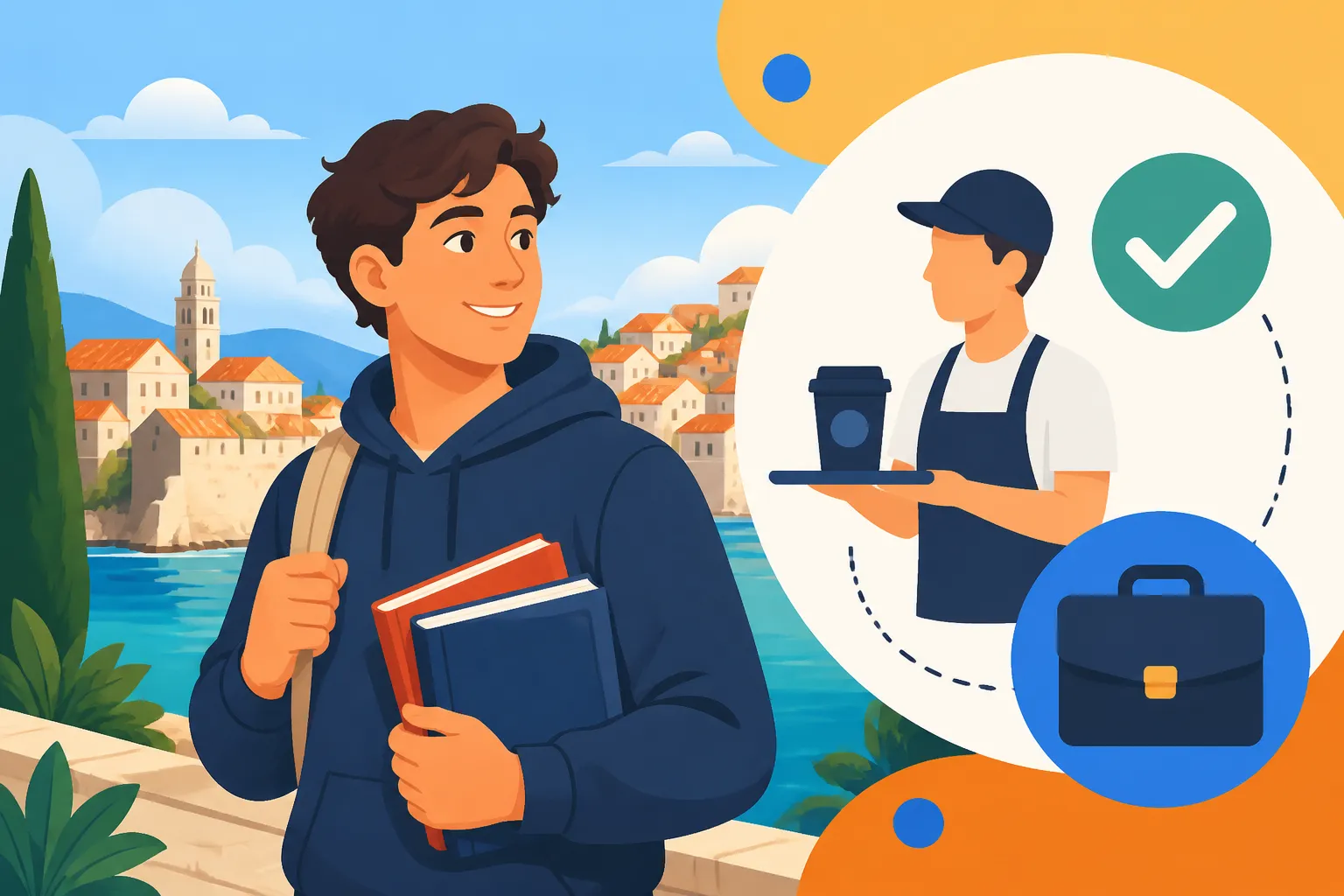
- Hospitality and Tourism: This is by far the most common sector, especially in coastal areas during summer, and in cities like Zagreb or Split year-round. Think waiters/waitresses, baristas, kitchen help, hotel reception, tour guides (if you have local knowledge and language skills).
- Retail: Working in shops, supermarkets, or boutiques.
- Administrative Tasks: Some university departments or smaller businesses might need help with data entry, filing, or office support.
- Language-Related Roles: If you’re a native English speaker (or another in-demand language), you might find opportunities for tutoring, language practice, or even some translation work. Platforms like iTalki, while not strictly Croatian, can offer remote opportunities that fit student schedules if your permit allows remote work.
- Event Support: Helping out at conferences, concerts, or festivals.
- Promotional Work: Handing out flyers, promoting products, or assisting with marketing campaigns.
The pay for these jobs is typically modest, but it can significantly help with your daily expenses like groceries, transport, or a bit of social life. For context, you might want to look into The Complete Guide to Cost of Living in Croatia for Expats (2026) to see how part-time earnings might fit into your budget.
The Language Barrier: A Realistic Look
Let's be honest, working in Croatia without speaking Croatian can be a challenge. While many Croatians, especially younger generations and those in tourism, speak English, daily work life often requires some level of Croatian.
- Basic Communication: For roles in hospitality or retail, even basic Croatian phrases will make a huge difference. Employers will appreciate your effort.
- Customer Service: If you're dealing directly with the public, a language barrier can be a significant hurdle. Jobs in the back-of-house (kitchen help, cleaning) or those specifically catering to tourists (e.g., in a hostel with international guests) might be more forgiving.
- Learning is Key: Investing time in learning Croatian will not only improve your job prospects but also enrich your overall experience. Consider enrolling in Learning Croatian: A Complete Guide to Language Courses and Levels. Even a few weeks of intensive classes or regular practice with tools like iTalki can boost your confidence and employability.
Legal and Financial Considerations for Student Workers
Getting paid is great, but understanding the legal and financial aspects of your part-time employment is vital to avoid any unwelcome surprises.
The Studentski Ugovor (Student Contract)
This is the golden ticket for student employment. It's a special type of contract that formalizes your temporary and part-time work through the Studentski Centar.
- How it works: When an employer hires you, they notify the Studentski Centar, which then issues a studentski ugovor for you. You sign it, the employer signs it, and a copy goes back to the Studentski Centar. This document details your hourly rate, the period of work, and the nature of the job.
- Benefits: Working under this contract means lower social contributions for both you and the employer compared to a standard employment contract. This makes students an attractive option for businesses needing flexible staff.
- Payment: Your payment will usually be processed through the Studentski Centar. They will deduct the necessary contributions and then pay the net amount into your Croatian bank account. This is why having a local bank account is non-negotiable. If you need help, check out The Expat Guide to Opening a Bank Account in Croatia.
Hours and Income Limitations
As mentioned earlier, non-EU/EEA students are typically limited to 20 hours per week or 80 hours per month. While EU/EEA students have more flexibility, remember that the studentski ugovor itself is designed for supplementary income during your studies, not full-time employment. Exceeding these limits, especially for non-EU/EEA students, could jeopardize your student residence permit.
There are also income thresholds. While you pay minimal taxes and contributions on student earnings, if your annual income from student work exceeds a certain amount, it might affect your dependent tax status (if someone else is claiming you as a dependent for their taxes) or trigger additional tax obligations for you. This often changes, so always check the current rules with the Porezna Uprava (Tax Administration) or a qualified advisor.
Here’s a simplified breakdown of typical student work conditions:
| Aspect | EU/EEA Students | Non-EU/EEA Students |
|---|---|---|
| Work Permit Required? | No, generally not for student work | Yes, part of student residence permit or mediated through SC for specific hours |
| Registration Body | Mandatory with Studentski Centar (SC) | Mandatory with Studentski Centar (SC) |
| Employment Contract | Studentski Ugovor | Studentski Ugovor |
| Working Hours Limit | Generally flexible, but SC contract designed for part-time | Up to 20 hours/week or 80 hours/month |
| Primary Goal of Work | Supplementary income | Supplementary income, not primary support for residence |
| Tax & Contributions | Reduced via SC, annual limits apply | Reduced via SC, annual limits apply |
| Language Need | Varies by job, often beneficial for customer-facing | Varies by job, often essential for most roles |
Taxes and Social Contributions
One of the great advantages of the studentski ugovor system is its tax-friendliness for students. For the most part, your earnings through the Studentski Centar are subject to lower social contributions compared to regular employment. However, if your annual income from student work exceeds a certain threshold (which can change yearly, so always verify), you might become liable for income tax.
Generally, for students, a portion of their earnings is exempt from tax, and the contributions are relatively small. This is meant to encourage students to work without being burdened by heavy taxation. However, it’s absolutely essential to be aware of your total annual income. If you earn above the threshold, you might be required to file an annual tax return. For detailed information on Croatian tax rules, especially as a foreigner, it's a good idea to consult Understanding Income Tax in Croatia: The Full Expat Guide. For complex tax situations, especially if you have other sources of income or are concerned about your overall financial picture, consulting with a specialized firm like Taxes for Expats could provide invaluable guidance.
Also, remember that while you are employed through the Studentski Centar, your health insurance status (typically through HZZO for students) remains separate. Ensure your How to Register for HZZO Health Insurance as a Foreigner in Croatia is up-to-date and valid.
Realistic Expectations and Tips for Success
Moving to a new country, starting university, and then trying to find a job is a lot. It’s important to manage your expectations and prepare yourself for the realities of student work in Croatia.
Be Patient and Persistent
The job market, particularly for students who might not speak fluent Croatian, can be competitive. Don’t get discouraged if you don’t find something immediately. Keep checking the Studentski Centar portal and be proactive in asking around. Many jobs are found through connections or simply by showing up and asking.
Prioritize Your Studies
Remember, your primary reason for being in Croatia is to study. While extra income is great, don't let part-time work compromise your academic performance or mental well-being. Croatian universities can be demanding, and balancing work with classes, assignments, and exams requires good time management.
Build Your Network
Attending student events, joining university clubs, and simply being open to meeting new people can open doors to job opportunities. Other students, especially locals, can provide valuable insights into the job market, recommend employers, or even hear about openings before they are publicly advertised.
Understand Your Rights
Even as a part-time student worker, you have rights. Familiarize yourself with basic Croatian labour law concerning working hours, breaks, and safe working conditions. While the studentski ugovor is a simplified contract, it still carries legal protections. A good starting point is Understanding Croatian Employment Contracts: A Complete Guide. If you ever feel exploited or treated unfairly, reach out to your Studentski Centar or university international office for advice.
Embrace the Experience
Working part-time in Croatia offers more than just money; it's an invaluable way to practice your Croatian, meet locals, gain work experience in a new cultural context, and truly immerse yourself in life here. It can be tough, but it's also incredibly rewarding.
So, while it requires a bit of effort and navigating bureaucracy, international students absolutely can work part-time in Croatia. With the right approach and understanding of the Studentski Centar system, you can supplement your income, gain valuable experience, and make your expat student journey even richer.
Disclaimer
The information provided in this guide is for general informational purposes only and does not constitute legal, financial, or immigration advice. Regulations and laws in Croatia, especially concerning immigration, employment, and taxation, can change frequently. While we strive to provide accurate and up-to-date information, it is essential to consult with official sources such as the Croatian Ministry of Interior (MUP), the Studentski Centar, the Croatian Tax Administration (Porezna Uprava), or a qualified legal/financial professional for advice tailored to your specific situation.