How to Register Your Residence (Prebivalište) at the MUP
Alright, let's be honest. Moving to a new country like Croatia is a rollercoaster of excitement, stunning scenery, and then, bam, you hit the wall of bureaucracy. One of the most perplexing hurdles many of us face, right after securing a place to live, is figuring out how to properly register your address with the authorities. This guide is going to walk you through the often-confusing process of registering your Prebivalište at the MUP, giving you the real talk on what to expect and how to navigate it without losing your mind.
What Exactly is Prebivalište and Why Does it Matter?
When you first arrive in Croatia, you'll quickly encounter terms like Prebivalište and Boravište, and trust me, the distinction is crucial. It’s not just semantic; it dictates how you interact with nearly every other administrative system in the country. For new arrivals, getting your head around these terms is usually the first step to feeling somewhat grounded.
Defining Prebivalište vs. Boravište Temporary Stay
Let’s break it down. Prebivalište (pronounced pre-bah-VEESH-teh) means "permanent residence" or "domicile." This is the address where you intend to live permanently and where your personal life is centered. Think of it as your official home base in Croatia. When you register your Prebivalište, it signifies that you are establishing your long-term life in a specific location within the country. This is usually tied to your long-term residence permit or EU registration.
On the other hand, Boravište (pronounced bor-ah-VEESH-teh) means "temporary stay" or "temporary residence." This is for those who are staying in a place for a period longer than three months but do not intend to make it their permanent home. For example, if you have a residence permit for Zagreb but decide to spend four months working from Split, you would register a Boravište in Split. Digital nomads often deal with Boravište if their stay in one place exceeds the initial short-term registration requirements for tourists, though for a full Digital Nomad Permit, a permanent address is often required for the duration of the permit. The key difference is the intent and duration: Prebivalište implies permanence, while Boravište is transient. For most expats establishing themselves, Prebivalište is the goal.
Why This Registration is Non-Negotiable for Expats
Think of registering your Prebivalište as the linchpin that connects you to every other essential service in Croatia. Without it, you’re essentially a ghost in the system, and that's not a fun place to be when you need to access public services. Your official address is required for so many things: opening a bank account, registering for healthcare, enrolling children in school, getting a Croatian driving licence, and even simply receiving mail reliably. It’s how the government knows where you are and, crucially, where to send official documents.
Many of us arriving here, especially from countries with less stringent reporting requirements, find this level of detail a bit overwhelming at first. It feels like everyone wants to know where you sleep! But in Croatia, this registration is fundamental to accessing nearly everything. Without a registered Prebivalište, you’ll hit roadblocks trying to, for instance, secure health insurance through HZZO. It’s simply how the system functions, and embracing it early on will save you a world of headaches. You can find more detailed information on why this is so important in our guide to Registering Your Residence in Croatia: The Complete MUP Guide.
Who Needs to Register Their Prebivalište?
This is where it gets a little nuanced, depending on your nationality and the legal basis of your stay. The general rule is this: if you have a long-term legal right to reside in Croatia, you’ll almost certainly need to register your Prebivalište. This isn't just a suggestion; it's a legal obligation.
EU/EEA Citizens Your Specific Requirements
For our fellow EU/EEA citizens, the process is slightly less daunting than for non-EU individuals, but it's still mandatory. If you plan to stay in Croatia for more than three months, you are legally required to register your temporary residence (yes, a form of boravište initially, but with the intent to establish prebivalište if you're settling long-term) with the MUP within 90 days of your arrival. After five years of continuous registered residence, you can apply for permanent residence. This initial registration is crucial because it formally establishes your presence in the country.
When you go to the MUP, you’ll typically be registering your right to reside based on employment, self-employment, study, sufficient funds, or family reunification. Once that legal basis is established and you have your Odluka (decision document) from the MUP confirming your legal right to stay, you then register your Prebivalište. It’s a two-step dance for many EU citizens: first, get your right to reside confirmed, then register your actual address. Without this, you might struggle with things like opening a bank account with ease, or even getting your How to Get Your OIB and Why It Matters for Healthcare Access.
Non-EU/EEA Citizens Connecting to Your Residence Permit
For those of us from outside the EU/EEA, registering your Prebivalište is inextricably linked to your temporary residence permit (Privremeni Boravak). In most cases, you cannot get your residence permit approved without already having an address in Croatia. Your Prebivalište is registered at the same time or immediately after your temporary residence permit is granted. The MUP will verify your accommodation details as part of your permit application. This means that when you apply for your The Expat Guide to Temporary Residence (Privremeni Boravak) in Croatia, proof of your intended address is a core requirement.
So, for non-EU citizens, it's often a more streamlined process in that the address registration is baked into your initial residence permit application. The address on your residence card (boravišna iskaznica) is your registered Prebivalište. This means the initial stress isn't about two separate registrations, but about ensuring all your documents for the residence permit, including proof of address, are in perfect order. It’s a comprehensive package deal, often leaving little room for error or missing pieces.
Exceptions and Special Cases
While most long-term residents need to register their Prebivalište, there are some specific scenarios worth noting.
For instance, Digital Nomads. If you’ve successfully navigated the waters of getting your How to Get a Croatian Digital Nomad Permit: The Full Guide (2027), you’ll generally be required to register a Boravište (temporary residence) rather than Prebivalište. This acknowledges the transient nature of the permit, even if you stay for the maximum year. However, the procedure for registering this Boravište at the MUP will be very similar in terms of documentation and the forms you fill out. The MUP will typically issue you a digital nomad specific residence card which details your registered address.
Another case involves property owners who don't necessarily live in Croatia full-time. If you own a property but don't intend to reside there permanently or don't have a residence permit based on your property ownership, you wouldn't register Prebivalište there. The registration of Prebivalište is always linked to your legal right to reside long-term and your actual intent to make it your home. It’s about more than just owning bricks and mortar; it’s about establishing your life there.
The Step-by-Step Process for Registering at the MUP
Alright, let’s get down to the nitty-gritty. This is where most of us start feeling that familiar administrative anxiety. The MUP, or Ministry of Interior (Ministarstvo unutarnjih poslova), is the central authority for all things related to residence, permits, and citizenship. Going there can feel like a trip into a bureaucratic labyrinth, but with a clear roadmap, you can make it through.
Finding Your Local MUP and Making an Appointment
First things first: you need to find your MUP. Croatia has MUP offices in most major cities and towns. You'll generally go to the MUP office in the city or region where your address is located. For example, if you live in Split, you go to the Split MUP. If you're in Zagreb, it will be one of the larger MUP offices, often the one in Heinzelova street, which is notorious for its queues but also handles the most cases.
While walk-ins are sometimes accepted, I cannot stress enough how much easier your life will be if you try to make an appointment first. Some MUPs, especially in larger cities like Zagreb, now offer online appointment booking systems. This can save you hours of waiting. If an online system isn't available, or you can't navigate it, try calling ahead. Even if they don't explicitly book appointments, they might be able to tell you the best times to come to avoid the longest queues. Remember to take a deep breath before you call; dealing with administrative offices in a foreign language can be frustrating, but patience is your best friend.
Navigating the Application Form Obrazac 1
Once you're at the MUP, you'll need to fill out a form, most commonly called Obrazac 1 (Form 1). This is your standard application for registering or changing your residence. It’s a relatively straightforward form, asking for your personal details (name, surname, OIB, date and place of birth, nationality) and, crucially, the address you wish to register as your Prebivalište.
My advice? If your Croatian isn't up to par, and you haven't brought a Croatian-speaking friend, ask for help. While some MUP employees speak English, it’s not a given, and they are usually very busy. Don't be afraid to use a translation app on your phone for specific words. Accuracy is key here; any mistakes could lead to delays. The form will also require information about your landlord or the property owner, so have their name, OIB, and contact details handy. This is also where you will sign, and often the property owner or landlord will also need to sign the form in person or provide a notarized statement.
The MUP Interview: What to Expect
Calling it an "interview" might sound formal, but it’s essentially the moment you meet with a MUP official to submit your documents. This isn't usually an interrogation, but a verification process. The official will review your Obrazac 1 and all your supporting documents. They'll check your passport, your residence permit (if applicable), and most importantly, your proof of accommodation. This is where many expats face a hurdle.
They want to see that you legitimately have a place to live. This means your lease agreement (Ugovor o Najmu), which needs to be either notarized or registered with the tax administration (Porezna Uprava), and often, a statement from your landlord confirming your residence. Sometimes, the official might even want to speak to your landlord directly, or request that the landlord accompany you. This can be challenging if your landlord isn't readily available or is reluctant to engage with the MUP directly. Be prepared for questions about your purpose of stay, how long you plan to live at the address, and your relationship to the property owner. The process can feel intrusive, but it’s their way of ensuring everything is legitimate.
Required Documents for Your Prebivalište Application
Gathering the correct documents is often the most stressful part of any administrative task in Croatia. Missing even one tiny piece can mean being sent away and having to repeat the whole process. So, let’s make sure you’re as prepared as possible.
Proof of Identity and Legal Stay
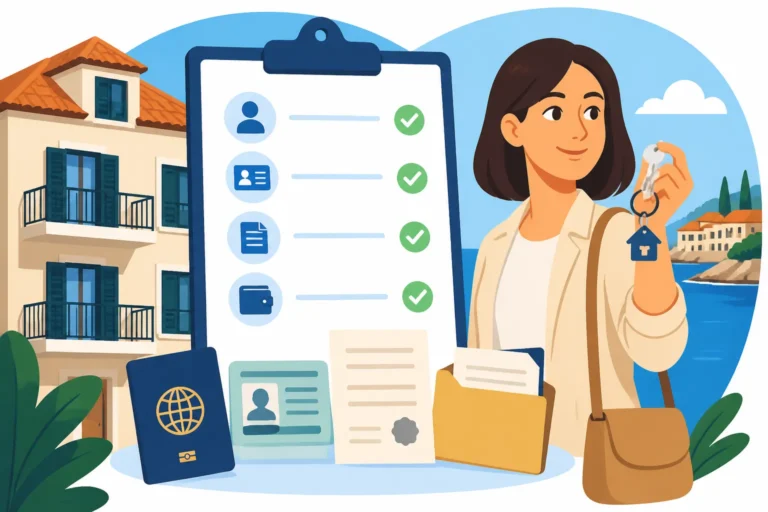
First and foremost, you'll need proof of your identity. For most non-EU citizens, this will be your valid passport, often along with your existing temporary residence card if you're renewing or changing an address after your initial permit has been issued. For EU/EEA citizens, a valid national ID card or passport is usually sufficient. Remember to bring both the original and a photocopy of each document. It’s always better to have too many copies than not enough.
Beyond identity, you need to prove your legal right to stay in Croatia. For non-EU citizens, this means your approved residence permit or the Odluka (decision) granting it. For EU citizens, it's typically the certificate you received after registering your right of residence (Potvrda o prijavi boravka/prebivališta) or the initial decision that approved your stay, whether based on employment, self-employment, or other criteria. This is often an overlooked detail, but without it, the MUP has no basis for registering your address. It’s like putting the cart before the horse. Our comprehensive guide The Complete Guide to Croatian Residence Permits for Expats (2027) offers more details on the initial permit process.
Proof of Accommodation and the Landlord's Role
This is often the trickiest part. The MUP needs concrete proof that you have a valid place to live and that the property owner is aware of and approves your residence there. The most common document is a signed lease agreement (Ugovor o Najmu). This agreement should specify your name, the address, the duration of the lease, and be signed by both you and the landlord.
Crucially, in Croatia, this lease agreement needs to be either notarized by a public notary (javni bilježnik) or registered with the local tax administration (Porezna Uprava). Many landlords skip this step to avoid declaring rental income, which can create a huge problem for you. If your landlord is hesitant, explain to them that without this, you cannot register your legal residence, which impacts everything from utilities to healthcare.
In some cases, especially if you are living with family or friends and not paying rent, you might need a statement from the property owner (Izjava stanodavca) explicitly granting you permission to reside at their address, along with a copy of their ID and proof of their property ownership (vlasnički list). This statement usually also needs to be notarized. The landlord's OIB is almost always required. Remember, the MUP is verifying that your stay is legitimate, and the landlord's cooperation is paramount.
Other Supporting Documents
Depending on your specific situation, you might need a few other items:
- OIB: Your Personal Identification Number. This is essential for virtually all administrative tasks in Croatia. If you don't have one yet, you'll need to get it first. Our guide on What Documents Do I Need to Get an OIB in Croatia? can help.
- Birth Certificate: Sometimes requested, especially for initial residence permit applications or if there are discrepancies in other documents. Ensure it’s an international one (multilingual) or translated and apostilled.
- Marriage Certificate: If registering based on family reunification, your marriage certificate will be required, again, international or translated/apostilled.
- Proof of Funds: For EU citizens registering based on "sufficient funds" or other categories, you might need bank statements to show you can support yourself.
- Administrative Fee: There might be a small administrative fee (upravna pristojba) payable either directly at the MUP or by purchasing fiscal stamps (državni biljezi) at a post office or Tisak kiosk. Always ask about this beforehand.
Table: Essential Documents for Prebivalište Registration
| Document Category | EU/EEA Citizens | Non-EU/EEA Citizens | Notes |
|---|---|---|---|
| Identity Proof | Valid National ID or Passport (Original + Copy) | Valid Passport (Original + Copy) | Bring originals for verification, copies for submission. |
| Legal Stay Proof | MUP Registration Certificate (Potvrda o prijavi boravka) or Decision Document | Valid Temporary Residence Permit (Boravišna iskaznica) or Decision Document (Odluka) | This confirms your legal right to reside in Croatia long-term. |
| Accommodation Proof | Notarized/Registered Lease Agreement OR Notarized Owner Statement (+ Owner ID) | Notarized/Registered Lease Agreement OR Notarized Owner Statement (+ Owner ID) | Landlord's OIB, name, and signature are crucial. Owner's Vlasnički List (proof of ownership) may be requested. |
| Personal Identification Number | OIB (Original + Copy) | OIB (Original + Copy) | Absolutely essential for all administrative processes. |
| Application Form | Obrazac 1 (Form 1) | Obrazac 1 (Form 1) | Fill this out accurately. |
| Additional Documents | Birth/Marriage Certificate (if applicable, translated/apostilled), Proof of Funds | Birth/Marriage Certificate (if applicable, translated/apostilled) | Always check specific MUP requirements; they can vary slightly by office or individual case. |
| Fees | Administrative Fee / Fiscal Stamps | Administrative Fee / Fiscal Stamps | Small fee, payable on site or via stamps. Ask for the exact amount. |
Common Challenges and How to Overcome Them
No matter how prepared you are, administrative processes in a foreign country always seem to throw curveballs. Croatia is no exception. Let’s tackle some of the most common frustrations head-on.
Language Barriers and Bureaucracy
This is probably the biggest hurdle for many expats. While younger generations and those in tourist-heavy areas often speak excellent English, many MUP officials, especially older ones, may have limited or no English proficiency. This can lead to misunderstandings, frustration, and the feeling that you’re not being heard. The MUP system, with its multiple windows and sometimes outdated procedures, can also be a beast.
How to Overcome:
- Bring a Croatian Speaker: This is, hands down, the best advice. If you have a Croatian friend, colleague, or even a local contact willing to accompany you, it will dramatically smooth the process. They can translate, clarify, and understand the nuances of the interaction.
- Use a Translation App: While not perfect, having Google Translate or a similar app ready on your phone can help bridge simple communication gaps, especially for specific questions or terms.
- Be Patient and Polite: This is universal advice for any bureaucracy, but especially in Croatia. Getting flustered or angry won't get you anywhere. A calm, polite demeanor, even when things are difficult, is usually appreciated.
- Go Prepared: Knowing exactly what you need (documents, forms) in advance helps you avoid questions you might not understand.
When it comes to staying connected and dealing with the language, even something as simple as a reliable data connection can be a lifesaver for on-the-spot translations or quick checks. Brands like Airalo offer eSIMs that can get you online quickly upon arrival, which is incredibly useful for navigating new places and administrative offices.
Incomplete Documents: The Dreaded Return Trip
Oh, the classic "you forgot one thing" saga! You wait for hours, finally get to the window, and then are told you’re missing a copy, a signature, or a stamp. It's soul-crushing. This often happens with the lease agreement not being notarized or the landlord's documents being insufficient.
How to Overcome:
- Double-Check Everything (Then Check Again): Before you even leave your house, go through every single document on your list. Make sure it's original and you have photocopies.
- Call Ahead (if possible): If you can call your MUP office or find their official website, try to verify the exact document list. Sometimes, requirements can change or vary slightly between offices.
- Ask Your Landlord Directly: Don't assume your landlord knows the MUP requirements. Explicitly ask them to get the lease notarized/registered or to provide a notarized statement of consent, complete with a copy of their ID and property deed.
- Over-Prepare: If they ask for one copy, bring two. If they don't explicitly say "original," bring the original and a copy. Better safe than sorry.
Landlord Cooperation: A Potential Hurdle
Many landlords in Croatia prefer to rent "under the table" to avoid declaring income and paying taxes. While this might seem appealing for a slightly lower rent, it can become a huge problem when you need to register your Prebivalište. Without a legally registered lease, the MUP simply won't process your application.
How to Overcome:
- Discuss Before Signing: When looking for an apartment, make it clear to prospective landlords that you need a legal, registered lease agreement. This should be a non-negotiable point for you. If they balk, move on.
- Explain the Consequences: If you’ve already signed, gently explain to your landlord that without a registered lease, you cannot get your residence permit, an OIB, health insurance, or any other vital services. Emphasize that their lack of cooperation directly impacts your legal right to live in the country.
- Offer to Cover Costs: Notarization and lease registration fees are usually minor. Offer to cover these costs if it helps convince a reluctant landlord.
- Seek Legal Advice: If you encounter significant resistance and it jeopardizes your residence status, it might be worth consulting with a local lawyer specializing in expat affairs. They can often provide a stern, official explanation to your landlord, which sometimes works wonders.
Moving internationally involves so many different parts, and a brand like Sirelo, which helps with relocation services, often emphasizes how critical these administrative steps are to a smooth transition. They know firsthand how intertwined housing and legal residence are.
After Registration: What's Next?
Phew! You've done it. You've navigated the MUP, submitted your documents, and finally received confirmation of your Prebivalište registration. Congratulations, that's a huge step! But the journey doesn't quite end there. This registration opens doors, and you'll need to walk through a few more.
Receiving Your Certificate of Residence
For non-EU citizens, your Prebivalište address will typically be printed on your physical residence card (boravišna iskaznica). This card is your proof of registered residence. Keep it safe! For EU/EEA citizens, after your registration is processed, you will often receive a separate certificate of residence (Potvrda o prijavi prebivališta). This is usually a small paper document, but it holds significant weight. It’s your official proof that you’ve told the state where you live.
This certificate is vital for many follow-up actions. It’s what banks, healthcare providers, and schools will often ask to see when verifying your address. Make sure to keep several photocopies, and perhaps a digital scan, in a safe place. You’ll be surprised how often you need to present it.
Updating Other Institutions
Once your Prebivalište is officially registered, it's time to inform all the other relevant institutions. Think of it like a cascade effect:
- Croatian Health Insurance Fund (HZZO): This is paramount. Your registered Prebivalište is a core requirement for Registering with HZZO in Croatia: The Complete Expat Guide (2027). You cannot get public health insurance without a registered address. Bring your Prebivalište confirmation to your local HZZO office to kickstart your health coverage.
- Banks: While you might have initially opened an account with a temporary address, your bank will definitely want your official Prebivalište. Update them to ensure all official correspondence and your financial records are accurate.
- Tax Administration (Porezna Uprava): Although your MUP registration often feeds into the tax system, it's good practice to ensure your Porezna Uprava records reflect your new address, especially if you're a freelancer or running a business.
- Utilities: If you’re responsible for setting up utilities in your own name, like electricity (HEP), water, or gas, your Prebivalište registration will be required. Our guide on The Expat Guide to Setting Up Utilities in Croatia delves into this.
- Employment: If you’re employed in Croatia, your employer will need your official Prebivalište for payroll, tax, and social contributions.
- Schools/Kindergartens: If you have children, their school or kindergarten will need your registered address for official records and to confirm eligibility for local services.
Changing Your Prebivalište in the Future
Life happens, and sometimes you move. If you decide to move to a new address within Croatia, you are legally obligated to update your Prebivalište with the MUP within 15 days of moving. The process is largely the same as the initial registration: you'll need to go to the MUP office responsible for your new address, fill out Obrazac 1 again, and provide proof of your new accommodation (notarized lease, landlord statement, etc.). They will then deregister your old address and register your new one.
It’s crucial not to skip this step. Not updating your address can lead to fines, difficulties receiving official mail, and problems with other institutions. Imagine trying to renew your health insurance or residence permit only to find your address on record is outdated. It’s a pain, but a necessary one to keep your legal status in Croatia clean and tidy.
Remember, this whole process, while tedious, is a rite of passage for every expat in Croatia. Take it one step at a time, gather your documents meticulously, and don't hesitate to ask for help from fellow expats or local friends. You've got this!
Disclaimer
Please note that this guide provides general information based on common expat experiences and publicly available data in Croatia as of 2026. While every effort has been made to ensure accuracy and comprehensiveness, immigration laws, administrative procedures, and specific document requirements can change. Always consult the official MUP website (mup.gov.hr) or seek professional legal advice for your specific situation. The author and publisher are not liable for any issues arising from the use of this information.