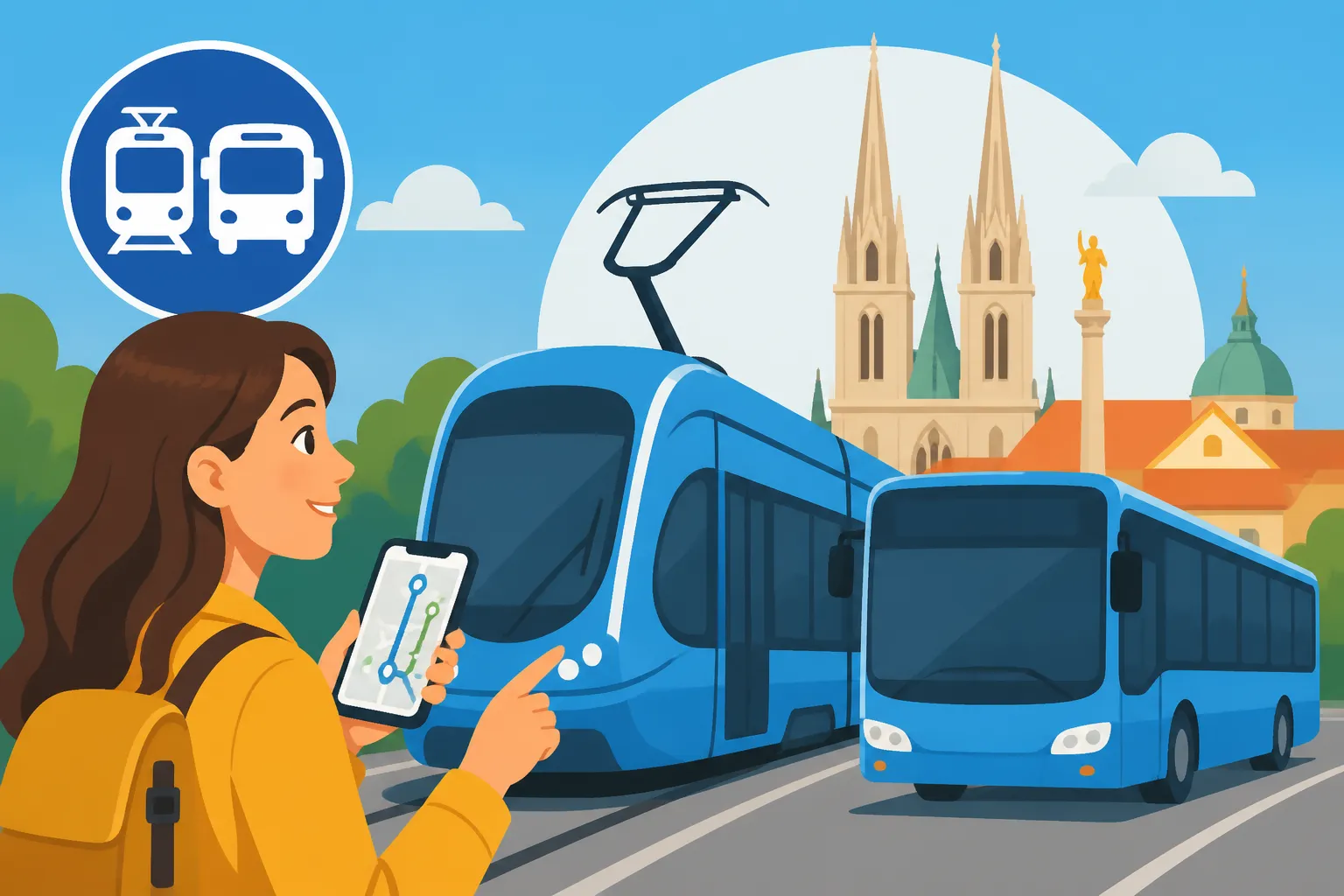
How Do I Use the ZET Tram and Bus System in Zagreb?
Alright, fellow expats and adventurers! When you first land in Zagreb, amidst the excitement of new beginnings or a holiday adventure, one of the quickest ways to feel overwhelmed is figuring out how to get around. Taxis can add up, and let’s be honest, walking everywhere isn't always an option. Navigating a new public transport system, especially one with its own quirks and language, can feel like trying to decipher an ancient map. But fear not! This guide is here to unravel the mysteries of Zagreb’s ZET tram and bus system, helping you ride like a local in no time.
Understanding Zagreb's ZET Public Transport System
ZET, or Zagrebački električni tramvaj, is Zagreb's integrated public transport system, and it’s truly the beating heart of the city's movement. For anyone living in or visiting the capital of Croatia, getting acquainted with ZET is non-negotiable. It’s efficient, generally reliable, and connects virtually every corner of the city. Forget the sprawling, often confusing metro systems of other European capitals; Zagreb's system is delightfully straightforward once you get the hang of it.
Trams: The Lifeline of Zagreb
The trams are undeniably the most iconic and essential part of Zagreb's public transport. They crisscross the city centre and fan out into many residential neighbourhoods, offering a convenient way to get from point A to point B without much fuss. There are 15 day lines and 4 night lines, which means you're almost always within shouting distance of a tram stop, especially in the central areas.
When you first arrive, you’ll notice two types of trams: the older, classic blue trams that have a certain nostalgic charm, and the newer, sleek, low-floor trams that are much more modern and accessible. Both get the job done, but the newer ones offer a smoother ride and are a godsend if you're travelling with a stroller, a wheelchair, or heavy luggage. Knowing which direction a tram is heading can be tricky at first, especially if you’re not familiar with the Croatian street names. My advice? Always double-check the destination displayed on the front of the tram or on the signs at the stop. Don’t be shy about asking someone if you’re unsure – Croatians are generally very helpful, even if English isn't their strong suit. Just point to your destination on a map, and they’ll usually be able to guide you.
Buses: Reaching Beyond the Tram Lines
While trams cover the core of Zagreb, the extensive network of ZET buses fills in the gaps, reaching into areas not served by tram lines, especially in the outer districts, the hills, and connecting various neighbourhoods to the main tram hubs. This includes crucial connections to places like Zagreb Airport, which uses a special ZET bus service (Line 290) for regular city tickets, or the Pleso Prijevoz shuttle for a direct, quicker route.
The bus system is just as integral, with over 100 day lines and a handful of night lines. If you're living in a residential area further from the city centre, chances are you'll be relying on a combination of bus and tram to get around. What makes the buses particularly useful is their ability to navigate smaller streets and more winding routes that trams simply can't. They're also indispensable for reaching destinations like Sljeme mountain, a popular spot for hiking and skiing, or various suburban shopping centres. Just like with trams, always check the destination on the front of the bus. Bus stops are clearly marked, usually with a sign detailing the lines that stop there and their schedules. Remember, bus schedules can be a bit more flexible with traffic, especially during peak hours, so factor in a little extra travel time.
Night Lines: Getting Home Safely
Zagreb’s night lines are a lifesaver, whether you’ve been out enjoying the city’s vibrant nightlife, working late, or just arriving on a late flight. The system offers four night tram lines (31, 32, 33, 34) and several night bus lines that operate roughly from midnight to 4 AM, picking up where the day lines leave off. These run less frequently than day lines, typically every 30-40 minutes, so it’s always wise to check the schedule beforehand, especially if you have a tight connection.
Using night lines might seem a bit daunting at first, particularly if you're solo. However, they are generally safe and well-used by locals. The main tram station at Trg bana Josipa Jelačića serves as a central hub for many night tram connections, making it easy to transfer. Keep an eye out for others waiting, and don’t hesitate to ask a fellow passenger if you're going in the right direction. Just like with day services, having a validated ticket or an active pass is crucial, as controls can happen at any time.
Navigating Tickets and Payment Options
This is where it can get a little tricky for newcomers, as Croatia, and specifically ZET, has a few different options that aren't always immediately obvious. The key is to understand your usage patterns: are you an occasional rider, a daily commuter, or a long-term resident? Your choice of ticket or pass will depend entirely on this. Understanding How Much Public Transport Cost in Zagreb? is key to making the right choice for your budget.
Single Ride Tickets and Where to Buy Them
For casual riders, tourists, or those just needing a one-off trip, single ride tickets are your go-to. ZET offers a few variations:
- 30-minute tickets: These are the most economical for short hops. Once validated, you have 30 minutes to complete your journey, including transfers. Perfect for quick trips across a few stops.
- 60-minute tickets: For slightly longer journeys, these give you an hour.
- 90-minute tickets: The standard single fare for most purposes, giving you 90 minutes of travel with transfers.
Now, where do you buy them?
- On board the tram/bus: You can purchase a ticket directly from the driver. However, be aware that these tickets are usually slightly more expensive than pre-purchased ones. Also, drivers prefer exact change or smaller denominations, so don't expect them to break a large euro note. It’s also important to note that you must activate the ticket immediately upon purchase from the driver by validating it in the yellow machine.
- Tisak kiosks: These ubiquitous newsstands are everywhere in Zagreb, and they’re your best friend for ZET tickets. They sell single-ride tickets at a slightly cheaper rate than on board.
- ZET ticket offices: For a full range of options, including monthly passes and top-ups, visit a main ZET office. These are located at key transport hubs like Remiza (Ljubljanica), Hlavni Kolodvor (Main Railway Station), or Dubec.
Always, always validate your ticket immediately upon boarding the tram or bus. There are bright yellow machines near each door. Insert your ticket, wait for the beep and the green light, and you're good to go. Failure to validate can result in a hefty fine from ticket inspectors, and trust me, they are frequent and unforgiving.
Daily, Weekly, and Monthly Passes: Value for Regular Users
If you're staying in Zagreb for more than a couple of days, or if you're an expat who will be using public transport regularly, investing in a multi-day or monthly pass is usually the most cost-effective solution.
- Daily Tickets (Dnevna Karta): Valid for 24 hours from the moment of first validation. Excellent for tourists planning a full day of sightseeing using public transport. You can buy these at Tisak kiosks or ZET offices.
- Weekly Tickets (Tjedna Karta): Valid for 7 days. Again, great for visitors or those on a short-term stay.
- Monthly Tickets (Mjesečna Karta): This is the staple for residents, students, and employees. To get a monthly pass, you first need a ZET card, which requires applying at a ZET office. You’ll need a photo and your OIB (Personal Identification Number). This card is then topped up monthly. It’s a bit of a process to get the card, but once you have it, topping it up is easy at any ZET office or some Tisak kiosks. For long-term residents, this is an absolute must-have. When calculating The Complete Guide to Cost of Living in Croatia for Expats (2026), these passes are a significant factor.
Here's a quick overview of current (as of late 2023 / early 2024) single ticket prices:
| Ticket Type | Price (Purchased Onboard) | Price (Pre-purchased at Kiosk/Office) | Validity |
|---|---|---|---|
| 30-minute Single | €0.60 | €0.53 | 30 min from val |
| 60-minute Single | €0.90 | €0.80 | 60 min from val |
| 90-minute Single | €1.33 | €1.20 | 90 min from val |
| Daily Ticket (24h) | N/A | €3.98 | 24h from val |
| Weekly Ticket (7d) | N/A | €15.93 | 7d from val |
Prices are approximate and subject to change. Always check the official ZET website for the most up-to-date information.
For expats looking to settle in, getting your How Do I Get an OIB (Personal Identification Number) in Croatia? and then applying for a ZET monthly pass is one of the rites of passage. It signals that you're truly getting integrated into Zagreb life.
Using the ZET Mobile App and Contactless Payment
In an increasingly digital world, ZET is slowly but surely catching up. There is a ZET mobile app, but its functionality for ticket purchases can be a bit limited or not as intuitive as one might hope. For tourists, however, the Zagreb Be There app can be quite useful for general navigation and tourist info, sometimes including ZET routes.
For actual ticket purchases, the most modern and convenient method becoming more widespread is contactless payment directly on board. Look for the new validators that accept bank cards (Visa, Mastercard, Maestro). Simply tap your card when you board, and it will automatically charge you the price of a 30-minute ticket. If you need a longer duration, you’ll have to use traditional tickets. This is a game-changer for tourists who don't want to fumble with cash or search for a kiosk. It’s quick, easy, and you don’t have to worry about exact change. Just remember to tap only once – multiple taps could result in multiple charges! Having a reliable mobile data plan, perhaps with an eSIM from a provider like Airalo, can make navigating and using any available apps much smoother when you're on the go. This way, you're not scrambling for Wi-Fi just to check your next connection.
Essential Tips for Expats and Tourists Using ZET
Public transport anywhere can be a maze, but a few insider tips can make all the difference in Zagreb. As an expat who’s fumbled through my fair share of ZET adventures, I can tell you these pointers will save you time, stress, and potentially some unwanted fines.
Reading ZET Maps and Schedules
While Google Maps and other navigation apps are pretty good for ZET, sometimes the old-fashioned way is best for understanding the overall network. ZET publishes system maps showing all tram and bus lines. You can usually find these at major tram stops, ZET offices, or download them from their official website. Knowing the key tram hubs like Trg bana Josipa Jelačića, Main Railway Station (Glavni Kolodvor), or Kvaternikov trg will greatly simplify your navigation.
At each stop, there will be a sign detailing which lines stop there and their schedule. Day lines run frequently, especially trams in the city center (every few minutes during peak times, and every 10-15 minutes off-peak). Bus schedules can be a bit less frequent in suburban areas. Night lines, as mentioned, are much sparser. Always pay attention to the direction listed on the schedule, as routes can split, and you might accidentally end up going the wrong way if you're not careful. My personal tip: if you’re using Google Maps, zoom in on the specific stop, and it will often show you real-time arrival estimates, which are incredibly helpful.
Boarding, Validating, and Common Fines
Boarding a ZET vehicle is pretty straightforward: simply wait at the designated stop. When the tram or bus arrives, let passengers exit before you try to board. Once inside, if you have a paper ticket, immediately locate one of the yellow validation machines and insert your ticket. You'll hear a beep and see a green light. If you’re using a ZET card, simply tap it against the validator. If you’re using a contactless bank card, tap it on the designated contactless reader.
Now, for the serious stuff: fines. ZET inspectors are diligent. They board at random stops, sometimes in plain clothes, and will check everyone's ticket. If you don't have a valid, validated ticket, you will be fined on the spot. The fine is substantial (currently around €60, but it can be higher if not paid immediately), and inspectors are not swayed by "I didn't know" or "I'm a tourist." They will often speak English, and they have heard every excuse in the book. So, to reiterate: always have a valid, validated ticket. This is probably the most crucial piece of advice for using ZET.
Accessibility and Luggage Considerations
Zagreb has made significant strides in improving accessibility, especially with its newer, low-floor trams. These are a blessing for anyone with mobility issues, parents with strollers, or travelers with bulky luggage. Older trams, however, can be a challenge with their high steps and narrow doorways. Buses also vary, with many newer models offering low-floor access.
When traveling with luggage, ZET rules state that you can bring luggage that can be carried without obstructing other passengers or vehicle movement. For most standard suitcases or backpacks, this is fine. If you have excessively large items, you might run into issues, especially on crowded trams. During peak hours, it's considerate to keep your bags close to you and out of the aisle. If you've just arrived after a big move to Croatia, perhaps with the help of a service like Sirelo, and have multiple bags, consider taking a taxi from the main station to your accommodation, rather than trying to juggle everything on a packed tram. It’s a small price to pay for sanity and avoiding inconvenience to others.
Troubleshooting and Common Expat Scenarios
Even with the best intentions, things can go awry. Buses get delayed, wallets get lost, and sometimes you just need a bit of help. Knowing how to navigate these bumps in the road is part of the expat experience.
Lost and Found: What to Do
Misplaced your phone, wallet, or a bag on a ZET tram or bus? Don't panic, but act quickly. ZET has a Lost and Found (Izgubljeno-nađeno) office. You’ll want to contact them as soon as possible. The main ZET Lost and Found office is usually located at their main administrative building or a central depot. You can find their contact information on the official ZET website or by asking at a ZET ticket office.
When you contact them, provide as much detail as possible: the line number, the direction of travel, the approximate time, and a detailed description of your item. While it's not guaranteed, many honest people in Zagreb will turn in found items. Keep your fingers crossed, and be prepared to visit the office in person with proof of identity if your item is found.
Language Barriers and Getting Help
While many younger Croatians, especially in Zagreb, speak English, you might encounter drivers, older passengers, or ZET staff who don't. This is where a little preparation goes a long way. Having a translation app on your phone can be incredibly helpful. Google Translate, for example, allows for offline translation and even camera translation of signs.
If you need help and encounter a language barrier, try to find a younger person – students are often more than happy to assist. Universally understood gestures, like pointing to a destination on a map, can also bridge communication gaps. If you're struggling to understand a schedule, look for numerical patterns (e.g., repeating times every 15 minutes) or ask for the "centar" (center) if you want to head downtown. Remember, a smile and a "Hvala" (thank you) go a long way, even if your Croatian is limited.
Comparing ZET to Other Transport Options
ZET is incredibly comprehensive, but it's not always the only or best option. For very short distances, especially in the compact city center, walking is often quicker and more enjoyable. You'll get to soak in the atmosphere and discover charming hidden streets.
Taxis and ride-sharing services like Bolt and Uber are readily available in Zagreb. They can be a great alternative if you’re traveling late at night, carrying heavy luggage, have a specific time-sensitive appointment, or are traveling with a group where the cost might be comparable to multiple ZET tickets. If you're just starting out in Croatia and navigating the first few weeks, perhaps as part of The Complete Guide to Moving to Croatia: Your First 90 Days (2027), don't hesitate to use a taxi for convenience, especially when getting to your accommodation after a long flight.
For exploring the wider region, Croatian Railways (HŽ) offers train services, and long-distance buses connect Zagreb to other cities across Croatia and Europe. While ZET is your urban workhorse, it’s good to know the full spectrum of transport options available to you, allowing you to tailor your travel to your specific needs and budget. Also, getting your phone and internet set up is another one of those crucial first steps, so don't forget to check out How Do I Set Up a Mobile Plan with A1 or Hrvatski Telekom? for seamless connectivity. And once you're officially registered and settled, don't forget about Registering Your Residence in Croatia: The Complete MUP Guide which is another key part of life here.
Disclaimer
Please remember that all information provided in this guide is for informational purposes only and is based on general knowledge and typical experiences. Public transport rules, schedules, and prices, especially in a dynamic city like Zagreb, can change without prior notice. It is always advisable to check the official ZET website or contact ZET directly for the most current and accurate information.