How Do I Set Up a Mobile Plan with A1 or Hrvatski Telekom?
Moving to Croatia brings a flood of administrative errands, from sorting out housing paperwork to navigating local bureaucracies. But few things feel as immediately urgent—or as surprisingly tricky—as trying to get a local phone number. Standing in a bustling store in Zagreb or Split, trying to understand the difference between postpaid contracts, prepaid vouchers, and residency requirements, can quickly turn into a headache. This guide walks you through every single step required to set up a mobile plan with Croatia’s two primary network giants, A1 and Hrvatski Telekom, so you can get connected without unnecessary stress.
Choosing Your Path: Prepaid (Na Bonove) vs. Postpaid (Pretplata)
When you first arrive in Croatia, one of your biggest decisions is whether to sign a long-term mobile contract (pretplata) or stick with a pay-as-you-go service (na bonove). For standard locals, a monthly contract is second nature. For expats, digital nomads, and new arrivals, administrative roadblocks can make that decision a little more complex.
Prepaid Options and Quick Setup
If you have just landed in Croatia and need internet access immediately, prepaid is your best option. You can walk into any Tisak or iNovine newsstand, a local grocery store, or a provider’s branded shop and buy a SIM card over the counter. There is no credit check, no contract, and no requirement to show your passport or local registration documents for basic prepaid lines.
Prepaid packages usually come with a base SIM card that you activate by inserting it into your phone and making a short call or sending a text. From there, you purchase top-up vouchers (bonovi) in various cash amounts. You activate these vouchers by entering a short code on your keypad or entering the voucher pin into the provider’s official mobile app. Both A1 and Hrvatski Telekom offer weekly or monthly option bundles that automatically deduct credit from your balance in exchange for data, calls, and text allowances. If you are still organizing your initial arrival logistics—perhaps using comparison services like Sirelo to arrange your international shipping and household move—a prepaid line gives you instant local contact capability while your permanent paperwork processes.
Postpaid Requirements for Expats
Postpaid plans offer far better value for money if you plan to stay long-term, including higher monthly data caps, unlimited calling within the EU, and the option to subsidize a new smartphone. However, telecom companies in Croatia are cautious when signing long-term billing contracts with foreign citizens.
To sign a postpaid mobile contract with either Hrvatski Telekom or A1, you will almost certainly need to present specific documentation:
- A valid passport or national identity card from an EU member state.
- Your official Croatian personal identification number, known as the OIB. If you do not have one yet, read up on How to Get an OIB as a Foreigner in Croatia before visiting the shop.
- Proof of legal residence in Croatia, such as a biometric residence card (boravišna iskaznica) or a temporary residence registration certificate issued by the police ministry (MUP).
- A local Croatian bank account for direct debit billing or payment verification. You can learn more about local accounts in our guide on How Do I Set Up Online Banking at PBZ or Erste in Croatia?.
If you lack a temporary residence permit or an OIB, store representatives will simply refuse to generate a postpaid contract. In that case, starting on a flexible prepaid bundle is your only path forward.
Step-by-Step Guide to Setting Up with Hrvatski Telekom (HT)
Hrvatski Telekom (formerly T-Com / T-Mobile) is the largest telecommunications provider in the country. Because they own much of the core infrastructure across Croatia, their signal coverage is notoriously reliable, even when you travel to remote islands, coastal coves, or rural inland regions.
What You Need Before Visiting an HT Branch
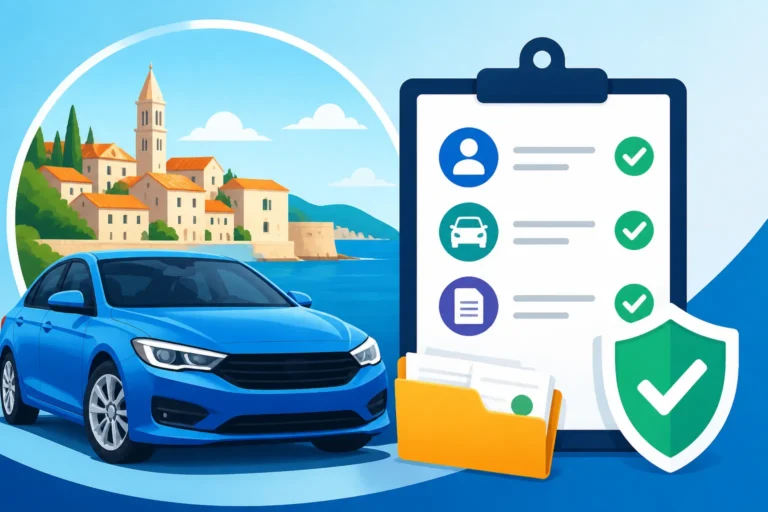
Before walking into a Hrvatski Telekom shop (often marked simply as T-Centar), gather all your personal documents into a single folder. You can find their physical stores in almost every major shopping mall, such as Arena Centar or City Center One in Zagreb, as well as along main commercial streets in coastal hubs.
Make sure you have:
1. Your physical passport or official EU identification card.
2. Your physical biometric residence card or your white MUP registration paper (potvrda o neprijavljenom/prijavljenom boravištu). To understand this step of the relocation journey, check our overview on Registering Your Residence in Croatia: The Complete MUP Guide.
3. Your OIB document (Potvrda o OIB-u).
4. A local debit card connected to an IBAN starting with HR.
If you are aiming to smooth out your overall transition period, review The Complete Guide to Moving to Croatia: Your First 90 Days (2027) to keep track of how telecom setup fits alongside your other administrative milestones.
The Registration and Activation Process for HT
Once you sit down with an agent at a T-Centar, tell them clearly whether you want a SIM-only postpaid plan (pretplata bez uređaja) or a plan tied to a phone purchase.
- Plan Selection: The agent will present their core tariff options (such as the Unlimited, M, or S plans). Ask specifically about seasonal promotions, contract lengths (12 months vs. 24 months), and international call allowances to your home country.
- Identity & Credit Check: The agent scans your passport, inputs your OIB, and verifies your residence address against their database. If you hold a foreign passport without a permanent residence permit, the system may flag your application, requiring a manager’s manual override or a security deposit.
- Contract Signing: You will be handed a multi-page contract written in Croatian. Take your time to review the monthly fee, the cancellation terms, and the exact data allocation. Do not hesitate to ask the representative to clarify points in English—most staff in major city branches speak English fluently.
- SIM Issuance & Activation: You will receive a physical SIM card or an eSIM QR code. Physical SIM cards normally activate within 1 to 4 hours, though system processing can occasionally take up to 24 hours.
- App Setup: Download the Moj Telekom app immediately. This allows you to track data usage, pay monthly invoices via card, and purchase add-ons without having to decipher paper bills sent to your home address.
Step-by-Step Guide to Setting Up with A1 Croatia
A1 Croatia (formerly known as VIPnet) is Hrvatski Telekom’s primary competitor. They offer exceptionally strong urban network performance, competitive pricing structures, and modern digital customer service interfaces.
How to Apply for an A1 Plan (In-Store vs. Online)
While Hrvatski Telekom leans heavily on established traditional workflows, A1 has invested significantly in digital onboarding. However, as a non-Croatian citizen, completing a postpaid application online remains difficult because automated system checks often fail to validate foreign passports or newly issued residence permits. Walking into an official A1 store remains the most reliable route.
When planning your household setup alongside mobile access, consult The Expat Guide to Setting Up Utilities in Croatia for a broader perspective on handling residential service applications.
If you visit an A1 store:
- Request an English-Speaking Representative: Most urban stores have bilingual staff members available.
- Present Your Credentials: Just like HT, A1 requires your passport, OIB, and proof of residence. If you are on a temporary visa, bring your physical biometric card How to Get a Biometric Residence Card (Boravišna Iskaznica) in Croatia.
- Select a Savršena or Apsolutna Tariff: A1’s plans range from basic data packages to fully unthrottled unlimited options. Pay close attention to whether the “unlimited” data tier includes a fair-use cap that requires sending a free SMS to unlock additional gigabyte blocks once you hit a daily limit.
- Sign the Agreement: You can choose between a standard 24-month commitment or a non-binding contract (ugovor bez obveze). The non-binding option incurs slightly higher monthly fees but offers complete freedom to cancel if your stay in Croatia ends unexpectedly.
Navigating Contracts, eSIMs, and Network Unlocking
If your smartphone supports eSIM technology, ask the A1 agent for an eSIM voucher instead of a plastic SIM card. They will hand you a paper slip featuring a unique QR code. Go to your phone’s cellular settings, scan the code, and your line will install in seconds.
For short-term digital nomads or expats who are still waiting on local paper approvals and cannot yet sign a local contract, travel eSIM solutions like Airalo offer instant, localized data bundles directly from your device. Using Airalo allows you to skip store visits entirely during your first few weeks, giving you continuous access to maps and translation tools while you gather your OIB and address documents.
If you bring a smartphone from your home country, ensure it is unlocked from your home network before attempting to use an A1 or HT SIM. While unlocked phones are standard across Europe, phones purchased on contract in North America or parts of Asia may still be locked to a specific carrier.
For deeper insights into combining home internet bundles with your mobile setup, read our dedicated article on How to Set Up Internet and Mobile Service in Croatia.
Practical Comparisons and Expat Pro-Tips for Mobile Service in Croatia
To help you decide between these two major players, here is a detailed breakdown comparing how they handle standard services for foreign residents:
| Feature / Requirement | Hrvatski Telekom (HT) | A1 Croatia | Prepaid Alternative (Both Providers) |
|---|---|---|---|
| Network Coverage | Exceptional nationwide; best on remote islands | Excellent in cities; strong on coast and highways | Same underlying network as provider |
| OIB Required? | Yes, strictly mandatory | Yes, strictly mandatory | No |
| Proof of Residence? | Yes (Biometric card or MUP paper) | Yes (Biometric card or MUP paper) | No |
| Contract Flexibility | 12 or 24-month contracts | 24-month or non-binding options | Pay-as-you-go (Cancel anytime) |
| eSIM Availability | Yes (In-store & via portal) | Yes (In-store & via portal) | Limited (Mostly physical cards) |
| App Support | Moj Telekom (English support) | Moj A1 (English support) | App support available for top-ups |
| Billing Method | Monthly invoice / Bank transfer | Monthly invoice / Bank transfer | Cash vouchers / Credit card top-ups |
Dealing with Language Barriers and Customer Service
Both providers offer phone and chat support in English, though front-line store employees in smaller towns may have varying levels of fluency. If you run into technical issues or administrative confusion, visiting a branch in a major city center—or sending a structured inquiry through their official web contact forms—usually yields the fastest results.
When evaluating your overall connectivity choices across the market, our complete comparison on How to Choose a Mobile and Internet Provider in Croatia details alternative providers like Telemach, as well as smaller virtual operators.
Managing Payments, Top-Ups, and Cancellation Policies
Once your line is active, managing your account efficiently will keep you from facing surprise service suspensions:
- Paying Monthly Invoices: Postpaid invoices arrive around the 10th of every month. Each bill includes a printed 2D barcode (uplatnica). You can pay this by scanning the barcode inside your local mobile banking application, paying online inside the provider app, or physically taking the paper slip to a post office (Hrvatska Pošta) or newsstand.
- Cancellation Warnings: If you sign a 24-month contract and decide to leave Croatia early, both A1 and Hrvatski Telekom will charge cancellation penalties. Under Croatian regulations, this fee is calculated as either the remaining monthly subscription fees for the rest of the contract period OR the total value of any discounts/subsidies received, whichever is lower for the consumer.
- Prepaid Inactivity: If you use a prepaid SIM card, keep in mind that the card has a strict expiry period. Even if you have remaining cash balance, failing to top up with a fresh voucher within 90 to 180 days can cause the provider to deactivate your phone number permanently.
By preparing your identity documents in advance, understanding your contract obligations, and choosing the right mix of prepaid flexibility or postpaid value, setting up a mobile line in Croatia becomes a straightforward milestone in making your new location feel like home.
Disclaimer
This article is for general informational purposes only and does not constitute professional advice. Laws, prices and regulations vary by location and change over time. Consult a qualified professional for guidance on your specific situation.