How to Get a Biometric Residence Card (Boravišna Iskaznica) in Croatia
Oh, the infamous Boravišna Iskaznica! If you've just moved to Croatia or are in the process of getting your affairs in order, you've probably heard this term whispered with a mix of anticipation and dread. It’s that little plastic card that finally makes your residence official, but getting it can feel like navigating a labyrinth designed by Kafka. This guide is here to demystify the process, offering you a realistic, step-by-step walkthrough so you can finally get that precious piece of plastic in your wallet and truly feel settled.
What Exactly is a Boravišna Iskaznica Biometric Residence Card?
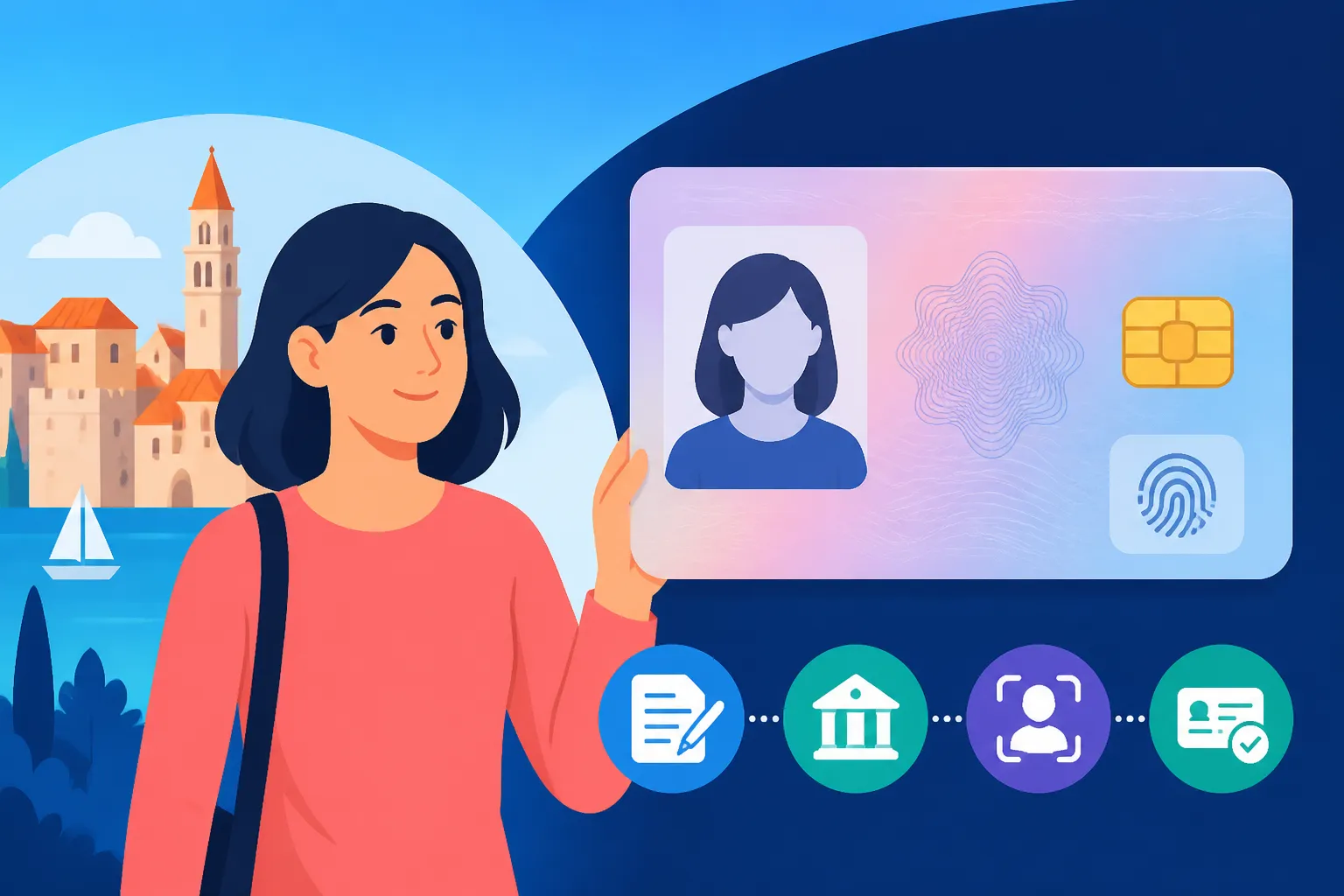
Let's cut through the jargon, shall we? The Boravišna Iskaznica is Croatia's official biometric residence card. Think of it as your Croatian ID card, but specifically for foreigners who have been granted a temporary or permanent residence permit. It's not just a fancy piece of plastic; it's the physical proof that you are legally allowed to live here, giving you access to all the rights and responsibilities that come with your specific permit. Without it, your residence permit, while approved, feels a bit like a ghost – legally binding, but lacking a tangible form for everyday life.
More Than Just a Plastic Card Its True Significance
From the moment you receive that coveted decision from the Ministry of Interior (MUP) granting your temporary residence (your Privremeni Boravak), you might feel a huge wave of relief. "I'm officially allowed to live here!" you might exclaim. And you'd be right, technically. However, that paper decision, while vital, isn't something you can easily flash at a bank, use for signing up for utilities, or even just carry as a form of identification. That's where the Boravišna Iskaznica steps in.
This card is your tangible connection to the Croatian system. It contains your photograph, your personal identification number (OIB), and critical data about your residence status, including the validity period. It’s what you’ll present when you register with a family doctor, or open a bank account. It's proof you're not just passing through, but you're a legitimate resident, engaging with Croatian society. Without it, you’ll find yourself constantly carrying around your passport and that flimsy paper MUP decision, often needing to explain yourself. This card simplifies everything, streamlining your interactions with various institutions across Croatia, from the health fund (HZZO) to local government offices. It’s the official recognition of your new life here, granting you a sense of belonging and practical ease that no paper document can provide.
Who Needs a Biometric Residence Card in Croatia?
This is a key question, and the answer largely depends on your nationality and the type of permit you're seeking. Generally speaking, if you are a third-country national (meaning from outside the EU/EEA/Switzerland) and you've been granted any form of temporary or permanent residence in Croatia, you will need to apply for a Boravišna Iskaznica.
This includes, but is not limited to, those who have received:
- A single work and residence permit.
- A digital nomad permit. This one is quite popular among expats these days, and your Boravišna Iskaznica will clearly state "Digitalni Nomad" as your basis for residence. If you're curious about this specific permit, check out our guide on How to Get a Croatian Digital Nomad Permit: The Full Guide.
- Residence based on family reunification, perhaps joining a spouse who is a Croatian citizen or another resident. We have a detailed guide on How to Apply for Family Reunification in Croatia that might be useful.
- Residence for study purposes.
- Residence as a self-employed individual, particularly if you’ve set up an obrt.
- Permanent residence.
For EU/EEA/Swiss citizens, the situation is a bit different. While you also need to register your residence if you plan to stay for more than three months, you don't typically get a "Boravišna Iskaznica" in the same way. Instead, you register your right of residence and receive a confirmation certificate or an EU residence card which is usually not biometric in the same vein as the third-country national card. However, this is still your official proof of residence, so don't think you can skip the MUP altogether! Regardless of your citizenship, understanding The Expat Guide to Temporary Residence (Privremeni Boravak) in Croatia is crucial.
The Application Process Navigating the MUP Bureaucracy
Ah, the MUP. The Ministry of Interior. It’s a name that can bring a sigh to many expat lips, myself included. While the MUP has made strides in streamlining processes, it still often feels like stepping back in time, with paper forms, long waits, and a rigid adherence to procedure. Getting your Boravišna Iskaznica is the final stretch of your residence permit journey, but it requires careful attention to detail.
Gathering Your Documents The Paperwork Gauntlet
Even after getting your residence permit approved, there's a specific set of documents you’ll need to present to actually get the physical card. Think of it as a final boss battle in the paperwork game. The exact list can sometimes vary slightly by MUP office or the individual officer you encounter, but here are the general requirements:
- Your Passport: Always, always bring your original passport. They will need to verify your identity and often cross-reference it with their existing records.
- MUP Decision on Approved Residence: This is the most crucial document. It’s the paper slip you received when your temporary residence permit was approved. It explicitly states that you have been granted residence and on what grounds. Make sure you have the original and a photocopy.
- Proof of Health Insurance: For your initial residence permit, you definitely needed proof of health insurance. For the Boravišna Iskaznica, they will want to see that this coverage is still active or that you've enrolled in the public health system (HZZO). If you’re a third-country national, you likely had private health insurance like Cigna Global initially. If you’ve since transitioned to HZZO, bring proof of your enrollment. A good resource for understanding your options is Health Insurance in Croatia: Mandatory, Supplementary and Private Options Explained.
- Proof of Funds: Depending on your permit type, you might need to show recent bank statements proving you still meet the financial requirements. This is less common for just the card application if you've already proven it for the permit, but it's wise to have it ready, especially if there's any ambiguity.
- Passport-Sized Photos: You'll need one or two recent, color passport-sized photos (usually 35×45 mm). These need to be against a white background, with a neutral expression, and no glasses or head coverings unless for religious reasons. My advice? Get these done at a professional photo studio here in Croatia. They know the exact specifications and are much less likely to be rejected by the MUP than photos from a machine or printed at home.
- Administrative Fees: There are specific fees associated with the card production and administrative costs. I’ll go into more detail about these below, but be prepared to show proof of payment.
- Your OIB: While not a "document" in itself, your OIB (Personal Identification Number) will be printed on the card. If you haven't gotten it yet, it’s a prerequisite for any official business in Croatia, including this card. You can learn more about this vital number in How to Get Your OIB and Why It Matters for Healthcare Access.
Remember, always bring originals and photocopies of everything. Croatian administration loves photocopies, and it can save you a trip to a nearby tisak (newsstand) if you have them prepared. Preparing your documents for a Croatian residence application can be overwhelming, so meticulousness is your best friend.
The Biometrics Appointment Fingerprints and Photos
Once you have all your documents in order and have paid the necessary fees, you'll head back to the MUP office where your residence permit was processed. This is usually the final step before the card is actually produced. Ideally, you’ve already made an appointment, especially in larger cities like Zagreb or Split. If you haven't, you might face significant queues. Understanding How to Book an Appointment at the MUP for Immigration Matters can save you a lot of grief.
During this appointment, the officer will:
- Review Your Documents: They'll meticulously check all the papers you've brought, verifying everything against your passport and their internal system. This is where those extra photocopies come in handy!
- Take Your Biometrics: This is the "biometric" part of the Boravišna Iskaznica. They will take your fingerprints, usually digitally using a scanner. It's a quick and painless process, involving placing your fingers one by one onto a small electronic pad. This data is then stored securely, making your card more difficult to forge and enhancing your identity verification.
- Confirm Your Photo: They will take a digital photo of you right there in the office, or they might scan the physical photos you brought if they meet the exact specifications. Even if you bring a photo, be prepared for them to take another one, just in case. They are very particular about lighting, expression, and background. My advice about getting professional photos done locally? Still valid, as they might accept those, but be flexible.
- Digital Signature (Optional, but Recommended): In some cases, they might ask if you want to activate your card for digital signature purposes immediately. This links your Boravišna Iskaznica to the e-Građani system, Croatia's fantastic digital portal for government services. It’s something I highly recommend doing, as it unlocks a world of convenience. More on that later.
Once all this is done, you'll be given a small paper confirmation slip, often called an Potvrda o predanom zahtjevu za izdavanje boravišne iskaznice (Confirmation of submitted request for residence card issuance). This slip is gold. Do NOT lose it. It contains a unique number that allows you to track the production of your card, and you'll need it to pick up your card when it's ready.
Understanding the Costs and Timelines
One of the biggest anxieties for expats, beyond the paperwork itself, is often the financial aspect and the waiting game. How much will this actually cost, and how long will I be without my official proof of residence? Let’s break it down realistically.
Fees for Your Boravišna Iskaznica
The fees for your Boravišna Iskaznica are generally paid via bank transfer (uplatnica) at a post office (Hrvatska pošta) or FINA (Financijska agencija) before you go to the MUP, or sometimes directly at the MUP office itself if they have a counter. It's always best to ask your specific MUP office about their preferred payment method. The amounts can change slightly, but here's a general breakdown as of my last check:
| Item | Cost (EUR) | Notes |
|---|---|---|
| Administrative Fee (Upravna Prustojba) | ~40-60 | This is the general administrative fee for processing your application for the residence card. It can vary slightly depending on the exact type of permit you have. |
| Card Production Fee | ~30-40 | This is the fee for the physical production of the biometric card itself. |
| Urgent Procedure Fee (optional) | ~100-150 | If you need your card processed urgently (e.g., for travel or an unforeseen emergency), you can pay an additional fee. This significantly speeds up the production time, but it's not always available for all types of permits or in all MUP offices, and it's expensive. |
| Form Filling Assistance (optional) | ~5-10 | If you use a service at the post office or FINA to help fill out the uplatnica (payment slip) correctly, there might be a small fee. Many expats find this useful to avoid errors. |
Please note: These figures are approximate and subject to change. Always verify the current fees with the MUP office or the official government gazette.
You'll usually receive a uplatnica from the MUP or a template from their website, which you then take to pay. Make sure you get a stamped receipt dokaz o uplati after payment, as you’ll need to present this to the MUP officer as proof that you've covered the costs. Sometimes, especially for new residents, the MUP might give you the payment slips with all the details pre-filled. If not, don't be afraid to ask for assistance at the post office – they are usually quite helpful.
How Long Will You Wait? Processing Times and Expectations
This is where the patience of an expat is truly tested. Croatian bureaucracy isn't known for its lightning speed. Once you've completed your biometrics appointment and submitted all documents, the card production begins.
- Standard Processing: Typically, you can expect your Boravišna Iskaznica to be ready in about 2 to 4 weeks. However, during peak seasons (like summer when many students or seasonal workers apply) or around major holidays, this can stretch to 6 weeks or even longer. In smaller towns, it might be quicker, but in larger cities like Zagreb or Split, prepare for the longer end of the spectrum.
- Urgent Processing: If you pay the urgent fee, the card might be ready in as little as 3-5 business days. This is fantastic if you have a critical need, but as you saw, it comes at a significant premium.
What to do while you wait?
Keep that paper confirmation slip (the potvrda). This is your temporary proof of application. In rare cases, if you need to travel internationally before your card arrives, you might be able to request a travel document from the MUP based on this, but it’s not guaranteed, and you should avoid planning international travel during this waiting period if possible.
You can often check the status of your card production online using the number on your potvrda. The MUP website, specifically the e-Passports and e-ID cards section, sometimes has a tool for this, or you can call the MUP office directly, although getting through by phone can be a challenge. Just be realistic with your expectations, and don't panic if it takes a bit longer than the estimated time. This is Croatia; polako (slowly) is often the modus operandi!
Collecting Your Card and What Comes Next
After weeks of anticipation, the moment finally arrives! You get the notification (sometimes an SMS, sometimes a call, sometimes you just keep checking online or in person) that your Boravišna Iskaznica is ready for collection. This is a mini-celebration moment – you’ve made it!
The Sweet Moment of Collection
To collect your new Boravišna Iskaznica, you'll need to return to the same MUP office where you submitted your application.
Here's what you'll need to bring:
- Your Original Passport: Again, for identification.
- The Confirmation Slip (Potvrda): The golden ticket you received after your biometrics appointment. Do not forget this!
- Your Old Residence Card (if applicable): If you're renewing or switching permit types, they will typically ask for your old card to be returned for cancellation.
The collection process itself is usually straightforward and relatively quick. You present your documents, they retrieve your new card, and with a smile (or at least a neutral expression), hand it over.
Immediately upon receiving your card, take a moment to double-check everything:
- Your Name: Is it spelled correctly, exactly as it appears on your passport?
- Your OIB: Is it the correct number?
- Your Photo: Is it actually you? (Believe me, sometimes mistakes happen!).
- Residence Type: Does it correctly state your permit type (e.g., Privremeni Boravak – Rad, Privremeni Boravak – Digitalni Nomad, Stalni Boravak)?
- Validity Dates: Are the start and end dates of your residence permit correct?
Catching an error immediately can save you a world of trouble later. While errors are rare, they do happen, and it's far easier to rectify them on the spot than to discover one weeks later when you're trying to do something official.
Activating Your Card and Digital Services e-Građani
This is a fantastic benefit of the biometric residence card that many expats don't fully utilize at first. Your Boravišna Iskaznica isn't just a physical ID; it's also a portal to Croatia's impressive digital government services platform, e-Građani (e-Citizens).
What is e-Građani?
e-Građani is an online platform that allows you to access a wide range of government services digitally, from checking your social security contributions (HZMO) and tax records (Porezna Uprava) to requesting various certificates (birth, marriage, residence). It’s designed to reduce the need for in-person visits to government offices, saving you countless hours of queuing and frustration. If you're managing life in Croatia, especially if you're a self-employed individual or simply want more control over your administrative life, getting set up with e-Građani is a game-changer. Our guide on Understanding the gov.hr and e-Građani Digital Services dives deep into this.
How to activate your card for e-Građani:
When you collect your card, the MUP officer might offer to activate it for e-Građani on the spot. If they don't, or if you decline at the time, you can usually do it later. You'll need:
- A Card Reader: A small USB device that connects to your computer and reads your chip-enabled ID card. These are readily available at electronics stores like Links or sometimes at larger post offices.
- PINs: When you get your card, you'll also receive an envelope containing your personal identification numbers (PINs) for digital use. Keep these very safe, just like your bank card PINs.
- Software Installation: You'll need to download and install specific software from the Croatian government's e-Osobna web portal (e-ID card portal). This software enables your computer to communicate with your card reader and the card itself.
Once set up, you can log into e-Građani by inserting your card into the reader and entering your PIN. It's an incredibly secure way to access your personal data and government services, bringing Croatian bureaucracy into the 21st century for those willing to embrace it. I can't stress enough how much easier life becomes once you have this set up for tasks like checking your pension contributions or applying for official documents without leaving your home.
Common Challenges and Troubleshooting for Expats
Even with the clearest instructions, dealing with bureaucracy in a foreign country always throws up unexpected hurdles. Croatia is no exception. Let's tackle some of the common frustrations expats face.
Lost, Stolen, or Damaged Cards
Losing your Boravišna Iskaznica is akin to losing your wallet or passport – it's a major headache. But it's not the end of the world, and there's a process to follow.
- Report Immediately: If your card is lost or stolen, your very first step is to report it to the nearest police station (policija) without delay. You'll need to file an official report, and they will provide you with a potvrda (confirmation) of your report. This is crucial for protecting you against potential identity theft and for your re-application.
- Contact the MUP: After reporting to the police, contact the MUP office where your card was issued (or any MUP office dealing with foreigners if you're unsure). They will guide you through the re-application process.
- Re-application Process: Unfortunately, getting a replacement card often means going through a process similar to the original application. You'll likely need to:
- Fill out a new application form.
- Provide new passport photos.
- Show your passport and the police report confirmation.
- Pay the administrative and card production fees again.
- Undergo the biometrics process again (fingerprints and possibly a new photo).
The processing time will also be similar to a standard new application, so prepare for another few weeks of waiting. If you need to travel urgently, ask the MUP about a temporary travel document.
If your card is merely damaged (e.g., chipped, bent, or the chip stops working), you'll also need to apply for a replacement. The process is similar, but you won't need a police report. Just bring the damaged card to the MUP for them to void and begin the replacement process. Always remember to keep your Boravišna Iskaznica safe, treat it like gold, and consider scanning it (along with your passport) and saving digital copies securely, just in case.
Dealing with Language Barriers and Unclear Instructions
This is perhaps the most universal expat frustration, and it hits hard when dealing with critical documents like your residence card. You're trying your best, but the instructions might be in Croatian, the MUP officer might not speak fluent English, and you're left feeling lost in translation. I've been there, staring blankly at forms, hoping for a kind soul to explain things.
Here’s some hard-won advice:
- Bring a Croatian-Speaking Friend: If possible, ask a Croatian friend, colleague, or even a landlord to accompany you to the MUP. Even having someone who can clarify one or two sentences can make a world of difference. Offering to treat them to coffee afterwards is a small price for peace of mind!
- Use Translation Apps: Google Translate or similar apps can be invaluable. Don't be shy about holding up your phone with a question or showing an officer a translated document. While not perfect, it can bridge significant communication gaps.
- Be Patient and Polite: Bureaucracy is tough everywhere, and even more so when there's a language barrier. A smile, a polite dobar dan (good day), and a calm demeanor can go a long way. Frustration is understandable, but expressing it rarely speeds things up.
- Ask for Clarification (Repeatedly if Necessary): If you don't understand an instruction, politely ask them to repeat it, or if they can write it down. Sometimes, simply hearing the same thing phrased differently can help. Don't leave the office until you are reasonably sure you understand what's required of you.
- Consult Expat Forums and Groups: Online expat communities in Croatia are a treasure trove of shared experiences. Chances are, someone else has navigated the exact same challenge you're facing. Ask specific questions; you'll often find invaluable, practical advice from fellow expats who have been through the same mill.
Remember, the MUP officers are doing their job, often under pressure. Most are willing to help, but their priority is following procedure. The burden is often on us, the expats, to adapt and persist. It's a rite of passage, really.
Renewing Your Biometric Residence Card
Just like any other official ID, your Boravišna Iskaznica has an expiry date. The validity period will correspond to your temporary residence permit (usually one year, sometimes longer for specific categories) or, if you have permanent residence, it will be valid for five years. Don't let it expire! Renewing it is a crucial administrative task that you need to be proactive about.
When and How to Renew
The golden rule for renewal is start early. Don't wait until the last minute. Croatian administrative processes, particularly those involving immigration, can take time.
-
When to Apply: You should ideally submit your renewal application to the MUP at least 60 to 30 days before your current card expires. Some MUP offices even prefer you start 90 days out. This gives them ample time to process your application without you falling into an expired status. If your card expires before you've received your new one, you might find yourself in an awkward legal limbo, unable to travel or even perform certain administrative tasks. We have a dedicated guide on How to Extend Your Temporary Residence Permit in Croatia which is essential reading here.
-
The Renewal Process: The good news is that renewing your Boravišna Iskaznica is usually less daunting than the initial application. Many of the documents will be similar to what you provided originally, but focused on proving your continued eligibility for residence.
- New Application for Residence Extension: You'll typically fill out a new application form for the extension of your temporary residence. This is not just for the card, but for your right to reside in Croatia for another period.
- Updated Documents: You'll need to provide updated versions of your documents, such as:
- Your current, soon-to-expire Boravišna Iskaznica.
- Your valid passport.
- Proof of continued financial means (bank statements, employment contract, obrt income).
- Proof of valid health insurance (HZZO confirmation or new private policy).
- Proof of accommodation (lease agreement, property ownership certificate).
- New passport photos (always a good idea to have fresh ones).
- Biometrics and Fees: You will likely undergo the biometrics process again (fingerprints and photo) and pay the same administrative and card production fees as you did for your initial card.
-
Consequences of Late Renewal: If your card expires before you apply for renewal, you could face penalties, including fines. More seriously, it can complicate your legal status and potentially lead to issues if you need to travel or interact with any official body. If you accidentally let it expire, contact the MUP immediately for guidance; don't just hope it goes unnoticed.
Changes in Status and Their Impact on Your Card
Life happens, and your circumstances in Croatia might change. A new job, marriage to a Croatian citizen, starting a family – these can all affect your residence status and, by extension, your Boravišna Iskaznica.
- Changing Your Basis for Residence: If you initially had a work permit and then get married to a Croatian citizen, you might want to switch your basis for residence to family reunification. This often involves a new application process at the MUP, and once approved, you will receive a new Boravišna Iskaznica reflecting your updated status. The old card will be cancelled. Similarly, if you were a digital nomad and then found employment with a Croatian company, you'd apply for a new work and residence permit.
- Changes to Personal Information: If your name changes (e.g., due to marriage), or any other key information printed on your card, you are generally required to report this to the MUP and apply for a new card with updated details. This ensures your official documents are always accurate.
- Change of Address (Prebivalište): While your address isn't typically printed on the Boravišna Iskaznica itself, you are legally obliged to report any change of address (your prebivalište) to the MUP within a specified timeframe (usually within 3 days). This won't necessarily trigger a new Boravišna Iskaznica, but it's a vital administrative step. Our guide on How to Register Your Residence (Prebivalište) at the MUP has all the details on this.
Always remember that your Boravišna Iskaznica is a reflection of your legal status in Croatia. Any significant change in that status should prompt you to consult with the MUP to ensure your documentation remains current and correct. While dealing with the MUP can be frustrating, being proactive and informed will ultimately save you a lot of stress and potential issues down the line. It's all part of the expat journey in this beautiful, sometimes bureaucratic, country.
Disclaimer
The information provided in this guide is for general informational purposes only and does not constitute legal or professional advice. While we strive to keep the information up-to-date and accurate, laws, regulations, and procedures in Croatia are subject to change without notice. Always consult with the official authorities (such as the Ministry of Interior – MUP), a legal professional, or a qualified advisor for specific advice regarding your individual circumstances. We cannot be held responsible for any loss or inconvenience caused by reliance on the information contained herein.