How Do I Apply for Family Reunification in Croatia?
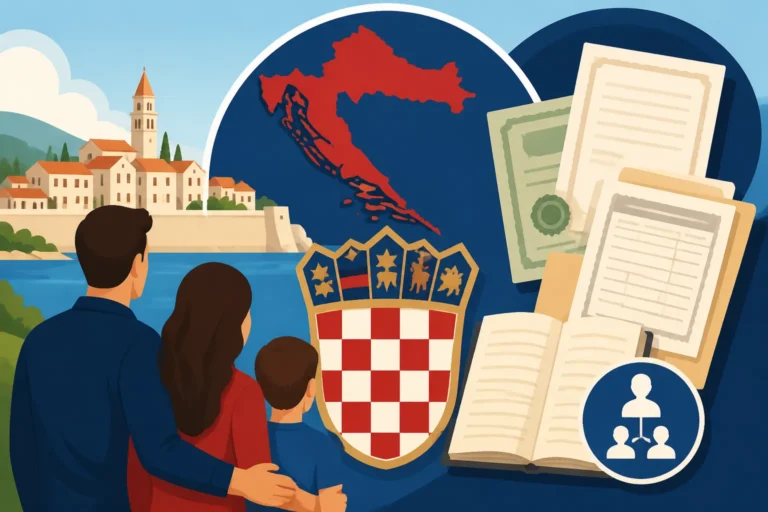
Oh, the joy and simultaneous headache of trying to bring your loved ones to join you in beautiful Croatia! As expats, we often dream of having our family closer, but the path to family reunification can feel like navigating a maze blindfolded, especially with the Croatian administrative system. This guide is here to untangle that knot for you, walking you through the application process for family reunification in Croatia, focusing on non-EU family members, and helping you understand exactly what’s needed to make your family whole again, right here on the Adriatic.
Understanding Family Reunification in Croatia: The Basics
When you’ve found your slice of paradise in Croatia, whether it’s the bustling streets of Zagreb, the sun-drenched coast of Split, or a quiet village in Istria, it’s only natural to want your closest family members to share that experience with you. Family reunification is a fundamental right, but in Croatia, like many countries, it comes with its own set of rules and requirements, particularly if your family members are coming from outside the European Union. It’s not simply a matter of wishing them here; there’s a structured, albeit sometimes slow, process to follow.
Who is Eligible to Apply as a Sponsor? The Resident in Croatia
First things first, let's talk about you, the person already living here in Croatia. You are the "sponsor" in this scenario, and your eligibility is the cornerstone of the entire application. Generally, to sponsor family members for reunification, you need to hold a valid temporary or permanent residence permit in Croatia. This isn't usually an option if you're just here on a tourist visa or a short-term stay. The Croatian authorities, primarily the Ministry of Interior (MUP), want to see that you are established, contributing to society, and capable of supporting your family without becoming a burden on the state.
This means you’ll need to prove stable income, suitable accommodation, and valid health insurance. For those of us who have gone through the initial residence permit process, you know these are the usual suspects! The length and type of your own residence permit can also impact the process. If you’re here on a digital nomad permit, for example, the rules for bringing family might differ slightly from someone employed by a Croatian company. The critical element is your legal standing and stability within Croatia. It's about demonstrating that you have a secure foundation from which to extend an invitation to your family.
Who Can Be Reunified? Defining "Family" in the Eyes of Croatian Law
So, who exactly counts as "family" when it comes to reunification in Croatia? The law is quite specific, generally covering immediate family members. This typically includes:
- Spouse or Life Partner: This is usually the most straightforward category. You’ll need to provide official proof of marriage or registered life partnership, which can be a bit of a bureaucratic dance if your marriage certificate isn't from an EU country.
- Minor Children: Your biological or adopted children under the age of 18 are usually eligible. If you have joint custody, you might need additional documentation from the other parent.
- Parents (in specific cases): This one is trickier. Generally, parents can only be reunified if they are dependent on you for support and don't have other children capable of supporting them in their home country. This dependency needs to be clearly proven, often with financial statements and declarations.
It's important to note that extended family members, such as siblings, grandparents, aunts, or uncles, are generally not eligible for family reunification under this specific process. The focus is on the nuclear family unit. If you're an EU citizen yourself, the scope might be slightly broader under EU freedom of movement rules, but for non-EU citizens, it's quite narrowly defined. Understanding these definitions from the outset will save you a lot of heartache and wasted effort.
Key Legal Frameworks: EU vs. Non-EU Citizens
The legal landscape for family reunification in Croatia differs significantly depending on whether you, the sponsor, are an EU/EEA/Swiss citizen or a third-country (non-EU) national. This is a crucial distinction that impacts everything from the type of application to the required documentation and even the processing times.
If you are an EU/EEA/Swiss citizen exercising your right to free movement in Croatia, your non-EU family members generally benefit from more favorable conditions under EU law. They will typically apply for a How to Register Your Residence as an EU Citizen in Croatia based on their relationship with you. The burden of proof for financial means might be less stringent, and the process generally aims to facilitate family unity within the EU framework.
However, if you are a third-country national (e.g., from the US, UK, Canada, Australia, India, etc.) holding a temporary or permanent residence permit in Croatia, your family members will need to apply under Croatia's national immigration laws, which align with the EU's directives for third-country nationals. This often involves more rigorous checks on financial stability, accommodation, and the genuineness of the relationship. They will be applying for a temporary residence permit for family reunification. It’s vital to understand which category you fall into, as it dictates the entire pathway you'll follow. The MUP website, while sometimes challenging to navigate, provides specific sections for both EU and non-EU related family applications.
The Application Process Step-by-Step for Non-EU Family Members
The journey to family reunification isn't a single jump; it's a series of deliberate steps, each requiring careful attention. For non-EU family members, the process often starts outside Croatia, but sometimes it can be initiated from within if certain conditions are met. This section will walk you through the typical pathway, highlighting potential pitfalls and what you should be mentally prepared for.
Gathering Your Documents: The Mountain of Paperwork
Let's be frank: Croatian bureaucracy loves paperwork. And then it loves more paperwork. For family reunification, this means assembling a meticulous collection of documents, often with specific requirements for translation and authentication. This isn't the time for 'good enough'; precision is key.
You'll need documents proving your identity and residence status in Croatia, such as your passport, biometric residence card, and proof of your OIB (Personal Identification Number). Then, for your family member(s), you'll need their passport, and crucially, official documents proving your family relationship. For spouses, this means an original marriage certificate, often apostilled or legalised and translated by a certified court translator in Croatia. For children, it's their birth certificate. If you're bringing parents, expect to need their birth certificates and yours, demonstrating your filial link, along with proof of their dependency.
Beyond identity and relationship, you'll need evidence of your ability to support them. This includes your financial statements, employment contract, and possibly tax returns. You'll also need proof of suitable accommodation in Croatia, such as your rental agreement or property ownership documents, along with utility bills in your name to show a genuine residence. Don't forget the requirement for health insurance; your family member will need to secure private health insurance like a policy from Cigna Global, or show proof of coverage through your own Croatian public health insurance if applicable, until they can register with HZZO. Each document needs to be presented correctly, sometimes in original form, sometimes notarised copies, and always with certified Croatian translations if they're not in English. It's truly a mountain, but an achievable one if you tackle it systematically.
Where to Apply: Croatian Embassy/Consulate vs. MUP
The initial application point is often a point of confusion for expats. Generally, the rule for non-EU family members is that they should apply for their temporary residence permit for family reunification at the competent Croatian embassy or consulate in their country of origin or the country where they have legal residence. This means they will submit all their documents, and possibly attend an interview, before even stepping foot in Croatia with the intention to reside.
However, there are exceptions. If your family member is already legally present in Croatia, for example, on a short-stay visa (Schengen C-visa) and the reasons for their stay warrant it, or if you, the sponsor, are an EU citizen and they are applying based on your EU rights, they might be able to submit their application directly to the MUP in Croatia. This is less common for third-country nationals sponsoring other third-country nationals, but it's always worth checking the specific circumstances with the MUP or embassy. It's often safer and more reliable for your family member to apply from abroad to avoid potential issues upon arrival or while waiting for processing. Make sure to research the specific requirements of the embassy or consulate responsible for your family member's country of residence well in advance. Some embassies require appointments months in advance, so plan accordingly.
The Waiting Game: What to Expect After Application
Once all the meticulously gathered paperwork has been submitted, and the application fee paid, then begins the infamous "waiting game." This is where patience truly becomes a virtue. The processing times for family reunification applications can vary significantly. They depend on the workload of the specific embassy or MUP office, the complexity of your case, and whether all documents were perfect from the first submission.
For applications submitted abroad, it can take anywhere from a few weeks to several months for a decision to be made. During this period, your family member might be contacted for additional documentation or clarification. It’s crucial to respond promptly to any requests. If the application is approved, your family member will typically be issued a long-stay D visa (if required for their nationality) allowing them to enter Croatia to pick up their residence permit. Upon arrival, they will need to report to the MUP, often within a few days, to register their address and apply for their biometric residence card. This entire journey can be emotionally taxing, but understanding that delays are a normal part of the process can help manage expectations. Remember that continuous communication and follow-up (without being overly pushy) with the relevant authorities are generally advisable.
Essential Requirements and Proofs for Family Reunification
Beyond the basic documents, Croatian authorities have specific criteria they scrutinize. These are not merely suggestions; they are non-negotiable pillars upon which your family reunification application stands. Failing to adequately prove any of these can lead to delays or outright rejection, prolonging the separation from your loved ones.
Proving Your Relationship: Marriage and Birth Certificates
This might sound obvious, but proving your relationship goes beyond just presenting a certificate. The Croatian authorities need to be absolutely certain of the legitimacy of your familial ties. For married couples, your marriage certificate must be recent, original, and properly authenticated. This often means it needs an Apostille stamp if issued by a country that is part of the Hague Apostille Convention, or full consular legalization if not. If the document isn't in Croatian or English, a sworn translation by a certified Croatian court translator is mandatory. They might also look at other evidence to ensure the marriage is genuine, not one of convenience, especially if you haven't been married for very long or have significant age differences.
For children, birth certificates are key. Again, these need to be authenticated and translated. If one parent isn't present for the application, or if you have sole custody, additional court orders or notarized statements of consent might be required. For dependent parents, proving the relationship involves not just their birth certificates, but also yours to show the generational link. This level of detail in documentation is paramount; any discrepancy or lack of proper authentication will send you back to square one, often delaying the process for weeks or even months.
Demonstrating Sufficient Funds: The Financial Hurdle
Croatia wants to ensure that those residing within its borders, especially those being sponsored for residence, can support themselves and their families without becoming a burden on the state's social welfare system. This is where demonstrating "sufficient funds" comes in. The MUP has specific thresholds for the minimum amount of financial means a sponsor must possess to support their family members. These amounts are subject to change but are generally tied to a percentage of the average net salary in Croatia or a fixed minimum.
You'll need to provide proof of consistent and adequate income, usually through bank statements, salary slips, or business income statements if you're self-employed. If you are applying for Understanding Health Coverage for Self-Employed (Obrt) Workers in Croatia, you’ll provide your obrte records. For a single person sponsoring a spouse, you might need around double the required amount for a single individual. For each additional child or dependent, the required amount increases. This isn't just about having money in your account on the day you apply; it's about demonstrating a stable, ongoing source of income. If your income fluctuates, you might need to provide a longer history of bank statements. For those relying on savings, the MUP typically requires a substantial sum to be held in a Croatian bank account for a prolonged period, indicating financial stability.
Health Insurance and Accommodation: The Non-Negotiables
Just like with your own initial residence permit application, health insurance and proof of accommodation are two critical requirements that absolutely cannot be overlooked.
Your family member will need to demonstrate that they have comprehensive health insurance coverage for their entire stay in Croatia. For non-EU citizens, this often means securing private health insurance. Options like Cigna Global are popular choices among expats as they provide international coverage and are generally accepted by Croatian authorities. This private policy needs to be valid from their intended date of arrival and cover them until they become eligible for public health insurance (HZZO). Once they are granted temporary residence and have their OIB, they can then apply for HZZO coverage, which is mandatory for most residents. The process for Registering with HZZO in Croatia: The Complete Expat Guide (2027) can take some time, so private insurance bridges that gap.
As for accommodation, you need to prove that you have a suitable place for your entire family to live. This means providing a valid rental agreement (original, notarised, and registered with the Tax Administration) or proof of property ownership (vlasnički list). The accommodation needs to be large enough for the number of people who will be living there, adhering to Croatian housing standards. A one-bedroom apartment might be fine for a couple, but if you're bringing two children, you'll need something larger. Providing recent utility bills in your name alongside your lease can further strengthen your proof of genuine residence. The MUP wants to see that your family won't be living in overcrowded or unsuitable conditions.
Navigating Common Challenges and Important Considerations
The family reunification process, while ultimately rewarding, is rarely without its bumps and twists. Having lived here for a while, you've probably encountered your fair share of "only in Croatia" administrative quirks. Being prepared for these common challenges can make the journey a lot smoother for both you and your family.
Language Barriers and Bureaucracy: Tips for Survival
Let’s be honest, even for simple tasks, the Croatian administrative system can be daunting if you don't speak the language fluently. For something as complex as family reunification, the language barrier can feel like an impenetrable wall. While many MUP officials, especially in larger cities like Zagreb or Split, might speak some English, it's not guaranteed, and technical legal terminology can easily get lost in translation. This is where professional help becomes invaluable.
Consider hiring a local lawyer or an experienced administrative assistant who specializes in immigration matters. They can help review your documents, accompany you to MUP appointments, and ensure all communication is precise and correctly understood. While it's an added expense, the peace of mind and prevention of costly mistakes (like having to redo documents) can be well worth it. You might also want to utilize online translation tools for general understanding, but always rely on certified translators for official documents. Remember, patience is your best friend when dealing with bureaucracy, and a kind, polite demeanor goes a long way, even when you're incredibly frustrated. Don’t hesitate to book an appointment with a MUP official; they are often more helpful in person.
The Importance of Timelines and Renewals
Unlike some countries where family reunification grants a long-term status immediately, Croatia typically issues temporary residence permits first. This means your family member's permit will have an expiry date, usually after one year. It is absolutely crucial to be aware of this timeline and begin the renewal process well in advance, typically 30-60 days before the current permit expires. Missing the renewal deadline can lead to serious complications, including potential overstay issues or the need to reapply from scratch.
Each renewal will again require updated documents, proving continued financial stability, accommodation, and health insurance. It’s not just a rubber stamp; it’s a re-evaluation of your circumstances. Keep a meticulous record of all documents, their expiry dates, and the dates of any MUP appointments or submissions. Setting calendar reminders for renewals is a must. Eventually, after a continuous period of temporary residence (usually 5 years), your family member may become eligible to apply for Permanent Residence in Croatia: The Complete Pathway (2027), which offers greater stability and fewer renewal hassles.
What Happens After Approval: Registration and Integration
So, your family member's application is approved! Congratulations, that's a huge hurdle cleared. But the journey isn't quite over. Upon their arrival in Croatia (or once the decision is made if they applied internally), they will have a limited timeframe, typically three days, to register their address (prijava boravišta) at the local MUP office. This is critical for formalizing their presence and receiving their biometric residence card. This card is their official proof of residence and should be carried at all times.
Beyond the administrative steps, think about their integration. Help them get an How to Get an OIB Personal Identification Number in Croatia, register with your family doctor (obiteljski liječnik), and for school if they are children. Explore options for learning Croatian, which will significantly ease their daily life. If they have skills or qualifications, assist them in looking for work or pursuing further education. Services like Sirelo can be immensely helpful if you’re coordinating a large move with many personal belongings. Remember, moving to a new country, even for family, can be a culture shock. Be there to support them through the initial adjustments, help them build a new social network, and discover the beauty of Croatian life. It's a process of creating a new home, not just getting a piece of paper. The Expat Guide to Moving to Croatia: Your First 90 Days (2026) can offer some valuable insights for their initial period.
Here's a quick overview of key documents for common family reunification scenarios for non-EU citizens:
| Document Type | For Sponsor (Expat in Croatia) | For Family Member (Non-EU) | Notes |
|---|---|---|---|
| Identity & Status | Valid Passport, OIB, Biometric Residence Card | Valid Passport, Visa (if applicable) | Passports must have sufficient validity. |
| Relationship Proof | N/A | Original Marriage Certificate (for spouse) | Must be apostilled/legalised & officially translated into Croatian by a court translator. |
| N/A | Original Birth Certificate (for children/parents) | Same authentication & translation requirements as marriage certificate. | |
| N/A | Proof of dependency (for parents, e.g., financial statements) | Must clearly show the parent relies solely on the sponsor for financial support. | |
| Financial Means | Proof of sufficient funds (bank statements, pay slips, employment contract, tax returns) | N/A | Must meet MUP's minimum threshold for the number of dependents. Consistent income is key. |
| Accommodation | Valid rental agreement (notarized, registered) or property ownership document (vlasnički list) | N/A | Must prove suitable housing for all family members. Utility bills can serve as additional proof. |
| Health Insurance | N/A | Private health insurance policy | Must cover the entire period until HZZO registration is possible. Cigna Global is a good option for initial private coverage. |
| Criminal Record Check | N/A | Certificate of no criminal record (from home country) | Often required for adult family members, must be recent, apostilled/legalised, and translated. |
| Photographs | N/A | Passport-sized photos (specific dimensions) | Always check the exact MUP/embassy requirements for photo dimensions. |
| Application Forms & Fees | N/A | Completed MUP application form, proof of fee payment | Download forms from MUP website; fees vary and are subject to change. |
This table is a general guide. Always verify the most current and specific requirements with the Croatian MUP or the relevant Croatian Embassy/Consulate.
Bringing your family to Croatia is one of the most significant steps you'll take as an expat, transforming your solo adventure into a shared family experience. While the administrative journey can be complex, even frustrating at times, it is absolutely achievable with diligent preparation, patience, and a bit of local insight. You've got this!
Disclaimer
The information provided in this guide is for general informational purposes only and does not constitute legal or immigration advice. While we strive to keep the information up-to-date and accurate, laws and procedures in Croatia can change rapidly. It is highly recommended to consult with the official Croatian Ministry of Interior (MUP) or a qualified immigration lawyer in Croatia for advice tailored to your specific situation. We cannot be held responsible for any inaccuracies or omissions, or for any actions taken based on the information provided herein.