How Do I Get Croatian Citizenship by Descent?
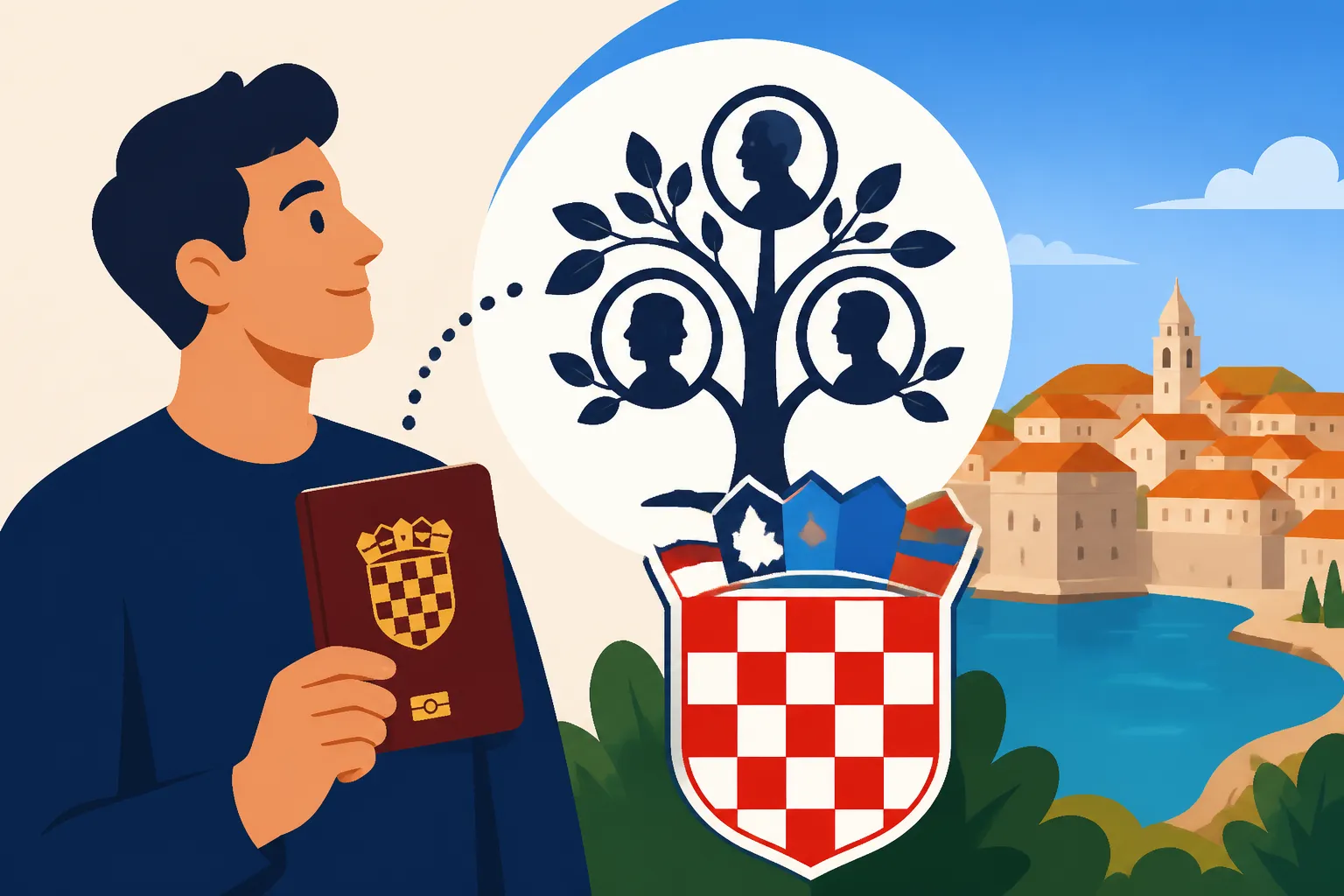
One of the most profound desires for many expats and those with Croatian heritage is to reconnect with their roots by obtaining Croatian citizenship. It’s a journey often fraught with administrative complexities, language barriers, and the sheer challenge of digging through generations of family history. This guide will walk you through the often-baffling process of applying for Croatian citizenship by descent, helping you understand the legal landscape, gather the necessary documents, and navigate the bureaucratic hurdles that come with it.
Understanding Citizenship by Descent in Croatia: The Basics
For many, the idea of holding a Croatian passport is more than just a legal status; it's a profound connection to family, culture, and a sense of belonging. Croatian citizenship by descent is primarily governed by the Law on Croatian Citizenship, and over the years, there have been significant amendments that have made it more accessible to the diaspora. It’s crucial to understand that this isn’t always a straightforward path, and your eligibility largely depends on when your ancestors emigrated and the specific circumstances of your lineage.
Who is Eligible for Citizenship by Descent?
Eligibility for Croatian citizenship by descent, often referred to as acquisition by origin or bloodline, is fundamentally based on proving a direct ancestral link to a Croatian citizen. The law generally distinguishes between those born before and after Croatia gained independence on October 8, 1991. If you were born before this date, the process often involved proving that at least one of your parents was a Croatian citizen at the time of your birth. This might seem simple, but historical shifts, renunciations of citizenship, or lack of formal recognition could complicate matters significantly.
For those born after October 8, 1991, the rules expanded slightly. The key here is typically through Article 11 or Article 16 of the Law on Croatian Citizenship. Article 11 is for individuals whose ancestors were Croatian citizens at the time of their emigration and who never acquired Croatian citizenship after gaining independence. This often applies to descendants of emigrants from the former Yugoslavia, where individuals might have been citizens of one of the republics but not specifically "Croatian" in the modern sense. The most impactful changes came with the 2019 amendments, which significantly broadened the scope for descendants of Croatian emigrants, making it possible for subsequent generations to apply even if their direct parent hadn't obtained citizenship. This was a massive relief for many who previously felt cut off. The crucial element remains demonstrating that your Croatian ancestor was indeed considered a Croatian citizen when they left the country, and that this status was maintained, at least theoretically, through their lineage until your application.
Key Laws and Amendments to Be Aware Of
The landscape of Croatian citizenship law has seen its fair share of changes, largely influenced by the country’s tumultuous 20th century history. Initially, after gaining independence, the laws were quite strict, primarily focusing on maintaining the integrity of the newly formed state. This meant that many descendants of those who emigrated during the Yugoslav era or even earlier found it incredibly difficult to prove their Croatian citizenship, especially if their ancestors had acquired citizenship of another country. The administrative hurdles were immense, and the burden of proof often felt insurmountable.
However, the most significant shift occurred with the amendments to the Law on Croatian Citizenship in 2019, which came into effect in 2020. These changes were a direct response to pleas from the global Croatian diaspora and aimed to simplify the process for descendants of emigrants. Crucially, these amendments introduced a more lenient interpretation, particularly for individuals whose ancestors had emigrated before Croatia declared independence. For instance, those who were direct descendants of Croatian emigrants who left between 1945 and October 8, 1991, now have a clearer path under Article 16. This article specifically allows individuals who can prove their Croatian ethnicity and direct lineage to an emigrant to apply for citizenship, regardless of how many generations have passed, as long as the direct lineage can be established. This was a game-changer, acknowledging the historical circumstances that led to mass emigration and offering a genuine opportunity for descendants to reclaim their heritage. It’s a move that has helped countless individuals finally feel connected to their ancestral homeland.
Gathering Your Croatian Ancestry Documentation
This is where the real detective work begins, and it can be a deeply personal, sometimes frustrating, but ultimately rewarding part of the journey. The Croatian authorities are meticulous, and every document tells a piece of your family's story, so precision is absolutely key. Don't underestimate the effort required to dig through family archives, contact distant relatives, and perhaps even engage professional genealogists.
Essential Documents from Your Ancestors
To even begin your application for Croatian citizenship by descent, you'll need to meticulously gather specific vital records from your Croatian ancestors. This typically includes their original birth certificates (rodni list), marriage certificates (vjenčani list), and sometimes even death certificates (smrtni list), depending on their status and your direct lineage. The aim is to prove that your ancestor was indeed a Croatian citizen at the time of their emigration or at the relevant point in your family tree. For instance, if your great-grandparent was born in a village that is now part of Croatia, their birth certificate from that region is invaluable.
The challenges here can be significant. Many records from the Austro-Hungarian Empire or the Kingdom of Yugoslavia might be in old script, difficult to read, or even damaged. Obtaining these documents often means navigating the archives of former Yugoslav republics, municipal registries (matični uredi) in Croatia, or even parish churches, which historically kept meticulous records. Sometimes, proving that an ancestor had Croatian citizenship at a particular time, rather than just being born in the territory, can be the trickiest part. This might involve old census records, military service records, or other official documents that explicitly state their nationality or loyalty. Each document must be an original or a certified copy from the issuing authority, not just a photocopy, and it must be legalized, usually with an apostille, if issued outside Croatia. This administrative hurdle alone can take months, so starting early is highly recommended.
Documents Proving Your Direct Lineage to Your Croatian Ancestor
Once you've managed to unearth your ancestor's vital records, the next step is to undeniably prove your direct bloodline connection to them. This means you'll need your own birth certificate, your parents' birth and marriage certificates, and so on, tracing an unbroken chain back to the Croatian ancestor. For example, if you're applying through a great-grandparent, you'll need their birth certificate, your grandparent's birth certificate, your parent's birth certificate, and finally your own. If your parents were married, their marriage certificate is also essential to demonstrate legal parenthood.
Any changes in names due to marriage, adoption, or other legal processes must be clearly documented with corresponding legal certificates. For instance, if your mother changed her surname upon marriage, you’ll need her marriage certificate to link her maiden name on her birth certificate to her married name on your birth certificate. All these documents, if not originally in Croatian, must be officially translated into Croatian by a sworn court interpreter. This isn't a task for a casual translator; it requires a certified professional whose translations are recognized by Croatian authorities. Furthermore, just like your ancestor's documents, your personal documents (like your birth certificate) often need to be legalized with an apostille from the country where they were issued. This process ensures the authenticity of the document for international legal purposes. Skipping any of these steps can lead to immediate rejection or significant delays, which is a common source of frustration for many applicants trying to piece together their family history across borders and generations.
Here’s a simplified table of the core documents you’ll generally need:
| Document Type | Description | Originating Person | Notes |
|---|---|---|---|
| Rodni List (Birth Cert.) | Certified copy of the birth certificate, proving birth within Croatia's historical or modern borders. Essential for every link in the chain from you back to your Croatian ancestor. | All Applicants | Must be original or certified copy. Apostille/legalization required if from outside Croatia. Official Croatian translation. |
| Vjenčani List (Marriage Cert.) | Certified copy of marriage certificates for parents and grandparents (and great-grandparents if applicable) to establish legal lineage. | Ancestors, Parents | Critical for linking surnames and proving legitimate descent. Apostille/legalization, official translation. |
| Smrtni List (Death Cert.) | Certified copy of death certificates for deceased ancestors. Often required to show the full picture of their life history. | Deceased Ancestors | Especially important if citizenship was potentially lost or renounced at death. Apostille/legalization, official translation. |
| Proof of Croatian Citizenship | Any document proving your ancestor held Croatian citizenship (or relevant nationality within former Yugoslavia that implies Croatian status) at the time of emigration. Examples: old passports, identity cards, military records, electoral rolls, census data. | Croatian Ancestor | This is often the hardest document to find. Without it, your claim might be much weaker, particularly under older laws. |
| Proof of Emigration | Documents showing when and how your ancestor left Croatia (e.g., ship manifests, foreign naturalization papers, old visas). | Croatian Ancestor | Helps establish the timeline and context of their departure. |
| Proof of No Foreign Citizenship Renunciation | Affidavit or official document stating that your ancestor (or intervening parent) did not renounce Croatian citizenship when acquiring foreign citizenship (if applicable). | Ancestor, Parent | This is a key legal point for many cases, especially regarding dual citizenship before recent amendments. |
| Identity Document | A valid passport or national ID card. | Applicant | For identification purposes. |
| Criminal Record Check | Official criminal record certificate from your country of residence (and any other countries where you've resided for a significant period), translated and apostilled. | Applicant | Mandatory for all applicants over a certain age (usually 18). |
| Curriculum Vitae (CV) | A detailed biography outlining your education, work history, and any connections to Croatian culture or community. | Applicant | While not strictly a vital record, it helps paint a picture of your connection. |
| Statement of Croatian Affiliation | A personal statement describing your connection to Croatian culture, language, or community, and your reasons for seeking citizenship. | Applicant | Shows intent and genuine interest beyond just a passport. |
The Application Process: Step-by-Step
After the monumental task of gathering all your meticulously documented family history, you're finally ready to submit your application. This phase, while less about historical sleuthing, brings its own set of administrative complexities. Patience, organization, and a clear understanding of the channels are your best allies.
Where and How to Submit Your Application
The location for submitting your application for Croatian citizenship by descent depends on where you currently reside. If you are living outside of Croatia, you will submit your application to the nearest Croatian embassy or consulate in your country of residence. This is often the most common route for descendants living abroad. You'll usually need to book an appointment, and these can be notoriously difficult to secure due, in part, to high demand and limited staff. It's not uncommon for waiting times to be several months long, so plan well in advance. When you attend your appointment, you’ll present all your original documents, along with their certified Croatian translations and apostilles. They will review your application, make copies, and may conduct a brief interview to confirm details.
If you are already living in Croatia, perhaps on a temporary residence permit like a digital nomad visa, you can submit your application directly to the Ministry of Interior (Ministarstvo unutarnjih poslova or MUP) department responsible for citizenship in the city where you reside. For example, if you're in Zagreb, you'd go to the MUP office in Petrinjska Street. Applying directly at the MUP can sometimes be perceived as faster by some, as it bypasses the diplomatic channels, but it still involves significant waiting times. In either case, ensure all your documents are perfectly in order before your appointment. If you're applying from within Croatia, you'll definitely need to have your OIB (personal identification number) already in place, as it's a fundamental identifier for all administrative processes here. You can learn more about How to Get an OIB (Personal Identification Number) in Croatia.
What to Expect After Submission
Once you've submitted your application and all the accompanying documents, a new waiting game begins. The processing times for Croatian citizenship applications can vary wildly, from several months to a year or even longer. It’s not a fast process, so manage your expectations. During this period, your application will be reviewed by officials at the MUP in Zagreb, and they may conduct further checks or request additional documentation if something is unclear or missing. This can be one of the most frustrating aspects, as these requests often come via postal mail, sometimes in Croatian, and can cause further delays if not addressed promptly and correctly.
It's wise to keep copies of everything you submit and to make a note of any reference numbers you receive. While you can't constantly call for updates, some embassies or the MUP might have an online portal or a dedicated email for status inquiries. For instance, once you have your OIB and if you're living in Croatia, you might be able to use the e-Građani system to check the status of certain administrative procedures, though citizenship applications might not always be fully tracked there. You can read more about Understanding the gov.hr and e-Građani Digital Services. The MUP might also schedule an interview with you, especially if there are ambiguities in your application or if they need more personal context regarding your connection to Croatia. This is usually a formal but conversational chat, often focused on your reasons for seeking citizenship and your ties to the country. Finally, if your application is successful, you will receive a formal decision (Rješenje o primitku u hrvatsko državljanstvo). This is a moment of immense pride for many, signifying the official recognition of their Croatian heritage.
Navigating Common Hurdles and Special Cases
The path to Croatian citizenship by descent, while rewarding, is rarely smooth. Expats often face unique challenges that stem from historical record-keeping, language barriers, and the sheer volume of bureaucracy. Understanding these common hurdles upfront can help you prepare and mitigate potential frustrations.
Dealing with Missing or Incomplete Documentation
One of the biggest headaches for many applicants is dealing with missing or incomplete documentation from their ancestors. Imagine trying to find a birth certificate from a small village in Dalmatia from the early 1900s, especially if your family lost touch with that region generations ago. Borders have shifted, names have changed (often due to anglicization or Germanization upon emigration), and records may have been lost or destroyed in wars or natural disasters. Sometimes, the only "proof" of Croatian identity is anecdotal family history or a faded photograph.
In such cases, perseverance and creativity are key. You might need to expand your search beyond official state archives. Church records, especially Catholic parish registers, often predate civil registries and can be incredibly detailed, sometimes going back centuries. Engaging a professional genealogist in Croatia can be invaluable. These experts have local knowledge, language skills, and an understanding of where to look for obscure records that you might never find on your own. They can navigate regional archives, municipal offices, and even interview distant relatives to piece together your family's story. Sometimes, if a direct document is truly unobtainable, a legal declaration from a close relative (if still alive and a Croatian citizen) or a combination of circumstantial evidence might be accepted, but this is less common and depends on the discretion of the MUP. It’s about building a compelling case with whatever evidence you can muster.
The Language Barrier and Official Translations
Even if you're a seasoned expat with a knack for navigating foreign bureaucracy, the language barrier can be a significant hurdle when dealing with official Croatian documents. Every single document not originally issued in Croatian must be translated by a sworn court interpreter (sudski tumač). This isn't just a recommendation; it's a strict legal requirement. A translation done by a friend or a non-certified translator, no matter how proficient, will be rejected immediately. Finding a reliable sworn court interpreter is crucial, and while they can be found in Croatia and in some Croatian embassies abroad, their services come at a cost.
The cost of these translations can quickly add up, especially when you have multiple birth, marriage, and death certificates for several generations, all needing translation and often an apostille. It's a significant financial outlay that many applicants underestimate. Moreover, the official letters and communications you might receive from the MUP during the application process will almost certainly be in Croatian. This means you'll need ongoing access to reliable translation services to ensure you understand any requests for additional information or clarification, and to respond accurately and promptly. Some expats find it helpful to engage a local administrative support service or a lawyer who can act as a liaison, helping to interpret official correspondence and ensure all documents meet the precise legal standards. For those considering a full move to Croatia after obtaining citizenship, integrating into the local language and administrative systems might be a smoother experience with comprehensive relocation support, which services like Sirelo can help coordinate, covering various aspects of moving and settling in.
Implications for Health Insurance and Travel Post-Citizenship
Once you successfully acquire Croatian citizenship, a whole new world of opportunities opens up, particularly concerning travel and healthcare. As a Croatian citizen, you automatically become an EU citizen, granting you the right to live, work, and travel freely within any of the European Union member states. This is a huge advantage, eliminating the need for separate visas or residence permits for EU countries. You can move to Germany to work, study in France, or retire in Portugal with far fewer administrative hoops. This vastly simplifies personal and professional mobility compared to being a non-EU citizen who might have needed a How to Apply for a Croatian Digital Nomad Permit or other temporary permits.
Regarding healthcare, your Croatian citizenship will allow you to access the public healthcare system through the Croatian Health Insurance Fund (HZZO), generally under the same conditions as any other Croatian resident. This is a significant benefit, as the public system is generally comprehensive and more affordable than private options. However, simply having citizenship doesn't mean instant enrollment; you'll still need to formally register with HZZO once you establish residency in Croatia, which involves its own set of administrative steps. You can dive deeper into The Complete Guide to Healthcare in Croatia for Expats (2027) and specifically how to manage Registering with HZZO in Croatia: The Complete Expat Guide (2027). While navigating the public system, especially in the initial stages or if you plan extensive travel, some expats still opt for robust private health insurance like Cigna Global to ensure seamless coverage, especially for international emergencies or specific treatments not immediately available through HZZO. This can offer peace of mind during the transition period or for those who plan to continue globetrotting with their new Croatian passport.
The citizenship opens doors for The Complete Guide to Working in Croatia as a Foreigner (2027) and helps in understanding The Complete Guide to Taxes in Croatia for Expats (2027). If you are thinking of studying, you might also want to look into How to Get Your Foreign Degree Recognised in Croatia: The AZVO Guide once you have your citizenship.
Disclaimer
Please note that the information provided in this guide is for general informational purposes only and does not constitute legal advice. While we strive to ensure accuracy, laws and procedures for Croatian citizenship are complex and subject to change. We highly recommend consulting with a qualified legal professional specializing in Croatian immigration and citizenship law for personalized advice regarding your specific situation.