How to Apply for a Croatian Digital Nomad Permit
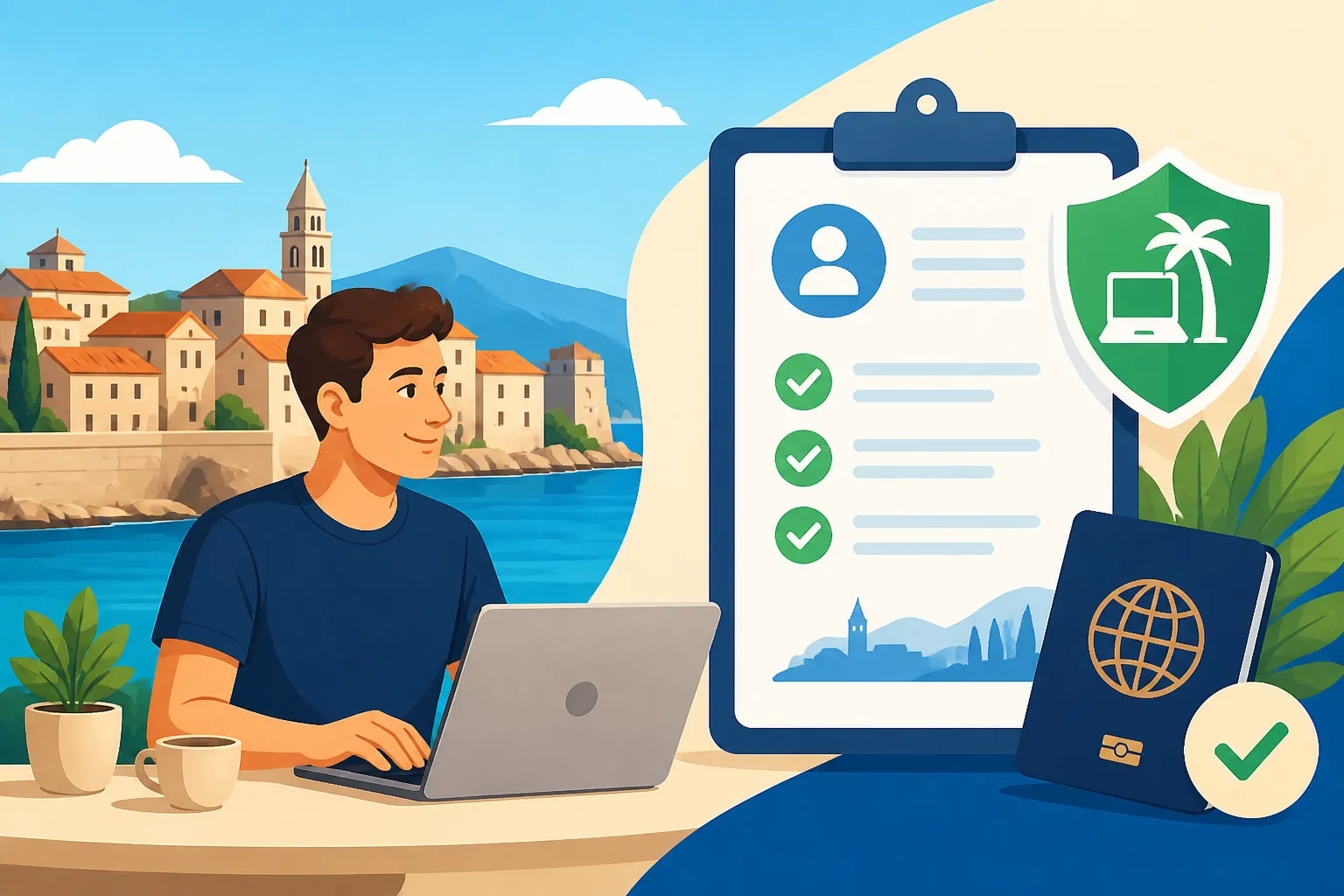
Ah, the siren call of Croatia! Imagine this: you're sitting in a charming konoba, laptop open, the Adriatic sparkling nearby, and you're actually working. Sounds like a dream, right? For many of us expats, it absolutely is. But getting here and making that dream a reality, especially when it comes to cutting through the legendary Croatian bureaucracy, can feel less like a dream and more like a never-ending quest. If you've been wondering how to navigate the waters of applying for Croatia's much-talked-about Digital Nomad Permit, you're in the right place. This guide will meticulously walk you through every single step, from understanding what this permit really is to the nitty-gritty of gathering your documents and what comes after approval.
The Croatian Digital Nomad Permit: What It Is and Why It's a Game-Changer
When Croatia introduced its Digital Nomad Permit back in 2021, it felt like a breath of fresh air for many of us who had been dreaming of making this stunning country our temporary home. It was one of the first in Europe to really embrace the concept, recognizing the value that remote workers bring to the local economy and culture without directly competing for local jobs. It’s a visionary approach that acknowledges the evolving nature of work.
Who is Eligible for this Permit?
First and foremost, let's clarify who this permit is actually for. The Croatian Digital Nomad Permit is specifically designed for non-EU/EEA citizens who are employed or self-employed by companies outside of Croatia, or who conduct their business activities for foreign clients. The core idea is that your income must be generated from abroad, not from within Croatia. This means you cannot be employed by a Croatian company, nor can you provide services to Croatian companies while on this permit.
For example, if you're a software developer working remotely for a tech company in Berlin, a graphic designer freelancing for clients in the US, or a content writer with a portfolio of international clients, you're likely a prime candidate. The key is that your work is digitally enabled and your employer or clients are based outside of Croatia. This distinction is absolutely critical; it's the fundamental premise of the entire permit. The law defines a "digital nomad" as a third-country national who performs work or provides services digitally for a foreign employer or company that is not registered in Croatia. It’s pretty straightforward, but often misunderstood.
Key Benefits of the Digital Nomad Permit
Now, why is this permit such a game-changer for so many? Beyond the obvious perk of living in a beautiful country, the Croatian Digital Nomad Permit comes with some truly significant advantages. The most talked-about, and for good reason, is the tax exemption. Holders of this permit are generally exempt from paying Croatian income tax on the income they earn as digital nomads. This is a massive relief for anyone used to navigating complex international tax laws, and it makes Croatia a financially attractive destination.
Secondly, the permit grants you temporary residency for up to one year, with the possibility of renewal. This allows you a stable base for an extended period, far beyond the typical tourist visa limits, without needing to jump through the hoops of traditional work permits that require a Croatian employer. It means you can truly settle in, explore the country, and immerse yourself in the local lifestyle, rather than constantly worrying about visa runs. This stability is invaluable for building a routine, joining local communities, and really experiencing Croatia. It’s not just a longer vacation; it’s a temporary home.
Important Limitations and What to Be Aware Of
While the Digital Nomad Permit offers incredible freedom, it's crucial to understand its limitations to avoid any nasty surprises down the line. As mentioned, the strictest rule is that you cannot work for any Croatian company or provide services to Croatian clients. This is non-negotiable and strictly enforced. If you decide you want to pursue local employment, you'll need to switch to a different type of residence permit, which comes with its own set of requirements.
Another point to remember is that while the permit allows you to live and work in Croatia, it does not automatically grant you a path to permanent residency or citizenship. The time spent on a Digital Nomad Permit does not count towards the five-year requirement for permanent residency. It’s designed as a temporary solution, a gateway to experience Croatia, not necessarily to set down lifelong roots here.
If you're planning to bring family members, understand that they will need to apply for their own temporary residence permits based on family reunification. Their applications are separate, though often linked to yours, and they will also need to meet specific criteria, including proof of sufficient funds and health insurance. It’s not a single-application-fits-all situation, and you'll need to factor in additional financial requirements for each dependent. Lastly, while you might not pay income tax in Croatia, you are still responsible for understanding your tax obligations in your home country or any other country where you maintain tax residency. This permit doesn't absolve you of all global tax responsibilities.
Pre-Application Checklist: Getting Your Ducks in a Row
Before you even think about hitting that 'submit' button, you need to meticulously prepare your application. The Croatian authorities, like many bureaucracies, appreciate thoroughness and accuracy. Missing a single document or having an incorrectly formatted one can lead to delays or outright rejection. Trust me, I've been there – standing at the MUP counter, realizing I forgot a stamp or a signature, and having to start all over again. It’s frustrating, but with proper preparation, it’s entirely avoidable.
Gathering Essential Documents
This is where the real work begins. You'll need an array of documents, and it's absolutely vital that they are all current and, if not in Croatian, officially translated and apostilled where required.
Let's break down the must-haves:
- Valid Passport: Your passport must be valid for at least three months beyond your intended stay in Croatia. Make sure it has at least two blank pages for stamps. You’ll need copies of all used and relevant pages.
- OIB (Personal Identification Number): This is Croatia's equivalent of a tax ID or social security number, and it’s absolutely essential for almost everything here, including your residence permit application. If you don't have one yet, you'll need to get it before or during your application. It’s usually a relatively quick process at the tax office (Porezna Uprava) by presenting your passport. You can find more detailed instructions on How to Get an OIB Personal Identification Number in Croatia.
- Proof of Funds: This is one of the most critical aspects. You need to demonstrate that you have sufficient financial means to support yourself (and any dependents) during your stay without relying on Croatian public funds or employment. This usually comes in the form of recent bank statements showing a consistent income stream or a lump sum. We’ll delve into the specifics of the amount in the next section, but expect to show statements from the last three to six months.
- Proof of Accommodation: You must have a confirmed place to live. This can be a rental agreement (lease), a notarized statement from a property owner confirming your stay, or proof of property ownership if you own a home in Croatia. The address on this document will be your registered address (prebivalište) once you arrive.
- Health Insurance: You are required to have private health insurance that covers your entire stay in Croatia. This isn't just a suggestion; it's a non-negotiable requirement. This insurance needs to cover emergency medical treatment, hospitalization, and often, repatriation. Don't skimp on this. Many expats opt for international providers like Cigna Global because they offer comprehensive coverage that specifically caters to those living abroad, ensuring you're covered no matter what. For a deeper dive, check out What Health Insurance Do I Need for a Croatian Residence Permit?.
- Clean Criminal Record Check: You'll need an original criminal background check from your home country (and any other country where you’ve resided for more than six months in the last five years) translated into Croatian and apostilled/legalized. This ensures you’re not bringing any unwanted baggage.
- Purpose of Stay Justification: This could be a letter from your foreign employer, contracts with international clients, or proof of ownership of your foreign company. It needs to clearly state that you perform work digitally and that your employer/clients are not in Croatia.
Remember, any documents not originally in Croatian or English will need to be officially translated by a sworn court translator in Croatia. It’s best to get this done in Croatia to ensure it meets local standards.
Financial Requirements: Proving You Can Support Yourself
The Ministry of Interior updates the minimum financial requirement annually, tied to the average Croatian salary. For 2024, the minimum amount of funds you need to prove is €2,539.34 per month. This means you need to show you have access to this amount consistently. If you prefer to show a lump sum for a full year’s stay (which is common for the initial application), you'd need to demonstrate €30,472.08. These figures are per applicant.
If you are bringing dependents, you’ll need to prove additional funds. For each additional family member, you need to add another 10% of the primary applicant's required amount. So, if you’re applying with a spouse, you’d need €2,539.34 + €253.93 per month, totaling €2,793.27.
How do you show this proof?
- Bank Statements: The most common method. Provide official, stamped bank statements (translated, if not in English) showing sufficient funds for the duration of your intended stay, or regular income deposits meeting the monthly requirement over several months.
- Letter from Employer/Client: If you're employed, a letter from your foreign employer stating your salary and employment details can supplement bank statements. For freelancers, contracts outlining your rates and payment schedules with foreign clients can be helpful.
- Proof of Business Ownership: If you own a company abroad, relevant business registration documents and financial statements showing profitability can also serve as proof.
It’s always a good idea to have a bit more than the minimum required. Showing that you're comfortable financially can only strengthen your application. For the absolute latest figures and detailed breakdown, you might want to look at official resources like How Much Income Do I Need for a Croatian Digital Nomad Visa in 2026?.
Securing Accommodation and Health Coverage
These two elements are not just formalities; they are foundational to your life in Croatia and your permit application.
For accommodation, you need a concrete plan. A simple Airbnb booking won't cut it for a residence permit. You'll need a long-term rental contract, usually for at least one year. This contract must be properly drawn up, signed by both parties, and often registered with the local tax administration (Porezna Uprava) by your landlord. If you own property in Croatia, a copy of your title deed (vlasnički list) will suffice. The address on this document will be the one registered with the police, so make sure it's accurate and legitimate. Finding a suitable rental can be a challenge, especially if you're doing it from afar, but platforms like Njuskalo or working with local real estate agents can help. You might even consider engaging a specialized relocation service like Sirelo to help you scout properties or manage the logistics of your move, which includes ensuring your accommodation documents are correctly prepared for the MUP.
As for health insurance, this is paramount. Public health insurance (HZZO) is generally not an option for digital nomads, as your income isn't derived from Croatia. Therefore, you must obtain private health insurance. When choosing a plan, ensure it clearly states coverage for Croatia, covers the duration of your stay, and has adequate limits for medical expenses, emergency care, and potentially, repatriation. Providers like Cigna Global are very familiar with expat needs and specific country requirements, making them a popular choice among the digital nomad community. They understand the intricacies of international coverage, offering peace of mind that a basic travel insurance policy simply cannot. Remember, a cheap travel insurance policy might satisfy the basic check box, but in a real emergency, you'll be glad you invested in something robust.
The Application Process: Step-by-Step Navigation
You've gathered all your documents, triple-checked your funds, and secured your accommodation and health insurance. Now it’s time for the actual application. This is where many people get intimidated, but knowing your options and what to expect can make it significantly less stressful.
Where to Apply: Online, Embassy/Consulate, or MUP in Croatia
Croatia offers a few avenues for submitting your digital nomad permit application, each with its own advantages:
- Online Application (Ministry of Interior Portal): This is often the most convenient option for many, especially those who prefer to manage paperwork digitally. Croatia's Ministry of Interior (MUP) has an online portal specifically for digital nomad applications. You can upload all your documents, fill out the forms, and submit everything from the comfort of your home, regardless of where you are in the world. This streamlines the initial submission process and often allows you to track your application status.
- Croatian Embassy or Consulate in Your Home Country: If you prefer a more traditional approach, or if you require a visa to enter Croatia (e.g., if you are from a country that isn't visa-free for Schengen entry), you might need to apply through a Croatian embassy or consulate in your country of residence. This typically involves making an appointment, submitting physical documents, and potentially an interview. While it can be slower, it might be necessary depending on your nationality and visa requirements.
- Directly at a MUP Office in Croatia: For citizens of countries that enjoy visa-free entry into the Schengen area (which includes Croatia), you have the option to enter Croatia as a tourist and then submit your application directly at the local police department (MUP) responsible for foreigners, once you're on the ground. This can be beneficial as you can handle local matters in person, like getting your OIB or finding accommodation. However, be mindful of your tourist visa duration; you must submit your application before your tourist visa expires. The general advice is to apply online or at an embassy before arriving, to avoid any potential overstay issues or complexities.
Consider your personal circumstances, nationality, and comfort level with bureaucracy when choosing your application method. While applying directly at the MUP might seem faster, if you're unsure about the process, applying online or through an embassy can offer more peace of mind, allowing you to arrive in Croatia with your permit already approved or in process.
Filling Out the Application Form and Submitting Documents
Regardless of whether you apply online, at an embassy, or directly at the MUP, the core information you provide will be the same. The application form will ask for personal details, passport information, details about your foreign employer/clients, financial proof, accommodation details, and health insurance information.
When filling out the form, be incredibly precise.
- Accuracy is Key: Double-check all spellings, dates, and numbers. Inconsistencies, even minor ones, can raise red flags and cause delays.
- Consistency: Ensure the information on your form matches exactly with the details in your supporting documents.
- Document Uploads: If applying online, make sure your scanned documents are clear, legible, and meet any specified file size or format requirements. Organize them logically, perhaps by numbering or clear naming conventions (e.g., "Passport_JohnDoe.pdf", "LeaseAgreement_JohnDoe.pdf").
- Police Check: Be prepared for a police check as part of the process. This is standard procedure to ensure you meet the country's security requirements.
- Interviews: While not always required, you might be called for a short interview, especially if applying at an embassy or directly at the MUP. This is usually to clarify information or confirm your intent.
Fees, Biometrics, and Waiting Periods
There are several fees associated with the Digital Nomad Permit application:
- Administrative Fee: This is typically a state fee paid when submitting the application. It can vary slightly depending on where you apply (e.g., at an embassy vs. MUP).
- Biometric Residence Card Fee: Once your permit is approved, you'll pay a fee for the production of your physical biometric residence card (boravišna iskaznica).
- Translation and Apostille Fees: Don't forget to factor in the costs for official translations and apostille services for your documents, which can add up.
After your application is submitted and generally approved, you will be invited to a local MUP office to provide your biometrics. This involves having your fingerprints taken and a digital photograph for your residence card. This is a crucial step for the final issuance of your card.
As for waiting periods, this can vary. Officially, the MUP aims to process applications within 20 to 30 days, but in reality, it can take anywhere from a few weeks to a couple of months, especially during peak application times or if additional information is requested. Applying online might expedite the initial review, but the overall processing time can still be unpredictable. For a realistic expectation on how long you might wait, you can refer to insights on How Long Does It Take to Get a Croatian Residence Permit?. Patience, as with much of Croatian bureaucracy, is a virtue.
Post-Approval: What Happens Next?
Congratulations, your Digital Nomad Permit application has been approved! That feeling of relief is immense, I know. But the journey isn't quite over. There are still a few essential steps you need to take to ensure your residency is fully recognized and you can legally enjoy your time in Croatia.
Receiving Your Biometric Residence Card (Boravišna Iskaznica)
Once your application is approved and you've submitted your biometrics and paid the card fee, the MUP will issue your physical Biometric Residence Card (Boravišna Iskaznica). This card is your official proof of temporary residence in Croatia and is incredibly important. It's not just a fancy ID; it’s what you'll use for proving your residency for banks, utilities, and general identification.
You'll typically be notified when your card is ready for pickup at the MUP office where you provided your biometrics. Make sure to collect it promptly. This card contains your photo, personal details, OIB, and the validity period of your permit. Always carry it with you, especially when dealing with official matters, as it simplifies many interactions. It's your ticket to being a recognized resident, even if temporary.
Registering Your Address with the MUP (Prebivalište)
After you've sorted out your accommodation, one of the first and most critical tasks is to formally register your address with the MUP. This process is called prijava prebivališta (registration of permanent residence) or prijava boravišta (registration of temporary stay, if your stay is shorter than 3 months, though for DNP it will generally be prebivalište based on your year-long lease). For Digital Nomad Permit holders who are here for a year, you’ll be doing the prijava prebivališta. This is not just a formality; it links you to your local community and is necessary for various administrative tasks, from opening bank accounts to receiving mail.
To register your address, you’ll typically go to the local MUP office where you submitted your application. You'll need your residence card, your passport, and your rental agreement (or proof of ownership). The MUP clerk will record your address, and you’ll receive a confirmation document. Without this, even with your residence permit, your official address isn't properly registered, which can cause headaches later. Don't underestimate this step; it's fundamental. You can find more detailed guidance on How Do I Register My Address at the MUP in Croatia?.
Understanding Your Obligations and Next Steps
With your permit in hand and address registered, you're all set to enjoy Croatia! However, remember your ongoing obligations:
- No Local Work: Reiterate this to yourself: you cannot work for Croatian companies or clients. Your permit is contingent on your income originating from outside Croatia.
- Renewal: Your permit is valid for one year. If you wish to continue living and working as a digital nomad in Croatia, you'll need to apply for a renewal before your current permit expires. We'll cover this in the next section.
- Health Insurance: Maintain valid private health insurance for the entire duration of your stay. Lapses in coverage can put your residency status at risk and, more importantly, leave you vulnerable in case of medical emergencies.
- Travel: Your Croatian residence card allows you to travel freely within the Schengen Area for up to 90 days within any 180-day period. This is a fantastic perk for exploring Europe. However, always remember the 90/180 rule when planning longer trips outside Croatia but within Schengen.
- Tax Residency Elsewhere: Continue to fulfill your tax obligations in your country of origin or wherever you maintain tax residency. The Croatian Digital Nomad Permit grants a tax exemption in Croatia, but doesn't erase your global tax duties. If you have questions about your global tax situation, it's always best to consult with a tax professional experienced in international residency.
Renewing Your Digital Nomad Permit and Potential Pathways
Life has a way of flying by, especially when you're enjoying yourself in a new country. Before you know it, that one year on your Digital Nomad Permit will be nearing its end. But don't fret; the option to renew is there, and it's generally a smoother process than the initial application.
The Renewal Process: When and How to Reapply
If you've loved your time in Croatia and want to extend your digital nomad adventure, you can apply for a renewal of your permit. The golden rule here is don't wait until the last minute! You should apply for renewal at your local MUP office (or online, if applicable) typically 30 to 60 days before your current permit expires. Trying to renew after expiry can lead to significant complications, including having to leave the country and reapply from scratch.
The renewal application will require many of the same documents as your initial application, but with updated information:
- Updated Proof of Funds: You'll need to demonstrate you still meet the financial requirements for the upcoming year, with recent bank statements.
- Continued Accommodation: A valid, current rental agreement or proof of property ownership for the next year.
- New Health Insurance Policy: Proof of valid private health insurance for the next year. This is a great opportunity to check if providers like Cigna Global have any new plans or updates that might suit your needs even better for the upcoming period.
- Valid Passport & Existing Residence Card: Of course, your passport must remain valid, and you'll present your current Croatian residence card.
- New Criminal Background Check (sometimes): While not always required for renewals, depending on the MUP office and individual circumstances, they might ask for an updated criminal background check. It's wise to have this in mind.
The fees will be similar to the initial application for the new card and administrative costs. Processing times for renewals can also vary but generally follow a similar pattern to initial applications. For specific details and timelines, checking resources like Can I Renew My Digital Nomad Permit in Croatia? can be very helpful.
Switching to Other Residence Types and Long-Term Considerations
While the Digital Nomad Permit is fantastic for a temporary stay, it doesn't automatically lead to permanent residency. However, it can open doors and provide a foundation if your long-term plans for Croatia evolve. If you decide that you want to integrate more deeply into Croatian society or secure a more permanent foothold, you will likely need to switch to a different type of residence permit.
Here are some common pathways:
- Work and Residence Permit: If you find a job with a Croatian employer, you would need to apply for a standard work and residence permit. This involves the employer initiating the process, often through a labor market test to prove no Croatian or EU citizens can fill the role. This is a significant shift from the DNP’s premise. If this is a path you're considering, start researching early with resources like The Complete Guide to Working in Croatia as a Foreigner 2026 or Can I Switch from a Digital Nomad Permit to a Work Permit?.
- Self-Employment (Obrt or d.o.o.): If you decide to establish your own business in Croatia and work for Croatian clients (or even just want to operate your existing business with a Croatian entity), you could apply for a residence permit based on self-employment, such as registering a "paušalni obrt" (flat-rate trade). This involves registering your business, getting a new OIB for your business, and meeting different income and contribution requirements.
- Family Reunification: If you marry a Croatian citizen or another EU resident living in Croatia, you could apply for residency based on family reunification.
- Long-Term (EU) Residence Status: After five years of continuous legal temporary residence in Croatia on other types of permits (the digital nomad permit time does not count), you can apply for long-term EU residence. This is a different category from permanent residency, but offers similar rights in many ways across the EU.
- Permanent Residence (Stalni Boravak): This is a more complex pathway, typically requiring 5 years of continuous temporary residence on specific types of permits (again, not including the DNP), and often a basic Croatian language test and proof of integration. The criteria are stringent, and the Digital Nomad Permit does not directly contribute to this timeline. For a full picture, check out How to Apply for Permanent Residence Stalni Boravak in Croatia.
The Digital Nomad Permit gives you a fantastic opportunity to test the waters, experience Croatia, and see if it's the right fit for you. It’s a low-commitment way to immerse yourself without immediately dedicating to a long-term, more complex immigration pathway like The Expat Guide to Temporary Residence Privremeni Boravak in Croatia.
| Aspect | Online Application (Ministry of Interior) | Embassy/Consulate Application (Abroad) | MUP Office Application (In Croatia) |
|---|---|---|---|
| Location of Applicant | Anywhere in the world | Home country/country of residence | Physically present in Croatia (visa-free nationals) |
| Entry Visa Requirement | Not applicable for application; may need a D-visa after approval | Often necessary if you require a visa to enter Croatia | Must have visa-free entry or valid tourist visa for Croatia |
| Initial Contact | Digital portal submission | In-person appointment required | In-person submission at local police station |
| Document Submission | Scanned uploads | Physical documents | Physical documents |
| Biometrics | Scheduled at MUP office after initial approval (in Croatia) | Often taken at embassy/consulate as part of process, or MUP in Croatia | Taken at MUP office after initial approval (in Croatia) |
| Fees | Online payment or bank transfer | Paid at embassy/consulate (may vary by location) | Paid at MUP via payment slips or POS |
| Processing Time | Can be faster for initial review, but overall varies (weeks-months) | Can be lengthy due to postal/inter-agency communication | Varies; direct contact can resolve minor issues quickly |
| Pros | Convenient, trackable, apply from anywhere | Guided process, may be necessary for visa-required nationals | Direct communication, handle local issues in person |
| Cons | Can be impersonal, potential for technical glitches | Slower, travel to embassy may be required, potentially multiple visits | Must adhere to tourist visa limits, risk of overstay |
Disclaimer
Please note that this guide provides general information based on current regulations and typical expat experiences in Croatia. Immigration laws and requirements can change. While every effort has been made to ensure accuracy, it is always recommended to consult the official websites of the Croatian Ministry of Interior (MUP), your nearest Croatian Embassy or Consulate, or a qualified legal professional for the most up-to-date and personalized advice regarding your specific situation. This information should not be considered legal advice.