Can I Bring My Spouse on a Croatian Digital Nomad Permit?
Moving to a new country is an adventure, but often, the biggest dream for expats in Croatia is to share that journey with loved ones. If you're a digital nomad eyeing Croatia, you've likely navigated the initial hurdles for yourself, but the question of bringing your spouse along can add a whole new layer of administrative complexity and anxiety. This guide is here to walk you through the often-confusing process, clearly outlining how your spouse can join you on your Croatian digital nomad adventure, focusing on the essential steps for family reunification.
Understanding the Digital Nomad Permit's Individual Focus
Let’s be upfront: the Croatian Digital Nomad Permit, officially known as "Temporary stay for digital nomads" ( privremeni boravak digitalnih nomada ), is primarily granted to an individual. It's designed to allow you, as the remote worker, to live and work in Croatia while generating income from outside the country. This means that while you're getting your permit in place, the Croatian authorities are assessing your eligibility based on your work, your income, and your health insurance.
The digital nomad permit itself isn't a direct "family package" deal that automatically includes your spouse or children from the get-go. This is a crucial distinction that often catches people by surprise. Many assume that once they get their permit, the family can just tag along. However, for your spouse to legally reside with you, they will need their own temporary stay permit based on family reunification. Think of it less as an add-on to your digital nomad status and more as a separate, albeit dependent, application. It’s an extra step, but a very common and well-defined one in Croatian immigration law. This is why planning your move for two, and perhaps looking into international moving services like those offered by Sirelo, is essential from the outset.
Navigating Family Reunification for Spouses of Digital Nomads
So, yes, absolutely, you can bring your spouse to Croatia while you're on a digital nomad permit! However, it's not a simple tick-box on your own application. Your spouse will apply for a temporary stay permit based on family reunification with you, the primary digital nomad permit holder. This is the official pathway and requires its own set of documents and an application process. It’s imperative to understand that their application is contingent upon your approved digital nomad status.
The Foundation: Your Approved Digital Nomad Permit
Before your spouse can even begin their application, your own digital nomad permit needs to be approved and active. The Ministry of Interior (MUP) needs to see that you are legally residing in Croatia under a valid permit that serves as the basis for family reunification. Attempting to apply concurrently can often lead to unnecessary complications and delays, so patience on this front is truly a virtue. Once you've got your shiny new biometric residence card, you're in a much stronger position to sponsor your spouse. For a deeper dive into your own permit, check out our guide on how to get a Croatian digital nomad permit: The Full Guide (2026).
Essential Documents for Your Spouse's Application
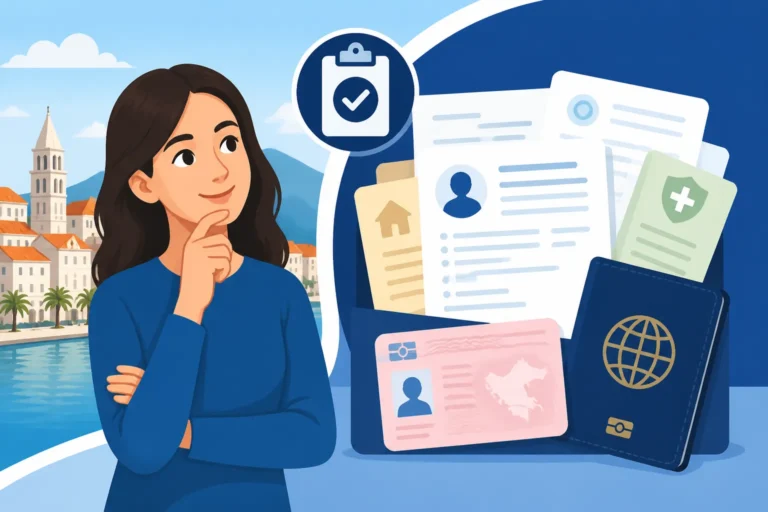
When your spouse applies for their temporary stay based on family reunification, they will need to submit a comprehensive set of documents, much like you did for your own permit. The MUP is thorough, and missing a single paper can send you back to square one, which can be incredibly frustrating. Here’s a breakdown of what they’ll typically need:
- Application Form: The standard temporary stay application form, available at the MUP or downloadable from their website.
- Valid Passport: Original and a photocopy of your spouse's passport, valid for at least three months beyond their intended stay.
- Proof of Marriage: An original, apostilled, and officially translated marriage certificate. This is non-negotiable proof of your relationship. Make sure the translation is done by a court-certified translator in Croatia or an officially recognised one in your home country, with an apostille if applicable.
- Proof of Sufficient Funds: This is where many digital nomads stumble. Your original digital nomad application required proof of your funds. For family reunification, you need to prove you have sufficient means to support both of you (or the entire family, if you have children). This amount is significantly higher than for a single person. As a rough guide, for a couple, you’ll need to demonstrate at least double the individual minimum required monthly funds, which, as of late 2023 / early 2024, translates to around €4,700 per month (the exact amount is determined by a legal minimum wage multiplier, so always check the latest figures with the MUP). This can be shown through bank statements.
- Proof of Accommodation: Just like you had to prove you have a place to live, your spouse's application will require proof that your shared accommodation is suitable for a couple. This could be your rental agreement (which should ideally be registered with the tax administration, for more on this see how to register a rental lease with the Croatian Tax Administration), or proof of property ownership. For comprehensive information on housing, refer to our article on How Do I Prove Accommodation for a Croatian Residence Permit?.
- Health Insurance: Your spouse will need to provide proof of comprehensive health insurance. This can be private travel health insurance that covers their entire stay in Croatia, or if you, as the digital nomad, have registered with the Croatian Health Insurance Fund (HZZO), they may be eligible to join your coverage. Many expats opt for international private health insurance providers like Cigna Global initially, as securing HZZO coverage can take time. Our guide on Health Insurance in Croatia: Mandatory, Supplementary and Private Options Explained can provide more insights.
- Criminal Background Check: A criminal background check from their country of origin (and any country where they've resided for more than one year in the last five years), apostilled and officially translated.
- Photos: Passport-sized photos.
- OIB (Personal Identification Number): While not strictly required before applying, your spouse will eventually need their own OIB. It's often requested during the application process or shortly after. Getting an OIB can be done relatively easily at the tax administration (Porezna Uprava). Our guide on How to Get an OIB (Personal Identification Number) in Croatia covers this in detail.
- Administrative Fees: There will be administrative fees for the application, payable in biljezi (stamps) or directly at the MUP counter.
The process of submitting these documents often involves booking an appointment at the local MUP office. For tips on navigating this, you might find our guide on How to Book an Appointment at the MUP for Immigration Matters helpful.
The Application Process: Where to Apply
The application for family reunification can typically be submitted in one of two places:
- At a Croatian Embassy or Consulate Abroad: If your spouse is not yet in Croatia, they should apply for a long-stay (Type D) visa for the purpose of family reunification at the Croatian embassy or consulate in their country of residence. This is often the recommended path as it ensures they arrive with the correct visa status.
- At the Local MUP in Croatia: If your spouse is already legally in Croatia (e.g., as a tourist under Schengen rules, for up to 90 days), they may be able to submit their application directly at the local MUP office where you, the digital nomad, are registered. However, be extremely mindful of the 90-day tourist limit. Overstaying this while waiting for a decision can lead to complications. It's generally less stressful to apply from abroad if possible, especially if your initial digital nomad permit is still quite new. Always confirm the current MUP guidelines regarding in-country applications, as rules can change.
Key Considerations and Potential Hurdles for Bringing Your Spouse
Bringing your spouse to Croatia on a family reunification permit while you hold a digital nomad permit is absolutely doable, but it’s crucial to anticipate and prepare for specific challenges. The Croatian administrative system, while generally clear once you understand it, requires meticulous attention to detail and a healthy dose of patience.
Proving Sufficient Financial Means
This is arguably the most significant hurdle for many expat couples. As mentioned, the MUP requires substantial proof that you can financially support both yourself and your spouse (and any children) without relying on Croatian social welfare. The exact amount is based on the average net salary in Croatia, multiplied by a factor set for family reunification. This means your bank statements need to consistently show a healthy balance well above the individual digital nomad income requirements.
For example, while a single digital nomad needs to show around €2,350 per month (as of late 2023 / early 2024, based on 2.5x the average gross salary, though specific MUP guidance should always be confirmed), for a family of two, this amount roughly doubles. For a family of three, it will be even more. The MUP wants to see not just current funds but also a pattern of consistent income. If your income fluctuates, try to show an average over several months. This isn’t a one-time check; it’s about demonstrating long-term financial stability for your family’s entire stay. Our article on Understanding Digital Nomad Permit Income Requirements in Croatia provides further context on the financial expectations.
Health Insurance: A Non-Negotiable Requirement
Just like you, your spouse needs adequate health insurance. This isn't something to skimp on. If you're a non-EU/EEA citizen, your spouse will need private health insurance that covers their entire stay, and it must be comprehensive. It should cover medical emergencies, hospitalization, and repatriation. Many expats opt for global health insurance plans from reputable providers like Cigna Global because they offer robust coverage that is usually accepted by the MUP and provides peace of mind.
Alternatively, if you, the primary digital nomad, have already registered with the Croatian public health insurance fund (HZZO) – which is possible after a period of residency under certain conditions – your spouse might be able to register as a dependent. However, this process has its own waiting periods and requirements, so having a private plan in place initially is often the most straightforward approach. For a complete understanding of your options, consult our guide on The Complete Guide to Healthcare in Croatia for Expats (2026).
The Bureaucracy and Waiting Game
Ah, Croatian bureaucracy! It’s legendary among expats, and family reunification applications are no exception. Be prepared for:
- Long Processing Times: While some digital nomad permits are processed relatively quickly, family reunification can take longer. Weeks, or even a couple of months, are not uncommon. It largely depends on the specific MUP office, the completeness of your application, and the current workload.
- Language Barrier: While MUP officials in larger cities like Zagreb or Split might speak some English, it's not guaranteed. Having a Croatian friend or a professional translator with you can significantly ease communication.
- Document Perfection: Every document must be exactly as requested: originals, copies, official translations, and apostilles where necessary. A single missing stamp or an incorrect translation can lead to your application being delayed or rejected, requiring you to restart the process. Double-checking everything before submission is key.
Accommodation Suitability
Your proof of accommodation needs to reflect that it's suitable for a couple. A small studio apartment that was fine for a single person might raise questions for a family reunification application. Ensure your rental agreement clearly states the number of occupants allowed, or if you own property, ensure its size and amenities are appropriate.
Spouse's OIB and Integration
While the OIB isn't strictly necessary to submit the family reunification application, your spouse will need one to fully integrate into Croatian life, open a bank account, or even get a local mobile phone plan. It’s best to get this done as soon as their permit is approved. This simple nine-digit number is your key to almost everything official in Croatia. For more details, refer to our article on How to Get an OIB and Why It Matters for Healthcare Access.
Table: Key Documents for Spouse's Family Reunification Permit
| Document Category | Specific Requirements | Notes |
|---|---|---|
| Proof of Relationship | Original, apostilled, and officially translated marriage certificate. | Must be translated by a court-certified Croatian translator if not issued in English with an apostille. |
| Identity & Nationality | Valid passport (original & copy). | Passport must be valid for at least 3 months beyond intended stay. |
| Financial Means | Bank statements demonstrating sufficient funds for the entire family (e.g., minimum of double the individual digital nomad income requirement). | Amounts are regularly updated; always confirm current MUP requirements. |
| Accommodation | Rental agreement (registered with Tax Admin) or proof of property ownership, indicating suitability for a couple/family. | Must show a valid address where both you and your spouse will reside. |
| Health Insurance | Proof of comprehensive private health insurance covering the entire duration of stay, or proof of HZZO coverage (if applicable). | Providers like Cigna Global are often a good option for initial private coverage. |
| Clean Record | Criminal background check from country of origin (and any country of residence >1 year in last 5 years), apostilled & officially translated. | The certificate should not be older than 6 months. |
| Application Specifics | Completed temporary stay application form, passport-sized photos, administrative fees (biljezi/stamps). | Forms available at MUP or online. Fees vary, check current rates. |
| Primary Applicant Status | Copy of your valid Croatian Digital Nomad residence permit (your boravišna iskaznica). | Essential for establishing the basis for family reunification. |
By meticulously preparing each document and understanding the intricacies of the process, you significantly increase the chances of a smooth and successful family reunification for your spouse in Croatia.
Disclaimer
The information provided in this guide is for general informational purposes only and does not constitute legal, financial, or immigration advice. While we strive to keep the information up-to-date and accurate, laws and regulations in Croatia, especially concerning immigration and taxation, are subject to change. Always consult with a qualified legal professional, immigration expert, or the official Croatian Ministry of Interior (MUP) for the most current and personalized advice regarding your specific situation. Reliance on any information provided here is solely at your own risk.