Can I Switch from a Digital Nomad Permit to a Work Permit?
Ah, the siren song of Croatia! Many of us arrive on a digital nomad permit, captivated by the sunshine, the stunning coastline, the delicious food, and the incredible pace of life, thinking it’s just a temporary adventure. But then, you fall in love – not just with the country, but maybe with a lifestyle, a community, or even a local company that needs your skills. Suddenly, that digital nomad status, which felt so freeing, starts to feel a bit restrictive. The big question looms: what if you want to properly settle down and work for a Croatian employer? This guide is going to walk you through the very real, often bumpy, but absolutely achievable journey of transitioning from a Croatian digital nomad permit to a traditional work permit.
Understanding the Digital Nomad Permit's Limitations in Croatia
When you first applied for your digital nomad permit in Croatia, the whole premise was about not working for a Croatian company or client. It's a wonderful gateway for location-independent professionals, but it comes with very specific boundaries. Many expats discover these boundaries are tighter than they initially perceived once they consider a more permanent life here.
The "No Local Work" Rule: A Fundamental Constraint
The most crucial, non-negotiable aspect of the digital nomad permit is the "no local work" clause. This isn't just a suggestion; it's the core legal distinction. It means you absolutely cannot be employed by a Croatian company, take on Croatian clients, or generate any income from sources within Croatia. Your employer, your clients, and your income must originate from outside Croatia.
Imagine you've been living in Split for eight months, working remotely for your company back in Canada. You've made friends, you're learning Croatian, and you've started volunteering at a local animal shelter. Then, an amazing opportunity pops up – a tech startup in Zagreb needs someone with your exact skills, and they're offering a fantastic role. Your heart leaps, but then the cold splash of reality hits: your digital nomad permit explicitly forbids this. This "no local work" rule is designed to distinguish digital nomads from regular foreign workers and to protect the Croatian labour market. It's why this entire transition process exists – you're essentially changing your legal status from a "visitor" (albeit a long-term one) to a "worker" within the Croatian system.
Duration and Renewal Considerations for Digital Nomads
A Croatian digital nomad permit is typically issued for one year. While it is renewable for an additional year, after those two years, you generally have to leave the Schengen Area for at least six months before you can apply for a new one. This built-in expiry date can be a real wake-up call for those who envisioned a longer, more integrated future in Croatia.
Let's say you're nearing the end of your first year on a digital nomad permit. You've settled in, found your rhythm, and the thought of packing up and leaving, even for six months, feels like pulling teeth. You want to plant deeper roots, perhaps buy property, or simply have the security of continuous residence without these interruptions. The limitations on duration and renewal are often the first practical drivers that make digital nomads consider alternative residence options, especially if local employment becomes a possibility. It moves you from a transient status to one with more longevity and integration potential.
Tax Implications and Social Contributions: The Hidden Cost of Staying Remote
As a digital nomad, your tax obligations usually remain with your home country, or you might be considered a non-resident for tax purposes in Croatia, depending on your specific circumstances and any double taxation treaties. Crucially, you generally don't contribute to the Croatian social security system – no contributions to pension funds (HZMO) or public health insurance (HZZO) via your permit. You're required to have private health insurance for your digital nomad permit application.
While this can sound appealing from a tax perspective initially, it means you're not building up any entitlement to Croatian state benefits, like the public healthcare system or future pension. For those looking to make Croatia their long-term home, this lack of contribution can be a significant drawback. When you transition to a work permit, this all changes. You become a full contributor to the Croatian social system, which, while it means higher deductions from your salary, also grants you access to the robust public health system and starts building your pensionable years here. It's a fundamental shift from being an independent, external economic entity to becoming an integrated part of Croatia's social and economic fabric.
The Path Less Traveled: From Digital Nomad to Work Permit
So, you've decided the digital nomad life, while lovely, isn't enough anymore. You want to properly work in Croatia. Can you actually make the switch? This is where the complexities begin, but rest assured, it is indeed possible, though it requires a significant shift in your approach to bureaucracy and job hunting.
Is It Even Possible? The "Yes, But…" Reality
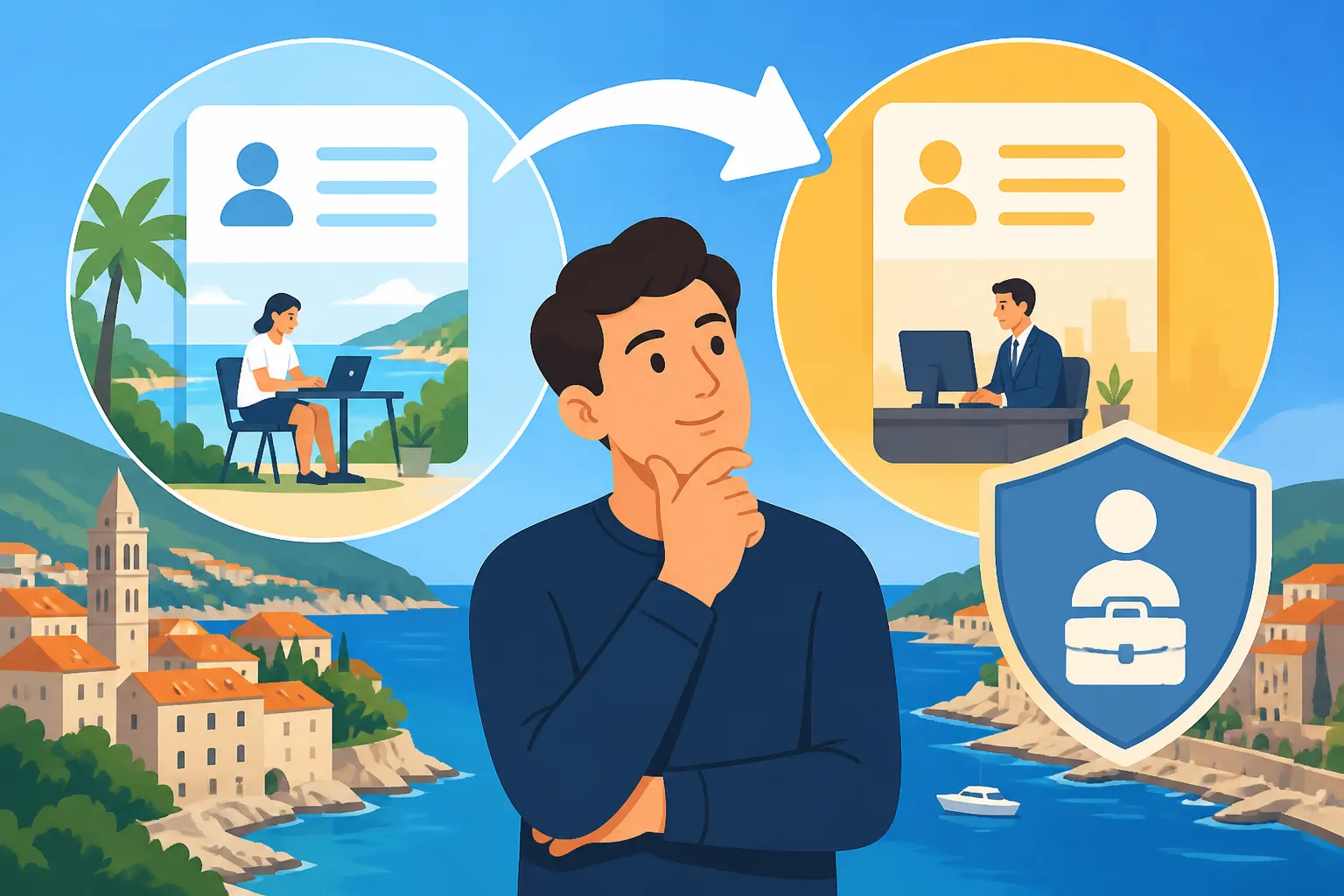
The short answer is a resounding "yes," it is absolutely possible to switch from a digital nomad permit to a work permit in Croatia. However, it’s not a simple administrative renewal or an upgrade you apply for at the click of a button. Think of it less like moving from a tourist visa to a work visa in the traditional sense, and more like applying for an entirely new residence permit category from scratch, with different requirements and a whole new set of rules to navigate.
The key difference is that the digital nomad permit is granted based on your remote work for foreign entities. A work permit (which is actually a combined work and residence permit in Croatia, known as a "jedinstvena dozvola") is granted because a Croatian employer wants to hire you and you will be working locally. This means your existing digital nomad status doesn't automatically give you a leg up, other than the fact you're already physically in Croatia (which can be an advantage for interviews) and you likely already have your OIB. The process essentially involves submitting a brand-new application under the category of employment.
The Key is a Job Offer: Your Golden Ticket
The single most crucial element for switching to a work permit is securing a legitimate job offer from a Croatian company. Without this, the entire process grinds to a halt before it even begins. You cannot apply for a work permit speculatively; it must be employer-sponsored.
This means your focus needs to shift from finding remote gigs to actively job hunting within Croatia. This can be challenging, especially if your Croatian language skills aren't strong, though opportunities in sectors like IT, tourism, and some specialized fields often cater to English speakers. You’ll need to put together a Croatian-style CV and cover letter and be prepared for interviews. Once you have that golden offer, your prospective employer becomes your main partner in the bureaucratic dance, as they will typically initiate much of the work permit application process on their end. They'll need to demonstrate to the Croatian Employment Service (HZZ) that they genuinely need you. For a comprehensive overview of local employment, check out The Complete Guide to Working in Croatia as a Foreigner (2027).
Navigating the MUP and Administrative Maze
Even if you’ve been in Croatia on a digital nomad permit, you’ve likely already had your fair share of interactions with the MUP (Ministry of Interior) for your initial permit and perhaps for obtaining your OIB. Well, get ready for more! The MUP is where all residence permit applications, including work permits, are processed. The experience can range from surprisingly efficient to utterly baffling, often depending on the specific office, the time of day, and the mood of the official you encounter.
The real challenge for many expats is the sheer volume of paperwork and the precise nature of Croatian bureaucracy. Every document must be correct, translated (if necessary) by a certified translator, and sometimes apostilled. Missing one small stamp or having an outdated form can send you back to square one, leading to multiple appointments and frustrating delays. The language barrier can also be a significant hurdle. Even if your employer handles a lot, you will still need to attend appointments, and having a Croatian speaker with you can be incredibly helpful. Make sure you understand How to Book an Appointment at the MUP for Immigration Matters well in advance. Patience, persistence, and meticulous organization are your best friends here.
Essential Steps and Documentation for Your Switch
Making the transition isn't just about wishing it were so; it's about methodically checking off a list of administrative demands. You’ll need to prepare thoroughly, gather very specific documents, and understand the procedural nuances.
The Job Offer and Labour Market Test: A Hurdle for Many
Once you have that promising job offer, the next big hurdle for your prospective employer, especially if you're a non-EU citizen, is often the "labour market test" (test tržišta rada). This process, managed by the Croatian Employment Service (HZZ), requires the employer to prove that there are no suitable candidates within Croatia or the EU/EEA for the position they wish to fill. They typically need to advertise the position and demonstrate that they genuinely tried to find a local worker first.
This test can add significant time to the process, usually around 10-15 days for the HZZ to issue an opinion, after which the MUP can process the actual work permit application. There are exceptions, of course – certain in-demand professions (like highly skilled IT specialists, specific medical professionals, or roles in designated shortage areas) might be exempt from the labour market test, or quotas might be in place for specific industries. Your employer will be key in navigating this, as it's their responsibility to initiate this part of the process. It's a critical step that often causes anxiety, but if your skills are truly specialized, it's certainly surmountable.
Gathering Your Arsenal of Documents: Prepare for Battle
The list of documents required for a combined work and residence permit can be extensive, and it often feels like the MUP wants to know your entire life story. Many of these you might have already for your digital nomad permit, but some will be new or need to be updated.
Here's a breakdown of what you'll typically need to gather:
- Valid Passport: Of course! Make sure it has plenty of validity left.
- Application Forms: The relevant MUP forms for applying for a work and residence permit. These can be downloaded from the MUP website.
- Proof of Accommodation: A rental agreement (registered with the tax authority) or proof of property ownership.
- Proof of Sufficient Funds: While your employment contract will show your future income, sometimes the MUP might still request proof of funds to cover initial living expenses or during the processing period, just to ensure you're not a burden on the state.
- Health Insurance: For the initial application, you might still need to show proof of private health insurance. However, once your work permit is approved and you start working, you'll be automatically enrolled in the Croatian public health insurance fund (HZZO) through your employer's contributions. This is a significant change from your digital nomad status. For guidance on options, see Health Insurance in Croatia: Mandatory, Supplementary and Private Options Explained. If you're looking for global private options for initial coverage or specific needs, companies like Cigna Global offer comprehensive plans that many expats consider.
- OIB (Personal Identification Number): You likely already have this from your digital nomad permit application. If not, this is one of the first things you'll need. This unique number is crucial for all administrative and financial matters in Croatia. Learn more about How to Get an OIB (Personal Identification Number) in Croatia.
- Criminal Background Check: A certificate of no criminal record from your home country and any other country where you've resided for more than six months in the last few years. These often need to be apostilled and officially translated.
- Employment Contract: The signed contract from your Croatian employer, clearly stating your position, salary, and terms of employment.
- Proof of Qualifications: Diplomas, certificates, and professional licenses, often needing recognition through agencies like AZVO. This is particularly important for regulated professions. You can learn more about this process in How to Get Your Foreign Degree Recognised in Croatia: The AZVO Guide.
- Other Documents: Depending on your specific situation, you might need marriage certificates (if applicable), birth certificates, etc., all properly translated and legalized.
It's a lot, I know. But gathering everything methodically is key. A good rule of thumb is to assume you need more documentation than you think, rather than less.
The Application Process: Where the Rubber Meets the Road
Once you have all your documents ready and your employer has cleared any necessary labour market tests, the formal application can begin.
- Where to Apply: You will submit your application to the local MUP office responsible for your place of residence in Croatia. If you are outside Croatia when the job offer is made, your employer might initiate the process at the MUP, or you might apply for a long-stay (D-visa) at a Croatian embassy or consulate in your country of origin before coming to Croatia to finalize the residence permit. Since you're already here on a digital nomad permit, you'll generally apply at your local MUP.
- Biometrics: During the application process, you'll need to provide biometric data (fingerprints and a photo) for your new biometric residence card (boravišna iskaznica).
- Waiting Times: Processing times can vary significantly. It can take anywhere from a few weeks to a couple of months, depending on the MUP office workload and the complexity of your case. Be prepared for a wait, and try to apply well before your digital nomad permit expires if possible, though you might enter a period where your status is "pending."
- Interview: While not always required, sometimes MUP officials may ask you to attend an interview to clarify aspects of your application.
This is the point where all your hard work comes together. The MUP will review everything, and if all conditions are met, you'll be granted your new combined work and residence permit.
Life After the Switch: New Freedoms and Responsibilities
Congratulations, you've made the switch! You're now officially an employed resident in Croatia, which opens up a whole new chapter of life here, complete with new freedoms, responsibilities, and deeper integration into Croatian society.
Embracing Local Employment and Contributions
With your work permit, you are now legally able to work for your Croatian employer. This means you'll be subject to Croatian labour laws, enjoying benefits like paid annual leave, public holidays, and sick leave. It’s a significant shift from the self-directed nature of digital nomad work.
Crucially, your employer will start making social security contributions on your behalf. This includes contributions to the Croatian Pension Insurance Institute (HZMO) and the Croatian Health Insurance Fund (HZZO). This is a big deal! You’ll gain access to the public healthcare system in Croatia, meaning you'll get your HZZO card and can register with a family doctor, access specialists through referrals, and use pharmacies at subsidized rates. This is a fundamental step towards long-term living in Croatia, giving you access to the same social safety nets as Croatian citizens. For more details on this, explore How the Croatian Health Insurance Fund (HZZO) Works: A Full Overview and Understanding Pension Contributions (HZMO) for Employees in Croatia.
Tax Residency and Financial Adjustments
As an employed resident, you will almost certainly become a Croatian tax resident. This means your worldwide income will generally be subject to Croatian income tax, unless otherwise specified by a double taxation agreement with another country. Your employer will deduct income tax and social contributions directly from your salary, simplifying things somewhat.
The abolition of prirez (local surtax) in early 2024 has simplified the tax landscape, as now only national income tax rates apply. Understanding your new tax obligations is vital for financial planning. It's a different ballgame compared to being a digital nomad who might not have had any Croatian tax residency. For a detailed guide on what to expect, read Understanding Income Tax in Croatia: The Full Expat Guide. You’ll also want to familiarize yourself with the ePorezna portal for any future tax filings.
Long-Term Residence Goals: A Stepping Stone to Stability
One of the most appealing aspects of transitioning to a work permit is its potential as a stepping stone towards long-term and even permanent residence in Croatia. While a digital nomad permit doesn't count towards the five years typically required for permanent residence, a work permit does. Each year you spend in Croatia as a legal worker, contributing to the system, brings you closer to obtaining permanent residency (Stalni Boravak), and eventually, if you choose, Croatian citizenship.
This provides a sense of stability and belonging that is often missing from temporary permits. You're no longer just passing through; you're building a life here with a clear path forward. For those dreaming of a forever home in Croatia, this pathway is invaluable. You can learn more about the long-term journey in Permanent Residence in Croatia: The Complete Pathway (2027).
Relocating Your Life's Belongings: From Temporary to Permanent
If your digital nomad stint was intended to be temporary, you might have arrived with minimal belongings. But now that you’re settling in for the long haul with a work permit, you might decide it’s time to bring over more of your personal possessions. This is where services like Sirelo can be incredibly helpful. They specialize in connecting expats with reliable international moving companies, ensuring your cherished items make it safely to your new Croatian home. Moving from a transient mindset to a more settled one often involves bringing more of your 'home' with you, making such services a practical consideration.
Digital Nomad Permit vs. Work & Residence Permit: A Comparison
To help clarify the fundamental differences and what changes when you make the switch, here’s a quick comparison:
| Feature | Digital Nomad Permit | Work & Residence Permit (Jedinstvena Dozvola) |
|---|---|---|
| Purpose | Remote work for foreign entities | Employment by a Croatian company |
| Local Work | Absolutely forbidden | Required, working for a Croatian employer |
| Employer Sponsor | Not required | Required (Croatian company sponsors) |
| Labour Market Test | Not applicable | Often required for non-EU citizens |
| Duration | 1 year, renewable once for another year | Typically for the duration of the employment contract (up to 1 year, renewable) |
| Health Insurance | Private health insurance required | Public HZZO health insurance (through employer contributions) |
| Social Contributions | Generally none to Croatian system | Yes, employer contributes to HZMO (pension) and HZZO |
| Tax Residency | Often non-resident, or tax in home country | Typically Croatian tax resident, pay Croatian income tax |
| Path to Perm. Res. | Does NOT count towards 5-year requirement | DOES count towards 5-year requirement |
| Family Reunification | Possible, but family members cannot work locally | Possible, and family members may also apply for work permits |
Making the switch from a digital nomad permit to a work permit in Croatia is a big step, signifying a deeper commitment to life in this beautiful country. It's an administrative challenge, yes, filled with forms, waiting, and navigating bureaucratic hurdles. But for many, it's a necessary and rewarding step towards building a more stable, integrated, and long-term future here. Arm yourself with patience, gather your documents meticulously, and embrace the adventure. Croatia has a way of drawing you in, and for those who choose to settle, the rewards are immense.
Disclaimer
The information provided in this article is intended for general guidance and informational purposes only, and does not constitute legal, financial, or immigration advice. While we strive to keep the information accurate and up-to-date, laws and regulations in Croatia are subject to change without notice. It is essential to consult with official government sources, legal professionals, or immigration experts for advice tailored to your specific situation before making any decisions related to your residence status or employment in Croatia.