The Complete Visa Guide for Relocating to Croatia (2027)
Oh, the Croatian visa journey! If you're reading this, you've probably already dipped a toe into the glorious, confusing, and sometimes downright frustrating world of Croatian bureaucracy. Many of us arrive here with dreams of Adriatic sunsets and relaxed living, only to find ourselves drowning in paperwork and deciphering governmental websites. This guide is here to untangle the labyrinth of Croatian visas and residence permits, giving you a clear, empathetic roadmap for relocating to this beautiful country today and beyond.
Understanding Croatia's Place in the Schengen Area and EU
Before we dive into the nitty-gritty of visas, it's absolutely crucial to grasp Croatia's position within the larger European framework. This isn't just a geographical detail; it fundamentally dictates your entry requirements and subsequent residence options. For years, Croatia was part of the EU but not Schengen, which added another layer of confusion for visitors. Thankfully, that's changed, but the nuances are still there.
Croatia's Schengen Status and Its Implications
As of January 1, 2023, Croatia officially joined the Schengen Area. This was a massive step, eliminating internal border controls with other Schengen member states and integrating Croatia fully into the EU's free movement zone. What does this mean for you, the aspiring expat or long-term visitor? Well, for starters, if you're traveling from another Schengen country, you won't face passport checks when entering Croatia by land. It simplifies travel immensely within the zone.
However, it also means that your time spent in Croatia on a short-stay visa (the common tourist visa) now counts towards your overall 90-day limit within any 180-day period across the entire Schengen Area. This is a common pitfall that catches many people out. Gone are the days when you could pop over to Croatia from Italy to "reset" your Schengen clock. Now, it's all one big pool, and every day you spend in any Schengen country contributes to that 90-day maximum. Understanding Schengen Rules for Croatia After 2023 is non-negotiable if you plan on extended stays.
EU/EEA Citizens vs. Third-Country Nationals
The most significant distinction in Croatian immigration law is whether you are an EU/EEA (European Economic Area) citizen or a "third-country national" (i.e., from outside the EU/EEA). For EU/EEA citizens, the process is considerably simpler, thanks to the principle of free movement. You generally have the right to enter, live, and work in Croatia without needing a visa, though you still need to register your residence if you plan to stay longer than 90 days.
For third-country nationals, the path is more complex. You'll likely need a visa for entry (depending on your nationality) and then a specific residence permit to stay long-term. This distinction is paramount, as the requirements, documentation, and processing times can differ wildly. Always double-check which category you fall into before you even begin gathering documents. It saves a lot of headaches later on.
Short-Stay Visas: The Schengen C-Visa for Tourists
For many, their first taste of Croatia is on a short-stay visa – the Schengen C-Visa. This is essentially your standard tourist visa, allowing for visits up to 90 days within any 180-day period. It's designed for tourism, business trips, or short family visits, but absolutely not for relocating or working long-term.
Who Needs a Schengen Visa for Croatia?
Whether you need a Schengen C-Visa depends entirely on your nationality. Many countries, such as the United States, Canada, Australia, and the United Kingdom, have visa-free agreements with the Schengen Area, meaning their citizens can enter Croatia (and the rest of Schengen) for up to 90 days without a visa. However, a significant number of countries do require a Schengen visa.
You'll need to check the official European Commission website or the website of the Croatian Ministry of Foreign and European Affairs (MVEP) for the most up-to-date list of visa-required nationalities. This list can change, so always verify close to your travel dates. Don't rely on old information, as it could lead to you being denied entry at the border, which is a nightmare scenario for anyone looking to make Croatia their new home.
Applying for a C-Visa: Requirements and Process
If you do need a C-Visa, the application process typically involves submitting your application to the Croatian embassy or consulate in your home country (or the country where you are legally residing) before you travel. You'll need a range of documents, which usually include:
- A valid passport: It must be valid for at least three months beyond your intended departure from the Schengen Area and have at least two blank pages.
- Completed application form: Duly filled and signed.
- Passport-sized photos: Usually two, conforming to Schengen requirements.
- Travel itinerary: Proof of onward or return travel.
- Proof of accommodation: Hotel bookings, rental agreements, or a letter of invitation from a host in Croatia.
- Proof of sufficient funds: Bank statements, credit card statements, or a letter of sponsorship, showing you can support yourself during your stay.
- Travel medical insurance: This is mandatory and must cover medical emergencies, hospitalization, and repatriation for at least €30,000. This is an area where expats often get confused, so it's good to consider options like Cigna Global even for short stays to ensure comprehensive coverage.
- Visa fee: A non-refundable fee.
The process can take a few weeks, so plan well in advance. Keep copies of everything, and be prepared for potential interviews or requests for additional documents. It’s a thorough check, designed to ensure you're a genuine visitor and won't overstay your welcome.
Understanding the 90/180-Day Rule
This rule is probably the single biggest source of confusion and frustration for non-EU citizens wanting to spend significant time in Europe. The 90/180-day rule states that you can stay in the Schengen Area for a maximum of 90 days within any 180-day period. This is a rolling period. Every day you are present in the Schengen Area counts.
What this means in practice is that you can't just leave Schengen for a day and come back, expecting your 90 days to reset. You need to be outside the Schengen Area for at least 90 days before you can return for another 90-day short stay. For those who envision a life moving back and forth between Croatia and other European destinations, this rule significantly limits your flexibility. If your plans involve anything longer than a typical holiday, you absolutely must look into long-stay visas and residence permits. Don't mess with this rule; border agents are very strict, and overstaying can lead to fines, deportation, and future entry bans.
Long-Stay (Type D) Visas: Your First Step to Extended Residence
For those of us planning to truly relocate to Croatia, the short-stay C-Visa simply isn't enough. We need something that signals our intent for a longer, more structured stay. This is where the often-misunderstood long-stay, or Type D, visa comes into play. It's not a residence permit itself, but rather a crucial bridge that allows you to enter Croatia with the intention of applying for temporary residence once you've arrived.
When a Type D Visa is Required
A Type D visa is typically required for third-country nationals who need a visa to enter the Schengen Area and intend to stay in Croatia for more than 90 days. Not all nationalities require it, even if they need a residence permit. For example, some visa-exempt nationalities (like Americans or Canadians) can enter Croatia without a visa and then apply for their temporary residence permit directly at the MUP (Ministry of Interior) within Croatia. However, if your nationality does require a Schengen visa, and you're planning a long-term stay, then the Type D visa becomes your entry ticket.
The primary purpose of the Type D visa is to facilitate your entry into Croatia and allow you to legally remain in the country while your application for a temporary residence permit is being processed. It prevents you from needing to leave and re-enter the country if your visa-free period (if applicable) is about to expire, or if you couldn't enter at all without a visa. It's all about smooth transitions, not creating unnecessary border hops.
Application Process and Key Documents
Applying for a Type D visa is similar to a C-Visa but with additional requirements that reflect your long-term intentions. You'll apply at the Croatian embassy or consulate in your home country, and the documents often include:
- Valid passport: With sufficient validity.
- Completed Type D visa application form.
- Passport-sized photos.
- Proof of the purpose of your long-term stay: This is critical. It could be an employment contract, proof of enrollment in a Croatian educational institution, a business plan for self-employment, evidence of a relationship for family reunification, or a decision approving your Digital Nomad status.
- Proof of accommodation in Croatia: For the initial period, or a statement of intent to rent.
- Proof of sufficient funds: To support yourself during your stay.
- Health insurance: Often more comprehensive than just travel insurance, anticipating your longer stay. Again, exploring options with global providers like Cigna Global can be beneficial, as they offer plans specifically tailored for expats needing long-term coverage.
- Clean criminal record certificate: Apostilled or legalized.
- Visa fee.
The processing time for a Type D visa can vary, so patience is key. Once granted, it typically allows for a stay of up to one year, which is generally enough time to get your temporary residence permit sorted. Remember, the Type D visa does not automatically grant you the right to reside in Croatia; it just gives you the legal basis to enter and apply for that right.
Temporary Residence Permits: The True Relocation Gateway
Okay, this is it. If you're serious about making Croatia your home, even for a year or two, the temporary residence permit ( privremeni boravak ) is your ultimate goal. This is what truly opens the door to living, working, and studying here beyond the short-stay limits. The process can feel like a gauntlet, but many of us have gone through it, and you can too.
Common Grounds for Temporary Residence (Work, Study, Digital Nomad, Family)
Croatia offers several pathways to obtain temporary residence, each designed for different situations. The most common grounds for expats include:
- Work: If you've landed a job with a Croatian employer, they will often initiate the process for your work and residence permit. This is known as a single work and residence permit.
- Study: Enrolling in a Croatian university or educational program qualifies you for a student residence permit.
- Digital Nomad: This category was a game-changer, allowing remote workers for foreign companies to live in Croatia without paying Croatian income tax (under certain conditions). This has become an incredibly popular route for many expats. You can learn all about it in our guide, How to Get a Croatian Digital Nomad Permit: The Full Guide (2027).
- Self-Employment (Obrt/d.o.o.): If you're an entrepreneur looking to start your own business in Croatia, you can apply for residence based on self-employment. Understanding Residence for Self-Employment (Obrt) in Croatia is vital for this path.
- Family Reunification: If you're joining a spouse or close family member who already holds a Croatian residence permit or citizenship, this is your route. We have a comprehensive guide: Family Reunification in Croatia: A Complete Guide for Expats.
- Other: There are also categories for property owners (non-EU citizens may be eligible in some cases, often tied to a company), scientific research, humanitarian reasons, and others.
Each category has its own specific set of requirements, so it's essential to identify the correct pathway for your personal circumstances. Don't try to fit a square peg into a round hole; the MUP will spot it immediately.
General Requirements for Temporary Residence Applications
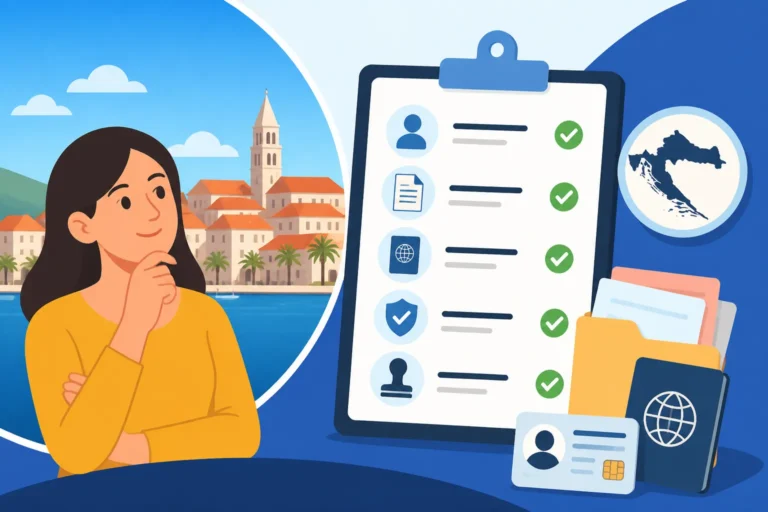
Regardless of your specific ground for temporary residence, there are several general requirements that almost everyone will need to meet. These form the bedrock of any successful application.
- Valid Passport: Always needs to be valid.
- Completed Application Form: Usually called Form 1a (Obrazac 1a).
- Proof of Funds: You need to demonstrate that you can support yourself financially without becoming a burden on the Croatian social system. This can be bank statements, a salary certificate, or proof of scholarship. The exact amount varies by category but is typically tied to the average Croatian salary.
- Proof of Accommodation: You need to show you have a place to live. This could be a notarized rental agreement, a property ownership certificate, or a statement from a host confirming they will provide accommodation.
- Health Insurance: This is non-negotiable. You need proof of comprehensive health insurance that covers your entire period of residence in Croatia. This is where many expats turn to international providers. Cigna Global, for instance, offers various plans designed to meet residence permit requirements, giving you peace of mind and MUP approval. What Health Insurance Do I Need for a Croatian Residence Permit? dives deeper into this.
- Clean Criminal Record Check: From your home country and any other country where you've resided for more than six months in the last few years. This usually needs to be apostilled or legalized and translated into Croatian by a sworn court interpreter.
- OIB (Personal Identification Number): If you don't already have one, you'll need to apply for this as part of your residence process. It's Croatia's equivalent of a tax ID or social security number and is essential for practically everything. How to Apply for an OIB (Personal Identification Number) in Croatia is a must-read.
- Photos: Passport-sized, biometric photos.
- Administrative Fees: There are various fees for the application, the biometric card, and sometimes stamps.
Always remember that all foreign documents generally need to be translated into Croatian by a certified court interpreter and, if not from an EU/EEA country, often apostilled or superlegalized. Prepare Documents for a Croatian Residence Application, and don't skimp on this step.
The MUP Application Process: Navigating the Bureaucracy
Ah, the MUP. The Ministry of Interior is where all residence permit applications eventually land. Visiting the MUP can be an experience in itself – expect queues, multiple windows, and sometimes, varying interpretations of the rules depending on who you speak to. This is where that expat patience really gets tested.
You typically submit your application in person at the MUP department for foreigners in the city where you intend to reside. For example, if you're settling in Zagreb, you'd go to the MUP office on Petrinjska Street. It's often recommended to book an appointment if possible, though not all offices offer this. Otherwise, arrive early, bring all your documents (and copies!), and be prepared to wait.
Once submitted, your application will be processed. The processing time can vary significantly, from a few weeks to several months, depending on the MUP office workload and the complexity of your case. During this time, you are generally allowed to stay in Croatia if you entered with a Type D visa or if you're from a visa-exempt country and applied before your 90-day tourist stay expired. If approved, you'll receive a decision, and then you'll go through the process of getting your biometric residence card. How to Apply for Temporary Residence in Croatia breaks this down further.
Specific Temporary Residence Categories for Expats
Let's zoom in on the most popular routes for foreigners looking to call Croatia home for a while. Each has its own charm and its own set of administrative hoops.
Digital Nomad Permit: A Game-Changer for Remote Workers
Croatia was one of the first countries in the EU to introduce a dedicated Digital Nomad Permit, and it's been incredibly popular. This permit allows non-EU/EEA citizens who work remotely for foreign companies (or are self-employed with foreign clients) to live in Croatia for up to one year, with the possibility of renewal.
The key benefit? You generally don't pay Croatian income tax on your foreign earnings, provided you meet certain criteria. The main requirements include proof of remote work, proof of sufficient funds (which is regularly updated, so check current figures – it's tied to the average Croatian salary), valid health insurance covering your stay, proof of accommodation, and a clean criminal record. It's an excellent option for those who want to experience Croatian life without needing to find local employment. Just be aware that family members cannot be included on the same application; they would need to apply for family reunification separately.
Work and Residence Permits: Finding Employment in Croatia
For many, securing a job in Croatia is the most straightforward path to residence. The process here usually involves a Croatian employer applying for a "single work and residence permit" on your behalf. This combines what used to be two separate documents into one.
The employer typically needs to conduct a labor market test to prove that there isn't a suitable Croatian or EU candidate for the position. There are exceptions for certain highly skilled professions or positions where there's a chronic shortage. Once the labor market test is cleared (or an exception is granted), your employer submits the application to the Croatian Employment Service (HZZ), and then it moves to the MUP. This is a very common route and detailed extensively in The Complete Guide to Croatian Work and Residence Permits (2026).
Residence for Self-Employment (Obrt/d.o.o.): Entrepreneurial Paths
If you're an entrepreneur with a business idea for Croatia, or if you plan to work as a freelancer with local clients, you might opt for residence based on establishing a company or a trade ( obrt ). This pathway demonstrates your intention to contribute to the Croatian economy.
Setting up an obrt (a simplified sole proprietorship) is a popular choice for many freelancers and small business owners due to its relatively straightforward setup and lower administrative burden compared to a d.o.o. (limited liability company). However, both options require a solid business plan and proof of sufficient funds to get your venture off the ground. You'll need to register your business, provide documentation of your financial viability, and demonstrate how your business will generate income in Croatia. This route requires a bit more initiative and understanding of local business regulations, but it offers significant autonomy.
Family Reunification: Bringing Loved Ones to Croatia
For those already living in Croatia with a valid residence permit (or Croatian citizenship), you can apply for family reunification to bring your spouse, minor children, or sometimes other dependent family members to live with you. This is a vital pathway for keeping families together.
The main applicant (the family member already residing in Croatia) must typically demonstrate stable and sufficient financial means to support the incoming family members, as well as adequate accommodation. The process involves proving the familial relationship (marriage certificates, birth certificates) and submitting a joint application or separate applications that reference each other. It can be an emotional and occasionally drawn-out process, but it's crucial for establishing a true family home. Our guide on Family Reunification in Croatia: A Complete Guide for Expats covers everything you need to know.
Study Permits: Education as a Pathway
Croatia has a growing number of international students, and if you're enrolling in an accredited Croatian educational institution for a full-time program, you'll be eligible for a study permit. This permit is usually granted for the duration of your studies.
Requirements generally include proof of acceptance from a Croatian university or school, proof of sufficient funds to cover tuition and living expenses, and health insurance. While studying, there are often provisions for part-time work to help cover costs, but the primary purpose of your stay must remain education.
Other Categories: Property Owners, Pensioners, etc.
While less common or more complex, there are other avenues for temporary residence:
- Property Owners: Non-EU citizens who own property in Croatia might, in specific circumstances (often through a registered company), be able to apply for residence. This isn't a direct "buy a house, get residence" scheme like in some other countries, and it usually requires demonstrating economic activity or purpose beyond just owning a vacation home.
- Pensioners: There isn't a specific "retirement visa" in Croatia. Retirees typically apply under other categories, such as "other purposes" or by demonstrating sufficient independent financial means, or by establishing a company that generates income. It's often a more complex pathway requiring careful planning.
Key Documents and Common Hurdles in the Visa Process
The sheer volume and precision required for documents often lead to the biggest headaches for expats. It’s not just about having the documents, but ensuring they meet Croatian administrative standards.
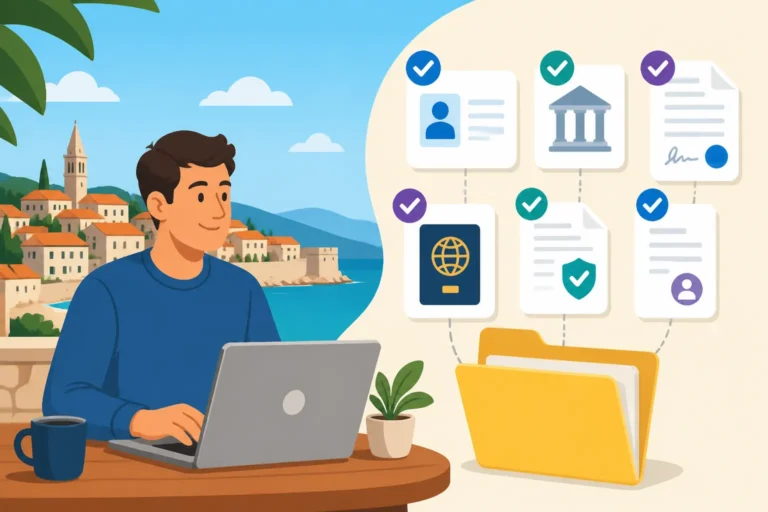
Essential Documents Checklist and Translation Requirements
You've probably gathered by now that paperwork is king in Croatia. A missing stamp, an uncertified copy, or an untranslated document can send you right back to the beginning of the queue.
- Translations: Any document not originally in Croatian must be translated by a sworn court interpreter ( sudski tumač ) officially recognized in Croatia. Don't try to use Google Translate or a friend who speaks Croatian; it won't be accepted.
- Apostille/Legalization: For documents issued outside the EU/EEA (like your criminal record check or marriage certificate), they often need an Apostille stamp (if your country is part of the Hague Apostille Convention) or full diplomatic legalization. This confirms the authenticity of the public document. Always check the specific requirements for documents from your home country.
- Copies: Always bring originals AND multiple copies of every single document. The MUP often keeps copies and returns originals, but sometimes they want copies of everything. Better safe than sorry!
Proving Sufficient Funds and Accommodation
These two are universal requirements and often scrutinized closely.
- Sufficient Funds: The Croatian authorities want to ensure you won't become a burden on their system. The exact amount varies by permit type (e.g., Digital Nomad vs. Family Reunification), but it's typically expressed as a multiple of the average Croatian salary or a fixed amount per month. You'll need recent bank statements showing consistent income or a lump sum that demonstrates you can sustain yourself. For a family, this amount will increase significantly per additional member.
- Accommodation: This proves you have a legitimate place to live. A notarized rental agreement ( ugovor o najmu ) is standard. If you're staying with friends or family, they'll need to provide a statement ( izjava ) confirming they are providing accommodation, often notarized. If you own property, you'll need the vlasnički list (property ownership certificate). Ensure your address on the rental agreement matches your intended registration address.
Navigating Health Insurance Requirements
Health insurance is not just a formality; it's a legal requirement for almost all long-term residence permits. The type of insurance needed varies:
- Proof of Travel Insurance: For short-stay visas.
- Private Health Insurance: For initial temporary residence permits, especially for Digital Nomads or those without an employer providing public health insurance. This insurance must cover emergency medical treatment, hospitalization, and repatriation, with a minimum coverage amount (often €30,000). Many expats opt for international private health insurance providers to fulfill this, as they understand the needs of people living abroad. For instance, Cigna Global offers plans that are robust enough to satisfy the requirements for a Croatian residence permit and provide comprehensive coverage wherever you go.
- Public Health Insurance (HZZO): Once you become a legal resident through employment or certain other categories, you'll typically be obligated to register with the Croatian Health Insurance Fund (HZZO). This becomes your mandatory public health insurance.
It's common to start with private insurance for your residence application and then transition to public HZZO once your permit is approved and you're officially registered as a resident.
The OIB: Your Personal Identification Number
We've mentioned it before, but the OIB ( Osobni identifikacijski broj ) is so fundamental to life in Croatia that it deserves its own emphasis. It’s a unique, eleven-digit identification number that everyone residing in Croatia, including foreigners, needs for pretty much everything: opening a bank account, buying property, registering a business, signing a lease, paying taxes, and, of course, getting a residence permit. You can't really function without one.
You can apply for an OIB at any tax administration ( Porezna Uprava ) office, usually with your passport and the application form. Sometimes, the MUP will initiate the OIB request as part of your residence permit application, but it's often faster to get it done beforehand if you can. It's a quick process, usually issued on the spot or within a day.
Renewing and Extending Your Stay in Croatia
A temporary residence permit is, as the name suggests, temporary. Most are issued for one year, and then you'll need to consider renewal. This is where you really start feeling like a local, as the renewal process often requires even more patience and foresight than the initial application.
Understanding Renewal Timelines and Procedures
Renewing your temporary residence permit usually involves submitting a new application to the MUP before your current permit expires. The general advice is to apply at least 30-60 days before expiration, but don't cut it too close. Some MUP offices prefer applications even earlier.
The renewal process is largely similar to the initial application, but you'll need to provide updated documents:
- Proof that the grounds for your residence still exist: For example, a new employment contract, proof of continued remote work for digital nomads, or ongoing enrollment for students.
- Proof of continued financial means and accommodation.
- Updated health insurance: If you're now on HZZO, you'll provide proof of that.
- Clean criminal record check: Sometimes requested again, especially if you've been abroad for extended periods.
It's important to demonstrate that you've been respecting the conditions of your previous permit. For instance, if you were a Digital Nomad, showing consistent income and adherence to the terms is key. How to Extend Your Temporary Residence Permit in Croatia offers a detailed walkthrough.
Changing Residence Categories: From DN to Work Permit, for example
Life happens, and your circumstances might change while you're in Croatia. Perhaps you came on a Digital Nomad permit but then found a fantastic job with a Croatian company. Or maybe you studied here and now want to stay and work. Croatia does allow for changing your residence category, but it's not always seamless.
This usually involves applying for a new temporary residence permit under the new grounds, rather than simply "transferring." This means you'll submit a full application, meeting all the requirements for the new category (e.g., a work permit application if you're switching to employment). It's always best to consult with the MUP or a legal expert beforehand to understand the specific steps and ensure you don't accidentally invalidate your current permit or overstay. You often need to apply for the new permit while your old one is still valid.
Moving Logistics and Settlement (Beyond the Visa)
Getting your visa and residence permit is a huge win, but it's just the first step in truly relocating. There's a whole world of practicalities that come after, and they can be just as daunting if you're not prepared.
Planning Your Relocation: What to Consider
Once the visa hurdle is cleared, the real move begins. This means thinking about how you'll get your belongings to Croatia, where you'll live, and how you'll set up your new life.
- Shipping your belongings: For larger moves, you might consider international moving services. Companies like Sirelo can help you compare quotes and find reliable movers to bring your worldly possessions to Croatia. It's often more complex and expensive than anticipated, so planning ahead is crucial.
- Accommodation: Even if you had a temporary address for your visa, finding a long-term home is essential. Research different cities and neighborhoods. Zagreb offers a vibrant city life, while Split or Dubrovnik offer coastal charm. The cost and availability of rentals vary significantly.
- Utilities and Services: Setting up electricity (HEP), water, gas, internet, and mobile phone services will be among your first tasks. Each requires a contract and your OIB.
- Bank Account: You’ll need a Croatian bank account for receiving salaries, paying bills, and general living. Having your OIB and residence permit makes this much easier.
Registering Your Residence and Getting Your Biometric Card
Once your temporary residence permit is approved, you'll receive a decision from the MUP. The next critical step is to obtain your biometric residence card ( boravišna iskaznica ). This is your physical proof of legal residence in Croatia.
You'll usually return to the MUP office (often a different window or department) with your approval decision, passport, and proof of payment for the card. They'll take your fingerprints and a digital photo, and then the card will be issued within a few weeks. It's often sent for production in Zagreb even if you applied in Split or Rijeka. How to Get a Biometric Residence Card (Boravišna Iskaznica) in Croatia explains this in detail.
Once you have your biometric card, you'll use it for everything from proving your identity to registering with doctors, opening accounts, and more. It's your key to unlocking everyday life in Croatia.
Disclaimer
The information provided in this guide is intended for general informational purposes only and does not constitute legal advice. While we strive to keep the information accurate and up-to-date, immigration laws and procedures in Croatia can change rapidly. Always consult with the official Croatian authorities (MUP, MVEP) or a qualified immigration lawyer in Croatia for personalized advice regarding your specific situation. Reliance on any information provided in this guide is solely at your own risk.