How to Apply for Croatian Citizenship by Descent (Podrijetlo)
Oh, the quest for Croatian citizenship by descent! Believe me, as someone who’s navigated the labyrinthine corridors of Croatian bureaucracy for years, I understand the mix of excitement, hope, and sheer frustration that comes with this journey. It’s more than just paperwork; it’s a deeply personal reconnection to your roots, a desire to formalize that bond with Lijepa Naša. But let’s be real, the path to reclaiming your heritage can feel like a riddle wrapped in an enigma, with a few obscure forms thrown in for good measure. This guide is here to untangle that knot, offering a clear, empathetic roadmap to help you apply for Croatian citizenship by descent, also known as Podrijetlo.
Understanding Croatian Citizenship by Descent (Podrijetlo)
Croatian citizenship by descent is a truly special pathway, often pursued by individuals whose ancestors emigrated from Croatia many years ago. It’s distinct from other immigration routes because it primarily focuses on historical lineage, acknowledging the deep ties many in the diaspora feel to their homeland. The Croatian state, through this mechanism, effectively says, "You are one of us, and we recognize your connection." This method aims to restore citizenship to individuals who, through no fault of their own, may have lost it or never officially had it due to historical circumstances or the emigration of their parents or grandparents.
Who is Eligible for Citizenship by Descent?
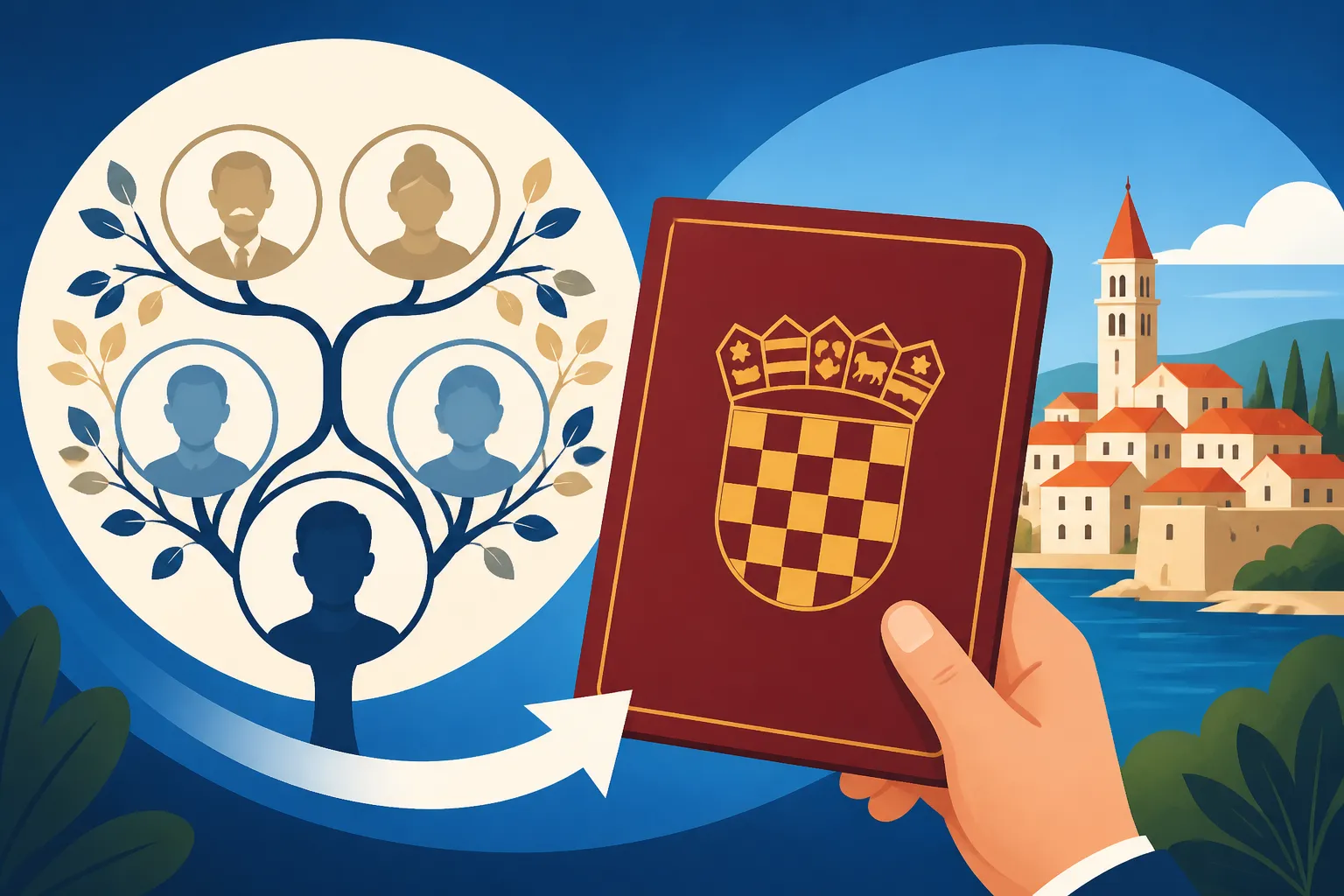
Eligibility for Croatian citizenship by descent, or Podrijetlo, is primarily defined by your direct lineage to a Croatian citizen. Generally speaking, this route is open to individuals who can prove that one of their parents or grandparents was a Croatian citizen at the time of their birth, or who was of Croatian ethnicity and emigrated from Croatia. This includes those whose ancestors may have lost their citizenship due to circumstances like emigration before Croatia gained independence or during various historical periods when citizenship rules were different. It’s not just about having a Croatian surname, though that certainly helps with the initial thought process; it's about being able to legally demonstrate that bloodline connection.
For instance, if your grandfather was born in a village near Split, was a Croatian citizen, and then emigrated to the United States in the 1950s, you would generally be eligible. The key is that they were considered a Croatian citizen (or of Croatian ethnicity from the territory of today's Croatia) at the time they left, or at the time of your parent's birth. This can sometimes involve digging into historical records to establish citizenship status if it wasn't explicitly documented. The law is quite specific, and proving that link is paramount; mere residency in Croatia at some point in the past is typically not enough to establish descent for your descendants.
The Legal Basis: Croatian Citizenship Law
The current framework for Croatian citizenship by descent is primarily governed by the Croatian Citizenship Law, most notably amendments from 2020. These amendments significantly broadened the scope for descendants of Croatian emigrants, particularly those who left the territory of present-day Croatia before independence or during the period of former Yugoslavia. Before 2020, the law was far more restrictive, often requiring applicants to prove that their ancestor had officially "opted out" of Yugoslav citizenship upon emigration, a bureaucratic step that many emigrants simply never took or weren't aware of. This made it incredibly difficult for many to prove their connection.
The 2020 changes aimed to simplify this, especially for those in the second and third generations of emigrants, recognizing the historical injustices and practical difficulties in obtaining such documentation. It essentially removed some of the previously insurmountable hurdles, allowing for a more inclusive approach to recognizing historical Croatian heritage. This means that if you applied years ago and were denied, it might be worth revisiting your case under the updated legislation. Understanding these legal nuances is crucial, as they dictate the exact types of proof and criteria you need to meet, ensuring your application aligns with the current legal interpretation of Podrijetlo.
Key Differences from Naturalisation or Other Routes
It’s really important to distinguish citizenship by descent from other pathways like naturalisation or even temporary residence. When you apply for citizenship by descent, you are essentially claiming a right based on your lineage, asserting that you already are Croatian by blood, even if not by birth in Croatia. This is why you typically don't need to demonstrate proficiency in the Croatian language or an in-depth knowledge of Croatian culture, nor do you need to meet residency requirements like those for naturalisation. You’re not "becoming" a citizen; you’re being "recognized" as one.
In contrast, naturalisation usually requires a significant period of continuous legal residency in Croatia, proof of financial stability, a clean criminal record, and, yes, a demonstration of Croatian language proficiency and cultural integration. For instance, someone seeking citizenship through naturalisation after years of temporary residence on a How Do I Apply for Permanent Residence in Croatia? permit would need to fulfill a very different set of criteria. The "descent" route bypasses many of these requirements precisely because it’s about acknowledging a pre-existing, albeit unformalized, connection. This makes it a much more accessible and direct path for those with verifiable Croatian roots, removing many of the complex hurdles faced by those who are simply moving to Croatia as new residents.
Gathering Your Ancestral Documentation: The Paper Chase
Ah, the "paper chase"! This is where many expats, myself included, have felt like detectives in a cold case. Gathering all the necessary documents for Croatian citizenship by descent isn't just about collecting papers; it's about piecing together your family's history, often reaching back generations, and translating that history into official, verifiable records. It can be a deeply rewarding but also incredibly frustrating process, especially when dealing with names that have been misspelled through emigration, lost records, or simply the passage of time. Be prepared for a treasure hunt, because that’s exactly what it feels like.
Essential Documents Proving Croatian Ancestry
The core of your application rests on proving that undeniable bloodline to your Croatian ancestor. This typically means providing original or certified copies of birth certificates, marriage certificates, and sometimes death certificates, linking you directly to the ancestor who was a Croatian citizen or of Croatian ethnicity. You'll need your birth certificate, your parents' birth and marriage certificates, and your Croatian grandparent's (or great-grandparent's) birth and marriage certificates. Each document serves as a link in an unbroken chain, showing your relationship to the person who qualifies you.
Beyond these vital records, you’ll also need documents pertaining to your Croatian ancestor’s citizenship status or ethnic background. This might include old passports, military records, church records, or even ship manifests if they emigrated. If your ancestor never had a Croatian passport but was born in what is now Croatia, their birth certificate is usually crucial. You'll also need proof of your own identity, like your current passport, and proof of a clean criminal record from your country of residence, often called a police clearance certificate. Remember, every document needs to tell a consistent story that clearly demonstrates your lineage back to a Croatian citizen.
Navigating Archives and Municipalities (Matični Ured)
Finding these crucial documents can be a real challenge, especially if your ancestors left Croatia decades ago. Often, the records you need are held in Matični Uredi (Registrar's Offices) in the specific municipalities where your ancestors were born or married. This means you might need to know the exact village or town, which can be tough if your family only ever spoke of "the old country." Sometimes, church records, particularly for older generations, can be a goldmine, as civil registration wasn't always as robust as it is today. Diocesan archives or local parish offices might hold records of baptisms and marriages that predate civil registration.
If you can’t travel to Croatia yourself, you might need to rely on relatives still living there, or consider hiring a local genealogist or a law firm that specializes in citizenship applications. They have the local knowledge and language skills to navigate the bureaucratic hurdles and know which offices to approach. Patience is truly a virtue here. You might find that a Matični Ured in a tiny village is far less digitally advanced than one in Zagreb, requiring physical visits or letters, and processes can be slow. It’s a marathon, not a sprint, and sometimes it feels like you're running backwards.
Dealing with Missing or Incomplete Records
What happens when you hit a roadblock, when that crucial birth certificate simply doesn't exist or has incomplete information? This is a common frustration for many applicants. Historical events, wars, fires, and even simple administrative oversights mean that not all records are perfectly preserved. If a key document is missing, you'll need to think creatively and legally about how to bridge that gap. This could involve finding alternative records that corroborate the missing information, such as church records, school records, old census data, or even sworn affidavits from elderly relatives who can attest to certain facts.
In some cases, especially if your ancestor was born in a territory that has changed hands multiple times, you might need to present documents from different national archives. For example, records from the Austro-Hungarian Empire might be relevant for ancestors from parts of Croatia that were under its rule. If a document is incomplete, such as a birth certificate missing a parent's name, you may need to apply for a correction at the Matični Ured or provide supplementary evidence to fill in the blanks. It’s crucial to document every step of your search and explain any gaps to the authorities. Sometimes, it truly feels like a jigsaw puzzle where half the pieces are missing, but don't give up hope; legal avenues often exist to compensate for these challenges.
Preparing Your Application: Translation, Notarisation, and Legalisation
Once you’ve embarked on your epic paper chase and gathered all those precious documents, the real work of preparing them for the Croatian authorities begins. This isn’t just about making photocopies; it’s about transforming your documents into a format that Croatian officials will accept, which often involves a strict process of translation, notarisation, and sometimes legalisation. Skipping these steps, or doing them incorrectly, is a surefire way to get your application delayed or, worse, rejected outright. It’s another layer of bureaucracy, but an essential one.
The Importance of Certified Translations
Nearly every document you submit that isn't already in Croatian will need to be officially translated. And not just any translation will do! You need a "certified" translation, meaning it must be done by a sworn court interpreter in Croatia or by an accredited translator whose work is recognized by the Croatian authorities. This isn’t the time for Google Translate or a friend who speaks a bit of Croatian. A certified translator will not only translate the text accurately but will also stamp and sign the document, attesting to its fidelity to the original. This stamp is what gives the translation legal weight.
Finding a good certified translator can be challenging, especially if you’re applying from abroad. Many Croatian embassies or consulates maintain a list of sworn translators in their jurisdiction. It's often best to use one of these recommended individuals or firms, as they are already familiar with the specific terminology and formatting required for official documents in Croatia. Expect to pay for this service, as quality certified translations are not cheap, but they are absolutely non-negotiable for your application's success. This step ensures that the officials reviewing your application fully understand the content of your foreign documents without any ambiguity.
Notarisation and Apostille/Legalisation Requirements
Beyond translation, many of your documents will need to be "notarised" and/or "legalised" (often through an Apostille). Notarisation simply means that a public notary attests to the authenticity of a signature on a document, or that a copy is a true copy of the original. An Apostille, on the other hand, is a specific type of legalisation for documents exchanged between countries that are members of the Hague Apostille Convention. It's a certificate attached to your document that verifies the authenticity of the signature and seal of the public official who signed the document (e.g., the registrar who issued a birth certificate).
If your country is part of the Hague Apostille Convention (and most are), you’ll need to get an Apostille stamp on your original documents (or sometimes on the notarised copies) from the relevant authority in your home country. This body might be your Secretary of State's office, Foreign Affairs office, or similar. If your country is not a member of the Hague Convention, then you’ll likely need full legalisation, which is a more complex multi-step process often involving your foreign ministry and then the Croatian embassy or consulate in your country. Always check the specific requirements with the Croatian embassy or consulate where you plan to submit your application, as requirements can vary slightly depending on your country of origin. This is one area where expert assistance, perhaps from a global mobility specialist like Sirelo if you're planning a relocation, could be beneficial in understanding the implications for your entire move.
Crafting Your Application Statement
Aside from the stack of certificates, you’ll also need to prepare a written statement, often called a "request" or "declaration," outlining your desire for Croatian citizenship by descent. This isn't just a simple letter; it’s a formal plea to the Croatian state, explaining your connection, your lineage, and why you are seeking citizenship under the Podrijetlo clause. While it doesn't need to be a literary masterpiece, it should be clear, concise, and directly address the legal criteria. It's an opportunity to present your case in a coherent narrative, backed up by the documents you're submitting.
You should clearly state your personal details, details of your Croatian ancestor, and how you meet the conditions for acquiring citizenship by descent. You might also include a brief personal reflection on what Croatian citizenship means to you, particularly if you have strong cultural ties or intentions to connect with Croatia. This statement must also be in Croatian, and often needs to be signed in front of a notary or at the Croatian consulate/embassy, or the MUP if you are applying in Croatia. Think of it as your formal address to the Minister of Interior, laying out your family story and your legitimate claim to Croatian identity.
The Application Process: Where to Apply and What to Expect
You've done the hard graft of collecting and preparing your documents. Now comes the moment of truth: submitting your application. This phase, while seemingly straightforward, can be rife with its own anxieties. Will everything be in order? Will they ask tricky questions? The key is knowing where to go, understanding the process, and managing your expectations regarding timelines and communication. It's about presenting your carefully curated family history to the authorities and hoping for a positive outcome.
Applying at the MUP in Croatia or an Embassy/Consulate Abroad
You generally have two main avenues for submitting your citizenship application: either directly at the Ministry of Interior (MUP) in Croatia, specifically at the relevant police administration based on where you intend to live (or where your ancestral ties are strongest, sometimes), or at a Croatian embassy or consulate in your current country of residence. Each option has its pros and cons. Applying within Croatia at the MUP might feel more direct, but it requires you to be legally present in Croatia, often on a separate How to Get a Type D Long-Stay Visa for Croatia? or How to Apply for Temporary Residence in Croatia? permit. If you're planning a move, it’s also important to factor in how your health insurance will work once you arrive; a provider like Cigna Global can offer peace of mind during this transitional period, ensuring you're covered while waiting for your citizenship to be processed and before becoming eligible for public health insurance.
Applying through an embassy or consulate abroad is usually the preferred method for those who don't yet reside in Croatia. It allows you to complete the bulk of the process from your home country, scheduling appointments and submitting documents locally. However, communication can sometimes be slower, and the processing time might be extended as documents are couriered back and forth between the consulate and the MUP in Croatia. Regardless of where you apply, ensure you book an appointment well in advance, as slots, especially at busy consulates, can be scarce.
The Interview Process and Potential Questions
When you submit your application, you will typically be required to attend an interview. This isn't necessarily an interrogation, but rather a formal meeting to confirm your identity, clarify any ambiguities in your documents, and allow you to formally sign certain declarations. The interview is usually conducted in Croatian, or with the assistance of a sworn interpreter if you're applying abroad. Don't panic if your Croatian isn't fluent; for citizenship by descent, language proficiency isn't typically a mandatory requirement, unlike naturalisation. However, showing even a basic understanding can convey your commitment.
Questions might range from your personal details, your family tree, and the specifics of your Croatian ancestor's emigration, to your reasons for seeking Croatian citizenship. They might ask about your connection to Croatia, whether you’ve visited, or if you have relatives still living there. Be honest, consistent, and ensure your answers align with the documentation you've provided. This is their opportunity to ensure everything is in order and that your claim is legitimate. It's also a chance for them to stamp your passport if you've brought it along, acknowledging receipt of your application.
Understanding Processing Times and Communication
This is often the part that tests everyone's patience: the waiting game. Processing times for Croatian citizenship by descent applications can vary wildly, from a few months to several years. Factors influencing this include the complexity of your case, the volume of applications, and the efficiency of the specific MUP office or consulate handling your file. During this period, communication can often feel like a black hole. Don't expect regular updates unless there's a specific issue with your application.
My advice? Settle in for the long haul. Follow up politely but not incessantly. If you applied through a consulate, they are usually your first point of contact for any status updates. If you applied directly at the MUP, you might have been given a contact number or email. It’s important to manage your expectations and understand that Croatian bureaucracy often moves at its own pace. Resist the urge to constantly call, as this can sometimes hinder rather than help. Just focus on ensuring your initial application was as complete and accurate as possible. While you wait, if you're still considering a future move to Croatia, resources like Sirelo can help you plan the logistics, from shipping household goods to finding international movers.
Post-Approval Steps: Registration and Your Croatian Identity
Congratulations! After what likely felt like an eternity, you’ve received that coveted letter confirming your Croatian citizenship. It’s a moment of immense pride and relief, but the journey isn’t quite over. There are still a few crucial administrative steps to take to fully formalise your new status and embrace your Croatian identity. This involves registering your citizenship, obtaining your official Croatian documents, and making preparations for your new life as a Croatian citizen, whether you choose to live in Croatia or remain abroad.
Registering Your New Croatian Citizenship
The confirmation letter (known as rješenje) is indeed thrilling, but it's not the final step. You now need to formally register your new citizenship with the Matični Ured (Registrar's Office) in Croatia. This process is called upis u knjigu državljana, which means registering in the register of Croatian citizens. This is where your birth details will be entered into the Croatian record system, formally acknowledging you as a citizen. If you were born outside Croatia, your foreign birth certificate will also be officially transcribed into Croatian birth registers.
This registration is often done at the MUP office where your application was processed, or if applying abroad, the consulate will guide you. You'll typically need to present your rješenje, your original birth certificate (with Apostille/legalisation and certified translation, if applicable), and possibly other identity documents. Once this is complete, you will receive a Croatian birth certificate (Izvadak iz matice rođenih) and a certificate of Croatian citizenship (Domovnica). These two documents are your fundamental proof of Croatian identity and are essential for all subsequent administrative tasks, such as obtaining an ID card or passport. It's a truly foundational step in becoming fully recognized.
Obtaining a Croatian Passport and OIB
With your Domovnica and Croatian birth certificate in hand, the next logical step is to obtain a Croatian passport and your Personal Identification Number (OIB). The OIB is the equivalent of a tax identification number or national identification number and is absolutely indispensable for almost everything in Croatia, from opening a bank account to registering for health insurance. You can apply for your OIB at the local tax administration office (Porezna Uprava) with your new Domovnica and foreign passport. Many people find it easiest to get this done at the same time they are doing other initial registrations. Remember, you'll need an How to Get Your OIB and Why It Matters for Healthcare Access for almost every official interaction you'll have in Croatia.
Applying for a Croatian passport is done at a MUP office in Croatia or at a Croatian embassy/consulate abroad. You'll need your Domovnica, Croatian birth certificate, a valid ID, and passport-sized photos. This is the moment when your Croatian identity becomes truly tangible – holding that deep blue passport in your hand is a profound experience for many. While you might continue to use your original passport for some international travel, the Croatian passport signifies your full recognition by the Republic of Croatia. For those residing in Croatia, an ID card (Osobna Iskaznica) is also essential and can be obtained at the same MUP office.
Integrating into Croatian Society
Becoming a Croatian citizen by descent is more than just paperwork; it’s an invitation to integrate into Croatian society and culture, even if you don't immediately move there. Many new citizens choose to learn the language (if they haven’t already), connect with local communities, or explore investment opportunities. If you're thinking of making the move, you'll want to dive into everything from The Expat Guide to Setting Up Utilities in Croatia to finding a family doctor. Your new citizenship can open doors to deeper engagement with your ancestral homeland, whether it's through cultural events, business ventures, or simply enjoying the unparalleled beauty of the country.
Even if you choose to remain abroad, having Croatian citizenship often grants you additional rights and opportunities within the EU, such as the freedom to live, work, and study in any EU member state. It also simplifies visits to Croatia, allowing you to stay indefinitely without worrying about Schengen limits. This newfound connection can be incredibly enriching, offering a deeper sense of belonging and heritage. And if a move is on the horizon, remember that having comprehensive health insurance, like Cigna Global, can be a great bridge until you get fully set up with the public health system (HZZO). This is especially true while you're sorting out your How to Register for HZZO Health Insurance as a Foreigner in Croatia or exploring Public vs Private Healthcare in Croatia: Which Should Expats Choose?. It's a big step, but it’s the beginning of a beautiful new chapter.
Summary of Key Documents for Citizenship by Descent
Here's a quick overview of the typical documents you'll need for a Croatian citizenship by descent application. Remember, specific requirements can vary based on your personal circumstances and the consulate/MUP office. Always consult the official guidelines for your particular case.
Document Type Purpose Key Details & Requirements
For Your Identity:
Valid Passport Essential Identification Must be currently valid, with sufficient remaining validity (e.g., 6+ months).
Your Birth Certificate: Demonstrates your identity and parentage. Must be official, 3-4 paragraphs detail.
Your Parents' Marriage Certificate: Links your lineage to your Croatian ancestor. Required to show the child-parent relationship.
Parents' Birth Certificates: Establishes identity and connection to ancestor. Must be official.
Disclaimer
The information provided in this guide is for general informational purposes only and is not intended to be a substitute for professional legal, financial, or medical advice, nor does it constitute an endorsement of any specific services or businesses. While we strive for accuracy, laws and regulations in Croatia are subject to change and individual circumstances vary. We recommend consulting with qualified professionals for specific guidance regarding your personal situation, particularly when navigating complex processes like applying for Croatian citizenship or making significant financial or medical decisions. We do not accept liability for any actions taken based on the information presented herein.