What Bank Balance Do I Need for a Croatian Digital Nomad Visa?
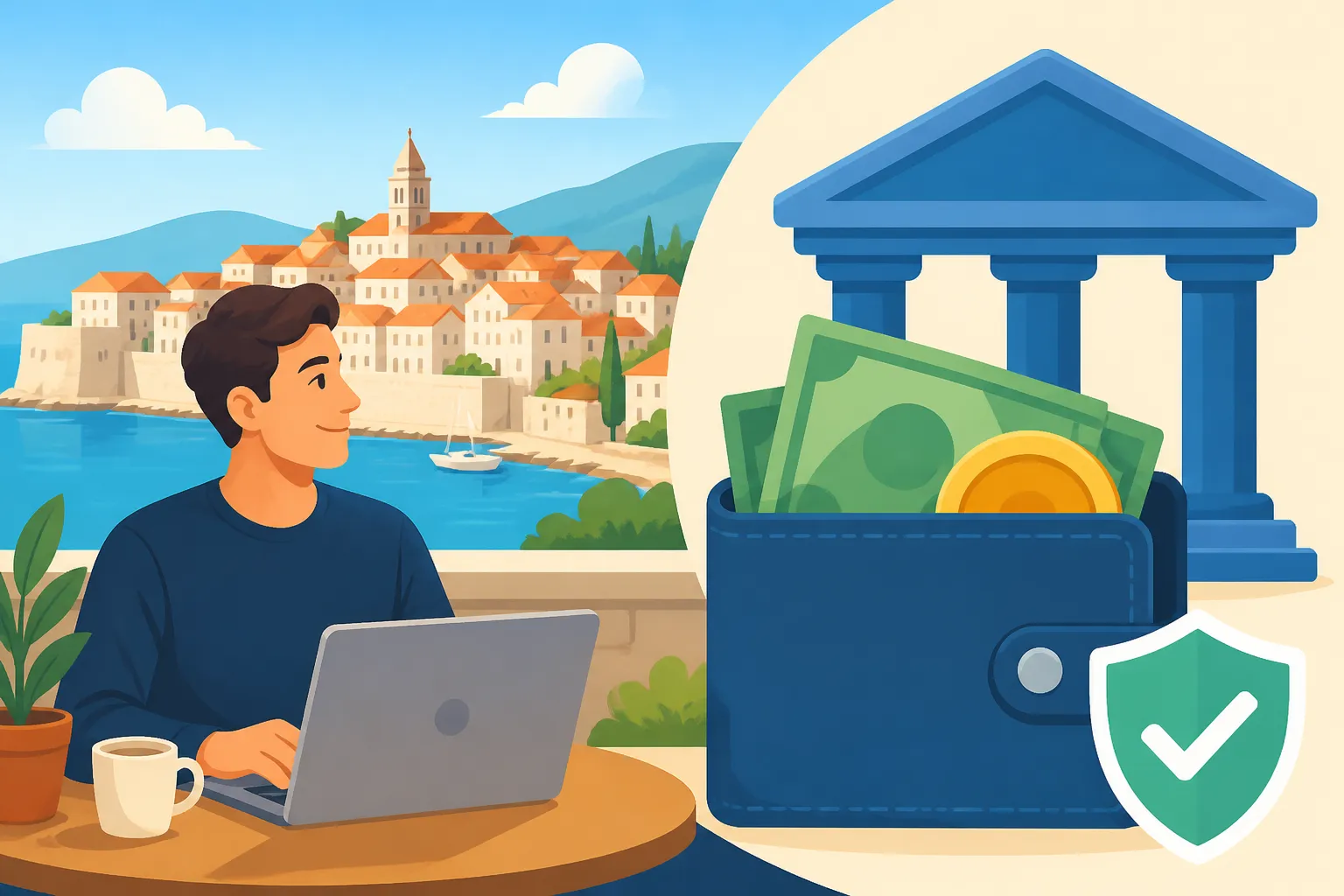
Oh, the infamous question about money! Believe me, when you’re dreaming of that Croatian sunshine and trying to navigate the digital nomad visa process, figuring out the financial requirements can feel like trying to solve a Rubik's Cube blindfolded. It’s not just about having some money; it's about having the right amount, proven in the right way, to satisfy the ever-vigilant Croatian authorities. This guide is going to strip away the confusion, clarify what bank balance you truly need, and offer a dose of reality about what it takes to actually live comfortably here.
The Official Stance: What the Croatian Law Says About Funds
Let's get right down to it. The Croatian Digital Nomad Visa, a true game-changer for many of us, requires you to prove you have sufficient funds to support yourself during your stay. This isn't just a suggestion; it's a hard and fast rule set by the Ministry of Interior (MUP). They want to ensure you won't become a burden on the state, which, let's be honest, makes perfect sense from their perspective.
The Minimum Monthly Requirement
The official figure you need to demonstrate for your digital nomad permit is tied to the average gross salary in Croatia. Specifically, it's set at 2.5 times the average gross monthly salary in Croatia for the previous year. Now, this figure can, and does, change slightly year-to-year as the average salary fluctuates. As of late 2023 and for applications into 2024, the general consensus and most recent official communications point to a minimum of around €2,539.34 per month. Yes, that’s a very specific number, isn't it? It reflects the latest calculations based on official statistics from DZS (Državni zavod za statistiku – Croatian Bureau of Statistics).
This amount needs to be consistently available to you. It's not enough to just show it once and then deplete your account. The MUP is looking for financial stability, a clear indication that you have a reliable income stream that meets or exceeds this threshold. When they look at your bank statements, they're scrutinizing your financial history to make sure there’s a pattern of income, not just a one-off deposit. This is why things like contracts with foreign clients or employers are so important – they back up the story your bank balance is telling. It’s all about proving that your digital nomad lifestyle genuinely allows you to be self-sufficient here in Croatia. For more details on this, you might want to check out the specifics on Understanding the Digital Nomad Permit Income Requirements in Croatia.
Annual vs. Monthly Proof
When it comes to proving these funds, you actually have two main options: demonstrate the monthly amount, or show the full annual amount upfront.
If you opt for the monthly proof, you typically need to show bank statements for the last three to six months that clearly indicate an income stream meeting the €2,539.34 per month minimum. This is often preferred by those with a steady, recurring income, such as employed digital nomads or freelancers with consistent retainer clients. It demonstrates a regular ability to meet the financial threshold without dipping into a large lump sum.
However, many digital nomads, especially those who freelance with variable income or have significant savings, prefer to show the full amount for a year. For a 12-month digital nomad permit, this means demonstrating €30,472.08 (2.5x average gross salary x 12 months) in your account. This lump sum approach gives you a bit more flexibility, as it doesn't require showing a consistent monthly inflow, just that you have enough to cover your expenses for the entire duration of your stay. This can be a huge relief for those whose income might fluctuate wildly from month to month but who have a solid financial cushion.
Choosing between the two depends on your personal financial situation and how you want to present your stability. If you're planning a shorter stay, say six months, then the calculation would be 2.5 times the average gross salary multiplied by six. The key is to have the funds clearly accessible and demonstrable in your name.
Proving Your Financial Stability: Acceptable Documentation
Alright, so you know the number, now how do you actually prove it to the MUP? This is where the paper trail (or digital trail, as it often is these days) becomes paramount. They're not just taking your word for it, naturally.
Bank Statements and Account Balances
Your bank statements are probably the most direct and common way to prove your financial standing. But don't just print out your online banking summary and expect it to fly. The MUP requires official, stamped, or digitally verified bank statements directly from your bank. These need to:
- Be in your name: This might sound obvious, but shared accounts or accounts where your name isn't clearly listed won't cut it.
- Show sufficient funds: The balance must clearly meet the minimum monthly or annual requirement.
- Cover a recent period: Usually, they want to see statements for the last 3-6 months to establish a pattern of income or a sustained balance.
- Be translated into Croatian: Unless your statements are already in English and the specific MUP office is lenient (which you should never count on!), you'll need a certified court translator to translate them. Don't skimp here; unofficial translations will be rejected.
- State the currency: While Croatia uses the Euro, your funds can be in any major convertible currency. The MUP will then convert it to Euro at the official exchange rate on the day of your application. This is an important detail to remember, as exchange rate fluctuations can work for or against you.
The type of account matters too. They typically look for funds in a current or savings account. Investment portfolios, cryptocurrency holdings, or property assets, while valuable, aren't usually considered "liquid" enough for this specific requirement without being converted to cash in a bank account. They want readily accessible funds.
Other Forms of Income Proof
While bank statements are key, they're often not the whole picture. The MUP also wants to understand where this money is coming from, especially if you're proving monthly income. This is where other supporting documents come into play:
- Employment Contracts: If you're employed by a foreign company, a copy of your employment contract, detailing your salary, your remote work arrangement, and the duration of your contract, is vital. This clearly establishes your source of income.
- Service Contracts/Invoices: For freelancers or independent contractors, contracts with your foreign clients are crucial. These should outline the services you provide, your payment terms, and ideally, show ongoing work. Recent invoices and proof of payment (like bank transaction receipts) will further strengthen your case.
- Pay Stubs/Salary Slips: If your employer provides these, they are an excellent way to show regular income.
- Letters from Employers/Clients: Sometimes, an official letter from your employer or a major client, confirming your remote work status, income, and the nature of your work, can supplement your application.
The key across all these documents is consistency. They should all tell the same story about your income and financial stability. If your income fluctuates wildly as a freelancer, and you’re relying on monthly proof, it might be safer to ensure you have that larger lump sum in your account for the full annual requirement. Always make sure everything is translated by a certified court translator and, if coming from outside the EU, potentially apostilled. The more meticulous you are with your documentation, the smoother the process tends to be. This level of detail in preparing your documents is often overlooked, but it can save you a lot of headaches later on, as discussed in How to Prepare Documents for a Croatian Residence Application.
Beyond the Minimum: Practical Financial Considerations for Digital Nomads
Meeting the visa's minimum bank balance requirement is one thing, but actually living comfortably in Croatia as a digital nomad is another. As a seasoned expat, I can tell you that the official minimum is often just that – a minimum to get your foot in the door. The reality of daily expenses can quickly make that figure feel tight, especially if you're looking for a good quality of life rather than just scraping by.
The Real Cost of Living vs. Visa Requirements
Croatia offers a diverse range of living costs depending on where you settle. Major cities like Zagreb, Split, and Dubrovnik are significantly more expensive than smaller towns or rural areas.
Let's look at some comparisons:
| Expense Category | Visa Minimum (€/month) | Zagreb/Split (Estimated €/month) | Smaller Town (Estimated €/month) |
|---|---|---|---|
| Visa Income Requirement | €2,539.34 | N/A (income, not expense) | N/A (income, not expense) |
| Rent (1-bed apartment) | (covered by income) | €500 – €900 | €300 – €600 |
| Utilities (electricity, water, gas, internet) | (covered by income) | €150 – €250 | €100 – €180 |
| Groceries | (covered by income) | €250 – €400 | €200 – €350 |
| Transport | (covered by income) | €40 – €80 | €20 – €50 (less for own car) |
| Eating Out/Entertainment | (covered by income) | €200 – €500+ | €100 – €300 |
| Estimated Total Living Costs | N/A | €1,140 – €2,130+ | €720 – €1,480+ |
As you can see, even in the "estimated total living costs" column, the figures are often well below the €2,539.34 monthly income requirement. This could suggest you'd have plenty left over. However, these are just averages for basic needs. They don't account for:
- Furnishing an apartment (if you're starting from scratch).
- Travel within Croatia or to other countries (which is half the fun of being a digital nomad, right?).
- Unexpected expenses like medical emergencies or home repairs.
- Socializing more than a couple of times a week.
- Personal care, hobbies, or shopping.
If you’re planning to live in a city like Dubrovnik, which is notoriously expensive, your costs could easily push towards the higher end of, or even exceed, the visa minimum. My advice? Aim to have an income comfortably above the minimum, especially if you plan to enjoy all that Croatia has to offer without constantly watching your budget. For a much deeper dive into what things actually cost, our comprehensive guide, The Complete Guide to Cost of Living in Croatia for Expats (2026), is an absolute must-read.
Health Insurance and Other Mandatory Expenses
Beyond your daily living costs, there are some non-negotiable expenses you absolutely need to factor into your financial planning. The big one for any long-term stay is health insurance.
For the digital nomad visa, you are required to have comprehensive private health insurance. This isn't optional, and it needs to be valid for your entire stay in Croatia. The cost of private health insurance can vary widely depending on your age, pre-existing conditions, and the level of coverage you choose. You can expect to pay anywhere from €50 to €150+ per month for a decent policy. Companies like Cigna Global offer plans that are specifically designed for expats and meet the visa requirements. Do your homework here; don't just grab the cheapest option. You really don't want to be caught out with inadequate coverage if something serious happens. We have a detailed article that can help you navigate this complex topic: What Health Insurance Do I Need for a Croatian Residence Permit?.
Other mandatory costs to budget for include:
- Visa Application Fees: While not astronomical, there are fees for submitting your application and for the biometric residence card itself. These are typically paid in Croatian Kuna (HRK), which means having some local currency or a card that handles foreign transactions without massive fees is useful.
- Translations and Notarizations: As mentioned earlier, many of your documents will need to be translated by a certified court translator. Each document or page can cost money, and if you need apostilles, that's an additional expense and bureaucratic hurdle.
- Initial Setup Costs: When you first arrive, you’ll likely have one-off expenses such as security deposits for rent, purchasing initial household items, or setting up utilities. These can quickly add up. If you’re planning a big move, perhaps even bringing household goods, services from companies like Sirelo can help you budget and manage the logistics, but they are still a cost to consider. Don't underestimate these initial outlays. Think about them as your "settling in" fund.
Contingency Funds and Financial Planning
My golden rule for expat life, especially for digital nomads, is this: always have a contingency fund. Life in a new country, even one as wonderful as Croatia, will inevitably throw curveballs at you. Your laptop could die, you might need an unexpected trip home, or you could face a dry spell with clients. Having three to six months' worth of living expenses above and beyond your regular operating budget is a smart financial move.
This isn't just about worst-case scenarios; it also gives you peace of mind and flexibility. Imagine wanting to take a month-long break to explore the Dalmatian coast, or deciding to switch careers – a solid emergency fund makes these decisions possible without financial stress. Many new expats, understandably, focus solely on the visa requirements. But truly successful expat living is about forward planning and resilience. Our guide, The Expat Guide to Moving to Croatia: Your First 90 Days (2026), covers a lot of these initial settling-in costs and tips for a smoother transition.
Common Pitfalls and Expert Tips
You've got the numbers, you've got the document types, and you're thinking about real-life costs. Now, let's talk about some of the common mistakes I've seen expats make and how to avoid them.
Currency Conversion and Exchange Rates
Croatia adopted the Euro on January 1, 2023, which simplifies things immensely for many foreigners. However, if your funds are held in a different currency (e.g., USD, GBP, AUD), you need to be acutely aware of exchange rate fluctuations. The MUP will convert your stated balance to Euros on the day they process your application.
Imagine this: You apply in early November, and the exchange rate is favorable. Your USD balance meets the Euro requirement. But if your application is reviewed in December, and the Euro has strengthened against the USD, your balance might suddenly fall below the minimum. This is a rare but frustrating pitfall.
My tip: If your funds are not in EUR, aim to have a buffer of at least 5-10% above the minimum requirement to account for potential exchange rate swings. Better yet, if you can, transfer the required amount into a Euro-denominated account a few weeks before applying. This removes any uncertainty. Also, make sure your bank statements clearly show the currency your funds are in.
Preparing Your Documents Meticulously
I cannot stress this enough: attention to detail is your best friend when dealing with Croatian bureaucracy. The MUP officials have a checklist, and if even one tiny item is missing or incorrect, your application can be delayed or rejected.
- Translations: Every single document not originally in Croatian (or English, if your specific MUP office accepts it) must be translated by a certified Croatian court translator. These aren't just any translators; they are government-approved. Don't use Google Translate or a friend who "speaks Croatian." The cost might seem like an extra burden, but it’s non-negotiable.
- Apostille/Legalization: Depending on your country of origin and any bilateral agreements with Croatia, some documents (like birth certificates or criminal background checks) might require an apostille stamp or other forms of legalization. Always check the specific requirements for your nationality.
- Photocopies and Originals: Always bring both original documents and good quality photocopies of everything to your MUP appointment. They will usually take the copies and sight the originals.
- Consistency: Ensure that names, dates, and addresses are consistent across all your documents. A slight discrepancy, like a middle initial missing on one document, can raise red flags.
Take your time, gather everything well in advance, and double-check it. Then have a trusted friend (or a professional) double-check it again. This will save you countless headaches and potentially extra trips to the MUP. It's truly an administrative marathon, not a sprint, and having your ducks in a row is key for your How to Apply for a Croatian Digital Nomad Permit.
Seeking Professional Advice
While this guide aims to be comprehensive, every individual's situation is unique. If you have a complex financial background, multiple income streams, or are unsure about any aspect of the process, investing in professional advice can be invaluable.
- Immigration Lawyers: A good immigration lawyer in Croatia who specializes in digital nomad visas can review your entire application, advise on specific documents, and even accompany you to the MUP (though this is often not necessary for the digital nomad visa). They know the nuances and can spot potential issues before they arise.
- Accountants/Financial Advisors: If you're managing complex foreign income, especially if you plan to stay long-term and consider tax residency, consulting with a Croatian accountant who understands international tax laws can be extremely beneficial. This is more for post-visa financial planning but can influence how you structure your income proof.
Don't be afraid to ask for help. While forums and expat groups are fantastic for shared experiences and general tips, they are not a substitute for professional, personalized advice tailored to your specific circumstances. Getting accurate information is crucial, especially with rules and requirements that can sometimes be ambiguous or change unexpectedly.
Disclaimer
Please remember that I am an expat blogger, not a legal or financial professional. The information provided in this article is based on my personal experience, general knowledge, and publicly available information at the time of writing. While I strive for accuracy, regulations and requirements, particularly for immigration and finance, can change. It is always recommended to consult with official government sources (like the Croatian Ministry of Interior or local MUP offices) or seek advice from qualified legal and financial professionals for your specific situation.