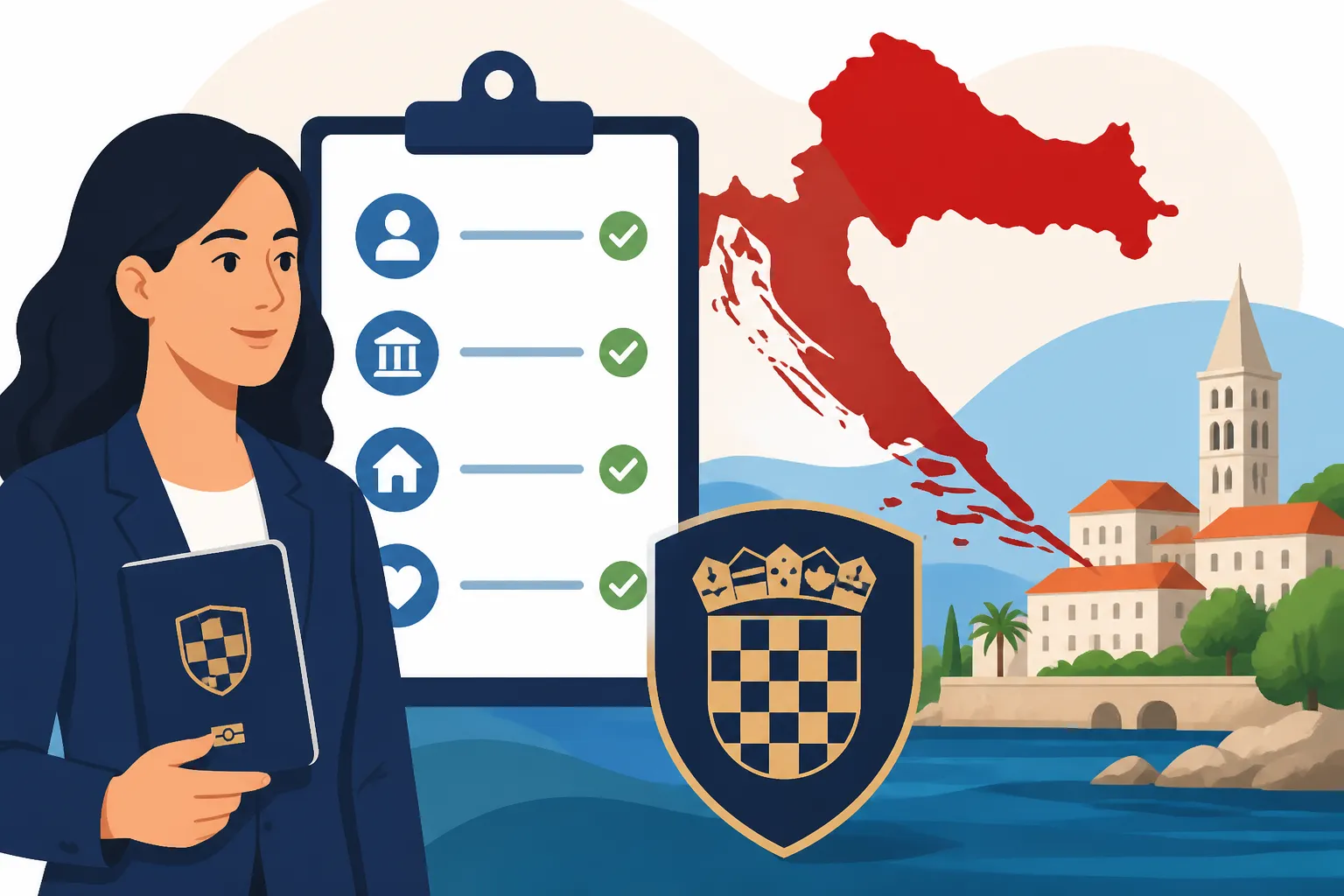
How Do I Apply for Croatian Citizenship Through Naturalisation?
The dream of calling Croatia 'home' permanently often culminates in seeking citizenship. But navigating the naturalisation process can feel like a labyrinth designed by Kafka himself, full of obscure rules and never-ending paperwork, especially when you’re dealing with the often-opaque administrative system. This guide aims to demystify applying for Croatian citizenship through naturalisation, walking you through the requirements, the infamous language test, and what to expect on this long but rewarding journey.
Understanding Naturalisation: The Path to Becoming a Croatian Citizen
Becoming a Croatian citizen through naturalisation isn't a quick sprint; it's more like an ultra-marathon. It requires patience, meticulous document gathering, and a genuine commitment to integrating into Croatian society. The law governing this process is the Croatian Citizenship Act, and understanding its nuances is key. It's not just about ticking boxes; it's about proving your connection to the country.
The Basic Eligibility Criteria
For most expats, the journey to Croatian citizenship via naturalisation begins with a significant period of legal residence. The general rule, often referred to as "regular naturalisation," requires you to have lived continuously in Croatia for a minimum of eight years. And when we say "continuously," the Ministry of Interior (MUP) really means it. Short trips abroad for holidays are fine, but extended absences can reset your clock or complicate matters. You need to have held permanent residence status, or stalni boravak, for at least five of those eight years. Before that, you would have been on various forms of temporary residence, or privremeni boravak. It's a progression that ensures you've truly established your life here.
Beyond the length of stay, you need to be at least 18 years old, be proficient in the Croatian language and Latin script, and have a basic understanding of Croatian culture and social order. This isn't just a casual "Dobar dan" and "Hvala"; it's a measurable level of understanding. You'll also need to prove that you respect the legal order of the Republic of Croatia and that your stay here hasn't been a financial burden to the state. This means demonstrating you have sufficient means to support yourself and your family. For instance, if you're working, you'll need proof of employment and income. If you're retired, evidence of a pension or other financial resources will be necessary. This is where your financial life in Croatia, including your tax history, comes under scrutiny. You'll want to ensure all your affairs are in order from the moment you settle down.
Special Considerations and Exceptions
While eight years is the standard, Croatia's citizenship law does offer some specific pathways for naturalisation that can reduce the required residency period or modify other conditions. These are designed to accommodate certain categories of individuals who have a stronger, inherent link to Croatia or who serve a particular national interest.
One of the most common exceptions applies to spouses of Croatian citizens. If you're married to a Croatian national, you can apply for naturalisation after just three years of continuous temporary residence in Croatia, provided you also have a valid privremeni boravak and a clean record. This significantly shortens the waiting time and acknowledges the familial bond. However, don't think marrying a Croatian is a golden ticket to bypass everything; you'll still need to demonstrate language proficiency and knowledge of Croatian culture, and, crucially, your marriage must be genuine and ongoing. The authorities will look for true integration into the family and community.
Another important category is for individuals whose naturalisation is deemed to be in the interest of the Republic of Croatia. This is often applied to people with exceptional scientific, cultural, or athletic achievements, or those who bring significant economic benefit to the country. The criteria for this are quite discretionary and usually involve a recommendation from a relevant government ministry. Similarly, members of the Croatian people who do not have Croatian citizenship can naturalise under slightly different conditions, typically requiring proof of Croatian ancestry and some evidence of actively nurturing Croatian identity, culture, or language. These paths are less common for the average expat but exist for those with specific circumstances. It's worth noting that if you’re unsure about your specific situation, consulting with a legal expert specializing in Croatian immigration law is always a wise investment.
Navigating the Application Process: Step-by-Step Through the Bureaucracy
The application process for Croatian citizenship through naturalisation is a journey through administrative complexities. It requires patience, meticulous attention to detail, and a readiness to provide extensive documentation. You'll primarily be dealing with the MUP (Ministry of Interior), specifically the administrative police department in the city where you hold residence. This is where all your applications for temporary and permanent residence have been processed, so you should be familiar with the drill, though the stakes are considerably higher this time.
Gathering Your Mountain of Documents
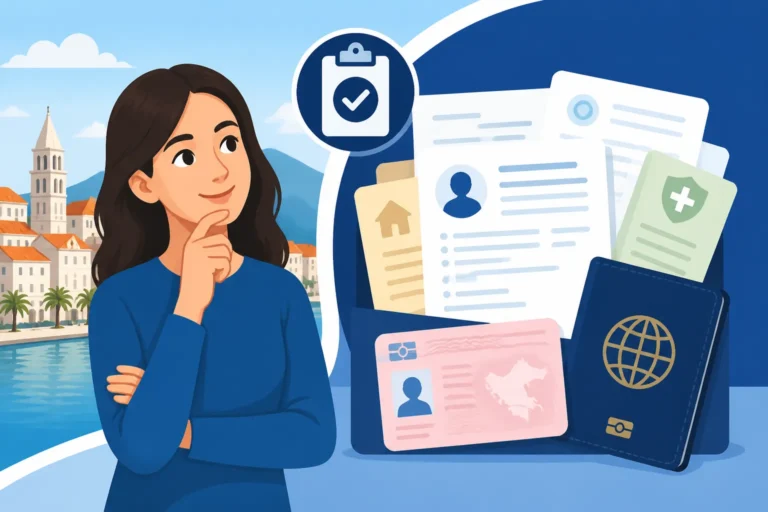
This is arguably the most demanding part of the entire process. The MUP demands a comprehensive set of documents, each serving as proof of your eligibility and commitment to Croatian life. Expect to provide original documents along with certified Croatian translations, which can be costly and time-consuming. You'll need:
- Application Form: The official form, usually obtained from the MUP or downloaded from their website.
- Proof of Identity and Citizenship: Your valid passport and proof of your current citizenship.
- Birth Certificate: An original, international format, or a certified copy translated into Croatian.
- Marriage Certificate: If applicable, especially if you're applying as a spouse of a Croatian citizen.
- Proof of Residence History: This means your full history of residence permits (privremeni boravak and stalni boravak) in Croatia, showing the continuity of your stay. The MUP will have records, but it's good practice to have your own copies.
- Proof of Financial Means: Documentation showing you can support yourself and your family. This could include employment contracts, payslips, bank statements, pension statements, or proof of owning income-generating property. You might also need to provide your annual tax returns. For those considering a longer move, services like Sirelo can often help organize the logistics of moving your financial records and essential documents, which can be a huge relief.
- Clean Criminal Record: An original criminal record check from your home country (with a certified translation) and one from Croatia. This is absolutely non-negotiable. You cannot have any serious offenses on your record.
- OIB (Personal Identification Number): This number is essential for almost any administrative task in Croatia, and certainly for citizenship. If you don't already have one, you'll need to obtain it, though it's highly unlikely you'd be applying for citizenship without having one for years. You can find more information about How to Get an OIB (Personal Identification Number) in Croatia.
- Health Insurance: While not always a direct naturalisation requirement per se, having consistent health insurance coverage throughout your residency period is crucial for demonstrating stable integration. Many expats rely on private options like Cigna Global during their initial temporary residence periods before potentially transitioning fully into the public HZZO system. The MUP wants to see that you've been a responsible resident.
- Proof of Payment of Administrative Fees: There are state fees associated with the application.
It's a lot, and often the MUP will ask for additional documents or clarifications that aren't on any official list. The best advice is to over-prepare and keep copies of absolutely everything you submit. Having a lawyer review your file before submission can save you immense headaches down the line.
The Submission and Interview Stages
Once you've meticulously gathered every last scrap of paper, you'll submit your application at your local MUP. This isn't just dropping off a file; it often involves an initial review by a MUP officer, who might immediately point out missing documents or request further clarification. Be prepared for this initial interaction to be somewhat challenging, especially if your Croatian isn't yet fluent.
Following the submission, you'll likely be called for an interview. This interview is a critical part of the process where the MUP assesses your integration, your commitment to Croatia, and your understanding of the country. This isn't just a formality; it's a chance for them to gauge your sincerity. They might ask about your reasons for wanting citizenship, your family life, your work, your social circle, and your general knowledge about Croatia. This is also where your language skills will be put to the test in a real-world conversational setting, even before the formal language exam. They want to see that you’re not just living in Croatia, but truly living Croatian life.
During the interview, be prepared to answer questions about your daily life, your understanding of Croatian customs, and even current events. They want to ensure you're not just passing through but genuinely embracing life here. It's not uncommon for them to verify details from your application, so make sure your story is consistent and truthful.
What to Expect After Application
After you've submitted your application and endured the interview, the waiting game begins. And oh, what a game it is! The processing times for naturalisation applications can vary wildly, from a few months to several years. There's no fixed timeline, and trying to rush the process is often futile. Many expats report long periods of silence, only to be contacted suddenly for additional documents or further interviews.
During this period, the MUP will conduct thorough background checks, verify all your submitted documents, and consult with other state bodies. This includes checking your criminal record, verifying your financial standing, and assessing your overall integration. If you've chosen a private health insurance provider like Cigna Global during your residency, they won't be checking that directly, but the MUP will verify your public health insurance status and contributions throughout your long-term residency.
Eventually, you will receive a decision. If approved, you'll be invited to take the oath of citizenship. If denied, you will receive an official explanation, and you might have the right to appeal the decision, though this process can be complex and often requires legal assistance. It's a journey that demands resilience and a deep understanding of the Croatian administrative system. You can explore topics related to your previous statuses, like How Do I Get a Biometric Residence Card (Boravišna Iskaznica) in Croatia, to better understand the documents that lead up to this point.
The Language and Culture Test: More Than Just 'Dobar Dan'
One of the most intimidating hurdles for many aspiring Croatian citizens is the language and culture test. It's not just a casual chat; it's a formal assessment designed to ensure you can genuinely integrate and participate in Croatian society. The MUP needs to be sure that you understand and respect the country's values and legal framework.
Proving Your Croatian Language Proficiency
The Croatian Citizenship Act explicitly states that an applicant must be proficient in the Croatian language and Latin script. This isn't a vague requirement; it usually means demonstrating a level of B1 or B2 on the Common European Framework of Reference for Languages (CEFR). For most expats, this will involve sitting for a specific language exam. Institutions like Croaticum at the University of Zagreb are well-known for offering such courses and certifications.
The test typically assesses all four language skills: reading, writing, listening, and speaking. You'll need to be able to understand everyday conversations, read official documents or newspaper articles, write simple letters or essays, and articulate your thoughts clearly. This goes far beyond tourist phrases. It demands a serious commitment to learning the language. Many expats enroll in intensive courses, hire private tutors, or immerse themselves fully in the language through local media and social interaction for years to reach this level. For more detailed information, consider checking out Learning Croatian: A Complete Guide to Language Courses and Levels.
Don't underestimate this part. The MUP has no interest in granting citizenship to someone who can't effectively communicate in the national language. It's a fundamental aspect of integration. If you're struggling, dedicate consistent time and effort; it will pay off not just for the test but for your entire life in Croatia.
Demonstrating Knowledge of Croatian Culture and Society
Alongside language proficiency, applicants must demonstrate a basic knowledge of Croatian culture and its social order. This part of the assessment aims to ensure you understand and respect the country's history, political system, main institutions, and fundamental values. It's less about memorizing every historical date and more about grasping the essence of what it means to be a citizen of Croatia.
You might be asked questions about:
- History: Key periods, significant events, and national heroes.
- Geography: Major cities, rivers, and regions.
- Political System: How the government works, the role of the President, Parliament (Sabor), and the Constitution.
- National Symbols: The flag, coat of arms, and anthem.
- Major Holidays and Traditions: Understanding cultural significance.
This component often takes the form of an oral examination during your MUP interview, but sometimes a written component is also included. The MUP wants to see that you've made an effort to understand the country you wish to join. They’re looking for evidence that you’re not just residing here but that you’ve truly made an effort to understand Croatian society. There are resources available, including MUP-recommended study materials, to help you prepare. This shows you’ve done your homework and are genuinely committed to becoming a part of Croatia. It builds on the idea of long-term integration, a concept fundamental to the pathway of Permanent Residence in Croatia: The Complete Pathway (2027).
Dual Citizenship: A Common Question for Expats
For many expats, especially those from countries that traditionally allow multiple nationalities, the question of dual citizenship is paramount. Will you have to renounce your original citizenship to become Croatian? This is a crucial consideration and one that Croatia approaches with specific rules.
Croatia's Stance on Dual Nationality
Generally, Croatia's Citizenship Act leans towards the principle of a single nationality. For most standard naturalisation applications, particularly under the general eight-year residency rule, you will typically be expected to provide proof that you have renounced your original citizenship or that you are in the process of doing so. This can be a very difficult decision for many, as it means severing a formal tie to your country of origin. The MUP will often ask for official documentation from your home country confirming your renunciation or a letter stating that their laws prevent you from doing so before they finalize your Croatian citizenship.
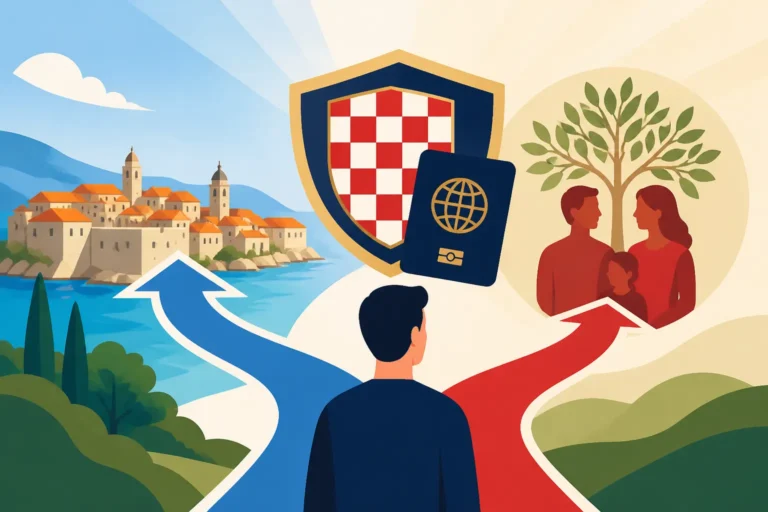
However, there are important exceptions to this general rule. Croatia does allow dual citizenship in specific scenarios, primarily to protect ties for those with strong historical or national connections to the country. For example, if you are naturalising based on descent (i.e., proving Croatian ancestry), or if your naturalisation is deemed to be in the special interest of the Republic of Croatia, you may not be required to renounce your original citizenship. Similarly, if your country of origin's laws do not permit you to renounce your citizenship (which is rare but does happen), Croatia may allow you to retain both. This is often an area that causes a lot of confusion, so it's vital to get clarity on your specific situation. You can delve deeper into this complex topic by reading about Understanding Dual Citizenship Rules in Croatia.
When You Might Have to Choose
If you fall under the general naturalisation rules, be prepared for the possibility of having to make a choice. This decision often involves significant emotional and practical considerations. Think about your family ties, property ownership in your home country, and the rights and responsibilities that come with each citizenship. The process of renunciation itself can be complicated and lengthy, varying significantly depending on your country of origin. You’ll need to coordinate carefully between the Croatian authorities and your home country’s embassy or consulate.
The MUP will not finalize your Croatian citizenship until they have satisfactory proof regarding your original nationality. This could mean a certificate of renunciation, or official correspondence confirming an exception applies to your case. This step often adds another layer of bureaucracy and stress to an already long process. It's highly advisable to research your home country's laws on renunciation well in advance, even before you start your Croatian naturalisation application. Being informed about this potential requirement early on can help you prepare mentally and logistically for what might be a monumental decision in your life.
| Criteria | General Naturalisation (Most Expats) | Spouse of Croatian Citizen | Interest of the Republic/Croatian Descent |
|---|---|---|---|
| Age | 18+ years | 18+ years | 18+ years |
| Residency | 8 years continuous (5 yrs perm. res.) | 3 years continuous temp. res. | Varies, often shorter or no requirement |
| Language & Culture | Required (B1/B2 CEFR, general knowledge) | Required (B1/B2 CEFR, general knowledge) | Required (B1/B2 CEFR, general knowledge) |
| Criminal Record | Clean record required | Clean record required | Clean record required |
| Financial Means | Proof of adequate means | Proof of adequate means | Proof of adequate means |
| Dual Citizenship | Generally NOT allowed (renunciation usually required) | Generally NOT allowed (renunciation usually required) | Often permitted or exceptions apply |
| Loyalty | Respect for Croatian legal order | Respect for Croatian legal order | Respect for Croatian legal order |
Disclaimer
This article is for general informational purposes only and does not constitute professional advice. Laws, prices and regulations vary by location and change over time. Consult a qualified professional for guidance on your specific situation.