Croatian Citizenship: Routes to Naturalisation and Descent (2027)
Many of us who have chosen Croatia as our home, or those with deep roots here, often find ourselves yearning for a more profound connection than just temporary residence. The journey to becoming a Croatian citizen is a testament to that desire, offering a sense of true belonging in this beautiful country. This comprehensive guide will meticulously explore the various pathways to Croatian citizenship, focusing on both the historical connection of descent and the dedicated path of naturalisation for those building new lives here today and beyond.
The Emotional Pull of Croatian Citizenship: More Than Just a Passport
For many expats, the decision to pursue Croatian citizenship isn't merely about administrative status or a shiny new passport. It's often deeply personal, a culmination of years of building a life, integrating into the community, and feeling a profound connection to the land and its people. This emotional aspect can be overlooked when you're wading through legal documents, but it's a powerful motivator.
Why Seek Croatian Citizenship?
Imagine finally being able to say, unequivocally, "I am Croatian." For some, it means solidifying their place in a country they've grown to love, removing the constant worries of residence permit renewals and visa changes. For others, particularly those with Croatian ancestry, it's a powerful act of reclaiming heritage, a way to honour their family's past and connect future generations to their roots. It offers unfettered freedom of movement within the EU, the right to vote, and the certainty that your future in Croatia is secure. No more wondering if your The Expat Guide to Temporary Residence Privremeni Boravak in Croatia will be renewed or if your work permit is tied to a specific job. It's about planting permanent roots.
The Expat Journey to Belonging
The path to citizenship is often the ultimate step in an expat's integration journey. You might have arrived here with just a suitcase and a dream, perhaps on a How to Apply for a Croatian Digital Nomad Permit or a work visa. Over time, you learned the language, navigated the bureaucracy, found your favourite local café, and built a community. Becoming a citizen is the official stamp on that journey, recognizing your commitment and contributions. It’s about being truly home. This process can be daunting, no doubt, and it can feel like you're constantly proving your worth, but the end goal is a sense of belonging that transcends any temporary status. Many people, during their initial residency applications, ensure they have proper health coverage, with international providers like Cigna Global often being a go-to for peace of mind before they even consider the long road to citizenship.
Understanding the Legal Framework: The Croatian Citizenship Act
Before diving into the specifics of descent or naturalisation, it's crucial to grasp the overarching legal framework that governs Croatian citizenship. This isn't just a bureaucratic hurdle; it’s the foundation upon which all applications are built. The current law is the Croatian Citizenship Act (Zakon o hrvatskom državljanstvu), which has seen several amendments over the years, with the most recent significant changes aiming to simplify processes for descendants, particularly those from the diaspora.
Key Principles of Croatian Citizenship Law
Croatian citizenship law operates primarily on the principle of jus sanguinis, or "right of blood." This means that citizenship is predominantly acquired through one or both parents being Croatian citizens, regardless of the child's place of birth. This is why the path of descent is so central to the Croatian legal system. While jus soli (right of soil, or citizenship by birth in the territory) exists, it's far more limited, typically applying only to children born in Croatia to unknown parents, stateless parents, or parents whose citizenship cannot be determined. Understanding this core principle is vital as it dictates which pathway is most appropriate for you. Furthermore, Croatia generally prefers a single citizenship, though exceptions exist, particularly for those acquiring citizenship by descent or those whose existing citizenship cannot be easily renounced.
Who is Considered a "Croatian Citizen" from the Start?
According to the law, a person is a Croatian citizen by origin if:
- Both parents are Croatian citizens at the time of their birth.
- One parent is a Croatian citizen at the time of their birth, and the child is born in Croatia.
- One parent is a Croatian citizen at the time of their birth, and the child is born abroad but registered as a Croatian citizen by their 18th birthday (or sometimes up to age 21 under specific conditions, or even later with certain amendments, particularly for diaspora).
- A child found or born in Croatia whose parents are unknown or whose citizenship status is unknown (though this is rare).
These provisions are particularly important for those looking to reconnect with their ancestry, as it sets the stage for establishing their inherent right to Croatian citizenship, rather than seeking to acquire it anew. This immediate recognition, if the conditions are met, bypasses the often lengthy and complex naturalisation process entirely.
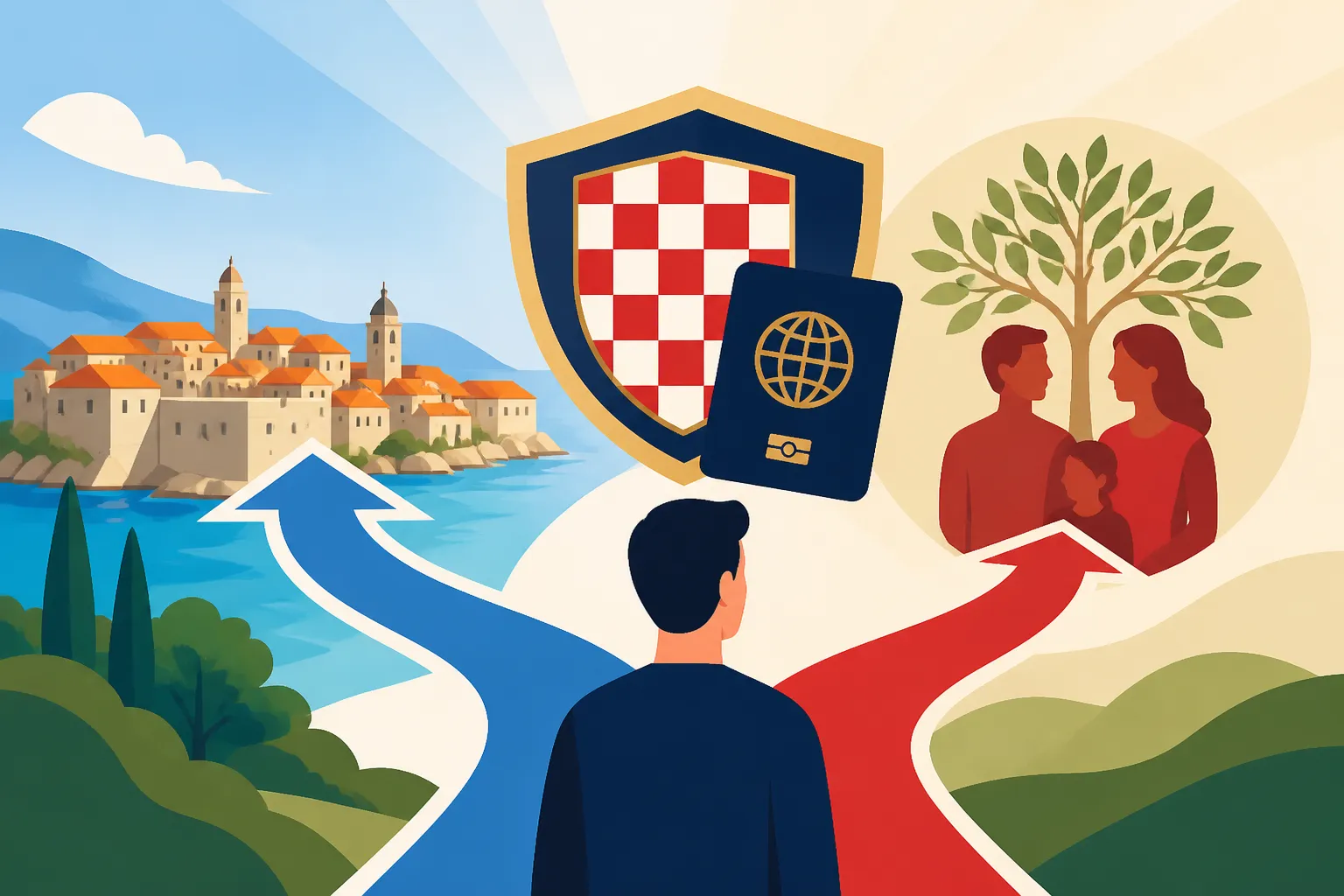
Pathway 1: Citizenship by Descent (Podrijetlo) – Connecting to Your Roots
This pathway is arguably the most straightforward for those with direct lineage to Croatian citizens. It's about recognizing an existing right rather than granting a new one, based on the principle of jus sanguinis we just discussed.
Eligibility for Descent: Who Qualifies?
The primary criteria for citizenship by descent is having at least one parent who was a Croatian citizen at the time of your birth. This can extend to grandparents and even great-grandparents under specific amendments, especially for individuals of Croatian emigration. For example, the 2020 amendment significantly eased the process for descendants of Croatian emigrants, removing the former requirement that the emigrant parent or grandparent must have renounced their Croatian citizenship to obtain foreign citizenship. Now, proving descent is often enough.
Let's consider a few scenarios:
- Scenario A: Your mother was a Croatian citizen when you were born, even if you were born in Canada. You're likely eligible.
- Scenario B: Your grandfather emigrated from Croatia in the 1950s, became an American citizen, and your parent was born in the USA. With the recent changes, you and your parent may now be eligible, even if your grandfather renounced his Croatian citizenship. The key is proving the continuous lineage and the "Croatian emigration" aspect. This includes persons who left Croatia due to circumstances of forced emigration, which often means escaping economic hardship or political turmoil.
It’s about reconstructing that family tree and finding the direct link that the Croatian state recognises. This is where patience and meticulous record-keeping become your best friends.
The Application Process for Descent: Step-by-Step
Applying for citizenship by descent involves several distinct steps, each requiring careful attention to detail. It's not a race, it's a marathon, and every piece of paper matters.
- Gathering Initial Documentation: Before you even think about forms, you need your family's history. This means birth certificates, marriage certificates, and death certificates of your Croatian ancestor(s) and everyone in your direct line to them. These are the bedrock of your application. You'll need to research which relative was the last Croatian citizen in your direct line, and gather all civil status documents (rodni list, vjenčani list, smrtni list) for that person and every generation leading to you.
- Contacting Croatian Authorities: You can initiate the process either at a Croatian diplomatic mission or consular post abroad (e.g., your local Croatian Embassy or Consulate) or directly with the Ministry of Interior (MUP) in Croatia if you already reside here. If you're abroad, the consulate will guide you on the necessary forms and appointments.
- Completing the Application Form: There will be a specific form (Zahtjev za stjecanje hrvatskog državljanstva podrijetlom) to fill out. Be precise. Any discrepancies between your documents and the form can cause delays.
- Submitting Documents: This is where the paper trail really comes alive. All foreign documents will need to be officially translated into Croatian by a sworn court interpreter and apostilled or superlegalized, depending on the country of origin. This step alone can be expensive and time-consuming. Don't underestimate it.
- Waiting for a Decision: Once submitted, your application will be reviewed. The waiting times can vary significantly, from a few months to over a year, depending on the complexity of your case and the volume of applications. The MUP will often send letters requesting additional documentation or clarification, so be prepared to respond promptly.
Remember, this isn't a quick process. Expect numerous trips to various administrative offices, both in your home country and potentially in Croatia, to get all the pieces in order.
Required Documents for Citizenship by Descent
The list of documents can feel overwhelming, but it's logical when you think about proving your lineage. Here’s a general overview:
- Proof of Croatian Ancestry: This is the most critical part. You'll need:
- Original birth certificates (Rodni list) of your Croatian ancestor(s).
- Marriage certificates (Vjenčani list) of your Croatian ancestor(s).
- Proof of their Croatian citizenship at the time of your birth (or the birth of your direct descendant). This might involve old identity cards, passports, military records, or even parish registers if formal civil records are unavailable. Sometimes, proving they were born in Croatia and resided there before emigrating is sufficient under the new diaspora rules.
- Proof of Your Identity and Lineage:
- Your original birth certificate (with parents' names).
- Your marriage certificate (if applicable).
- Birth and marriage certificates of all individuals in the direct line from your Croatian ancestor to you.
- A valid passport or national ID card.
- Proof of your current citizenship (e.g., copy of passport).
- Other Supporting Documents:
- Application form (Zahtjev za stjecanje hrvatskog državljanstva podrijetlom).
- A detailed family tree, if available, can sometimes help visualize the lineage, though official documents are paramount.
- Proof of payment of administrative fees.
- Any other documents requested by the MUP or consular office to clarify your specific case.
Each document from a foreign country needs to be translated into Croatian by a certified court interpreter and bear an apostille stamp (for countries party to the Hague Apostille Convention) or be superlegalized (for other countries). This process is non-negotiable and requires careful planning.
Pathway 2: Citizenship by Naturalisation (Prirođenje) – The Road for Residents
If you don't have direct Croatian ancestry, or if your lineage falls outside the current scope of the descent laws, naturalisation is your primary route. This pathway is for those who have lived in Croatia, integrated into society, and wish to formalize their commitment to the country. It's a testament to your personal journey and dedication.
General Requirements for Naturalisation
Naturalisation is not a casual decision; it requires significant time, effort, and demonstrable commitment to Croatia. The general requirements outlined in the Croatian Citizenship Act are quite stringent, ensuring that those who become citizens through this route are genuinely integrated.
- Age and Legal Capacity: You must be 18 years of age or older and have legal capacity (meaning you are of sound mind and capable of making legal decisions).
- Release from Foreign Citizenship: This is a major one. Croatia generally requires you to renounce your current citizenship if you become a citizen through naturalisation. There are exceptions, but assume this will be a requirement unless told otherwise. The process for renouncing your current citizenship can be complex and depends entirely on your home country's laws.
- Prior Residence in Croatia: This is a fundamental requirement. You must have lived in Croatia with a registered The Expat Guide to Temporary Residence Privremeni Boravak in Croatia or Permanent Residence in Croatia The Complete Pathway 2026 for a continuous period of at least 8 years before applying for naturalisation. This doesn't mean you can pop in and out; it's about continuous, registered residence. There are specific rules regarding what constitutes 'continuous' and how short absences are treated.
- Knowledge of the Croatian Language and Latin Script: This is perhaps the most significant hurdle for many. You must demonstrate proficiency in the Croatian language and the Latin script (the alphabet used in Croatia). This is usually assessed through an official exam or by providing a certificate from a recognized language school. We'll delve deeper into this shortly. For more on this, you can check Understanding the Croatian Citizenship Test and Language Requirement.
- Respect for the Legal Order and Customs: You must demonstrate that you respect the legal order and customs of the Republic of Croatia. This typically means having no criminal record, paying your taxes, and generally being a law-abiding resident. The MUP will check your background.
- Proof of Adequate Funds: You need to show that you have sufficient means to support yourself and your family in Croatia, without relying on social welfare. This could be through employment, self-employment, pension income, or other demonstrable financial resources.
It’s a comprehensive checklist designed to ensure genuine integration.
Specific Categories for Naturalisation (Marriage, Special Interest, etc.)
While the 8-year general residence rule is standard, Croatian law provides several specific categories that can shorten the required residence period or modify other requirements.
- Marriage to a Croatian Citizen: If you are married to a Croatian citizen, the residence requirement drops significantly. You need to have lived in Croatia for at least 3 years continuously on a registered temporary residence permit and demonstrate that the marriage is genuine and has lasted for at least three years by the time of application. This is a common path for many expats who find love in Croatia. The marriage must be legally registered in Croatia. You'll need to provide your marriage certificate, your spouse's Croatian ID, and proof of your joint address and shared life.
- Special Interest of the Republic of Croatia: This is a more elusive category. Croatian citizenship can be granted to individuals whose naturalisation is deemed to be in the "special interest of the Republic of Croatia." This typically applies to individuals who have made significant contributions in areas such as science, culture, sport, economy, or humanitarian work. These cases are rare and require strong advocacy from a relevant ministry or national institution. You can't just apply for this; it usually arises from a recognized, impactful contribution. For example, a world-renowned scientist establishing a research lab in Croatia, or an acclaimed artist bringing international prestige.
- Expat Status for Those with Croatian Roots (but not direct enough for descent): Sometimes, if your Croatian ancestry isn't direct enough for the "descent" pathway but you still have verifiable Croatian lineage (e.g., through an aunt or cousin, or if a direct ancestor renounced citizenship before laws changed), there are provisions under naturalisation that can reduce residence requirements or waive the release from foreign citizenship, particularly if you've been actively involved in Croatian expat communities or have promoted Croatian culture abroad. This is a nuanced area, and often requires careful consultation with legal experts.
- Other Categories: There are also specific provisions for children whose parents obtain Croatian citizenship, stateless persons, and refugees, each with tailored requirements. If you were born in Croatia and have lived here since birth but your parents were not citizens, you might also have a specific route.
Each category has its own specific nuances, so it's essential to identify the one that best fits your personal circumstances.
The Naturalisation Application Process: What to Expect
The naturalisation process is a commitment, demanding thoroughness and mental fortitude. It will test your patience, but remember the goal: full integration.
- Initial Inquiry and Document Preparation: Your first step is to contact the local MUP (Ministry of Interior) department responsible for foreigners or the Croatian Embassy/Consulate in your country of residence to get the most up-to-date list of requirements and forms. This list is your bible. Simultaneously, start gathering all your civil status documents (birth, marriage certificates, etc.), your residence history records, and financial proofs.
- Language and Culture Exam: If required, you will need to register for and pass the Croatian language and culture exam. These exams typically cover basic conversational Croatian, reading and writing in Latin script, and knowledge of Croatian history, culture, and social structure. Many applicants enroll in intensive language courses, often found in major cities like Zagreb or Split, specifically designed to prepare for this. Institutions like Croaticum in Zagreb are well-regarded for this.
- Application Submission: Once you have all documents prepared, translated, and apostilled (or superlegalized), you will submit your official application (Zahtjev za stjecanje hrvatskog državljanstva prirođenjem) to the MUP. This usually involves an in-person appointment. Ensure every single document is present and correct. Even a missing stamp can send you back to square one.
- Interviews and Background Checks: The MUP will conduct a thorough background check, verifying your residence history, financial stability, and absence of a criminal record. In some cases, you may be called for an interview to clarify aspects of your application or your ties to Croatia. They want to ensure you are genuinely integrated and committed.
- Renunciation of Foreign Citizenship (If Required): If your application is provisionally approved, and you are required to renounce your current citizenship, the MUP will issue you a decision that states this. You then have a specific timeframe (usually one or two years) to provide proof from your home country that you have been released from their citizenship. This can be a significant administrative and emotional challenge. It's a critical step, as Croatian citizenship won't be granted until this is confirmed.
- Final Decision and Oath: Once you provide proof of renunciation (if required) and all other conditions are met, the MUP will issue a final decision granting you Croatian citizenship. This is often followed by a formal ceremony where you take an oath of allegiance to the Republic of Croatia.
The processing time for naturalisation applications can be extensive, often spanning 1-3 years, sometimes more. Maintaining your temporary or permanent residence status throughout this period is crucial.
Required Documents for Naturalisation
The sheer volume of paperwork for naturalisation can be daunting. Here’s a detailed list of what you will typically need:
- Personal Identification and Status:
- Original birth certificate (Rodni list).
- Original marriage certificate (Vjenčani list), if applicable.
- Valid foreign passport and/or national identity card.
- Proof of current citizenship (e.g., certificate of citizenship from your home country).
- Proof of legal capacity (sometimes a simple statement, sometimes a more formal document).
- Residence Documentation:
- Proof of continuous residence in Croatia for the required period (e.g., copies of all your residence permits, confirmation of prebivalište/boravište from MUP, rental agreements, utility bills). This can be a long stack of documents, demonstrating an unbroken chain.
- Your OIB (Personal Identification Number) is essential for all these records.
- Financial Stability:
- Proof of employment (work contract, pay slips).
- Proof of self-employment (Obrt registration, tax returns).
- Bank statements showing sufficient funds.
- Pension statements, if applicable.
- Language and Cultural Integration:
- Certificate of passing the Croatian language and culture exam.
- Alternatively, certificates from recognized Croatian language schools showing completion of advanced levels might sometimes suffice or reduce the exam burden, though usually an official exam is still required for citizenship. You can also refer to Learning Croatian A Complete Guide to Language Courses and Levels for guidance.
- Legal and Ethical Standing:
- Certificate of no criminal record from your home country (often required with an apostille/superlegalization).
- Certificate of no criminal record from Croatia (issued by the local court).
- A signed declaration of respect for the legal order and customs of Croatia.
- Specific Category Documents (if applicable):
- For marriage: Your Croatian spouse's ID and birth certificate, proof of shared address, photos, joint bank statements, etc., to prove the genuine nature of the marriage.
- For special interest: Official letters, recommendations, and proofs of your significant contributions.
- Other:
- Completed application form (Zahtjev za stjecanje hrvatskog državljanstva prirođenjem).
- Proof of payment of administrative fees.
- Two passport-sized photos.
Just like with descent, all foreign documents must be officially translated into Croatian by a sworn court interpreter and apostilled or superlegalized. Prepare for this to be a significant undertaking.
The Big Hurdles: Language, Proof, and Patience
Let’s be honest, the administrative journey in Croatia can often feel like an Olympic sport, and applying for citizenship is the marathon. Many expats can feel overwhelmed and even frustrated by the seemingly endless requirements. Validating this experience is important – it is challenging, but also incredibly rewarding.
Navigating the Croatian Language Requirement
For naturalisation, the Croatian language requirement is often the biggest stumbling block. It's not just about ordering coffee; it's about demonstrating a functional understanding of the language, sufficient to integrate into Croatian society. The standard expectation is a B1/B2 level of proficiency according to the Common European Framework of Reference for Languages (CEFR).
- The Exam Structure: The exam typically consists of written comprehension, written expression, oral comprehension, and oral production, along with a component on Croatian culture and history. Don't underestimate the history and culture part – it's often more than just memorizing dates; it's about understanding the context.
- Preparation is Key: Many expats find it incredibly helpful to enroll in structured language courses. Institutions like Croaticum at the University of Zagreb offer excellent programs. Practicing speaking with locals, watching Croatian TV, and reading Croatian news will also be invaluable. This isn't just for the exam; it’s for truly integrating into your new home. Learning the language is not just a checkbox; it's a bridge to the culture and community.
- Exceptions and Waivers: Limited exceptions to the language requirement exist, such as for individuals over a certain age (e.g., 60 years old or more) or those with severe health conditions that impede learning. However, these are rare and assessed on a case-by-case basis. Do not assume you will be exempt.
Gathering and Validating Documentation
The struggle with paperwork is real. Croatian bureaucracy, like many across Europe, is meticulously detailed. They want originals, apostilles, sworn translations, and everything perfectly aligned.
- The Apostille vs. Superlegalization Maze: This is a common point of confusion. If your home country is a signatory to the Hague Apostille Convention (and most Western countries are), your documents need an Apostille stamp. If not, they'll need "superlegalization" which involves multiple authentications from various government departments and the Croatian embassy in your country. Always confirm the exact requirement for each document based on its country of origin.
- Certified Translations: You cannot just translate documents yourself or use an online tool. Every foreign-language document must be translated into Croatian by a sworn court interpreter registered in Croatia. These translators have an official stamp, and their translations are legally recognized. This can add significant cost and time to your application process.
- Retrieving Historical Documents: For descent applications, tracking down old birth or marriage certificates from decades ago can be a monumental task, especially if places have changed names or administrative borders. Digital archives are improving, but sometimes it requires physically visiting old churches or municipal archives. This is a common frustration, but it's part of piecing together the family narrative.
- Maintaining Consistency: Ensure that names, dates, and places are consistent across all documents. Even a slight discrepancy can flag your application for further review and significant delays.
The Waiting Game: Managing Expectations
Once you submit your application, the waiting truly begins. This is where many expats hit a wall of anxiety.
- Unpredictable Timelines: There are no guaranteed timelines. While laws may stipulate certain periods, in practice, due to application volumes, administrative processes, and potential requests for additional information, processing can take months, sometimes years. For descent, it can be 6 months to 2 years. For naturalisation, it's often 1 to 3 years.
- Lack of Proactive Updates: Don't expect regular updates from the MUP. It's generally a "no news is good news" situation, or you'll receive a letter if something is missing or unclear. You can inquire about the status, but frequent calls won't necessarily speed things up.
- The Emotional Toll: The uncertainty can be emotionally draining. Many applicants find themselves in limbo, hesitant to make long-term plans. It's crucial to manage these expectations and have contingency plans for your residence status while you wait. Continue renewing your The Expat Guide to Temporary Residence Privremeni Boravak in Croatia or Permanent Residence in Croatia The Complete Pathway 2026 as needed.
- Seeking Professional Help: If the process feels too overwhelming, consider hiring a local lawyer specializing in immigration or citizenship. They can help with document review, submission, and follow-ups, though they cannot guarantee a faster outcome. When you're dealing with the complexities of moving your entire life, sometimes having a dedicated service, like those offered by Sirelo, can help manage the logistical stress, even if they don't handle the MUP directly. They can help coordinate the move while you focus on paperwork.
Dual Citizenship and Renunciation: What You Need to Know
This is often one of the most confusing and sensitive aspects of acquiring Croatian citizenship, especially for those pursuing naturalisation.
Croatia's Stance on Dual Citizenship
Croatia generally operates on the principle of single citizenship. This means that when you acquire Croatian citizenship through naturalisation, you are typically expected to renounce your previous citizenship. However, there are significant exceptions to this rule:
- Citizenship by Descent: If you acquire Croatian citizenship by descent (through origin), Croatia generally permits you to retain your foreign citizenship. This is because you are considered to have had a right to Croatian citizenship from birth, rather than acquiring it anew through an active application process as an adult resident. This is a huge relief for many in the diaspora who wish to reconnect with their roots without severing ties to their birth country.
- Special Circumstances for Naturalisation: In certain rare naturalisation cases, such as those deemed to be of "special interest" to Croatia, or if renouncing your current citizenship is legally impossible or would cause undue hardship (e.g., if your home country does not allow renunciation or requires you to pay an exorbitant fee), an exception might be made. However, these are exceptions, not the rule, and require strong justification.
- Reciprocity Agreements: Sometimes, there are bilateral agreements between Croatia and other countries that allow for dual citizenship under specific conditions, but these are country-specific and not universal.
It is absolutely crucial to clarify your specific situation with the MUP or a legal expert early in the process, as the requirement for renunciation can significantly impact your decision to apply.
When Renunciation is Required (and How to Do It)
If you are pursuing citizenship by naturalisation and are informed that you must renounce your current citizenship, this becomes a critical phase of the process.
- Conditional Approval: The MUP will issue a conditional decision (zaključak) stating that your Croatian citizenship will be granted upon presentation of proof that you have been released from your foreign citizenship. This conditional approval usually grants you a period, typically one to two years, to complete the renunciation process with your home country.
- Contacting Your Home Country's Authorities: This is entirely dependent on the laws and procedures of your current citizenship country. You will need to contact their embassy, consulate, or relevant government department to inquire about the process of renouncing citizenship. This can involve filling out forms, attending interviews, paying fees, and waiting for their administrative process. Some countries make it easy; others make it very difficult, or even impossible.
- Providing Proof to the MUP: Once your home country officially releases you from its citizenship, they will issue a formal document (e.g., a "Certificate of Loss of Nationality"). You must then provide this document to the Croatian MUP. Again, this foreign document will need an apostille or superlegalization and a sworn Croatian translation.
- Final Grant of Citizenship: Only after the MUP receives and verifies this proof will they issue the final decision granting you Croatian citizenship. This sequence is important: you typically don't renounce until Croatia has conditionally approved your application. This prevents you from becoming stateless.
This entire phase can be fraught with anxiety, as you are relying on two different bureaucratic systems (Croatia's and your home country's) to align. Many find this to be the most stressful part of the entire citizenship journey.
The Final Steps: Oath, Certificate, and Passport
Congratulations! After all the paperwork, the waiting, the language learning, and potentially the renunciation, you've received the good news. But the journey isn't quite over. There are a few final, yet significant, steps to fully embrace your new Croatian identity.
The Formalities After Approval
Once the MUP issues the decision granting you Croatian citizenship, you're almost there. This decision itself is a legal document, but it's not yet your passport.
- Taking the Oath of Allegiance: For those acquiring citizenship through naturalisation, the final step often involves a formal ceremony where you take an oath of allegiance to the Republic of Croatia. This is usually a short, dignified affair held at the MUP or a local administrative office. It's a symbolic moment, marking your full integration and commitment to your new country. You'll formally declare your loyalty and respect for Croatian laws and its constitution.
- Receiving Your Certificate of Citizenship (Domovnica): After the oath (or directly after the decision for descent), you will be issued your Domovnica, the Certificate of Croatian Citizenship. This is a crucial document. It's a small, official paper, usually laminated, that officially confirms your status as a Croatian citizen. Keep it safe, as it's the primary proof of your citizenship when applying for other documents.
This is the moment when all those years of effort culminate, a tangible representation of your new status.
Receiving Your Croatian Passport and ID
With your Domovnica in hand, you can now apply for all the official Croatian documents that truly allow you to live as a citizen.
- Applying for a Croatian Identity Card (Osobna Iskaznica): Your next step is to apply for an Osobna Iskaznica, the Croatian national identity card. This card is mandatory for all Croatian citizens residing in Croatia aged 18 and over. You apply for it at your local MUP. You'll need your Domovnica, your birth certificate (Rodni list), and usually a valid address in Croatia. The ID card serves as proof of identity and often as a travel document within the Schengen Area.
- Applying for a Croatian Passport (Putovnica): To travel beyond Croatia and the Schengen zone, you'll want a Croatian passport. Like the ID card, you apply for this at the MUP. You'll need your Domovnica, your Osobna Iskaznica (if you have it), your birth certificate, and passport-sized photos. The Croatian passport is a powerful document, granting visa-free or visa-on-arrival access to many countries worldwide, and confirming your status as a citizen of an EU member state.
- Updating Other Records: Don't forget to update other important records, such as your driver's license (if you previously held a foreign one), bank accounts, and any other official documentation where your citizenship status is relevant. If you were previously a temporary or permanent resident, your residence permits will now be cancelled as your new citizenship status overrides them.
This phase is about fully transitioning into your new identity, unlocking all the rights and responsibilities that come with being a Croatian citizen.
Common Pitfalls and Pro Tips for Applicants
Navigating the Croatian citizenship process can be complex, and it’s easy to stumble. Learning from common mistakes and leveraging practical advice can make a significant difference to your experience.
Avoiding Common Application Mistakes
Even with the best intentions, errors can happen. Being aware of the most frequent missteps can help you steer clear of them.
- Incomplete Documentation: This is by far the most common reason for delays or rejections. The MUP will not proceed if a required document is missing, even a minor one. Before submitting, create a checklist and double-check every item. Don’t assume they will be lenient.
- Incorrect Translations or Authentications: Submitting documents that aren't properly translated by a sworn court interpreter or lack the correct apostille/superlegalization is another major hurdle. This isn't just a formality; it's a legal requirement for the documents to be accepted in Croatia.
- Inconsistent Information: Discrepancies between names (e.g., middle names included in some documents but not others), dates, or places across your various documents can raise red flags. Ensure everything is consistent. If there are official variations, provide explanatory documentation (e.g., a deed poll for a name change).
- Applying Under the Wrong Category: Misunderstanding the eligibility criteria for descent versus naturalisation can lead to wasted time and effort. If in doubt, seek advice from immigration lawyers or the MUP. Sometimes, you might think you qualify by descent, but recent amendments mean naturalisation is now easier for your specific situation.
- Lack of Patience and Follow-up: While you shouldn't pester the MUP, knowing when and how to follow up (e.g., if you've been explicitly asked for additional documents) is important. However, constant calls without new information won't help. Learn the rhythm of Croatian bureaucracy.
Tips for a Smoother Process
Beyond avoiding mistakes, there are proactive steps you can take to make the process as smooth as possible.
- Start Early: Do not wait until your current residence permit is about to expire to start the citizenship process. It is a long-term project. Gather documents, inquire about requirements, and begin language learning well in advance.
- Organize Everything: Create a meticulous filing system for all your original documents, copies, translations, and correspondence. A binder with clearly labeled sections can save you immense stress. Make digital backups too.
- Seek Professional Advice (If Needed): While this guide provides extensive information, individual cases can be complex. Consulting with a Croatian immigration lawyer, especially for intricate descent cases or if you have specific questions about dual citizenship, can be a worthwhile investment. They can help with How to Prepare Documents for a Croatian Residence Application for instance, which is similar to citizenship applications.
- Learn the Language Genuinely: Don't just learn enough Croatian to pass the exam. Immerse yourself. The MUP officials can often sense genuine effort and integration, which can implicitly support your application. Besides, it makes living in Croatia infinitely richer!
- Be Polite and Persistent: Croatian officials appreciate politeness and respect for the rules. While bureaucracy can be frustrating, maintaining a respectful demeanor will serve you well. Persistence in tracking down documents and responding to requests is key.
- Understand Local Nuances: Every MUP office might have slightly different ways of doing things or preferred communication methods. Observing and adapting to these local nuances can help.
- Build a Support Network: Connect with other expats who have gone through the process. Their experiences and insights can offer invaluable moral support and practical advice. There are many online expat groups in Croatia where people share their journeys.
By approaching the citizenship process with diligence, patience, and a positive attitude, you significantly increase your chances of a successful outcome and can truly embrace your place in Croatia.
Comparison Table: Descent vs. Naturalisation Pathways
To help clarify the core differences, here’s a quick comparison of the two main pathways to Croatian citizenship:
| Feature | Citizenship by Descent (Podrijetlo) | Citizenship by Naturalisation (Prirođenje) |
|---|---|---|
| Basis | Right of blood (Jus Sanguinis), parental/ancestral Croatian citizenship. | Integration into Croatian society through residence. |
| Core Requirement | Proving direct lineage to a Croatian citizen. | Continuous residence in Croatia (8 years general, 3 years for marriage) |
| Renunciation of Foreign Citizenship | Generally NOT required. Dual citizenship usually permitted. | Generally REQUIRED. Exceptions are rare. |
| Language Requirement | Generally NOT required for applicants born abroad. | REQUIRED (B1/B2 Croatian language & Latin script, culture test). |
| Required Documents | Primarily ancestral civil records (birth, marriage, death certificates) demonstrating lineage. | Personal civil records, extensive proof of residence, financial stability, no criminal record. |
| Processing Time | Varies, often 6 months – 2 years. Can be faster if documentation is perfect. | Typically 1 – 3 years, sometimes longer. |
| Who is it for? | Descendants of Croatian citizens or emigrants. | Foreigners who have established long-term residence and integrated. |
| Age Requirement | Usually no age limit if direct lineage can be proven (can apply for minors). | 18+ years of age with legal capacity. |
| Application Location | MUP in Croatia or Croatian Embassy/Consulate abroad. | MUP in Croatia or Croatian Embassy/Consulate abroad. |
Disclaimer
The information provided in this guide is for general informational purposes only and does not constitute legal advice. While we strive to keep the information accurate and up-to-date for 2026, Croatian citizenship laws can be complex and subject to change. Individual circumstances vary greatly. It is highly recommended to consult directly with the Ministry of Interior (MUP) in Croatia or a qualified Croatian immigration lawyer for advice specific to your situation before making any decisions or taking any action. We cannot be held responsible for any outcomes based on the information presented here.