How to Transfer from a Digital Nomad Permit to Another Residence Type
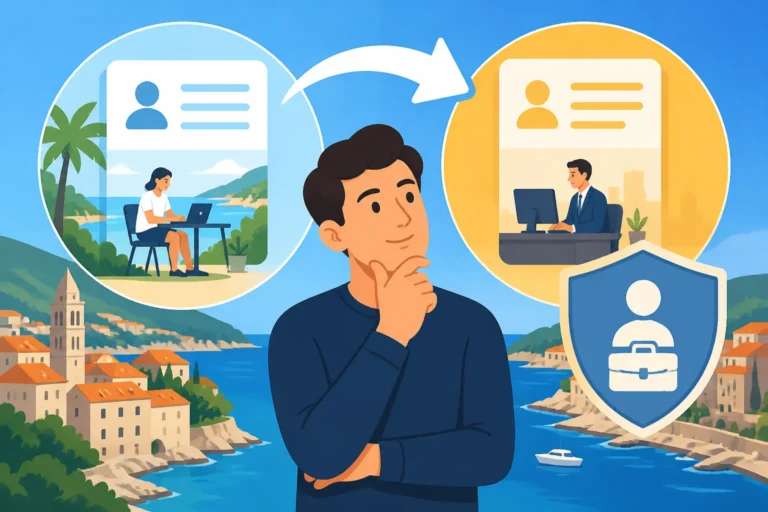
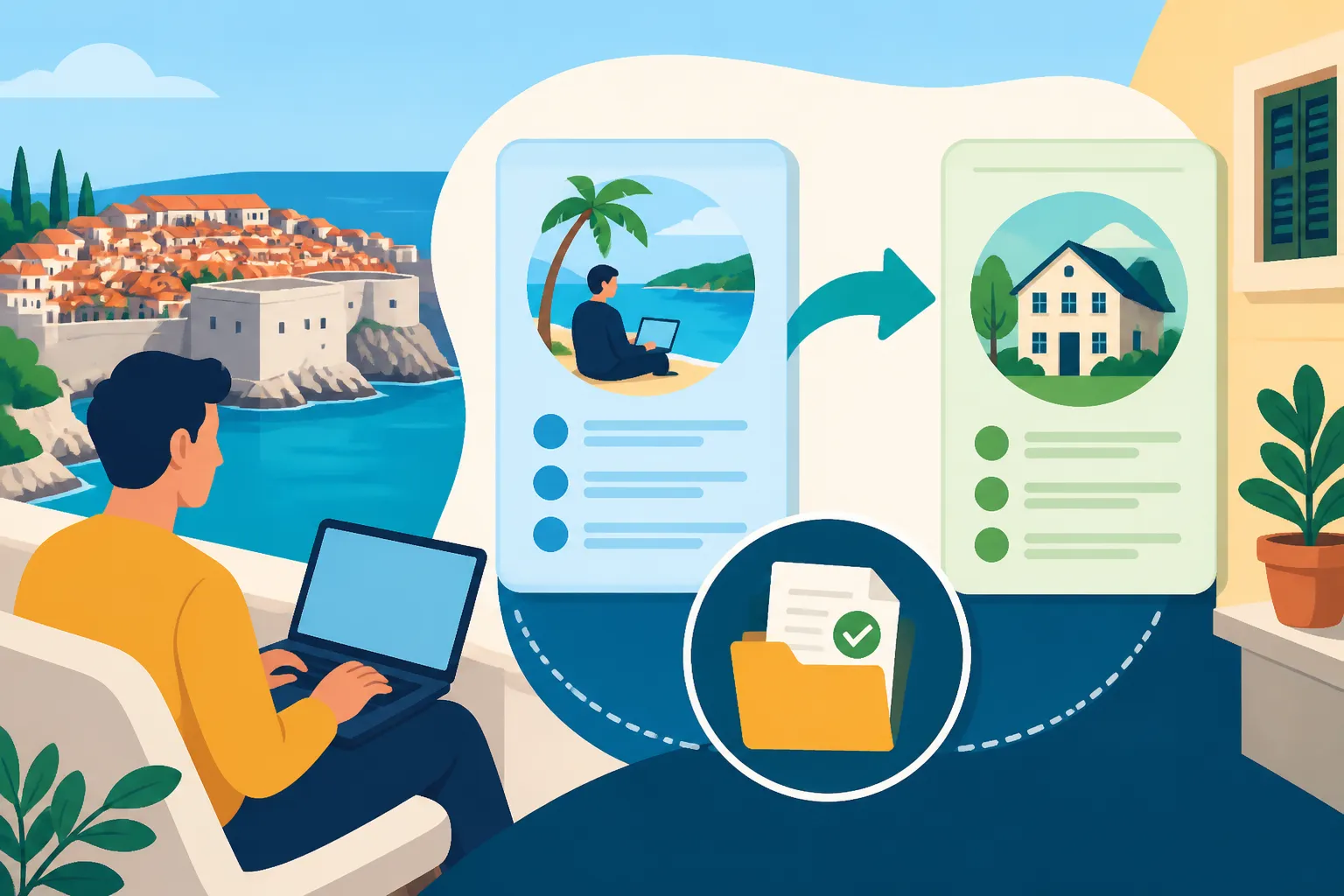
So, you’ve spent some time soaking up the Croatian sun, perhaps working remotely from a charming apartment in Split, or a cozy stone house in Istria, and you’ve realized… you don’t want to leave. The digital nomad permit was a fantastic foot in the door, a brilliant way to test the waters, but it’s inherently temporary. Now, you’re staring down the barrel of its expiry date and wondering, “What next?” This guide is for every expat who’s found themselves in this delightful predicament, looking to transition from that glorious, albeit transient, digital nomad status to a more stable, long-term residence in Croatia. We’re going to walk through the various pathways, the bureaucratic hoops, and the subtle but crucial differences in the application process.
Understanding the Digital Nomad Permit's Limitations
The Croatian digital nomad permit has been a game-changer for many, allowing non-EU citizens to live and work in this beautiful country. It's relatively straightforward to obtain, and it truly opened doors for a new kind of expat. However, it’s vital to understand its inherent limitations right from the start, especially if you're dreaming of a more permanent life here.
The Temporary Nature of the Permit
Let’s be honest, the clue is in the name: "temporary residence for digital nomads." This permit is explicitly designed for a short-to-medium term stay, typically for one year, with the possibility of renewal under very specific conditions. It's not a direct stepping stone to permanent residency or citizenship. The intent behind this permit was to attract remote workers, boost the economy, and showcase Croatia as a vibrant, modern destination, not to provide an easy route to long-term settlement.
What does this mean in practical terms? It means you can't simply renew it indefinitely, nor does the time spent on a digital nomad permit count towards the years required for permanent residence. This is a crucial distinction that often catches people off guard. If your goal is to stay in Croatia for more than a year or two, or to integrate more fully into Croatian society, you absolutely need to explore other residence categories. It’s essentially a fantastic trial run, but not the final destination if you’re planning on truly putting down roots.
Why Transition is Necessary for Long-Term Stay
For those who have fallen head over heels for Croatia and envision a life here that extends beyond short-term remote work, transitioning to a different residence permit category is not just an option; it's a necessity. The digital nomad permit explicitly prohibits you from working for Croatian companies or clients, and it doesn't offer the same long-term social benefits as other permits.
Think about it: after a year or two, you might want to switch careers, start a local business, or even meet someone and begin a family here. None of these pathways are compatible with the digital nomad permit. To truly integrate, to access the public healthcare system on a long-term basis through employment, or to build a local career, you need a different type of permit. This transition is about aligning your legal status with your long-term life plans, allowing you to participate more fully in Croatian life without constantly worrying about your visa status. It's about stability and opening up new possibilities that the digital nomad permit simply wasn't designed for.
Key Considerations Before You Switch
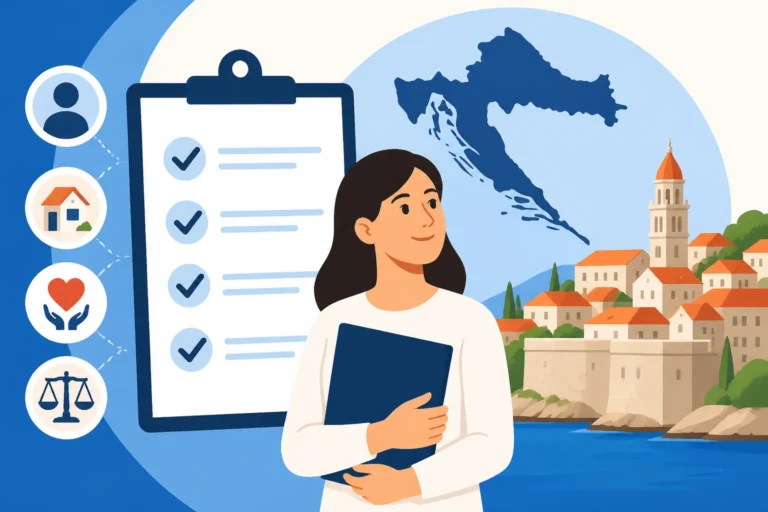
Before you dive headfirst into the MUP application process, take a deep breath and truly assess your situation. Switching residence permits in Croatia isn't just a matter of filling out a new form; it requires a strategic approach and a clear understanding of what’s expected of you.
Assessing Your Eligibility for Other Permits
This is perhaps the most critical step. Your digital nomad permit is expiring, but what’s your new reason for staying? Croatia has several categories for temporary residence, each with its own specific criteria. Are you planning to get a job with a Croatian employer? Then you'll be looking at a work and residence permit. Are you dreaming of starting your own business and contributing to the local economy? A permit based on self-employment, like opening a Paušalni Obrt, might be your path. Have you fallen in love with a local or another expat living here on a different status? Then family reunification might be the answer.
It's vital to meticulously review the requirements for each potential category. Don't assume that because you got the digital nomad permit easily, other permits will be the same. The MUP takes these applications seriously, and they want to see a clear, legitimate reason for your stay and a demonstrable ability to support yourself without becoming a burden on the state. Spend time researching specific permit types, such as those outlined in The Expat Guide to Temporary Residence (Privremeni Boravak) in Croatia, to see where you fit.
Financial Stability and Proof of Funds
Regardless of the new permit category you choose, demonstrating financial stability is paramount. This isn't just about showing you have enough money in your bank account to cover your initial stay; it's about proving you have a sustainable source of income for the duration of your intended residence.
For example, if you're applying for a work and residence permit, your employment contract and salary slips will be your primary proof. If you're going the self-employment route, you'll need a solid business plan, proof of capital, and projections of your income. For family reunification, the sponsoring family member will need to demonstrate sufficient income. Even if you're applying for a permit based on property ownership, you'll still need to show you can support yourself. The income requirements for a Croatian Digital Nomad Visa in 2026 are already quite clear, but the new permit might have different, possibly higher, expectations depending on the category. Be prepared to show bank statements, employment contracts, business registration documents, and anything else that clearly illustrates your financial health. Remember, the Croatian authorities want to know you won't be relying on public funds.
Health Insurance Requirements Post-Nomad Permit
Your digital nomad permit likely required you to have valid travel health insurance. However, moving to a different residence type often means a different approach to healthcare coverage. Once you transition to a work and residence permit, or a permit based on self-employment, you'll generally become eligible and obligated to register with the Croatian Health Insurance Fund (HZZO). This is a big step, as it integrates you into the public healthcare system.
However, there can be waiting periods or specific conditions before you get full HZZO coverage. For example, some self-employed individuals might need to pay contributions for a certain period before accessing all benefits. It’s crucial to understand these nuances to avoid gaps in your health coverage. While waiting for HZZO to kick in or for broader coverage, many expats opt for private health insurance. Companies like Cigna Global offer comprehensive plans that can bridge these gaps or supplement public healthcare, giving you peace of mind. It’s always wise to ensure you have continuous, robust health insurance throughout any transition period, as medical emergencies are unwelcome surprises at the best of times, let alone when navigating bureaucratic changes. For a comprehensive overview, check out The Complete Guide to Healthcare in Croatia for Expats (2026).
Common Pathways for Transition
So, you’ve decided to stay. Excellent choice! Now, let's explore the most common and viable pathways for transitioning from a digital nomad permit to a more stable form of residence in Croatia. Each route has its own set of requirements, so think carefully about which one aligns best with your circumstances and future plans.
Switching to a Work and Residence Permit
This is arguably the most common and straightforward path for many. If you've been working remotely for a foreign company and enjoyed your time in Croatia, you might decide to seek employment with a local Croatian company. Once you secure a job offer, your Croatian employer will initiate the process for a work and residence permit (often called a "single permit").
The employer typically handles a significant portion of the application, including the labor market test (unless your profession is on the shortage list, which is a big help!). This involves proving that there isn't a suitable Croatian or EU candidate for the role. Once the permit is approved, you'll be able to work legally for that employer and contribute to the Croatian pension and health insurance systems. This means you'll eventually be registered with HZZO, getting access to public healthcare, and contributing to your future pension. This pathway offers a strong sense of stability and integration into the local economy, but it does mean being tied to a specific employer and their regulations. For a deep dive, see The Complete Guide to Croatian Work and Residence Permits (2026).
Transitioning to Self-Employment (Obrt or d.o.o.)
For the entrepreneurial spirits among us, or those who wish to continue working flexibly but for Croatian clients or their own ventures, establishing a business is a popular option. The most common structures for expats are the Obrt (sole proprietorship) or a d.o.o. (limited liability company).
Many digital nomads find the Paušalni Obrt particularly appealing. This is a simplified, flat-rate tax system for small businesses, making accounting less complex. To transition to a residence permit based on self-employment, you'll need to register your business, demonstrate a viable business plan, and prove sufficient funds to sustain yourself and your business. This route gives you immense flexibility and control over your work life, but it also comes with the responsibility of managing your own taxes, social contributions, and administrative duties. You'll also need to ensure your health insurance contributions are consistent to maintain HZZO coverage. Dive deeper into this option with the Self-Employment in Croatia: The Paušalni Obrt Guide for Foreigners. It's a fantastic way to become truly embedded in the Croatian economic fabric, moving beyond the transient nature of the digital nomad visa.
Family Reunification Permits
Love blossoms in the most unexpected places, doesn't it? If you've found a partner who is a Croatian citizen or holds a long-term Croatian residence permit, family reunification is a very strong and secure pathway. This permit allows you to reside in Croatia based on your relationship with your family member.
The process involves proving your relationship (marriage certificate, birth certificate, etc.), and the sponsoring family member needs to demonstrate sufficient income and adequate accommodation to support you without relying on social welfare. This permit offers significant stability and often leads directly towards permanent residence after a certain number of years, making it an excellent long-term solution. It's important to understand the specific nuances and required documentation, as the MUP can be quite particular about these applications. You can learn more by checking out Family Reunification in Croatia: A Complete Guide for Expats. It’s a route that solidifies not just your residency, but your personal life in Croatia.
Residence Based on Other Categories
While work, self-employment, and family reunification are the most common, don't forget other possibilities for temporary residence in Croatia, depending on your individual circumstances.
- Study: If you decide to enroll in a Croatian university or language course, you can apply for a student residence permit. This is a great way to immerse yourself in the culture and learn the language.
- Property Ownership: While not a direct path to residence, owning property can sometimes facilitate the process, particularly if you can demonstrate sufficient means to support yourself without working locally. It's not a standalone residence permit, but it can be a supporting factor.
- Other Legitimate Reasons: In rare cases, other "justified reasons" might be considered, but these are typically evaluated on a case-by-case basis and are much less common for a transition from a digital nomad permit.
It’s crucial to match your actual situation and intentions with the specific requirements of the permit. Trying to shoehorn yourself into a category that doesn't fit will only lead to frustration and potential rejection. Always consult the official MUP website or seek advice from a legal professional specializing in immigration for the most accurate and up-to-date information.
The Application Process: What Changes?
So, you’ve pinpointed your new residence category. Great! Now, let’s talk about the nitty-gritty: the actual application process. While you've already experienced applying for a digital nomad permit, be prepared for some notable differences when switching categories. It's not just a matter of checking a different box.
Navigating the MUP and Administrative Hurdles
Ah, the MUP. If you’ve been through the digital nomad permit process, you’re already familiar with the Ministry of Interior (MUP) and its various departments. However, transitioning to a new permit type often means dealing with different desks, different requirements, and sometimes, entirely different interpretations of the rules depending on the specific MUP office you visit. It's like a new level in a video game you thought you'd mastered!
One of the biggest changes is the potential for a more in-depth review of your application. The digital nomad permit often has a more streamlined process, but permits like work and residence or family reunification involve closer scrutiny of contracts, financial stability, and personal circumstances. You might find yourself needing to book an appointment at the MUP for immigration matters, sometimes multiple times, and facing longer wait times for processing. Patience, my friend, is your greatest virtue here. Ensure all your forms are meticulously filled out, every document accounted for, and copies made for your records. Don't be shy about asking for clarification, even if it feels like you're asking the same question for the third time.
Application Timelines and Overlapping Permits
Timing is everything when you're transitioning permits. You absolutely want to avoid any gaps in your legal residence status. This means starting your application for the new permit well in advance of your digital nomad permit's expiry date. Depending on the MUP office and the complexity of your case, processing times can vary wildly – from a few weeks to several months.
Here’s a practical scenario: If your digital nomad permit expires on December 31st, you should ideally aim to submit your new application by late September or early October. This gives the MUP ample time to process it. What happens if your digital nomad permit expires while your new application is still pending? Generally, you are allowed to remain in Croatia during the processing period, but you won't have your new permit in hand. This "waiting period" status needs to be carefully managed. You might not be able to travel outside Croatia and re-enter, and it can affect certain administrative tasks. Always confirm your status with the MUP directly to ensure you don't inadvertently overstay or invalidate your application. It’s a tightrope walk, but careful planning and early submission are your safety net.
Important Documentation and Logistics
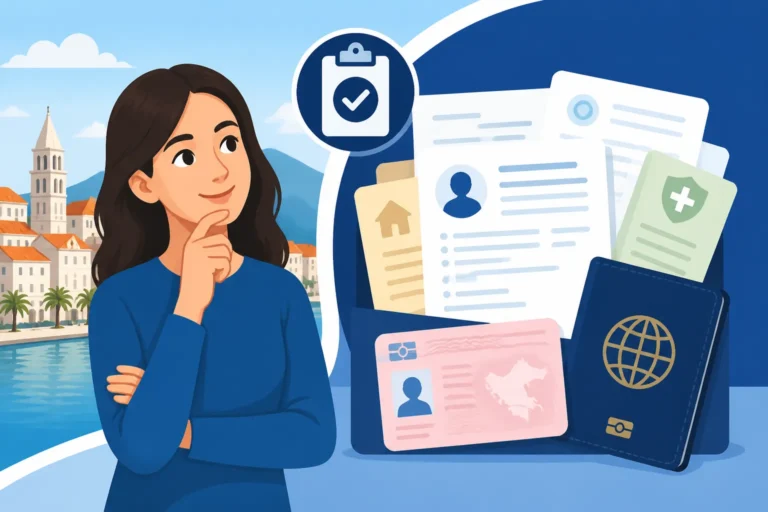
Okay, the path is chosen, and you’re ready to tackle the MUP. Now comes the paperwork, which, let’s be honest, can feel like a mountain even for the most organized among us. When transitioning permits, you'll find that many of the documents you submitted for your digital nomad permit might need to be resubmitted or updated, alongside a whole new set of requirements.
Gathering the New Set of Documents
This is where the real work begins. While you might already have your OIB (Personal Identification Number) from your initial application (if you don't, you'll absolutely need to know how to get an OIB (Personal Identification Number) in Croatia), almost everything else will require a fresh look. The list of required documents will vary significantly based on your chosen permit type.
Here’s a general idea of what you might need, in addition to standard passport copies:
| Document Type | Digital Nomad Permit (Initial) | New Residence Permit (Examples) | Key Difference |
|---|---|---|---|
| Proof of Purpose | Declaration of remote work, foreign company info | Employment Contract, Business Registration (Obrt/d.o.o.), Marriage/Birth Certificate, University Acceptance | Shifts from remote work to local employment, entrepreneurship, or family ties. |
| Financial Proof | Bank statements (foreign income) | Salary slips, company financial statements, sponsor's income, proof of capital for business | Focus shifts to local or sustainable income tied to the new permit's purpose. |
| Accommodation | Lease agreement, owner statement | Updated lease, vlasnički list (proof of ownership), often requiring longer-term arrangements | Often requires longer validity or proof of stability. |
| Health Insurance | Private travel health insurance | HZZO registration (mandatory for employment/self-employment) or private plan for waiting periods | Transition to public HZZO is key; private cover is often a bridge. What Health Insurance Do I Need for a Croatian Residence Permit? |
| Criminal Background | Often required | Often required again, possibly from Croatia if residing long enough | May need an updated check, sometimes from Croatian authorities if applicable. |
| Photographs | Yes | Yes, updated biometric photos | Standard requirement, but always ensure they're recent and meet specifications. |
| Administrative Fees | Yes | Yes, for the new permit application and biometric card | Fees may differ based on the permit category. |
Don't forget to keep a checklist. Print it out, tick off items, and make multiple copies of everything before you head to the MUP. It’s better to have too many documents than too few.
Notarization and Apostille Considerations
Just as with your initial digital nomad application, many of your foreign documents will likely need to be translated into Croatian by a sworn court interpreter (sudski tumač). Furthermore, depending on your country of origin and the type of document, an apostille or full legalization might be required.
For example, a marriage certificate from your home country, crucial for a family reunification application, will almost certainly need to be apostilled (if your country is a signatory to the Hague Apostille Convention) and then translated. Birth certificates, degree certificates (if applying for a highly skilled worker permit), and certain financial statements might also fall under these requirements. Start this process early, as obtaining apostilles can take time, especially if you need to coordinate with authorities in your home country. These seemingly small steps are often the biggest time sinks and can hold up your entire application if not addressed proactively. Sirelo might be able to help with advice on shipping documents if you need originals from home, or generally with the logistics of moving and handling important paperwork.
Accommodation Proof and Other Essentials
Proof of accommodation is a steadfast requirement for almost all residence permits in Croatia, and this won't change when you transition. You'll need to demonstrate that you have a place to live for the duration of your permit. This could be a rental contract (which should be registered with the tax office!), a statement from your landlord, or a vlasnički list (property ownership certificate) if you've purchased a home. Remember, the MUP needs to see that you have a stable roof over your head. This links back to Registering Your Residence in Croatia: The Complete MUP Guide.
Beyond accommodation, you’ll also need to consider other administrative tasks. For instance, once your new permit is approved, you’ll likely need to obtain a new biometric residence card (boravišna iskaznica). This is your physical proof of residence and often serves as a form of ID in Croatia. Ensure you understand the process for this, as it typically involves a separate fee and another trip to the MUP to submit your fingerprints and photo. Every detail matters, so don't leave anything to chance.
Potential Challenges and How to Overcome Them
Let's be real, navigating any bureaucracy in a foreign country can be a challenge. While Croatia is charming, its administrative processes can sometimes test the patience of even the most seasoned expat. When transitioning from a digital nomad permit to another residence type, you might face some unique hurdles.
Dealing with Bureaucracy and Language Barriers
You've already had a taste of the MUP, but switching permits can sometimes feel like an entirely new experience. Each MUP office can have slightly different interpretations of the rules, or require an extra document that wasn't mentioned on the official website. This inconsistency is a common frustration for expats across Croatia. You might also encounter language barriers, even if you’ve picked up some Croatian during your digital nomad stint. While many MUP officials speak some English, it’s not guaranteed, especially in smaller towns.
How to overcome it:
- Be Patient and Persistent: This is not a sprint; it's a marathon. Expect delays, be polite, and don't give up.
- Bring a Croatian Speaker: If your Croatian isn't fluent, bring a trusted Croatian-speaking friend, colleague, or a professional translator with you to MUP appointments. This can make a world of difference in clarifying requirements and preventing misunderstandings.
- Get Everything in Writing: If you receive specific instructions, try to get them in writing or at least meticulously note down names, dates, and what was discussed. This can be crucial if you encounter conflicting information later.
- Call Ahead (But Take with a Grain of Salt): While calling the MUP can provide general information, remember that what one person says on the phone might differ from what a specific official requires in person. Use phone calls for general guidance, but always be prepared for more detailed requests at your appointment.
- Consult Professionals: Sometimes, the best way to cut through the red tape is to hire an immigration lawyer or a specialized agency. Their expertise can save you time, stress, and potential errors.
Avoiding Gaps in Residence and Health Coverage
As mentioned, the period between your digital nomad permit expiring and your new permit being issued is a critical window. A lapse in legal residence can lead to fines, deportation, and make future applications much harder. Similarly, a gap in health insurance coverage can leave you vulnerable to enormous medical bills if you have an unexpected health issue.
How to overcome it:
- Apply Early, Early, Early: Start your new application at least 3-4 months before your digital nomad permit expires. This gives you a buffer for processing delays or requests for additional documents.
- Understand Your Status During Processing: Confirm with the MUP whether you are legally allowed to remain in Croatia while your new application is pending. Usually, you are, but traveling outside Croatia might be restricted. Don't plan international trips during this period unless explicitly advised by the MUP that it's safe to do so.
- Maintain Health Insurance: Do not let your health insurance lapse. If you’re transitioning to HZZO via employment or self-employment, there might be a short period before your coverage is fully active, or before you’ve paid enough contributions. During this time, continue your private health insurance, perhaps with a provider like Cigna Global, to ensure continuous coverage. You might even consider supplementary health insurance, or dopunsko zdravstveno osiguranje, once your basic HZZO is sorted, to cover co-payments. Learn more in How to Register for HZZO Health Insurance as a Foreigner in Croatia and The Complete Guide to Healthcare in Croatia for Expats (2026).
- Keep Records of All Payments: For self-employment or employment-based permits, make sure you have clear records of all social and health contributions. This proves you are fulfilling your obligations and helps prevent any issues with HZZO registration.
- Don't Change Address Mid-Application (If Possible): While sometimes unavoidable, changing your registered address (prebivalište) in the middle of a residence permit application can add unnecessary complications and delays. If you must move, inform the MUP immediately.
Transitioning from a digital nomad permit to another residence type in Croatia is a significant step, but it's entirely achievable with careful planning, patience, and a good understanding of the process. You've already proven your ability to adapt by becoming a digital nomad here; now it's time to solidify your stay and truly make Croatia your long-term home. Sretno! (Good luck!)
Disclaimer
The information provided in this guide is intended for general informational purposes only and does not constitute legal or professional advice. Immigration laws and procedures in Croatia are subject to change. While every effort has been made to ensure accuracy, readers should consult official government sources (such as the Ministry of Interior – MUP) or seek advice from a qualified legal professional specializing in immigration for their specific circumstances.