What Income Do I Need for a Croatian Digital Nomad Visa in 2026?
Navigating the labyrinthine world of Croatian immigration can feel like an Olympic sport, especially when you're trying to pin down precise figures that seem to shift with the wind. One of the most common headaches for aspiring digital nomads is figuring out the exact income required for the Croatian Digital Nomad Visa. This guide is here to cut through the confusion and give you a clear, realistic picture of what financial benchmark you'll need to hit for 2026, based on current regulations and likely future trends.
Understanding the Croatian Digital Nomad Visa Basics
Let's start by grounding ourselves in what this visa actually is. It’s not just a cool name; it’s a specific temporary residence permit tailored for those of us who can work remotely using technology for non-Croatian companies or clients.
A Brief History and Purpose
Croatia, being the forward-thinking country it is, was one of the first in the EU to officially launch a digital nomad visa back in 2021. The idea was simple: attract talented, high-earning individuals from all over the world to live, contribute (indirectly, through consumption), and experience the country, without taking jobs from local citizens. It’s been a massive success, bringing a vibrant, international flavor to cities like Split, Dubrovnik, and Zagreb. They truly rolled out the red carpet, recognizing the value that remote workers bring to the economy, and let me tell you, it felt like a breath of fresh air after years of other countries dragging their feet on such initiatives.
Who is Eligible?
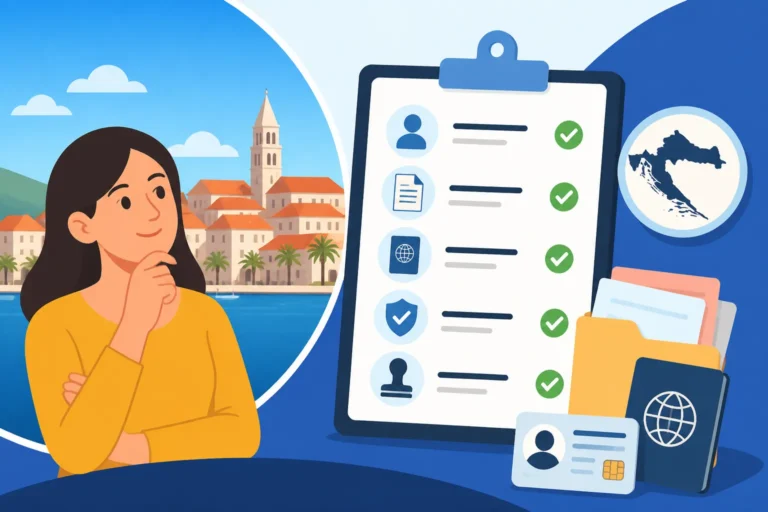
The core eligibility revolves around a few key tenets: you must be a non-EU/EEA citizen (EU/EEA citizens have different registration rules), you must perform work remotely for a company or clients outside Croatia, and you must not offer services to Croatian companies or individuals while on this permit. This is crucial for avoiding local taxation on your income while here, making the whole proposition incredibly attractive. Beyond that, you'll need a valid passport, proof of accommodation, a clean background check, and, of course, that all-important proof of financial means. If you're wondering about the initial application steps, you can find a comprehensive breakdown on How to Apply for a Croatian Digital Nomad Permit.
The All-Important Income Requirement for 2026
Alright, let's get down to the brass tacks, the nitty-gritty that keeps most of us up at night when planning a move: how much money do you actually need? This is where the rules can feel a bit like a moving target because the specific figure is tied to the average gross salary in Croatia, which, as you might guess, changes.
The Calculation: What's the Magic Number?
The official word is that the income requirement for the Croatian Digital Nomad Visa is 2.5 times the average gross monthly salary in Croatia, as published by the Croatian Bureau of Statistics (Državni zavod za statistiku – DZS). This is the key metric. It's not the net salary you hear about; it's the gross one, which includes all those lovely contributions before taxes.
Now, trying to predict the exact average gross salary for 2026 is, frankly, a fool's errand. Official statistics usually lag a bit, reflecting past quarters. However, based on recent trends and typical annual increases, we can make a very educated guess. Let's assume, for the purpose of planning for early 2026, that the average gross monthly salary in Croatia will be around €1,900. This is an estimate, mind you, but it provides a solid benchmark.
So, if we use our projected average gross salary of €1,900:
- For the main applicant: 2.5 x €1,900 = €4,750 per month
This means you need to demonstrate that you consistently earn at least this amount, or have sufficient funds in your bank account equivalent to 12 months of this amount. That's a minimum of €57,000 for the year. It feels like a big number, I know, but it’s designed to ensure you can support yourself without becoming a burden on the state, and it’s a standard approach for many such visas globally.
It's vital to stay updated on the official DZS publications, especially closer to your application date, as these numbers are typically updated quarterly or annually. You can always check the Ministry of Interior's (MUP) official website for the very latest figures when you are ready to apply.
Proving Your Financial Stability
Okay, so you know the number. Now, how do you prove it? This part can be straightforward if you're prepared, but it requires meticulous documentation. The Croatian authorities aren't looking for a quick flash of cash; they want to see consistent, reliable income.
Here's what they generally accept:
- Bank Statements: This is usually the most critical piece of evidence. You'll need original bank statements (or certified copies) from your foreign bank account showing income for at least the last three, but preferably six, months. These statements must clearly show your name as the account holder and the incoming transactions that meet the monthly threshold. They want to see those euros, dollars, or pounds flowing in regularly.
- Proof of Employment: If you're employed by a foreign company, you'll need a letter from your employer on company letterhead. This letter should clearly state your position, that you are permitted to work remotely from Croatia, and your monthly salary. It should also confirm that your employment contract is with a company registered outside of Croatia.
- Client Contracts/Invoices: For freelancers or self-employed individuals, a portfolio of contracts with foreign clients, along with corresponding invoices and proof of payment, will be necessary. This demonstrates active work and income generation from outside Croatia. If you’re a paušalni obrt owner (flat-rate sole trader) in another country, for example, your business registration and recent tax declarations might also be useful.
- Proof of Sufficient Funds: If your income isn't perfectly consistent month-to-month, you can often show proof of sufficient funds in your bank account to cover the entire 12-month period. For example, if the monthly requirement is €4,750, having €57,000 (12 x €4,750) sitting in your savings account can work. This provides a safety net for the authorities, showing you won't be in a pinch.
Remember, all documents that aren't originally in Croatian or English will need to be officially translated and apostilled. Don't underestimate this step; the MUP can be very particular about exact translations and proper certification. This is a common hurdle for many expats, so give yourself plenty of time! You might find more general advice on How to Prepare Documents for a Croatian Residence Application helpful.
What If You Have Dependents?
Bringing your family along? That's wonderful, but it also means the income requirement scales up. For each additional family member (spouse, children) you wish to include on your digital nomad permit, you'll need to demonstrate an additional 0.75 times the average gross monthly salary.
Using our projected average gross salary of €1,900 for 2026:
- For each additional dependent: 0.75 x €1,900 = €1,425 per month
Let's look at a few examples for a clearer picture:
- You + Spouse: €4,750 (you) + €1,425 (spouse) = €6,175 per month
- You + Spouse + 1 Child: €4,750 + €1,425 + €1,425 = €7,600 per month
This is why careful financial planning is absolutely essential. The Croatian government wants to ensure your entire family can be comfortably supported without relying on local social services.
Here's a table summarizing the projected monthly income for 2026 based on a projected average gross salary of €1,900:
| Number of Applicants | Monthly Income Requirement (Estimated 2026) | Annual Income Requirement (Estimated 2026) |
|---|---|---|
| Main Applicant Only | €4,750 | €57,000 |
| Main Applicant + 1 | €6,175 | €74,100 |
| Main Applicant + 2 | €7,600 | €91,200 |
| Main Applicant + 3 | €9,025 | €108,300 |
Note: These figures are based on a projected average gross salary of €1,900 for early 2026 and are subject to change based on official statistics from the Croatian Bureau of Statistics.
Beyond the Monthly Income: Other Financial Considerations
While the primary income requirement is a big hurdle, it's not the only financial aspect to consider. There are other mandatory and practical expenses you need to budget for to make your digital nomad dream in Croatia a reality.
Health Insurance: A Non-Negotiable Cost
This is not a suggestion; it's a hard requirement. You must have valid health insurance for the entire duration of your stay in Croatia. For most non-EU digital nomads, this means a private health insurance policy. The policy needs to cover medical expenses and repatriation for the full year of your permit.
Don't skimp on this. While the public healthcare system (HZZO) is available for those on certain long-term permits or citizens, it's not typically an option for digital nomads, especially not initially. Private health insurance gives you peace of mind and access to a wider network of doctors and clinics. Many expats choose international providers like Cigna Global for comprehensive coverage that works across borders, which can be a real blessing if you're not planning to stay put for the entire year. To delve deeper into what's required, check out What Health Insurance Do I Need for a Croatian Residence Permit?.
Accommodation and Cost of Living
Even if you meet the income requirements, you still need to actually live here! Croatia, especially in popular coastal areas or Zagreb, can be surprisingly expensive for accommodation, particularly during peak tourist season. You'll need to show proof of accommodation as part of your application, which could be a rental agreement or proof of ownership.
Consider using resources like Sirelo to get a better handle on what it costs to move and live in various parts of the country. They can help you compare moving services and give you an idea of typical living expenses. While a charming apartment in Split might seem idyllic, the reality is that rentals can eat a significant chunk of your budget. Groceries are relatively affordable, but dining out and leisure activities can add up. For a detailed breakdown, explore The Complete Guide to Cost of Living in Croatia for Expats (2026).
Application Fees and Other Hidden Costs
There are always those little administrative costs that sneak up on you. While the digital nomad permit itself isn't outrageously expensive compared to some other countries, here's what to expect:
- Application Fee: There's a government fee for processing your temporary residence permit. This usually consists of an administrative fee and a biometric card issuance fee. Currently, these are relatively modest, often totaling around €100-€150.
- OIB Registration: You'll definitely need an OIB (Personal Identification Number) as part of your application process. This is free but involves a trip to the tax office (Porezna Uprava). Learn more about How Do I Get an OIB (Personal Identification Number) in Croatia?.
- Translations and Apostilles: As mentioned, if your documents aren't in Croatian or English, expect to pay for certified translations and possibly apostille stamps, which can add up depending on the volume of paperwork.
- Notary Fees: Sometimes, certain documents might need to be notarized.
- Consular Fees: If you apply from a Croatian embassy or consulate abroad, there might be additional consular fees.
These are all minor individually, but they do accumulate. It’s always best to budget an extra few hundred euros for these miscellaneous expenses, just in case.
Staying Compliant and Renewing Your Permit
Getting the digital nomad permit is fantastic, but it's crucial to understand that it's just the first step. You need to maintain compliance with the rules, especially when it comes to your financial situation, if you plan to extend your stay.
Maintaining Your Financial Status
The income requirement isn't a one-time check. While they won't typically ask for monthly bank statements after your permit is issued, if you decide to renew, you'll absolutely need to prove your financial means again. This means ensuring your income remains consistent throughout your stay. Should your financial situation drastically change for the worse, it could impact your ability to renew your permit. The whole point is to attract individuals who are financially independent and self-sufficient.
What Happens at Renewal?
The Croatian Digital Nomad Permit is typically granted for one year. If you fall in love with Croatia (which, let's be honest, is highly likely) and want to stay longer, you can apply for a renewal. The process is similar to the initial application, requiring updated proof of income, accommodation, and health insurance. You usually apply for renewal at your local MUP office, generally within 90 days before your current permit expires.
It’s important to remember that while the permit allows for a one-year stay, it doesn’t automatically lead to permanent residency or citizenship. It's a temporary residence. If you're curious about the duration, check out How Long Does the Croatian Digital Nomad Permit Last?, and for renewal specifics, there's Can I Renew My Digital Nomad Permit in Croatia?. Planning your exit or your next move is just as important as planning your arrival!
Disclaimer
Please remember that I am an expat blogger, not a legal or financial professional. The information provided in this article is based on my personal experience, research, and publicly available information regarding Croatian immigration and tax laws as of the time of writing. Regulations can change, and interpretations may vary. It is always highly recommended to consult with an official legal expert, immigration lawyer, or the relevant Croatian authorities (like the MUP or Porezna Uprava) for the most accurate, up-to-date, and personalized advice regarding your specific situation before making any decisions.