How Do I Apply for a Digital Nomad Permit in Croatia?
The dream of working remotely from a stunning coastal town or a bustling historic city in Croatia is incredibly appealing. However, the path to making that dream a reality, specifically through obtaining a digital nomad permit, can feel like navigating a labyrinth of paperwork and regulations. Many of us expats have faced similar frustrations with Croatian bureaucracy, but fear not, this comprehensive guide is here to demystify the process, walking you through every single step to apply for your digital nomad permit in Croatia.
Understanding Croatia's Digital Nomad Permit: The Basics
Croatia rolled out its digital nomad permit in January 2021, making it one of the pioneering countries in Europe to formally welcome remote workers from outside the EU/EEA. This initiative was a game-changer, acknowledging the growing trend of location-independent work and aiming to attract a new demographic of residents who can contribute to the local economy without competing for local jobs. It’s designed for individuals who earn their living from clients or companies based outside Croatia, and who want to experience the Croatian lifestyle for an extended period.
The core idea behind this permit is to allow non-EU/EEA citizens to reside in Croatia and perform their work remotely, provided that work is for foreign-registered companies or clients. It’s a temporary residence permit, typically granted for up to one year, with the possibility of renewal. This isn't a work permit in the traditional sense, as it strictly prohibits you from working for any Croatian company or earning income from Croatian sources, with very limited exceptions. The Croatian government cleverly designed this to bring in foreign currency and skills, boosting local spending, without impacting the domestic job market.
The appeal of Croatia for digital nomads is multi-faceted. Beyond the obvious draw of its breathtaking natural beauty – from the sapphire waters of the Adriatic to the lush national parks and charming historical cities like Split and Dubrovnik – the cost of living can be more affordable than in many Western European or North American cities. The culture is warm and welcoming, the internet infrastructure is generally good, and the relatively central location in Europe makes it easy to explore neighboring countries. Many digital nomads are drawn to the relaxed Mediterranean pace of life, the delicious local cuisine, and the opportunity to integrate into vibrant expat communities that are rapidly growing in cities like Zagreb, Split, and Rijeka. It’s not just a place to work; it’s a place to live life to the fullest.
Essential Requirements and Documents for Your Application
This is where the rubber meets the road, and getting these details right can save you a world of headaches. Croatian authorities are meticulous, so precision is your friend.
Eligibility Criteria: Who Qualifies?
First and foremost, the Croatian digital nomad permit is exclusively for non-EU/EEA citizens. If you hold a passport from one of the EU member states, Iceland, Liechtenstein, or Norway, you don't need this permit; you'll follow a simpler registration process for EU citizens.
You must be performing work remotely. This means your employer or clients must be registered outside of Croatia. You absolutely cannot work for a Croatian company or provide services to Croatian clients while on this permit. This distinction is critical and often misunderstood. It’s about bringing new money into the economy, not competing for existing local opportunities.
One of the most significant hurdles for many applicants is proving "sufficient funds." The Croatian law stipulates a minimum monthly income or bank balance to demonstrate that you can financially support yourself without becoming a burden on the state. As of my last check, this amount is around 2.5 average Croatian net salaries for the primary applicant, plus an additional percentage for each family member you include in your application. For instance, in 2024, this translated to approximately €2,800 to €3,000 per month for a single applicant, though you should always verify the latest exact figure on the official MUP website or consult with an immigration specialist. This isn't a trivial amount, so be prepared to show solid proof that you meet this threshold consistently.
Finally, you’ll need a clean criminal record from your home country and any country you’ve resided in for more than six months over the past five years. This is a standard requirement for almost all residence permits globally, ensuring public safety. You'll also need to secure health insurance for the duration of your stay and demonstrate proof of accommodation in Croatia. These aren't just checkboxes; they're fundamental pillars of your application.
Gathering Your Documents: The Paperwork Puzzle
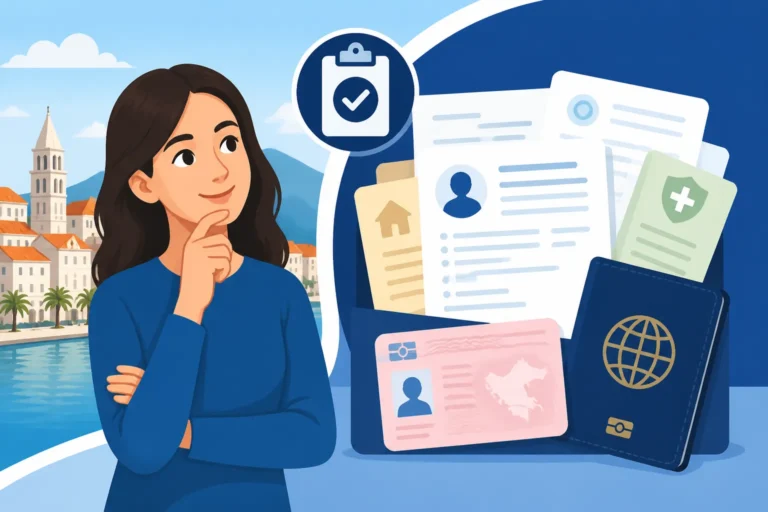
Once you've confirmed your eligibility, it's time to gather the necessary paperwork. This stage often feels like a treasure hunt, so organization is key. You'll need:
- Valid Passport or Travel Document: Make sure it's valid for at least three months beyond your intended stay.
- Proof of Digital Nomad Status: This is your core evidence. It could be an employment contract with a non-Croatian company stating your remote work arrangement, or if you're a freelancer/business owner, contracts with international clients, registration documents for your foreign-based company, or a statement from a relevant authority proving your self-employment abroad. The clearer this is, the better.
- Proof of Funds: Bank statements showing the required monthly income or a substantial lump sum in a bank account. These statements should ideally cover the last few months to demonstrate consistent income.
- Health Insurance Policy: You must have comprehensive travel or private health insurance that covers you for the entire duration of your stay in Croatia. This is non-negotiable. Companies like Cigna Global offer plans specifically designed for expats and digital nomads, which can provide peace of mind. While you won't immediately register with the Croatian Health Insurance Fund (HZZO) on a digital nomad permit, having adequate private coverage is vital. Check out our guide on What Health Insurance Do I Need for a Croatian Residence Permit? for more details.
- Proof of Accommodation: A rental agreement (with a notarized landlord signature), a title deed if you own property, or a statement from a host. This document should clearly state your address in Croatia. Ensure it covers your intended period of stay. You'll need to use this to register your address later. Our article on How to Prove Accommodation for a Croatian Residence Permit? goes into more depth.
- Criminal Background Check: This is a certificate issued by the competent authority in your home country, and any other country where you've lived for more than six months in the last five years. It needs to be apostilled or super-legalized, depending on whether your country is part of the Hague Apostille Convention. This process can take time, so start early!
- Marriage Certificate/Birth Certificates (if applicable): If you're applying with family members, you'll need certified copies of these documents, also apostilled or legalized and translated.
- Motivation Letter: While not always explicitly required, a concise letter explaining why you want to live and work in Croatia as a digital nomad can strengthen your application.
- Translations and Notarization: Any document not originally in Croatian or English must be translated by a sworn court interpreter in Croatia and often notarized. Even documents in English might need to be translated if the MUP officer insists, though this is less common.
It’s crucial to present clean, organized copies of all documents, along with their originals for verification. Remember that the MUP (Ministry of Interior) offices can be sticklers for detail, so double-check everything. Consider packing strategically if you're making a big move; services like Sirelo can help you organize the logistics of moving your belongings while you focus on the paperwork.
The Application Process: Step-by-Step Navigation
Understanding the procedural labyrinth is often the most anxiety-inducing part of applying for a permit in a new country. Let's break down how you actually submit your application.
Where to Apply: Croatian Embassies, Consulates, or MUP
You have two primary avenues for applying for your digital nomad permit:
-
From Abroad: The most common route is to apply at the Croatian Embassy or Consulate in your home country, or in the country where you currently hold legal residence. This generally involves filling out an application form, scheduling an appointment (which can sometimes be tricky to get, so book well in advance!), and submitting all your documents in person. If your application is approved, they will issue you a Type D (long-stay) visa, allowing you to enter Croatia and finalize your residence permit. The benefit of applying from abroad is that you often have a clearer idea of your permit status before you even step foot in Croatia.
-
From Within Croatia: It is also possible to apply for the digital nomad permit once you are already in Croatia, provided you entered legally (e.g., on a tourist visa) and have not overstayed your welcome in the Schengen Area (if applicable). This means you would submit your application directly to the local MUP (Ministry of Interior) office in the city or town where you intend to reside. For example, if you plan to live in Zagreb, you'd go to the MUP in Zagreb. This method can sometimes feel faster, as you're dealing directly with the local authorities, but it comes with the risk that your tourist visa might expire before your digital nomad permit is approved. This can lead to a precarious legal situation, so weigh the pros and cons carefully. Regardless of whether you apply from abroad or locally, you’ll definitely need to know How to Book an Appointment at the MUP for Immigration Matters because these appointments are essential for either submitting documents or finalizing your permit.
Submitting Your Application: What to Expect
Whether you're at an embassy or a local MUP office, the submission process will involve:
- Filling out the Application Form: This form, often called 'Zahtjev za izdavanje dozvole za boravak', will ask for all your personal details, information about your remote work, financial situation, and intended address in Croatia. Fill it out clearly and accurately.
- Document Submission: You'll hand over all the meticulously gathered documents. The officer will check them against a checklist, often asking for originals to verify copies. Be prepared for questions about your work, finances, and reasons for choosing Croatia.
- Biometrics: You'll typically have your fingerprints taken and a digital photo captured for your biometric residence card. This is standard procedure for modern residence permits.
- Potential Interview: While not always a formal "interview" in the traditional sense, the officer reviewing your application might ask follow-up questions to clarify any details or seek further information. Be prepared to explain your situation clearly and concisely.
- Processing Times: This is where patience becomes a virtue. Processing times can vary wildly depending on the volume of applications, the time of year, and the specific MUP office or embassy. It could be anywhere from a few weeks to several months. While some lucky individuals report swift approvals, it's safer to expect a longer wait. Many expats have tales of the bureaucratic pace, so try to factor this into your relocation plans. Our guide on How Long Does It Take to Get a Croatian Residence Permit? can give you more context.
After submission, you'll usually receive a confirmation document. This is not your permit, but proof that your application is being processed. It's vital to keep this safe.
After Approval: Your Next Steps in Croatia
Congratulations! You've received the good news that your permit is approved. But the journey isn't quite over. There are a few crucial administrative steps to take once you're on Croatian soil with your shiny new permit:
- Collecting Your Biometric Residence Card: If you applied from abroad and received a Type D visa, your first stop after arriving in Croatia will be the MUP to pick up your actual physical residence card (boravišna iskaznica). This card is your official proof of residence and should be carried with you.
- Registering Your Address (Prijava Boravišta/Prebivalište): This is one of the most immediate and critical tasks. Within a very short timeframe (usually within 3 days) of settling into your accommodation, you must register your address with the MUP. This is called 'prijava boravišta' (temporary address) or 'prijava prebivališta' (permanent address), and for a digital nomad permit, it will typically be a temporary registration. Your landlord often needs to accompany you, or at least provide you with a specific form and their ID. This is a common pitfall for new arrivals, so don't delay it.
- Obtaining Your OIB (Personal Identification Number): If you don't already have one, obtaining your OIB is paramount. It's Croatia's equivalent of a tax identification number, social security number, or national ID number. You'll need it for just about everything: opening a bank account, setting up utilities, registering for services, and much more. You can apply for it at the local tax administration office (Porezna Uprava) or sometimes even through the MUP during your residence application. This is so important that we have a whole guide on How to Get an OIB (Personal Identification Number) in Croatia.
- Healthcare Considerations: While your permit requires private health insurance, it's wise to understand the local healthcare system. For extended stays, you might eventually explore options beyond your initial private plan. Learn more about The Complete Guide to Healthcare in Croatia for Expats (2027) and specific options like Understanding Private Health Insurance Plans in Croatia.
- Banking: Once you have your OIB and residence card, you can proceed to open a Croatian bank account, which is incredibly useful for day-to-day living and managing expenses.
- Setting Up Utilities: Getting your electricity, water, gas, and internet sorted is another practical step. Check out our guide on The Expat Guide to Setting Up Utilities in Croatia to make this process smoother.
Important Considerations and Common Pitfalls
While the digital nomad permit offers an incredible opportunity, it's essential to approach the process with a clear understanding of its nuances and potential challenges. Forewarned is forearmed, as they say!
Financial Proof and Income Requirements
Let's reiterate the importance of those financial requirements. The amount isn't arbitrary; it's set by law and aims to ensure you won't rely on the Croatian social system. As of the last updates, the primary applicant needs to prove consistent monthly income equivalent to 2.5 average Croatian net salaries. For each additional family member (spouse, children) you wish to include in your permit application, an extra percentage of that amount is required. For instance, if the base is €2,800, a spouse might add another 35% (€980), making the total €3,780 per month for a couple. This isn't just a snapshot; authorities want to see stability, often requesting bank statements covering the past 3 to 6 months.
It’s not enough to simply have the money; you need to demonstrate that it’s your money and that it comes from legitimate, foreign sources. Transfers from relatives or sudden large deposits without clear explanations might raise red flags. Be prepared to show contracts, invoices, or employment letters that corroborate your income. This can feel intrusive, but it’s standard procedure. Make sure you refer to our detailed article on How Much Income Is Required for a Croatian Residence Permit? for the most current figures and interpretation.
Health Insurance: A Crucial Component
As we mentioned, comprehensive health insurance for the entire duration of your permit validity is mandatory. This is often an area where expats make mistakes, thinking basic travel insurance will suffice. You need a policy that covers medical emergencies, hospital stays, and ideally, general practitioner visits, repatriation, and other essential health services. The policy should be valid for at least the full year of your permit.
While you are not automatically eligible for the public healthcare system (HZZO) on a digital nomad permit, understanding how it works is still beneficial for context. Your private insurance is your primary safety net. Many choose international providers like Cigna Global because their plans are tailored for expats and offer coverage that extends beyond just emergency care. Be sure to get a policy that explicitly states its coverage in Croatia and is recognized by the MUP. It's always a good idea to have the policy document translated into Croatian or, at the very least, have a summary of benefits in Croatian, just in case. Dive deeper into the topic with our article on The Complete Guide to Healthcare in Croatia for Expats (2027).
Accommodation and Address Registration
Securing suitable accommodation is not just about having a roof over your head; it’s a critical piece of your permit application and subsequent legal residency. You'll need to provide proof of accommodation that clearly states your address and the duration of your stay. A long-term rental contract is usually the preferred method. Remember, if your contract isn't notarized (specifically the landlord's signature), the MUP might not accept it, causing delays. Finding long-term rentals in popular tourist areas can be challenging, especially during peak season, as landlords often prefer short-term tourist rentals. It might be wise to look slightly outside the main tourist hubs or consider renting during the off-season.
Once you have your accommodation, you must register your address (prijava boravišta) at the MUP within three days of arriving at that address. This is a non-negotiable legal requirement. Failure to do so can result in fines and complications with your permit. Your landlord will need to be involved in this process, as they are legally obliged to report your stay. This registration confirms your physical presence in Croatia and ties your permit to a specific location. For practical advice on securing a place, check out How to Find and Rent Long-Term Accommodation in Croatia and also consider the overall The Complete Guide to Cost of Living in Croatia for Expats (2026) when planning your budget for rent.
Disclaimer
Please note that while I strive to provide accurate and up-to-date information based on my knowledge and publicly available sources, immigration laws and procedures in Croatia can change. This guide is intended for informational purposes only and does not constitute legal advice. It is always recommended to verify the latest requirements with the official MUP (Ministry of Interior) website, the Croatian Embassy or Consulate in your country, or consult with a qualified Croatian immigration lawyer for personalized advice regarding your specific situation.