How Do I Apply for Residence at a Croatian Embassy Abroad?
Navigating the labyrinthine world of Croatian immigration can feel like an Olympic sport, especially when you're trying to do it from thousands of kilometers away. The stress of gathering documents, understanding nuanced legal speak, and dealing with potential language barriers before you even set foot on Croatian soil is a common, and completely valid, frustration for so many expats. This guide aims to demystify the process of applying for your Croatian residence permit at an embassy or consulate abroad, offering practical, empathetic advice from someone who’s been there.
Why Start Your Residence Application Abroad?
For many aspiring expats, applying for a Croatian residence permit before arriving in the country isn't just a suggestion – it's often a strict requirement. This initial step usually involves securing a D-Type long-stay visa, which is your golden ticket for entry and the foundation upon which your temporary residence permit will be built once you arrive. You see, while EU citizens have a much simpler path, non-EU citizens typically cannot simply arrive as tourists and then apply for a long-term stay. The rules are pretty clear on this: you need to declare your intent and get the necessary pre-approvals from outside the country.
Understanding the D-Type Visa Requirement
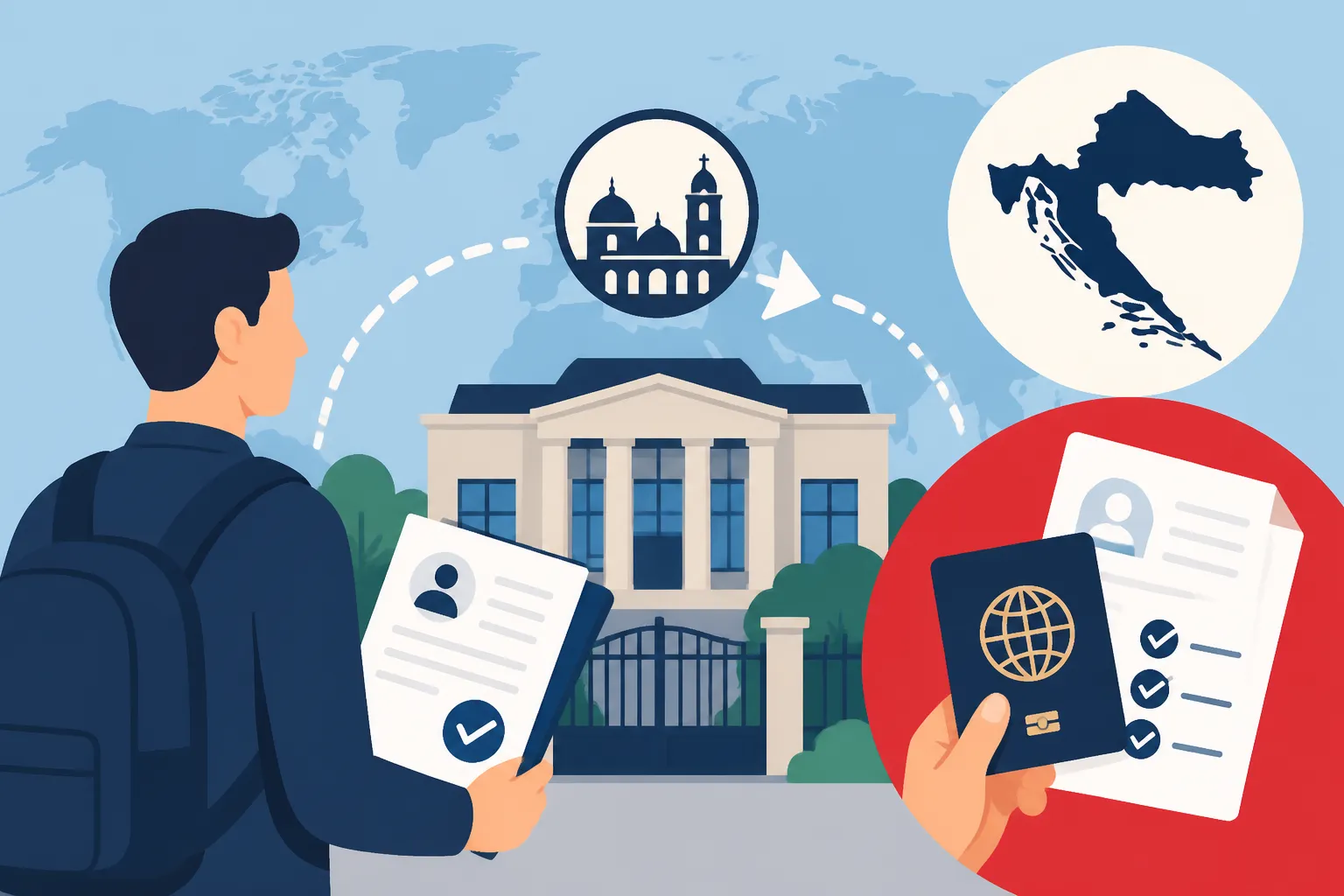
The D-Type visa isn't your average tourist visa; it’s specifically for individuals planning to apply for temporary residence in Croatia for purposes like work, study, family reunification, or even the ever-popular digital nomad permit. Think of it as the precursor to your actual residence permit. You'll apply for this long-stay visa at the Croatian embassy or consulate responsible for your place of residence. This crucial step ensures that your initial entry into Croatia is legally aligned with your intention to reside there long-term, bypassing the headache of trying to switch status from a tourist visa, which is usually impossible or incredibly complex. It's the MUP's way of saying, "We know you're coming, and we've already done some preliminary checks."
Advantages and Disadvantages of Applying Remotely
Starting your application from your home country has distinct benefits. Firstly, it offers a sense of security. Knowing that your initial visa is approved before you pack your bags significantly reduces anxiety, allowing you to focus on the myriad other aspects of moving abroad, such as logistics. It also means you’re often dealing with consular staff who may speak your native language, making communication much smoother than trying to navigate Croatian bureaucracy with limited language skills. Many people find getting their ducks in a row on familiar ground, with easy access to local document providers and notaries, far less stressful.
However, it's not without its challenges. The waiting times can be excruciatingly long, sometimes stretching into months, which can throw a wrench into your moving plans. You're also beholden to the specific interpretation of rules by that particular embassy, which can occasionally differ slightly from the MUP's direct interpretation in Croatia. This means you might be asked for documents that aren't explicitly listed on general MUP guidelines, adding to the paperwork burden. Then there's the sheer inconvenience of having to physically visit the embassy, sometimes multiple times, especially if you live far from your nearest consulate. But for most non-EU citizens, it's the only viable path to long-term residency.
The Nitty-Gritty: Step-by-Step Application Process
Alright, let's roll up our sleeves and get into the practical steps. This isn't a race; it's a marathon, and preparation is absolutely key. Trying to rush or cut corners will only lead to more frustration down the line.
Initial Research and Contact with the Embassy
Your very first step, even before gathering a single document, is to meticulously research the specific requirements of the Croatian embassy or consulate in your country of residence. This is critical because while the general requirements for residence permits in Croatia are outlined by the Ministry of Interior (MUP), individual embassies might have slightly different procedures, preferred document formats, or even unique local requirements. Don't assume anything. Check their official website for visa and residence information. Many embassies require you to book an appointment online well in advance, and slots can be scarce, so jump on this as soon as you know your general timeline. Some, like the Croatian Embassy in Washington D.C., have very clear online instructions, while others might be less detailed, requiring a direct email or phone call.
Once you have a general idea, send an email or call them to confirm the exact documents needed for your specific type of residence permit (e.g., work, study, family reunification, or digital nomad permit in Croatia). Ask about accepted forms of proof of funds, health insurance requirements (more on this in a bit!), and any local peculiarities they might have. Keep a detailed record of all communications.
Gathering and Legalising Your Documents
This is often the most time-consuming part. You’ll need to assemble a hefty dossier of personal documents, official forms, and supporting evidence. This isn't just about collecting them; it's about making sure they meet Croatia's stringent legalisation requirements. Most documents originating from outside Croatia (like birth certificates, marriage certificates, police clearances, and educational diplomas) will need to be apostilled or superlegalised, depending on whether your home country is a signatory to the Hague Apostille Convention. This is a process where the document is certified by an authority in your home country to be legitimate for international use. Without this, your documents will be rejected.
Make multiple copies of everything, and ensure any translations into Croatian are done by a certified court interpreter (sudski tumač). Sometimes, your embassy might have a list of approved translators. For larger moves, consider using a reputable international moving service like Sirelo to help manage the logistics of shipping your belongings, as dealing with administrative paperwork is enough stress without worrying about your furniture!
The Application Appointment and Interview
Once your documents are in order and your appointment is confirmed, you’ll visit the embassy or consulate. Be prepared for a thorough review of your paperwork. The consular officer will check every single document, so ensure everything is meticulously organised, ideally in the order they’ve requested. This is where those double-checked requirements really pay off. You might also undergo a brief interview where they'll ask about your intentions for moving to Croatia, your financial stability, and your ties to your home country. Be honest, direct, and polite. Remember, they’re just doing their job to ensure you meet all the criteria.
During this appointment, you'll also pay the application fee. While many embassies now accept card payments, it's always wise to have some local currency on hand, just in case. They'll also take your biometric data (fingerprints and a photo), which will be used for your D-Type visa and eventually, your residence card.
Essential Documents You'll Need
Let's talk documents. This is where most people hit snags, so pay close attention. The specific list can vary based on your reason for applying for residence, but there's a core set that almost everyone needs. For a more general overview, check out our guide on how to prepare documents for a Croatian residence application.
Standard Required Documents
No matter what, you'll need these:
- Valid Passport: Your passport needs to be valid for at least three months beyond your intended stay in Croatia, and typically issued within the last 10 years, with at least two blank pages for stamps.
- Application Form: The official D-Type visa application form, correctly filled out and signed.
- Passport Photos: Recent, biometric passport-sized photos, usually 35x45mm. Check the exact specifications with your embassy.
- Proof of Accommodation: This is crucial. It could be a rental agreement, a statement from a host, or proof of property ownership in Croatia. If you’re renting, make sure the landlord has properly registered the lease with the tax administration.
- Proof of Financial Means: You need to demonstrate you can support yourself without becoming a burden on the Croatian social system. This often means recent bank statements, proof of income (employment contract, pay stubs, business registration for self-employed), or a notarised statement of support from a family member. The exact amount required can vary, but generally, you need to show you have consistent income above a certain threshold (often around €2,000-€3,000 per month for a single person, but this is highly variable based on permit type).
- Travel Health Insurance: This is vital. For your initial D-Type visa, you need comprehensive travel health insurance that covers your first period of stay in Croatia (e.g., up to 30 or 60 days, depending on the embassy's requirements), with a minimum coverage of €30,000 for medical emergencies and repatriation. Companies like Cigna Global offer excellent international health insurance plans that meet these requirements, providing peace of mind from day one. This initial policy will cover you until you can register for HZZO (Croatian Health Insurance Fund) once you're officially a resident. Our guide on What Health Insurance Do I Need for a Croatian Residence Permit? delves deeper into this.
- Criminal Background Check: A police clearance certificate from your home country (and any country you've resided in for more than 6 months in the last few years) is almost always required. This too needs to be apostilled/superlegalised and translated.
Additional Documents Based on Residence Purpose
Beyond the standard list, your specific reason for moving will dictate additional paperwork.
| Residence Purpose | Key Additional Documents |
|---|---|
| Work Permit | Employment contract with a Croatian employer, proof of qualifications (diplomas, certificates, apostilled/superlegalised), Labour Market Test results (if applicable, which your employer usually handles), and a copy of your employer's registration. This falls under the Understanding the Single Work and Residence Permit in Croatia category. |
| Digital Nomad | Proof of employment with a non-Croatian company or registration as a freelancer/business owner outside Croatia, evidence of remote work capabilities, and a statement confirming you won't provide services to Croatian companies. Proof of significantly higher financial means than other categories is usually required. |
| Study | Acceptance letter from an accredited Croatian educational institution, proof of paid tuition fees (if applicable), and evidence of sufficient funds for living expenses. |
| Family Reunification | Marriage certificate (apostilled/superlegalised) for spouses, birth certificates for children, and proof of the Croatian citizen/resident sponsor's financial means and accommodation. This can be complex, so read our guide on how to apply for residence based on marriage in Croatia. |
| Self-Employment (Obrt) | Business plan, proof of relevant professional qualifications, and significant proof of funds to establish and maintain your business. This is a more complex route often requiring advice from local legal or accounting experts. |
| Property Owners/Pensioners | Proof of property ownership (Vlasnički list), recent property tax payments, and for pensioners, proof of regular pension income. Check Understanding Residence Requirements for Pensioners in Croatia for more details. |
Always remember, original documents are often requested, and embassies will usually keep certified copies.
Common Pitfalls and How to Avoid Them
The most common pitfalls include incomplete applications, incorrectly legalised documents, or missing certified translations. For example, some people forget that a simple notarisation isn't always enough; an apostille is a specific international certification that often requires an additional step. Another common issue is outdated information – always refer to the most current embassy website and re-confirm everything.
Also, don't underestimate the time it takes to get an OIB (personal identification number). While you can often apply for your OIB as part of your residence application, sometimes it's a separate step you need to initiate. Having your OIB sorted beforehand can streamline certain aspects after arrival. Ensure your health insurance meets the exact criteria; some basic travel insurance policies might not be deemed sufficient. It's often better to opt for a comprehensive plan from an international provider like Cigna Global initially.
After You've Applied: What to Expect Next
The application process doesn't end when you leave the embassy. It simply shifts gears. The waiting game can be the hardest part, testing your patience like nothing else.
The Waiting Game and Decision Process
Once you've submitted your application and had your interview, the embassy will forward your documents to the Ministry of Interior (MUP) in Croatia for processing. This is where the real waiting begins. Processing times can vary wildly depending on the type of permit, the time of year, and the workload of the MUP. It could be a few weeks, or it could stretch into several months. Our article How Long Does It Take to Get a Croatian Residence Permit? provides some insight into this. During this time, you might not hear anything, which can be unsettling.
Resist the urge to constantly call or email the embassy unless a significant amount of time has passed beyond their stated processing guidelines. They typically won't have updates beyond what's publicly available. Eventually, the embassy will notify you of the MUP's decision. If approved, they'll issue your D-Type long-stay visa, which allows you to enter Croatia legally.
Arriving in Croatia and Registering Your Residence
With your D-Type visa stamped in your passport, you can finally make the move! Once you arrive in Croatia, usually within a few days of entry, you must register your address with the local police station (MUP). This is a mandatory step for all foreigners and crucial for activating your actual temporary residence permit. Even if you applied for residence from abroad, the final issuance of your biometric residence card happens in Croatia.
You'll need to visit the MUP department for foreigners in the city where you'll be residing to complete your registration. For those in larger cities, you might need to book an appointment at the MUP for immigration matters beforehand. They will collect your biometric data again (fingerprints and photo) for your official residence card. This card is your proof of temporary residence and is essential for everything from opening a bank account to registering for healthcare. Make sure you get your official address registration (prijava boravišta or prebivališta) sorted.
Activating Your Temporary Residence Permit
Once you’ve registered your address and completed the MUP visit, you'll pay a small administrative fee for the production of your residence card. The card itself typically takes a few weeks to be processed, after which you'll be notified to pick it up. Once you have that physical card in hand, you are officially a temporary resident of Croatia!
This is when you can proceed with other important steps like signing up for the public health insurance scheme (HZZO) if your permit type allows it, or ensuring your private insurance like Cigna Global is fully activated for your long-term stay. Don't forget to notify all relevant authorities in your home country about your change of residence. It’s a huge milestone, and after all that paperwork and waiting, you’ve earned the right to finally enjoy your new life in this beautiful country.
Disclaimer
The information provided in this guide is for general informational purposes only and does not constitute legal or professional advice. Immigration laws and procedures in Croatia are subject to change, and individual circumstances can vary. While we strive to provide accurate and up-to-date information, we recommend consulting with the official Croatian embassy or consulate in your country of residence, or a qualified Croatian immigration lawyer, for advice tailored to your specific situation.