What Is the Difference Between Privremeni and Stalni Boravak?
Navigating the labyrinthine world of Croatian bureaucracy can feel like a full-time job, especially when you're trying to figure out something as fundamental as your right to live here. One of the biggest hurdles and sources of confusion for many of us expats is understanding the difference between privremeni boravak and stalni boravak. It's not just a matter of semantics; these two statuses dictate everything from your daily life to your long-term security in Croatia. This guide is here to untangle that knot, offering you a clear, empathetic roadmap to understanding these crucial residency distinctions.
Understanding Privremeni Boravak: Temporary Residence in Croatia
Ah, privremeni boravak. For most of us, this is where our Croatian adventure truly begins, legally speaking. It's the stepping stone, the first real commitment you make to this beautiful country after perhaps a tourist visa, and it comes with its own set of challenges and learning curves.
What Is It and Who Needs It?
In its simplest form, privremeni boravak translates to "temporary residence." It's essentially the permit that grants you legal permission to live in Croatia for a specified period, typically one year at a time. Think of it as your golden ticket, valid for a limited run, allowing you to breathe, work, study, or simply exist here without constantly worrying about Schengen limits.
Who needs it? Well, pretty much anyone from a non-EU/EEA country who intends to stay in Croatia for more than 90 days within any 180-day period. This could be you if you've found a job with a Croatian employer, if you're a keen student embarking on higher education here, or if you're one of the growing number of digital nomads captivated by Croatia's charm. It also applies to those seeking family reunification with a Croatian citizen or a foreign resident, or even if you're a property owner looking to settle down. Each of these scenarios falls under a specific category of temporary residence, each with its own nuances and documentation demands. You might start on a digital nomad permit, then perhaps transition to a work permit if you find local employment. It’s a dynamic status that caters to various life situations.
Application Process and Requirements
Now, for the part that often tests one's patience and organizational skills: the application. The process for obtaining your initial privremeni boravak can be a rollercoaster of emotions. It typically involves submitting a mountain of documents to the Ministry of Interior (MUP), either at a police station in Croatia or through a Croatian embassy or consulate if you're applying from abroad.
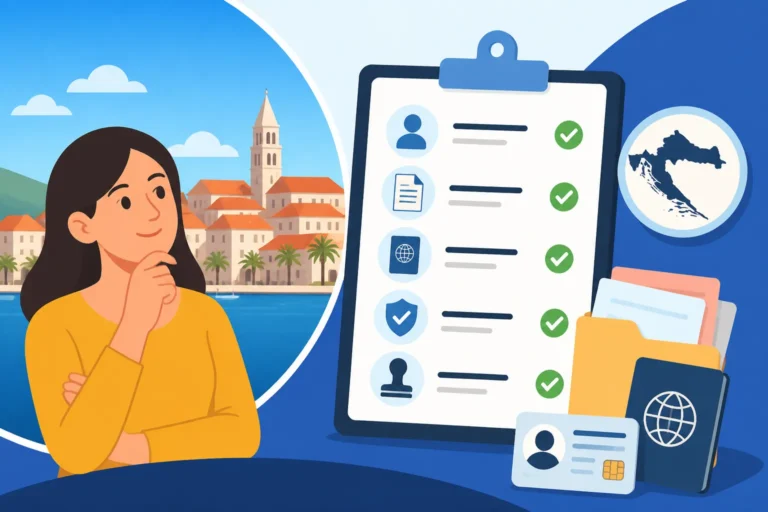
The exact documents vary based on your reason for residence, but generally, you'll need things like a valid passport, proof of sufficient funds to support yourself (bank statements are usually key here), proof of accommodation (a rental contract or property deed), and crucially, health insurance. Many expats opt for robust international health insurance like Cigna Global during this initial phase, especially before they become eligible for the public HZZO system. You'll also need your OIB, the Croatian personal identification number, which is absolutely vital for almost everything administrative here. The MUP will also want to see a criminal background check from your home country and potentially other countries where you've lived for more than a certain period. Be prepared for photo requirements, application forms filled out meticulously (and often in Croatian!), and potentially even an interview. The waiting times can be notoriously unpredictable, so a healthy dose of patience is more than just a virtue; it's a necessity.
Limitations and Renewal
Your privremeni boravak is, as the name suggests, temporary. It's typically granted for a period of one year, although some categories, like the digital nomad permit, can be issued for up to one year and renewed for an additional year. This means that every year (or whatever the validity period is), you'll need to go through a renewal process, often submitting updated documents to prove you still meet the criteria for your specific permit. This annual dance with the MUP can be draining, a constant reminder that your stay, for now, is conditional.
The biggest limitation is that your rights are tied to the specific reason for your temporary residence. For example, if you have a work permit for a specific employer, changing jobs often means needing to apply for a new work permit tied to your new employer, potentially restarting parts of the bureaucratic process. However, successfully maintaining your privremeni boravak over several consecutive years is your direct pathway to a more stable future in Croatia. The continuous period of temporary residence is what counts towards the eligibility for stalni boravak. If you're wondering how to extend your temporary residence permit in Croatia, remember that preparation and early submission are your best friends.
Delving into Stalni Boravak: Permanent Residence in Croatia
If privremeni boravak is the stepping stone, stalni boravak is the bedrock. This is the goal for many expats who envision a long-term future in Croatia, offering a level of stability and integration that temporary status simply can't match.
What Does It Mean to Have Permanent Residence?
Stalni boravak translates to "permanent residence." Once you achieve this status, you effectively have the right to live in Croatia indefinitely. It's akin to getting a "green card" or settled status in other countries, granting you significantly more rights and freedoms than temporary residents. For many, it represents the true feeling of dom – home – in Croatia, a sense of belonging without the constant administrative overhead.
With permanent residence, you gain much broader access to the public services and social benefits that Croatian citizens enjoy, with only a few exceptions (like voting in national elections, though you can vote in local elections). You can move freely, seek employment without needing specific work permits for each job, start a business, and travel in and out of Croatia with far less hassle. Imagine not having to worry about annual renewals, not having your right to live somewhere tied to your current job or student status! It's a huge psychological and practical relief. Your social security contributions become more aligned with those of a citizen, and your access to the public healthcare system becomes seamless, eliminating the need for private plans unless you choose them.
Eligibility Criteria and Application
The primary pathway to stalni boravak for most non-EU/EEA citizens is having held privremeni boravak continuously for at least five years. This "five-year rule" is paramount. "Continuously" is the key word here; extended absences from Croatia can reset the clock, so it's vital to keep track of your time in and out of the country. There are exceptions, of course, such as those who are married to a Croatian citizen or those with recognized refugee status, who may qualify sooner. For EU/EEA citizens, the process is slightly different but also generally involves five years of continuous registered residence.
When it comes to the application for permanent residence, the MUP is again your primary point of contact. You’ll need to demonstrate stable financial resources, suitable accommodation, and crucially, often a basic knowledge of the Croatian language and Latin script. While this language requirement can sometimes be waived or informally assessed for certain groups, it’s always a good idea to at least attempt to learn the local language. You’ll also need to prove your continuous residence, often through records from the MUP itself or by showing utility bills and other documents that demonstrate your presence. Expect a thorough review of your entire residency history in Croatia. It’s a significant step, and the authorities want to ensure you are genuinely integrated and committed to living here long-term. You can find more specific details on how to apply for Permanent Residence (Stalni Boravak) in Croatia on official MUP pages.
Advantages and Disadvantages
The advantages of stalni boravak are numerous and generally outweigh the initial effort. The immense stability and security it offers are priceless. You're no longer living under the shadow of annual renewals, and your life choices (like changing jobs or pursuing new studies) aren't dictated by the parameters of a temporary permit. Access to public services, educational institutions, and healthcare through HZZO becomes much simpler. For families, it means a more secure future for children's schooling and integration.
However, the main "disadvantage" is the journey itself. The five-year waiting period can feel incredibly long, and maintaining privremeni boravak diligently for that entire duration requires meticulous record-keeping and a deep understanding of Croatian administrative rules. It's a testament to your commitment to Croatia, demanding patience, resilience, and a willingness to navigate bureaucracy for half a decade. But once you have it, the feeling of truly belonging and having a secure future here is incredibly rewarding.
Key Differences and Why They Matter to Expats
Understanding the nuances between these two statuses isn't just an academic exercise; it has real, tangible impacts on your daily life and long-term plans as an expat in Croatia.
Duration and Security of Status
The most glaring difference is, of course, the duration. Privremeni boravak is inherently time-limited. It’s a permit you hold for a year (or sometimes two), requiring regular renewals and checks. It keeps you somewhat on tenterhooks, always aware that your legal right to stay needs periodic re-affirmation. This can create a constant hum of anxiety for some, especially as renewal deadlines approach.
Stalni boravak, on the other hand, grants you the right to reside indefinitely. While the card itself might have a validity period (usually 10 years, requiring renewal of the physical card but not the underlying status), the status itself is permanent, offering unparalleled peace of mind. This means you can truly set down roots, buy property, plan a family, and make long-term financial decisions without the looming question of whether your residency will be renewed. The security it provides is the foundation upon which a stable expat life in Croatia is built.
Rights, Privileges, and Obligations
The leap from temporary to permanent residence brings with it a significant upgrade in rights and privileges. As a temporary resident, your rights are often tied to your specific permit. For example, if you're on a work permit, you're permitted to work for that employer. Changing jobs might mean a new application process. Your access to public healthcare through the Croatian Health Insurance Fund (HZZO) is dependent on your specific category of privremeni boravak and often involves waiting periods or alternative private insurance, like Cigna Global. Travel can be smooth, but always with your temporary permit in mind.
With stalni boravak, you essentially gain most of the rights of a Croatian citizen, excluding voting in national elections. You have the freedom to work for any employer, start your own business without additional specific permits, and your access to public healthcare is firmly established. You also have broader social welfare rights and clearer paths for family reunification. From a tax perspective, while both statuses generally make you a tax resident if you spend more than 183 days a year here, permanent residence solidifies your long-term fiscal obligations and rights within Croatia’s system, as covered in topics like The Complete Guide to Taxes in Croatia for Expats (2027). The administrative burden lessens considerably; no more annual trips to the MUP just to prove you're still here.
The Pathway from Temporary to Permanent
For many, privremeni boravak isn't just a temporary status; it's the mandatory apprenticeship on the way to stalni boravak. This pathway requires strategic planning and diligent adherence to regulations. Every year you successfully renew your temporary permit, you're building towards that five-year mark.
One of the most common pitfalls is breaking the continuous residence rule. If you spend too much time outside Croatia, particularly during the initial years, you risk having your "clock" reset. This is why it’s so important to be aware of the specific rules for your temporary permit type regarding absences. It’s also crucial to ensure all your temporary permits are correctly processed and recorded by the MUP. Any gaps or administrative errors can complicate your application for permanent residence down the line. Keeping meticulous records of all your applications, permits, and even travel dates will be invaluable when you finally apply for permanent status. Ultimately, the pathway is clear: consecutive, unbroken periods of temporary residence, demonstrating your genuine intention to make Croatia your long-term home.
Here's a quick overview of the key distinctions:
| Feature | Privremeni Boravak (Temporary Residence) | Stalni Boravak (Permanent Residence) |
|---|---|---|
| Duration | Limited (typically 1 year, renewable) | Indefinite (permanent, card renewal every 10 years) |
| Eligibility | Specific purpose (work, study, digital nomad, family, property, etc.) | Generally, 5 years continuous temporary residence (with exceptions) |
| Application Location | MUP in Croatia or Croatian Embassy/Consulate abroad (initial) | MUP in Croatia |
| Key Requirements | Proof of purpose, funds, accommodation, health insurance, criminal check | Proof of 5 years continuous residence, financial stability, accommodation, (often) basic Croatian language |
| MUP Engagement | Frequent (annual renewals, permit-specific changes) | Minimal (card renewal every 10 years, some reporting) |
| Rights & Privileges | Tied to permit purpose, limited access to some social benefits | Broader, almost equivalent to citizens (except national voting), full access to social security & healthcare |
| Travel Freedom | Generally good within Schengen, but always tied to permit validity | Easier, less scrutiny, similar to EU citizen for travel documentation |
| Work Flexibility | Often tied to specific employer/type of work | Free to work for any employer, start businesses without specific work permit applications |
| Path to Citizenship | Necessary step (contributes to residency period) | Direct pathway (meets core residency requirement for naturalization) |
Navigating the Administrative Maze: Tips for Expats
The Croatian administrative system, while steadily modernizing, can still feel like a formidable maze. Trust me, many of us have faced the frustrations of endless queues, unclear requirements, and the sheer volume of paperwork. But with the right approach and a bit of local insight, you can navigate it successfully.
Gathering Documents and MUP Appointments
One of the biggest lessons I learned early on is that you can never be too prepared when it comes to documents. What might seem like a straightforward request can suddenly require an apostille, an official translation, or an older document you thought was long irrelevant. Always get clear, explicit lists of required documents from the MUP well in advance, and then double-check, triple-check, and bring copies of everything – original, copy, translation, copy of translation… you get the picture.
MUP appointments, especially in larger cities like Zagreb or Split, can be challenging. Some offices operate on a first-come, first-served basis, meaning early mornings are your friend. Others have online booking systems that can be tricky to navigate. Try to get familiar with your local MUP's system. Don't be afraid to politely ask for clarification if something isn't clear, even if you need to use a translation app or bring a Croatian-speaking friend. Remember, the officials are just doing their job, often under pressure, so a calm and respectful approach goes a long way. Services like Sirelo, while focused on moving logistics, also provide a wealth of information about settling in, including administrative hurdles, and can be a great resource for connecting with other expats who've been through it. Check out their insights and forums for first-hand tips on dealing with the local specifics of your area. If you're tackling your registration, a detailed guide like Registering Your Residence in Croatia: The Complete MUP Guide can be incredibly helpful.
The Importance of Health Insurance
Regardless of whether you're on privremeni or stalni boravak, health insurance is non-negotiable in Croatia. For temporary residence, you must demonstrate valid health insurance, and for many non-EU citizens, this often means securing private international health insurance initially. Companies like Cigna Global offer comprehensive plans that meet the residency requirements and give you peace of mind.
Once you gain privremeni boravak through employment or certain other categories, or certainly once you achieve stalni boravak, you will generally become eligible for the Croatian public health insurance system, HZZO. This is a critical step towards fully integrating into Croatian life. Understanding how the Croatian Health Insurance Fund (HZZO) Works: A Full Overview is essential. However, even with HZZO, many expats opt to maintain supplementary private insurance (Dopunsko) or even private comprehensive plans for faster access to specialists or specific treatments. Always ensure your health coverage is continuous and compliant with Croatian law to avoid any issues with your residency status.
Continuous Learning and Adaptation
Living in Croatia as an expat is a journey of continuous learning. While many Croatians, especially in tourist areas and younger generations, speak excellent English, learning some Croatian phrases will make your life immeasurably easier. It builds bridges, helps you navigate daily tasks, and can even smooth over bureaucratic interactions. It's a sign of respect and commitment to your new home.
Beyond language, understanding Croatian culture, social norms, and the rhythms of life here will greatly enrich your experience. The administrative process, while frustrating at times, is part of this adaptation. Embrace it as a challenge, not an insurmountable obstacle. Stay connected with expat communities online and offline; they are invaluable sources of shared wisdom, advice, and moral support. This journey from temporary to permanent residence isn't just about collecting stamps on a form; it's about building a life, a community, and a sense of belonging in this incredible country. Remember, every expat who has successfully integrated into Croatian life has walked a similar path, overcoming these same challenges.
Disclaimer
Please note that the information provided in this guide is for general informational purposes only and does not constitute legal, financial, or immigration advice. While we strive to keep our content up-to-date, laws and regulations in Croatia are subject to change. It is always recommended to consult with official government sources (like the Ministry of Interior – MUP, or the Croatian Health Insurance Fund – HZZO) or seek professional legal or immigration counsel for advice specific to your individual circumstances.