How Do I Prepare for a MUP Interview for My Residence Permit?
Navigating Croatian bureaucracy can feel like traversing a labyrinth blindfolded, and few experiences test an expat's patience and nerves quite like an appointment at the Ministry of Interior, affectionately known as the MUP. If you've received that notification for an interview regarding your residence permit application, a knot of anxiety might have formed in your stomach – and let me tell you, that's an utterly normal reaction. This guide is here to untangle that knot, walking you through everything you need to know to confidently prepare for your MUP interview, ensuring you stride in ready for whatever questions come your way.
Understanding the MUP Interview – What to Expect
Let's be real, the thought of an official interview with immigration authorities in a foreign country can be intimidating. You've probably heard stories, or perhaps you're already familiar with the general MUP vibe. But understanding the 'why' and 'how' behind these interviews can demystify the process and help you feel more prepared.
The Purpose of the Interview
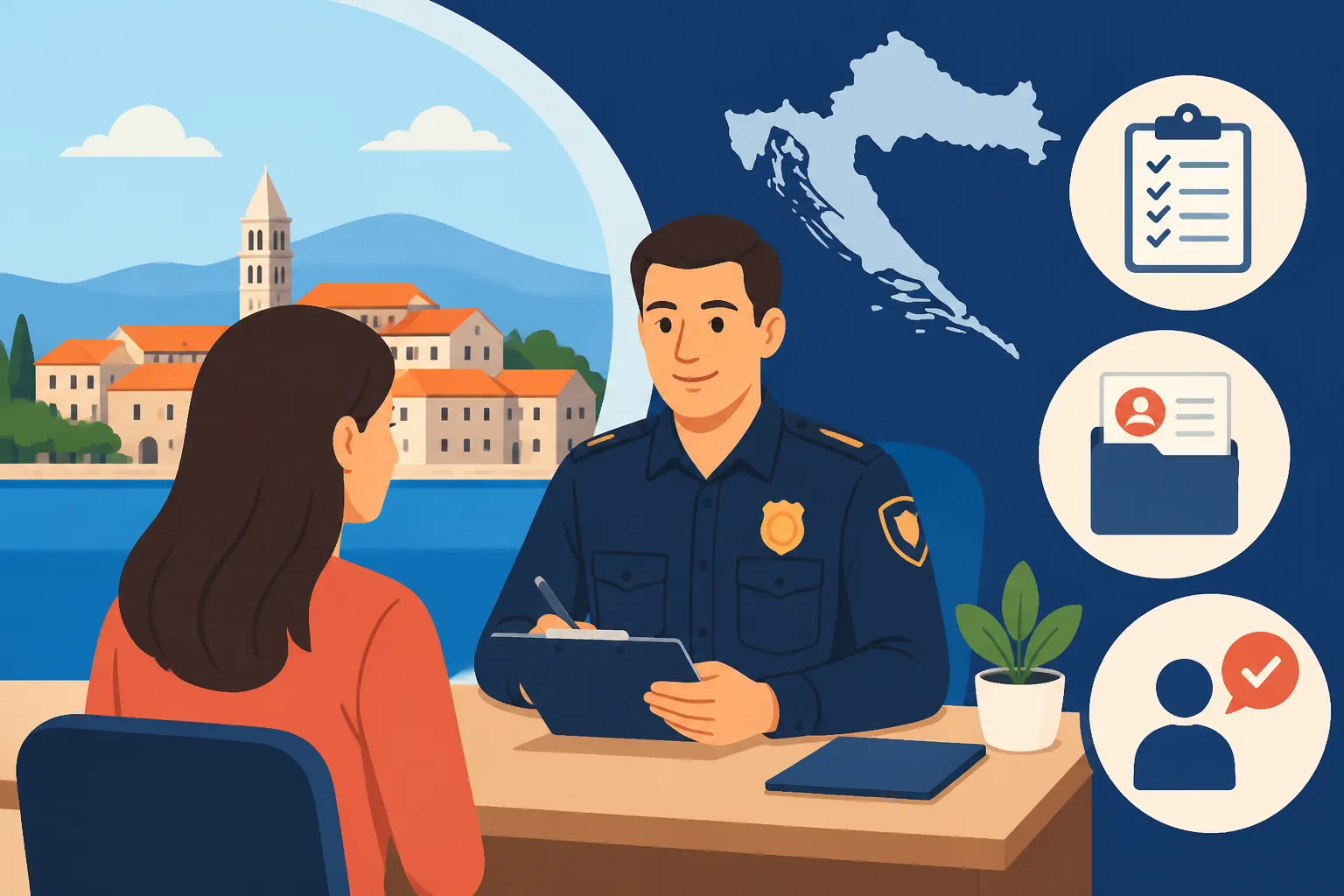
First and foremost, the MUP interview isn't necessarily designed to catch you out or trip you up. While it can certainly feel that way at times, the primary purpose is to clarify and verify the information you’ve already submitted in your application. Think of it as a quality control check. The officers need to ensure that the details on paper accurately reflect your real-life situation and intentions. They want to confirm you genuinely qualify for the residence permit you're seeking.
For example, if you've applied for a temporary residence permit based on work, they might want to ensure your employer is legitimate and that you understand your role and terms of employment. If it's family reunification, they’ll want to verify the authenticity of your relationship. They're looking for consistency, honesty, and a clear understanding of your purpose for being in Croatia. It’s their job to uphold the integrity of the immigration system, and these interviews are a crucial part of that.
Who Gets Interviewed and When
It's a common question among expats: Will I even have an interview? And the honest answer is, it varies wildly. Not every single applicant for a residence permit will be called in for an interview. Often, the MUP will approve applications purely based on the submitted documentation. However, an interview becomes more likely in certain situations.
This could be your first-ever temporary residence permit application, especially if it’s for categories like self-employment (an obrt or d.o.o.), family reunification, or even sometimes for the digital nomad permit. Renewals are less likely to require an interview unless there's been a significant change in your circumstances, or if something in your previous application was unclear. The MUP might also call you in if they have specific questions about a document, if a detail on your application seems inconsistent, or simply if an officer decides they need more information. There’s no hard and fast rule, which is why it’s always best to be prepared for the possibility. Don't be surprised if your friend sailed through without one, while you get called in – it's just how the Croatian bureaucratic cookie crumbles sometimes.
Location and Logistics of Your MUP Appointment
So, you’ve got your appointment notification. What now? Well, for starters, you’ll be heading to your local MUP office, specifically the department for foreigners. In larger cities like Zagreb, Split, Rijeka, or Dubrovnik, these offices can be bustling, with queues forming early. The atmosphere can feel a bit like a doctor's waiting room, albeit one with slightly less cheerful decor and often more official signage.
It's crucial to know the exact address and department for your appointment. If you booked online or were given a specific time slot, make sure you arrive punctually – or even a bit early, just in case. Don't forget to take a number from the machine if required, even if you have an appointment time. Navigating these offices can be confusing, so don't hesitate to ask one of the security guards for guidance. While it might seem like a small detail, remember that preparing for your MUP appointment actually starts the moment you interact with the system. For a full breakdown on how to arrange your visit, check out our guide on how to book an appointment at the MUP for immigration matters.
Essential Preparation – Documents and Knowledge
Getting ready for your MUP interview isn't just about showing up; it's about showing up prepared. This means having your paperwork in order and, perhaps even more importantly, having your facts straight.
Re-Gathering Your Original Application Documents
The golden rule of any MUP interaction is: bring everything. Even if you submitted copies with your initial application, the interviewing officer might want to see the originals again. They might even request additional documents that weren't part of the initial checklist. It’s frustrating, I know, but it’s part of the process.
Here’s a non-exhaustive list of documents you should always have readily available, both originals and copies, because you just never know what they might ask for:
- Your Passport: The absolute essential. Make sure it's valid for at least three months beyond your intended stay.
- Your OIB: The Croatian personal identification number. If you don't have one yet, or it was part of your application, be ready to discuss it. We have a helpful guide on how to get an OIB (Personal Identification Number) in Croatia.
- Proof of Accommodation: This means your rental agreement (translated and notarized if applicable), or a property ownership certificate (vlasnički list) if you own a home. They’ll want to confirm your address.
- Proof of Funds: Bank statements showing sufficient funds for your stay. The amount varies depending on your permit type (e.g., Understanding the Digital Nomad Permit Income Requirements in Croatia), but generally, they want to see you can support yourself without becoming a burden on the state.
- Health Insurance: This is non-negotiable. Whether it's HZZO coverage or private insurance, you must have valid health insurance. Companies like Cigna Global are popular choices among expats for comprehensive private coverage, especially during the initial phase before public health insurance kicks in. Be ready to show your policy. We have a detailed resource on what health insurance do I need for a Croatian residence permit?
- Proof of Purpose for Stay:
- For Work Permits: Your employment contract, certificate from your employer, or proof of self-employment registration (obrtnička iskaznica).
- For Digital Nomads: Your contract with your foreign employer, proof of income, and a declaration stating you won't work for Croatian companies. If you're applying for this permit, you'll find our guide on how to apply for a Croatian digital nomad permit incredibly useful.
- For Family Reunification: Marriage certificate, birth certificates of children, proof of relationship, and proof of funds of the sponsoring family member. Our resource on family reunification in Croatia: a complete guide for expats can help here.
- Criminal Background Check: The original document (with apostille if from certain countries) and official translation.
- Passport Photos: Always carry a few extra, just in case.
Remember, organization is key. Keep all your documents neatly organized in a folder. If you've been working with a relocation service like Sirelo to help organize your move, they often provide checklists that can be invaluable in ensuring you haven't missed anything.
Mastering Your Application Details
Beyond the physical documents, you need to be an expert on your own application. This might sound obvious, but you’d be surprised how many people forget crucial details under pressure. Go through every line of your submitted application form. Understand every date, every address, every income figure you declared. The interview is about verifying these specifics.
Imagine this scenario: you've stated on your application that you've been living at an address in Split for six months, but when asked, you stumble on the exact move-in date. Or you provide a monthly income figure that doesn't quite match the bank statements you brought. These discrepancies, even if innocent, can raise red flags and prolong the process. Be prepared to answer questions about:
- Your background: Where are you from? What did you do before moving to Croatia?
- Your current situation: What exactly is your job? Who is your employer? How do you support yourself financially?
- Your life in Croatia: Where do you live? What are your plans here? Do you have family here?
- Your travel history: Have you left Croatia since arriving? For how long?
- Your family: If applying for family reunification, be ready for detailed questions about your spouse, children, and the nature of your relationship.
The key is consistency. Your oral answers should align perfectly with your written application and the documents you've provided.
Language Barrier and Translator Considerations
This is a big one for many expats. While some MUP officers, particularly in larger cities or areas with high tourist traffic, might speak English, you absolutely cannot rely on it. Croatian is the official language, and interviews will primarily be conducted in Croatian.
If your Croatian isn't up to snuff (and let's face it, for most newcomers, it isn't), you have a few options:
- Bring a Certified Translator: This is often the safest and most recommended approach. A court-certified translator (sudski tumač) can accompany you to the interview. They will not only translate the officer’s questions but also your answers, ensuring no misunderstandings. It comes at a cost, but it can save you immense stress and potential complications.
- Bring a Croatian-Speaking Friend: This is a riskier option. While a friend can certainly help, they are not officially recognized and the MUP officer might not permit them to translate. Even if they do, unofficial translations can lead to misinterpretations. This is generally only advisable for very minor, informal clarifications.
- Hope for the Best: This is the riskiest. Relying on the officer's English proficiency might leave you struggling to understand crucial questions or adequately explain your situation. If you don't understand, politely say "Ne razumijem hrvatski" (I don't understand Croatian) and ask if they speak English, or if you can use a translator.
My personal advice? If you're not fluent in Croatian, invest in a certified translator. It's a small price to pay for peace of mind and the smooth progression of your application.
Navigating the Interview Itself – Tips for Success
The actual interview can feel like the final boss battle of the MUP process. But with the right mindset and a few strategic approaches, you can navigate it successfully.
Presentation and Demeanor
First impressions matter, even in a bureaucratic setting. While you don't need to show up in a three-piece suit, dressing neatly and respectfully indicates that you take the process seriously. Avoid overly casual attire like beachwear or ripped jeans. Smart casual is usually a good bet.
More importantly, your demeanor throughout the interview is crucial. Be polite, calm, and respectful, even if you feel frustrated by waiting times or repetitive questions. Remember, the officer is just doing their job. A smile, a "Dobar dan" (Good day), and a "Hvala" (Thank you) can go a long way.
- Be Patient: MUP interviews, like many bureaucratic processes in Croatia, can take time. Don't rush your answers.
- Be Honest: Never lie or try to embellish facts. If you don't know an answer, it's better to say so rather than making something up.
- Be Clear and Concise: Answer the questions directly. Avoid long, rambling explanations that might confuse the officer or introduce unnecessary details.
- Maintain Eye Contact: It shows confidence and honesty.
- Stay Calm: If you feel flustered, take a deep breath. Asking for a moment to think is perfectly acceptable.
Common Interview Questions and How to Answer Them
While every interview is unique, certain questions pop up frequently. Being mentally prepared for these can make a huge difference.
- "Zašto želite živjeti u Hrvatskoj?" (Why do you want to live in Croatia?)
- This is your chance to be genuine. Talk about the lifestyle, the culture, the beauty, the opportunities. If you're working, mention your job. If you're with family, emphasize the family connection. Avoid generic answers if possible; show a real interest in becoming part of the Croatian community.
- "Kako ćete se uzdržavati?" (How will you support yourself?)
- This directly relates to your proof of funds. Explain your source of income clearly – whether it’s your salary, remote work, business profits, or a pension. Be specific and confident, linking it back to the documents you've provided.
- "Gdje ćete živjeti?" (Where will you live?)
- Refer to your rental agreement or property ownership. Be able to state your address clearly and confirm that you have stable accommodation.
- "Koji su vaši dugoročni planovi u Hrvatskoj?" (What are your long-term plans in Croatia?)
- Again, be realistic but positive. Do you plan to stay long-term? Start a family? Build a career? Your answer should align with the type of permit you're seeking (e.g., if you're on a temporary permit, you might say you intend to integrate and potentially extend your stay, perhaps even aiming for permanent residence later).
- Questions about your family, previous stays, or travel history:
- These are for verification. Ensure your answers match your application and any entry/exit stamps in your passport. If you've been called for family reunification, expect detailed questions about your spouse's background, how you met, and specific dates related to your relationship.
The key is to remember that these questions are fundamentally aimed at confirming the truthfulness and consistency of your application. If your story is genuine and well-supported by documents, you’re on solid ground.
What to Do If You Don't Understand a Question or Need Clarification
It’s perfectly normal not to understand every single word, especially if your Croatian is limited. Do not, under any circumstances, guess an answer or pretend you understood if you didn't. This is where misunderstandings can lead to serious problems.
If you don't understand a question:
- Politely ask for repetition: "Možete li ponoviti, molim vas?" (Can you repeat, please?)
- Ask for clarification: "Možete li objasniti, molim vas?" (Can you explain, please?)
- State that you don't understand Croatian: "Oprostite, ne razumijem hrvatski." (Excuse me, I don't understand Croatian.)
- If you have a translator: Ask your translator to step in immediately. This is precisely why they are there.
It's far better to slow down the interview to ensure clarity than to provide an incorrect or misleading answer. Honesty and clear communication, even through a language barrier, are highly valued.
Post-Interview and Awaiting a Decision
The interview is over, you’ve gathered your documents, and you’re out of the MUP building. Now what? The process isn't quite done, but the hardest part (for many) is often behind you.
What Happens After the Interview
Unlike some administrative procedures, decisions on residence permits are rarely made on the spot after an interview. The officer will typically take all your documents, perhaps make some notes from your interview, and then inform you that you will be notified of the decision. This notification can come via mail, or sometimes through an online portal if you've been registered for digital services.
The waiting period can feel excruciatingly long, sometimes weeks, sometimes even months. This is where patience truly becomes a virtue. It’s part of the typical pace of Croatian bureaucracy. We delve into this in more detail in our guide on how long does it take to get a Croatian residence permit?
Potential Outcomes and Next Steps
Once the MUP has processed your application and reviewed your interview, there are a few possible outcomes:
- Approval: This is what you're hoping for! You'll receive a notification, usually by mail, instructing you on the next steps to collect your biometric residence card (boravišna iskaznica). This card is your official proof of residence. Once you get it, you're officially a resident! We have a complete guide on how to get a biometric residence card (Boravišna Iskaznica) in Croatia.
- Request for Additional Documents: Sometimes, even after an interview, the MUP might find something missing or unclear and request further documentation. Don't panic; this isn't a rejection. It simply means they need more information to finalize their decision. Respond promptly and provide exactly what they ask for.
- Denial: While rare if you've diligently followed all requirements, a denial is a possibility. If your application is denied, you will receive a formal decision explaining the reasons. You usually have the right to appeal this decision within a certain timeframe (often 15 days) by submitting a written appeal to the same MUP office that issued the denial. This is where legal counsel might become necessary.
| Document Type | Purpose in Interview Context | Must Bring Original? | Must Bring Copy? |
|---|---|---|---|
| Passport | Identity & nationality verification | Yes | Yes |
| OIB Confirmation | Personal identification number | Yes | Yes |
| Proof of Accommodation | Residence address verification | Yes | Yes |
| Proof of Funds | Financial self-sufficiency | Yes | Yes |
| Health Insurance | Mandatory coverage | Yes | Yes |
| Work Contract/Biz Reg. | Proof of employment/business intent (if applicable) | Yes | Yes |
| Criminal Background | Security check (if required) | Yes | Yes |
| Marriage/Birth Certs. | Family ties (for family reunification) | Yes | Yes |
| Passport Photos | For ID card (if approved) | Optional (but smart) | No |
Importance of Persistence and Patience
Ultimately, navigating the Croatian immigration system requires a significant amount of persistence and an even greater dose of patience. The MUP is not known for its speed, and delays are common. Don't get discouraged if things take longer than expected.
If you don't hear anything for a while after your interview, you can politely follow up. Sometimes, a quick phone call to the MUP (if you speak Croatian) or an in-person visit can help nudge things along, but avoid becoming a nuisance. Connecting with other expats in Croatia can also provide valuable insights and emotional support during these waiting periods. Remember, you're not alone in this journey. Thousands of us have gone through it, and with careful preparation, you will too. Understanding temporary residence (Privremeni Boravak) categories in Croatia is a great next step to keep informed about the broader context of your application.
Disclaimer
The information provided in this guide is for general informational purposes only and does not constitute legal or professional advice. While we strive to keep the information up-to-date and accurate, laws and procedures in Croatia can change rapidly. Always consult with official MUP resources, legal professionals, or qualified immigration consultants for advice specific to your individual situation.