How Do I Prove My Income for a Croatian Residence Permit?
Ah, the infamous income proof – one of those bureaucratic hurdles that can make even the most seasoned expat want to tear their hair out! Trying to figure out exactly what Croatia's MUP (Ministarstvo unutarnjih poslova) considers "sufficient" income for your residence permit can feel like navigating a maze blindfolded. This guide is here to untangle that confusion, offering a realistic, step-by-step look at how to gather and present your financial documents so you can finally secure your place in beautiful Croatia.
Understanding the Income Requirements: It's Not a One-Size-Fits-All Situation
When it comes to proving your income for a Croatian residence permit, there's no single, universally applicable magic number or document. Believe me, I wish it were that simple! The requirements are highly dependent on the type of permit you're applying for, your nationality, and even your specific situation. This is where many of us get tripped up, thinking one set of rules applies to everyone. It doesn't, and understanding these nuances is your first step to success.
Different Residence Permit Types, Different Financial Hurdles
The type of temporary residence permit you're seeking will largely dictate what kind of financial proof you need and how much. For instance, if you're coming to Croatia on a work permit, your income is typically tied to your employment contract with a Croatian company. The MUP will primarily look at that contract and your salary to ensure you meet the minimum wage or an adequate standard for your position. It’s usually fairly straightforward, as your employer is vouching for your earnings.
However, for those not directly employed by a Croatian entity, things get a bit more complex. Digital nomads, for example, have a distinct set of rules. The Croatian Digital Nomad Permit has a specific income threshold, which is typically calculated based on the average gross monthly salary in Croatia from the previous year. As of my last check, this threshold usually hovers around 2.5 times the average gross monthly salary for the preceding year, increasing by half a times the average salary for each additional family member you bring along. You can find more details on this in guides like Understanding the Digital Nomad Permit Income Requirements in Croatia. This amount is not insignificant, and you need to show you consistently earn at least this much from your remote work, usually from non-Croatian sources.
Students, retirees, or individuals seeking residence based on property ownership or other means, each face unique financial hurdles. Students might need proof of scholarships or sufficient funds from a guarantor, while retirees would present pension statements. For property owners, simply owning property isn't enough; you still need to demonstrate you have the means to support yourself without becoming a burden on the state. It’s all about proving you can sustain yourself and any dependents without needing social assistance.
Minimums and Means: What "Sufficient Funds" Really Means
The term "sufficient funds" can be incredibly vague and is a source of much anxiety for expats. What does it really mean in practice? Essentially, the MUP wants to see that you have a stable, regular income that allows you to cover your living expenses in Croatia. This isn't just about having money in your account right now; it's about demonstrating a sustained financial capacity. They're looking for evidence that you won't run out of money halfway through your permit period or need public assistance.
For many permits, this "sufficient funds" is informally tied to a national average or minimum, though not always explicitly stated. For example, if you're applying for The Expat Guide to Temporary Residence (Privremeni Boravak) in Croatia based on self-employment or other categories, the MUP officer might assess if your declared income is realistic for covering rent, food, utilities, and health insurance for yourself and your family. They are looking for sustainable income, not just a one-off payment or a large sum that suddenly appeared in your account right before the application. They want to see that you have a consistent flow of funds. This often means having a buffer beyond the absolute minimum, as the cost of living, while generally lower than in Western Europe, can still add up, especially in popular cities like Zagreb or Split.
Acceptable Forms of Income Proof: Getting Your Ducks in a Row
Once you understand what they're looking for, the next step is figuring out how to show it. This section will delve into the types of documents the MUP typically accepts as proof of income and how to best prepare them. The key here is clarity, consistency, and having everything officially translated if needed.
The Standard Players: Bank Statements, Salary Slips, and Tax Returns
These are your bread and butter when it comes to proving income. For most residence permit applications, you'll be asked for:
-
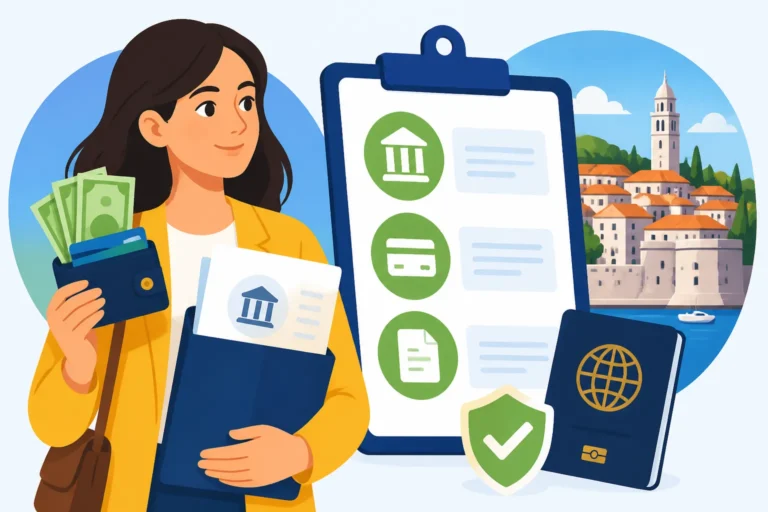
Bank Statements: This is almost always required. You'll typically need statements from the last three to six months, sometimes even longer, depending on the permit type and the MUP office. These statements need to clearly show regular income deposits (e.g., salary, freelance payments, pension) and a consistent balance that covers the required amount. They're not just looking for the final balance; they want to see the activity. For instance, if you're applying for a digital nomad permit, they'll want to see your remote income consistently landing in your account. Make sure your name and account number are clearly visible. If your funds are spread across multiple accounts, you'll need statements for all of them. And a crucial tip: avoid sudden, large deposits right before applying without a clear explanation, as this can raise red flags. They want to see genuine financial activity.
-
Salary Slips/Payslips: If you're employed, your recent salary slips (usually for the last three to six months) are essential. These documents from your employer demonstrate your regular earnings and often include details of taxes and contributions, which adds credibility. Ensure they are dated and clearly show your net and gross income.
-
Employment Contracts: For those with a job, a valid employment contract with a Croatian company is often the primary piece of income proof. It should clearly state your salary, position, and duration of employment. If you're working remotely for a foreign company, a contract with that company, translated and notarized, will be necessary.
-
Tax Returns: Sometimes, especially for self-employed individuals or those with varied income sources, previous year's tax returns from your home country can serve as robust proof of your historical earning capacity. These documents provide a comprehensive overview of your financial situation over an extended period. They show the MUP that you have a track record of earning and reporting your income.
It’s always a good idea to gather more documentation than you think you’ll need. Over-preparing is far better than being sent home for missing a crucial paper. And remember, any documents not in Croatian will require certified translation. For guidance on general documentation, check out What Documents Do I Need for a Croatian Residence Permit?.
Alternative Proofs for Non-Traditional Income Streams
Not everyone has a standard employment contract and monthly payslips, and the MUP understands this. For freelancers, entrepreneurs, retirees, and others, alternative forms of income proof are perfectly acceptable, provided they clearly demonstrate financial stability.
-
For Self-Employed and Freelancers: This is where it gets interesting! If you're running a paušalni obrt (flat-rate trade) in Croatia, you'll be providing your business registration documents and possibly your knjiga prometa (income book) or invoices. If you're freelancing for foreign clients, you'll need contracts with those clients, invoices you've issued, and corresponding bank statements showing consistent payments. A business bank account statement that clearly separates personal and business finances can also be highly beneficial. Don't forget that if you're part of the gig economy, detailed records of your earnings from various platforms will be necessary. This also requires you to be meticulous with your own record-keeping. While a moving company like Sirelo focuses on relocation, sound financial planning for your move, including proof of funds for initial setup, is crucial, and good financial records will help you plan for that too.
-
For Retirees: Pension statements from your home country, showing a regular and sufficient pension income, are the primary proof. You might also include statements from investment portfolios or other passive income sources. The key is demonstrating a secure, ongoing income stream that doesn't rely on employment. Understanding Residence Requirements for Pensioners in Croatia offers more insights into this category.
-
For Property Owners: While owning property doesn't automatically grant you residence, if it's part of your application, you'll still need to prove your ability to support yourself. This might include showing significant savings, rental income from the property (if applicable and legally declared), or other investments. The MUP wants to be sure you're not just using the property as a loophole to reside without adequate financial means.
-
For Students: Often, students require proof of funds to cover their tuition and living expenses for the academic year. This can come from personal bank statements, proof of scholarships, or a notarized statement from parents or guardians confirming financial support, along with their income proof.
Regardless of your income stream, the underlying principle remains: convince the MUP that you have the financial means to support yourself and any dependents for the entire duration of your requested permit. For more general advice on demonstrating funds, you might find How Do I Provide Proof of Funds for a Croatian Visa? helpful.
Common Pitfalls and Best Practices: Don't Let the Bureaucracy Win
Navigating the Croatian immigration system can be a test of patience, and proving your income is one of the most common stumbling blocks. Knowing the potential pitfalls and adopting best practices can save you immense stress and prevent delays or even outright rejections. I've seen countless expats get frustrated, myself included, simply because they didn't anticipate certain requirements or bureaucratic nuances.
The Dreaded "Insufficient Documentation"
This is probably the most common reason for residence permit rejections related to income. The MUP is very particular, and "close enough" often isn't good enough. Here are some of the frequent issues:
- Outdated Documents: Submitting bank statements that are 9 months old when they specifically asked for the last 3 or 6 months. Always ensure your documents are as recent as possible, typically issued no more than 30 days before your MUP appointment.
- Missing Translations/Apostilles: If your documents are not in Croatian, they must be translated by a sworn court interpreter in Croatia. Simply translating them yourself or using a non-certified translator won't cut it. Furthermore, some documents, especially those from outside the EU, might require an apostille stamp to be legally recognized in Croatia. Always double-check this requirement.
- Inconsistent Income: For digital nomads or freelancers, sporadic large payments followed by long gaps can be problematic. They want to see a steady stream of income that suggests you're genuinely self-sufficient over time, not just someone who received a big payment recently.
- Insufficient Funds (Actual): You might genuinely believe you have enough, but if your bank balance or reported income falls below the official or unofficial threshold for your permit type, your application will be denied. This is particularly critical for the Digital Nomad Permit, where the exact amount is clearly stipulated. Ensure you have a comfortable buffer above the minimum.
- Unexplained Funds: Large, unexplained deposits in your bank account right before applying can raise suspicion. If you've sold property, received a gift, or have other non-income-related large sums, be prepared to provide documentation explaining their origin. Transparency is key.
Strategic Preparation and Professional Help
To minimize stress and maximize your chances of success, strategic preparation is paramount. Treat your application like a critical project.
- Start Early: Gather your documents well in advance. Getting bank statements, tax returns, and translations takes time. Don't leave it to the last minute!
- Organize Everything: Create a physical folder and a digital backup. Label everything clearly. Keep original documents separate from copies. When you go to the MUP, having a neat, organized stack of papers will make a good impression and make the officer's job easier, which can only help you.
- Over-document (Within Reason): If they ask for 3 months of bank statements, consider bringing 6. If you have an employment contract and also tax returns that clearly back up your income, bring both. More evidence of your financial stability is usually better than less.
- Seek Professional Advice: For complex cases, or if you're feeling completely overwhelmed, consider consulting an immigration lawyer or a specialized expat agency in Croatia. They often have up-to-date knowledge of specific MUP office requirements and can help you avoid common mistakes. This can be a worthwhile investment, especially when dealing with something as crucial as your right to reside.
- Health Insurance is Part of the Equation: While not direct income proof, sufficient health insurance is a mandatory part of proving your self-sufficiency for almost all residence permits. It’s part of the overall financial picture the MUP considers. If you get sick or have an accident, they want to know you won't burden the Croatian healthcare system. Many expats opt for private health insurance, especially for initial permits, as registering for HZZO (public health insurance) often comes after your residence permit is granted, or has waiting periods. International providers like Cigna Global offer excellent plans tailored for expats and are widely accepted. Having this in order shows foresight and financial responsibility. You can learn more about this in What Health Insurance Do I Need for a Croatian Residence Permit?.
Remember, the goal of the MUP is to ensure that anyone residing in Croatia can support themselves. Demonstrating your financial stability clearly and consistently is your way of proving you're a responsible, self-sufficient resident.
Specific Scenarios and Nuances
As we've touched upon, different categories of applicants will face slightly varied expectations regarding income proof. Let's dig a little deeper into some common expat scenarios to give you a clearer picture. It’s these small details that can make or break an application.
Digital Nomads and the Income Threshold
The Digital Nomad Permit has been a game-changer for many, but it comes with a very clear financial stipulation. The required income is pegged to the average gross monthly salary in Croatia (multiplied by a certain factor). For 2024, for a single applicant, this amount has been around €2,500 – €2,600 per month, increasing for each additional family member. This figure can change annually, so it's vital to check the latest official information directly from the MUP or reliable expat resources.
For digital nomads, the proof is usually through bank statements showing consistent, regular transfers from your foreign clients or employer. You'll need to demonstrate that this income is derived from work performed for a non-Croatian company or clients, and that it's been sustained over a period, typically the last six months. Contracts with clients, invoices, and even screenshots of payment platforms (if clearly verifiable) can supplement your bank statements. The MUP needs to see this isn't just a temporary windfall but a sustainable lifestyle. Remember, this income should be foreign-sourced; you generally cannot work for Croatian companies on a digital nomad permit. For a deeper dive into this, consult How to Apply for a Croatian Digital Nomad Permit.
Family Reunification and the "Family Unit" Income
When applying for How Do I Apply for Family Reunification in Croatia?, the income requirements shift to consider the entire family unit. The MUP will assess whether the primary applicant (the sponsor) earns enough to support not only themselves but also their spouse and any children. The income threshold will increase proportionally for each family member being sponsored.
For example, if the primary applicant works in Croatia, their salary must be sufficient to cover the living expenses for everyone. If the primary applicant is a digital nomad, their income threshold will be higher than for a single person. The MUP looks at the collective financial capability. You might need to provide marriage certificates, birth certificates for children, and additional bank statements or salary slips to show how the entire family will be supported. It’s not just about one person's income anymore; it’s about the household's financial stability. This can be a particularly tricky area, and detailed planning is necessary to ensure all members are adequately covered.
Students, Pensioners, and Property Owners
These groups have distinct ways of proving financial self-sufficiency:
- Students: While they might not have an income in the traditional sense, students need to show they can cover their educational and living costs. This usually involves proof of enrollment in a Croatian educational institution, and then one or more of the following:
- Bank statements showing personal savings.
- Proof of scholarships or grants.
- A notarized statement from parents or a legal guardian confirming financial support, accompanied by their income proof (e.g., salary slips, bank statements). This ensures there’s a clear source of funds for the student's duration of stay.
- A table outlining these various scenarios can be quite helpful:
| Residence Permit Type | Primary Income Proof | Additional Documents Often Required | Key Consideration |
|---|---|---|---|
| Digital Nomad | Foreign bank statements (6+ months), client contracts/invoices | Letter from foreign employer/clients, tax returns | Must meet specific, legally defined monthly income threshold (approx. 2.5x avg. gross salary) from foreign sources. |
| Work Permit (Employed) | Croatian employment contract, payslips (3-6 months), bank statements | Employer's letter, OIB proof | Salary must meet at least minimum wage for the role and be sufficient for living costs. Employer handles most paperwork. |
| Self-Employment (Obrt) | Business registration, invoices, business bank statements | Knjiga prometa (income book), tax returns | Must demonstrate regular business activity and profit sufficient for living costs. |
| Family Reunification | Sponsor's employment contract/payslips or digital nomad income | Marriage/birth certificates, sponsor's bank statements | Sponsor's income must cover all family members (threshold increases per person). |
| Retiree | Pension statements from home country (recent) | Proof of investments, property ownership documents | Must show stable, sufficient pension/passive income to live independently without working. |
| Student | Personal bank statements (savings), scholarship confirmation | Notarized parental support statement + parents' income proof | Must cover tuition and living expenses for the academic year. |
-
Pensioners: As mentioned earlier, robust and consistently delivered pension statements are key. These demonstrate a stable, non-work-related income. You might also need to show proof of comprehensive health insurance for Croatia, as this is often a prerequisite for self-sufficient residence. The MUP wants assurance that retirees won't be a burden on the state, financially or medically.
-
Property Owners: While owning property can facilitate some residence types, it's generally not a standalone reason for a permit. You'll still need to demonstrate independent financial means to live. This could be through significant personal savings, investment income, or rental income from the property itself (if legally declared). The property acts as an asset, but regular cash flow is what the MUP prioritizes for living expenses. In essence, How Much Income Is Required for a Croatian Residence Permit? ultimately applies to you as well.
It's a lot to take in, I know. Each scenario has its quirks, and the MUP tends to look at each case individually, scrutinizing your paperwork to ensure everything adds up. Don't be afraid to ask for clarification if something isn't clear, and always err on the side of providing too much information rather than too little. Getting your OIB is also a crucial first step for any financial dealings in Croatia, so make sure you understand How to Get an OIB (Personal Identification Number) in Croatia.
Disclaimer
Please remember that I am an expat blogger, not a legal professional or a government official. The information provided in this guide is based on personal experience, extensive research, and publicly available information. Immigration laws and requirements in Croatia can change, often without much prior notice. While I strive to keep this information as accurate and up-to-date as possible, it should not be considered legal advice. Always consult with the official MUP (Ministarstvo unutarnjih poslova) website, a qualified immigration lawyer in Croatia, or the Croatian embassy/consulate in your country for the most current and personalized advice regarding your specific situation.