Understanding Residence Requirements for Pensioners in Croatia
Moving to a new country for retirement can feel like navigating a complex maze, especially when you’re leaving behind familiar systems and stepping into the unknown. For many pensioners dreaming of sunny days, a slower pace, and an affordable lifestyle in Croatia, the initial reality of figuring out residence permits can frankly be a real headache. This guide aims to cut through the confusion, offering clear, empathetic, and realistic advice on understanding the residence requirements for retirees in Croatia, making your dream move a smoother reality.
The Allure of Croatia for Retirees and the Reality Check
Croatia has truly captured the hearts of many, and it’s no wonder why. The stunning coastline, the rich history, the delicious food, and the generally relaxed pace of life are incredibly appealing, especially for those looking to enjoy their golden years in a beautiful, vibrant setting. However, like any significant move, there's the dream, and then there's the administrative reality. It's crucial to approach this with your eyes wide open, ready to navigate a few bureaucratic hurdles before you can truly settle into your Mediterranean paradise.
Why Croatia Calls to Pensioners
Imagine waking up to the smell of the sea, enjoying fresh local produce from the market, and spending your afternoons sipping coffee by the Adriatic. This isn't just a fantasy; it's the daily reality for many who've made Croatia their home. The climate, particularly along the coast, is a huge draw, offering warm summers and mild winters, far more inviting than many northern European or North American locales. Beyond the weather, the sense of community in smaller towns, the rich cultural heritage, and the increasing number of English speakers in tourist areas make it an attractive option. Many pensioners also find the cost of living in Croatia to be significantly more affordable than in their home countries, especially when it comes to housing, food, and social activities. This can make a pension stretch further, offering a better quality of life.
However, the allure extends beyond just the tangible. There's a certain charm to Croatian life, a slower rhythm that encourages savoring moments rather than rushing through them. It’s a place where relationships are valued, and time with family and friends takes precedence. For a retiree, this shift in focus from career demands to personal enrichment can be incredibly liberating. It truly offers a chance to reinvent retirement, focusing on hobbies, exploring nature, and simply enjoying life.
Common Misconceptions and Initial Hurdles
While the dream is lovely, let's inject a dose of realism. One of the biggest misconceptions many retirees have is that moving to Croatia will be as simple as moving within their home country or even within the EU, if they are from a non-EU country. Croatia has its own unique set of administrative processes, which can often feel slow, opaque, and require a significant amount of patience. You might arrive thinking your pension statements are enough, only to find you need specific translations, notarizations, and apostilles that you hadn't anticipated. The system, while logical in its own way, isn't always designed with international newcomers in mind, and the language barrier can amplify frustrations.
Another common hurdle is understanding that while the cost of living can be lower, there are initial setup costs that need to be budgeted for. This includes fees for residence permits, potentially higher initial deposits for rental properties, and the cost of private health insurance, which is often mandatory for your temporary residence application. It's not just about proving you have money; it's about proving you have enough money according to Croatian regulations, which can be a moving target based on the average net salary. Don't underestimate the time it takes to get an OIB (your Croatian tax identification number), which is absolutely crucial for almost everything. These initial steps, while necessary, can feel daunting and often lead to that validation of frustration many expats experience.
Navigating the Legal Landscape: Residence Options for Pensioners
When you decide to make Croatia your retirement home, the primary goal is to secure a legal right to reside here. For pensioners from non-EU/EEA countries, this usually means applying for a temporary residence permit. While there are several categories for temporary residence, the most straightforward path for retirees without active employment ties in Croatia is typically based on "sufficient funds" for subsistence.
Temporary Residence Based on Sufficient Funds (The Go-To Option)
This is the most common and often the only viable route for non-EU/EEA pensioners. Under Croatian law, you can apply for a temporary residence permit if you can prove you have sufficient means to support yourself during your stay. The key here is "sufficient means," which is typically defined by reference to the average net salary in Croatia. The current requirement generally states that you need to prove financial means equal to or greater than one average net salary in Croatia for each month of your intended stay, or for a full year if applying for a year-long permit. As of early 2024, the average net salary floats around €1,200-€1,300 per month. So, for a year-long permit, you'd need to show access to roughly €14,400 to €15,600 per person.
This isn't just about having the money; it’s about proving it in a way the Ministry of Interior (MUP) understands. They want to see bank statements, pension statements, or other verifiable income sources that clearly demonstrate your financial stability. These documents usually need to be recent, often no more than a few months old, and sometimes officially translated into Croatian and apostilled, depending on their origin. The MUP officials are quite strict on this, as they want to ensure you won't become a burden on the Croatian social system. This initial permit is typically granted for one year and can be renewed, provided you continue to meet the conditions. It's often the first step towards more long-term residency. For a deeper dive into the general process, check out our guide on The Expat Guide to Temporary Residence (Privremeni Boravak) in Croatia.
Exploring Other Potential Avenues and Their Limitations
While the "sufficient funds" route is dominant, some might wonder about other options. It's important to understand their limitations for retirees.
One alternative is residence based on property ownership. While owning property in Croatia is fantastic for holidays, it does not automatically grant you a residence permit, especially not for non-EU/EEA citizens. You still need to apply for a separate residence permit. For EU citizens, owning property can simplify proving accommodation for their long-term stay notification, but it's not a standalone visa category for non-EU nationals. So, if you're thinking of buying that dream villa on the coast, remember it’s not a golden ticket to residency unless you are an EU citizen.
Another category is self-employment (Obrt or d.o.o.), but this is generally not suitable for retirees unless they genuinely plan to start and run a business in Croatia. This requires active engagement in economic activity, registration of a company, and meeting specific income thresholds, which is far from the typical retirement lifestyle. While technically an option, it comes with significant administrative burdens and tax obligations that most pensioners would prefer to avoid. Similarly, work permits are tied to active employment, which retirees are generally past. The Digital Nomad Visa is also geared towards active remote workers, not typically retirees on a fixed pension. Therefore, for most non-EU/EEA pensioners, the "sufficient funds" category remains the most relevant and navigable path.
The Application Process: Step-by-Step for Pensioner Residence
Applying for a temporary residence permit in Croatia, particularly as a pensioner, can feel like a bureaucratic marathon. It's not impossible, but it demands meticulous preparation and a healthy dose of patience. The process typically involves gathering a specific set of documents, submitting them to the MUP, and then waiting for a decision.
Essential Documentation: Gathering Your Paperwork
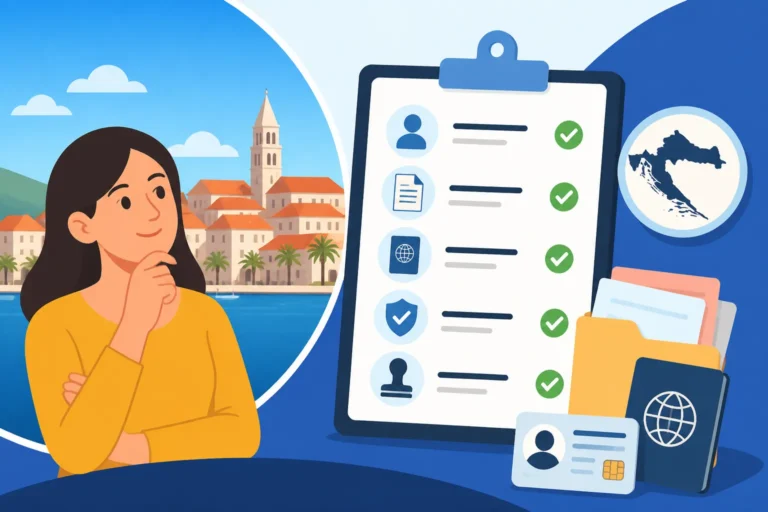
This is where many people get stuck, and honestly, it’s understandable. The MUP has precise requirements, and missing even a single item can lead to delays. Here's a rundown of what you'll typically need to prepare:
- Valid Passport: This is a given, but ensure it has sufficient validity (usually at least three months beyond your intended stay).
- Application Form: The standard form (Obrazac 1a) for temporary residence. You can usually download this from the MUP website or get it at their office.
- Proof of Funds: As discussed, recent bank statements showing the required amount for your intended stay (e.g., 12 times the average net salary for a one-year permit). Pension statements from your home country are also excellent proof. These often need to be officially translated and apostilled.
- Proof of Accommodation: A signed lease agreement (contract for najam) with a Croatian landlord, a notarized statement from a property owner allowing you to stay, or a property ownership certificate if you own a Croatian property (though, as noted, ownership itself doesn't grant residency). This lease needs to be registered with the tax administration.
- Health Insurance: This is absolutely critical. You must have valid private health insurance that covers you for the entire period of your requested stay in Croatia. Many expats opt for international providers like Cigna Global to ensure their coverage is comprehensive and recognized. This insurance needs to be purchased before you apply and should clearly state its validity period and coverage in Croatia. What health insurance do I need for a Croatian residence permit?
- Criminal Background Check: A certificate of no criminal record from your home country, and possibly from any other country you've resided in for more than six months in the last few years. This also typically needs to be apostilled and officially translated.
- Passport Photos: Standard size (usually 35×45 mm).
- Administrative Fees: There are various fees for the application, the biometric residence card, and sometimes for specific forms.
It’s advisable to have all documents, especially those from abroad, apostilled (if your country is a signatory to the Hague Apostille Convention) and officially translated into Croatian by a sworn court interpreter (sudski tumač). Don’t try to save money by doing your own translations – they won’t accept them. Also, remember that you’ll need an How to Get an OIB (Personal Identification Number) in Croatia, which is your Croatian tax identification number, for almost every administrative process, including this one.
Submitting Your Application and the MUP Experience
Once your mountain of paperwork is ready, the next step is to submit it to the Ministry of Interior (MUP), specifically the administrative police department (Upravni poslovi) responsible for foreign nationals. In larger cities like Zagreb, Split, Rijeka, or Dubrovnik, these offices can be busy, so preparation is key.
You can submit your application either from your home country at the Croatian embassy or consulate, or directly in Croatia at the local MUP office, depending on your nationality and visa status. If you enter Croatia as a tourist (e.g., on a 90-day Schengen visa if you're from a non-visa-required country), you usually need to submit your temporary residence application before your tourist stay expires. If you wait until the last minute, you might find yourself in a tricky situation, potentially needing to leave and re-enter. It’s always best to start the process as soon as possible after arriving. To make sure you're not waiting forever, it’s a good idea to How to Book an Appointment at the MUP for Immigration Matters in advance, if available in your city.
When you go to the MUP, bring not only your original documents but also a set of photocopies. The officials will check everything, and if anything is missing or incorrect, they will typically give you a deadline to provide the additional information. Be polite, patient, and try to speak some Croatian if you can, or bring a Croatian speaker with you. Even if they speak English, demonstrating an effort goes a long way. This isn't a quick in-and-out visit; be prepared to spend some time there.
The Waiting Game and What to Expect
After you've submitted your meticulously prepared application, the waiting game begins. The processing times for temporary residence permits can vary significantly depending on the MUP office, the time of year (tourist season often means longer waits), and the complexity of your case. It could be a few weeks, or it could stretch into a few months. During this time, your passport will likely be held by the MUP, which can be a bit unsettling. They might issue you a temporary receipt or certificate to prove you’ve applied, which is important for legal stay.
Once your application is approved, you'll be notified to come back to the MUP to submit your biometric data (fingerprints and photo) for your How to Get a Biometric Residence Card (Boravišna Iskaznica) in Croatia. This card is your official proof of residence in Croatia. It's a small plastic card, similar to a driver's license, and you should always carry it with you. Remember to pick it up promptly once it's ready. If your initial permit is for one year, mark your calendar for its renewal, as the process needs to be started well in advance of the expiry date.
Financial Considerations: Proving Your Means
One of the cornerstones of obtaining a residence permit as a pensioner in Croatia is demonstrating financial independence. It’s not just a formality; it’s a critical requirement that the Croatian authorities take very seriously. They want reassurance that you can support yourself without becoming reliant on the state, especially as you embark on your retirement.
Understanding "Sufficient Funds" for Pensioners
As we touched upon earlier, "sufficient funds" refers to your ability to maintain yourself financially for your entire requested period of stay. For pensioners, this primarily means showing regular, reliable income from your pension, investments, or savings. The benchmark, as a rule of thumb, is typically set against the average net salary in Croatia. Currently, you should aim to demonstrate at least one average net salary per month for each month you wish to reside in Croatia. For a single applicant seeking a one-year permit, this means roughly showing access to €14,400 to €15,600 (based on a current average net salary of €1,200-€1,300). For a couple, you generally need to show closer to 1.5 times this amount, though exact figures can fluctuate.
This proof usually takes the form of official pension statements from your home country, comprehensive bank statements from the last few months (showing consistent income and the required balance), or investment portfolio statements. It’s not just about a lump sum; they often want to see a pattern of income. These documents must be original, in English or officially translated into Croatian by a court-certified translator (sudski tumač), and often bear an apostille or consular legalization, depending on the country of origin. My advice? Over-prepare. If you think you need one bank statement, bring three. The clearer and more consistent your financial picture, the smoother this part of the process will be. Remember, the goal is to leave no doubt that you are financially self-sufficient.
Health Insurance: A Non-Negotiable Requirement
Alongside financial stability, health insurance is perhaps the single most important requirement for pensioners seeking temporary residence. You absolutely cannot obtain a temporary residence permit without demonstrating that you have comprehensive private health insurance covering the entire duration of your requested stay in Croatia. This isn't something to skimp on or assume will be covered by your home country's system, even if you have excellent coverage there. Croatia needs to see that you are insured here.
The insurance policy needs to be valid in Croatia and typically cover emergency medical treatment, hospital stays, and medical evacuation back to your home country if necessary. Many international insurance providers offer plans specifically designed for expats, which makes meeting these requirements much easier. Companies like Cigna Global are frequently used by expats because their policies are robust and generally well-understood by Croatian authorities. Be sure to get a policy certificate that explicitly states its validity in Croatia, the coverage period, and the types of medical services covered. This document, like your financial proof, might need an official Croatian translation. While Croatia has a public healthcare system (HZZO), as a new non-EU resident, you won't immediately be covered by it for your temporary residence application. You might be able to integrate into the public system later, but for initial residency, private health insurance is the key. For a more detailed look, consider reading What Health Insurance Do I Need for a Croatian Residence Permit?.
Life Beyond the Permit: Integrating into Croatian Society
Once you've navigated the sometimes-arduous path of securing your residence permit, the real adventure of retirement in Croatia truly begins. But getting the permit is just the first step. Integrating into your new community, understanding the healthcare system, and even picking up a few Croatian phrases will significantly enhance your experience.
Healthcare Access for Pensioners
After you've secured your initial temporary residence permit with private health insurance, you'll likely want to understand your long-term healthcare options. For non-EU/EEA citizens residing in Croatia, the path to public healthcare (HZZO) often involves a waiting period and specific criteria. Generally, once you have a valid temporary residence permit, you can apply to be included in the public health insurance scheme. This typically requires demonstrating continuous legal residence and making monthly contributions. These contributions are usually calculated based on your income (pension), but often there's a minimum contribution amount.
It's important to differentiate between mandatory basic health insurance (which covers a significant portion of medical costs) and supplementary insurance (dopunsko osiguranje), which covers co-payments (participacija) for most services. Many expats opt for both. Initially, you might rely heavily on your private insurance or pay out-of-pocket for some services until your HZZO coverage is fully activated. It's a complex system, and waiting times for specialists in the public sector can be long. Therefore, many expats choose to mix and match, using the public system for routine care but opting for private polyclinics for quicker access to specialists or specific procedures. For a deep dive into the system, I highly recommend our comprehensive guide on The Complete Guide to Healthcare in Croatia for Expats (2027) and Public vs Private Healthcare in Croatia: Which Should Expats Choose?. Finding an How to Find an English-Speaking Doctor in Croatia can also make a huge difference in your early days.
Learning the Language and Local Customs
While many Croatians, especially in tourist areas, speak English, making an effort to learn Croatian will profoundly enrich your retirement experience. Even a few basic phrases for greetings, shopping, or asking for directions can make a huge difference in your daily interactions and demonstrate respect for your new home. Locals genuinely appreciate the effort, and it can open doors to deeper connections within the community.
Beyond language, understanding local customs is key. Croatia is a country with a strong sense of tradition and community. Things might move at a different pace than you’re used to – the famous pomalo (take it easy) mentality is real, especially in Dalmatia. Socializing over coffee is a ritual, and family is paramount. Be open to these differences, observe, and ask questions. Participating in local events, frequenting local markets, and simply being present can help you pick up on these nuances naturally. Don't be afraid to try new foods, embrace spontaneous conversations, and allow yourself to be immersed. For those serious about language learning, there's a guide on Learning Croatian: A Complete Guide to Language Courses and Levels to get you started.
Community and Support Networks
Moving to a new country can be isolating at times, even in retirement. Building a support network is vital for a fulfilling expat life. Seek out other expats – online forums, Facebook groups, or local meetups are great places to start. These communities can offer invaluable advice, shared experiences, and friendships with people who understand the unique challenges and joys of living abroad.
Don't limit yourself to just expat circles, though. Make an effort to connect with your Croatian neighbors and locals. Join clubs, volunteer, or participate in local activities that align with your interests. Maybe there's a walking group, a book club, or even a local choir. These connections are what transform a temporary stay into a true home. When considering your initial move, thinking about the logistics of getting your belongings to Croatia, services like Sirelo can be helpful for planning and comparing moving companies, ensuring your treasured possessions arrive safely as you build your new life and community. Remember, everyone started somewhere, and most people are eager to help newcomers settle in.
| Document Category | Specific Document Examples | Key Requirement for Pensioners |
|---|---|---|
| Identity & Application | Valid Passport, Temporary Residence Application Form | Passport validity > 3 months beyond stay. Form accurately completed. |
| Financial Proof | Pension statements, Bank statements (past 3-6 months), Investment proof | Minimum €1,200 – €1,300 per month (approx. average net salary) for each month of stay. Must be readily accessible. |
| Accommodation | Rental contract, Notarized statement of accommodation, Property deed | Legal and registered proof of residence for the entire stay. |
| Health Coverage | Private Health Insurance Policy | Must be valid in Croatia for the entire duration of stay, covering emergencies and hospital care. |
| Background Check | Certificate of no criminal record | From country of origin (and any country of residence >6 months in recent years). Must be apostilled/legalized & translated. |
| Additional Documents | Passport-sized photos, OIB (Personal Identification Number) | Recent photos. OIB is essential for all official matters. |
| Language & Legalisation | Official translations (by sudski tumač), Apostille/Legalization | Crucial for any foreign-issued document; ensure proper certification. |
This table provides a general overview, but always double-check the latest requirements directly with the Croatian MUP or your nearest Croatian embassy/consulate, as regulations can change.
Disclaimer
The information provided in this guide is for general informational purposes only and does not constitute legal or professional advice. While we strive to keep the information accurate and up-to-date, immigration laws and procedures in Croatia can change. Always consult with official government sources, such as the Ministry of Interior (MUP) in Croatia, or seek advice from a qualified legal professional specializing in Croatian immigration law before making any decisions related to your residence status. We are not liable for any actions taken based on the information presented here.