How Do I Register a Newly Purchased Car in Croatia?
Oh, the joy of finally finding that perfect car in Croatia! Whether it’s a shiny new model from a dealership or a trusty pre-loved vehicle that caught your eye, the excitement is often quickly tempered by the looming administrative hurdle of registration. Many expats arriving in Croatia feel a familiar pang of dread when faced with local bureaucracy. This guide is here to cut through the confusion and walk you, step by step, through the often-complex process of registering a newly purchased car in Croatia, ensuring you're road-ready without the usual headache.
The Initial Hurdles: Gathering Your Documents for Car Registration
The Croatian administrative system, while robust, certainly loves its paperwork. Registering a vehicle is no exception, and gathering the correct documentation is half the battle won. Don't underestimate this step; missing even one seemingly minor paper can send you spiraling into multiple return trips to various offices. Trust me, I've been there, staring blankly at a civil servant who just told me "jedan papir fali" (one paper is missing) after waiting an hour.
Essential Documents from the Seller (New or Used Car)
When you're buying a car, whether it’s fresh off the lot or has a few kilometres on it, the seller is responsible for providing crucial documents that are absolutely indispensable for your registration. Make sure you get these at the point of sale, before you even think about driving away!
For a new car purchased from a dealership, you'll receive an official invoice (račun) detailing the sale. This is your primary proof of ownership. They'll usually handle some initial steps like obtaining the Certificate of Conformity (COC) if it's an imported vehicle, but ensure you get all relevant paperwork from them.
If you're buying a used car from a private individual, the most important document is the Kupoprodajni Ugovor – the sales contract. This must be notarized at a public notary (javni bilježnik) to be legally binding. It needs to clearly state the seller's and buyer's details (including OIBs!), the vehicle identification number (VIN), make, model, year, and agreed sale price. Don't skip the notarization; without it, the MUP (Ministry of Interior) won't even look at your application.
Additionally, you'll need the original Vehicle Registration Certificate (Prometna Dozvola) and, for older vehicles, potentially the Certificate of Ownership (Knjižica Vozila). While the Knjižica Vozila has largely been integrated into the digital system or the Prometna Dozvola, some older cars might still have it. Always ask for these originals. The seller should also provide proof that the last technical inspection (Tehnički Pregled) was valid, especially if you're buying a used car close to its renewal date. Having the seller's OIB is also critical for the sales contract and subsequent transfer of ownership. Always double-check every detail on these documents before signing anything.
Personal Documents You'll Need
Beyond the car's papers, you, as the new owner, will need to present your own set of documents. Think of it as proving not just that you own the car, but that you are a legitimate resident of Croatia.
First and foremost, you absolutely need your Croatian OIB (Osobni identifikacijski broj). This unique personal identification number is your key to almost all administrative processes in Croatia, from banking to healthcare, and yes, car registration. If you don't have one, you'll need to sort that out first. It’s fundamental. You can learn more about its importance by checking out our guide on How to Get Your OIB and Why It Matters for Healthcare Access.
You'll also need a valid form of identification, typically your passport or your Croatian ID card (Osobna Iskaznica), if you're an EU citizen who has registered for one. Make sure it's current and clearly shows your photo and signature. While having photocopies handy is always a good idea for any Croatian administrative task, be prepared to present the originals for verification.
Proof of residence in Croatia is another non-negotiable requirement. This usually means your certificate of temporary or permanent residence issued by the MUP. This document confirms your legal address in Croatia, which is where your car will be registered. If you’re still navigating the initial stages of settling in, our article Registering Your Residence in Croatia: The Complete MUP Guide offers a deep dive into that process. If for some reason you can't attend the registration in person, you'll need to provide a legally notarized power of attorney (punomoć) for the person acting on your behalf, clearly stating they are authorized to register the vehicle for you.
Navigating the Bureaucracy: Step-by-Step Registration Process
Alright, you've got your pile of documents. Now comes the exciting part – actually getting that car legally registered. This isn't a one-stop shop, folks. You'll likely visit a few different places, and patience, along with a good attitude (and maybe a fully charged phone for waiting times), will be your best companions.
Technical Inspection (Tehnički Pregled) and Environmental Check
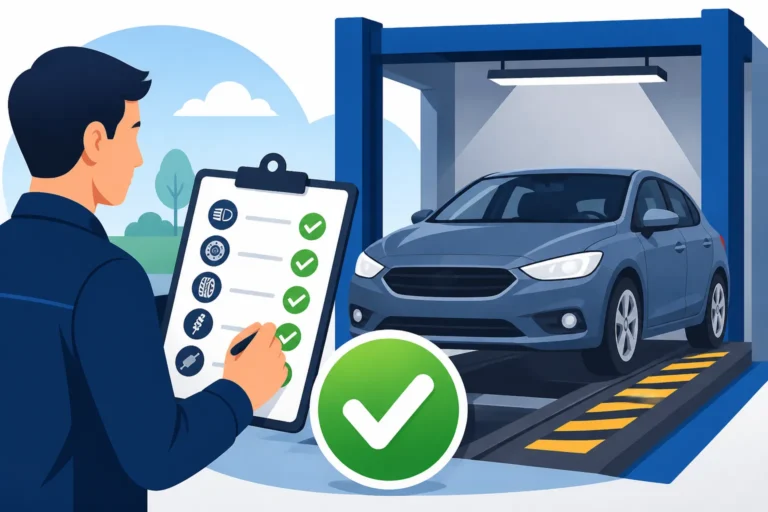
Every car in Croatia needs to undergo a technical inspection annually to ensure it's roadworthy and meets environmental standards. This is done at a Centar za vozila Hrvatske (CVH) station, which you'll find in almost every major town. You can spot them by the "CVH" or "Stanica za tehnički pregled" signs.
Even if you've bought a used car with a seemingly valid technical inspection, you might need a new one as part of the ownership transfer, especially if the previous one is nearing its expiry or if you’re transferring ownership between different counties (županije). The inspection covers everything from brakes and lights to tire tread depth, suspension, and exhaust emissions. It's a thorough check designed to keep everyone safe on Croatian roads. If you're importing a foreign car, there's an even more stringent initial technical inspection to ensure it meets Croatian standards – a process distinct from registering a car already purchased in Croatia. For those looking to understand the full scope of vehicle checks, our guide on Understanding Vehicle Technical Inspection (Tehnički Pregled) in Croatia can be incredibly helpful.
Should your vehicle fail the inspection – which can happen with older cars – you'll be given a list of deficiencies that need to be fixed. You typically have a short grace period (often 15-30 days) to rectify these issues and bring the car back for a re-inspection, which usually only checks the failed items. It’s an extra step and expense, but necessary. Keep in mind, these stations are also where you'll get your proof of mandatory third-party liability insurance and handle many of the fees, making them a central hub in the registration process.
Insurance – Mandatory Third-Party Liability
You absolutely cannot register a car in Croatia without proof of obvezno osiguranje, which is mandatory third-party liability insurance. This insurance covers damages you might cause to another vehicle or person in an accident. It's the law, and there's no way around it.
You can purchase this insurance at various providers across Croatia. Major players like Croatia Osiguranje, Generali, Uniqa, and Allianzt all offer competitive packages. It's wise to shop around and compare offers, as premiums can vary based on the vehicle type, your driving history, and crucially, your bonus/malus rating. If you're coming from another EU country, you might be able to transfer your no-claims bonus (bonus) to Croatia, which can significantly reduce your premium. This requires a certificate from your previous insurer. Without it, you might start at the highest "malus" (penalty) category, meaning higher premiums until you build up a clean record here.
While mandatory liability insurance is non-negotiable, many expats also opt for kasko osiguranje, or comprehensive insurance. This covers damages to your vehicle, even if you are at fault, or damages from events like theft, fire, or natural disasters. It’s not mandatory for registration, but for peace of mind, especially with a new or valuable car, it's often a smart investment. Always make sure your policy is valid for the entire duration of your planned registration period (usually one year).
Paying the Fees and Taxes
Ah, the fees and taxes. Another unavoidable, yet often opaque, part of Croatian administration. When registering a newly purchased car, you'll encounter several types of payments.
First, there's the annual road tax (cestarina), which is determined by your vehicle's engine power (kW) and age. Then there are various administrative fees for the issuance of documents (like the registration certificate) and for the registration plates themselves. There might also be an environmental fee or other minor charges. The exact amounts can fluctuate slightly year to year, so it's always best to check the current rates at the technical inspection station. For a broader understanding of financial obligations in Croatia, our guide The Complete Guide to Taxes in Croatia for Expats (2027) provides invaluable context.
Most of these fees can be paid directly at the technical inspection station. They usually have a payment counter that accepts cash and card. Occasionally, specific fees might need to be paid at FINA (Financijska agencija), which handles various state payments. The staff at the technical inspection station are usually very helpful in guiding you on where and how to pay each specific charge. Don't be shy to ask them to list out every single fee for clarity, as the total can sometimes be a bit of a shock if you're not expecting it.
Here’s a general idea of some of the costs you might encounter (these are approximate and can change):
| Fee Type | Estimated Range (EUR) | Notes |
|---|---|---|
| Technical Inspection | 30 – 70 | Depends on vehicle type (motorcycle, car, truck). Re-inspection is cheaper. |
| Road Tax (Cestarina) | 40 – 200+ | Varies significantly by engine power (kW) and vehicle age. Higher kW = higher tax. |
| Registration Plates | 15 – 30 | For standard plates. Personalized plates are much more expensive (up to €2,000+). |
| Traffic License Issuance | 5 – 10 | Administrative fee for the Prometna Dozvola. |
| Environmental Fee | 20 – 50 | Varies by vehicle emissions. |
| Administrative Fees | 5 – 20 | Various small charges for forms, seals, etc. |
| Mandatory Insurance | 150 – 500+ | Not a fee, but a major cost. Highly variable based on vehicle, driver, no-claims bonus. |
| Ownership Transfer Tax | ~5% of purchase price (until Jan 2020, now removed for used cars if VAT paid on new purchase) | Important Note: Croatia abolished the 5% vehicle transfer tax (porez na promet motornih vozila) for used vehicles in 2020. This simplifies things greatly, as you only pay VAT if buying a new vehicle from a dealer. For private sales of used cars, this tax is no longer applicable. |
The MUP (Ministry of Interior) Visit and Finalizing Registration
Once you've passed the technical inspection, secured your insurance, and paid all the necessary fees, the final stage is a visit to the MUP, specifically the administrative affairs department (upravni poslovi). This is where all your hard work comes together, and you officially get your car registered.
At the MUP, you'll present all the documents you've painstakingly gathered: the notarized sales contract (for used cars) or invoice (for new cars), the technical inspection certificate, proof of insurance, your OIB, and your ID. The MUP officer will review everything, cross-reference data in their system, and if all is in order, they will process the ownership transfer and issue your new vehicle registration certificate (prometna dozvola) and, if applicable, the vehicle ownership certificate (knjižica vozila – though this is often integrated into the prometna dozvola or digitalized nowadays).
This is also where you'll receive your registration plates (registarske pločice). You can choose standard plates with a pre-assigned number-letter combination, or if you're feeling fancy and willing to pay a premium, personalized plates. The MUP office can be a busy place, so prepare for potential waiting times. A friendly demeanor and a bit of Croatian (or Google Translate) will go a long way in ensuring a smooth experience. Remember, these are the same folks who handle your general residency, so if you've been through the Registering Your Residence (Prebivalište) at the MUP process, you'll be familiar with the environment.
Practicalities and Post-Registration Life
Congratulations, you've done it! Your car is officially registered in Croatia. But the journey doesn't quite end there. There are a few more practicalities to consider to ensure you're driving legally and safely, and to prepare for future events.
Getting Your Plates and Sticking Your Sticker
Once you have your shiny new Croatian registration plates from the MUP, it's time to put them on your car. Croatian plates are typically affixed to the front and rear bumpers using screws or a plate holder. While the MUP won't do this for you, most car service stations (automehaničar) can help, or you can do it yourself if you're handy.
Crucially, you'll also receive a small, round validation sticker (naljepnica) from the MUP or the technical inspection station. This sticker displays your registration number, the date until which your technical inspection is valid, and the MUP's seal. This sticker must be visibly affixed to the inside of your car's windshield, usually in the lower right corner, where it's easily seen from the outside. Driving without this sticker, or with an expired one, is a sure way to attract attention from the police and receive a fine. It’s essentially your car’s expiration date for legal road use.
Updating Your Records and Driving Legally
With your car registered, you need to ensure you have all your documents in order while driving. While the original prometna dozvola (registration certificate) should technically be kept with you in the car, many locals keep a copy and the original at home to prevent loss or theft. However, if stopped by the police, you'll need to provide proof of registration, insurance, and a valid driving licence.
Speaking of driving licences, if you're a non-EU citizen, you might need to exchange your foreign driving licence for a Croatian one after a certain period of residency. For EU citizens, your home country licence is typically valid indefinitely, but registering it with the MUP is often recommended. Our detailed guide on How to Exchange Your Foreign Driving Licence in Croatia will give you all the specifics on this important topic.
Beyond the basic documents, consider other practical aspects of driving in Croatia. If you plan on doing a lot of highway driving, investing in an ENC device for automatic toll payment can save you time and money. It also helps avoid fumbling for cash or cards at the toll booths. You can find more information about this in our article Understanding Highway Tolls and the ENC Device in Croatia. Also, ensure your smartphone has a reliable local SIM card with data, like those offered by providers that resell eSIMs such as Airalo. This will be invaluable for navigation, emergencies, and even translating on the fly when dealing with roadside assistance or local mechanics.
Selling Your Car in Croatia as an Expat (Future Consideration)
While you've just bought your car, it's always good to have an idea of the process in reverse, should you decide to sell your vehicle in Croatia or move on from the country. Selling your car as an expat follows a similar, albeit simpler, administrative path.
When you sell, you'll again need a Kupoprodajni Ugovor (sales contract) with the buyer, which will need to be notarized. You'll hand over your prometna dozvola and the actual vehicle to the new owner. It's the buyer's responsibility to register the car in their name, but you should ensure the transfer of ownership is properly documented to avoid any liability for future incidents involving the vehicle. Always keep a copy of the notarized sales contract for your records.
If you decide to leave Croatia entirely and take your car with you, you'll need to deregister it from the Croatian system. This involves a visit to the MUP to inform them you're exporting the vehicle. The process can vary depending on your destination country and its import regulations, so research those requirements thoroughly. For comprehensive moving services that can assist with shipping vehicles and household goods internationally, companies like Sirelo offer valuable resources and partnerships to streamline your departure. Planning ahead can save you a lot of stress when it's time to pack up your life in Croatia, whether it's just your belongings or your trusty vehicle too.
Disclaimer
Please remember that while we strive to provide the most accurate and up-to-date information, administrative procedures and regulations in Croatia can change. This guide is intended for informational purposes only and does not constitute legal or professional advice. Always consult official government sources, legal professionals, or relevant agencies (like MUP or CVH) for the most current and specific requirements for your individual situation.