Understanding Highway Tolls and the ENC Device in Croatia
Ah, the Croatian highways! If you're new to Croatia, or even if you've been here a while but mostly stick to your local roads, venturing onto the autoceste (motorways) can be a bit of an adventure, particularly when it comes to understanding how the tolls work. Many expats, myself included, have stood at a toll booth, fumbling for kuna (back in the day) or a forgotten credit card, watching a queue grow behind them, feeling that familiar pang of expat frustration. This guide is here to demystify the Croatian highway toll system, explain the different ways you can pay, and, most importantly, introduce you to the magic of the ENC device, which will truly make your road trips a breeze.
The Basics of Croatian Highway Tolls: What You Need to Know
Driving in Croatia is generally a pleasure, especially on the modern, well-maintained highways that crisscross the country. They connect major cities like Zagreb, Split, Rijeka, and Osijek, and are essential for reaching popular coastal destinations or moving between regions efficiently. However, these highways come with a price, literally. Unlike some countries that use vignette systems, Croatia operates on a pay-per-use toll system for most of its motorways. This means you pay based on the distance you travel and the category of your vehicle.
Who Manages the Highways and Tolls?
Understanding the players helps to make sense of the system. In Croatia, the main companies responsible for operating and maintaining the vast majority of the toll roads are Hrvatske autoceste (HAC) and Autocesta Rijeka-Zagreb (ARZ). While they are separate entities, they operate under a unified toll system, meaning the methods of payment and vehicle categories are consistent across their networks. This is a relief, as imagining a different system for every stretch of road would be truly a nightmare for new arrivals!
When you enter a toll road, you'll typically take a ticket (unless you have an ENC device, which we’ll get to). This ticket records your entry point. When you exit, you present this ticket, and the system calculates the toll based on the distance to your exit point. It’s a pretty standard open-exit system, but the queues, especially in summer, can be anything but standard. You'll notice prominent signage, usually in Croatian and English, indicating the toll stations and payment options well in advance. Keep an eye out for these, as they often give you a heads-up on which lanes accept which payment methods.
Understanding Vehicle Categories
One of the first things that can cause confusion, beyond the language barrier, is understanding the vehicle categories. Croatian tolls are not a flat rate per vehicle; they are categorized to ensure fair pricing based on vehicle size and type. This system is pretty standard across Europe, but knowing which category your vehicle falls into is crucial for anticipating costs and avoiding surprises.
Here's a breakdown of the standard vehicle categories you'll encounter at Croatian toll booths:
- Category I (IA): This is for motorcycles and trikes. They have their own, generally lower, rate.
- Category I: This is the most common category for tourists and expats, covering passenger cars with two axles, up to 1.90 meters in height (at the front axle), and a maximum permissible weight of 3,500 kg. Most standard cars, SUVs, and smaller vans fall into this category.
- Category II: This category gets a bit more complex. It includes:
- Vehicles from Category I but with a trailer (regardless of height or weight of the trailer).
- Category I vehicles exceeding 1.90 meters in height (at the front axle) but with a maximum permissible weight of 3,500 kg. Think taller vans or some larger SUVs.
- Two-axle vehicles with a maximum permissible weight exceeding 3,500 kg.
- Vehicles from Category I with a camper or caravan attached.
- Category III: This is for vehicles with two or three axles, a height greater than 1.30 meters (at the front axle), and a maximum permissible weight exceeding 3,500 kg. This typically covers larger trucks, buses, and some heavy-duty vehicles.
- Category IV: This is for vehicles with four or more axles, a height greater than 1.30 meters (at the front axle), and a maximum permissible weight exceeding 3,500 kg. These are usually the biggest trucks and articulated lorries.
The height measurement is taken at the front axle, which can sometimes trip people up if their vehicle has a higher roof towards the back. Most standard family cars and smaller SUVs will comfortably fit into Category I. If you're moving house and bringing a trailer or a large moving truck, understanding the higher categories is vital for budgeting, as the costs increase significantly. If you're importing a vehicle, make sure you also look into How to Register a Vehicle and Get Croatian Plates so you understand all the associated costs and procedures.
Common Toll Payment Methods for Foreigners
When you roll up to a Croatian toll booth, you’ll see various lanes marked with different symbols. These symbols indicate the accepted payment methods for that particular lane. Getting into the right lane is key to a smooth experience; otherwise, you might find yourself reversing or, even worse, stuck.
Cash and Card Payments at Toll Booths
For most visitors and new residents, the immediate go-to options are cash or credit/debit card. These are universally accepted at all manned toll booths and many automated ones.
- Cash Payment: Yes, you can still pay with cash, but since Croatia adopted the Euro in 2023, you’ll need Euros. Don't pull out your old Croatian Kuna anymore; they are no longer accepted! Always try to have smaller denominations available if you're paying cash, especially at quieter booths, as they might not always have change for a large bill for a small toll. While most places are equipped, it's a good habit to carry some small notes.
- Card Payment: This is probably the most popular method for tourists and many residents. All major credit and debit cards (Visa, Mastercard, Maestro, American Express, Diners Club) are accepted. Look for lanes marked with a credit card symbol. It’s generally quick and convenient, especially if you have a contactless card. Just tap and go! However, make sure your card is working and you have sufficient funds. There’s nothing quite like the embarrassment of a declined card at a busy toll booth.
These manual or card-only lanes are easy to spot and generally have human operators during peak hours or automated machines that guide you through the process. The process is usually straightforward: take your ticket on entry, present it on exit, pay with your chosen method, and collect your receipt.
The Challenges of Manual Payment: Queues, Currency, and Communication
While cash and card payments are accessible, they do come with their own set of challenges, especially for those less familiar with the system or during peak travel times.
- Queues, Oh, the Queues! This is, without a doubt, the biggest headache. During the high tourist season (July and August), particularly on weekends or public holidays, the queues at major toll gates (like Lučko near Zagreb, or Dugopolje near Split) can stretch for kilometers. You might spend anywhere from 15 minutes to an hour or more just waiting to pay your toll. Imagine that after a long drive! This is where the expat frustration really kicks in. You've planned your The Complete Guide to Moving to Croatia: Your First 90 Days (2027), you've budgeted for The Complete Guide to Cost of Living in Croatia for Expats (2026), but you didn't factor in a two-hour wait at the toll!
- Currency and Change Issues: While it's all Euro now, sometimes you might be caught off guard if you only have large bills for a small toll. Automated machines might struggle with large denominations, and while human operators are helpful, you don't want to hold up the line. Always have some smaller notes (€5, €10, €20) or use a card.
- Communication Barriers: Most toll booth operators speak some English, especially at major junctions. However, if there's an issue with your ticket, payment, or vehicle category, and the operator's English isn't strong, it can lead to frustrating delays and misunderstandings. Having Google Translate handy on your phone is always a good idea. Consider getting a local SIM card or an eSIM from providers like Airalo for reliable data coverage on the go, making those moments less stressful.
- Lost Tickets: What happens if you lose your ticket? Don't panic, but prepare for a slightly more expensive experience. If you present no ticket on exit, you’ll typically be charged the maximum toll for your vehicle category from the farthest possible entry point on that highway section. So, keep that little piece of paper safe!
These challenges really underscore why many residents and frequent travelers opt for an alternative: the ENC device.
The ENC Device: Your Best Friend for Croatian Highways
If you plan on driving regularly on Croatian highways, whether for work or pleasure, getting an ENC device is perhaps the single best piece of advice any veteran expat can give you. It's a game-changer for convenience, speed, and even your wallet.
What is an ENC Device and How Does It Work?
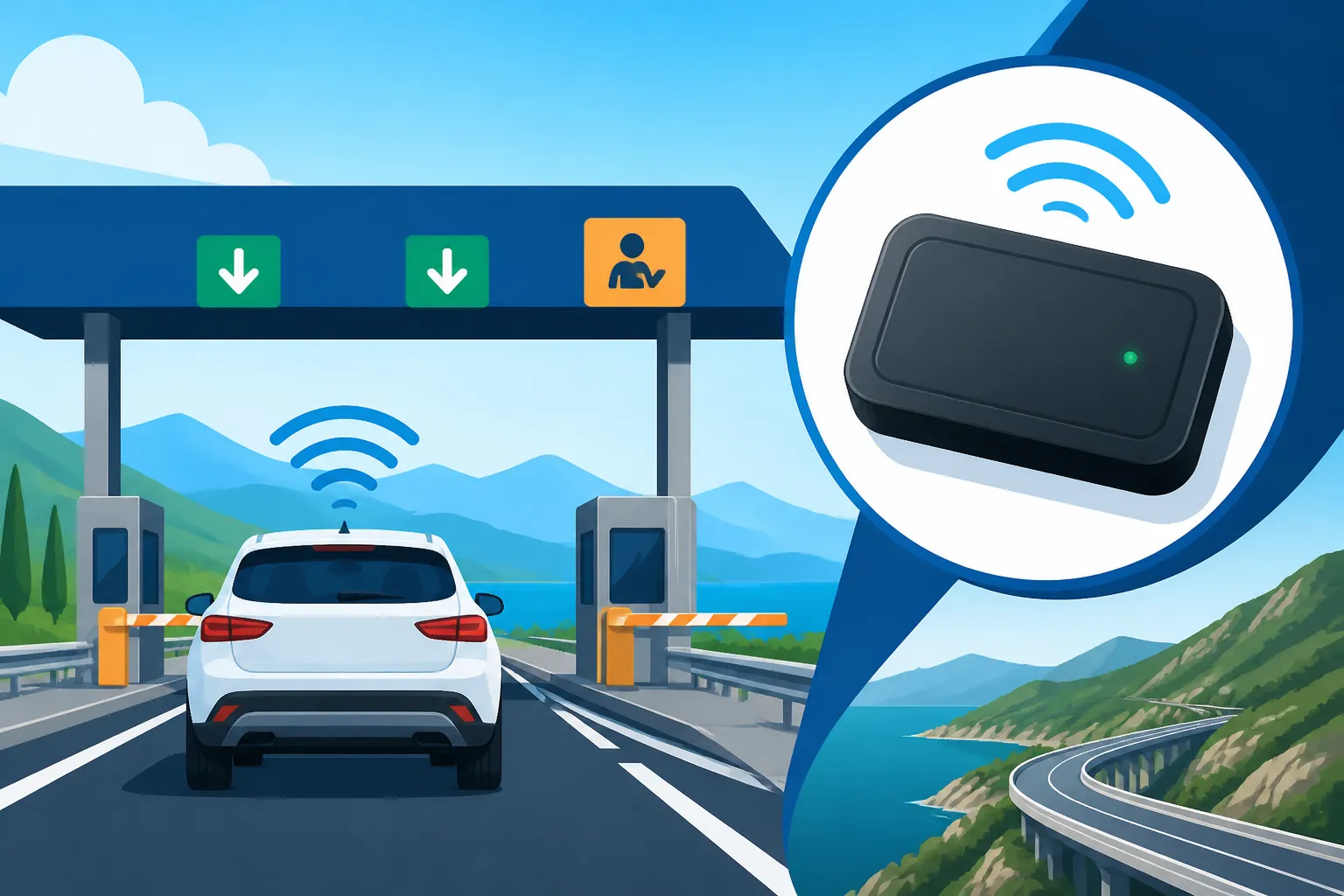
ENC stands for Elektronička Naplata Cestarine, which literally means "Electronic Toll Collection." It's a small electronic transponder that you attach to your car's windshield. As you approach a designated ENC lane at a toll booth, a sensor reads your device, the barrier lifts, and the toll is automatically deducted from your pre-paid account. No stopping, no fumbling, no waiting for a receipt – just smooth sailing through the toll gate. It's pure bliss when you see those long queues for cash/card lanes and you glide right through.
There are dedicated ENC lanes at every toll station, clearly marked with a yellow symbol resembling a small car or a stylized 'e' for electronic. These lanes are usually on the far left or right and are only for vehicles equipped with an ENC device. This system works on a pre-paid basis, meaning you top up your account with funds, and the tolls are debited as you drive.
Benefits of Using ENC: Discounts, Speed, Convenience
The advantages of the ENC device are numerous, making it a truly worthwhile investment for anyone spending significant time on Croatian roads.
- Significant Discounts: This is a major perk! By using ENC, you typically get a discount of approximately 21.74% on the regular toll prices for Category I and II vehicles (cars and cars with trailers/vans). This adds up quickly, especially if you're making frequent trips. Imagine going from Zagreb to Split and saving over 5 Euros on a single trip – that’s a coffee and a pastry!
- Speed and No Queues: This is probably the most immediate and satisfying benefit. You drive through dedicated ENC lanes, which are rarely, if ever, backed up. While others are waiting for 5, 10, 30 minutes, or even more during peak season, you simply glide through. It transforms highway travel from a potential headache into a truly efficient experience.
- Cashless and Contactless: No need to worry about having the right currency, enough change, or a working credit card. The system is entirely automated.
- Convenience: Once it's set up, you literally just drive. No ticket taking, no waiting for change, no signing receipts. It's seamless. This is particularly handy if you're juggling kids or dealing with tricky weather conditions.
- Easy Account Management: Most ENC providers (like HAC) offer online portals and mobile apps where you can check your balance, review your travel history, and top up your account. This transparency is great for budgeting and keeping track of expenses.
Acquiring and Registering Your ENC Device
So, you're convinced and ready to get your ENC device. The process is fairly straightforward, but it does require a few steps.
- Where to Buy: You can purchase an ENC device at any major HAC or ARZ toll station sales point (like Lučko near Zagreb, or Dugopolje near Split) or at their dedicated sales offices in larger cities. You can also buy them online, but picking one up in person is often easier for new arrivals.
- Required Documents: You'll typically need your identification (passport or ID card), your vehicle registration documents, and potentially your OIB (Croatian Personal Identification Number). If you haven't sorted that out yet, you should definitely check out How to Get an OIB (Personal Identification Number) in Croatia.
- Choosing a Package: When you buy an ENC device, you usually sign up for a pre-paid package. There are various options, often involving an initial top-up amount. For example, you might pay a set price for the device itself (around €15-€20) and then commit to an initial top-up (e.g., €50 or €100). The discounts kick in immediately once your account is active. They sometimes have promotional packages that offer extra credit, so keep an eye out for those.
- Installation: The device comes with instructions on how to properly mount it on your windshield. It’s usually a self-adhesive holder. Make sure it's positioned correctly (typically behind the rearview mirror, at the top center of the windshield) to ensure it's read accurately by the sensors.
Once you have it, it's typically ready to use after a short activation period. For those planning a major relocation, consider how much easier this makes driving within Croatia, especially if you’re using a removal service like Sirelo and need to coordinate driving routes or personal vehicle transport.
Topping Up and Managing Your ENC Account
Keeping your ENC account topped up is essential to ensure uninterrupted travel. Running out of credit at a toll booth will force you into a manual lane, defeating the purpose!
- Online Portal/Mobile App: This is the most convenient method for most people. HAC and ARZ have user-friendly websites and mobile applications where you can log in with your account details. Here, you can check your current balance, view your transaction history, and easily top up using a credit or debit card. Some even offer direct debit options if you link a Croatian bank account – a feature you might appreciate after you How to Set Up Online Banking and IBAN Transfers in Croatia.
- At Toll Station Sales Points: You can always top up your account in person at any manned toll station sales point during their operating hours. This is useful if you prefer cash or just happen to be passing by.
- At Petrol Stations/Kiosks: Many larger petrol stations (like INA, Crodux, Tifon, Petrol) and Tisak kiosks also offer ENC top-up services. This is a great option when you're on the road and realize your balance is low. Just provide your ENC device number, and they'll handle the rest.
- SMS Top-up: Some providers also offer SMS top-up services, where you send a text with a specific code and amount, and it's charged to your phone bill or linked card. Check with your specific provider for this option.
Monitoring your balance regularly, especially before long trips, is a good habit. You don't want to get caught short when you're far from a top-up point.
Navigating Toll Roads and Specific Routes
Croatia's highway network is quite extensive, connecting nearly all major regions. Understanding the main routes and how tolls are structured on them will help you plan your travels more effectively.
Major Toll Roads and Their Operators
The majority of Croatia's highways are managed by HAC, but there are a few exceptions, primarily on the Istarski Ipsilon (Istrian Ypsilon) which is managed by Bina-Istra, and a smaller section of the A7 (Rijeka bypass) which is ARZ. However, as mentioned, the system (vehicle categories, payment methods, ENC compatibility) is generally unified, so your HAC ENC device will work on ARZ roads and vice-versa. For Bina-Istra, their own Bina-Istra ENC is available, but the HAC ENC works there too.
Here are some of the most significant toll routes:
- A1 (Zagreb – Split – Dubrovnik): This is the backbone of the Croatian highway network, famously known as "Dalmatina." It stretches from Zagreb all the way down towards Dubrovnik (though the highway itself currently ends near Ploče, requiring an exit for the coastal road further south). This is the route you'll take to reach popular destinations like Zadar, Šibenik, and Split. It's almost entirely tolled.
- A3 (Bregana – Zagreb – Lipovac): Running east-west, this highway connects Croatia to Slovenia (at Bregana) and Serbia (at Lipovac). It's a crucial transit route and also connects Zagreb to Slavonia. Fully tolled.
- A4 (Goričan – Zagreb): Connects Zagreb to the Hungarian border (Goričan). Fully tolled.
- A5 (Beli Manastir – Osijek – Bosnia and Herzegovina border): This is the Slavonika highway, still under construction in parts, connecting Osijek to the border and eventually into Hungary. Sections are tolled.
- A6 (Bosiljevo – Rijeka): This connects the A1 (at Bosiljevo) to Rijeka, providing access to the northern Adriatic coast. Fully tolled.
- A7 (Rupa – Rijeka – Žuta Lokva): The Rijeka bypass is a part of this, and sections are tolled. It connects to the Slovenian border at Rupa.
- A8/A9 (Istarski Ipsilon): This is the "Istrian Ypsilon," covering the two main arteries in Istria. Operated by Bina-Istra, but as mentioned, most ENCs work here. Parts of it are semi-open, with tolls for certain sections, and a vignette-like system for the Učka tunnel.
When planning a trip, it's always good to consult a map or a route planner that includes toll information, like Google Maps or ViaMichelin, to get a clear picture of your journey and associated costs.
Estimating Toll Costs for Popular Routes
Knowing roughly how much a trip will cost helps significantly with budgeting, especially if you're on a long road trip or regularly commuting between cities. While exact prices can fluctuate slightly, the official HAC website provides a comprehensive toll calculator where you can input your entry and exit points and your vehicle category to get precise costs.
Let's look at a few common routes for Category I vehicles (standard car) to give you an idea (prices are approximate and for cash/card, remember ENC offers a discount!):
- Zagreb (Lučko) to Split (Dugopolje) (A1): This is one of the most frequently used routes. For a Category I vehicle, the toll is roughly €24-€25. With an ENC, you'd save a good chunk of that!
- Zagreb (Lučko) to Zadar (Zadar Istok) (A1): A popular route to North Dalmatia. Expect around €15-€16 for a Category I vehicle.
- Zagreb (Lučko) to Rijeka (Grobnica) (A1 and A6): Connecting the capital to the major port city. This route is typically around €8-€9 for Category I.
- Zagreb (Lučko) to Pula (A1 and A6 to Istrian Ypsilon): To reach the heart of Istria. This would be a combination of HAC and Bina-Istra tolls, costing approximately €13-€15.
Keep in mind that these are one-way prices. If you're doing a return trip, double the amount. The table below provides a quick comparison of payment methods.
| Feature | Cash / Card Payment | ENC Device (HAC/ARZ) |
|---|---|---|
| Convenience | Stop, get ticket/pay, wait for receipt | Drive through dedicated lane, automatic deduction |
| Speed | Can be very slow, long queues in peak season | Fast, virtually no queues |
| Cost | Standard toll price | ~21.74% discount for Cat I & II vehicles |
| Required Items | Euros (cash), credit/debit card, toll ticket | Pre-loaded ENC device, no ticket needed |
| Account Management | None, transaction by transaction | Online portal/app for balance, history, top-ups |
| Availability | All manned/automated toll booths | Dedicated ENC lanes only |
| Initial Investment | None | Cost of ENC device (approx. €15-€20) + initial top-up |
| Ideal For | Infrequent travelers, first-timers | Regular highway users, residents, long-term visitors |
Tips and Tricks for Expats and Tourists
Even with all the information, hitting the road in a new country can always throw a curveball or two. Here are some seasoned expat tips to help you cruise through Croatian tolls with confidence.
Planning Your Journey and Budgeting for Tolls
Preparation is key, especially during the busy summer months.
- Use Online Calculators: Always check the HAC website or other reliable route planners (like ViaMichelin) before you set off. This gives you an accurate estimate of toll costs.
- Factor in Peak Season: If you're travelling between June and September, particularly on weekends, understand that the A1 highway will be busy. Budget extra time for potential delays, not just at tolls but also due to increased traffic.
- Consider Alternatives (Sometimes): While highways are the fastest, sometimes scenic routes offer a different experience. For short distances or if you're not in a rush, a non-toll road might be pleasant. However, be aware that these roads are often slower, windier, and may pass through many small towns, which can increase travel time significantly. If you're comparing options, consider how The Expat Guide to Public Transport in Croatia might also fit into your travel plans for certain destinations.
- Fuel Up Before the Highway: While highways have petrol stations, prices can sometimes be slightly higher. Fill up before you enter the highway to save a few cents.
What to Do If You Encounter Issues at the Toll Gate
Even the most prepared traveler can face unexpected issues.
- ENC Device Not Working: If your ENC device doesn't register or the barrier doesn't lift, do not reverse! Most ENC lanes have an intercom button for assistance. Press it, explain the problem (even in basic English), and the operator can usually manually open the barrier or guide you to a different lane. They're used to it.
- Lost Ticket: As mentioned earlier, if you lose your entry ticket, inform the toll booth operator immediately. You will be charged the maximum possible toll for your vehicle category from the furthest entry point on that highway section. It's frustrating, but it's the rule.
- Payment Card Issues: If your card is declined, and you don't have cash, explain the situation. They might direct you to a manned booth where they can try a different terminal, or in rare cases, they might even let you through and give you instructions on how to pay later (though this is highly uncommon and usually for residents with a registered vehicle). Always have a backup payment method if possible.
- Language Barrier: Don't be afraid to use a translation app on your phone. Most Croatians are incredibly helpful and understanding, especially when dealing with foreigners. A simple "moj ENC ne radi" (my ENC doesn't work) or "izgubio sam kartu" (I lost my ticket) goes a long way.
Alternatives to Toll Roads (When It Makes Sense)
While the highways are efficient, sometimes avoiding tolls entirely can be part of the adventure, or simply a necessity if you're truly penny-pinching.
- State Roads (Državne Ceste): Croatia has a comprehensive network of state roads (marked with D followed by a number, e.g., D1, D8). These roads are generally well-maintained, but they are single carriageway, often wind through towns and villages, and have lower speed limits. They will significantly increase your travel time.
- Coastal Roads (Jadranska Magistrala – D8): If you're travelling along the coast, the D8, or "Jadranska Magistrala," is a famously scenic route. It offers breathtaking views of the Adriatic Sea and islands. However, it's slow, winding, and can be frustrating in summer due to heavy traffic and endless turns. It's a journey for the experience, not for speed.
- Local Roads (Županijske/Lokalne Ceste): These are smaller regional and local roads. Only use these if you know exactly where you're going or if your GPS specifically recommends them for a short hop.
Generally, for long distances, the highways are worth the toll for the time saved and the reduced stress. But for shorter, more scenic detours, or if you simply want to avoid the main arteries, the state roads are a viable option. For anyone who has just done the colossal task of moving here, perhaps with a service like Sirelo, and now wants to explore, these road options can significantly impact your experience. And remember, before you even hit the road, ensure your vehicle is properly insured and registered. Take a look at Driving in Croatia: Licences, Registration and Rules for Expats (2027) for a full overview of what you need to know.
Getting around Croatia, especially by car, is one of the best ways to explore this beautiful country. Don't let the thought of tolls intimidate you. With a little planning and an ENC device, you'll be zipping down those highways like a local in no time!
Disclaimer
The information provided in this guide is intended for general informational purposes only and does not constitute legal or professional advice. While we strive to keep the information up-to-date and accurate, regulations and procedures in Croatia can change. It is always recommended to consult official government sources, such as Hrvatske autoceste (HAC) or the Ministry of the Interior (MUP), or seek advice from qualified professionals for the most current and specific information pertaining to your individual situation. We do not assume any liability for decisions made based on this information.