What Documents Do I Need to Buy Property in Croatia?
Oh, the joy of paperwork in Croatia! If you’ve been dreaming of owning a little piece of paradise along the Adriatic, you’re in for a treat, but not always the kind with sun and cocktails. Buying property here, especially as a foreigner, can feel like navigating a maze blindfolded. This guide is here to shine a light on the exact documents you'll need to prepare, helping you avoid some of the common bureaucratic headaches and move closer to your Croatian home.
The Initial Hurdles: Why Documents Are So Key in Croatia
Let's be honest, bureaucracy in Croatia can be… a unique experience. It’s not necessarily bad, but it operates on a different rhythm, one that often demands meticulous attention to detail and a profound respect for the paper trail. This isn't a place where a handshake seals the deal; every single step, every single declaration, needs to be backed up by official documentation.
Understanding the Croatian Bureaucracy Mindset
Coming from a country where digital processes or quick signatures are the norm, the Croatian emphasis on physical documents and stamps can be quite a jolt. You'll often find yourself needing originals of everything, copies of those originals, and then sometimes copies of the copies! It’s a culture rooted in precision and verification, which, while frustratingly slow at times, ultimately aims to ensure everything is legitimate and above board. This is where your patience will be tested, but understanding this mindset is half the battle. Just breathe, gather your papers, and prepare for multiple visits to different institutions. It’s the Croatian way.
The Importance of a Clear Title (Čisti Vlasnički List)
Before you even fall in love with a charming stone house or a modern apartment, you must understand the concept of a clear title, known here as a vlasnički list. This document is the absolute cornerstone of any property transaction. It's not just a piece of paper; it’s the legal proof of ownership, detailing who owns the property, what exactly they own, and if there are any encumbrances (debts, mortgages, easements) attached to it.
A "clear title" means the vlasnički list is free of any burdens that could hinder your ownership rights. Imagine buying a property only to find out it has a long-standing mortgage you didn't know about, or that a relative of the seller has a claim to it. This happens, and it's precisely why verifying the vlasnički list is the very first and most critical step. You'll want to dive deep into the Land Registry (Zemljišne Knjige) and the Cadastre (Katastar) to ensure what's on paper matches what you see and what the seller claims. Learning about Understanding the Croatian Property Registry and Cadastre System will be invaluable here.
Essential Documents for Foreign Buyers in Croatia
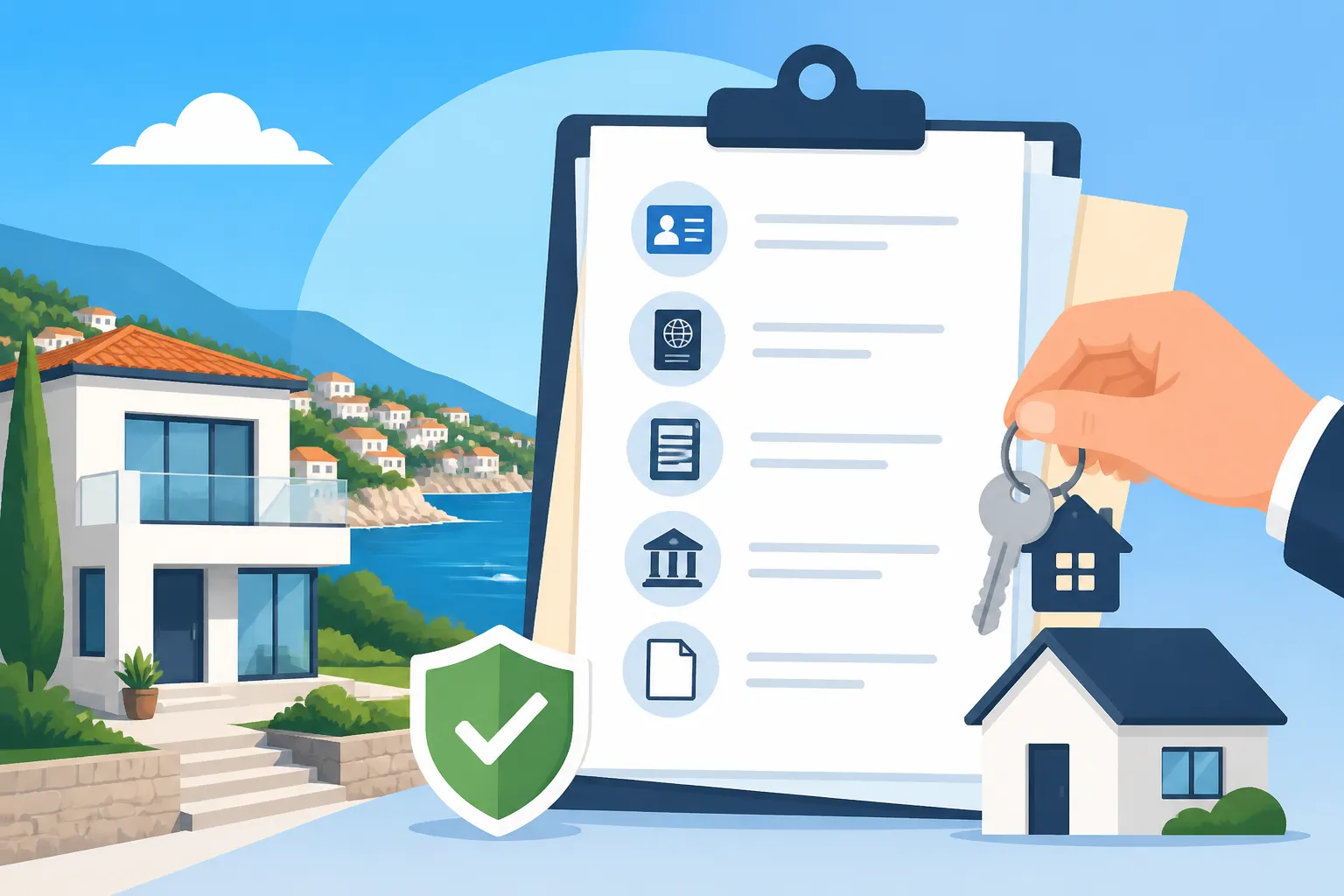
Alright, let's get down to the nitty-gritty. This is where we start building your official paper arsenal. Missing even one seemingly small document can bring the entire process to a grinding halt, so pay close attention.
Personal Identification and Financial Proof
First things first, you need to prove who you are and that you can actually pay for the property.
- OIB (Personal Identification Number): This is your Croatian tax number, your identification for almost everything official, including property transactions. Without it, you’re basically a ghost in the system. You'll need to apply for it, typically at the local tax administration (Porezna Uprava). Don’t start any serious property hunting before you have this. We have a full guide on How to Get an OIB (Personal Identification Number) in Croatia, and another on What Documents Do I Need to Get an OIB in Croatia which you’ll find incredibly useful.
- Valid Passport or ID Card: Sounds obvious, but make sure your passport is current and has plenty of validity left. If you're an EU citizen, your national ID card will also suffice.
- Proof of Funds: Whether you're paying cash or getting a mortgage, you'll need to demonstrate you have the financial capacity. This usually means recent bank statements, letters from your bank, or official pre-approval for a mortgage. If you're using international money transfer services, make sure you have clear records.
Property-Specific Documentation
This is where the property itself comes into play. Your lawyer (and you, if you're brave) will scrutinize these.
- Vlasnički List (Ownership Certificate): As discussed, this is paramount. It must clearly state the seller as the sole owner, confirm the property details (address, size, description), and be free of any encumbrances. Your lawyer will obtain an up-to-date extract from the Land Registry.
- Katastarski Plan (Cadastral Map Extract): This document, obtained from the cadastral office, shows the exact boundaries and layout of the land, as well as any buildings on it. It’s crucial for ensuring the physical property matches the official records. Any discrepancies here can cause significant problems.
- Uporabna Dozvola (Occupancy Permit) or Građevinska Dozvola (Building Permit): For properties built after 1968, an Uporabna Dozvola confirms that the building has been constructed in accordance with the building permit and relevant regulations, and is safe for use. If it's an older property, a Građevinska Dozvola (Building Permit) might be relevant, or sometimes even proof of "legalisation" if the property had unpermitted additions. Without these, you might struggle to register utilities or face issues down the line.
- Energetski Certifikat (Energy Performance Certificate): Mandatory for most properties being sold or rented, this certificate rates the building's energy efficiency. It's required at the time of signing the sales contract. Don't skip this, it's a legal requirement and provides insight into potential future utility costs. You can learn more about this in Understanding the Energy Performance Certificate (Energetski Certifikat).
- Proof of No Outstanding Debts: While not always a single document, your lawyer should verify that there are no outstanding utility bills (electricity, water, gas, waste management), communal fees (komunalna naknada), or building reserve fund (pričuva) payments tied to the property. These checks ensure you're not inheriting someone else's financial obligations.
- Seller's ID/Passport: Naturally, the seller also needs to provide proof of identity. If it's a company selling, then company registration documents are required.
Legal and Transactional Documents
These are the contracts and official records created during the buying process.
- Pre-Contract (Predugovor): This isn't always mandatory but highly recommended. It's a preliminary agreement outlining the terms of the sale, the price, payment schedule, and any conditions that need to be met before the final sale. It also typically includes a deposit payment, often 10% of the purchase price.
- Sales Contract (Kupoprodajni Ugovor): This is the big one, the legally binding document that officially transfers ownership. It will be drafted by your lawyer, translated (if necessary), and signed in front of a notary public. It needs to contain specific details about both parties, the property, the price, and the exact legal declaration of ownership transfer.
- Power of Attorney (Punomoć): If you're not able to be physically present for every step of the process (which is highly likely, given the back-and-forth nature of Croatian bureaucracy), you'll need to grant a Power of Attorney to your lawyer or a trusted representative. This document allows them to act on your behalf, sign documents, and deal with authorities. It must be notarized and often apostilled if issued abroad.
- Notary Public Statement: The notary's role is crucial here. They verify identities, ensure the sales contract is legally sound, and witness the signing. Their stamp and signature make the contract official and enforceable. You’ll find more information on Understanding Notary Fees and Property Purchase Costs in Croatia.
The Buying Process: When and Where These Documents Come Into Play
Understanding what documents you need is one thing, but knowing when you need them and why they’re crucial at each stage of the buying process in Croatia is another. It's like a finely choreographed dance, and you don't want to miss a step.
Before You Even Look: Getting Your Affairs in Order
This preliminary stage is all about preparation. You wouldn't run a marathon without training, and you shouldn't buy property in Croatia without getting your ducks in a row first.
First, as mentioned, secure your OIB. This should be one of your absolute first administrative tasks upon arriving or even before. You’ll need it for pretty much anything official, and it’s a prerequisite for nearly every other step in the property buying process. Consider this your foundational piece of paper. Then, seriously consider engaging a local, reputable real estate agent and, crucially, a good lawyer who specializes in property law and ideally has experience with foreign buyers. They will be your eyes, ears, and legal backbone through this entire journey. A trusted real estate agent can help you navigate the market and find suitable properties, and they are invaluable for sourcing many of the initial property documents. When you’re planning your move, services like Sirelo can be incredibly helpful for coordinating the logistics of relocation, leaving you more mental space to tackle the property hunt itself.
During this stage, your lawyer will likely start preliminary checks on any property that catches your eye. This might involve a quick glance at the vlasnički list and katastar entries to ensure there are no immediate red flags, saving you time and heartache later.
During the Due Diligence Phase
Once you’ve found a property you’re serious about, the real document deep dive begins. This is the due diligence phase, and it’s non-negotiable.
Your lawyer will meticulously examine the full vlasnički list from the Land Registry to confirm clear ownership and check for any outstanding mortgages, liens, or other encumbrances (tereti) that might affect your ownership. They’ll also cross-reference this with the Katastarski Plan to verify the property’s dimensions and layout match the official records. Discrepancies between these two registries are unfortunately not uncommon in Croatia, especially with older properties, and addressing them can be a time-consuming process.
This is also when you'll definitely need to see the Energetski Certifikat. It's not just a formality; it gives you an actual rating of the property's energy efficiency, which directly impacts heating and cooling costs. Furthermore, for any properties built post-1968, verifying the Uporabna Dozvola (Occupancy Permit) or Građevinska Dozvola (Building Permit) is crucial. Without proper permits, you could face legal issues, difficulties selling in the future, or even challenges with getting utilities connected or insured. Imagine buying a beautiful villa only to find out an entire floor was built illegally – a nightmare scenario that proper due diligence prevents. Your lawyer will be your best friend in spotting these potential pitfalls.
The Notary and Registration Steps
After all the documents have been checked, the contracts drafted, and you're ready to commit, you move to the formalization stage. This is where the legal weight of the Croatian system truly comes into play.
The signing of the Kupoprodajni Ugovor (Sales Contract) must take place in front of a Notary Public. This is a critical step; the notary's presence ensures legal validity. They will verify everyone's identity and ensure all parties understand the terms of the contract before signing. Once signed, the notary will often officially certify the buyer's signature. Then comes the next crucial step: paying the real estate transfer tax (Porez na Promet Nekretnina). This is generally 3% of the purchase price and is typically paid by the buyer. It's vital to handle this promptly, as delays can incur penalties. We have a detailed guide on Understanding the Real Estate Transfer Tax (Porez na Promet Nekretnina) that breaks down the specifics.
Finally, your lawyer will submit the necessary documentation to the Land Registry to officially register you as the new owner. This process can take some time, but once completed, your name will appear on the vlasnički list. Only then is the property truly, legally yours. After ownership is transferred, you'll need to set up utilities in your name. This is where a local phone plan, maybe from a provider like Airalo, becomes invaluable for coordinating with utility companies. Check out The Expat Guide to Setting Up Utilities in Croatia to get a head start on those connections.
Remember, the journey to property ownership in Croatia is not a sprint, but a marathon. Each document plays a vital role in ensuring your investment is secure and legally sound.
| Document Name (Croatian) | Document Name (English) | Purpose | Where to Obtain / Who Provides |
|---|---|---|---|
| OIB | Personal Identification Number | Essential for all official transactions, including tax, property purchase, and opening bank accounts. | Tax Administration (Porezna Uprava) |
| Putovnica / Osobna Iskaznica | Passport / ID Card | Proof of identity for all official dealings. | Your national government |
| Vlasnički List | Ownership Certificate | Proof of legal ownership, details property, lists encumbrances (mortgages, liens). Absolutely critical for verifying seller's title and property status. | Land Registry (Zemljišne Knjige) – obtained by lawyer or seller |
| Katastarski Plan / Izvadak | Cadastral Map Extract / Extract | Shows exact property boundaries, land plots, and buildings according to the Cadastre. Helps verify physical property matches legal description. | Cadastral Office (Katastar) |
| Uporabna Dozvola | Occupancy Permit | Confirms a building has been constructed and is suitable for use according to its building permit and regulations (for properties built after 1968, or legalised). | Local Administrative Body for Construction / Seller |
| Građevinska Dozvola | Building Permit | Confirms initial permission for construction (relevant for older properties or if Uporabna Dozvola isn't applicable). | Local Administrative Body for Construction / Seller |
| Energetski Certifikat | Energy Performance Certificate | Rates the property's energy efficiency; legally required for sales and rentals. | Certified Energy Auditor / Seller |
| Predugovor | Pre-Contract (Preliminary Agreement) | Optional but highly recommended. Outlines sale terms, price, payment schedule, and conditions, often includes a deposit. | Drafted by your lawyer, signed by buyer/seller |
| Kupoprodajni Ugovor | Sales Contract | Legally binding document transferring ownership from seller to buyer. Signed before a notary. | Drafted by your lawyer, signed by buyer/seller in front of a Notary Public |
| Punomoć | Power of Attorney | Authorizes someone (e.g., your lawyer) to act on your behalf in legal matters related to the purchase. | Prepared by lawyer, signed by you (often notarized and apostilled if signed abroad) |
| Dokaz o sredstvima | Proof of Funds | Bank statements, loan pre-approvals, or other official documentation showing you have the financial capacity to purchase the property. | Your bank or financial institution |
Disclaimer
The information provided in this guide is for general informational purposes only and does not constitute legal, financial, or professional advice. While we strive to keep the information up-to-date and accurate, laws and procedures in Croatia can change. It is essential to consult with qualified legal and financial professionals specializing in Croatian property law and taxation before making any property purchase decisions. Relying solely on this information is at your own risk.