What Is the Process for Buying an Apartment in Croatia?
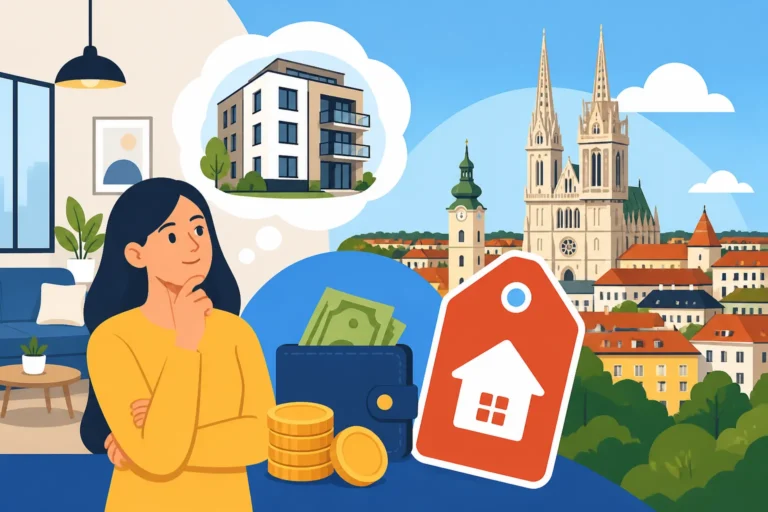
Oh, the dream of owning a little piece of Croatia! It's a beautiful vision, isn't it? Imagine waking up to the sound of waves, or stepping out onto a bustling city street you now call home. But let's be real: turning that dream into a reality, especially when buying an apartment, can feel like navigating a maze blindfolded. The administrative hurdles, the unfamiliar terminology, the sheer amount of paperwork – it’s enough to make anyone want to throw in the towel before they even start. That's why I'm here. This guide will walk you through the entire process of buying an apartment in Croatia, demystifying each step so you know exactly what to expect and how to handle it.
Understanding the Landscape: Who Can Buy and What to Expect
Before you even start browsing property listings, it's crucial to understand the foundational rules and the general market conditions in Croatia. This isn't your home country, and the regulations can differ significantly.
EU Citizens vs. Non-EU Citizens: The Legalities
This is probably the single most important distinction when it comes to buying property in Croatia. It largely determines the speed and complexity of your purchase.
For my fellow EU citizens, I have some good news: you’re generally in a much smoother boat. Since Croatia joined the European Union, EU citizens have largely been granted the same rights as Croatian citizens when it comes to property acquisition. This means you typically don't need any special permits or approvals beyond what a local would require. You can buy residential property, including apartments, directly in your own name. This simplifies things immensely and cuts down on bureaucratic delays that non-EU citizens often face. The process mirrors a Croatian citizen's purchase, requiring diligent legal checks but no extra governmental consent.
Now, for those of you from outside the EU, things are a bit more… Croatian. Which means "it's complicated and prepare for patience." Non-EU citizens typically need to secure approval from the Ministry of Justice (Ministarstvo pravosuđa) to purchase real estate in Croatia. This isn't just a formality; it's a process that can take several months, sometimes even longer, depending on how swamped the Ministry is. This approval is based on the principle of reciprocity, meaning Croatia will allow citizens of your country to buy property here if your country grants similar rights to Croatian citizens. Most developed nations have these agreements, but it’s absolutely vital to check. If there's no reciprocity, your options become limited to either establishing a Croatian company to buy the property through (which comes with its own set of administrative and tax implications) or finding an alternative path. This is why having an experienced local lawyer from the very beginning is not just recommended, it's virtually mandatory for non-EU buyers. They can verify reciprocity, navigate the Ministry of Justice application, or advise on setting up a company.
Regardless of whether you're an EU or non-EU citizen, you will definitely need an How to Get an OIB Personal Identification Number in Croatia early in the process. This personal identification number is your key to almost all administrative and financial dealings in Croatia, including property purchase. Don't even think about starting without it.
The Croatian Property Market: Realities and Regions
Croatia's property market is incredibly diverse, influenced heavily by geography, tourism, and economic development. What you'll find, and what you'll pay, in Zagreb is going to be vastly different from, say, a tiny village on an island or a bustling coastal city like Split or Dubrovnik.
If you’re dreaming of a city apartment, Zagreb offers the widest range of options. Here, you'll find everything from charming, albeit often in need of renovation, apartments in Austro-Hungarian buildings in the Lower Town to modern, newly built units in neighbourhoods further from the centre. The prices, especially in desirable central areas or new constructions, can be surprisingly high, comparable to some Western European cities. The market here is relatively stable, driven by local demand, students, and a growing expat community.
Along the coast, particularly in popular tourist spots like Split, Dubrovnik, Zadar, and Istria, the market is heavily influenced by tourism. Prices can skyrocket, especially for properties with sea views or those suitable for short-term rentals. Many coastal apartments are older, built during socialist times, and might require significant investment to modernize. New developments are popping up, but they come with a premium. The demand for coastal properties remains strong, often leading to competitive bidding. Don't be surprised if apartments sell quickly, especially during peak season when foreign buyers are actively looking. It’s a hot market, but also one where you need to be extra careful about what you’re buying and its true value.
Generally, outside of the major cities and popular coastal areas, you’ll find more affordable options, but with fewer amenities and potentially less liquidity if you ever decide to sell. Remember, Croatia is still developing, and while progress is rapid, infrastructure and services can vary. Always consider location, accessibility, and potential future value when looking at apartments. A cheap apartment in a remote village might seem appealing, but it could be challenging to manage or resell later.
Navigating the Purchase Process: Step-by-Step
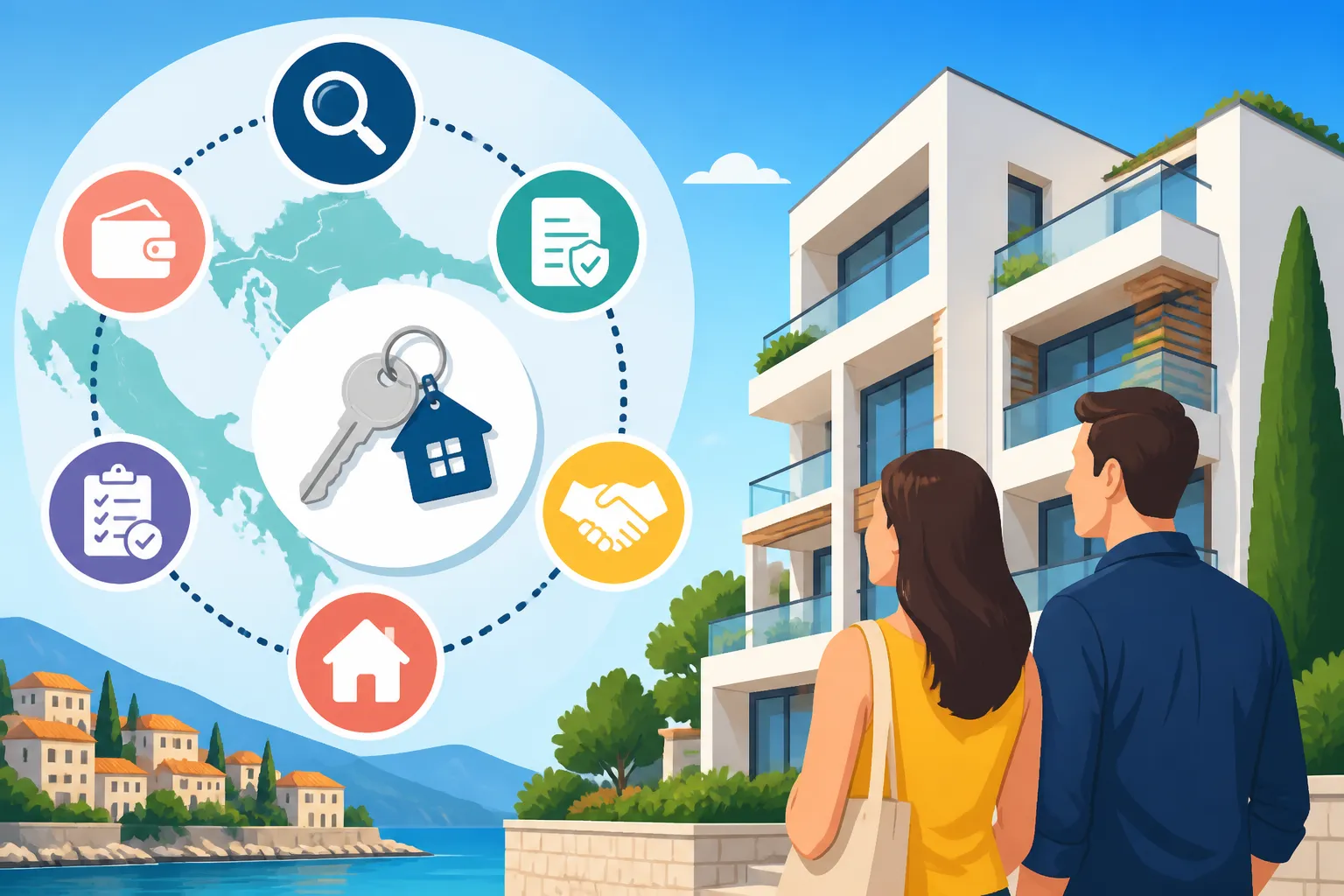
Alright, let's get down to brass tacks. You've got your OIB, you understand the legalities for your citizenship, and you've got a sense of the market. Now, how do you actually buy that apartment? This is where the fun (and the paperwork) really begins.
Finding Your Dream Apartment and Initial Checks
Finding the right place can be a journey in itself. Many expats start online, poring over listings on popular Croatian portals like Njuškalo.hr, or international sites that also list Croatian properties. These can give you a good overview, but they often lack the depth of information you really need.
This is where a good real estate agent comes into play. I know, I know, commission fees can feel hefty, but a reputable agent, especially one with experience helping foreigners, is worth their weight in gold. They have access to listings not always public, understand local nuances, and can save you countless hours. Look for an agency that is transparent about their fees and, crucially, licensed. A good agent will guide you through the initial searches, arrange viewings, and help you understand the local market value. If you're looking for help on this front, companies like Sirelo might offer resources to connect you with professionals, which can be invaluable when you're dealing with a foreign market. They can also introduce you to lawyers who specialise in real estate transactions for expats.
Once you’ve found an apartment that catches your eye, resist the urge to get overly excited. This is the time for cold, hard due diligence. Your first, absolutely critical step is to verify the legal status of the property. This means checking two key public registries: the Understanding the Zemljišne Knjige Land Registry in Croatia (Land Registry) and the Understanding the Katastar Cadastre and Property Boundaries in Croatia (Cadastre).
The Land Registry (Zemljišne Knjige) is your primary source of truth. It contains the vlasnički list (ownership certificate), which tells you who the legal owner is, if there are any mortgages (hipoteka), liens, easements, or other encumbrances on the property. You want a "clean" vlasnički list, showing the seller as the sole owner and no nasty surprises. The Cadastre (Katastar) complements this by providing geographical data, showing the property's boundaries, size, and layout on a map. It’s important that the data in the Land Registry and the Cadastre match up perfectly with the physical property and its current state. Discrepancies here are a massive red flag and can lead to huge headaches down the line, requiring complex legalisation processes. This is a task for your lawyer, not something you should ever attempt to decipher on your own. They will know exactly what to look for and how to interpret the Croatian legal documents.
The Pre-Contract and Deposit
So, you’ve found "the one," and your lawyer has given the green light on the initial property checks. It's time to make a serious offer. In Croatia, this usually starts with a predugovor (pre-contract or preliminary agreement). This document is legally binding and sets out the key terms of the sale before the final contract is drawn up.
The pre-contract will specify:
- The exact details of the buyer and seller.
- A precise description of the property, matching the Land Registry data.
- The agreed-upon purchase price.
- The amount of the kapara (deposit), which is typically 10% of the purchase price.
- The deadline for signing the glavni ugovor (main contract).
- Any specific conditions that need to be met before the final sale (e.g., non-EU Ministry of Justice approval).
The deposit, or kapara, serves as a guarantee. If you, as the buyer, back out of the deal without a valid reason (as defined in the contract), you typically lose your deposit. However, if the seller backs out, they are usually obligated to return double the deposit to you. This acts as a strong incentive for both parties to proceed.
It’s absolutely vital that your lawyer meticulously reviews this pre-contract. Ensure all conditions are clearly stated, especially if you're a non-EU citizen awaiting approval, or if there are any specific repairs or inclusions agreed upon. A poorly drafted pre-contract can leave you vulnerable. Do not sign anything you don't fully understand, and definitely not without legal counsel.
Finalizing the Deal: Main Contract and Notary Public
Once all conditions outlined in the pre-contract are met (like getting non-EU approval, if applicable), it's time for the glavni ugovor (main contract of sale). This is the big one, the document that formally transfers ownership.
This main contract will contain even more detailed information than the pre-contract, reiterating all agreed terms and legally binding the transfer of property. It will be drafted by your lawyer (or the seller's, but your lawyer must review it), often based on the template established in the pre-contract.
The signing of the main contract happens in front of a javni bilježnik (notary public). The notary’s role is crucial: they verify the identities of both parties, ensure that the document has been properly understood (especially if translated), and certify the signatures. They are essentially a neutral party ensuring the legality and authenticity of the transaction. If you don't speak Croatian fluently (and let's be honest, who does with legal jargon?), you must have an official court interpreter present during the signing. This isn't optional; it's a legal requirement to ensure you fully comprehend the terms you're agreeing to. The notary will not proceed without one if you cannot demonstrate fluency. Remember, the Understanding Notary Fees and Property Purchase Costs in Croatia will be an expense you'll incur.
At this stage, the remaining balance of the purchase price is typically transferred. This is usually done via bank transfer. If you're transferring a large sum of money from abroad, be prepared for potential questions from your Croatian bank due to anti-money laundering regulations. It's wise to inform your bank in advance and have documentation ready to prove the source of funds. Choosing a reliable bank and understanding How to Transfer Money Internationally from a Croatian Account is key.
Registration and Post-Purchase Obligations
Congratulations! You’ve signed the main contract and paid for your new apartment. But you’re not officially the owner until it's registered in the Land Registry.
Your lawyer will submit the glavni ugovor to the municipal court’s Land Registry department. This is the crucial step that updates the public record, removing the previous owner and listing you as the new owner on the Understanding Property Ownership Certificates Vlasnički List in Croatia. This process can take some weeks or even a few months, depending on the court's workload, but your ownership is effective from the moment the application is submitted. This is called tabularna isprava – the legal instrument that allows for the transfer of ownership into your name.
Once ownership is registered, the next big hurdle is the Understanding the Real Estate Transfer Tax Porez na Promet Nekretnina. This is currently 3% of the property's market value, and it’s generally paid by the buyer. The tax authority (Porezna Uprava) will assess the value of the property and send you a tax decision (rješenje o porezu) within a certain period after the contract is registered. You'll then have a deadline to pay this tax. Missing the deadline can result in penalties, so keep a keen eye on your mail. Your lawyer will usually handle the submission of the documentation for this tax, but the payment itself is your responsibility.
Finally, one of the less glamorous, but equally important, tasks is transferring all the utilities into your name. This includes electricity (HEP), water, gas (if applicable), and waste collection. This can sometimes feel like a mini-adventure in Croatian bureaucracy, as you'll need to visit the local offices of each utility provider with your ownership documents and OIB. It might be challenging if you don't speak Croatian, so bringing a friend or engaging a local assistant can be a huge help. You’ll also want to arrange for internet and mobile services, especially if you’re moving into an empty apartment. While not strictly a post-purchase obligation in the legal sense, it's essential for comfortable living. When setting up internet and mobile, consider local providers like Hrvatski Telekom, A1, or Telemach. And for connectivity right from arrival, remember handy services like Airalo for eSIMs, ensuring you're connected while navigating your new home.
Essential Considerations and Potential Pitfalls
Buying property anywhere is a significant investment, but doing it in a foreign country adds layers of complexity. Being aware of the potential issues and having the right support can make all the difference.
The Importance of Professional Help
I cannot stress this enough: do not go it alone. While it might seem like an extra expense, professional help is an investment that protects you from potentially catastrophic mistakes.
- Lawyers: A good, independent Croatian lawyer specializing in real estate for foreigners is your absolute best friend in this process. They will conduct thorough due diligence, review all contracts, advise on legal risks, handle communication with the Land Registry and Cadastre, and ensure your interests are protected at every stage. They'll also navigate the Ministry of Justice approval if you're a non-EU citizen. Look for a lawyer who is fluent in English and has a proven track record with expat clients. Never use the seller's lawyer.
- Real Estate Agents: While some people prefer to bypass agents to save on commission, a reputable agent can be a massive asset. They know the market, can filter properties, assist with negotiations, and guide you through local customs. Choose an agent who is licensed, transparent about their fees (typically 3% plus VAT from each side, buyer and seller), and responsive. They should be able to provide clear information on properties, including their legal status. Be cautious of agents who push you to make quick decisions or discourage legal consultation.
- Language Barriers and Translation Services: Unless you are truly fluent in legal Croatian, you will need a court-certified interpreter for the notary signing. Beyond that, having documents translated for your understanding is highly recommended. Many lawyers and agents will communicate in English, but official documents will always be in Croatian. Don't assume you understand something just because it looks similar to a word in your language.
Hidden Costs and Ongoing Expenses
Beyond the sticker price of the apartment, there's a whole raft of additional costs that can catch first-time buyers off guard. Budget for these from the start.
- Notary Fees: The Understanding Notary Fees and Property Purchase Costs in Croatia are statutory and depend on the value of the transaction and the number of pages. Expect to pay a few hundred to a couple of thousand euros for the notarization of the main contract, declarations, and other associated documents.
- Legal Fees: Your lawyer's fees will vary depending on the complexity of the deal and the services they provide, but typically range from 1% to 2% of the purchase price, or a flat fee for specific services.
- Real Estate Agent Commission: As mentioned, this is usually 3% + VAT for the buyer (and the seller pays another 3% + VAT).
- Real Estate Transfer Tax: A flat 3% of the property’s market value, paid to the state.
- Property Insurance: While not mandatory, it's highly advisable to insure your property against fire, theft, natural disasters, etc. Costs vary depending on coverage and property value.
- Building Reserve Fund (Pričuva): If you buy an apartment in a building with multiple units, you'll be required to pay into a communal fund called pričuva. This covers maintenance, repairs, and improvements to common areas (roof, facade, stairwells, etc.). The amount is calculated per square meter and is mandatory. It's often overseen by a building management company. This is an ongoing monthly cost.
- Communal Fee (Komunalna Naknada): This is another local fee, paid to the municipality, for infrastructure and communal services. It’s calculated based on property size, location, and type. It's an annual or biannual payment.
- Utilities: Electricity, water, gas, internet, and waste disposal. These are ongoing monthly costs. Getting The Expat Guide to Setting Up Utilities in Croatia can be quite the bureaucratic dance, so be prepared for some back-and-forth.
| Step in Process | Key Action | Who's Involved | Typical Cost/Fee |
|---|---|---|---|
| Initial Search | Finding property, due diligence | Buyer, Real Estate Agent, Lawyer | Agent commission (3% + VAT) if using. |
| OIB Acquisition | Obtaining personal identification number | Buyer | Free (if done yourself at the tax office). |
| Non-EU Approval | Ministry of Justice consent (if applicable) | Buyer, Lawyer | Lawyer fees for application; stamp duties (minimal). |
| Pre-Contract (Predugovor) | Signing initial agreement, paying deposit | Buyer, Seller, Lawyer | Deposit (Kapara): 10% of purchase price. Lawyer fees. |
| Main Contract (Glavni Ugovor) | Signing final agreement, full payment | Buyer, Seller, Lawyer, Notary | Remaining purchase price. Notary fees (variable, few hundred EUR). Lawyer fees. Interpreter fees. |
| Land Registry Registration | Updating ownership record | Lawyer (on behalf of buyer) | State fees (minimal, ~20-50 EUR). |
| Real Estate Transfer Tax | Paying 3% property tax | Buyer | 3% of property value. |
| Utilities Transfer | Registering utilities in new owner's name | Buyer | Connection fees (if applicable), ongoing monthly bills. |
| Ongoing Costs | Building reserve, communal fees, insurance | Buyer | Monthly (pričuva, insurance), annual/biannual (komunalna naknada). |
Due Diligence Beyond the Paperwork
While legal due diligence is paramount, don't forget the practical aspects of inspecting the property itself. What looks good on paper might hide costly problems.
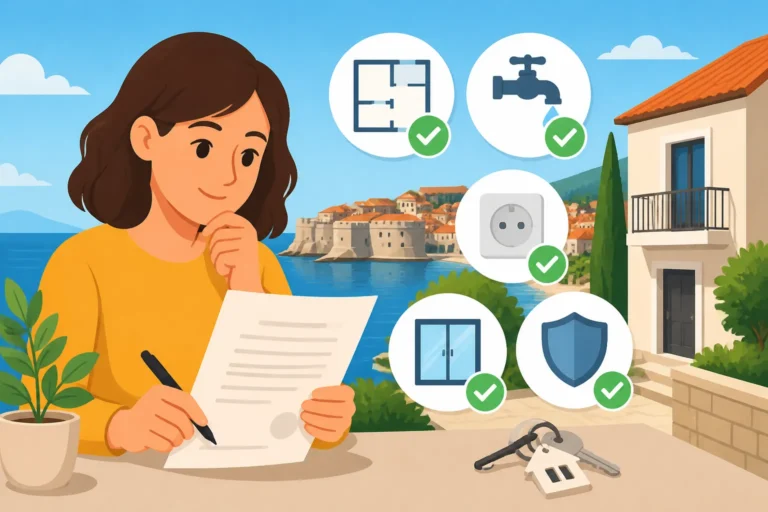
- Physical Inspection: Always have a thorough physical inspection of the apartment, and ideally, the building. Look for signs of damp, leaks, cracks in walls, the condition of the roof (if it’s a top-floor apartment), electrical wiring, and plumbing. Older buildings, while charming, often come with outdated infrastructure that can be expensive to replace. If you're buying an older apartment, a professional surveyor or architect might be a worthwhile investment.
- Legalization of Structures: Croatia has gone through several rounds of "legalization" for illegally built structures or additions. Make sure that any additions to the apartment (e.g., enclosed balconies, extensions) or the building itself have been properly legalized and registered. Unlegalized structures can lead to fines and difficulties with future sales or renovations. Your lawyer should check this.
- Energy Performance Certificate (Energetski Certifikat): All properties being sold or rented must have an Understanding the Energy Performance Certificate Energetski Certifikat. This certificate rates the energy efficiency of the building. While it might not be a deal-breaker, it gives you an idea of potential heating and cooling costs and any necessary insulation improvements.
- Building Management and Neighbours: If you’re buying into an apartment building, understanding the building management and getting a sense of the neighbours can be helpful. Are there any ongoing disputes? Is the pričuva (building reserve fund) well-managed and sufficiently funded for future repairs? These are practical considerations that impact your living experience.
Buying an apartment in Croatia can be an incredibly rewarding experience, opening doors to a new lifestyle in a stunning country. Just remember to approach it with a clear head, a good team of local professionals, and a healthy dose of patience. Sretno! (Good luck!)
Disclaimer
This article is for general informational purposes only and does not constitute professional advice. Laws, prices and regulations vary by location and change over time. Consult a qualified professional for guidance on your specific situation.