What Should I Check Before Signing a Lease in Croatia?
Oh, the joy, or perhaps the sheer terror, of finding a new place to call home in a foreign land! Believe me, I’ve been there, staring blankly at a Croatian rental contract, wondering if I was signing away my firstborn or just agreeing to pay for a communal lightbulb. It’s a rite of passage for every expat in Croatia, filled with exciting possibilities and, let's be honest, a fair bit of bureaucratic head-scratching. This guide is going to walk you through exactly what you need to scrutinize and question before you put your name on that dotted line for a lease here in beautiful Croatia.
Navigating the Croatian Rental Market: Initial Considerations
When you first start looking for a rental in Croatia, it can feel like a whirlwind. Websites might show beautiful pictures, but the real challenge often begins when you start to interact with landlords or agents. The market here has its own quirks, and knowing what to expect from the outset can save you a world of stress and potential headaches down the line.
Understanding the Landscape of Leases in Croatia
First off, it's crucial to understand that rental agreements in Croatia, especially long-term ones, often differ significantly from what you might be used to back home. While some landlords are seasoned professionals with meticulously drafted contracts, others might be renting out a spare apartment and using a very basic, perhaps even handwritten, agreement. This isn't necessarily a red flag, but it does mean you need to be extra diligent.
Generally, you'll encounter two main types of rental situations: apartments rented by individuals and those managed by agencies. Individual landlords might offer more flexibility, but you’ll bear more responsibility for due diligence. Agencies, while charging a fee (usually one month's rent plus VAT, paid by the tenant), often provide more standardized contracts and some level of mediation. However, not all agencies are created equal, so always check their reputation. The key here is consistency and transparency. You want an agreement that clearly lays out terms, not one that leaves too much open to interpretation. Always ask for a copy of the contract in advance so you can have it translated and reviewed, not just glanced at on the spot.
The Importance of the OIB Before You Start
Before you even begin seriously looking at apartments or interacting with landlords, you absolutely must have your Croatian personal identification number, known as an OIB (Osobni identifikacijski broj). Think of it as your unique tax and identification number here. You cannot legally sign a lease, open a bank account, or truly integrate into Croatian society without it. This isn’t something you can get after you sign the lease; it’s a prerequisite for most official transactions.
Obtaining an OIB is usually a straightforward process, though it might involve a trip to the local tax administration office (Porezna Uprava) and presenting your passport. Without an OIB, any landlord agreeing to rent to you is likely operating outside the official system, which can put you in a very vulnerable position. Don't let anyone tell you it's optional, because for any legitimate long-term rental, it's not. It's the first step towards establishing your presence in Croatia and gaining access to essential services, including healthcare. You can read more about how to get your OIB here: How to Get Your OIB and Why It Matters for Healthcare Access For those who are still getting their bearings in Croatia, sorting out a local mobile plan is also a critical early step. Services like Airalo can offer eSIMs that get you connected instantly upon arrival, which is incredibly useful for coordinating OIB appointments and apartment viewings while you’re still getting established.
Essential Checks Before Committing to a Lease Agreement
Once you’ve found a place that looks promising and you’re armed with your OIB, the real detective work begins. This stage is all about verifying legitimacy and meticulously dissecting the proposed lease contract to ensure you fully understand every clause and every financial commitment.
Verifying Property and Landlord Legitimacy
This might sound like overkill, but unfortunately, scams exist everywhere. The last thing you want is to pay a deposit to someone who doesn't even own the property. Always, always, always verify the landlord’s ownership. You can do this by asking the landlord to provide you with a vlasnički list (ownership certificate) for the property. This document proves who legally owns the apartment and if there are any encumbrances on it. You can even check the land registry yourself online, often for a small fee, using the property's cadastral number.
It's also wise to check the landlord's identity against their official ID to ensure they are indeed the person named on the vlasnički list. If you're dealing with an agency, verify the agency itself and ensure the person you're speaking with is an authorized representative. Never feel pressured to hand over cash or sign anything without these verifications. It's your right to protect yourself. Delving into the specifics of property ownership can be a complex process, but it's vital. You can learn more about this by checking out our guide on How Do I Check Property Ownership in the Land Registry in Croatia?
Deep Dive into the Lease Contract Itself
The contract is your bible; it's what protects both you and the landlord. Don't rush through it.
Duration and Termination Clauses
- Lease Term: Is it for a fixed term (e.g., one year) or an indefinite period? Fixed-term leases usually have automatic renewal clauses unless specified otherwise, but understanding the end date is important for planning your life.
- Notice Period: This is paramount! How much notice do you need to give if you want to leave, and how much notice does the landlord need to give you if they want you out? In Croatia, standard notice periods are often 30-90 days, but they should be clearly stated. This prevents you from being suddenly evicted or tied into a lease longer than intended. What happens if you need to terminate early? Are there penalties? All these details should be in writing.
- Breach of Contract: What constitutes a breach of contract by either party? What are the consequences? This protects you from arbitrary eviction and ensures you know your responsibilities.
Rent, Deposit, and Payment Terms
- Monthly Rent: This should be crystal clear. Is it in Euros (now the official currency in Croatia)?
- Deposit (Kaucija): Typically, landlords ask for one to two months' rent as a security deposit. Ensure the contract states when and how this deposit will be returned to you at the end of the tenancy. Will it be held in a separate account? What conditions might lead to partial or full forfeiture?
- Payment Due Date: When is rent due each month? How should it be paid (bank transfer is standard, cash less so for official rentals)?
- Late Fees: Are there penalties for late payment? If so, what are they?
- Rent Increases: Does the contract include clauses for future rent increases? If so, how often and by what mechanism?
Property Condition and Maintenance
- Inventory List: Before moving in, insist on a detailed inventory list of all furniture, appliances, and their condition. Take photos or videos. This protects both parties when you move out, especially regarding the deposit return.
- Maintenance Responsibilities: Who is responsible for what? Generally, minor repairs (like changing a lightbulb) are tenant's responsibility, while major structural issues are the landlord's. But what about appliance breakdowns? Leaky faucets? This needs to be explicit.
- Inspections: Can the landlord enter the property without notice? What are the rules for inspections? Respectful landlords will always give reasonable notice.
Understanding Financial Obligations Beyond Rent
It’s easy to focus solely on the monthly rent, but in Croatia, there are often additional costs associated with renting that can add up quickly. These need to be clearly outlined in your lease or discussed explicitly.
Utilities and Other Monthly Charges
- Utilities (Režije): This is a big one. Does the rent include utilities (electricity, water, gas, heating, internet, waste collection), or are they separate? In most Croatian rentals, utilities are separate and paid by the tenant directly based on consumption. Ask to see recent utility bills (računi) for the apartment to get a realistic idea of monthly costs, especially for heating in winter! Understanding how to set up your electricity with providers like HEP is crucial once you move in. You can check out our guide How Do I Set Up Electricity (HEP) in Your Croatian Home
- Internet/TV: Is internet included, or will you need to arrange your own? If you arrange your own, who pays for installation? Providers like Hrvatski Telekom and A1 are common. Getting set up can be a bit of a process, so clarify this upfront. Here's a helpful resource: How to Set Up Internet at Home in Croatia
- Building Reserve Fund (Pričuva): For apartments in multi-unit buildings, there’s often a pričuva – a monthly contribution for building maintenance and repairs (like roof repairs, facade work, etc.). This is typically paid by the owner, but some landlords might try to pass it on to the tenant. Clarify who pays this. It's important to understand this cost, as outlined in our article Understanding Building Reserve Funds (Pričuva) for Apartment Owners
- Communal Fee (Komunalna Naknada): This is another communal charge, usually for services like public lighting, roads, and waste management. Like pričuva, it’s legally the owner’s responsibility, but again, clarify who pays. We explain it further here: Understanding the Komunalna Naknada (Communal Fee) in Croatia
Markdown Table: Key Financial Checks Before Signing Your Lease
| Financial Aspect | What to Check | Who Typically Pays (Verify in Contract) |
|---|---|---|
| Monthly Rent | Exact amount, currency (EUR), payment due date, accepted payment method | Tenant |
| Security Deposit | Amount (1-2 months rent), conditions for return, separate account? | Tenant (refundable) |
| Utilities (Režije) | Included in rent or separate? Ask for previous bills (electricity, water, gas, heating, internet, waste) | Often Tenant (based on consumption) |
| Internet/TV | Included or separate? Who pays for installation? | Varies (can be included or paid by Tenant) |
| Building Reserve (Pričuva) | Is it mentioned? Who is responsible for this monthly charge? | Owner (Legally) |
| Communal Fee (Komunalna Naknada) | Is it mentioned? Who is responsible for this charge? | Owner (Legally) |
| Agency Fees | If applicable, exact amount (usually 1 month's rent + VAT), when due | Tenant |
| Late Payment Fees | Are there any? What are the penalties for delayed payments? | Tenant (if applicable) |
| Rent Increase Clause | Any clauses for future rent increases? Frequency and method? | N/A |
Practical Aspects and Due Diligence on the Ground
Beyond the contract itself, there are practical things you need to do and observe when you’re physically at the property. This is your chance to really assess if the apartment fits your lifestyle and needs.
Inspecting the Property Thoroughly
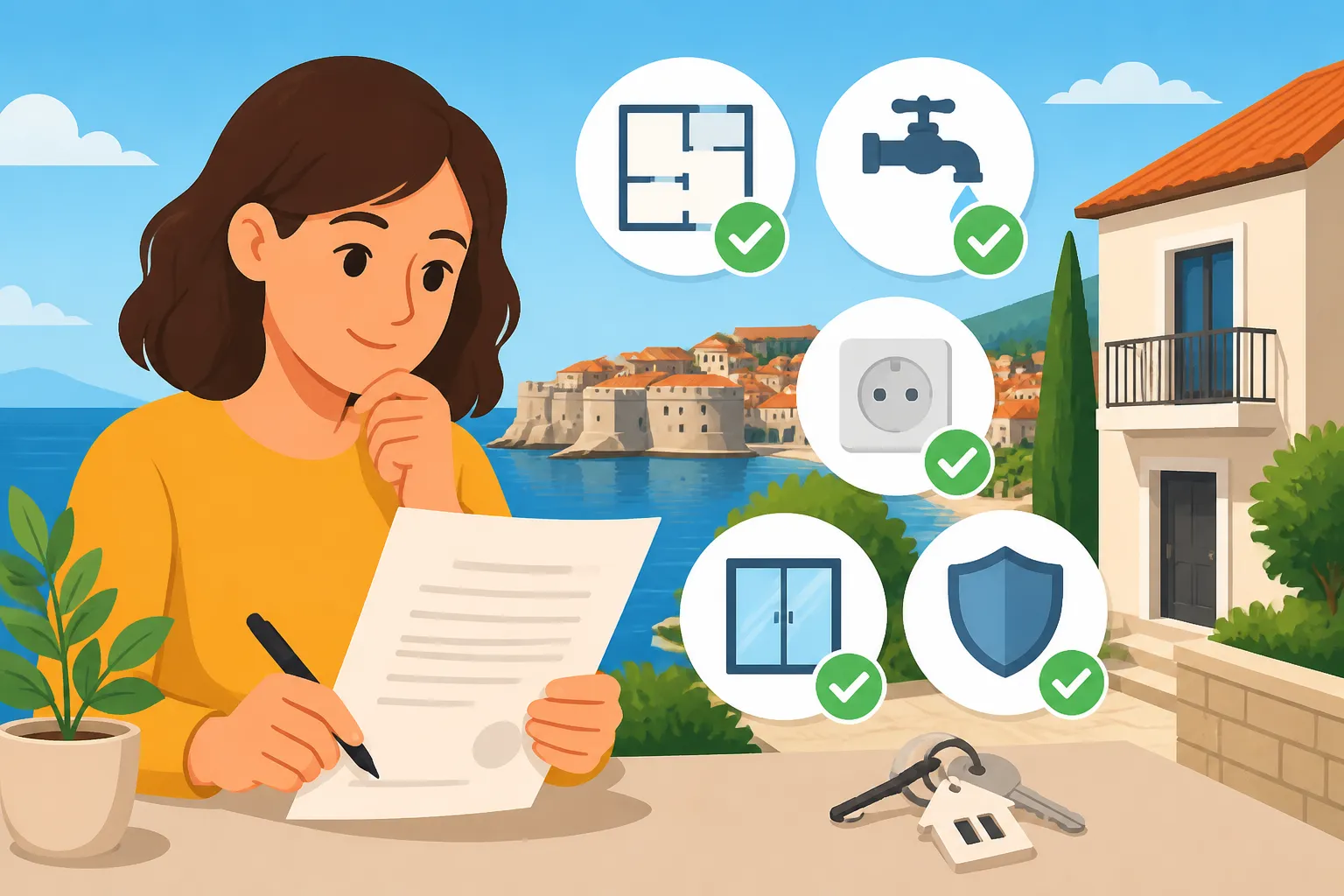
Don't just walk through and nod. Open every cupboard, turn on every tap, and test every appliance.
- Appliances: Are the stove, oven, refrigerator, washing machine, and dishwasher in good working order? What about heating and air conditioning? Test them. Ask about their age and any known issues. There’s nothing worse than discovering a broken washing machine on your first laundry day.
- Plumbing: Check for leaks under sinks, in the bathroom, and around the toilet. Flush toilets. Run the shower. Is there good water pressure? Is the water heater functional?
- Electrical: Are there enough outlets? Do all lights work? Are there any visible wiring issues? Does the main breaker trip easily?
- Windows and Doors: Do they close securely? Are there drafts? Are the locks functioning? Are there blinds or shutters for privacy and sun protection?
- Damp/Mould: Look and smell for signs of dampness or mould, especially in bathrooms, kitchens, and corners of rooms. Croatia can be humid, and older buildings can sometimes have issues.
- Pests: While harder to spot on a single viewing, ask about any history of pest problems.
- Noise Levels: Visit the property at different times of day if possible, especially during peak traffic hours or in the evening. Is it noisy from traffic, neighbours, or nearby bars/restaurants?
Clarifying Utilities, Internet, and Maintenance
This circles back to earlier points but emphasizes hands-on verification.
- Utility Meters: Locate the utility meters (electricity, water, gas). Note their readings upon moving in. This is crucial for avoiding being charged for previous tenants' consumption.
- Internet Connection: Ask what internet provider the current or previous tenant used. Is there an existing connection? If not, understand the process and potential costs for getting one installed. High-speed internet is essential for many expats, especially digital nomads, and installation times can vary. For those just arriving, consider a temporary solution like a local SIM card or an Airalo eSIM to ensure you have data while waiting for home internet to be set up.
- Waste Management: How does waste collection work? Are there specific bins for recycling? Where are they located? Are there separate fees for waste collection? This ties into the communal fees mentioned earlier.
- Property Access: How do you get keys for the building entrance, apartment, and mailbox? What happens if you lose a key?
- Pet Policy: If you have pets (or plan to get one), ensure the pet policy is explicitly stated in the lease. Many landlords in Croatia are hesitant about pets, so clarity here is vital to avoid future conflicts. Finding pet-friendly rentals can be a challenge, so be upfront.
Considering Long-Term Practicalities
Think about how this apartment will function in your daily life in Croatia.
- Location: Does the location suit your lifestyle? Is it close to public transport, grocery stores, pharmacies, and your workplace or children’s school? Understanding the local public transport system can be key to your daily commute. For instance, if you're in Zagreb, learning about the ZET system is crucial: How to Use the ZET Public Transport System in Zagreb
- Storage: Is there sufficient storage space within the apartment or in the building (e.g., a basement unit, šupa)?
- Parking: If you have a car, is parking available? Is it private, street parking, or a garage? What are the costs and rules for parking in the area?
- Neighbours: While you can't vet your neighbours, a quick chat with someone in the building hallway can sometimes offer insights into the building's atmosphere.
Protecting Yourself Legally: Registration and Documentation
Once you've done all your checks and decided this is the place, signing the lease isn't the final step. To ensure you're fully protected and officially resident in Croatia, some crucial administrative tasks remain.
Registering Your Rental Lease with the Porezna Uprava
This is perhaps one of the most critical steps for expats in Croatia. Your landlord is legally obligated to register your lease contract with the Croatian Tax Administration (Porezna Uprava) within 8 days of signing. This is not optional. If the lease isn't registered, your tenancy is effectively "off the books," and you lose significant tenant rights.
Why is registration crucial?
- Legal Protection: A registered lease makes your tenancy official and provides you with legal standing. If disputes arise, you have a documented agreement.
- Residence Permit: For non-EU citizens, a registered lease is often a prerequisite for obtaining or renewing your temporary residence permit at the MUP (Ministry of Interior). The MUP will ask for proof of accommodation, and a registered lease is the best document for this. This is directly related to Registering Your Residence in Croatia: The Complete MUP Guide
- Tax Compliance: It ensures proper tax is paid on the rental income, contributing to transparency in the system.
- Proof of Address: You'll need proof of address for various other administrative tasks, like opening a bank account or registering with a family doctor.
- OIB Verification: It links your OIB to a legitimate address, further solidifying your official presence.
Make sure the contract specifies the rent amount correctly, as this is what the landlord will declare for tax purposes. You can always ask your landlord for proof of registration after they've done it, such as a stamped copy of the contract. For a more detailed walkthrough of this process, see our guide on How to Register a Rental Lease with the Croatian Tax Administration
Your Rights as a Tenant in Croatia
Even with a registered lease, it's beneficial to be aware of your general rights as a tenant in Croatia. While the contract will detail most aspects, Croatian law provides baseline protections.
- Right to Privacy: Your landlord cannot enter your apartment without your permission or reasonable notice, except in emergencies.
- Right to a Habitable Property: The landlord is generally responsible for ensuring the property is in a habitable condition and for major structural repairs.
- Protection Against Unjust Eviction: With a registered lease, a landlord cannot simply kick you out without a valid legal reason and proper notice periods.
- Deposit Return: Your deposit should be returned upon the termination of the lease, minus any agreed-upon deductions for damages beyond normal wear and tear.
Understanding these rights can empower you, particularly if you encounter issues during your tenancy. For a deeper dive into this, check out Understanding Tenant and Landlord Rights in Croatia Remember, moving can be a monumental task, especially from another country. While you're busy securing your new home in Croatia, thinking about the move itself can be daunting. Services like Sirelo can be a great starting point for comparing quotes from international movers, helping you transport your belongings to your new, perfectly vetted Croatian abode.
Moving to Croatia and finding a home is an adventure, and with careful attention to these details, you can ensure your landing is as smooth and stress-free as possible. Don’t be afraid to ask questions, insist on documentation, and take your time. This is your new home, and you deserve to feel secure and comfortable in it.
Disclaimer
The information provided in this article is for general informational purposes only and does not constitute legal, financial, or professional advice. While we strive to provide accurate and up-to-date information, rules and regulations in Croatia can change. Always consult with a qualified legal professional or real estate expert for advice tailored to your specific situation. We are not responsible for any actions taken based on the information presented herein.