Can I Drive in Croatia with a Foreign Licence?
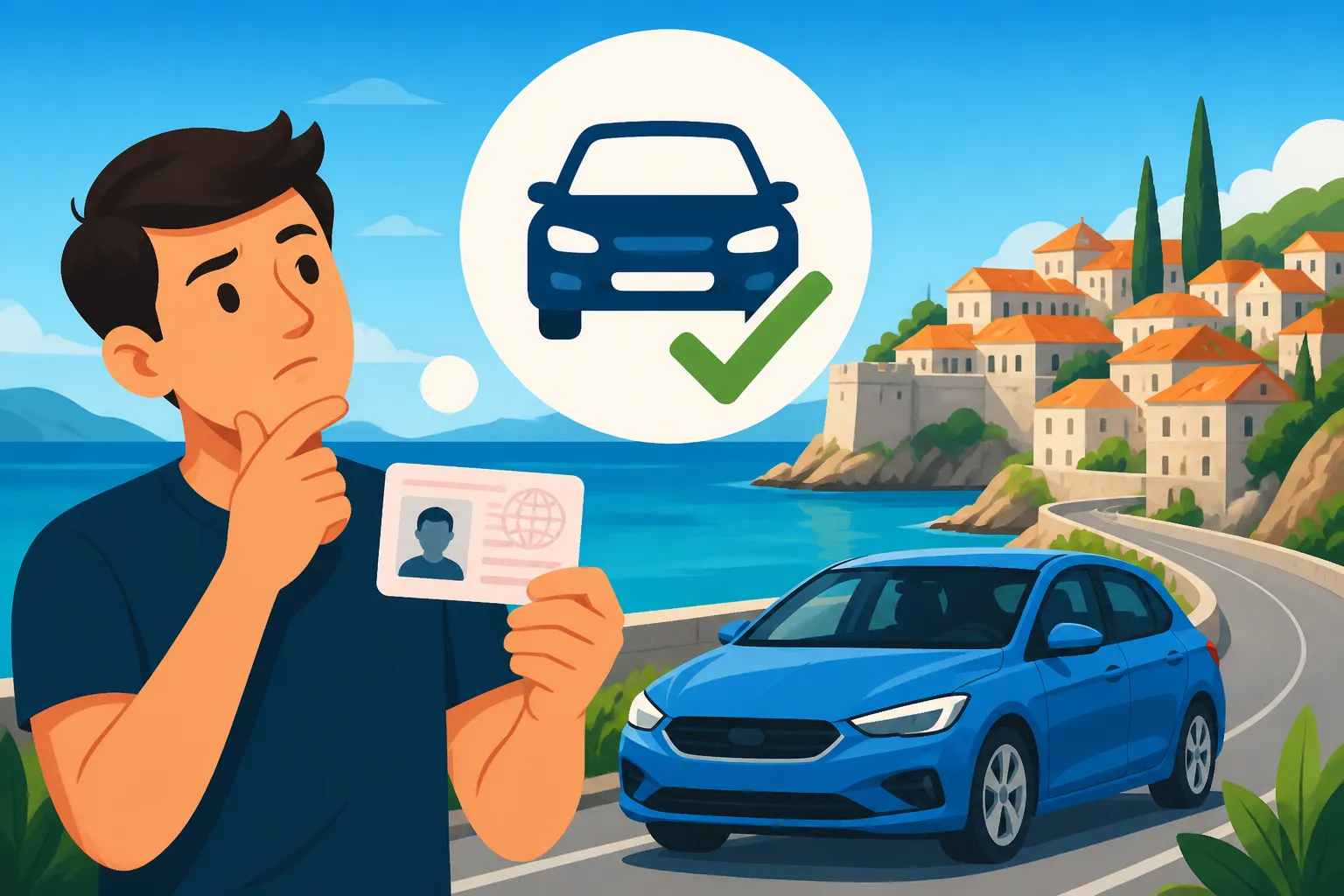
Alright, let's be real. Moving to Croatia, you're probably dreaming of those scenic coastal drives, but then a little voice creeps in: "Can I actually drive here with my foreign license?" It's a valid worry, and navigating the bureaucracy around driving permits in a new country can feel like trying to solve a Rubik's cube while blindfolded. This guide is here to shed light on exactly what you need to know about using your foreign driver's license in Croatia, cutting through the confusion so you can hit the road with confidence.
The Initial Lowdown: Driving in Croatia with Your Foreign Licence
One of the first questions on every expat's mind, right after "How do I get an OIB?" and "Where's the best burek?", is usually about driving. It's a foundational piece of independence, especially if you're not in one of the major cities with decent public transport. The good news is, for a certain period, your foreign license is valid. The bad news? It's not indefinite, and the rules vary significantly depending on where your license was issued. Ignoring these timelines can lead to unnecessary fines and complications, which, trust me, you want to avoid in any new country.
For EU/EEA Citizens: More Leeway, But Not Forever
If you're lucky enough to hail from an EU (European Union) or EEA (European Economic Area) member state, you've got a much smoother ride, initially at least. Your national driving license is generally recognized and valid in Croatia for as long as it's valid in your home country. This means you can keep using it without immediate concern about exchange. However, there's a catch, as there always is with bureaucracy, especially when you become a resident.
Once you establish your temporary residence in Croatia, you are technically obliged to register your driving license with the MUP (Ministry of Interior) within 12 months. This isn't an exchange, but more of a notification process. While many EU/EEA citizens might continue driving without this step for years, it can lead to issues if you're pulled over and the police note your residency status doesn't match your unregistered foreign license. It's also required if your license needs renewal, or if you lose it, and you're seeking a replacement in Croatia. Most people eventually opt to exchange it for a Croatian one, just to streamline things, especially if their original license is nearing expiration. Think of it as embracing the full Croatian administrative experience! If you're planning on staying long-term, it's definitely something to sort out sooner rather than later to avoid any future headaches down the road.
For Non-EU/EEA Citizens: The Strict 12-Month Clock
Now, for those of us from outside the EU/EEA, the rules are a bit more stringent, and the timeline is crucial. From the moment you register your temporary residence in Croatia, your foreign driving license is valid for exactly one year. Not a day more. This 12-month period starts ticking from the date your residence permit is issued, not from when you first arrived or started driving. This is a critical distinction many expats miss, leading to potential issues.
During this initial year, your valid foreign license is sufficient. However, if your license isn't in Croatian, English, French, German, or Italian, you'll also need an international driving permit (IDP) or a certified translation of your license. The IDP effectively translates your existing license into multiple languages and is recognized by signatory countries of various international conventions on road traffic. It's not a standalone license but a supplement. Imagine the frustration of being stopped by a friendly (or not-so-friendly) police officer on a gorgeous drive down the Dalmatian coast, only to find yourself in a bureaucratic tangle because your documents aren't in order. It’s a pain you absolutely want to avoid.
After that 12-month grace period, your foreign license effectively becomes invalid for driving in Croatia. At this point, you must exchange it for a Croatian driving license. There's no extension, no second chance – it's a hard deadline. Driving with an expired foreign license (meaning, expired according to Croatian law due to your residency) is considered driving without a valid license, and the penalties can be severe, including hefty fines and even vehicle impoundment. This is why understanding this specific timeline is perhaps the most important piece of information for non-EU/EEA citizens driving in Croatia. For any administrative procedure involving your residency, you'll find comprehensive guides like the one on The Complete Guide to Croatian Residence Permits for Expats (2027) incredibly useful, as your driving status is directly tied to your residency.
Why Exchanging Your Licence Becomes Necessary
The thought of more paperwork and MUP visits might make you sigh, but exchanging your foreign driving license for a Croatian one isn't just a suggestion; it's a legal imperative for long-term residents. Beyond the legalities, there are practical reasons why embracing this process will make your life significantly easier. It’s another step towards truly integrating into Croatian life, much like setting up your utilities or understanding the local tax system.
Legal Requirements and the Perils of Non-Compliance
As established, for non-EU/EEA citizens, the 12-month deadline is absolute. Fail to exchange your license within this period from your residency registration date, and you're essentially driving illegally. This isn't just a minor infraction; it can lead to serious consequences. Police checks are common, especially during tourist season or on major routes. If you're stopped and found to be driving with an invalid license, you could face:
- Significant Fines: These can range from hundreds to thousands of euros, depending on the severity and whether it's a repeat offense.
- Vehicle Impoundment: Your car could be towed and impounded, leaving you stranded and incurring additional costs for retrieval.
- Difficulty with Insurance Claims: In the unfortunate event of an accident, your insurance company might refuse to cover damages if you were driving without a legally valid license. This could leave you personally liable for extensive repair costs and medical bills.
- Immigration Complications: Repeated traffic violations, especially serious ones like driving without a valid license, could potentially complicate future residence permit renewals or citizenship applications.
For EU/EEA citizens, while your license remains technically valid longer, the requirement to register it with the MUP after 12 months of residency still stands. Neglecting this could lead to issues when renewing your license or if you need proof of your driving entitlement for any official purpose within Croatia. It's always best to be on the right side of the law, even if it means a trip to the MUP.
Practicalities and Avoiding Future Headaches
Beyond the legal stick, there are plenty of practical carrots that encourage license exchange. Imagine a scenario where you're renting a car for a weekend trip to Plitvice Lakes, or you need to process an insurance claim after a fender bender. Having a local Croatian driving license simplifies these interactions immensely.
- Ease of Identification: Your Croatian driving license becomes another form of official identification, simplifying various administrative tasks where a foreign ID might cause confusion.
- Vehicle Registration: If you decide to buy a car in Croatia, having a local license will streamline the process of How to Register a Vehicle and Get Croatian Plates. While not strictly necessary at every step, it often makes things smoother.
- Insurance: Dealing with Croatian insurance companies will be easier and potentially cheaper with a local license. They understand the document immediately, which can speed up claims processing.
- Language Barrier Reduction: While many Croatians speak English, having documents in the local language removes one more potential point of misunderstanding or delay.
- Rental Car Confidence: When you present a Croatian driving license to a rental car agency, there's no question about its validity or interpretation, making pickup and drop-off stress-free.
The initial hassle of the exchange process is a small price to pay for years of smooth sailing on Croatian roads. It's an investment in your peace of mind, allowing you to focus on enjoying the beauty of Croatia, rather than worrying about bureaucratic mishaps. Think about the entire moving process – companies like Sirelo exist to make the big move easier. This license exchange is just one of those smaller, but equally important, pieces of the puzzle.
Navigating the Exchange Process: Your Step-by-Step Guide
So, you've decided to bite the bullet and exchange your foreign driver's license for a Croatian one. Good on you! While it might feel like navigating a maze, having a clear roadmap will save you a lot of grief. The process involves multiple steps, documents, and a fair amount of patience, but it's entirely manageable. For a broader context on Croatian administrative procedures, you might find our guide on The Complete Guide to Moving to Croatia: Your First 90 Days (2027) helpful.
Gathering Your Documents: The Bureaucratic Gauntlet
This is often the most time-consuming part, as you need to ensure every document is exactly what the MUP requires. Missing even one tiny detail can send you back to square one.
- Your Original Foreign Driving License: This is crucial. It must be valid and unexpired.
- Certified Translation: If your license is not in Croatian, English, French, German, or Italian, you'll need a certified translation into Croatian. This typically means engaging a court-appointed translator (sudski tumač). Don't try to use a friend's translation; it won't be accepted.
- Proof of Identity: Your valid passport or national ID card (for EU/EEA citizens).
- Proof of Residence: Your valid residence permit (boravišna iskaznica) is essential. If you're an EU/EEA citizen, your confirmed registration of residence (potvrda o prijavi boravišta) will suffice. Knowing How to Register Your Residence (Prebivalište) at the MUP is a prerequisite for this entire process.
- OIB (Personal Identification Number): Absolutely mandatory for almost all official transactions in Croatia. If you don't have one yet, you'll need to sort that out first. Our guide on How to Get an OIB (Personal Identification Number) in Croatia can walk you through it.
- Medical Certificate (Liječničko Uvjerenje): This is a mandatory medical examination conducted by an authorized occupational health physician (doktor medicine rada) in Croatia. It's not just a basic check-up; it includes eyesight, hearing, and a general health assessment to ensure you're fit to drive. This certificate is usually valid for a limited period (e.g., 6 months), so make sure you get it close to your MUP appointment date. You'll need to specify what categories of vehicle you're applying for (e.g., B for cars).
- Proof of Payment for Administrative Fees: These fees change, so it's best to inquire about the exact amount at the MUP or check their official website. You'll typically pay for the administrative stamp (upravna pristojba) and the cost of issuing the new Croatian license. Payments are usually made at the post office or Fina (financial agency) based on specific payment slips provided by the MUP, or sometimes directly at the MUP counter via card.
- Photograph: While often taken digitally at the MUP, it's a good idea to bring a standard passport-sized photo just in case, or confirm if it's required.
Here's a quick overview of document requirements:
| Document Type | EU/EEA Citizens | Non-EU/EEA Citizens | Notes |
|---|---|---|---|
| Original Foreign Driving License | Yes | Yes | Must be valid. |
| Certified Translation / IDP | Not usually required | Yes (if not in specified languages or for IDP) | IDP or court translator. |
| Proof of Identity | National ID / Passport | Passport | Valid and current. |
| Proof of Residence | Residence registration confirmation (MUP) | Residence permit (Boravišna iskaznica) | Crucial for all expats. |
| OIB | Yes | Yes | Your personal identification number. |
| Medical Certificate | Yes | Yes | From an authorized Croatian occupational health physician. |
| Administrative Fees | Yes | Yes | Payment slips provided by MUP. |
| Photograph | Often taken digitally at MUP | Often taken digitally at MUP | Carry one just in case. |
The MUP Appointment: What to Expect and How to Prepare
With all your documents in hand, your next stop is the MUP. In larger cities like Zagreb or Split, you'll typically go to the main MUP office that handles foreigners and driving licenses. In smaller towns, it might be the general police station.
- Booking an Appointment: It's increasingly common, and highly recommended, to book an appointment online via the e-Građani platform or by phone. Simply walking in can mean hours of waiting, especially in peak season.
- The Visit: When your number is called, present all your documents. The official will review everything meticulously. They might ask questions, and this is where a basic understanding of Croatian or a patient English-speaking official helps. Be prepared for them to keep your original foreign driving license. This is standard procedure; Croatia doesn't allow you to hold two valid driving licenses simultaneously.
- Potential Roadblocks:
- Expired Medical Certificate: Ensure it's current.
- Incomplete Translation: The translation must be official and cover all necessary parts of your license.
- Residency Discrepancies: Make sure your residency details are perfectly aligned with MUP records.
- "What if my home country won't accept my license back?" This is a common concern, especially for licenses that are simply taken and not returned. You need to verify your home country's regulations. Some countries allow you to apply for a replacement "lost" license while still holding your Croatian one if you need to drive there during visits.
After processing, you'll receive a confirmation (potvrda) that you've applied for a Croatian license. This confirmation, along with a valid ID, usually serves as a temporary driving permit until your new card is ready. The waiting time for the physical card can vary, but generally, it's a few weeks. In the meantime, you'll want to ensure you have good mobile data with a provider like Airalo so you can check emails for updates or access online navigation while you wait for your card.
Post-Exchange: Your New Croatian Licence
Once your new Croatian driving license arrives, you’re officially a Croatian driver! It's a standard plastic card, similar to an EU driving license, featuring your photo, personal details, and vehicle categories.
- Validity: Croatian driving licenses for private vehicles (Category B) are typically valid for 10 years, or until you turn 80, after which renewals become more frequent and often require a fresh medical examination.
- Driving Abroad: Your Croatian license is valid throughout the EU/EEA and in many other countries that recognize the standard EU format. If you plan to drive outside these areas, you might need an International Driving Permit in addition to your Croatian license, just like any Croatian citizen would.
- Returning to Your Home Country: If you eventually move back to your home country, you'll need to check their specific rules regarding exchanging your Croatian license back for a domestic one.
The process might seem daunting at first glance, but with patience and all the correct documentation, it’s a standard procedure. Getting this sorted will give you the freedom to explore Croatia’s beautiful landscapes without a lingering worry about legalities. For more detailed information about the specific rules and regulations for driving, you can always refer to the Driving in Croatia: Licences, Registration and Rules for Expats (2027) guide.
Essential Tips for Expat Drivers in Croatia
Once you've navigated the administrative hurdles of getting your license sorted, it's time to actually hit the road! Croatia offers some incredible driving experiences, from the winding coastal roads with breathtaking sea views to the efficient highways connecting major cities. But like any new country, there are local quirks and vital rules to be aware of.
Understanding Croatian Road Rules and Driving Culture
Driving in Croatia can be a delightful experience, but it's different from what you might be used to. Here are a few things to keep in mind:
- Speed Limits: Generally, 50 km/h in urban areas, 90 km/h outside urban areas, and 130 km/h on highways (autocesta). Pay attention to signage as these can vary. Speed cameras are present, so adhere strictly to limits.
- Headlights: You must drive with your headlights on at all times during winter (from the last Sunday in October until the last Sunday in March). During the rest of the year, headlights are only mandatory at night or in conditions of reduced visibility. However, many locals just keep them on year-round for safety.
- Alcohol Limits: The legal blood alcohol limit is 0.05%. For professional drivers and drivers under 24, it's 0.00%. It's best to simply not drink and drive.
- Seatbelts: Mandatory for all passengers, front and back.
- Children: Children under 1.35 meters tall must be in a car seat appropriate for their size and weight. Children under 12 years old are not permitted to sit in the front passenger seat.
- Emergency Kit: By law, your car must contain a first-aid kit, a reflective safety vest (to be worn if you exit your vehicle on the roadside), and a warning triangle. If you're towing, you'll need two warning triangles. A spare tire or a tire repair kit is also recommended.
- Tolls: Most highways have tolls. You can pay with cash (Euros) or card, or use an ENC device (electronic toll collection) for discounted rates and quicker passage. This is particularly relevant if you're frequently traveling between cities. For more on this, check out Understanding Highway Tolls and the ENC Device in Croatia.
- Driving Style: Croatian drivers can sometimes be impatient, especially in urban areas. Expect quick overtakes and occasional honking. Don't take it personally; maintain your defensive driving style and be assertive when necessary. Roads can be narrow in older towns and villages, and parking can be challenging.
- Winter Tires/Chains: In winter conditions (roughly November 15 to April 15), winter tires are mandatory in certain regions, especially mountainous areas. Snow chains must also be carried in your vehicle during this period if you are in those specified regions.
Staying Connected and Prepared on the Road
Modern driving isn't just about knowing the rules; it's also about leveraging technology to make your journeys safer and smoother.
- GPS and Navigation Apps: Google Maps, Waze, and similar apps are indispensable for navigating Croatian roads, especially when dealing with one-way streets in old towns or finding specific addresses. Make sure your phone is charged and consider a car mount. Having reliable mobile data is key – perhaps look into local SIM cards or eSIMs from providers like Airalo to ensure you're always connected without breaking the bank.
- Roadside Assistance: Consider signing up for roadside assistance through HAK (Hrvatski Autoklub), the Croatian Automobile Club. They offer excellent services, from towing to minor repairs, and their membership can be invaluable in an emergency.
- Language Skills: Even basic Croatian phrases for directions or explaining a situation to a police officer can go a long way. "Molim vas, pomozite mi" (Please help me) or "Gdje je…?" (Where is…?) can be very useful.
- Vehicle Maintenance: Especially if you buy a used car in Croatia, ensure it passes its regular technical inspection (Understanding Vehicle Technical Inspection (Tehnički Pregled) in Croatia) and is well-maintained. Breakdowns are never fun, particularly in a foreign country.
- Parking: Parking can be tricky in Croatian cities. Look for designated parking zones (often paid via parking meters, apps like Bmove, or SMS), and avoid parking illegally to prevent fines or towing.
Driving in Croatia offers immense freedom and the chance to discover hidden gems. By understanding the license requirements, familiarizing yourself with local driving customs, and being prepared, you'll be well on your way to enjoying every kilometer of your expat journey.
Disclaimer
The information provided in this guide is for general informational purposes only and does not constitute legal, financial, or professional advice. While we strive to keep the information up-to-date and accurate, regulations in Croatia can change frequently. Always consult with the official authorities, such as the Ministry of Interior (MUP) or a qualified legal professional in Croatia, for the most current and specific advice pertaining to your individual situation. Reliance on any information in this guide is solely at your own risk.