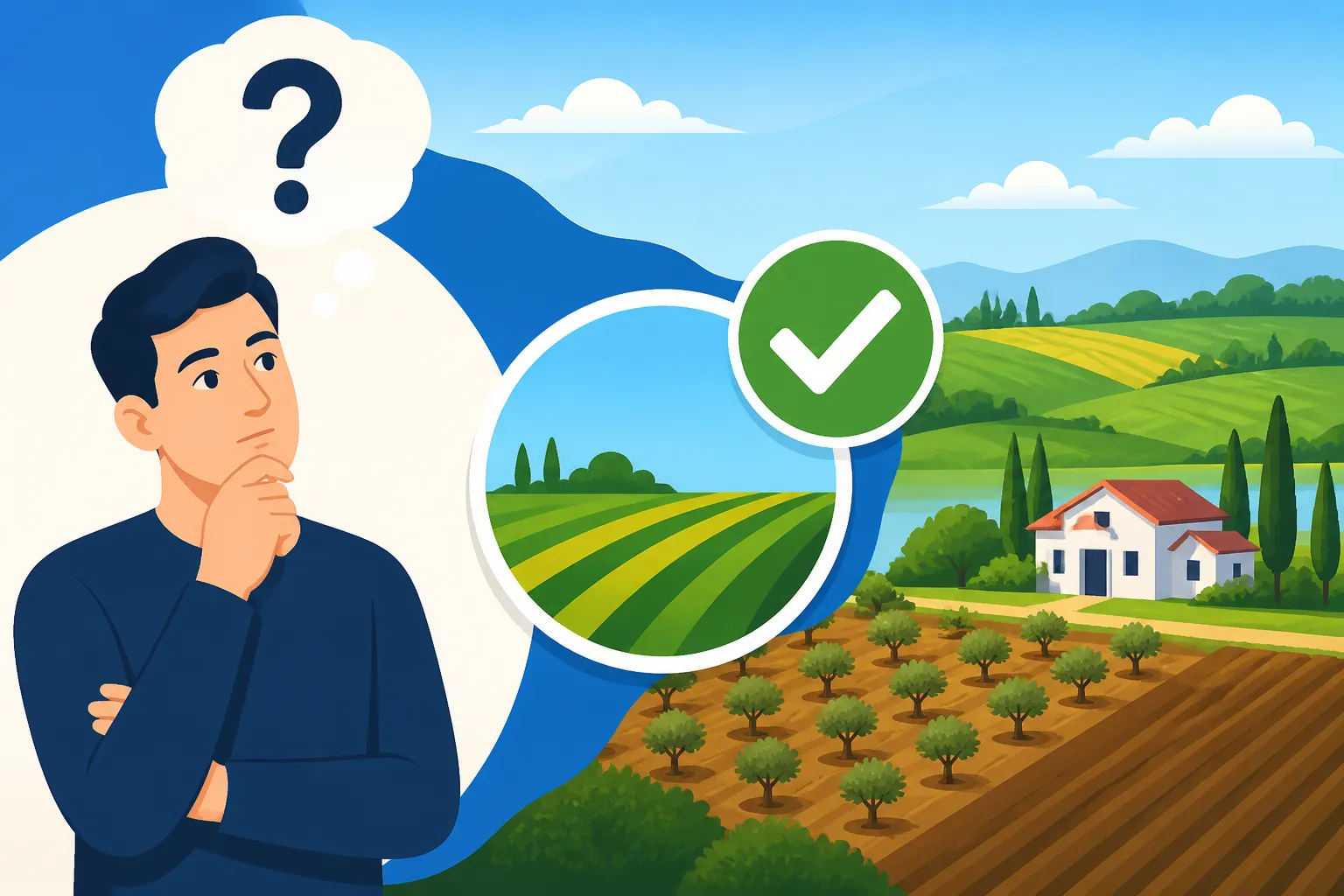
Can I Buy Agricultural Land in Croatia as a Foreigner?
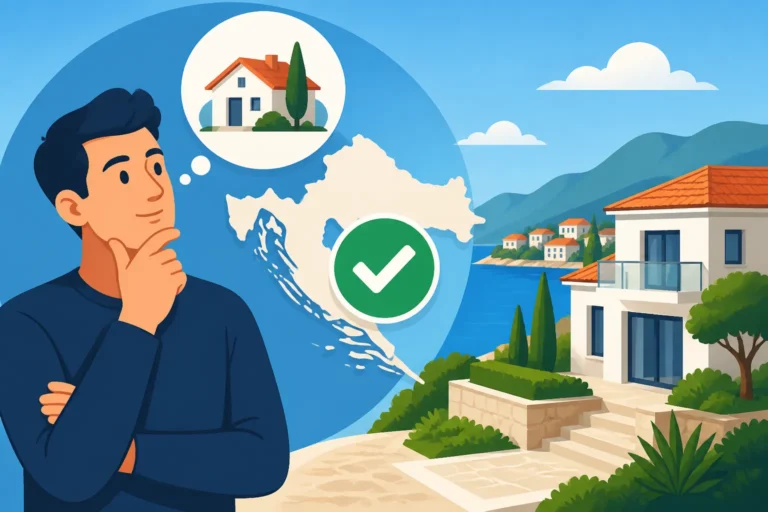
Oh, the dream of owning a piece of Croatian land, especially a sprawling field or an olive grove! Many of us expats arrive with visions of a tranquil life, perhaps even growing our own produce. But when it comes to agricultural land, the reality can hit you like a cold bura wind. It's not as straightforward as buying a house or a plot of građevinsko zemljište (construction land). This guide will peel back the layers of Croatian law and offer practical advice for foreigners hoping to acquire agricultural land here, helping you understand the very specific rules you'll encounter.
The Dream vs. Reality: Why Agricultural Land is Different in Croatia
When you first start looking at property in Croatia, you might see tantalizingly cheap plots listed as "poljoprivredno zemljište" – agricultural land. It looks like a bargain compared to building plots, doesn't it? But before you get too excited about your future vineyard, it's crucial to understand that agricultural land isn't just another piece of real estate in Croatia; it’s treated very differently, and for good reason.
The Strategic Importance of Poljoprivredno Zemljište
Croatia, like many nations, views its agricultural land as a vital national resource. This isn't just about pretty landscapes; it's deeply connected to food security, the livelihood of local farmers, and the preservation of traditional rural life. The government's policies, therefore, are designed to protect this resource, ensuring it remains in productive use and, ideally, in the hands of those who will farm it.
This means that while buying a charming old stone house with a small garden might be relatively simple for many foreigners, acquiring larger tracts of agricultural land comes with layers of legal scrutiny and significant restrictions. You won't find the same open market principles at play here as you might with residential or commercial properties. It’s about more than just the transaction; it’s about the purpose and stewardship of the land.
Initial Hurdles for Foreigners: EU vs. Non-EU Citizens
The first major hurdle, and one that trips up many hopeful buyers, is your citizenship status. This is where the rules diverge dramatically, creating two very different pathways—or indeed, dead ends—for potential foreign owners.
For a long time, even EU citizens faced significant restrictions on buying agricultural land in Croatia, notably a moratorium that only fully lifted on July 1, 2023. Before that, it felt like everyone was in a similar boat. But now, EU/EEA citizens generally enjoy much more flexibility. However, for those of us from non-EU/EEA countries, the situation remains extremely challenging, with direct ownership largely prohibited. This isn't just a minor administrative detail; it's a fundamental legal barrier that requires creative, albeit complex, solutions.
Navigating the Legal Landscape: Who Can Buy What, and When?
Understanding the specifics of Croatian land law is paramount. This isn't a "wing it" situation; getting it wrong can lead to heartbreak, wasted money, and endless bureaucratic headaches. Let's break down the rules based on your citizenship.
EU/EEA Citizens: Post-Moratorium Realities
Good news for my fellow EU/EEA citizens! As of July 1, 2023, the long-standing moratorium that prevented you from buying agricultural land in Croatia has officially lifted. This means that, in principle, you now have the same rights as Croatian citizens to acquire poljoprivredno zemljište. This was a monumental change, simplifying things for many who’ve been patiently waiting.
However, and this is a big however, this doesn't mean it's a free-for-all. The Croatian state has a robust system of pre-emption rights (known as pravo prvokupa) designed to prioritize certain buyers. When a piece of agricultural land goes up for sale, the following entities have the right to purchase it before anyone else, in a specific order:
- The Republic of Croatia: Through the Agency for Agricultural Land (Agencija za poljoprivredno zemljište, now often part of the Ministry of Agriculture), the state has the first right to buy. They look at whether the land is strategically important, perhaps for large-scale agricultural projects or land consolidation.
- Units of Local and Regional Self-Government: Your local municipality or county might be next in line, especially if the land is relevant to their development plans.
- Co-owners: If the land has multiple owners, any existing co-owner has a right of pre-emption.
- Adjacent Landowners: Owners of land bordering the plot for sale, particularly if they are registered farmers or have existing agricultural operations, also have a right of pre-emption.
- Registered Farmers: Finally, if none of the above exercise their right, other registered farmers in the area might have a claim.
This means that even if you, as an EU citizen, agree on a price with a seller, the deal isn't sealed until all these parties have had their chance to exercise their pre-emption rights. This process can add significant time to the transaction, potentially months, and requires careful legal navigation. You'll need to secure your OIB (Personal Identification Number) in Croatia early in the process, as it's fundamental to any property transaction.
Non-EU/EEA Citizens: A Much Tighter Rein
Now, for those of you from outside the EU/EEA, I'm going to be brutally honest: direct purchase of agricultural land in Croatia is, in almost all practical scenarios, not possible. Croatian law explicitly restricts non-EU/EEA citizens from directly acquiring poljoprivredno zemljište. It's a tough pill to swallow, especially if you've fallen in love with a plot.
So, what are your options? Well, "options" might be too strong a word for direct ownership, but there are indirect routes if you're truly determined:
-
Establishing a Croatian Company: This is the most common workaround. Instead of you, the individual, buying the land, your Croatian-registered company (a d.o.o. or an obrt) purchases it. Since the company is a Croatian legal entity, it's treated as a local buyer, bypassing the foreign ownership restrictions. This path, however, comes with its own set of complexities:
- Administrative Burden: You'll need to establish and register a company, which involves legal fees, accountants, and ongoing administrative tasks. You can explore options like How to Open an Obrt vs a d.o.o. Company in Croatia for more details.
- Tax Implications: The company will be subject to Croatian corporate taxes, social contributions, and other business-related levies. Understanding The Complete Guide to Taxes in Croatia for Expats (2027) will be vital here.
- Ongoing Costs: Even if the company is just holding land, there are annual fees, accounting costs, and potentially activity-related expenses.
- Purpose of the Company: The company should ideally have an agricultural or related purpose in its registration to justify the purchase of agricultural land.
- Residency: To manage a Croatian company, you'll likely need to secure residence in Croatia. This ties into the broader topic of Registering Your Residence in Croatia: The Complete MUP Guide.
-
Reciprocity Agreements: Theoretically, citizens from countries that have a reciprocity agreement with Croatia for property ownership might be able to buy land. However, for agricultural land specifically, this is extremely rare and almost never applied in practice. The restrictions on agricultural land are more stringent than for other property types, making the company route the only realistic pathway for non-EU citizens.
My advice? If you're a non-EU citizen and serious about agricultural land, engage a specialized lawyer immediately. They can confirm the latest nuances and guide you through the company setup. Don't try to navigate this alone.
The Process of Purchasing Agricultural Land in Croatia
Alright, so you've understood the legal framework and figured out which category you fall into. Now, let's talk about the practical steps involved in actually getting that land title in your name (or your company's name).
Finding the Right Plot and Due Diligence
Finding the perfect piece of land is often the fun part, but it's just the beginning. The crucial next step is thorough due diligence. This is where you verify everything about the property.
Firstly, you need to confirm that the land is indeed classified as agricultural. Sometimes, a listing might be ambiguous, or the owner might hope it can be reclassified. You need to check the official records. This involves diving into two key government systems: the Understanding the Croatian Property Registry and Cadastre System. Specifically, you'll consult the Zemljišne Knjige (Land Registry) to ascertain ownership, any existing liens, mortgages, or other burdens on the property. Then, you'll cross-reference this with the Katastar (Cadastre) to verify the exact boundaries, size, and official classification of the land. It’s absolutely essential that the land you’re looking at is zoned for agriculture and not, for example, within a national park where farming might be restricted or an area earmarked for future development where pre-emption rights are even more complex.
A good local real estate agent can help you locate suitable plots, but for the due diligence, a lawyer is non-negotiable. They will identify any red flags that could turn your dream into a nightmare. They'll also be instrumental in communicating with various government bodies, especially during the pre-emption stage.
The Pre-emption Right Procedure
This is the most critical and often the most frustrating part of buying agricultural land, even for EU citizens. Unlike a standard property sale, where once you agree on a price, you just sign, pay, and register, with agricultural land, there's a mandatory legal waiting game.
Here’s a simplified breakdown of the procedure:
- Offer to the State: Once you (or your Croatian company) have agreed on a purchase price with the seller, the seller must first offer the land to the Republic of Croatia. This is done through the relevant agricultural agency (APPRRR). They have a statutory period (typically 30 days) to decide if they want to exercise their right of pre-emption. They will often consider the price, the land's characteristics, and their strategic plans.
- Offer to Local Government: If the state declines, the offer then goes to the local self-government unit (municipality or city) where the land is located. They have their own timeframe (usually 15 days) to decide.
- Offer to Co-owners/Adjacent Owners/Farmers: If both the state and local government decline, the offer then extends to co-owners of the land (if any), then to owners of adjacent agricultural land, and finally to other registered farmers. Each of these groups also has specific timeframes to respond.
Only if all these parties decline to exercise their right of pre-emption can the sale proceed to you, the original foreign buyer. As you can imagine, this entire process can take several months, and it means your offer is not truly binding until everyone has had their say. Patience is truly a virtue here. Imagine finding your perfect plot, only for the state to swoop in and buy it at the last minute! It happens, and it's why proper legal guidance is so vital.
Contract and Registration
Once the pre-emption rights are cleared, you can finally move towards formalizing the purchase.
First, you'll typically sign a preliminary agreement (predugovor) which outlines the terms and conditions, including the purchase price, payment schedule, and any contingencies. This is usually followed by the main purchase agreement (kupoprodajni ugovor). Both documents must be drafted by a lawyer and then notarized by a public notary (javni bilježnik) in Croatia. This notarization is a critical step that validates the contract legally.
After signing and notarization, you'll need to pay the Real Estate Transfer Tax (Porez na Promet Nekretnina). This tax is typically 3% of the purchase price and is usually paid by the buyer. You can find more comprehensive details on this in Understanding the Real Estate Transfer Tax (Porez na Promet Nekretnina). Once the tax is paid and the purchase agreement is finalized, your lawyer will submit the necessary documents to the Land Registry for official registration. This is the moment when ownership is legally transferred and you (or your company) become the rightful owner of the agricultural land.
Common Pitfalls and Expert Tips for Foreign Buyers
Even with the right legal framework and a clear process, buying agricultural land in Croatia can throw curveballs. As an expat who's seen it all, I can tell you that anticipating issues is half the battle.
Misclassification of Land
One of the biggest pitfalls is the misclassification of land. Not all plots that look like agricultural land actually are, according to the official zoning plans. You might stumble upon land that appears pristine and ready for farming, but it could be designated as šumsko zemljište (forest land), or even a grey area where its official purpose isn't clear.
The key is to always verify the land's classification with the local municipality's urban planning department, alongside checking the Cadastre and Land Registry. Don't rely solely on what a seller or even a general real estate agent tells you. Changing a land's classification from agricultural to construction, for example, is an extremely lengthy, complex, and often impossible process in Croatia, especially for individual foreigners. Don’t buy agricultural land hoping to build a villa on it unless you have absolute, legally verified proof of pending reclassification – which is rare.
Navigating Bureaucracy and Delays
Croatian bureaucracy is a beast many of us expats learn to live with. It can be slow, sometimes illogical, and often requires an immense amount of patience. When dealing with something as protected as agricultural land, these traits are amplified.
The state's right of pre-emption process, as detailed earlier, is a prime example of a legally mandated delay. You can't rush it, and you can't bypass it. Furthermore, if you're a non-EU citizen establishing a company, you're adding layers of business registration, tax office interactions, and potential MUP inquiries to the mix. It can feel like an endless parade of forms and waiting periods. This is where having a reliable local team, particularly a good lawyer and an experienced accountant for your company, becomes your most valuable asset. They can navigate the system, chase documents, and communicate in Croatian on your behalf. When you're dealing with all these procedures, having a reliable way to communicate is essential. I've found an eSIM from providers like Airalo to be incredibly helpful for staying connected without worrying about local SIM card hassles right after landing, allowing me to focus on setting things up. This is invaluable during the initial phase of your The Expat Guide to Moving to Croatia: Your First 90 Days (2026).
Consider Your Long-Term Goals
Before you commit to buying agricultural land, reflect deeply on your long-term goals. Are you genuinely planning to farm? Or are you dreaming of a secluded spot to build a house? If it's the latter, agricultural land is probably not the right choice due to building restrictions. If it's for farming, do you understand the local climate, soil conditions, and the market for your produce?
If you opt for the company route as a non-EU citizen, consider the ongoing responsibilities. Are you prepared for annual tax filings, balance sheets, and administrative duties? This isn't just a one-time purchase; it's an ongoing commitment. Think about the logistics of moving your belongings to Croatia if you do decide to settle on your new land; a service like Sirelo can help with coordinating international shipping, making at least one aspect of the move smoother. Owning land here can be incredibly rewarding, but it needs to align with a realistic understanding of Croatian property laws and bureaucratic processes.
| Aspect | EU/EEA Citizens | Non-EU/EEA Citizens |
|---|---|---|
| Direct Purchase | Generally permitted since July 1, 2023 | Not permitted for agricultural land |
| Primary Mechanism | Individual purchase, subject to pre-emption rights | Purchase via a Croatian-registered company (d.o.o./obrt) |
| Pre-emption Rights | State, local govt., co-owners, adjacent farmers have priority | Still applies to the Croatian company making the purchase |
| Bureaucracy Involved | Moderate (land registry, notary, pre-emption process) | High (company registration, ongoing tax/admin, then land process) |
| Legal/Admin Costs | Standard property lawyer fees | Higher (company setup, ongoing accounting, specialized property lawyer) |
| Tax Implications | Real Estate Transfer Tax | Real Estate Transfer Tax + corporate taxes, social contributions, etc. |
| Timeframe for Purchase | Several months (due to pre-emption process) | Potentially longer (company setup + pre-emption process) |
| Primary Challenge | Navigating pre-emption rights | Establishing and managing a Croatian company |
Disclaimer
The information provided in this article is intended for general guidance only and does not constitute legal, financial, or professional advice. Croatian laws and regulations, particularly concerning property ownership for foreigners, can be complex and subject to change. It is essential to consult with qualified legal professionals, real estate agents, and tax advisors in Croatia for advice tailored to your specific situation before making any decisions related to purchasing agricultural land.