How Do I Enrol My Child in a Vrtić (Kindergarten) in Zagreb?
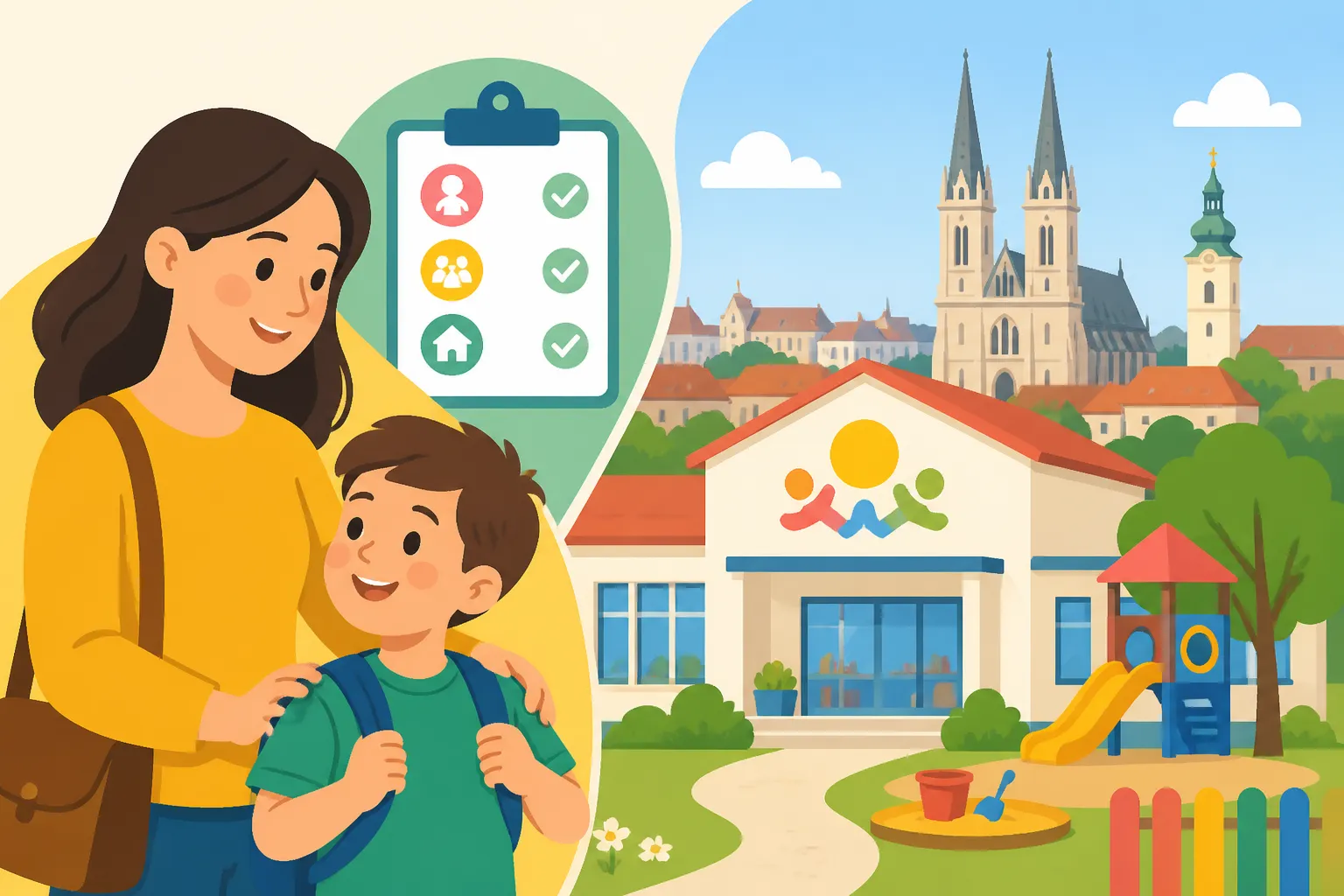
Moving to a new country with young children is a whole different ball game, and honestly, the administrative hurdles in Croatia can feel like a marathon with extra obstacles. One of the biggest stressors for expat parents, once you've managed to land and start settling, is figuring out how to get your little ones into a vrtić, or kindergarten, especially here in Zagreb. This guide is going to walk you through the often-confusing process, sharing insider tips and validating those moments when you just want to throw your hands up in exasperation.
Navigating the Croatian Vrtić System in Zagreb
Let's be real, the Croatian kindergarten system, while offering a generally good quality of care and education, isn't always the most straightforward for foreigners to navigate. It's a blend of public and private institutions, each with its own quirks, costs, and application processes. Understanding these differences is your first step to not feeling completely lost in the birokracija.
Public vs. Private Kindergartens: What's the Difference?
When you start looking for a vrtić in Zagreb, you'll quickly discover two main categories: public (often called gradski dječji vrtići or city-owned kindergartens) and private (privatni dječji vrtići), which also includes religious institutions. The differences aren't just in the name; they impact everything from cost to curriculum.
Public Kindergartens (Gradski Dječji Vrtići) are the most common choice for Croatian families, and understandably, many expats aim for them too. The biggest draw? Affordability. These institutions are heavily subsidized by the City of Zagreb, meaning your monthly fees are significantly lower than private options. The exact amount you pay is usually calculated based on your family's income, with some categories (e.g., families with multiple children in vrtić, single parents, children with special needs) receiving further discounts or priority. For example, a family with an average income might pay anywhere from €60 to €200 per month, a stark contrast to private fees.
The curriculum in public vrtići typically follows national guidelines, focusing on holistic development through play, educational activities, and social interaction. Most operate on a full-day schedule, usually from around 6:30 AM to 5:00 PM, which is a godsend for working parents. However, a significant challenge for expats is the language barrier. Instruction is almost exclusively in Croatian, which can be tough for children who don't speak the language yet, though young children are incredibly adaptable. The biggest hurdle, though, is securing a spot. Public vrtići in popular neighborhoods like Centar, Trešnjevka, or Jarun often have long waiting lists, and priority is heavily given to children whose parents are residents of Zagreb, particularly in the specific district where the vrtić is located. This means proving your legitimate residence, which is why having your ducks in a row with your How to Register Your Residence (Prebivalište) at the MUP paperwork is absolutely critical.
Private Kindergartens (Privatni Dječji Vrtići) offer an alternative, albeit a more expensive one. They are not subsidized by the city, so you're looking at much higher monthly fees, typically ranging from €300 to €700 or even more, depending on the program, location, and facilities. Many private vrtići offer specialized programs, such as Montessori, Waldorf, or early English immersion, which can be a huge advantage for expat families who want their children to maintain their native language or be in a more multilingual environment. These are often the "international schools" you hear about when discussing Understanding International Schools and Their Costs in Croatia.
While private institutions don't have the same strict residency requirements as public ones, competition can still be fierce, especially for those with English-speaking programs. The application process is generally more direct, involving an interview with the child and parents, but it's still crucial to apply well in advance. For parents who are still finding their feet in Croatia, dealing with multiple forms and calls, having a reliable way to stay connected is key. I remember relying heavily on an eSIM from a provider like Airalo to ensure I didn't miss any calls or emails during these crucial application periods.
Age Groups and Programs: Jaslice vs. Vrtić
Understanding the age divisions within Croatian kindergartens is important, as it dictates which program your child is eligible for.
Jaslice (Nursery Program) is for the youngest children, typically from around 1 year old (once they are walking and can eat solid food) up to 3 years old. These groups are smaller, with a higher staff-to-child ratio, focusing on basic care, early sensory development, and socialisation. The environment is designed to be nurturing, mimicking a home setting as much as possible. Finding a jaslice spot can be even more challenging than a vrtić spot due to limited capacity and high demand for infant and toddler care.
Vrtić (Kindergarten Program) is for children aged 3 years up to around 6 or 7 years old, right before they start elementary school. The curriculum here becomes more structured, incorporating pre-literacy and pre-numeracy skills, creative arts, physical education, and environmental awareness, all still primarily through play. Children learn to follow routines, cooperate with peers, and develop independence. Many vrtići also offer pre-school programs (mala škola) for the oldest group, which serves as a preparatory year for first grade. This is mandatory for children who won't be attending a vrtić regularly.
Regardless of age group, both jaslice and vrtić programs operate on a schedule designed to support working parents. Most offer morning care (from 6:30-7:30 AM), core program hours, and afternoon care (until 4:30-5:00 PM). It's worth noting that meal times, including breakfast, a hot lunch, and an afternoon snack, are integral to the daily routine, ensuring children receive balanced nutrition.
The Application Process for a Zagreb Vrtić: Step-by-Step
Alright, now for the nitty-gritty: the actual application process. This is where most expats hit a wall, so take a deep breath, grab a coffee, and let's break it down.
Key Deadlines and the e-Upisi System
The most crucial thing to remember is that the main enrollment period for public vrtići in Zagreb happens once a year, typically in May or June for the academic year starting in September. There are usually no rolling admissions throughout the year unless a spot unexpectedly opens up, which is rare. Missing this window means you'll likely have to wait a full year, so mark your calendar! Private vrtići might have slightly more flexible, though still structured, application periods.
For public vrtići, the City of Zagreb has moved towards an online application system called e-Upisi. This is a central portal where you submit all your documents and preferences. While it's designed to streamline the process, getting familiar with it can be a steep learning curve, especially if your Croatian isn't up to par. The portal is usually accessible through the official website of the City of Zagreb, often under the "Gradski ured za obrazovanje, sport i mlade" section. You'll need an e-Građani account to access it, which means you need to have already established your residency and obtained an OIB. This is another example of how all these administrative steps are interconnected – you can't really do one without the others.
Essential Documents for Application
This is where the "collecting papers" part of expat life really kicks in. You'll need a stack of documents, and they must be current and, in some cases, officially translated. Don't skip any, or your application will be rejected outright.
- Birth Certificate (Rodni List): Original or certified copy for your child. If it's not in Croatian, you'll need an official translation by a sworn court interpreter (sudski tumač).
- OIB for Child and Parents: Your Croatian personal identification numbers. If you haven't got them yet, make it a priority. Read our guide on How to Get Your OIB and Why It Matters for Healthcare Access to get this sorted.
- Proof of Residence (Uvjerenje o Prebivalištu): This is vital. It proves that you and your child are registered residents of Zagreb. You get this at the MUP (Ministry of Interior). For public vrtići, your residence in Zagreb is often a prerequisite for eligibility and gives you priority. The closer you are to the vrtić you're applying for, the better.
- Proof of Employment/Student Status for Parents: This usually means recent payslips, an employment contract, or a certificate from your employer confirming your working hours. If you're self-employed, proof of your registered business (obrt or d.o.o.) and recent tax payments will be needed. For students, a certificate from your university. This documentation helps prove that you need childcare.
- Medical Certificate (Potvrda o Zdravstvenom Stanju Djeteta): Your family doctor (obiteljski liječnik) or pediatrician (pedijatar) will need to issue a medical certificate stating that your child is healthy and fit to attend vrtić. This is a standard requirement for all children entering organized care. This is typically obtained right before starting vrtić but might be requested during application too. Finding The Expat Guide to Finding a Family Doctor (Obiteljski Liječnik) in Croatia will be helpful here.
- Proof of Shared Household: Often a declaration signed by both parents (if applicable) stating that you live in a shared household.
- Other Supporting Documents: If you have specific circumstances that grant priority (e.g., child with special needs, single parent status, multiple children in vrtić), you'll need official documentation for these too.
Important Note on Translations and Notarization: Foreign documents almost always need to be officially translated into Croatian by a sworn court interpreter. In some cases, notarization might also be required. It’s always best to check the specific requirements outlined on the City of Zagreb’s website or with the vrtić directly. Don't assume anything; verify, verify, verify!
Here’s a quick overview of typical documents:
| Document Category | Specific Item | Purpose | Where to Get It (or What to Do) |
|---|---|---|---|
| Child's Identity | Rodni List (Birth Certificate) | Proof of identity and parentage | Local Registry Office (Matični Ured); Translate if foreign |
| OIB (Personal ID Number) | Required for all official transactions | Tax Administration (Porezna Uprava) | |
| Parent's Identity/Status | OIB (Parents) | Required for all official transactions | Tax Administration (Porezna Uprava) |
| Proof of Employment/Student Status | Demonstrates need for childcare | Employer/University Certificate, Payslips, Business Reg. | |
| Proof of Residence (Uvjerenje o Prebivalištu) | Confirms Zagreb residency for priority | MUP (Ministry of Interior) – vital for public vrtići | |
| Health | Potvrda o Zdravstvenom Stanju Djeteta | Confirms child is fit for collective care | Family doctor/Pediatrician (Obiteljski Liječnik/Pedijatar) |
| Household Status | Izjava o Zajedničkom Kućanstvu | Declaration of shared living arrangement | Self-declaration, often notarized |
| Special Circumstances | Proof of Special Needs, Single Parent Status, etc. | For priority consideration | Official certificates, court documents, etc. |
Submitting Your Application
Once you've gathered all your documents and had them translated, you'll upload them to the e-Upisi system during the enrollment period. The system usually allows you to select your preferred vrtići (often ranking them 1st, 2nd, 3rd choice). Be strategic with your choices; if you live in a less densely populated area, your chances might be higher for the local vrtić. After the application window closes, there's a waiting period as the city processes all applications and assigns spots based on a points system (which prioritizes Zagreb residents, working parents, etc.).
You'll receive notification via the e-Upisi system or directly from the vrtić if your child has been accepted. If you're accepted, you'll then be given a short window to officially confirm your enrollment and submit any remaining physical documents, like the final medical certificate, directly to the vrtić.
Navigating Challenges and What to Expect
Even with all your papers in order, applying for a vrtić in Zagreb as an expat can come with its unique set of challenges. It's important to prepare for these so you don't get completely disheartened.
The Dreaded Waiting Lists and Alternative Solutions
The truth is, many public vrtići in Zagreb, especially in desirable areas, are oversubscribed. Waiting lists are a reality, and even if you apply on time, there's no guarantee of a spot, particularly if you're a new expat without a long history of residence or employment in Croatia. This is often the biggest source of stress for expat parents.
So, what are your options if you don't get a spot in a public vrtić?
- Private Kindergartens: As discussed, these are a viable alternative if your budget allows. Many have more flexible enrollment and might have spots available even outside the main public vrtić application window. Some even offer excellent multilingual programs.
- Private Childcare (Dadilja): You might consider hiring a private nanny or childminder. This offers flexibility and personalized care but can be more expensive than a public vrtić and might not offer the same socialisation opportunities. Word-of-mouth recommendations are often the best way to find reliable childcare providers.
- Small Private Playgroups: Sometimes, smaller, informal playgroups or cooperatives pop up, especially in expat communities. These are usually run by parents or small businesses and can offer a good middle ground for socialisation and care, though they might not be officially licensed vrtići.
- Waiting it Out: If your child is close to school age, and you can manage without a vrtić for a year, sometimes it's simply a matter of waiting for the next enrollment cycle or a spot to open up. This isn't ideal for younger children or working parents, but it's a reality for some.
Language Barrier and Cultural Adjustments
The primary language in almost all public vrtići is Croatian. For expat children who don't speak Croatian, this can be a daunting prospect for parents. However, children are incredibly resilient and often pick up languages much faster than adults. Most vrtić educators are experienced in helping new children integrate, even without a shared language. They use gestures, visual aids, and a lot of patience. Within a few months, many expat children are chattering away in Croatian with their peers. This immersion is actually one of the fastest ways for them to become fluent!
Culturally, Croatian vrtići have routines that might differ from what you're used to. Nap time (spavanje) is still very common, even for older vrtić children, and is often mandatory. Food is usually fresh, locally sourced, and traditional Croatian fare. Be prepared for less "parental involvement" in terms of daily classroom volunteering compared to some Western countries; the emphasis is often on the educators managing the classroom. Communication with teachers might also be primarily in Croatian, so having a translation app or a Croatian-speaking friend can be incredibly helpful in the beginning.
Costs Beyond Monthly Fees
While public vrtić fees are relatively low, there might be other costs to consider. You'll likely need to provide specific supplies at the beginning of the year – think tissues, paper, crayons, maybe a specific type of indoor slipper, and a change of clothes. Field trips or special events might incur small additional fees. For private vrtići, these "extra" costs can add up, so always ask for a full breakdown of all potential expenses during your initial inquiries. When you're budgeting for your life here, remember that The Complete Guide to Cost of Living in Croatia for Expats (2026) will help you factor in these smaller, everyday expenses.
Finally, remember that the journey of enrolling your child in a vrtić is just one step in setting up your family life in Croatia. It requires patience, persistence, and a good dose of humor. Don't be afraid to ask for help from other expats or local friends; navigating the system together is always easier. If you're still in the throes of moving, coordinating with international shipping companies like Sirelo might alleviate some logistical stress, freeing up your mental bandwidth for vrtić applications.
Internal Link Suggestions
- How to Register Your Residence (Prebivalište) at the MUP
- How to Get Your OIB and Why It Matters for Healthcare Access
- The Expat Guide to Finding a Family Doctor (Obiteljski Liječnik) in Croatia
- The Complete Guide to Cost of Living in Croatia for Expats (2026)
- Understanding International Schools and Their Costs in Croatia
- The Complete Guide to Moving to Croatia: Your First 90 Days (2027)
- The Complete Guide to Renting an Apartment in Croatia (2027)
- How to Register Family Members for Health Insurance in Croatia
Disclaimer
Please remember that while I strive to provide accurate and up-to-date information, rules and regulations in Croatia, especially concerning administrative processes, can change. It is always best to consult the official websites of the City of Zagreb, the Ministry of Interior (MUP), or the specific kindergarten you are interested in for the most current and definitive information. This guide is for informational purposes only and should not be considered legal or official advice.