How to Register Family Members for Health Insurance in Croatia
Getting your own health insurance sorted in a new country like Croatia can feel like tackling a bureaucratic Hydra – one problem solved, two more seem to pop up. But when you add the well-being of your entire family into the mix, that task transforms into a full-blown quest. This guide is here to be your shield and compass, helping you navigate the sometimes-confusing process of registering your beloved family members for health insurance in Croatia, ensuring everyone you care for is properly covered.
Understanding Croatia's Family Health Insurance Landscape
For any expat family planting roots in Croatia, understanding the local healthcare system, particularly how it applies to dependents, is absolutely paramount. It’s not just about ticking a box for a residence permit; it’s about peace of mind.
The Croatian Health Insurance Fund (HZZO) for Dependents
Croatia operates primarily on a public health insurance system, managed by the Croatian Health Insurance Fund, or Hrvatski zavod za zdravstveno osiguranje (HZZO). If you, as the primary applicant or employed individual, are registered with HZZO, your eligible family members can typically be registered as dependents under your policy. This means they will share in the benefits of the public healthcare system, which covers a wide array of services from general practitioner visits to hospital stays, and even prescription medications, often at a reduced cost.
However, the key here is 'eligible' and 'dependent'. HZZO meticulously defines who qualifies, and it’s not always as straightforward as you might assume coming from another country. The system aims to ensure that while the primary insured individual contributes to the fund (usually through their employment in Croatia or as a self-employed person), their immediate family members who rely on them can access necessary medical care. Think of it as a tree: the primary insured is the trunk, providing the base, and the family members are the branches, drawing support from it. Without a strong, registered trunk, the branches can't thrive within the system. You'll find a more comprehensive overview of how it all works in our guide on How the Croatian Health Insurance Fund (HZZO) Works: A Full Overview.
Mandatory vs. Supplementary Insurance for Families
This is where many expats hit a snag. The HZZO insurance you register for as the primary insured is considered mandatory basic health insurance (obvezno zdravstveno osiguranje). While it covers a significant portion of medical costs, it doesn't cover everything. For most services, there are co-payments (participacija) that you’re expected to pay out-of-pocket. These can add up quickly, especially with a family, for things like specialist visits, diagnostic tests, or hospital stays.
This is where supplementary health insurance (dopunsko zdravstveno osiguranje) becomes essential, not just for you but for your entire family. Dopunsko insurance essentially covers these co-payments, significantly reducing your out-of-pocket expenses when accessing public healthcare. Many Croatian citizens and long-term residents opt for dopunsko insurance, often through HZZO itself or other private providers. It's truly a game-changer for budgeting healthcare costs. If you haven't yet, make sure to read our detailed explanation of Understanding Dopunsko Zdravstveno Osiguranje (Supplementary Insurance) in Croatia.
For families, particularly those still navigating the initial stages of residency or facing potential waiting periods for full HZZO coverage, it’s worth considering temporary private insurance options. While not a substitute for HZZO, providers like SafetyWing can offer a safety net for unexpected medical emergencies or travel, especially if you're not fully settled or if the bureaucratic wheels are turning slower than anticipated. This kind of plan might be particularly useful during those interim periods or if your family travels frequently outside of Croatia.
The Importance of OIB for Each Family Member
The OIB, or Osobni identifikacijski broj (Personal Identification Number), is Croatia's equivalent of a national ID number, and it’s absolutely non-negotiable for almost any administrative task, including healthcare. Just like you need one, every single one of your family members, regardless of age – yes, even newborns – will need their own OIB to be registered with HZZO. This seemingly small detail is crucial. Without an OIB, your family member simply won't exist in the Croatian administrative system, making it impossible to register them for health insurance, open a bank account, or even enroll them in school. Securing OIBs for your entire family should be one of your very first administrative tasks upon arrival. We have a dedicated guide to help you with that: How to Get Your OIB and Why It Matters for Healthcare Access.
Who Qualifies as a Family Member for HZZO Coverage?
This is where the definitions get a little precise. HZZO has strict criteria for who can be registered as an "insured family member" (osigurana osoba – član obitelji). It's generally about direct dependency on the primary insured individual.
Spouses and Life Partners
For your spouse or registered life partner to be covered, their relationship with the primary insured person must be legally recognized in Croatia. This means:
- Legally Married Spouses: You will need your marriage certificate. If you were married outside of Croatia, this document will need to be apostilled (if your home country is part of the Hague Apostille Convention) or fully legalized through the Croatian embassy or consulate in your home country, and then officially translated into Croatian by a sworn court interpreter in Croatia. This is a common requirement for many official documents here.
- Registered Life Partners: Croatia recognizes life partnerships (životno partnerstvo) for same-sex couples, and registered partners have similar rights to married spouses regarding health insurance. You will need proof of your registered life partnership, again, likely requiring official translation and legalization if it was registered abroad.
The key here is proving the legal bond. Simply living together, even for many years, usually won't suffice unless it's a recognized life partnership or a common-law marriage specifically proven through a court decision, which is a much more complex route and generally not advised for initial registration. Your spouse or partner generally shouldn't have their own grounds for mandatory HZZO insurance (e.g., they aren't employed in Croatia themselves).
Children and Young Adults
Children are typically the most straightforward dependents to register, but there are age and status limitations:
- Children under 18: All minor children (under 18 years old) are generally covered as dependents of their parents or legal guardians. You will need their birth certificates (again, translated and legalized if foreign) and their OIBs.
- Full-time Students (up to 26 years old): If your child is over 18 but is still a full-time student, they can usually remain covered as a dependent until they turn 26. This requires providing proof of their student status, such as a certificate from their Croatian educational institution. This is a common scenario for expat families whose children attend university here. The HZZO office will typically request an annual confirmation of enrollment.
- Children with Disabilities: There are provisions for adult children with certain disabilities who are unable to work, allowing them to remain dependents regardless of age. This usually requires official medical documentation and assessments from Croatian institutions.
It's important to remember that these provisions apply as long as the child does not acquire their own basis for insurance, such as becoming employed themselves. For example, if your 20-year-old child gets a part-time job in Croatia that provides HZZO coverage, they would then be insured on their own basis, not as your dependent.
Other Dependents and Special Cases
While the focus for most expat families will be on spouses/partners and children, HZZO does have provisions for other dependents in very specific and limited circumstances. These typically include:
- Parents of the Primary Insured: In rare cases, if parents are completely dependent on the primary insured for financial support and have no other means of income or insurance, they might be eligible. However, this is usually much harder to prove for non-EU citizens and involves significant hurdles, often requiring proof of complete financial dependency and lack of other insurance options, even in their home country. It’s certainly not a common route for general expat relocation.
- Other Relatives: It's extremely uncommon for other relatives to qualify as dependents under HZZO for expats. The system is designed to cover direct, immediate family members.
If you believe you have a special case, it's always best to consult directly with the local HZZO office or seek advice from a legal professional specializing in expat affairs in Croatia. However, prepare for a potentially complex and lengthy process.
The Step-by-Step Process for Registering Family Members
Once you've wrapped your head around who qualifies and what you'll need, it's time to tackle the actual registration process. Trust me, patience is a virtue here.
Initial Registration of the Primary Insured
This is the golden rule: you, as the primary insured individual (e.g., the employed person, the self-employed person, or the digital nomad with an approved permit), must be properly registered with HZZO first. Your health insurance status forms the foundation upon which your family's coverage will be built. This means you should have received your HZZO card (zdravstvena iskaznica) or at least have confirmation of your active insurance status. If you're still working on this, our guide on Registering with HZZO in Croatia: The Complete Expat Guide (2027) will walk you through it. You cannot register family members if your own status isn't yet secured.
Applying for Dependent Status at HZZO
Once your HZZO status is confirmed, you can proceed to register your family.
- Gather Your Documents: Refer to the "Essential Documents" section below and gather everything required for each family member. This means originals and copies, and remember those translated and apostilled documents!
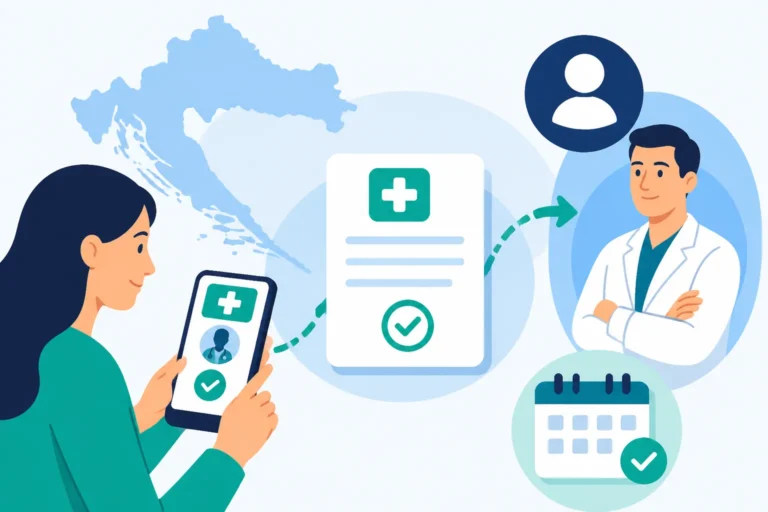
- Visit Your Local HZZO Office: You will need to go to the HZZO branch office that corresponds to your registered address (prebivalište). While some initial inquiries might be possible online or over the phone, the actual submission of documents and completion of forms typically requires an in-person visit. Booking an appointment might be possible in larger cities like Zagreb or Split, which can save you a lot of waiting time.
- Fill Out the Forms: At the HZZO office, you'll be given specific forms to fill out. These forms will ask for details about the primary insured person and each family member you wish to register. They are generally in Croatian, so if your Croatian isn't fluent, bring a Croatian-speaking friend, a language exchange partner, or consider hiring a professional translator to accompany you. This is not the time for guesswork; any errors could delay the process significantly.
- Submit Documents and Forms: Hand over your completed forms and all supporting documentation. The HZZO employee will review them. Be prepared for questions or requests for additional documents they might deem necessary, even if you thought you had everything. This is a common experience and part of the bureaucratic process. For example, they might ask for your original residence permit card (boravišna iskaznica) even if you've brought a copy. Always bring originals!
- What Happens Next?: If everything is in order, your application will be processed. The HZZO representative should give you an estimate of how long it will take. Sometimes, they can issue a temporary confirmation of insurance for your family members on the spot, which can be useful while waiting for the physical cards.
It's a process that requires patience and meticulous attention to detail. Don't be discouraged if you need to make multiple trips or provide additional paperwork; it's a rite of passage for many expats here.
Receiving Your Family's Healthcare Cards
After your application for dependent status is approved, HZZO will process and issue individual zdravstvena iskaznica (health cards) for each registered family member. These are physical cards, similar to an ID card, that your family members will need to present whenever they access healthcare services in Croatia – whether it's visiting a family doctor, a specialist, or picking up prescriptions at a pharmacy.
- Delivery: The cards are usually sent by mail to your registered address (prebivalište). Ensure your mailbox is clearly marked with your name(s) to avoid any delivery issues.
- Activation: In most cases, the cards are active upon receipt. However, it’s always a good idea to confirm this with the HZZO office.
- Using the Cards: Each card has a unique number and identifies the holder as an HZZO insured person. When visiting a doctor, for instance, your child would present their own card, even though their coverage is dependent on your primary insurance. This makes accessing care much smoother.
It's a huge relief when these cards finally arrive, as it signifies that your family is officially integrated into the Croatian public healthcare system.
Essential Documents for Family Registration
This section is vital. Gathering all the correct paperwork upfront will save you immense headaches down the line. Remember, all foreign documents (marriage certificates, birth certificates, etc.) must be apostilled or legalized and officially translated into Croatian.
Documents for the Primary Insured
Even though you, the primary insured, are already registered, you will need to present your own documents again to link your family members to your coverage.
- Valid Passport or ID Card: Your primary identification document.
- Residence Permit Card (Boravišna Iskaznica): Proof of your legal residency in Croatia.
- OIB (Personal Identification Number): Your OIB is essential.
- Proof of HZZO Registration: Your HZZO health card or a certificate confirming your active HZZO status.
- Proof of Employment/Income: If you're employed, your employment contract and recent pay slips. If you're self-employed (e.g., a paušalni obrt owner), proof of your registration and contributions. For digital nomads, your digital nomad permit and proof of income meeting the requirements.
Documents for Spouses and Partners
- Valid Passport or ID Card: For the spouse/partner.
- OIB (Personal Identification Number): Their individual OIB.
- Marriage Certificate / Life Partnership Certificate: The original document, apostilled/legalized, and officially translated into Croatian. This is paramount for proving the legal relationship.
- Proof of Registered Residence (Prebivalište): Proof that they are also registered at the same address as the primary insured, such as a certificate from the MUP.
- Declaration of No Independent Basis for Insurance: Often, the spouse will need to sign a statement confirming they are not employed in Croatia and do not have their own grounds for mandatory HZZO insurance.
Documents for Children
- Valid Passport or ID Card: If applicable (for older children).
- OIB (Personal Identification Number): Each child's individual OIB.
- Birth Certificate: The original document, apostilled/legalized, and officially translated into Croatian. This establishes the parental relationship.
- Proof of Registered Residence (Prebivalište): Proof they are registered at your address.
- Student Certificate (for children aged 18-26): If your child is over 18 and a full-time student, an official certificate from their educational institution in Croatia, confirming their enrollment and full-time status.
Here’s a quick summary table for clarity:
| Document Type | Primary Insured | Spouse/Partner | Children (under 18) | Children (18-26, students) |
|---|---|---|---|---|
| Passport/ID Card | X | X | (if applicable) | X |
| OIB | X | X | X | X |
| Residence Permit/Proof of Status | X | Proof of joint residence | Proof of joint residence | Proof of joint residence |
| HZZO Card/Status Confirmation | X | |||
| Employment/Income Proof | X | |||
| Marriage/Partnership Certificate | X (translated/legalized) | |||
| Birth Certificate | X (translated/legalized) | X (translated/legalized) | ||
| Student Certificate | X | |||
| Declaration of No Independent HZZO | X | (if applicable) |
Navigating Special Circumstances and Challenges
Even with all your ducks in a row, the Croatian administrative system can throw a curveball or two. It’s part of the expat experience!
Language Barriers and Bureaucracy
This is perhaps the most common hurdle. While younger HZZO employees in larger cities might have some English proficiency, you cannot rely on it. The forms are in Croatian, and detailed explanations will be given in Croatian.
- Bring a Croatian Speaker: This is my number one piece of advice. A Croatian friend, a language tutor, or even a professional assistant (often advertised by expat groups) can make a world of difference. They can translate, clarify, and advocate on your behalf.
- Patience and Politeness: Croatian bureaucracy operates on its own timeline. Rushing or becoming frustrated (however understandable) will likely be counterproductive. A calm, polite, and patient approach often yields better results.
- Double-Check Everything: Before you leave the HZZO office, confirm what the next steps are, if any, and when you can expect your cards. Get names if possible.
It can feel like you're speaking a different language, even when you're speaking Croatian. The specific administrative jargon can be challenging.
Waiting Periods and Gaps in Coverage
For some categories of new residents, there might be a waiting period before full HZZO coverage becomes active. This is particularly relevant for those registering for HZZO based on long-term residency without immediate employment, or for certain self-employed categories. It’s crucial to understand if this applies to your situation and to plan accordingly for your family.
- Understanding Waiting Periods: For instance, if you are registering for HZZO based on being an independent resident (not employed), you might have a short waiting period before your insurance becomes fully active. During this time, you are covered for emergency care, but routine care might not be. Check the specifics for your residency basis. Our guide on Understanding Health Insurance Waiting Periods for New Residents in Croatia goes into more detail.
- Temporary Private Insurance: This is where a provider like SafetyWing can offer a valuable stop-gap. If you anticipate a waiting period or want peace of mind while your HZZO application is processing, a short-term travel or expat health insurance plan can cover your family for unexpected illnesses or accidents. This is especially important if you have young children or family members with pre-existing conditions that might require immediate attention. It provides a crucial safety net so you're not left scrambling if a medical issue arises before your public insurance is fully active. Remember, HZZO is about ongoing comprehensive care, while temporary private plans bridge potential gaps.
Changes in Family Status (Births, Marriages, Divorces)
Life happens, and your family situation might change while you're in Croatia. It's imperative to report these changes to HZZO promptly.
- Newborns: If you have a baby in Croatia, registering them for HZZO is a priority. After obtaining their birth certificate and OIB, you'll need to go to HZZO with these documents to add them as a dependent. The process for How Do I Register My Newborn for Health Insurance in Croatia? is quite specific.
- Marriage/Partnership: If you get married or register a life partnership in Croatia, you'll need to submit the relevant certificates to HZZO to add your spouse/partner as a dependent.
- Divorce/Separation: If you divorce or separate, the dependent status of your former spouse will need to be updated. This might mean they need to seek their own basis for HZZO coverage or switch to another form of insurance. For children, custody arrangements might influence their primary insured parent.
- Adult Children: If your student child turns 26 or ceases to be a full-time student, they will no longer qualify as your dependent and will need to establish their own basis for HZZO coverage (e.g., through employment, or by registering as unemployed if eligible).
Proactively communicating these changes to HZZO prevents any future complications or unexpected bills.
Maintaining and Renewing Family Health Insurance
Registering is just the first hurdle. Maintaining your family's health insurance coverage requires a bit of ongoing attention.
Annual Renewal and Updates
Unlike some systems where you might actively "renew" family members annually, HZZO coverage for dependents is generally tied to the primary insured's status. As long as you, the primary insured, maintain your active HZZO status (e.g., through continuous employment or approved residency), your dependents usually remain covered. However, this doesn't mean you can forget about it entirely.
- Student Status: For adult children covered as students, you will likely need to provide annual proof of their continued enrollment to HZZO. The office might send you a reminder, or it might be your responsibility to proactively submit the documentation.
- Changes in Personal Data: Any changes in your family's personal data (e.g., a child’s name change, a change of address) should be reported to HZZO. While often linked to MUP registration, it’s good practice to ensure HZZO records are also up-to-date.
- Review Your Status: It’s a good habit to periodically review your HZZO status and that of your family, especially if there have been significant life changes. A quick call or visit to your local HZZO office can clarify any uncertainties.
Understanding Co-Payments (Participacija) and Supplementary Insurance
I can’t stress this enough: understanding co-payments is fundamental to managing healthcare costs in Croatia, especially with a family. Without supplementary insurance (dopunsko), you will be charged a portion of the cost for most medical services. These fees are called participacija.
- How Participacija Works: For example, a doctor's visit might have a participacija fee of €1-€2, a specialist visit €5-€10, and certain procedures or hospital stays can be significantly more, up to a legal maximum per event. While these might seem small individually, they add up quickly if multiple family members are frequently accessing care.
- The Role of Dopunsko: Supplementary insurance, whether from HZZO's own dopunsko plan or a private provider, covers these participacija fees. This means that with both basic HZZO and dopunsko, most services in the public system become virtually free at the point of use. For a family, this offers substantial financial protection and predictability.
- Consider Early: It's wise to arrange for dopunsko osiguranje for your entire family as soon as your basic HZZO coverage is secure. The small monthly premium is almost always worth the peace of mind and cost savings, particularly if your family is prone to illnesses or frequent check-ups. Our detailed guide on Understanding Dopunsko Zdravstveno Osiguranje (Supplementary Insurance) in Croatia is a must-read.
What Happens If the Primary Insured's Status Changes?
This is a critical point that many expats overlook. Your family’s HZZO coverage is intrinsically linked to your status as the primary insured. If your basis for HZZO insurance changes, it will directly impact your dependents.
- Loss of Employment: If you lose your job in Croatia, your HZZO status as an employed person will cease. You would then need to register as unemployed with the Croatian Employment Service (HZZ) to maintain your HZZO coverage, which then extends to your family. There are specific rules and timelines for this, and failing to register quickly could lead to a gap in coverage.
- Change of Residency Status: If your residence permit changes, or if you move out of Croatia, you must inform HZZO. Your family's dependent status would also change or cease accordingly.
- Switching from Employed to Self-Employed: If you transition from being an employee to, say, a paušalni obrt owner, your basis for HZZO changes. You will need to update your records with HZZO to reflect your new status as a self-employed insured person. Your family would then be dependents under this new basis.
Always be proactive in reporting any changes in your primary insured status to HZZO. This helps avoid any unexpected loss of coverage for your family and ensures continued access to the excellent Croatian public healthcare system. Having an ongoing expat insurance plan like SafetyWing can also provide a cushion during such transitional periods, offering broader coverage that adapts to your changing circumstances.
Disclaimer
The information provided in this guide is intended for general informational purposes only and does not constitute legal or medical advice. Regulations regarding health insurance in Croatia can change, and individual circumstances vary significantly. Always consult with the official Croatian Health Insurance Fund (HZZO) directly, or a qualified legal professional specializing in immigration and expat services in Croatia, for advice tailored to your specific situation.