How Do I Handle a Hospital Stay as a Non-Croatian Speaker?
Waking up in a Croatian hospital bed is disorienting enough without the added stress of a language barrier. When the nurses are moving quickly and the doctors are discussing your vitals in a language you only half-understand from coffee shop interactions, the anxiety can be overwhelming. This guide solves the "lost in translation" crisis by providing a realistic roadmap for navigating hospital stays, from admission to discharge, specifically for non-speakers.
Navigating the Admission Process Without Croatian
The moment you enter a hospital in Croatia, whether it is for a planned procedure or an unexpected emergency, the administrative machinery begins to grind. For a non-speaker, this is often the most intimidating part. If you arrive at the emergency room, known locally as the Hitna Pomoć, the first thing they will ask for is your identification and insurance. If you are an expat living here, you likely have your OIB (Personal Identification Number) and your health card.
If you are a tourist or a digital nomad still waiting on your residency, the process feels a bit more "pay-to-play" initially. This is where having a robust travel or nomad insurance policy like SafetyWing becomes your best friend. In those high-stress moments at the registration desk, showing that you have comprehensive international coverage can often smooth the path. Most hospital staff in major cities like Zagreb, Split, or Rijeka have a basic grasp of English, but the technical forms will almost certainly be in Croatian.
It is vital to stay calm during triage. In the public system, the staff are often overworked and might seem brusque. This isn't personal; it is simply the pace of a high-volume public institution. If you cannot communicate your symptoms, try to have a written summary on your phone or a translation app ready. Knowing how to explain your medical history via a translated note can prevent dangerous misunderstandings during the initial assessment. For more on the basics, you might want to read about Emergency Medical Care in Croatia: What Every Expat Needs to Know to understand how the triage system functions.
Communication Strategies on the Hospital Ward
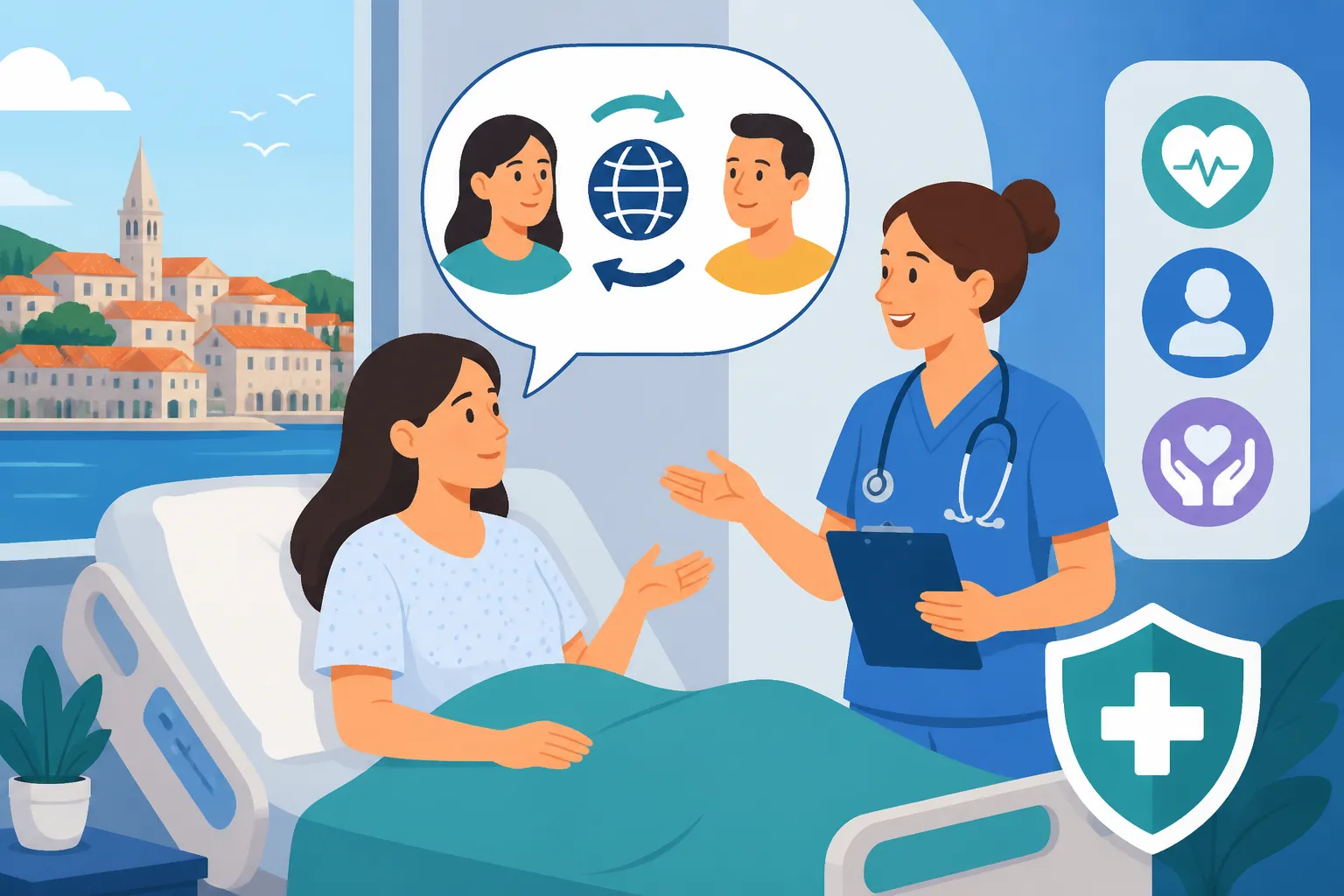
Once you are moved from the ER to a specialist ward, the pace slows down, but the communication gap often widens. Nurses on the ward (medicinska sestra) are the backbone of the system. While many of the younger nurses speak excellent English, the older generation may only speak Croatian or perhaps some German or Italian depending on the region.
One of the most effective strategies is to use the "Daily Rounds" (vizita). This is when a group of doctors, usually led by a department head, visits every patient. This is your prime time to ask questions. Doctors in Croatia are highly educated and almost all speak professional-level English. If you have questions about your treatment or surgery, save them for the vizita. Do not feel pressured to agree to something you don't understand. If the language gap is too wide, ask if there is an English-speaking doctor available or use a translation app to dictate your specific concerns.
For those who are not yet part of the state system, understanding Public vs Private Healthcare in Croatia: Which Should Expats Choose? is crucial, as private facilities often offer a much higher ratio of English-speaking staff. However, for serious emergencies or major surgeries, you will almost certainly be in a public KBC (Clinical Hospital Centre). In these cases, having a friend who speaks Croatian on standby via a messaging app like Viber or WhatsApp can be a lifesaver. You can record what the doctor says and send it to your friend for a quick translation to ensure you haven't missed any nuances about your recovery plan.
The Reality of Hospital Life and "The List"
Life inside a Croatian public hospital is a unique cultural experience. Unlike some Western countries where the hospital provides everything from pajamas to toothbrushes, the Croatian system assumes a level of "family support." If you are a foreigner here alone, you need to be prepared. Usually, you are expected to bring your own "survival kit," which includes towels, soap, toilet paper, and even your own cutlery in some older facilities.
Food is another area where communication is key. If you have allergies or dietary restrictions, you must communicate this clearly and repeatedly. Because the staff are managing dozens of patients, a "no gluten" or "vegetarian" request can sometimes get lost in the shuffle. Again, a simple translated card that says "I am allergic to…" (Alergičan sam na…) in Croatian can save you from a reaction.
If you are covered by a policy like SafetyWing, you might have the option to seek care at private polyclinics for follow-up, which often provide more "hotel-like" amenities. However, in the public wards, the focus is strictly on medical outcomes. It is a no-frills environment. Knowing What Should Expats Know About Maternity Leave Healthcare in Croatia? or general ward rules can help you understand the expected etiquette, such as visiting hours and how to interact with the "Glavna Sestra" (Head Nurse), who effectively runs the floor.
Managing Costs and Documentation
The financial side of a hospital stay can be confusing for non-speakers, especially when bills are presented in Croatian. If you have the state health insurance, you will likely only be responsible for a small co-payment, known as participacija. However, if you haven't yet registered with the local health fund, you should look into Registering with HZZO in Croatia: The Complete Expat Guide (2027) to avoid massive out-of-pocket expenses.
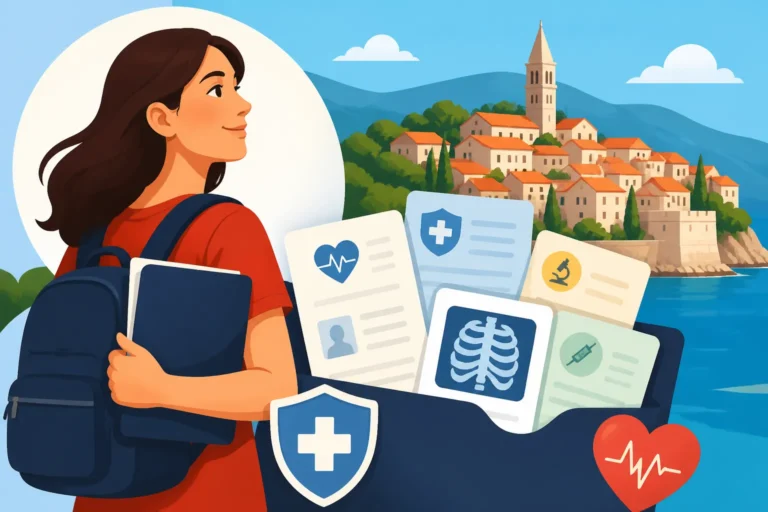
For those without HZZO, the hospital will issue an invoice that must be paid, often before discharge or shortly after. This is where your insurance provider comes in. If you are using SafetyWing, you will need to keep every single piece of paper the hospital gives you. This includes the "Liječnički nalaz" (doctor’s finding) and the "Otpusno pismo" (discharge letter). These documents are your proof of treatment and are essential for reimbursement claims.
| Document Name (Croatian) | English Equivalent | Purpose |
|---|---|---|
| Otpusno pismo | Discharge Letter | Summary of your stay, diagnosis, and medications for your GP. |
| Liječnički nalaz | Medical Finding | Detailed report of a specific test, scan, or consultation. |
| Račun | Invoice / Bill | Necessary for insurance reimbursement and tax records. |
| Uputnica | Referral | Needed if you are transferred between departments. |
| Recept | Prescription | Needed to get medication at the pharmacy after discharge. |
Post-Discharge and Follow-up Care
Leaving the hospital isn't the end of the journey. In the Croatian system, your hospital doctor will provide the "Otpusno pismo," but they usually do not handle your long-term follow-up. That responsibility falls to your primary care physician. If you don't have one yet, check out The Expat Guide to Finding a Family Doctor (Obiteljski Liječnik) in Croatia as soon as you are mobile. You will need to take your discharge papers to them so they can enter the data into the central e-health system.
If you need medication, the hospital will give you a discharge summary which you take to your GP, who then issues an "e-Recept." You can read more about how this works in our guide on Prescription Medications and Pharmacies in Croatia: The Complete Guide. For a non-speaker, this multi-step process can be exhausting. If your insurance, such as SafetyWing, covers outpatient care, you might choose to see a private specialist for your follow-up to save time and ensure you can discuss your recovery in English without the 3-month wait time often found in the public system.
Always ask for a copy of your scans (like an MRI or X-ray) on a CD or a digital link before you leave. In the public system, these aren't always automatically shared with other clinics. Having your own digital medical file makes it much easier to get a second opinion or to continue treatment if you decide to return to your home country for recovery. Knowing How Do I Get a Specialist Referral Without Waiting Months in Croatia? can also help you navigate the post-hospital phase more efficiently.
Practical Tips for Non-Croatian Speakers
- Download Offline Translation: Don't rely on hospital Wi-Fi. Download the Croatian language pack on Google Translate so you can use the camera feature to read forms and signs instantly.
- The OIB is King: Memorize your OIB or keep a photo of it on your phone. It is the key to your entire medical identity in Croatia. If you don't have one, learn How to Get Your OIB and Why It Matters for Healthcare Access.
- Family Advocacy: If you have a spouse or partner, make sure they have a "Power of Attorney" or at least a signed statement in Croatian saying they are allowed to receive medical information about you. Privacy laws (GDPR) are taken very seriously here.
- Use Private Options for Diagnostics: If the hospital tells you there is a six-month wait for a follow-up scan, check Understanding Private Polyclinics (Poliklinike) in Croatia. Often, you can get the scan the next day for a reasonable fee, which might be covered by your SafetyWing policy.
- Be Your Own Patient Advocate: If you don't understand the discharge instructions, don't leave. Use a translator, call a friend, or keep asking "English?" until someone can explain your dosage and next steps clearly.
Hospital stays are never easy, but in Croatia, the medical care is generally of a high standard. The hurdle is almost always administrative and linguistic rather than clinical. By preparing for the "BYO" culture of the wards and keeping your insurance documentation like SafetyWing organized, you can navigate the system with much less stress. For a broader look at the whole roadmap, see Navigating the Croatian Healthcare System: An Expat's Roadmap (2027).
Disclaimer
This guide is for informational purposes only and does not constitute medical or legal advice. Healthcare regulations and insurance requirements in Croatia can change. Always consult with a qualified medical professional or a legal expert regarding your specific situation and refer to official government sources for the most current administrative procedures.