How e-Uputnica (E-Referrals) Work for Specialist Appointments in Croatia
If you've spent any time trying to navigate the Croatian healthcare system, you'll know that getting to see a specialist can feel like solving a particularly tricky puzzle. From paper referrals that could get lost in transit to the sheer uncertainty of appointment booking, it's enough to make anyone sigh in frustration. This guide is here to demystify the e-Uputnica system, Croatia's digital solution for specialist referrals, and show you exactly how it works for expats.
What Exactly is an e-Uputnica and Why Does It Matter?
When you first arrive in Croatia, the healthcare system can feel like a labyrinth, especially if you're used to different processes. One of the biggest hurdles used to be the dreaded paper referral, or "uputnica," for specialist appointments. Thankfully, Croatia has largely embraced digitalization, bringing us the e-Uputnica. This isn't just a fancy name; it's a fundamental shift in how you access specialized medical care here.
The Digital Evolution of Referrals
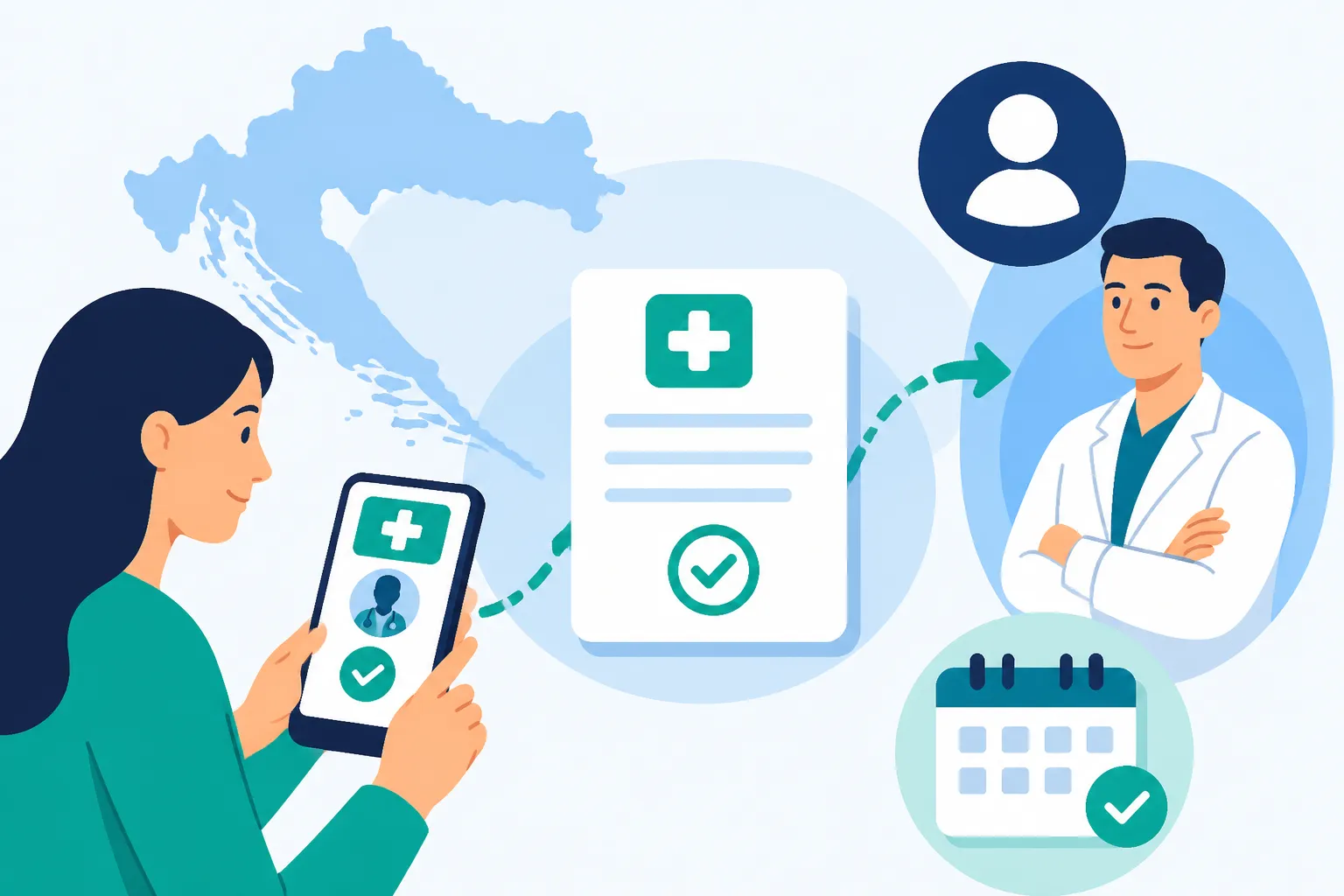
In essence, an e-Uputnica is an electronic referral issued by your chosen family doctor (obiteljski liječnik) or other general practitioner within the HZZO (Croatian Health Insurance Fund) system. Instead of getting a physical piece of paper that you then have to guard with your life and present at the specialist's office, this referral exists digitally within the national healthcare system. Your doctor issues it, and it's immediately accessible to any specialist or clinic that uses the HZZO system. This means no more lost papers, no more having to physically go back to your GP if you misplaced it, and a much smoother overall experience. It's a testament to how the system is trying to modernize, even if there are still some quirks to iron out. It’s part of a broader effort to streamline processes, much like the e-Recept (E-Prescription) System in Croatia.
Key Benefits for Expats
For us expats, the e-Uputnica system brings a sigh of relief. Firstly, it significantly reduces the administrative burden. Trying to keep track of crucial documents in a new language, especially when your Croatian isn't quite fluent yet, can be incredibly stressful. With e-Uputnica, that worry is largely eliminated. Your referral is in the system, ready when you are. Secondly, it improves efficiency. Once your doctor issues the e-Uputnica, you can often call the specialist’s office or the hospital directly to book your appointment without needing to show up first just to hand over a paper. This is a huge time-saver, especially if you live outside of a major city and have to travel for specialist care. It also creates a clearer trail of your medical history within the public system, making it easier for different healthcare providers to see what referrals have been made and why. This interconnectedness can be particularly helpful if you're navigating a chronic condition or require multiple specialist opinions.
The Step-by-Step Process: Getting Your e-Uputnica
Alright, let's get down to the nitty-gritty of how you actually obtain one of these digital golden tickets. It all starts with your family doctor – the gatekeeper to most specialist care in Croatia's public system.
Consulting Your Family Doctor (Obiteljski Liječnik)
The very first step, and arguably the most crucial one, is to see your family doctor. In Croatia, your general practitioner, or obiteljski liječnik, is your primary point of contact for almost all health concerns, and they are the ones who will issue the vast majority of your e-Uputnicas. Think of them as your personal healthcare manager. During your consultation, you’ll explain your symptoms, concerns, or the reason you believe you need to see a specialist. Your doctor will assess your situation, and if they agree that a specialist consultation or diagnostic test is necessary, they will issue an e-Uputnica.
It's vital to have a good relationship with your GP, and ideally, one who speaks at least some English, especially when you're first settling in. If you're still looking for one, our guide on The Expat Guide to Finding a Family Doctor (Obiteljski Liječnik) in Croatia can help. They will enter all the relevant details into the system, including your personal information (linked to your OIB), the type of specialist you need to see (e.g., cardiologist, dermatologist), the reason for the referral, and any specific diagnostic tests required. While the system is digital, your doctor might still print out a confirmation for you with the referral number (broj uputnice) or simply write it down, which can be useful for your own records or when booking.
The Referral Issuance and Storage
Once your GP issues the e-Uputnica, it’s instantly recorded in the central HZZO system. There's no physical paper to collect, sign, or transport. It just exists there, linked to your OIB and HZZO health insurance. This digital storage is one of the system's biggest advantages. It dramatically reduces the chance of administrative errors or lost documents. When you call to book your appointment, the clinic or hospital staff will be able to access this e-Uputnica using your OIB. This seamless transfer of information is incredibly efficient, cutting down on waiting times at the registration desk and ensuring the specialist has the referral details readily available.
For those without full HZZO coverage, or those awaiting their registration, it's a slightly different path. If you're on a digital nomad permit, for example, you might be relying on private insurance like SafetyWing. In such cases, your GP might still write a paper referral, or you would directly consult a private specialist or polyclinic, bypassing the public system's referral process altogether. Understanding Private Polyclinics (Poliklinike) in Croatia can provide more context on these alternative options.
What to Do If You Don't Have HZZO
This is a common question, especially for new arrivals or those with specific residence permits like the digital nomad visa. If you don't have active HZZO health insurance, the e-Uputnica system doesn't apply to you directly. The e-Uputnica is specifically for accessing care within Croatia's public health system.
Here’s the breakdown:
- No HZZO, No e-Uputnica (for public care): Without HZZO, you cannot get an e-Uputnica to access free or subsidized specialist care in public hospitals or clinics. You would be considered a private patient in the public system and charged the full price, which can be substantial.
- Private Healthcare is Your Route: If you're not covered by HZZO, your primary route for specialist care will be through private polyclinics or private doctors. In these settings, you typically do not need a referral from a GP. You can directly call and book an appointment with the specialist you need. Of course, you'll be paying out-of-pocket, or your private health insurance provider (like SafetyWing, which is popular among digital nomads and expats for its flexibility) would cover the costs, depending on your policy. It's crucial to understand your private policy thoroughly before incurring costs.
- Urgent Care Exceptions: In cases of genuine emergencies, public hospitals will treat you regardless of your insurance status, but you will be billed for the services rendered. You can learn more about this in Emergency Medical Care in Croatia: What Every Expat Needs to Know.
It's a good reminder that registering for HZZO as soon as possible after establishing residency is paramount. Our comprehensive guide, Registering with HZZO in Croatia: The Complete Expat Guide (2027), walks you through that process.
Navigating Specialist Appointments with e-Uputnica
So, you've got your e-Uputnica issued by your GP. Now what? The next step is actually securing that coveted appointment with the specialist. This part can still be a bit of a dance, but the e-Uputnica definitely makes it smoother.
Booking Your Appointment
Once your e-Uputnica is in the system, you have a few options for booking your specialist appointment.
- Directly with the Specialist's Office/Clinic: This is the most common method. You'll need to know which hospital or polyclinic you want to visit and which specific specialist you need to see. You then call their administrative desk or appointment booking line. When you call, state that you have an e-Uputnica (pronounced "eh-oo-POOT-nee-tsa") and provide your OIB (Personal Identification Number). The staff will then be able to locate your digital referral in the system. They will inform you of available dates and times. It’s important to clarify if there’s any participacija (co-payment) required for your visit, which is a standard part of the Croatian healthcare system for many services.
- Online Booking (Limited Availability): Some healthcare institutions, particularly in larger cities like Zagreb or Split, are starting to offer online appointment booking portals. These are often integrated into the e-Građani system or specific hospital websites. While convenient, this option isn't universally available for all specialists or all locations, so be prepared to make a phone call.
- Via Your GP's Office (Less Common, but Possible): In some instances, especially if you have a very proactive GP, their office might assist you with booking the specialist appointment. However, this is becoming less common as the e-Uputnica system empowers patients to book directly. It’s always worth asking your GP if they can help if you’re struggling with language barriers or navigating the system.
Be prepared for waiting lists, particularly for popular specialists or certain procedures within the public system. These can range from a few weeks to several months. This is often where the "Public vs Private Healthcare in Croatia: Which Should Expats Choose?" dilemma becomes very real for many expats. If you need urgent attention and the public waitlist is too long, a private polyclinic might be your only option. Ensure any private insurance like SafetyWing covers such consultations if you go this route.
What to Bring to Your Specialist Visit
Even with a digital referral, it's always a good idea to be prepared when you visit the specialist.
- Your HZZO card: This is your proof of public health insurance. Don’t leave home without it.
- Your OIB: While your HZZO card usually contains this, it's good to have it memorized or written down.
- Any previous medical reports or test results: Especially if they are relevant to your current condition and weren't issued within the Croatian public system. If they are in a foreign language, consider getting them officially translated, or at least having a clear summary in English.
- A list of your current medications: Including dosage and frequency.
- A notebook and pen: To jot down instructions or questions.
- A friend or family member (if possible): Especially if you're not confident in your Croatian, having someone to help translate or clarify can be invaluable. You can also specifically look for How to Find an English-Speaking Doctor in Croatia.
The specialist will use your OIB to access your e-Uputnica in the system, confirming the referral. They will then proceed with the consultation, examination, and any further recommendations.
Follow-Up Referrals and Repeat Visits
Often, a specialist will require follow-up visits or additional diagnostic tests. If these are needed, the specialist themselves can issue a new e-Uputnica directly from their office for subsequent appointments with them, or for other specialists, or for specific tests. You won't necessarily need to go back to your GP for every single follow-up, which is another great advantage of the digital system. However, if the specialist decides that your issue is resolved or requires a different type of care, they might advise you to return to your GP for a new assessment or a new e-Uputnica if further, unrelated specialist care is needed. This keeps your GP as the central hub for your overall health management.
Common Challenges and Troubleshooting for Expats
While the e-Uputnica system is a huge improvement, it's not without its quirks, especially for expats navigating a new country and language. Understanding these potential roadblocks can help you prepare and overcome them.
Language Barriers and Communication Tips
Let's be honest, Croatia isn't always the easiest place to communicate if you don't speak the local language. While doctors, especially specialists, often have some English proficiency, administrative staff may not. This can make booking appointments or understanding specific instructions a challenge.
- Practice Key Phrases: Learn basic phrases like "Imam e-Uputnicu" (I have an e-Uputnica), "Treba mi termin za…" (I need an appointment for…), and "Imate li slobodnih termina?" (Do you have any available appointments?).
- Bring a Translator: If you have a Croatian-speaking friend or partner, ask them to help you make calls or even accompany you to appointments, especially for initial consultations or complex issues.
- Utilize Translation Apps: While not perfect, Google Translate or similar apps can be helpful for quick exchanges.
- Be Patient and Polite: A friendly attitude goes a long way. The staff are often overworked, and a little kindness can make a big difference.
Remember, the goal is to get the care you need, so don't be afraid to ask for clarification, even if it means repeating yourself or asking them to speak slower.
Understanding Public vs. Private Pathways
One of the biggest sources of confusion for expats is discerning when to use the public system (via HZZO and e-Uputnica) and when to consider private options.
- Public System (HZZO): This is generally your most affordable option, as your contributions cover most costs (aside from participacija). It's suitable for non-urgent care, routine check-ups, and long-term management of conditions. However, it often comes with longer waiting times for specialist appointments and sometimes older facilities. Your e-Uputnica is your ticket here. How the Croatian Health Insurance Fund (HZZO) Works: A Full Overview offers a detailed look.
- Private System (Polyclinics): Private polyclinics (poliklinike) offer faster appointments, modern facilities, and often English-speaking staff. You typically don't need an e-Uputnica here, and you can book directly. The trade-off is the cost, which you'll either pay out-of-pocket or through private health insurance. Many expats opt for a combination, using HZZO for routine care and private clinics for faster access or specialized services that might have long public waitlists. For those with international insurance like SafetyWing, private clinics are often the go-to for convenience and speed.
It’s about balancing cost, speed, and convenience. The e-Uputnica system facilitates access to the public side, but knowing when to bypass it for private care is a crucial expat skill.
When the System Seems Stuck
There will be times when, despite your best efforts, you might feel like you're hitting a wall. The system can be bureaucratic, and things might not always make logical sense from an outsider's perspective.
- Long Waiting Lists: This is perhaps the most common frustration. If a specialist in the public system has a several-month waiting list and your condition is causing significant discomfort, discuss it with your GP. They might be able to help you find an alternative public specialist with a shorter wait or advise you on private options.
- Technical Glitches: While rare, digital systems can have hiccups. If a specialist's office can't find your e-Uputnica, double-check the referral number with your GP. It’s also wise to ensure your How to Get Your OIB and Why It Matters for Healthcare Access is correctly recorded everywhere.
- Miscommunication: If you're struggling to understand instructions or get an appointment booked, don't give up. Call back, try speaking to a different person, or seek help from a Croatian speaker. Persistence is key. Sometimes, clinics might suggest contacting them via email, which can give you more time to translate and formulate your request clearly.
Essential Tips for Expats Using e-Uputnica
Having lived through the administrative maze here myself, I can tell you that a little foresight and organization can save you a lot of headaches when dealing with healthcare in Croatia.
Keep Records and Stay Organized
Even though the e-Uputnica is digital, it’s still smart to keep your own records. When your GP issues an e-Uputnica, they can often give you a printout or at least the referral number. Jot this down somewhere.
- Maintain a Health Folder: Create a physical or digital folder for all your medical documents. This includes dates of appointments, names of specialists, referral numbers, and any test results or reports you receive.
- Digital Copies: If you get any paper reports from specialists, consider taking a photo or scanning them to keep digital copies. This is especially useful if you're traveling or need to share information with another doctor.
- Track Referrals: Keep a simple log of which e-Uputnica was for what specialist, and when it was issued. This can be invaluable if you need to follow up or if there's any confusion later.
This organized approach is crucial for managing your health journey effectively, especially when dealing with potentially complex issues or multiple specialists. It also ensures that if your insurance situation changes, perhaps from HZZO to a private provider like SafetyWing, you have all your historical medical information at hand.
The Importance of a Good GP
Your family doctor in Croatia is more than just someone who treats minor ailments; they are your central coordinator for all healthcare within the public system. They are the ones issuing your e-Uputnicas, managing your general health, and often providing advice on how to navigate the system.
- Choose Wisely: Take the time to find a GP you feel comfortable with and who you can communicate effectively with. Personal recommendations can be very helpful here. A doctor who understands expat challenges can make a huge difference.
- Regular Check-ins: Don't hesitate to schedule appointments with your GP even for seemingly small concerns. They can offer preventative advice, manage prescriptions (through the e-recept system), and guide you through various health procedures.
- Ask Questions: If you're unsure about a referral, a specialist's recommendation, or anything related to your health or the system, ask your GP. They are there to help you understand and navigate the complexities.
A strong relationship with a competent and empathetic GP is arguably the single most important asset an expat can have when engaging with the Croatian healthcare system.
e-Uputnica vs. Paper Uputnica: A Comparison
To further clarify the advantages of the e-Uputnica system, here's a quick comparison of the old paper system versus the current digital one.
| Feature | Paper Uputnica (Traditional) | e-Uputnica (Electronic) |
|---|---|---|
| Issuance | Printed by GP, physically handed to patient. | Issued digitally by GP, stored in HZZO system. |
| Accessibility | Patient must physically carry and present document. | Accessible by any HZZO specialist/clinic with OIB. |
| Loss/Damage Risk | High risk of misplacement, damage, or forgetting. | Virtually no risk of loss, always in the system. |
| Booking Process | Often required physical presentation to book. | Can book via phone or online (if available) with OIB. |
| Efficiency | Slower, involves physical paper handling. | Faster, streamlined, reduces administrative burden. |
| Follow-up | Often required new paper referral from GP. | Specialist can often issue new e-Uputnica directly. |
| Environmental Impact | Uses paper, contributes to waste. | Paperless, environmentally friendly. |
| Expat Experience | More confusing, higher chance of error, language issues compounded. | Simpler, less prone to document loss, still requires communication skills. |
This table clearly highlights why the shift to e-Uputnica has been a positive step for healthcare in Croatia, making it slightly less daunting for both locals and expats alike. It's a key part of how Navigating the Croatian Healthcare System: An Expat's Roadmap (2027) is evolving.
Disclaimer
The information provided in this guide is for general informational purposes only and does not constitute medical, legal, or financial advice. While we strive to keep the information up-to-date and accurate, healthcare regulations and procedures in Croatia can change. Always consult with qualified professionals for advice tailored to your specific situation. We are not responsible for any actions taken based on the information provided herein.