The Expat Guide to Finding a Family Doctor (Obiteljski Liječnik) in Croatia
Navigating the public healthcare system in a new country can feel like walking through an administrative maze, especially when faced with language barriers and local bureaucratic quirks. Finding an official family doctor, known locally as an obiteljski liječnik, is a vital step for any expat settling down in Croatia, as this primary care physician serves as your central point of contact for prescriptions, specialist referrals, and routine health checks. This guide walks you through every step of locating, selecting, and successfully registering with an English-speaking general practitioner, ensuring seamless healthcare coverage throughout your stay.
Understanding Primary Healthcare in the Croatian System
Primary healthcare in Croatia forms the fundamental foundation of the nation’s public medical infrastructure. Before you can schedule a specialist visit, get a routine blood test, or obtain a prescription for long-term medication, you must interact with the primary care tier. For foreigners coming from systems where you can simply book appointments directly with hospital specialists, this centralized setup often requires a mental shift. Your general practitioner is not merely a doctor you visit when you have the flu; they are the legal and administrative gatekeeper to the broader medical network managed by the state.
Understanding how this infrastructure operates on a daily basis helps ease the initial culture shock many expatriates experience. In Croatia, healthcare is organized around community-level facilities, regional health hubs, and central state insurance protocols. Knowing where your primary care doctor fits into this ecosystem prevents unnecessary trips to emergency rooms or misdirected visits to regional hospitals.
The Role of the Obiteljski Liječnik in Daily Care
Your obiteljski liječnik—often referred to interchangeably as a liječnik opće prakse—is responsible for managing your overall physical and mental well-being. They handle basic diagnostic procedures, manage minor illnesses, issue sickness certificates for employers, and write ongoing prescriptions for chronic conditions. Unlike some Western medical systems where consultations are strictly timed to ten-minute slots, a Croatian family physician’s office operates with a mix of scheduled appointments, drop-in hours, and administrative triage managed largely by the clinic’s nurse.
Building a good relationship with your general practitioner and their administrative staff is essential. The nurse, or medicinska sestra, plays a powerful administrative role in managing daily patient flow, handling phone queries, issuing basic prescriptions, and taking blood samples. Treating the medical staff with patience and respect goes a long way toward securing timely appointments and smooth communication, particularly when navigating minor language gaps during your first few visits.
For comprehensive insight into how primary care aligns with the national system, read The Complete Guide to Healthcare in Croatia for Expats (2027) to understand the overall framework governing public medical services.
How Health Centres Operate Across Croatian Regions
Primary medical care is predominantly housed within community health centres known as a dom zdravlja. A typical dom zdravlja is a multi-story civic medical building containing dozens of independent general practice offices, pediatric units, dental surgeries, gynecological clinics, and basic diagnostic laboratories under one roof. Every municipality or city district in Croatia has at least one central health centre, making primary care physically accessible across all regions.
While individual doctors manage their own patient registries, they operate within the physical infrastructure of these community health centres. The working hours of a dom zdravlja are generally split into two main shifts: a morning shift (jutarnja smjena) running from early morning until early afternoon, and an afternoon shift (popodnevna smjena) running from mid-afternoon until evening. Most family doctors alternate their shifts daily or weekly, which means you must always check your physician’s current schedule before visiting.
To better understand how these regional institutions function on a practical level, explore Understanding the Role of the Dom Zdravlja (Health Centre) in Croatia for detailed guidance on navigating local health facilities.
The Gateway Function for Specialist Referrals and Prescriptions
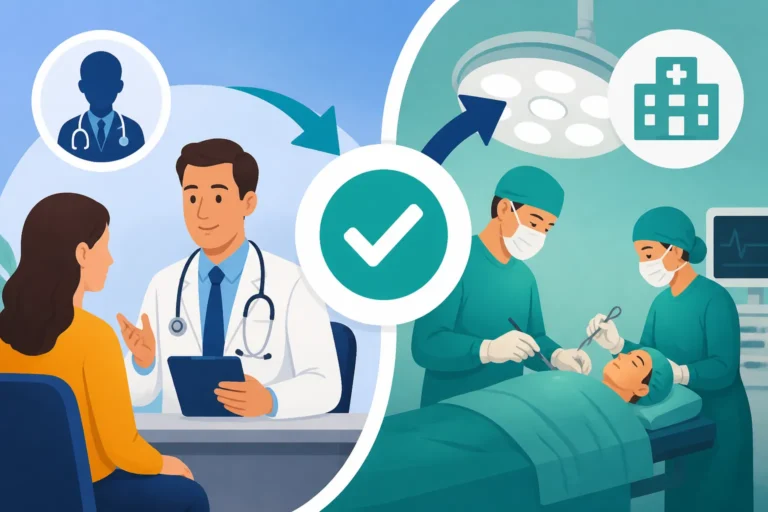
In the Croatian public healthcare framework, you cannot simply walk into a hospital or specialist clinic and request an advanced diagnostic scan or consultation without prior authorization. Your primary care physician holds the sole legal authority to issue official referrals, known as an uputnica, which grant you access to hospital care, physical therapy, radiologic imaging, and secondary consultations fully covered by the state insurance scheme.
Similarly, access to subsidized medications hinges directly on your family doctor. When you require maintenance medication or antibiotic courses, your doctor issues a digital prescription that is sent straight to the national pharmacy database. Without an assigned general practitioner in the state system, you would be forced to pay out-of-pocket for private medical consultations and full retail prices for all prescription drugs.
To grasp the full mechanics of public health coverage and administrative referral structures, consult How the Croatian Health Insurance Fund (HZZO) Works: A Full Overview before scheduling your initial medical appointments.
Mandatory Prerequisites Before Choosing Your General Practitioner
Before you can step into a clinic and officially place your name on a family doctor’s patient roster, you must satisfy specific legal and administrative prerequisites established by Croatian law. You cannot register with a public GP as a walk-in tourist or temporary visitor without the proper state-issued identification and active public health coverage.
Attempting to complete the medical registration process out of order is one of the most common pitfalls for new arrivals. Croatian public administration relies on precise sequence: tax identification precedes residence registration, residence registration precedes health insurance activation, and health insurance activation unlocks primary physician enrollment.
Securing Your OIB and Personal Tax Details
The absolute starting point for any administrative procedure in Croatia is obtaining your Osobni Identifikacijski Broj, universally known as an OIB. This eleven-digit personal identification number acts as your official tax and administrative identifier across all government ministries, financial institutions, and public healthcare databases. Without an OIB, public health officials cannot generate an administrative file or link your personal details to the state healthcare system.
Obtaining an OIB is a relatively straightforward process completed through the local tax office (Porezna uprava). You will need to submit a completed application form, present a valid original passport or EU national identity card, and provide a legal justification for the request, such as applying for temporary residence or registering for healthcare. Once issued, your OIB remains attached to your identity permanently.
If you have not yet completed this crucial step, review How to Get Your OIB and Why It Matters for Healthcare Access to streamline your tax office application process.
Navigating Mandatory Public Health Insurance Registration
Once your OIB is secured and your temporary residence permit (privremeni boravak) is granted by the Ministry of the Interior (MUP), you are legally obligated to enroll in the national public insurance system. Public health insurance is managed exclusively by the Croatian Health Insurance Fund, locally known as Hrvatski zavod za zdravstveno osiguranje (HZZO).
Registration involves submitting proof of address, your residence permit documents, and specific administrative forms to your municipal HZZO office. For non-EU citizens and certain third-country nationals, enrolling in HZZO often requires paying retroactive contributions for the preceding twelve months unless specific bilateral social security exemptions apply. Once registered, HZZO issues a health insurance card featuring your personal details and healthcare identification number (MBO).
For an exhaustive, step-by-step walkthrough of the enrollment process and statutory contribution rules, check Registering with HZZO in Croatia: The Complete Expat Guide (2027) as well as How to Register for HZZO Health Insurance as a Foreigner in Croatia.
Bridging the Coverage Gap with Temporary Medical Travel Insurance
The administrative transition between arriving in Croatia, securing your residence paperwork, and gaining official entry into the HZZO public registry can take anywhere from a few weeks to several months. During this interim period, you are legally required to maintain valid medical insurance coverage, and practical reality dictates that you must protect yourself against unforeseen illness or accidents.
During this transition, many digital nomads and international arrivals rely on flexible international policies like SafetyWing to ensure continuous coverage. Having a reliable policy from SafetyWing provides peace of mind while you wait for your HZZO application to process through local government offices. It allows you to visit private urgent care clinics or emergency facilities without incurring exorbitant out-of-pocket costs while your primary care paperwork remains pending.
Once your HZZO registration is fully approved, you can complete your doctor selection with public facilities while keeping international plans like SafetyWing active if you travel frequently outside Croatia or require worldwide travel protection.
Step by Step Guide to Registering with a Family Doctor
With your active HZZO health insurance status confirmed and your physical health insurance card or temporary certificate in hand, you are ready to register with an individual family physician. While the process is standardized across the country, local capacity constraints can make finding an available doctor tricky in densely populated urban centers or small coastal towns.
The registration process requires contacting individual medical practices, confirming that the doctor has administrative room on their official patient roster, and completing the required registration paperwork.
STAGES OF GP REGISTRATION IN CROATIA
1. Obtain OIB & Residence Permit –> Issued by Tax Office & MUP
2. Activate HZZO Insurance –> Processed at Regional HZZO Office
3. Locate GP with Open Patient List –> Contact Local Health Centres (Dom Zdravlja)
4. Complete Tiskanica 3 Form –> Signed at Doctor’s Office with Nurse
- HZZO System Processing –> Takes 8–15 Days for Final Digital Activation
Finding Doctors with Open Patient Lists in Your Area
By law, every general practitioner operating within the public system has a maximum quota of registered patients, typically capped around 1,500 to 2,000 individuals per doctor. When a doctor reaches their maximum administrative threshold, they are legally permitted to refuse new patient registrations unless you are an immediate family member of an already registered patient or live within their strict geographic zone with no other available options.
To locate doctors who currently have open lists, you have two primary options:
* Visit the official HZZO website, which publishes a periodic public list (Popis ugovornih liječnika) detailing every contracted doctor and their current capacity status.
* Visit your nearest dom zdravlja in person and speak directly to the reception staff or nurses at various offices. In-person inquiries are often much more effective, as reception nurses possess real-time information regarding upcoming patient retirements or list openings that may not yet reflect on the central website.
For additional strategies on choosing between local healthcare options, read Public vs Private Healthcare in Croatia: Which Should Expats Choose? to weigh your choices carefully.
Submitting the White Tiskanica 3 Form at the Doctor Office
When you find a general practitioner willing to accept you onto their patient registry, you must formally complete an administrative registration document known as Izjava o izboru/promjeni izabranog doktora, commonly referred to as Tiskanica 3. This official HZZO form establishes the legal relationship between you, the physician, and the health insurance fund.
The registration procedure involves specific steps:
- Obtain the Tiskanica 3 form directly from the doctor’s nurse or download it from the official HZZO document portal.
- Complete your personal details, including your full legal name, current registered residential address in Croatia, OIB, and MBO health number.
- Hand the form to the medical nurse, who will verify your identity against your passport or residence card and present the document to the doctor for an official signature and clinic stamp.
- Keep a physical copy of the signed form for your personal records, as this serves as temporary proof of registration while HZZO updates its central digital database.
Confirming Your Registration with the Local Health Insurance Office
After your doctor signs and stamps the Tiskanica 3 form, the clinic administrative staff will either submit the paperwork digitally to the central HZZO system or request that you personally drop off a physical copy at your local HZZO branch office (područni ured).
Processing typically takes between eight and fifteen business days. Once HZZO approves the selection, your name officially links to that doctor in the national e-Health system (e-Zdravstvo). From that moment forward, your chosen obiteljski liječnik can issue digital prescriptions, create electronic referrals, and order routine laboratory tests under your public insurance coverage.
If you wish to add supplementary insurance coverage to eliminate minor copayments during visits, read Understanding Dopunsko Zdravstveno Osiguranje (Supplementary Insurance) in Croatia to protect yourself against extra out-of-pocket costs.
Overcoming Language Barriers and Local Administrative Bureaucracy
While young medical professionals and doctors in urban hubs like Zagreb, Split, Rijeka, and Zadar generally speak excellent English, administrative personnel and senior clinical staff in smaller regional health centres may primarily communicate in Croatian. Navigating administrative procedures without fluent language skills can be intimidating, but careful preparation makes the experience manageable.
Patience, flexibility, and an understanding of local institutional culture are crucial assets when interacting with the Croatian public healthcare system. Knowing what to expect during clinic encounters prevents unnecessary stress.
Strategies for Locating English Speaking Medical Practitioners
Finding a primary care doctor fluent in English requires a proactive approach, especially if you reside outside major metropolitan hubs. While HZZO does not maintain an official public directory filtering doctors by foreign language proficiency, expat community networks and municipal expat forums provide invaluable word-of-mouth recommendations.
Effective ways to locate an English-speaking GP include:
* Asking for recommendations in local expat social media groups specific to your city (e.g., Expats in Zagreb, Expats in Split).
* Contacting private polyclinics in your city and asking if their staff doctors also maintain public general practice registries at a local dom zdravlja.
* Calling foreign embassies or consulates in Croatia, many of which maintain curated lists of English-speaking medical providers for their citizens.
* Visiting community health centres in districts popular with international residents or university faculties, where medical personnel routinely treat foreign students and professionals.
For additional practical advice on overcoming language hurdles in medical settings, consult How to Find an English-Speaking Doctor in Croatia.
Dealing with Administrative Waiting Lists and Cap Limits
It is not uncommon for foreign residents living in central Zagreb or major coastal cities to encounter doctors who state their patient roster is completely full (popunjeno). When this occurs, do not be discouraged. Under Croatian healthcare regulations, a doctor whose roster is technically full can choose to accept a new patient if special administrative reasons exist, or you can simply inquire at a neighboring office within the same dom zdravlja.
If every general practitioner in your immediate neighborhood refuses registration due to cap limits, you have the right to visit the regional HZZO administrative office and request an official placement. The HZZO case manager will identify the nearest doctor who has legal capacity or assign you to a designated primary care unit operating within the municipal health centre framework.
What to Expect During Your Initial Consultation
Your first visit with your newly assigned obiteljski liječnik is primarily administrative and preventive. The doctor will want to establish your baseline medical history, record any chronic conditions, log your current long-term prescription medications, and review your immunization background.
To make your initial appointment as efficient as possible, bring the following items:
* Your valid passport or Croatian residence card (boravišna iskaznica).
* Your official HZZO health card or temporary registration certificate.
* Translated physical copies of your foreign medical records, recent diagnostic reports, or summary letters from your previous home-country physician.
* An exact list of current prescription medications, including their generic chemical names rather than home-country brand names, as brand names vary widely across European markets.
How to Utilize the e-Health System for Appointments and Medications
Croatia has made substantial strides in digitizing its public healthcare infrastructure through the central e-Health network, known locally as CEZIH (Centralni zdravstveni informacijski sustav Republike Hrvatske). Once you are successfully registered with an obiteljski liječnik, most of your routine medical interactions—such as renewing standard prescriptions or receiving diagnostic referrals—occur digitally without requiring physical paperwork.
Understanding how to interact with this digital system saves hours of sitting in clinic waiting rooms and simplifies your ongoing healthcare management.
Accessing Digital Prescriptions at Local Pharmacies
The electronic prescription system, known as Understanding the e-Recept (E-Prescription) System in Croatia, eliminates the need for physical paper prescriptions in most situations. When your family doctor prescribes a medication, they upload the electronic prescription directly to the national CEZIH network, linking it to your unique MBO health identification number.
To pick up your medication:
1. Walk into any pharmacy (ljekarna) across Croatia.
2. Present your HZZO health insurance card or state your MBO number to the pharmacist.
3. Present a valid photo ID if requested.
4. The pharmacist retrieves your active e-prescriptions from the national database and dispenses the medication immediately.
If you have supplementary insurance (dopunsko), fully covered medications on the state essential list (A-lista) are dispensed with zero copayment. Medications on the supplementary list (B-lista) require a partial copayment at the pharmacy counter.
Managing Electronic Referrals for Secondary Specialist Consultations
When your family doctor determines that you require specialized care, such as an evaluation by a cardiologist, dermatologist, or orthopedic surgeon, they issue an electronic referral known as an e-uputnica.
This electronic referral is transmitted directly into the national hospital appointment system. Depending on your doctor’s administrative workflow, they may schedule the hospital appointment for you directly from their office computer, or they will provide you with a printed copy of the e-uputnica containing a reference code. You can then use this reference code to book your appointment online, via email, or in person at the central registration desk (centralo naručivanje) of your chosen public hospital.
To learn how to navigate specialist scheduling and manage public hospital wait times effectively, review How e-Uputnica (E-Referrals) Work for Specialist Appointments in Croatia.
Navigating Telephonic Consultations and Email Request Protocols
In modern Croatian general practice, you do not always need to schedule a face-to-face appointment for routine requests. Most general practitioners establish specific daily hours dedicated to telephone inquiries, administrative paperwork, and email requests.
Common administrative tasks handled remotely include:
* Requesting monthly refills for stable chronic medications.
* Requesting routine blood work referrals for ongoing check-ups.
* Obtaining sick leave notes (bolovanje) for your employer if you fall ill with a temporary virus.
* Reviewing basic laboratory results that have been sent electronically from the local dom zdravlja lab to your doctor’s screen.
Always ask your doctor’s nurse during your initial appointment about their preferred method for handling routine remote requests. Many modern practices utilize secure email channels or designated messaging portals, which is particularly helpful for foreign residents who prefer communicating in written English.
Public Doctor Versus Private Polyclinic Options
While enrolling with an obiteljski liječnik in the public system is mandatory for long-term residents relying on state coverage, many expatriates choose to complement their public care with private medical services. Croatia boasts a highly sophisticated network of private polyclinics (poliklinike) offering modern facilities, flexible scheduling, and staff fluent in English and German.
Understanding how public primary care compares with private medical options allows you to make informed choices about where to seek care based on urgency, cost, and personal convenience.
Costs and Conveniences of Private Consultations
Private medical clinics operate entirely outside the HZZO public insurance network. Visiting a private general practitioner or specialist means paying directly out-of-pocket or utilizing a specialized private health insurance policy.
The primary advantages of private polyclinics include:
* Immediate Availability: Specialist appointments and advanced diagnostic imaging (such as MRI or CT scans) can typically be booked within a few days, avoiding public system waiting lists.
* Modern Amenities: Private clinics often feature state-of-the-art diagnostic equipment and hotel-like waiting environments.
* Seamless Language Support: Nearly all administrative staff and physicians in top-tier private polyclinics speak fluent English.
For a deeper look into private healthcare providers, consult Understanding Private Polyclinics (Poliklinike) in Croatia.
Combining Public System Coverage with Private Supplemental Care
A popular strategy among long-term expatriates in Croatia is combining the legal benefits of public coverage with the speed and convenience of private clinics. For instance, you maintain your mandatory HZZO enrollment and public obiteljski liječnik to secure subsidized long-term prescriptions, routine sick leave documentation, and hospital emergency coverage.
However, if you require a non-urgent diagnostic scan or wish to consult a specialist without waiting several months in the public queue, you can pay for a discrete private appointment at a local polyclinic. If the private specialist recommends a specific course of treatment or medication, you can take those private medical findings back to your public family doctor. Your public GP can then transcribe those recommendations into official e-prescriptions and public hospital referrals under your HZZO coverage.
Expatriates who travel frequently or split time between countries often maintain flexible international coverage through SafetyWing alongside their local HZZO setup. This hybrid approach ensures you are covered for emergency medical care worldwide while maintaining seamless access to local primary care in Croatia.
Comparison of Public General Practice and Private Medical Care
To help visualize the differences between public general practices and private medical polyclinics in Croatia, review the comparative breakdown below:
| Feature / Metric | Public General Practice (Dom Zdravlja) | Private Medical Polyclinic (Poliklinika) |
|---|---|---|
| Primary Funding Source | HZZO State Insurance Fund | Out-of-pocket / Private Insurance |
| Registration Requirement | Mandatory registration via Tiskanica 3 | No registration required; open booking |
| Appointment Wait Times | Same-day for urgent care; days for routine | Usually 24 to 72 hours |
| English Language Fluency | Varies by individual doctor and location | Consistently high across all staff |
| Prescription Capability | Direct e-Recept issue (Subsidized) | Paper private prescriptions (Full price) |
| Specialist Referral Power | Issues official e-Uputnica for public care | Cannot issue public state referrals |
| Sick Leave Authorization | Authorizes legal employer sick notes | Cannot directly grant HZZO sick leave |
| Facilities & Comfort | Functional, public civic infrastructure | Modern, premium private facilities |
Changing Your Family Physician or Handling Relocations
Life circumstances change, and you may find it necessary to switch your registered obiteljski liječnik. Whether you move to a new residential neighborhood, relocate to a different Croatian city, or simply feel that the medical care provided by your current doctor is not meeting your expectations, Croatian law guarantees your right to change primary care physicians.
The administrative process for changing doctors is straightforward, but it adheres to specific statutory rules regarding timing and location.
Transferring Medical Files to a New Local Clinic
Under HZZO regulations, you are generally expected to remain registered with your chosen family physician for at least one full calendar year before requesting a discretionary transfer. However, this one-year restriction is immediately waived under several valid conditions:
- You officially change your residential address (prebivalište or boravište) to a new city or municipal district.
- Your current physician retires, closes their private practice, or terminates their legal contract with HZZO.
- The physical distance to your doctor’s practice becomes unreasonable due to changes in public transit routes or municipal boundaries.
To initiate a transfer, locate a new doctor in your new area who agrees to accept you onto their roster. You fill out a new Tiskanica 3 form at the new doctor’s office, checking the box marked for changing doctors (promjena izabranog doktora). Once submitted, the digital system automatically unlinks you from your previous doctor and transfers your electronic medical history to the new clinic. You do not need to visit your old doctor to request permission or manually transport paper files.
Addressing Disputes or Unsatisfactory Care Standards
If you experience significant communication breakdowns, unprofessional conduct, or sub-standard medical care from your registered physician, you do not have to wait a full year to request an administrative transfer. You have the legal right to submit a formal change request directly to HZZO based on a broken doctor-patient relationship (narudžba odnosa povjerenja).
To execute a change under these circumstances:
1. Visit your local HZZO regional branch office.
2. Request a special transfer petition form explaining that mutual trust with your current physician has broken down.
3. Submit the completed petition to the HZZO controller (kontrolor).
4. Upon administrative approval, HZZO grants immediate permission to register with a new available general practitioner in your municipality.
Maintaining Continuity of Care for Chronic Conditions
If you manage a ongoing health condition requiring continuous prescription medication—such as hypertension, diabetes, thyroid disorders, or autoimmune conditions—ensuring uninterrupted access to care during a move or doctor transition is critical.
To prevent gaps in treatment:
* Request a two-month refill of your essential medications from your outgoing doctor before initiating a transfer.
* Obtain a complete printed copy of your medical file (zdravstveni karton) and recent lab tests from your current clinic nurse before unlinking your status.
* Schedule your initial consultation with your new family doctor immediately after the digital transfer completes, allowing them to review your foreign and local medical history and enter your chronic condition into their practice system.
Taking these proactive steps guarantees that your health remains protected, allowing you to settle into your new Croatian home with confidence and peace of mind.
Disclaimer
This article is for general informational purposes only and does not constitute professional advice. Laws, prices and regulations vary by location and change over time. Consult a qualified professional for guidance on your specific situation.