How Much Does an Ambulance (Hitna Pomoć) Cost in Croatia?
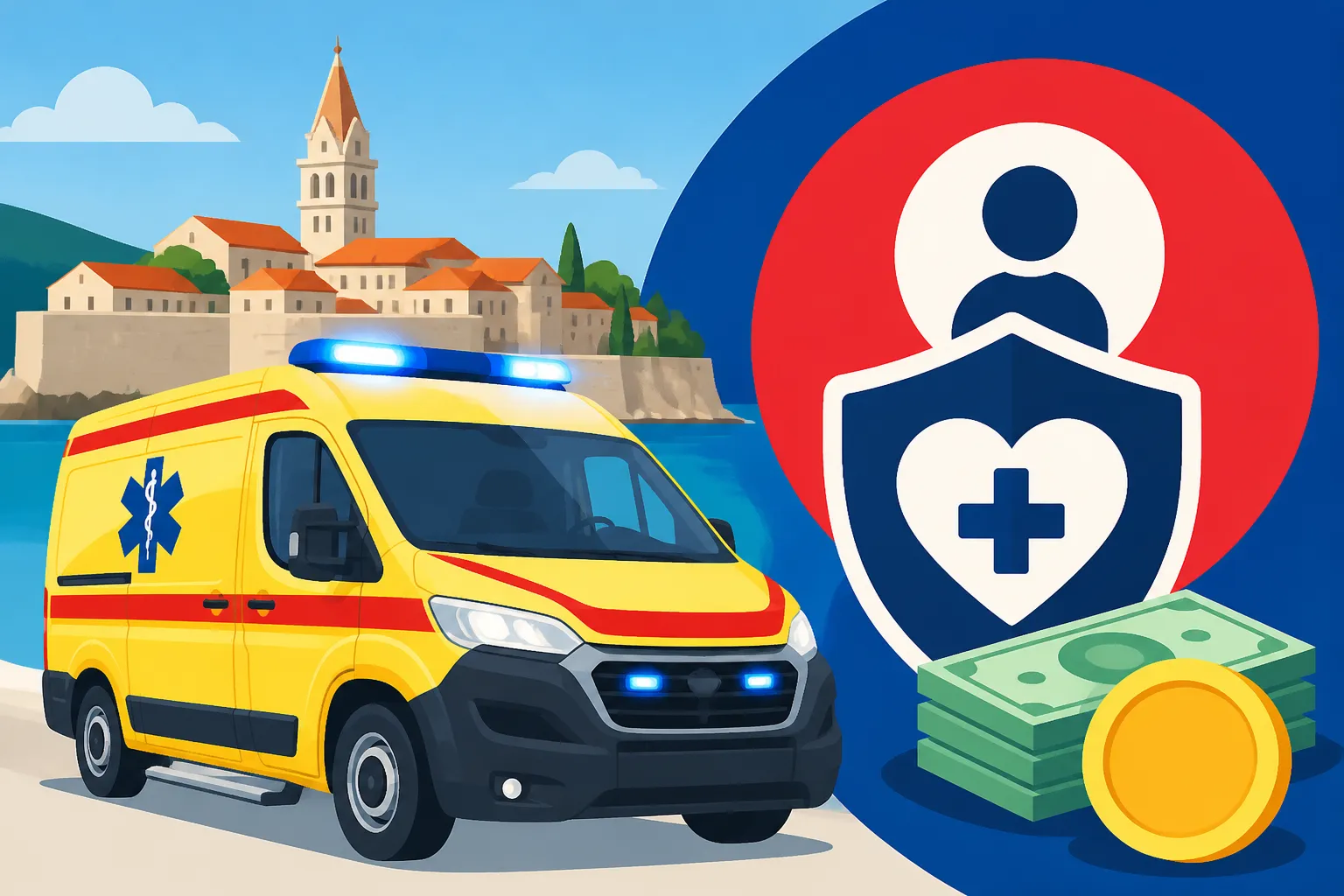
It's one of those heart-stopping moments no expat, tourist, or digital nomad ever wants to face: a sudden, severe medical emergency in a foreign land. Your mind races, and among the many anxieties, a crucial question pops up – "How much is this going to cost me?" In Croatia, specifically concerning the Hitna Pomoć, or ambulance service, the answer isn't always straightforward, and understanding it can save you a world of stress when every second counts. This guide will walk you through the nitty-gritty of ambulance costs in Croatia, demystifying the system so you're prepared, no matter what.
Understanding the Croatian Emergency Medical System Hitna Pomoć
When you're dealing with a medical emergency in Croatia, the first thing you need to know is how the system works. Hitna Pomoć refers to the emergency medical services, and they operate similarly to many other countries, aiming to provide rapid response for life-threatening situations. However, the financial implications can vary significantly depending on your residency status and health insurance coverage.
When to Call 112 or 194
Croatia has two primary numbers for emergencies, and it's important to know the distinction, although both will ultimately get you the help you need.
- 112 (Jedinstveni europski broj za hitne službe): This is the single European emergency number. You can call 112 for any emergency – medical, fire, police, mountain rescue. The operators are usually multilingual and will direct your call to the appropriate service. It's an excellent choice if you're unsure which specific service you need or if you're in a highly stressful situation where clear thinking is difficult. They act as a central hub.
- 194 (Hitna Medicinska Pomoć): This is the direct line for medical emergencies, connecting you straight to the ambulance service. If you know definitively that you need an ambulance for a medical crisis, 194 is your direct route.
Regardless of which number you dial, always be prepared to provide clear, concise information: your location (as precise as possible, including city, street, and house number, or even landmarks if you're outdoors), the nature of the emergency, and the condition of the patient. Stay calm and speak slowly. This isn't the time to worry about your Croatian pronunciation; they are trained to handle calls from foreigners.
What Constitutes a "True" Emergency
This is where the system gets a little nuanced, especially regarding potential costs. In Croatia, as in many public healthcare systems, ambulance services are primarily for true medical emergencies – situations where a person's life is in danger or there's a serious risk of permanent disability. This includes things like:
- Heart attack or stroke symptoms
- Severe trauma (e.g., car accident, serious fall)
- Unconsciousness or sudden collapse
- Severe bleeding
- Difficulty breathing
- Sudden, excruciating pain
If you call an ambulance for a minor issue that could realistically be handled by a visit to a Dom Zdravlja (Health Centre) or an urgent care clinic (hitna ambulanta), you might find yourself facing a co-payment or even the full cost of the transport, depending on your insurance status. The emergency medical teams are professionals, and they will assess the situation upon arrival. While you should never hesitate to call in a genuine emergency out of fear of cost, it's wise to understand this distinction. It’s a bit of a tightrope walk, and sometimes as an expat, you just don't know the local nuances until you're in the thick of it.
Cost Breakdown for Ambulance Services Public vs Private
Now, let's get to the brass tacks of what an ambulance ride might actually set you back. The cost of Hitna Pomoć in Croatia isn't a fixed price tag you can find on a menu; it's intricately linked to your health insurance status and the nature of the emergency itself.
For HZZO-Insured Residents
If you are a legal resident in Croatia and registered with the Croatian Health Insurance Fund (HZZO), congratulations, you've got the best possible coverage for emergency services. HZZO is Croatia's public health insurance, and it covers the vast majority of medical costs, including ambulance transport, for those who are properly registered. You can read more about How the Croatian Health Insurance Fund (HZZO) Works: A Full Overview.
- True Emergencies: In cases deemed a true medical emergency by the medical personnel, the ambulance transport itself is usually fully covered by HZZO. This means no direct charge for the ride. However, depending on the subsequent treatment, there might be a "participacija" or co-payment. Understanding Participacija (Co-Payments) in the Croatian Health System is key here. The maximum co-payment per individual instance of care is typically capped at a certain amount (currently around €530.88 as of early 2026, but this can change), but for ambulance transport itself in a life-threatening situation, it's often minimal or waived.
- Non-Emergencies: If you call an ambulance for something that the medical team later determines wasn't a life-threatening emergency, you might be charged a co-payment or even the full cost of the transport. This is rare for legitimate calls, but it's a possibility if the service is deemed unnecessary. For example, if you call for a mild fever that could have been handled by visiting a GP (Liječnik Opće Prakse) at the Dom Zdravlja. The exact cost in such cases can vary but could range from €50-€200 or more, depending on the distance and resources used.
- Supplementary Health Insurance (Dopunsko Osiguranje): To avoid most, if not all, co-payments, many HZZO-insured residents also get Dopunsko Zdravstveno Osiguranje (supplementary health insurance). This covers the participacija fees. If you have dopunsko, your out-of-pocket costs for an ambulance, even with co-payments, would likely be zero. This is a highly recommended option for long-term residents. You can learn more about Understanding Dopunsko Zdravstveno Osiguranje (Supplementary Insurance) in Croatia.
For EU/EEA Citizens with an EHIC
If you're an EU/EEA citizen visiting Croatia, your European Health Insurance Card (EHIC) is your best friend. The EHIC allows you to receive medically necessary state-provided healthcare during a temporary stay in Croatia under the same conditions and at the same cost as people insured in Croatia.
- Medically Necessary Care: For medically necessary ambulance transport (i.e., a true emergency), your EHIC should cover the costs. You will be treated as if you were an HZZO-insured individual. This means you might still be liable for any participacija (co-payments) that a local Croatian would pay.
- Limitations: The EHIC is not a substitute for travel insurance. It only covers state-provided care and does not cover private medical treatment, repatriation, or lost luggage. If you require an ambulance to transport you to a private clinic, for instance, your EHIC might not cover it. Also, if the medical personnel determine the ambulance was not strictly "medically necessary" for a temporary stay, you could be billed. It's always wise to have comprehensive travel insurance in addition to your EHIC. Learn more about How to Use Your EHIC (EKZO) Card in Croatia as an EU Citizen.
For Non-EU/EEA Citizens, Tourists, and Digital Nomads
This is where the costs can become significant if you're not properly prepared. If you're a non-EU/EEA citizen, a tourist without specific insurance, or a digital nomad still navigating the residence permit process, you generally fall into the "uninsured" category for Croatian public healthcare unless you have private insurance that specifically covers emergency medical transport.
- Full Cost Liability: Without HZZO, an EHIC, or valid private health insurance, you will be liable for the full cost of the ambulance service and any subsequent medical treatment. This is not cheap.
- Estimated Costs (Uninsured):
- Ambulance Transport: While it's difficult to give an exact figure as it depends on distance, resources used (e.g., paramedics, advanced life support equipment), and the urgency of the call, a basic ambulance ride in Croatia could easily cost anywhere from €150 to €500 or more. For more complex transfers or situations requiring extensive intervention en route, this figure could climb significantly.
- Subsequent Hospital Care: Remember, the ambulance ride is just the transport. The real costs will come from the medical examination, diagnostics, treatment, and any hospital stay. An emergency room visit without insurance can quickly run into hundreds, if not thousands, of euros. A simple broken bone requiring X-rays and a cast could be €500-€1500, while a severe medical event could lead to bills in the tens of thousands.
- Private Health Insurance: This is absolutely essential for non-EU/EEA individuals. Whether you're a tourist or a digital nomad, comprehensive private health insurance is your safety net. Look for policies that explicitly cover emergency medical evacuation and transport. Many travel insurance policies or expat-focused insurance providers, like SafetyWing, offer this crucial coverage. SafetyWing, for instance, is a popular choice among digital nomads because it's designed for global citizens and often includes emergency medical expenses and evacuation. Having this type of insurance means that while you might pay upfront, you can then claim reimbursement, shielding you from exorbitant out-ofpocket expenses. Even if you're applying for a Croatian Digital Nomad Permit, proof of health insurance is a requirement, so make sure it's robust! You'll want to ensure your chosen plan, whether it's SafetyWing or another provider, meets the requirements for a Croatian residence permit and offers sufficient coverage for serious incidents.
Overview of Ambulance Costs by Insurance Status
To help clarify, here's a quick table summarizing the typical cost scenarios for an ambulance in Croatia:
| Insurance Status | Ambulance Transport Cost (True Emergency) | Potential Additional Costs (Co-payments/Treatment) | Overall Out-of-Pocket (Approx.) |
|---|---|---|---|
| HZZO (Public Health Insurance) | Usually 0€ | Participacija (co-payment) applies | Low (if dopunsko is held) |
| HZZO + Dopunsko Osiguranje (Supplementary) | Usually 0€ | Participacija covered by dopunsko | 0€ |
| EU/EEA with EHIC (Temporary Stay) | Usually 0€ | Participacija (co-payment) applies | Low to Moderate |
| Private Health Insurance (e.g., SafetyWing) | Covered by policy (may require upfront pay) | Covered by policy (may require upfront pay) | 0€ – Moderate (depending on deductible/coverage) |
| Uninsured (Non-EU/EEA, no private insurance) | Full cost (150€ – 500€+) | Full cost of all medical services | Very High (Potentially thousands of euros) |
Note: All costs are estimates and can vary based on the specific situation, services rendered, and current regulations.
Navigating Insurance HZZO, EHIC, and Private Policies
Understanding your insurance situation is paramount before an emergency strikes. It's not just about the ambulance; it's about the entire chain of medical care that follows.
HZZO and Dopunsko Osiguranje for Residents
If you're planning a long-term stay or have already established residency in Croatia, getting registered with HZZO is your top priority. This is the foundation of public healthcare access. The process can feel a bit like a bureaucratic labyrinth, but it's crucial. Your employer will typically handle your initial registration if you're employed, but if you're self-employed, a digital nomad, or joining a spouse, you'll need to navigate it yourself. This might involve getting your OIB first and then heading to the local HZZO office. For those self-employed or on a digital nomad permit, you'll be paying monthly contributions, which will then grant you access to the system.
Once you have HZZO, seriously consider Dopunsko Zdravstveno Osiguranje. It's a relatively inexpensive supplementary policy (usually around €10-€20 per month) that covers those pesky co-payments. Without dopunsko, even with HZZO, you can still incur significant out-of-pocket expenses if you have multiple tests, specialist visits, or a hospital stay. For comprehensive guidance on this, check out Health Insurance in Croatia: Mandatory, Supplementary and Private Options Explained.
EHIC for EU/EEA Visitors
As mentioned, the EHIC is vital for EU/EEA citizens. Always carry your physical card (or a digital equivalent if your country provides one) when traveling. While it covers "medically necessary" treatment, the interpretation of "necessary" can sometimes be subjective, especially if you're not in a life-or-death situation but still need urgent care. It’s always best to have a backup travel insurance plan.
Private Health Insurance for Everyone Else
For those outside the EU/EEA, or even EU/EEA citizens who want more comprehensive coverage than EHIC alone provides, private health insurance is non-negotiable.
- Coverage for Residence Permits: If you're applying for a Croatian residence permit, proof of health insurance is almost always a requirement. The policy needs to be valid in Croatia and cover a certain minimum amount for medical expenses. Always double-check the specific requirements for your permit type.
- Choosing a Provider: Look for international private health insurance companies. Local Croatian private insurance companies exist (like Croatia Osiguranje or Generali), but their policies might be geared more towards supplementing HZZO rather than standalone full coverage for foreigners. International providers like SafetyWing are often designed with global travelers and expats in mind, offering flexibility and coverage across borders. When comparing policies, pay close attention to:
- Emergency Medical Evacuation/Repatriation: This is critical. It covers the cost of transporting you to the nearest appropriate medical facility or even back to your home country if necessary.
- In-patient and Out-patient Care: Covers hospital stays, surgeries, and doctor visits.
- Deductibles and Co-insurance: Understand how much you'll pay out-of-pocket before your insurance kicks in.
- Network of Hospitals/Clinics: Does the insurer have agreements with facilities in Croatia, or will you have to pay upfront and claim reimbursement?
- Customer Service: Is it available in English and accessible 24/7?
Having a robust private plan, like those offered by SafetyWing, provides peace of mind. It ensures that if you need emergency medical transport, or any urgent care, the financial burden is manageable. This is particularly important for individuals on a Digital Nomad Permit who might not immediately qualify for HZZO or who prefer the flexibility of private options.
Practical Advice What to Do in an Emergency
Beyond knowing the costs and your insurance situation, having a clear head and a plan in an actual emergency can make all the difference.
Before an Emergency Strikes
Preparation is key, my friends. As an expat, you learn to expect the unexpected, and that includes health hiccups.
- Emergency Contact List: Keep a list of emergency numbers (112, 194, your family doctor's number, embassy contact) readily accessible, perhaps saved in your phone as "ICE" (In Case of Emergency) contacts.
- Medical Information: Carry a small card in your wallet with vital medical information:
- Your full name and date of birth
- Any known allergies (e.g., medications, food)
- Current medications you are taking
- Any pre-existing medical conditions (e.g., diabetes, heart condition)
- Your blood type (if you know it)
- Emergency contact person's name and phone number
- Your insurance provider and policy number (HZZO card number, EHIC number, or private insurance details).
- Learn Key Croatian Phrases: While many medical professionals speak English, knowing a few basic Croatian phrases can be incredibly helpful:
- "Hitna pomoć!" (Emergency!)
- "Pomoć!" (Help!)
- "Boli me ovdje." (It hurts here.)
- "Ne mogu disati." (I can't breathe.)
- "Alergičan sam na…" (I am allergic to…)
- Locate Nearest Medical Facilities: Know where your nearest Dom Zdravlja (health centre) and Klinički Bolnički Centar (KBC – Clinical Hospital Centre) are. These are the main public healthcare institutions.
- Keep Your Documents Handy: Always have your ID, residence permit, and insurance card (HZZO, EHIC, or private) readily available. This is crucial for smooth processing.
During the Emergency Call
When you dial 112 or 194, remember to:
- Stay Calm: Take a deep breath. Your calm voice will help the operator understand you better.
- Speak Clearly: State your emergency clearly.
- Location, Location, Location: Provide the precise address, including city, street name, house number, and any distinguishing features. If you're unsure, look for street signs, prominent buildings, or ask a passerby.
- Describe the Situation: Briefly explain what happened and the patient's symptoms.
- Answer Questions: Be prepared to answer questions about the patient's age, conscious state, breathing, and any visible injuries.
- Don't Hang Up Until Told To: The operator may have more questions or instructions.
After the Ambulance Arrives
- Show Your ID and Insurance: Present your identification and insurance documents to the paramedics.
- Explain What Happened (Again): Be prepared to briefly recount the events and symptoms to the medical team.
- Follow Instructions: The paramedics are highly trained. Follow their instructions precisely.
- Ask for Documentation: If possible, ask for some form of documentation regarding the ambulance transport and the initial assessment. This can be helpful for your insurance claims later, especially if you have private insurance like SafetyWing and need to submit for reimbursement.
Facing a medical emergency in Croatia can be daunting, but being informed about the ambulance system and your insurance coverage can significantly alleviate the stress. Remember, in a genuine emergency, your health and safety come first. Don't hesitate to call for Hitna Pomoć. The financial aspects can be sorted out afterward, especially if you've taken the steps to ensure you're adequately insured.
Disclaimer
This article is for general informational purposes only and does not constitute professional advice. Laws, prices and regulations vary by location and change over time. Consult a qualified professional for guidance on your specific situation.