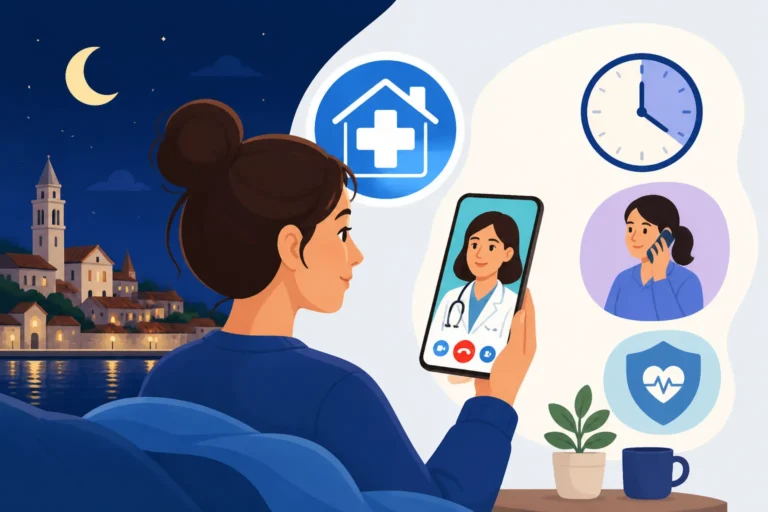
How to Choose and Register with a GP (Liječnik Opće Prakse) in Croatia
Moving to Croatia is an adventure, isn't it? But amidst the beauty of the Adriatic and the charming cobblestone streets, there's always that niggling worry: "What if I get sick?" The thought of navigating a foreign healthcare system, especially when you're not feeling your best, can be incredibly daunting. This guide is here to unravel the complexities of choosing and registering with a General Practitioner (GP), known locally as a liječnik opće prakse, ensuring you feel confident and cared for in your new home.
Understanding the Role of Your GP in Croatia (Liječnik Opće Prakse)
For many expats, the concept of a “family doctor” or GP might seem straightforward from back home. However, in Croatia, your *liječnik opće prakse* isn’t just a doctor you see when you’re under the weather; they are truly your gateway to the entire public healthcare system. This means they’re not just treating your sniffles, but also managing your long-term health, acting as your advocate, and facilitating nearly every step of your medical journey.
Why a GP is Your First Port of Call
In Croatia, your GP holds a central, indispensable role in your healthcare. Think of them as the conductor of your health orchestra. You can’t just waltz into a specialist’s office or a hospital for non-emergency issues without a referral from your GP. This gatekeeping function is designed to streamline care, ensure continuity, and prevent unnecessary specialist visits, but it can feel restrictive if you’re used to direct access. From common colds and flu to initial diagnoses of more complex conditions, your GP is where it all begins. They are the ones who will listen to your symptoms, perform initial examinations, and decide on the best course of action. They might prescribe medication, recommend lifestyle changes, or, crucially, issue you an *e-uputnica* (e-referral) to see a specialist or undergo further diagnostic tests.
This means building a good relationship with your GP is paramount. They will become familiar with your medical history, your lifestyle, and even your personality, which can make a huge difference in how effectively your health needs are met. For those moments when you just need a routine check-up, or even advice on everyday health concerns, your GP is the expert you turn to first.
The Scope of Your GP’s Services
The services provided by your *liječnik opće prakse* are surprisingly broad, covering a significant portion of your primary healthcare needs. This isn’t just about handing out prescriptions; it’s comprehensive care. They manage chronic conditions like diabetes or high blood pressure, provide preventive care such as vaccinations and annual check-ups, and offer advice on nutrition and healthy living. Minor injuries, infections, and even some psychological support can fall under their purview. They are also responsible for issuing official medical certificates for work or other administrative purposes, which you’ll inevitably need at some point.
It's a common misconception that in a public system, care might be minimal, but Croatian GPs are highly trained and often have extensive experience. They are equipped to handle a wide array of medical situations, acting as your primary diagnostician and treatment coordinator. They also play a key role in public health initiatives, such as tracking infectious diseases and encouraging preventative screenings. So, don't underestimate their capabilities; they're truly the frontline of Croatian healthcare.
The Importance of Communication and Trust
Establishing clear communication and a foundation of trust with your GP is probably the most vital step in navigating the Croatian healthcare system successfully. Especially as an expat, where language barriers or cultural differences might exist, this becomes even more critical. You need to feel comfortable discussing your health concerns openly and honestly, knowing that your GP understands you and has your best interests at heart. If you’re struggling with Croatian, finding a GP who speaks English can make an immense difference. Don’t be shy about asking if they or their nurse speak English during your initial inquiries. This isn’t a luxury; it’s a necessity for accurate diagnosis and treatment.
Beyond language, trust also comes from feeling heard and respected. A good GP will take the time to explain diagnoses, treatment plans, and referral processes in a way that you can understand, avoiding overly technical jargon. They should also be receptive to your questions and concerns. Remember, you are an active participant in your healthcare, and your GP is your partner in that journey. A strong, trusting relationship can alleviate much of the anxiety that comes with accessing medical care in a new country.
Navigating the Croatian Public Healthcare System for GP Registration
Before you can even think about which doctor to choose, you need to understand the fundamental prerequisites for accessing public healthcare in Croatia. This isn’t like popping into a walk-in clinic; there’s a structured system in place that requires specific documentation and a bit of administrative legwork. It’s here that many expats encounter their first “welcome to Croatia” bureaucratic hurdles.
The Indispensable OIB and Health Insurance (HZZO)
First things first: you absolutely need an OIB (Osobni identifikacijski broj), Croatia’s personal identification number, before you can do almost anything official here, including registering for healthcare. It’s like your social security number, tax ID, and personal identification all rolled into one. Without it, you’re essentially invisible to the system. You can learn more about how to get this crucial number by checking out our guide on How to Get Your OIB and Why It Matters for Healthcare Access. Once you have your OIB, the next critical step is registering with HZZO, the Croatian Health Insurance Fund. How the Croatian Health Insurance Fund (HZZO) Works: A Full Overview explains this in detail. This isn’t just a suggestion; it’s mandatory for all residents.
Once you're enrolled in HZZO, you become eligible for public healthcare services, and that includes choosing and registering with a GP. Your HZZO card is your golden ticket, proving your entitlement to healthcare. Without active HZZO coverage, you'll be treated as a private patient, and while excellent care is available privately, it comes at a cost, which is why many expats also look into private health insurance options like SafetyWing to cover any gaps, especially during initial waiting periods or for specific private services. Having your HZZO status sorted is the absolute bedrock upon which your access to a GP stands.
The “Catchment Area” Myth and Reality
You might hear whispers about “catchment areas” or geographical restrictions when it comes to choosing a GP. In theory, each GP has a defined number of patients they can take on, and typically, these patients reside within a certain geographical proximity to their practice. This is often tied to the *dom zdravlja* (health centre) system, which serves specific districts. Our guide on Understanding the Role of the Dom Zdravlja (Health Centre) in Croatia can shed more light on this. However, in practice, this isn’t always a strict rule for choosing your personal GP, especially in larger cities. While it’s generally easier to find a GP within your municipality or a nearby one, it’s not impossible to register with a GP a bit further away if they have capacity and are willing to accept you.
The key is capacity. GPs are limited in the number of patients they can manage, and once they reach that quota, they cannot take on new patients. This means that while you might prefer a GP across town, if they're full, you'll need to look elsewhere. It's less about a rigid geographical boundary and more about the availability of slots. Don't be discouraged if your first choice is full; simply move on to the next.
Essential Documents for Registration
When you head out to register with your chosen GP, it’s vital to have all your ducks in a row. Croatian bureaucracy loves its paperwork, and the more prepared you are, the smoother the process will be. Here’s a list of documents you’ll almost certainly need:
- OIB: Your Croatian personal identification number. You absolutely cannot proceed without it.
- Proof of Croatian Health Insurance (HZZO): This will be your HZZO card or a certificate proving your active enrollment. If you're an EU citizen using your EHIC, ensure you understand How to Use Your EHIC (EKZO) Card in Croatia as an EU Citizen works for initial coverage, but ultimately, for long-term residence, HZZO registration is key.
- Valid ID: Your passport or Croatian residence permit (boravišna iskaznica).
- Proof of Address (Potvrda o prebivalištu): This could be your rental contract, a utility bill in your name, or a certificate of residence from the MUP. This is important to show that you are indeed a resident in the area.
- The Izjava o Odabiru Doktora form: This is the official declaration form you fill out to register with a specific doctor. The GP's office will usually provide this, but it’s good to be aware of its existence.
- Translation of medical history (optional but highly recommended): While not required for registration, having a summary of your significant medical history, allergies, and current medications translated into Croatian or English will be invaluable for your new GP.
Being organised with these documents will save you multiple trips and ensure a much less stressful experience.
Step-by-Step Guide to Choosing Your GP
So, you’ve got your OIB, your HZZO is sorted, and you’re ready to find that medical lifeline. Choosing a GP isn’t a decision to rush. This person will be integral to your health journey in Croatia, so a little research and careful consideration go a long way.
Researching Doctors and Health Centers (Dom Zdravlja)
The first step is to identify potential GPs in your area. Most GPs operate out of a *dom zdravlja* (health centre), which are public health institutions found in nearly every town and city. These centres house multiple GP practices, as well as often dental services, gynecology, and sometimes even labs for basic blood tests. Start by locating the *dom zdravlja* nearest to your home. You can find their contact information online or simply by asking locals. Google Maps is your friend here!
Once you've identified a dom zdravlja, you can look for a list of GPs working there. Often, this information is available on their website or on notice boards within the centre. Ask expat forums or local community groups for recommendations. Word-of-mouth can be incredibly powerful in Croatia. You'll want to gather names, contact numbers, and potentially their working hours. When researching, keep an eye out for mentions of English-speaking doctors, which will significantly ease your mind. Some expats even opt for private polyclinics for specific services, and you can explore Public vs Private Healthcare in Croatia: Which Should Expats Choose? for more insight into that.
Initial Contact and Availability Checks
Once you have a shortlist of potential GPs, it’s time to make contact. This is usually done by phone. Be prepared for a conversation, potentially in Croatian, or with the help of a Croatian-speaking friend. When you call, you’ll want to ask a few key questions:
- Are they accepting new patients? (Jeste li slobodni za nove pacijente?) This is the most crucial question. If they're full, you'll have to move on.
- Do they or their nurse speak English? (Govorite li engleski vi ili vaša sestra?) Don't be afraid to ask. This can make all the difference.
- What are their working hours? (Koje je vaše radno vrijeme?) This is important for scheduling appointments.
- Where are they located? (Gdje se nalazite?) Confirm the exact address.
If the answer to the first two questions is positive, you're in luck! If not, don't get discouraged. The process can sometimes take a few calls. It's often best to call during off-peak hours, perhaps early afternoon, when the practice might be less busy with patients. Many practices have specific "phone call hours" as well, so pay attention to those.
What to Look For in a Good GP
Beyond the practicalities of availability and language, what really makes a *good* GP for an expat in Croatia? It’s often a combination of professional competence and a supportive attitude.
- Empathetic and Patient: Someone who understands the challenges of being a foreigner in a new system and is willing to explain things clearly, even if it takes a little longer.
- Good Listener: A GP who actively listens to your concerns rather than rushing through the appointment. You want to feel heard.
- Organizational Skills: A well-run practice with efficient appointment scheduling and clear communication from the nurse can save you a lot of headaches.
- Proximity and Accessibility: While not always strictly necessary, having a GP close to home or work is incredibly convenient, especially when you're feeling unwell.
- Modern Approach: Some GPs are more tech-savvy, utilizing the e-health system effectively for prescriptions (e-recept) and referrals (e-uputnica). This can significantly streamline your interactions.
- Recommendations: Don't underestimate the power of fellow expat recommendations. If other foreigners have had positive experiences, that’s a strong indicator.
Remember, you have the right to choose your GP. If, after registering, you find that the doctor isn't a good fit, you can switch. However, it's generally recommended to stick with one GP for a reasonable period to allow them to get to know your medical history.
The Actual Registration Process
You’ve done your research, made your calls, and found a GP who is willing to take you on. Fantastic! Now comes the actual registration, which is thankfully less complicated than the research phase.
Completing the Registration Form (Izjava o Odabiru Doktora)
Once you’ve confirmed with your chosen GP’s office that they have availability and are happy to accept you, they will ask you to come in to complete the official registration form, known as the *Izjava o Odabiru Doktora*. This form is a formal declaration where you state your intention to select this particular doctor as your primary care physician. It’s usually a single page, straightforward document that asks for your personal details (name, OIB, address, contact info) and the doctor’s details.
The nurse in the GP's office (often called the medicinska sestra) will usually guide you through filling it out. This is a great opportunity to ask any final questions about their practice's procedures, such as how to make appointments, what their busiest times are, or how to get a repeat prescription. Don't be afraid to ask. This is also where you'll submit your required documents like your HZZO card and ID. Ensure you have everything ready as listed above. The nurse will then process your registration, officially linking you to that GP within the HZZO system.
The Transfer Period and Continuity of Care
Once you’ve submitted your *Izjava o Odabiru Doktora*, there might be a short administrative “transfer period” before your registration is fully processed within the HZZO system. This is usually not a long wait, often just a few days to a week. During this time, you might not immediately show up on the system as their registered patient, but the GP’s office will generally acknowledge your pending registration and treat you if necessary. It’s rare to be left without care during this interim.
If you are transferring from another Croatian GP, your previous medical records will usually be transferred to your new GP's office. This ensures continuity of care, meaning your new doctor will have access to your medical history, past diagnoses, and treatments. It's a good idea to confirm this with the nurse when you register. If you are brand new to the Croatian system and didn't have a GP here before, this transfer period won't apply in the same way, but it's still good to be aware that administrative updates can take a short while. It’s in these moments that having a reliable backup like SafetyWing travel medical insurance can offer peace of mind, especially if you have an urgent, non-life-threatening need that arises before your HZZO registration is fully reflected in the system.
What Happens After Registration
Congratulations! You’re now officially registered with a GP in Croatia. This means you can now access all primary healthcare services through their practice. Your GP will be the one you contact for appointments, prescriptions (which will be issued as e-recept), and referrals to specialists (e-uputnica). They will also be your point of contact for routine check-ups, sick leave certificates, and general medical advice.
You might receive a welcome packet or some information about the practice, including their specific operating hours, contact numbers, and possibly an overview of services. Make sure to save this information somewhere accessible. It's also a good idea to schedule an initial "meet and greet" appointment with your new GP, even if you don't have any pressing health concerns. This allows you to introduce yourself, provide them with a summary of your medical history (if you haven't already), and establish that crucial personal connection. This proactive step can make future visits much more comfortable and productive.
Common Challenges and Troubleshooting for Expats
While the process is relatively straightforward on paper, real life in Croatia often throws a few curveballs, especially for expats. Being prepared for these challenges can save you a lot of frustration.
Language Barriers and Finding English-Speaking Doctors
Ah, the eternal expat challenge: language. While many younger Croatians, especially in tourist areas, speak excellent English, relying solely on English for complex medical discussions can be risky. This is why actively seeking out an English-speaking GP is so important. As mentioned, don’t hesitate to ask during your initial phone calls. Our guide on How to Find an English-Speaking Doctor in Croatia offers even more tips on this.
If you find yourself in a situation where your chosen GP doesn't speak fluent English, and you don't speak fluent Croatian, consider bringing a Croatian-speaking friend or even hiring a professional translator for your first few appointments, especially if you have significant health issues to discuss. Google Translate is great for quick phrases, but it's not reliable enough for medical consultations. Many expat communities on social media are also fantastic resources for recommendations for doctors with good English. Remember, clear communication is paramount to your health, so prioritize finding a way to bridge any language gap.
Dealing with Bureaucracy and Patience
Croatia, like many countries, has its fair share of bureaucracy. The healthcare system, being a large public institution, is no exception. Forms, stamps, waiting rooms, and sometimes seemingly illogical processes are all part of the experience. The best advice here is: patience, patience, patience. Don’t go in expecting lightning-fast efficiency, especially for non-urgent matters.
Be prepared for waiting times, both on the phone and in the waiting room. Arrive at appointments a little early, and bring a book or something to keep you occupied. When dealing with administrative staff, always be polite and persistent. A smile and a respectful tone can go a long way in getting things done. If you encounter a roadblock, ask for clarification on why something is needed or why a process is taking longer than expected. Understanding the "why" can often help you navigate it better. Sometimes it's a matter of understanding local customs; sometimes it's just the way the system works.
What if Your Chosen GP is Full?
This is a very real possibility, especially in popular expat areas like Zagreb, Split, or Dubrovnik. As mentioned, GPs have a limited number of patients they can take, and once they hit that cap, they cannot accept more. If your ideal GP informs you they are full, don’t despair.
Here’s what you can do:
- Ask for recommendations: Ask the nurse at the full practice if they can recommend another GP within the same dom zdravlja or a nearby one who might have capacity.
- Expand your search: Widen your geographical search area slightly. Sometimes a GP a bit further out might have availability.
- Try again later: Practices' patient lists can change. While you shouldn't put your health on hold, if you're not in urgent need, you could try calling back in a few months to see if a slot has opened up.
- Consider private options temporarily: If you need immediate care and can't find a public GP, consider a private clinic for an initial consultation. This might incur out-of-pocket costs, but can be managed if you have private insurance such as SafetyWing. This option can tide you over until you secure a public GP. Remember, private care is typically faster, but it doesn't replace the need for a public GP for HZZO-covered services and referrals.
- Seek assistance: If you are truly struggling, reach out to local expat groups or community resources. Often, someone there has navigated a similar situation and can offer specific advice or even a contact.
Ultimately, you will find a GP. It might just require a little more persistence than you initially anticipated.
Practical Tips and Expat Insights
As an expat who’s been through the Croatian healthcare wringer myself, I’ve picked up a few nuggets of wisdom that can make your experience much smoother.
Consider Supplementary Health Insurance (Dopunsko)
Even with HZZO primary insurance, you’ll still be subject to *participacija*, which are co-payments for various services, including GP visits, specialist consultations, and prescriptions. These aren’t usually huge amounts, but they add up, and for some services, they can be substantial. This is where supplementary health insurance, or *dopunsko zdravstveno osiguranje*, comes in handy. It covers these co-payments, effectively making many HZZO services “free” at the point of use.
Many Croatian insurance companies, like Croatia Osiguranje, offer dopunsko. It's typically a low monthly premium, and for most expats, it's absolutely worth it. It removes the stress of paying a small fee every time you visit the doctor or pick up a prescription. Our guide on Understanding Dopunsko Zdravstveno Osiguranje (Supplementary Insurance) in Croatia details why this is such a smart choice. While SafetyWing provides excellent travel medical insurance, dopunsko integrates directly with the Croatian public system to cover those local co-pays, offering a different but equally valuable layer of financial protection.
Digital Tools and the e-Health System
Croatia’s healthcare system has made significant strides in digitalization in recent years. The *e-zdravstvo* (e-health) system is now quite robust, meaning many interactions are paperless and streamlined. Your GP will issue *e-recepti* (e-prescriptions) directly to the pharmacy and *e-uputnice* (e-referrals) for specialist appointments. This is incredibly convenient once you’re used to it.
- e-Recept: When your GP prescribes medication, it's automatically sent to a central system. You simply go to any pharmacy (ljekarna) with your HZZO card (or just your OIB) and they can access your prescription. No paper slips needed! Our guide on Prescription Medications and Pharmacies in Croatia: The Complete Guide has more information.
- e-Uputnica: Similarly, if your GP refers you to a specialist, they will issue an e-uputnica. This is also digital. You then contact the specialist's office (or hospital department) with your HZZO card, and they can see the referral in the system. You can even check the status of your referrals through the e-Građani portal if you have it set up. Understanding How e-Uputnica (E-Referrals) Work for Specialist Appointments in Croatia is key to accessing specialist care.
Embrace these digital tools. They truly make life easier once you understand how they work.
Building a Relationship with Your Medical Team
Beyond your GP, you’ll also interact frequently with their medical nurse (medicinska sestra). In Croatian practices, the nurse plays a crucial role, often acting as the first point of contact, handling administrative tasks, taking basic measurements, and providing initial advice. Building a good rapport with both your GP and their nurse is incredibly beneficial. They are your allies in the system.
Be polite, express gratitude, and if possible, learn a few basic Croatian phrases (even just dobar dan for good day and hvala for thank you). This small effort can go a long way in fostering a positive relationship. They are the ones who can often squeeze you in for an urgent appointment, patiently explain a process for the tenth time, or offer invaluable local insights. Your GP's office isn't just a transactional space; it's a small community, and being a respectful and engaged patient will make your healthcare journey much smoother and more pleasant in the long run.
Here’s a quick reference table to summarize key aspects of GP registration in Croatia:
| Aspect | Description | Key Takeaway |
|---|---|---|
| Role of GP | First point of contact for nearly all public healthcare needs, gatekeeper to specialists. | Choose wisely, as they manage your entire health journey. |
| Prerequisites | OIB (personal identification number) and active HZZO (public health insurance) coverage. | Get your OIB and register for HZZO before looking for a GP. |
| Finding a GP | Research dom zdravlja (health centers), ask expat communities for recommendations, call practices to check availability and language skills. | Be proactive and persistent. Focus on English-speaking options if your Croatian is limited. |
| Key Documents | OIB, HZZO card/certificate, valid ID (passport/residence permit), proof of address. | Have all documents ready to avoid delays. |
| Registration Form | Izjava o Odabiru Doktora – official declaration signed at the GP's office. | The nurse will guide you. Ask questions about practice procedures at this point. |
| Language Barrier | Common challenge; prioritize English-speaking GPs or bring a translator. | Essential for clear diagnosis and treatment. Consider SafetyWing as a backup if communication issues lead to needing private consultations. |
| Patience | Bureaucracy and waiting times are part of the public system experience. | Maintain a polite and patient demeanor. |
| Supplementary Insurance | Dopunsko zdravstveno osiguranje covers HZZO co-payments (participacija). | Highly recommended for financial peace of mind. |
| e-Health System | Digital prescriptions (e-recept) and referrals (e-uputnica) are standard. | Streamlines processes; learn to use your HZZO card for these services. |
Disclaimer
Please remember that while I strive to provide accurate and up-to-date information, regulations and procedures in Croatia can change. This guide is intended for informational purposes only and should not be taken as legal or medical advice. Always consult official sources, such as the Croatian Ministry of Health, HZZO, or legal professionals for the most current and personalized guidance.