How to Handle a Medical Emergency Abroad with Croatian Insurance
Oh, the joys of travel! We expats in Croatia often get a bit too comfortable with the stunning coastline and the laid-back life, forgetting that outside these borders, things can get tricky, especially if a medical emergency strikes. It's one thing to navigate the Croatian healthcare system, but quite another to figure out what happens when you're suddenly ill or injured in another country, relying on your Croatian insurance. This guide is here to shed some light on that often-confusing situation, helping you understand your options and, most importantly, how to act when every second counts, ensuring you don't end up with a huge medical bill or unnecessary stress while recovering.
Understanding Your Croatian Health Insurance for Travel Abroad
Living in Croatia means you're likely plugged into the national health insurance system, HZZO. But when you step outside Croatian borders, particularly for travel, the rules of the game change. It's crucial to understand what your existing coverage actually provides, as it's often not as comprehensive as you might hope.
HZZO and the EHIC Card: What It Covers
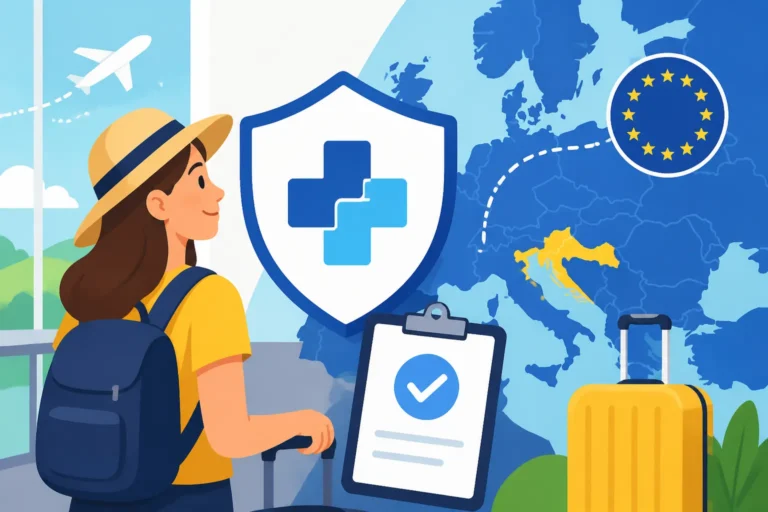
For those of us registered with the Croatian Health Insurance Fund (HZZO), our primary coverage is for healthcare within Croatia. However, the European Health Insurance Card (EHIC), known as the EKZO card here, is your golden ticket for accessing medically necessary state-provided healthcare during a temporary stay in any of the 27 EU countries, Iceland, Liechtenstein, Norway, Switzerland, and the UK. "Medically necessary" is the key phrase here, and it means healthcare that cannot wait until your planned return to Croatia. This could be anything from a sudden fever that needs attention to an unexpected injury.
When you present your EHIC, you're entitled to receive healthcare on the same terms and at the same cost as a resident of that country. This means if locals pay a co-payment (participacija) for a doctor's visit, you will too. If certain services are free for residents, they're free for you. It's not a magical "free healthcare everywhere" card; it merely ensures equal treatment. The EHIC card covers urgent care and treatments, but typically won't cover things like planned medical treatments or repatriation costs if you need to be flown back to Croatia due to a serious illness or injury. Many expats find the nuances of the EHIC system to be one of the more confusing aspects of How the Croatian Health Insurance Fund (HZZO) Works: A Full Overview.
Dopunsko and M+ Dopunsko: Supplemental Coverage
Many of us living here also opt for dopunsko zdravstveno osiguranje, or supplementary health insurance. This often covers the participacija fees, the co-payments that HZZO requires for certain services, meaning you don't pay out-of-pocket for things like doctor visits or hospital stays in Croatia. While incredibly useful domestically, the crucial thing to understand is that your standard dopunsko insurance, whether it's from HZZO itself (M+ Dopunsko) or a private Croatian insurer like Croatia Osiguranje or Generali, is almost exclusively tied to the Croatian healthcare system.
What does this mean for travel? It means your dopunsko does not extend its benefits to cover co-payments or other costs incurred in another country. It's a local top-up for a local system. So, even if your EHIC covers you in another EU country, any co-payments you're liable for in that country will still need to be paid by you directly, as your Croatian dopunsko won't step in to cover them. This is a common misunderstanding and can lead to unexpected expenses if you're not prepared. Truly Understanding Dopunsko Zdravstveno Osiguranje (Supplementary Insurance) in Croatia is vital for managing healthcare costs here, but don't let that understanding mislead you about international coverage.
Limitations of Public Croatian Insurance Abroad
The biggest limitation of relying solely on your Croatian public insurance (HZZO and EHIC) when traveling abroad is its scope. While the EHIC covers medically necessary treatment in EU/EEA countries and the UK, it does not cover private healthcare costs, even if the public system has long waiting lists. It also doesn't cover non-EU countries at all. Imagine you have an accident in Thailand or need urgent care in the United States; your EHIC is entirely useless in those scenarios.
Furthermore, and this is a significant point of stress for many expats, the EHIC never covers the cost of medical repatriation. If you have a severe injury or illness and need to be transported back to Croatia, perhaps with medical supervision, those costs can be astronomical, easily running into tens of thousands of Euros. Your HZZO or dopunsko will not cover this. It also often won't cover lost luggage, trip cancellation, or other non-medical travel emergencies. This gap is why relying purely on HZZO for international travel is a significant risk, a point often highlighted when discussing Public vs Private Healthcare in Croatia: Which Should Expats Choose?. The coverage is robust for what it's designed for—public healthcare within certain regions—but it's far from a comprehensive travel safety net.
What Constitutes a Medical Emergency Abroad?
Defining what truly counts as a "medical emergency" can feel subjective, especially when you're far from home and feeling unwell. However, for insurance purposes, there are fairly clear lines drawn that expats need to understand.
Distinguishing Urgent from Non-Urgent Care
When you're traveling, a sudden cough or a mild stomach upset might make you feel awful, but it's unlikely to be classified as a medical emergency by insurance providers. Urgent care, under the EHIC definition, is typically for conditions that require immediate treatment to prevent a serious health deterioration or save a life. Think appendicitis, a broken bone, a severe infection, or a heart attack. These are situations where you couldn't reasonably wait until you returned to Croatia for treatment.
Non-urgent care, on the other hand, includes routine check-ups, follow-up appointments for existing conditions, or minor ailments that can be managed with over-the-counter medication or can safely wait until you're back home. For example, if you ran out of a non-essential prescription drug, that would typically not be considered an emergency. Understanding this distinction is vital because presenting your EHIC for non-urgent care might still incur costs, and private travel insurance policies will also scrutinize the necessity of your treatment. It's not about how you feel, but how medical professionals assess the severity and immediacy of the threat to your health.
Common Scenarios: Accidents, Sudden Illnesses
Let's run through a few common scenarios that would typically qualify as medical emergencies while you're traveling abroad:
- A skiing accident in Austria: You fall, break your leg, and need immediate surgery. The EHIC would cover the necessary public hospital treatment in Austria, just as an Austrian citizen would receive it.
- Sudden severe abdominal pain in Italy: This could be anything from gallstones to appendicitis. Urgent medical investigation and treatment in an Italian public hospital would be covered by your EHIC.
- A serious allergic reaction (anaphylaxis) in Germany: If you accidentally eat something you're allergic to and require an emergency injection and hospital observation, the EHIC would apply for public healthcare services.
- A heart attack or stroke while visiting family in Bosnia and Herzegovina (non-EU): This is where HZZO and EHIC offer no coverage. You would be fully responsible for all medical costs unless you have private travel insurance that covers non-EU countries.
- Food poisoning leading to severe dehydration in Turkey (non-EU): Again, no EHIC coverage. Private travel insurance is your only safeguard here.
These examples highlight why simply having HZZO isn't enough when you venture outside the EU/EEA, or if you desire coverage beyond the bare minimum in EU countries. The question isn't just "what could happen?" but "where could it happen?" when planning your Emergency Medical Care in Croatia: What Every Expat Needs to Know but also when planning your international trips.
Step-by-Step Guide: Handling an Emergency While Abroad
Finding yourself in a medical emergency in a foreign country can be disorienting and frightening. Having a clear plan, even a mental one, can make a huge difference in managing the situation effectively.
Immediate Actions: Where to Go and Who to Call
Your first priority, naturally, is to get medical attention. In most European countries, you'll find an emergency number similar to 112 in Croatia. Dialing this will connect you to emergency services (ambulance, police, fire department). State your location and explain the emergency clearly. If you're able, try to find the nearest public hospital or emergency clinic. Avoid private clinics unless you have private travel insurance that explicitly covers them and you've confirmed with your insurer.
Once at a medical facility, immediately present your EHIC card if you're in an EU/EEA country or the UK. If you have private travel insurance, contact their 24/7 emergency assistance line as soon as it's safe and practical to do so. They can guide you to approved facilities, arrange direct billing, and provide translation services if needed. Many policies, like those offered by SafetyWing, have excellent customer service accessible around the clock, which can be a lifesaver when you're feeling vulnerable and unwell in an unfamiliar place.
Documentation is Key: Collecting Records
This might seem secondary when you're in pain or worried, but collecting all relevant documentation is absolutely crucial for any potential reimbursement claim later. From the moment you seek care, try to keep a meticulous record of everything.
- Medical Reports: Obtain copies of all medical reports, diagnoses, treatment plans, and discharge summaries. Make sure they are dated and signed by the treating physician.
- Invoices and Receipts: Keep every single invoice and receipt for consultations, medications, tests, and hospital stays. Even small co-payments add up.
- Prescriptions: If you receive new prescriptions, keep the original prescription and the pharmacy receipt. This is especially important for Prescription Medications and Pharmacies in Croatia: The Complete Guide as you might need to show them upon returning to Croatia.
- Contact Information: Get the full name, address, and contact details of the hospital, clinic, and treating doctors.
- Police Reports: If the emergency resulted from an accident (e.g., car crash, fall), obtain a copy of the police report.
It's a good idea to have a dedicated folder or digital file on your phone where you can store scans or photos of these documents. The more thoroughly documented your emergency is, the smoother the reimbursement process will be, whether through HZZO or a private insurer.
Communicating with Healthcare Providers
Language barriers can be a significant source of frustration during a medical emergency. While many healthcare professionals in popular tourist destinations speak English, this isn't always the case, especially in smaller towns or less-visited areas.
- Translation Apps: Have a reliable translation app on your phone. Google Translate or similar tools can be invaluable for basic communication.
- Phrasebook: A small medical phrasebook in the local language can also be helpful.
- Emergency Contact: If your private travel insurance has an emergency assistance line, they often provide translation services or can communicate directly with the medical staff on your behalf.
- Keep it Simple: When explaining your symptoms, try to use simple language and point to areas of pain.
- Medical History: Carry a brief summary of your essential medical history (allergies, chronic conditions, regular medications) translated into a few common European languages, or English at minimum. This can prevent misunderstandings and ensure you receive appropriate care.
Remember, clear communication is paramount for accurate diagnosis and treatment, so do everything you can to facilitate it, even when you're feeling unwell.
The Role of Travel Insurance (Beyond HZZO)
For any expat who travels regularly outside of Croatia, particularly beyond the EU/EEA, relying solely on HZZO is simply not enough. This is where dedicated travel insurance becomes not just an option, but a necessity.
Why HZZO Alone Isn't Enough
As we've discussed, HZZO, even with an EHIC, has significant limitations. It's designed for medically necessary public healthcare, and only within specific regions. It doesn't cover:
- Private medical care: If you need to access a private clinic or hospital due to shorter waiting times, better facilities, or specialist availability, HZZO won't pay.
- Repatriation: The cost of flying you home with medical supervision if you're too ill to travel conventionally. This is arguably the most critical gap.
- Non-EU/EEA countries: No coverage at all outside the designated EHIC zones.
- Trip interruption/cancellation: Loss of luggage, flight delays, or other non-medical travel mishaps are entirely separate from health insurance.
- Pre-existing conditions: While some EHIC aspects might cover urgent treatment of pre-existing conditions, comprehensive travel insurance often has specific rules and may require declaration or additional premiums for these.
- High co-payments: Even within the EU, if the local system has substantial co-payments, you're on the hook for them without private travel insurance.
These gaps can lead to financial ruin in the event of a serious incident. Imagine a €50,000 bill for a broken leg and emergency surgery in the US, or a €20,000 bill to be medically repatriated from Turkey after a severe infection. These are real possibilities without adequate coverage.
Exploring Private Travel Insurance Options
This is where private travel insurance steps in to fill the enormous void left by HZZO's international limitations. There are many providers out there, and it's essential to shop around and find a policy that suits your travel habits and needs. Look for policies that offer:
- High medical coverage limits: Millions of Euros/Dollars is not overkill.
- Emergency medical evacuation and repatriation: This is non-negotiable.
- 24/7 emergency assistance: Crucial for guidance and support when you're abroad.
- Coverage for the regions you plan to visit: If you're going to Southeast Asia, ensure it's included.
- Coverage for pre-existing conditions (if applicable): Declare these honestly.
- Adventure sports coverage (if you plan activities like skiing or diving): Standard policies often exclude these.
One popular option among expats, particularly digital nomads and frequent travelers, is SafetyWing. They offer a unique "travel medical insurance" product that functions more like a global health insurance policy for travel, providing coverage for medical emergencies and travel-related incidents worldwide. SafetyWing is designed to be flexible, often purchased for specific trips or on a rolling monthly basis, and can be particularly beneficial for those who are always on the move. Their policies are typically geared towards younger, more independent travelers, but their core offering of robust medical and emergency travel coverage makes them a strong contender for anyone needing a solid safety net beyond HZZO. When considering Understanding Private Health Insurance Plans in Croatia, remember that these plans are usually designed for residency in Croatia, not extensive international travel.
Understanding Policy Terms and Exclusions
Before you click "buy," meticulously read the fine print of any private travel insurance policy. All policies have terms, conditions, and exclusions, and understanding them before an emergency arises will save you a world of pain.
Common exclusions or limitations include:
- Alcohol or drug-related incidents: If your injury occurs while intoxicated, coverage may be denied.
- Self-inflicted injuries: Standard.
- Extreme sports: Unless specifically added to your policy, activities like bungee jumping, mountaineering, or certain types of diving are usually excluded.
- Undeclared pre-existing conditions: Hiding medical history can invalidate your claim.
- Travel to sanctioned countries: Countries under international sanctions might not be covered.
- Failure to follow medical advice: If you go against doctor's orders, your coverage might be impacted.
Also, pay attention to deductibles (the amount you pay before the insurance kicks in) and co-insurance percentages. These can significantly impact your out-of-pocket costs. A little bit of research now can prevent massive financial headaches later.
Financial Considerations and Reimbursement
Dealing with medical costs abroad can be a bureaucratic nightmare. Knowing the process for payment and reimbursement beforehand can alleviate some of the stress.
Paying Upfront and Claiming Back
In many emergency situations abroad, especially outside the EU/EEA or if you're using a private facility, you will likely have to pay for services upfront. Even with an EHIC in an EU country, you might still encounter local co-payments (participacija) that need to be paid directly. It's rare for foreign hospitals to directly bill your Croatian HZZO.
This is why having access to funds – credit cards with sufficient limits, emergency savings, or a travel insurance policy that allows for direct billing – is crucial. Once you've paid, the process of claiming that money back begins. This can be time-consuming and requires all the documentation we discussed earlier.
The HZZO Reimbursement Process
If you used your EHIC in an EU/EEA country or the UK and had to pay for services that would have been free or partially covered for a local resident (beyond standard co-payments), you might be able to claim some reimbursement from HZZO upon your return to Croatia. The process involves submitting a formal request to HZZO, along with all original medical documentation and receipts.
HZZO will then assess your claim based on Croatian regulations and the reciprocal agreements in place with the country where you received treatment. They will reimburse you up to the amount that would have been paid had you received the same treatment in Croatia. This can sometimes mean you don't get the full amount back if healthcare costs were significantly higher where you were treated. For a more detailed walkthrough, look into How to Claim Medical Expense Reimbursement from HZZO. Be prepared for this process to take some time, and ensure you have all original documents, not just copies.
Private Insurance Claim Procedures
Claiming through private travel insurance, such as SafetyWing or another provider, is often a more straightforward process, provided you've followed all their guidelines (like contacting their emergency line promptly).
Typically, the steps involve:
- Contacting the insurer's emergency assistance: As soon as possible, inform them of the situation. They can often arrange direct billing with the hospital or advise on payment.
- Submitting a claim form: Fill out the insurer's specific claim form.
- Providing documentation: Attach all medical reports, invoices, receipts, and any police reports or incident reports.
- Proof of travel: Provide flight tickets, hotel bookings, or other proof of your travel dates.
- Bank details: Supply your bank details for reimbursement.
Private insurers usually have more dedicated claims departments and are accustomed to handling international claims, which can make the process less daunting than navigating a foreign public system for reimbursement. However, the timeline for reimbursement can still vary depending on the complexity of your case and the volume of claims the insurer is handling.
Preventative Measures and Preparation Before You Go
While we can't prevent every medical emergency, we can certainly take steps to minimize risks and be better prepared for the unexpected. A little proactive planning goes a long way.
Health Checks and Prescriptions
Before embarking on any significant trip, especially if you're traveling for an extended period or to a remote area, it's wise to schedule a general health check-up with your family doctor (obiteljski liječnik) in Croatia. This is a good opportunity to ensure you're fit for travel and to discuss any specific health concerns related to your destination. You might want to refer to The Expat Guide to Finding a Family Doctor (Obiteljski Liječnik) in Croatia for more on how to manage your general practitioner needs here.
If you take regular prescription medications, make sure you have enough to last your entire trip, plus a few extra days in case of delays. Always carry medications in their original packaging with the pharmacy label, and a copy of your prescription. It's also a good idea to have a doctor's note, especially for controlled substances, explaining your need for the medication, potentially translated into the language of your destination or English. This can prevent issues with customs or local pharmacies. Remember that Understanding the e-Recept (E-Prescription) System in Croatia is for domestic prescriptions, so you'll need physical copies or doctor's notes for international travel.
Travel Medical Kits and Emergency Contacts
Packing a basic travel medical kit is a simple yet effective way to handle minor ailments without needing a doctor, saving both time and money. Your kit should include:
- Pain relievers: Paracetamol (Lupocet, Lekadol) or Ibuprofen.
- Antihistamines: For allergies or insect bites.
- Antidiarrheals: Essential for travel sickness.
- Bandages, antiseptic wipes, and wound dressings: For minor cuts and scrapes.
- Hand sanitizer: Always useful.
- Any personal specific medications: Such as asthma inhalers, epi-pens, etc.
In addition to a physical kit, ensure you have a list of emergency contacts readily available, both physical and on your phone. This should include:
- Your private travel insurance emergency assistance number.
- The local emergency number for your destination.
- Contact details for your family and close friends.
- Your family doctor's number in Croatia.
Consider creating a laminated card with this information to carry in your wallet.
Researching Healthcare at Your Destination
Taking a few minutes to research the healthcare landscape of your destination can significantly ease stress if an emergency arises. Look up:
- Local emergency numbers: 112 is common in Europe, but not everywhere.
- Names and locations of reputable hospitals or clinics: Especially those with emergency departments.
- Any known health risks or required vaccinations for the area.
- The typical cost of a private doctor's visit: This gives you a baseline for what to expect.
Being informed means you're not scrambling for basic information when you're already in a stressful situation. It's an extension of the careful planning you'd undertake when Navigating the Croatian Healthcare System: An Expat's Roadmap (2027), but applied to a new locale. This proactive approach ensures you're as prepared as possible for whatever your travels may bring.
Comparison of Croatian Public Insurance vs. Private Travel Insurance
To truly grasp the differences and why private travel insurance is often indispensable, let's look at a quick comparison:
| Feature/Coverage Area | Croatian HZZO (with EHIC in EU/EEA/UK) | Private Travel Insurance (e.g., SafetyWing) |
|---|---|---|
| Coverage Area | EU/EEA, UK (state-provided care only) | Worldwide (or specified regions) |
| Type of Care | Medically necessary public healthcare | Medically necessary private & public healthcare |
| Repatriation | Not covered | Generally covered (high limits) |
| Medical Evacuation | Not covered | Generally covered (high limits) |
| Pre-existing Conditions | Urgent care may be covered; often complex for ongoing conditions | Varies, often requires declaration & extra premium |
| Private Clinics | Not covered | Covered if specified and authorized |
| Co-payments | You pay local co-payments (participacija) | Often covered after deductible; direct billing possible |
| Trip Cancellation/Interruption | Not covered | Often included in comprehensive policies |
| Lost Luggage/Travel Delays | Not covered | Often included in comprehensive policies |
| 24/7 Assistance | No | Yes, typically dedicated emergency lines |
| Reimbursement Process | Can be slow, complex, based on Croatian rates | Generally more streamlined, quicker, adheres to policy limits |
| Flexibility | Fixed public system | Customizable plans (e.g., SafetyWing's monthly options) |
This table clearly illustrates the massive gaps that HZZO leaves when you travel beyond Croatia's borders. For comprehensive peace of mind, private travel insurance is a wise investment for any expat globetrotter.
Disclaimer
The information provided in this guide is intended for general informational purposes only and does not constitute legal, financial, or medical advice. Healthcare systems, insurance policies, and regulations can change frequently. While we strive to provide accurate and up-to-date information, readers should always consult with HZZO, their private insurance provider, and relevant authorities for the most current and personalized advice regarding their specific situation and travel plans.