Can I Use HZZO Insurance When Travelling Within the EU?
One of the most common anxieties for expats living in Croatia is what happens the moment you cross the border into Slovenia, Hungary, or Italy. We’ve all spent hours navigating the local bureaucracy to get our health coverage sorted, but does that protection vanish once you leave Croatian soil? This guide explains exactly how to use your HZZO insurance while traveling within the EU and how to ensure you aren't left with a massive bill.
The Magic of the EKZO Card: Your Ticket to EU Healthcare
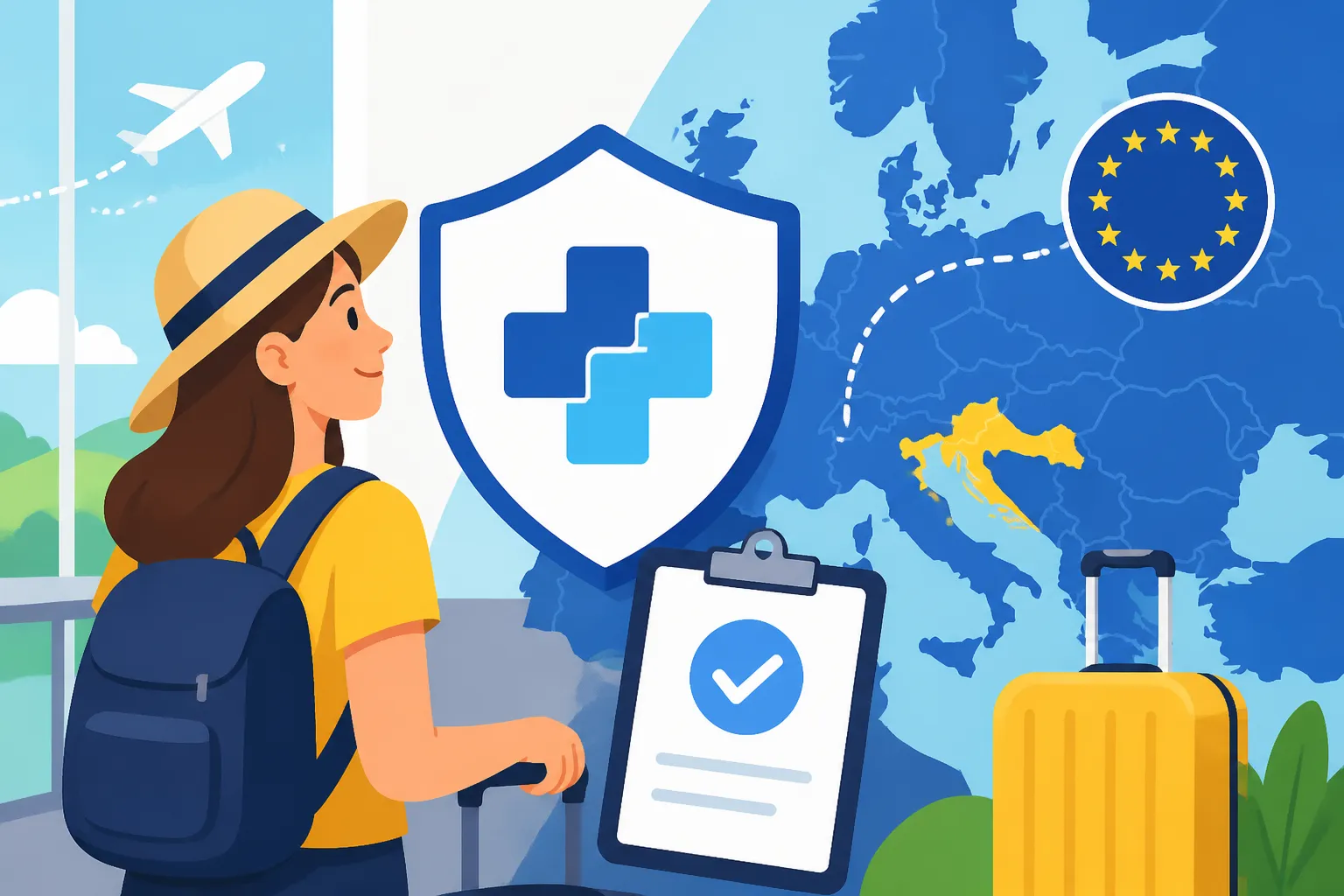
If you are a resident in Croatia and you are paying into the national health system, you are entitled to more than just local care. Many foreigners don't realize that their HZZO contributions grant them access to the European Health Insurance Card (EHIC), known locally as the EKZO (Europska kartica zdravstvenog osiguranja). This little blue card is your lifeline when you are visiting other EU member states, as well as Iceland, Liechtenstein, Norway, and Switzerland. It is essentially a reciprocal agreement that tells other countries, "This person is covered by Croatia, so treat them as you would one of your own citizens."
However, there is a massive caveat that many expats miss until it is too late: the EKZO card is not an automatic benefit that comes in the mail with your standard HZZO card. You have to specifically apply for it. I remember the first time I planned a weekend trip to Vienna; I thought my standard Croatian health card would be enough. It wasn't. If I had ended up in an Austrian hospital, I would have been billed as a private patient, which could easily have cost thousands of euros. Understanding How the Croatian Health Insurance Fund (HZZO) Works: A Full Overview is the first step in realizing that while the system is robust, it requires you to be proactive about your documentation.
The principle of the EKZO card is "necessary medical care." This doesn't mean you can go to Munich for a planned hip replacement on Croatia’s dime. It means that if you get a sudden case of appendicitis while visiting a museum in Paris, or if you trip and break your ankle on a cobblestone street in Prague, you are covered. You will be treated in the public system of that country under the same conditions and at the same cost as people insured in that country. This is vital because it prevents you from being charged "tourist rates" in public hospitals.
How to Apply for Your Croatian EKZO Card
Applying for the EKZO card is one of the few administrative tasks in Croatia that is surprisingly efficient, provided you know where to go. You have three main options, and depending on your comfort level with the Croatian language and digital systems, one will definitely suit you better than the others. Before you start, ensure you have your OIB ready and that your Registering with HZZO in Croatia: The Complete Expat Guide (2027) process is fully finalized. If your residency is still "in process," you likely won't be able to generate a card yet.
The most "expat-friendly" way to get your card is via the HZZO web portal or the e-Građani (e-Citizens) system. If you have already set up your digital credentials, you can request the card with a few clicks. It usually takes about 8 to 14 days to arrive at your registered address. If you are a procrastinator like me and realize you're leaving for Italy in three days, the online method won't work. In that case, you need to head to an HZZO branch office. In Zagreb, many people head to Jukićeva 12. There, you can find a "tabulator" or a kiosk (it looks like an ATM) where you insert your HZZO card, and it prints out a paper certificate that acts as a temporary EKZO. It isn't as pretty as the plastic card, but it is legally identical.
For those living in other cities, such as Split or Rijeka, you can find these kiosks in the main HZZO buildings. It is always a good idea to check Navigating the Croatian Healthcare System: An Expat's Roadmap (2027) to find the nearest branch. If the kiosk is broken—which does happen—you will need to take a number and speak to a clerk. They are generally helpful, though having a few phrases of Croatian ready or a translation app on your phone will go a long way. Once you have the plastic card, it is typically valid for three years, as long as you remain insured by HZZO.
What is Actually Covered and the Gaps You Need to Know
This is where things get a bit tricky and where many people get caught out. The EKZO card covers public healthcare. It does not cover private clinics. In many EU countries, the line between public and private can be blurry for a visitor. If you walk into a fancy-looking "Medical Center" in the heart of a tourist district, they might not accept your EKZO card at all. You will be expected to pay upfront. This is why it is essential to understand the distinction between Public vs Private Healthcare in Croatia: Which Should Expats Choose? and how that logic applies abroad.
Furthermore, the card does not cover "participacija" or co-payments. In Croatia, we are used to paying a small fee for doctor visits or prescriptions unless we have supplemental insurance. The same applies abroad. If a French citizen has to pay a 20-euro co-payment for an ER visit, you will also have to pay those 20 euros. Your Croatian dopunsko insurance will not cover these foreign co-payments. You should always read up on Understanding Participacija (Co-Payments) in the Croatian Health System to get a feel for how these small costs can add up.
There are also several major categories that HZZO simply does not cover when you are abroad. These include:
- Medical repatriation (flying you back to Croatia in a specialized plane).
- Search and rescue (if you get lost hiking in the Tatras or the Alps).
- Non-urgent dental work.
- Private hospital room upgrades.
Because of these gaps, many veterans of the expat life in Croatia choose to layer their HZZO coverage with a private travel policy. For instance, having a plan from a provider like SafetyWing can be a literal lifesaver if you need to be evacuated or if you prefer the speed of private clinics. While HZZO is your foundational safety net, a brand like SafetyWing fills the holes that the public system leaves open, especially for those of us who travel frequently across borders.
| Coverage Feature | HZZO (EKZO Card) | Private Travel Insurance (e.g., SafetyWing) |
|---|---|---|
| Public Hospitals in EU | Yes (Equal treatment) | Yes (Reimbursement/Direct Pay) |
| Private Clinics | No | Yes |
| Co-payments (Participacija) | No (You must pay) | Yes (Depending on deductible) |
| Search & Rescue | No | Yes |
| Medical Repatriation | No | Yes |
| Coverage Outside EU | No | Yes |
Real-World Scenarios and Practical Tips for Travelers
Let’s look at a hypothetical situation. Imagine you are an American expat living in Zagreb, you have your HZZO card, and you've successfully received your EKZO. You decide to go skiing in Slovenia. If you have a minor accident on the slopes and go to the local public clinic in Kranjska Gora, you present your EKZO card. They treat you, you might pay a small local co-payment, and the rest is billed back to Croatia. However, if you need a helicopter to get you off the mountain, HZZO will not pay for that helicopter. That bill—which could be 5,000 euros—is yours to keep. This is another moment where having a supplemental policy like SafetyWing becomes incredibly relevant, as they specialize in these types of travel-related emergencies.
If you find yourself in a situation where you forgot your card or the provider refuses to accept it, you will likely have to pay the full cost out of pocket. Don't panic, but do keep every single piece of paper. You will need the original medical report, the invoice, and the proof of payment. When you return to Croatia, you can apply for a refund. You should familiarize yourself with How to Claim Medical Expense Reimbursement from HZZO before you leave, just so you know what documentation to ask for. Be warned: the reimbursement process is slow. It can take months for the Croatian authorities to coordinate with the foreign health fund to verify the costs.
Another tip for those who frequently host family from back home: remember that while you are covered by HZZO, your visiting relatives are not. If your cousin from the UK or your parents from Canada are visiting you in Split and you decide to take a day trip to Mostar in Bosnia, your EKZO card is useless there because Bosnia is not in the EU. You need to know How to Handle a Medical Emergency Abroad with Croatian Insurance and recognize that different rules apply the moment you leave the Schengen or EU zone. For those edge cases, a flexible insurance like SafetyWing is often the easiest way to ensure everyone in the group is protected, regardless of their nationality or residency status.
Finally, always keep a digital scan of your EKZO card on your phone. If you are unconscious or in a state of shock, a digital copy can help hospital staff start the paperwork even if your wallet is tucked away in a locker. It is also worth checking The Expat Guide to Finding a Family Doctor (Obiteljski Liječnik) in Croatia to see if your local GP has any specific advice for your chronic conditions before you head out on a long journey. Being prepared is the difference between a minor travel hiccup and a financial disaster.
Summary of Necessary Steps Before You Travel
Before you lock your front door and head to the airport or the highway, run through this checklist to ensure your health is protected:
- Verify that your HZZO status is active. If you have recently changed jobs or moved from a digital nomad permit to a work permit, there might be a gap.
- Check the expiry date on your blue EKZO card. If it has expired, the "tabulators" at the HZZO office can print you a replacement certificate instantly.
- Research the public hospital locations in your destination. In an emergency, you want to tell the ambulance to take you to a public facility to ensure your EKZO is accepted.
- Consider if your activities (like extreme sports or remote hiking) require additional coverage. Using a service like SafetyWing for the duration of your trip can provide peace of mind that a public-only system cannot.
- Check if you need any Health Insurance in Croatia: Mandatory, Supplementary and Private Options Explained updates, such as travel vaccinations, especially if your "EU travel" includes territories that might have different health risks.
Living in Croatia offers incredible access to the rest of Europe, and the HZZO system is a fantastic benefit of residency. By taking ten minutes to secure your EKZO card and understanding where its limits lie, you can enjoy your travels with the same relaxed "pomalo" attitude we’ve all come to love about life on the Adriatic. Just remember that the system works best for those who follow the rules and prepare for the unexpected. Whether you are dealing with Emergency Medical Care in Croatia: What Every Expat Needs to Know or navigating a hospital in Berlin, being informed is your best medicine.
Even if you are an EU citizen who moved here, don't assume your old card from home still works. You should read Can I Use My German EHIC Card at a Croatian Hospital? to understand how your coverage shifts the moment you become a tax resident in Croatia. Transitioning your life to a new country means transitioning your safety nets too.
Disclaimer
The information provided in this guide is for informational purposes only and does not constitute legal or medical advice. Healthcare regulations in Croatia and the EU are subject to change. Always verify current requirements with the Croatian Health Insurance Fund (HZZO) or a qualified legal professional before making travel arrangements. The author is an expat sharing personal experiences and research, not an official representative of any government body.