How to Access Healthcare While on a Digital Nomad Permit in Croatia
One of the biggest worries for digital nomads setting up their lives in a new country like Croatia is navigating the healthcare system. It's not just about finding a doctor when you're sick; it's about understanding the legal requirements, the differences between public and private options, and how to ensure you're covered when you need it most. This comprehensive guide is here to demystify Croatian healthcare for digital nomads, providing a clear roadmap to peace of mind.
Understanding Your Health Insurance Obligations as a Digital Nomad in Croatia
When you embark on the adventure of living and working in Croatia as a digital nomad, understanding your health insurance isn't just a suggestion; it's a fundamental requirement for your temporary residence permit. Many nomads assume their travel insurance or home country's plan will suffice, only to hit a bureaucratic wall. Croatia has specific stipulations, and getting them right from the start can save you a world of trouble down the line.
The Mandatory Requirement for Health Insurance
Croatia's digital nomad permit is a fantastic opportunity, but it comes with a strict condition: you must prove you have adequate health insurance. This isn't just a formality; it's a safeguard for both you and the Croatian system. The law explicitly states that all applicants for a temporary stay, including digital nomads, must provide proof of health insurance that covers the entire duration of their intended stay. Without this, your application simply won't be approved by the Ministry of Interior (MUP). The primary goal here is to ensure that should you need medical attention, you won't become a financial burden on the state, nor will you face exorbitant bills yourself. This mandatory coverage ensures you can access necessary medical services without undue stress, which is crucial for a smooth expatriate experience.
It's not uncommon for new arrivals to think a basic travel insurance policy will cut it, but Croatian authorities often look for more comprehensive coverage. They want to see that your policy includes emergency medical treatment, hospitalization, and potentially repatriation, aligning with standards often found in international private health insurance plans. Always double-check the specific requirements on the official MUP website or consult with a local immigration specialist to ensure your chosen policy meets all the criteria. This initial hurdle can seem daunting, but once you understand the specific expectations, it becomes much more manageable.
What Qualifies as Valid Digital Nomad Health Insurance?
So, what exactly is valid health insurance for your digital nomad permit in Croatia? Generally speaking, you have two main pathways: either being covered by the Croatian Health Insurance Fund (HZZO) if you meet certain criteria (which is less common for initial digital nomad permits) or by an international private health insurance policy. For most digital nomads, the latter is the more straightforward and commonly accepted option, especially during the initial application phase.
A valid private policy needs to demonstrate broad coverage. This typically means it must cover acute illnesses, accidents, emergency medical evacuation, and often, repatriation of remains. The policy usually needs to be valid for the entire period of your requested stay in Croatia. It's important to have a certificate from your insurer, often in English and sometimes requiring a Croatian translation, that clearly states the coverage period and the types of medical expenses covered. Many international insurance providers are familiar with these requirements. For instance, SafetyWing offers a "Nomad Insurance" product which is popular among digital nomads precisely because it's designed to meet the travel medical insurance requirements for visa applications in many countries, including those in the Schengen Area which Croatia is now part of. Such policies are explicitly tailored for the lifestyle and temporary residence needs of remote workers, making them a good fit for Croatian requirements. They often cover unforeseen illnesses and accidents, which is the baseline the MUP is looking for.
Initial vs. Ongoing Coverage
It’s easy to focus solely on the initial health insurance requirement to get your permit. However, thinking long-term about your health coverage in Croatia is vital. Your initial policy needs to cover the duration of your temporary residence. If you apply for a one-year permit, your insurance must cover that full year. But what happens if you decide to extend your stay or if your needs change?
This is where planning for ongoing coverage becomes critical. Before your initial policy expires, you'll need to secure new insurance. If you continue with an international private provider like SafetyWing, remember to renew your policy well in advance. Some digital nomads might also explore the possibility of integrating into the public HZZO system if their circumstances change, for example, if they establish an Obrt vs a d.o.o. Company in Croatia and start contributing to the Croatian social security system. However, for most digital nomads, remaining on a private plan is simpler as their income isn't typically derived from a Croatian entity that would automatically enroll them in HZZO. When extending your temporary residence permit, you'll again need to provide proof of valid health insurance for the new period. Maintaining continuous coverage isn't just a legal obligation; it's smart personal finance and ensures you're never caught without access to care. Don't let your coverage lapse, even for a day, as it could complicate future residence applications and leave you vulnerable.
Navigating Public vs. Private Healthcare Options
Croatia offers a dual healthcare system: a public option run by the Croatian Health Insurance Fund (HZZO) and a robust private sector. As a digital nomad, understanding the nuances of each and how they might apply to you is key to making informed decisions about your well-being. It's not always an "either/or" choice; sometimes, a combination works best.
Croatia's Public Health System (HZZO) for Digital Nomads
Croatia's public healthcare system, managed by HZZO, is primarily funded through mandatory contributions from salaries and pensions. It provides a comprehensive range of services, including primary care, specialist consultations, hospital treatments, and prescription medications, though often with a Understanding Participacija (Co-Payments) in the Croatian Health System involved. For most digital nomads on a temporary residence permit, direct access to the HZZO system isn't automatic upon arrival.
Generally, to be eligible for HZZO, you need to be employed by a Croatian company, be self-employed (e.g., as a paušalni obrt owner) and making social security contributions, or be an EU/EEA citizen who has transferred their health insurance rights. Since digital nomads, by definition, work for foreign companies or clients and don't typically contribute to the Croatian social security system, they usually don't qualify for HZZO coverage directly through their nomad permit. However, if your status changes, for instance, if you establish a local business or become employed by a Croatian entity, then you would become eligible to register with HZZO. The process for that involves several steps, including obtaining your OIB (personal identification number) and then applying to HZZO. You can learn more about Registering with HZZO in Croatia: The Complete Expat Guide (2027) if your circumstances ever change. For the initial digital nomad permit, HZZO is generally not your primary healthcare access route.
The Benefits of Private Health Insurance
For digital nomads, private health insurance is typically the go-to solution, both for meeting permit requirements and for practical healthcare access. Unlike the public system, private insurance usually offers greater flexibility, quicker access to specialists, shorter waiting times for appointments and procedures, and often more comfortable facilities in private clinics and polyclinics. This can be a huge advantage when you're in a foreign country and want efficient, high-quality care without the potential language barriers or bureaucratic hurdles of the public system.
Many private insurers, including those specifically catering to global travelers like SafetyWing, offer plans tailored to expats and digital nomads. These policies are designed for portability, meaning they can cover you not just in Croatia but potentially in other countries as you travel. This is particularly appealing for nomads who don't stay in one place for the entire year. With a private plan, you typically pay upfront for services and then claim reimbursement, or in some cases, the insurer can arrange direct billing with providers. This means you have more control over where and when you seek medical attention, often allowing you to choose English-speaking doctors or specific clinics. The peace of mind that comes with knowing you have comprehensive coverage and direct access to care can't be overstated. You can often find an English-Speaking Doctor in Croatia more easily through private clinics that cater to international patients.
Hybrid Approaches: Public for Basics, Private for Speed
While most digital nomads won't automatically qualify for HZZO, it's worth considering a hybrid approach if your situation allows, or simply understanding how the two systems can complement each other. For example, if you're an EU citizen using your European Health Insurance Card (EHIC) for basic emergency care, that covers you for medically necessary treatment in the public system, but it's not a substitute for comprehensive travel or private insurance, nor is it sufficient for your temporary residence permit. For non-EU digital nomads, it's almost always a private insurance game from the start.
However, even with private insurance, you might find yourself in situations where public healthcare resources are unavoidable, such as in severe emergencies where the closest hospital might be public, or for specific highly specialized treatments. In these scenarios, your private insurance would typically cover the costs incurred. Conversely, if you do manage to integrate into HZZO through other means, you might still consider a supplementary private plan (often called dopunsko zdravstveno osiguranje in Croatia, though this is usually for covering HZZO co-payments) or a full-blown private plan for benefits not fully covered by HZZO, such as dental work or quicker access to specific specialists. Understanding the different facets of Public vs Private Healthcare in Croatia: Which Should Expats Choose? is crucial for tailoring your coverage to your personal preferences and financial situation. A balanced approach can ensure both legal compliance and optimal access to care.
Accessing Medical Services: Doctors, Pharmacies, and Emergencies
Once you've sorted out your insurance, the next step is knowing how to actually use it. Navigating a new healthcare system can be confusing, especially when you're not feeling well. From finding a family doctor to understanding prescriptions and emergency protocols, here's what digital nomads need to know about accessing medical services in Croatia.
Finding a General Practitioner (GP) and Specialists
In Croatia, your General Practitioner (GP), known as liječnik obiteljske medicine or obiteljski liječnik, is your first point of contact for most health issues. While digital nomads using private insurance aren't strictly "registered" with a public GP in the HZZO system, you will still need to find a private GP or clinic that can serve as your primary care provider. This is especially true if you're looking for an Expat Guide to Finding a Family Doctor (Obiteljski Liječnik) in Croatia who speaks English. Many private polyclinics in larger cities like Zagreb, Split, Rijeka, and Dubrovnik cater specifically to expats and tourists, offering appointments with GPs and various specialists.
When choosing a private GP, look for clinics with good reviews from international patients. Websites and expat forums often have recommendations. You'll typically schedule an appointment, pay for the consultation directly, and then submit the invoice to your private insurer (like SafetyWing) for reimbursement. If your GP determines you need to see a specialist, they will provide a referral. With private insurance, you can often go directly to a private specialist without the long waiting lists sometimes associated with the public system. Be prepared to pay for specialist consultations upfront as well. Always keep clear records of your appointments, diagnoses, and payments for insurance claims.
Prescription Medications and Pharmacies
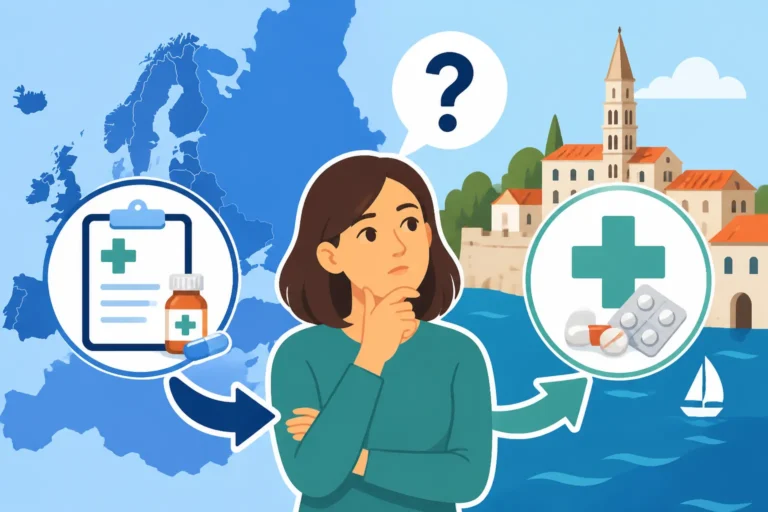
The pharmacy system (ljekarna) in Croatia is generally efficient and well-regulated. You'll find pharmacies in almost every town and city, often marked by a green cross. Many pharmacists speak at least some English, especially in tourist areas. To get prescription medication, you'll need a prescription from a Croatian doctor. If you have a foreign prescription, a Croatian doctor will usually need to issue a local one after a consultation.
For those with private insurance, you'll typically pay the full cost of the medication at the pharmacy and then submit the receipt to your insurer for reimbursement, if your policy covers it. The cost of prescription medications in Croatia can vary, but it's generally considered reasonable compared to some Western European or North American countries. You can learn more about Prescription Medications and Pharmacies in Croatia: The Complete Guide. It's always a good idea to bring a copy of your current medications and their generic names when you first see a Croatian doctor, to ensure continuity of care and avoid any issues with availability or equivalents.
What to Do in a Medical Emergency
Medical emergencies can be frightening anywhere, but even more so in a new country. In Croatia, the emergency number for all services (ambulance, fire, police) is 112. For urgent medical assistance, you can also call 194 directly for an ambulance (hitna pomoć). Croatia's emergency services are competent, and paramedics are well-trained.
If you have a medical emergency, head to the nearest emergency room (hitna pomoć or objedinjeni hitni prijem) at a hospital (bolnica) or clinical hospital center (KBC). If you're physically unable to get there, call for an ambulance. When you arrive at the emergency room, present your identification and proof of private health insurance (your insurance card or policy details). The staff will assess your condition. While life-threatening emergencies are treated regardless of your ability to pay, you will be responsible for the costs, which your private insurance should cover. Make sure to get all documentation, including reports and invoices, for your insurance claim. Knowing these steps can greatly reduce panic in a stressful situation. For more detailed information, see Emergency Medical Care in Croatia: What Every Expat Needs to Know.
Practical Steps for Digital Nomads to Get Healthcare
Getting your healthcare ducks in a row as a digital nomad in Croatia involves a few practical steps beyond just securing an insurance policy. It's about understanding the administrative side, what documents you need, and how to navigate the day-to-day realities of the system.
Documentation Needed for Healthcare Access
The single most important document you'll need for healthcare access as a digital nomad is your private health insurance policy or card. This should clearly state your coverage, policy number, and the contact details for your insurer. It's wise to have both a physical copy and a digital copy (on your phone or in the cloud) accessible at all times.
Beyond your insurance, always carry your passport or temporary residence permit (your boravišna iskaznica). This helps with identification at any medical facility. If you require prescription medication, having a list of your current prescriptions (with generic names) from your home country doctor can be very helpful for Croatian physicians. Although not always strictly necessary for private care, having your OIB (personal identification number) is generally useful for any official transaction in Croatia, so ensure you've obtained it. You can learn more about How to Get Your OIB and Why It Matters for Healthcare Access. Having these documents readily available can significantly smooth out any medical interaction you might have, from a routine check-up to an unexpected emergency.
Registering with Local Health Services
As a digital nomad on a private insurance plan, you won't typically "register" with a specific public health center (dom zdravlja) or a public GP in the same way a Croatian citizen or HZZO-insured individual would. Instead, your "registration" largely involves finding private healthcare providers and establishing a relationship with them.
The process usually goes like this:
- Identify private clinics/polyclinics: Research reputable private medical centers in your area, particularly those that advertise English-speaking staff or cater to expats.
- Schedule your first appointment: Call or use online portals to book an initial consultation with a general practitioner at your chosen private clinic. This is a good opportunity to introduce yourself, discuss your medical history, and understand their processes.
- Inform them of your insurance: Clearly state that you are a digital nomad with private international health insurance. Confirm their billing process – whether you pay upfront and claim, or if they can directly bill your insurer (less common but worth asking).
- Establish a medical record: The clinic will create a file for you. It's good practice to provide them with any relevant medical history you have.
- Ongoing relationship: For routine care, you'll simply book appointments as needed with your chosen private GP or specialists within that network.
This approach gives you flexibility and often faster access to care, bypassing some of the administrative layers of the public system.
Understanding Costs and Payments (Participacija)
When accessing healthcare with private insurance as a digital nomad, you need to understand the financial aspect. Unlike the HZZO system where Croatians pay participacija (co-payments), your costs will depend entirely on your private policy.
Here's a breakdown:
- Upfront Payment: Most private clinics and pharmacies will require you to pay for services and medications upfront at the time of service. For example, a private GP consultation might cost anywhere from €30-€70, and a specialist visit could be €50-€150 or more, depending on the specialty and location. An MRI scan privately in Zagreb could easily run you €200-€400.
- Reimbursement: After paying, you'll gather all original invoices, receipts, and medical reports. You then submit these to your private insurance provider (e.g., SafetyWing) for reimbursement according to the terms of your policy. Ensure you understand your deductible, co-insurance, and any limits on specific services.
- Deductibles and Exclusions: Be aware of your policy's deductible (the amount you pay before your insurance starts covering costs) and any exclusions (services not covered, like pre-existing conditions unless specifically added).
- Non-Insured Services: For things like cosmetic procedures or certain elective treatments, your private insurance may not cover them at all, meaning you'll bear the full cost.
Always keep meticulous records of all medical expenses and communicate clearly with your insurance provider to ensure a smooth reimbursement process. This proactive approach helps manage the Cost of Healthcare in Croatia: A Complete Breakdown for Foreigners (2026).
Important Considerations and Tips for Digital Nomads
Being a digital nomad in Croatia is an incredible experience, but like any expat journey, it comes with unique challenges, especially concerning something as critical as healthcare. Being prepared and proactive can make all the difference.
Language Barriers and Finding English-Speaking Professionals
One of the most significant challenges for non-Croatian speakers is the language barrier, particularly outside of major tourist hubs. While many younger medical professionals and those in private clinics in larger cities like Zagreb, Split, and Dubrovnik speak English, this isn't universally true. In smaller towns or the public system, you might encounter doctors or administrative staff with limited English proficiency.
Here are some tips to navigate this:
- Private Clinics: Prioritize private polyclinics and hospitals in expat-dense areas. They are more likely to have English-speaking staff. When booking an appointment, specifically request an English-speaking doctor.
- Translation Apps: Have a reliable translation app on your phone for basic communication.
- Learn Basic Phrases: Even a few basic Croatian medical phrases can be incredibly helpful and show respect.
- Expat Networks: Leverage expat Facebook groups and forums for recommendations on English-speaking doctors. Many digital nomads share their experiences and direct contacts.
- Bring a Friend: If you have a Croatian-speaking friend, ask them to accompany you to appointments for more complex discussions, especially if you're feeling unwell. You can also search for How to Find an English-Speaking Doctor in Croatia through online resources.
Staying Informed About Policy Changes
Healthcare regulations and insurance requirements can change, both in Croatia and with your private insurer. It's crucial to stay informed, especially if you plan to extend your stay or if there are major legislative changes affecting temporary residents.
- MUP Website: Regularly check the official website of the Ministry of Interior (MUP) for updates on residence permit requirements, including health insurance.
- Insurance Provider Updates: Stay in touch with your private insurance provider (like SafetyWing) for any changes to their policies, coverage, or claim procedures. They often send out newsletters or notifications.
- Expat Communities: Engage with online expat and digital nomad communities in Croatia. These groups are often excellent sources of real-time information and can alert you to upcoming changes or shared experiences.
- Official Sources: Always cross-reference information from unofficial sources with official government websites or reputable legal/immigration services.
A little proactive research can prevent unexpected surprises and ensure continuous compliance with local regulations.
Mental Health Support for Expats
Living abroad, even in a beautiful place like Croatia, can sometimes take a toll on mental health. Adjusting to a new culture, being away from your support network, and dealing with administrative hurdles can be stressful. Accessing mental health support is just as important as physical healthcare.
- Private Therapy: In larger cities, you can find private therapists and psychologists who offer sessions in English. These services are typically paid out-of-pocket, though some private health insurance plans might offer limited coverage for mental health consultations.
- Online Therapy: Many digital nomads rely on online therapy platforms, allowing them to connect with therapists from their home country or international platforms, ensuring continuity of care regardless of their location.
- Support Groups: Seek out expat or digital nomad support groups, both online and in-person. Sharing experiences with others who understand your situation can be incredibly therapeutic.
- Emergency Care: In case of a mental health crisis, emergency rooms in larger hospitals can provide initial assessment and referral. The emergency number 112 is always available.
Prioritizing your mental well-being is vital for a sustainable digital nomad lifestyle. Don't hesitate to seek help if you need it. For more information, read How to Access Mental Health Services in Croatia as an Expat.
Comparative Overview: Public vs. Private Healthcare for Digital Nomads
To summarize the primary differences for digital nomads seeking healthcare in Croatia:
| Feature | Public Healthcare (HZZO) for Digital Nomads | Private Healthcare (e.g., SafetyWing) for Digital Nomads |
|---|---|---|
| Eligibility | Generally not directly eligible with a digital nomad permit (unless employed by Croatian entity, EU citizen with EHIC for medically necessary care). | Required for permit; readily available for all nationalities. |
| Primary Access | Limited without direct HZZO contributions; EHIC for EU citizens is for temporary needs. | Direct access to private clinics, doctors, specialists. |
| Speed/Waiting Times | Can be longer for specialist appointments and non-emergency procedures. | Generally much shorter waiting times. |
| Cost Structure | Covered by HZZO contributions; often involves participacija (co-payments) for services. | Pay upfront, then claim reimbursement from insurer (subject to deductible/policy limits). |
| Doctor Choice | Assigned GP within a dom zdravlja (if eligible), less flexibility. | Freedom to choose private doctors and clinics, often with English-speaking staff. |
| Facility Quality | Varies, but public hospitals can be crowded. | Generally modern, comfortable private clinics. |
| International Portability | None (HZZO is Croatia-specific). EHIC only within EU. | Designed for global travel, covers you in multiple countries (check policy). |
| Documentation | OIB, HZZO card (if eligible), MUP documents. | Private insurance policy/card, passport/residence permit, OIB (useful). |
| Mental Health Coverage | Limited, mostly through referrals if eligible. | Varies by policy; some plans include limited mental health benefits. |
Disclaimer
Please note that this guide provides general information based on current regulations and common expat experiences in Croatia. Healthcare policies and immigration laws can change. Always consult official government sources (such as the Croatian Ministry of Interior and HZZO), as well as your specific health insurance provider, for the most accurate and up-to-date information relevant to your personal situation.