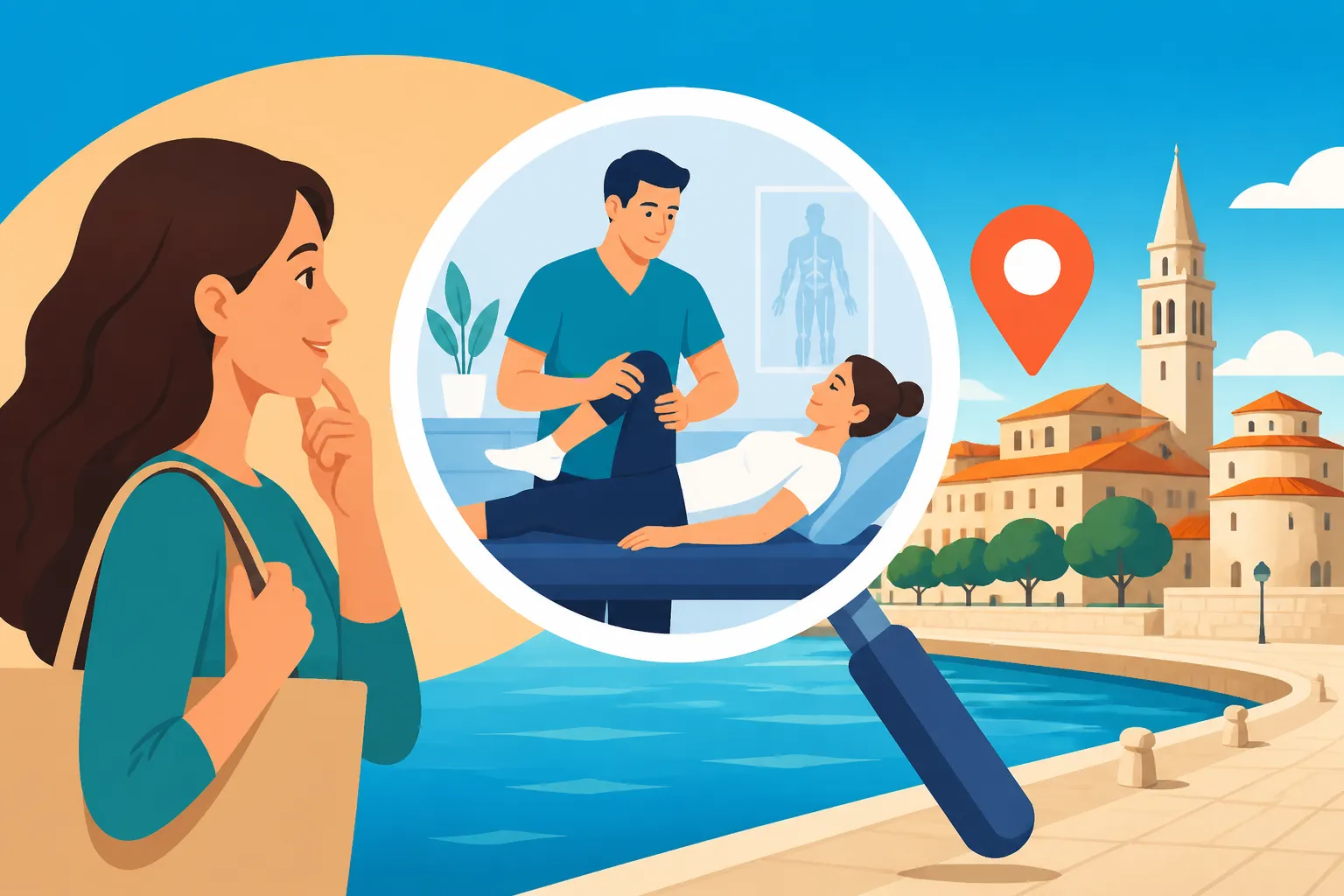
How Do I Find a Physiotherapist (Fizioterapeut) in Zadar?
Waking up with a pinched nerve or twisting your ankle on the uneven limestone of the Kalelarga is a quick way to ruin your Mediterranean dream. Navigating the medical landscape in Zadar can feel like a labyrinth of paperwork and language barriers when you just want relief. This guide provides a clear, step-by-step roadmap for finding a qualified physiotherapist in Zadar, whether you are using the public system or going private.
Understanding the Physiotherapy Landscape in Zadar
Croatia’s healthcare system is a dual-track beast. On one hand, you have the state-funded system, and on the other, a rapidly growing private sector. If you are a resident, your journey likely begins with the national insurance scheme. Learning How the Croatian Health Insurance Fund (HZZO) Works: A Full Overview is essential because it dictates how much you pay and how long you wait. In Zadar, public physiotherapy is centralized, but the demand often outweighs the supply, leading to significant waiting times for non-emergency cases.
For most expats and digital nomads, the choice between these two tracks depends on the urgency of the injury. If you have a chronic issue that can wait three months, the public system is cost-effective. However, if you are in acute pain, the private sector is usually the only sane choice. Many newcomers find themselves debating Public vs Private Healthcare in Croatia: Which Should Expats Choose? simply because the private clinics in Zadar offer immediate appointments and often better English-speaking staff.
If you are traveling or recently arrived without local insurance, companies like SafetyWing can be a lifesaver for unexpected injuries that require physical therapy. Their plans are often designed for the flexible lifestyle of someone living in a place like Zadar, where a sudden fall on a slippery pier could lead to weeks of rehabilitation.
The Public Path via HZZO
The public route is a lesson in patience. To access a "fizioterapeut" through the state, you cannot simply walk into a clinic. You must first visit your primary care physician (obiteljski liječnik). They will evaluate your condition and, if necessary, issue a referral. It is crucial to understand How e-Uputnica (E-Referrals) Work for Specialist Appointments in Croatia because the paper trail is now almost entirely digital. Once the referral is in the system, you must contact the physiotherapy department at the hospital or a local health center to get on their waiting list.
In Zadar, the main hub for public services is the General Hospital Zadar (Opća bolnica Zadar) located in the Relja neighborhood. There is also the specialized orthopedic hospital in Biograd na Moru, which is just a short drive south and is world-renowned for bone and joint recovery. However, be prepared: "hitno" (urgent) means something very different in the public system than it does in a private clinic. If you are dealing with a non-life-threatening injury, you might be looking at a several-week wait just for the initial assessment.
The Private Polyclinic Experience
Private clinics, or "Poliklinike," are the gold standard for expats in Zadar who value their time. These facilities are modern, usually equipped with the latest ultrasound and electrotherapy machines, and the staff almost always speaks excellent English. When Understanding Private Polyclinics (Poliklinike) in Croatia, you realize that you are paying for the convenience of skipping the line. You can usually call a clinic like Poliklinika Mešter or Fiziovita and get an appointment within 48 hours.
The cost for a private session in Zadar typically ranges from 30 to 60 EUR, depending on the complexity of the treatment. For those with international coverage, it is worth checking if your provider, such as SafetyWing, covers these specialized rehabilitative sessions, especially if they are the result of an accident. Private therapists in Zadar often specialize in specific areas, such as sports manual therapy, Bobath for neurological issues, or specialized prenatal and postnatal care.
Local Resources and Where to Look in Zadar
Zadar is a compact city, but medical services are scattered between the historic center, the newer residential blocks of Voštarnica, and the suburban stretches like Borik. Knowing Understanding the Role of the Dom Zdravlja (Health Centre) in Croatia will help you identify the smaller neighborhood clinics that might offer basic physical therapy services closer to home. The "Dom Zdravlja" on the street Ivana Mažuranića is a primary point of contact for many residents.
Specialized Clinics and Manual Therapy
If you are looking for high-end manual therapy, Zadar has several standout options. Fiziovita, located near the Višnjik sports complex, is a popular choice for athletes and expats. They offer a comprehensive range of services from kinesiotaping to advanced radiofrequency therapy. Another reputable name is Poliklinika Lacrima, which, while known for other specialties, often has connections to high-quality rehabilitative care.
When searching, use the Croatian term "fizikalna terapija" or "privatni fizioterapeut." Don't be afraid to ask for recommendations in local expat Facebook groups; the community in Zadar is tight-knit and people are usually happy to share their experiences with specific therapists. If you are also looking for general wellness alongside your recovery, you might want to ask your therapist Where Can I Get a Health Check-Up (Sistematski Pregled) in Croatia? to ensure your overall health is on track while you recover from your injury.
Rehabilitation for EU Citizens and Tourists
If you are an EU citizen visiting Zadar, your European Health Insurance Card (EHIC) provides a safety net. You should learn How to Use Your EHIC (EKZO) Card in Croatia as an EU Citizen before you head to the hospital. It allows you to access necessary public physiotherapy under the same conditions as locals. However, this does not apply to private clinics. For non-EU tourists, any visit to a physiotherapist will likely be out-of-pocket unless you have a robust travel insurance policy.
In cases of sudden, acute pain that limits your mobility, you should first seek Emergency Medical Care in Croatia: What Every Expat Needs to Know. The emergency room (Hitna Pomoć) in Zadar is located at the main hospital. They won't provide long-term physiotherapy, but they will provide the initial diagnosis and pain management needed to get you to a specialist.
Practical Logistics: Cost, Language, and Preparation
Finding the therapist is only half the battle; the other half is managing the appointment itself. For many, the biggest fear is the language barrier. While the medical curriculum in Croatia is rigorous and most younger doctors are fluent in English, the administrative staff at public institutions might not be. This is why many expats prioritize How to Find an English-Speaking Doctor in Croatia when they first move to the Dalmatian coast.
What to Bring to Your Appointment
Regardless of whether you go public or private, you need to be organized. Bring any previous X-rays, MRI results, or discharge summaries from your home country. If these are in a language other than English or Croatian, you may need a certified translation, though many Zadar specialists are comfortable reading English medical reports.
You should also have a clear understanding of The Cost of Healthcare in Croatia: A Complete Breakdown for Foreigners (2026) so you aren't surprised by the "participacija" (co-payment) in the public system. Even with state insurance, you often pay a small fee for each therapy session unless you have supplementary insurance.
| Service Type | Estimated Wait Time | Cost (Estimated) | Referral Required? |
|---|---|---|---|
| Public (HZZO) | 4 – 12 Weeks | 0 – 10 EUR (with Dopunsko) | Yes (from GP) |
| Private Clinic | 1 – 3 Days | 30 – 60 EUR per session | No |
| Home Visit | 2 – 5 Days | 50 – 80 EUR per session | No |
| Emergency (Hospital) | Immediate | 0 – 50 EUR (depends on status) | No |
Navigating Costs and Insurance
If you are working remotely in Zadar, your insurance situation might be unique. Digital nomads often rely on specialized products like SafetyWing, which are tailored to those who aren't yet integrated into the local HZZO system. This can be particularly helpful because the "out-of-pocket" costs for a full course of physiotherapy (usually 10 sessions) can easily climb toward 500 EUR in a private clinic.
For those who are staying long-term and have registered for residency, getting supplementary insurance is a must. You can find more details on this in the guide to Health Insurance in Croatia: Mandatory, Supplementary and Private Options Explained. This "Dopunsko" insurance covers the co-payments that would otherwise add up during a two-week stretch of daily physical therapy.
Finding the Right Fit for Your Recovery
Physiotherapy is a deeply personal service. You are spending significant time with a professional who is handling your body and pushing your physical limits. In Zadar, the culture is quite direct. Don't be surprised if your therapist is blunt about your posture or your lifestyle habits. This isn't rudeness; it is the typical Dalmatian "pomalo" attitude mixed with clinical honesty.
If your injury is related to a chronic condition, make sure you mention this during your first consultation. If you find that your current therapist isn't the right fit, or if you need a different specialty, you have the right to seek a second opinion. The private sector in Zadar is small enough that reputation matters immensely, so a therapist who treats you well is likely to be recommended by many others in the expat community.
For those using SafetyWing or other international providers, always keep your receipts (račun). Croatian tax laws are strict, and every legitimate clinic will provide a fiscalized receipt that you can then submit for reimbursement. Ensure the receipt clearly states the services provided, as insurance adjusters sometimes need specific "codes" to process a claim for rehabilitation.
In the end, Zadar is a wonderful place to recover. Between the sea air, the sound of the Sea Organ, and the wealth of skilled professionals, you have everything you need to get back on your feet. Just remember to take the administrative hurdles one step at a time, and don't let the "birokracija" keep you from getting the care you need.
Disclaimer
The information provided in this article is for informational purposes only and does not constitute professional medical or legal advice. Healthcare regulations and costs in Croatia are subject to change. Always consult with a qualified healthcare professional or the Croatian Health Insurance Fund (HZZO) for specific medical or insurance inquiries.