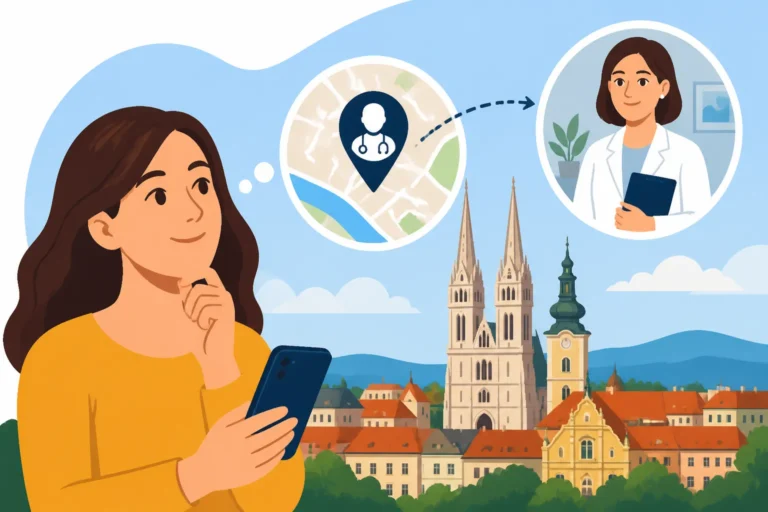
How to Switch Your Family Doctor (Liječnik) in Croatia
Getting settled in Croatia is a journey filled with incredible discoveries, but let's be real, it also comes with its fair share of bureaucratic head-scratching – especially when it comes to healthcare. One of the most foundational relationships you'll establish here is with your family doctor, or liječnik opće prakse. When that relationship isn't quite right, or your circumstances change, the idea of switching can feel like a daunting task. This guide is here to demystify the process, offering a realistic, empathetic roadmap to finding a new liječnik who truly meets your needs.
Understanding the Role of Your Family Doctor in Croatia
Your family doctor in Croatia isn't just a gatekeeper; they are the central hub of your healthcare journey here. It’s a bit different from what many of us are used to back home, where direct access to specialists might be more common. Here, your liječnik is absolutely essential, and understanding their role is the first step to navigating the system effectively, whether you're sticking with your current one or contemplating a change.
Why Your Liječnik Matters
Your family doctor holds the keys to almost all public health services in Croatia. They are the first point of contact for most of your medical needs, from routine check-ups and minor illnesses to chronic condition management. Think of them as your personal health advocate and navigator within the often-complex Croatian healthcare system. They issue all your necessary prescriptions (e-recepti), provide referrals (e-uputnice) to specialists like dermatologists, cardiologists, or physiotherapists, and are responsible for approving sick leave (bolovanje) if you're employed. Without a registered family doctor, accessing even basic care through the public system becomes incredibly difficult, if not impossible. They also maintain your medical records, ensuring continuity of care. This central role means that having a good, trusting relationship with your liječnik is paramount. For a broader perspective on the system, check out The Complete Guide to Healthcare in Croatia for Expats (2027).
When a Change Might Be Necessary
While we all hope for a perfect match from day one, sometimes, your current family doctor just isn't working out, and that's perfectly okay. It's a personal relationship, and there are many valid reasons why you might consider a switch. Perhaps there's a significant language barrier, even if they initially claimed to speak English. Communication is vital in healthcare, and misunderstandings can lead to frustration or, worse, inadequate care. Maybe you feel a lack of empathy, a personality clash, or simply that your concerns aren't being adequately addressed. We've all been there, feeling rushed or unheard, and it's a completely legitimate reason to seek a different doctor. Location can also play a big role; maybe you've moved to a new part of the city or even a different town, and your current doctor is now too far away to be practical for regular visits. Some expats also find that their doctor might not be familiar with certain international health practices or forms, which can complicate things, especially if you have parallel private insurance like SafetyWing for travel or emergencies outside Croatia. Ultimately, if you don't feel comfortable, confident, or properly cared for, exploring other options is your right and often, in your best interest.
The Official Process for Switching Your Doctor
So, you've decided it's time for a change. Good for you for taking charge of your health! The process isn't overly complicated once you know the steps, but it does require a bit of paperwork and patience. This is where the Croatian Health Insurance Fund (HZZO) comes into play, as they oversee all doctor registrations and transfers.
Finding Your New Liječnik
Before you can officially switch, you need to find a new family doctor who is accepting new patients. This can sometimes be the trickiest part, especially in larger cities or areas with high expat populations. Word of mouth is often gold here; ask other expats in your community, join local Facebook groups, or consult expat forums. They often have lists of recommended English-speaking doctors. You can also directly call domovi zdravlja (health centers) in your area, which house many family doctors, and ask about availability. Don't be shy about asking if the doctor speaks English! When you call, state clearly that you are looking for a new family doctor and are asking about their capacity to take on new patients. It's also wise to inquire about their working hours and how appointments are typically booked. For more focused advice, you might want to read The Expat Guide to Finding a Family Doctor (Obiteljski Liječnik) in Croatia and How to Find an English-Speaking Doctor in Croatia.
Once you find a potential doctor, they will usually ask you to come in for an introductory visit to meet them and ensure it's a good fit. This is your chance to ask questions about their practice, their approach to patient care, and to confirm any language capabilities. If you both agree to proceed, they will initiate the next step.
The "Statement of Choice" (Izjava o Izboru)
This is the core document for switching doctors. The Izjava o Izboru is essentially a formal declaration that you wish to choose a specific family doctor. You won't fill this out in triplicate from a government office, though! Usually, your new chosen doctor or their nurse will provide you with this form directly at their office. It’s a standard HZZO form. You will need to fill in your personal details, including your OIB (Personal Identification Number) and HZZO health insurance number (if you have one). How to Get Your OIB and Why It Matters for Healthcare Access is a good resource if you don't have this yet. On this form, you declare that you are choosing them as your family doctor and confirm that you have not switched doctors within the last year (more on that rule in a moment).
The doctor or nurse will then sign and stamp this form, essentially accepting you as their patient. This document is crucial because it formally registers your choice with HZZO. Make sure to keep a copy for your records, just in case any questions arise later.
Submitting the Request
Once you and your new doctor have completed and signed the Izjava o Izboru, the responsibility for submitting it usually falls to the new doctor's office. They will submit it electronically or physically to the local HZZO branch on your behalf. This is a huge relief because it means you don't have to navigate another government office yourself! The HZZO then processes the request, officially transferring you to the new doctor's patient list.
Generally, the switch becomes effective on the first day of the month following your submission, provided it’s submitted early enough in the preceding month. For example, if you submit the form in mid-June, your new doctor should be officially registered with HZZO by July 1st. There is a general rule that you can only switch your family doctor once a year, so choose wisely! However, exceptions can be made in specific circumstances, such as if you move to a new area that makes your current doctor impractical, or if there's a serious breakdown in the doctor-patient relationship. These exceptions usually require a formal request to HZZO with supporting documentation.
Navigating Common Challenges During the Switch
Even with the process laid out, it's Croatia, and sometimes things don't go exactly as planned. Knowing what bumps you might encounter and how to deal with them can save you a lot of stress.
Dealing with Capacity Issues
One of the most frequent frustrations expats face when trying to switch doctors is finding that their preferred liječnik simply isn't accepting new patients. Family doctors in Croatia have a patient quota, and once they hit that number, they cannot take on more. This is particularly common in popular urban areas or for highly-rated English-speaking doctors. If you encounter this, don't despair. It just means you might need to broaden your search.
Here are a few strategies:
- Expand your geographic search: Look at domovi zdravlja (health centers) in slightly less central neighborhoods or even adjacent towns if feasible.
- Be persistent: Sometimes, capacity can change quickly if other patients switch or move. A polite follow-up call after a few weeks might yield results.
- Ask for recommendations from within the dom zdravlja: If one doctor is full, their colleagues might have openings, or the administrative staff might know who does.
- Consider a temporary doctor: In rare cases, if you need urgent ongoing care and cannot find a permanent doctor immediately, HZZO might be able to help you register with a temporary one until a permanent spot opens up. This is less ideal but ensures continuity of care.
Remember, while it’s frustrating, these capacity limits are in place to ensure doctors aren’t overloaded and can provide adequate care to their existing patients.
Transferring Medical Records
When you switch doctors, your medical records also need to move to your new liječnik. In theory, this should be a seamless process. Your previous doctor is obligated to transfer your records to your new one upon request. However, this isn't always an instant, digital transfer like you might expect in some other countries. Sometimes, records might be physical files, or the electronic systems might not be fully interoperable between different practices or domovi zdravlja.
What typically happens is that your new doctor's office will send a formal request to your old doctor's office for your medical file. It's a good idea to inform your old doctor's nurse that you'll be switching and that your new doctor will be requesting your records. This can help smooth the process. You might even be able to pick up a copy of your records yourself from your old doctor (especially vaccination records or significant specialist reports) to hand-deliver to your new doctor, which can sometimes be faster. Having a summary of your medical history, any chronic conditions, and current medications prepared in English (and ideally, Croatian, if you can get it translated) is always a smart move to present to your new liječnik during your first visit.
Waiting Periods and Continuity of Care
As mentioned, the official transfer through HZZO usually takes effect on the first day of the month following your submission of the Izjava o Izboru. This means there might be a short waiting period, usually a few weeks, where you are technically "between" doctors on the HZZO system. During this time, it's crucial to understand how to access care if an urgent need arises.
If you have an urgent medical issue during this transition period, you can still seek care at the nearest dom zdravlja or, for emergencies, at the emergency room (Emergency Medical Care in Croatia: What Every Expat Needs to Know). Explain your situation, mentioning that you are in the process of switching family doctors. For less urgent matters, if you anticipate a gap, try to ensure any necessary prescriptions are filled or referrals are made by your old doctor before the switch officially takes effect. This is particularly important if you rely on regular medication. For some expats, especially those who travel frequently or are still setting up long-term residency, having a private international health insurance like SafetyWing can provide a vital safety net during these transitional periods, ensuring access to care without HZZO complications. Remember, planning ahead can prevent unnecessary stress during this short waiting period.
Practical Tips for a Smooth Transition
Making the switch smoother is all about preparation and clear communication. A little bit of foresight can save you a lot of headaches, especially when dealing with the intricacies of the Croatian administrative system.
Preparing Your Documents
Having all your ducks in a row with your documents will make the process much faster. Before you even start looking for a new doctor, gather these essentials:
- Your OIB: This personal identification number is absolutely crucial for any interaction with the Croatian healthcare system. If you don't have it yet, prioritize getting it. Read What Documents Do I Need to Get an OIB in Croatia? for guidance.
- Your HZZO card (or proof of HZZO insurance): This verifies your public health insurance coverage.
- Your residence permit (boravišna iskaznica): This confirms your legal residency status in Croatia.
- A list of your current medications: Include dosages and why you take them.
- A brief medical history: Any chronic conditions, allergies, past surgeries, or significant health events.
- Contact details of your previous doctor: Your new doctor's office will need this to request your records.
Having these documents ready will not only streamline the registration with your new doctor but also help your new liječnik get a comprehensive understanding of your health from day one, which is vital for good care.
Communicating with Both Doctors Respectfully
While your new doctor's office will handle the formal request for your records, a little proactive communication from your side can really help. Inform your current doctor's nurse or receptionist that you are planning to switch. You don't need to go into extensive detail or make excuses. A simple, polite statement like, "I'm moving to a new area, and I'll be switching to a new family doctor closer to my new home. They will be requesting my medical records," is perfectly sufficient. This courtesy can help ensure a smoother transfer of your records and avoids any awkwardness.
When you meet your new doctor for the first time, be prepared to share your medical history openly. This initial consultation is vital for establishing trust and allowing them to get to know you as a patient. Don't assume everything will be automatically transferred or understood; proactively share information.
Utilizing HZZO Resources
The Croatian Health Insurance Fund (HZZO) is the central authority for public healthcare. While their websites might be predominantly in Croatian, they do have information and dedicated contact points. If you encounter significant difficulties during your switch, or if there's a dispute, HZZO is the body to contact. They have administrative departments that deal with patient registrations and transfers.
You can often find contact details for your local HZZO office online. While calling might be challenging due to language, visiting in person can sometimes yield better results if you bring a Croatian speaker with you. They can clarify rules about switching, especially if your situation is complex (e.g., needing to switch more frequently than once a year due to a valid reason). For a full overview of how HZZO works, consult How the Croatian Health Insurance Fund (HZZO) Works: A Full Overview. Understanding these resources can empower you to navigate bureaucratic hurdles more effectively.
Essential Considerations for Expats
As an expat, you often face unique challenges that locals might not. These considerations are particularly important when trying to switch your family doctor in Croatia.
Language Barriers and English-Speaking Doctors
The language barrier is arguably the biggest hurdle for many expats in the Croatian healthcare system. While many younger doctors or those in larger cities might have some English proficiency, it's not a guarantee, and medical terminology can be complex even for fluent speakers. When you're sick or worried, struggling to communicate effectively is the last thing you need.
When searching for a new liječnik, prioritize finding one who is genuinely proficient in English. Don't just take a general "yes" when you ask; try to have a brief conversation during your initial inquiry. If possible, have a Croatian friend or colleague make the initial call for you to confirm. Online expat groups are invaluable for recommendations of English-speaking doctors. Many private polyclinics (poliklinike) also employ English-speaking doctors, though their services are not covered by HZZO and require private payment or private insurance. However, for your primary liječnik who is HZZO-covered, finding one with good English skills can dramatically improve your healthcare experience. This is especially relevant when discussing complex medical issues or understanding specialist referrals. Revisit How to Find an English-Speaking Doctor in Croatia for more specific tips.
Health Insurance Implications (HZZO and Private)
Your primary HZZO insurance covers your family doctor, prescriptions, and referrals. Switching doctors within the HZZO system doesn't change your core HZZO coverage. However, it's worth remembering that if you also have supplementary health insurance (dopunsko zdravstveno osiguranje), this covers your participacija (co-payments) for HZZO services. Your dopunsko is linked to your HZZO status, not to a specific doctor, so it will continue to function seamlessly after your switch. For more details on this, see Understanding Dopunsko Zdravstveno Osiguranje (Supplementary Insurance) in Croatia.
If you rely on private health insurance, perhaps from an international provider like SafetyWing, for specific needs or to avoid public system waiting times, your choice of HZZO doctor won't directly impact that private coverage. However, a good HZZO liječnik can still provide valuable advice on which private specialists to see or help you navigate any medical reports needed for private claims. It's about finding the right balance between the public and private options available to you.
What to Do if You Face Resistance
While patient rights are protected, sometimes you might encounter resistance from an administrative staff member, or a doctor's office might seem uncooperative. If your current doctor's office is dragging its feet on transferring records, or if a potential new doctor seems hesitant for unclear reasons (beyond genuine capacity issues), you have options.
First, try a polite but firm follow-up. Sometimes, things get lost in the shuffle. If that doesn't work, gather all your documentation (especially the Izjava o Izboru from your new doctor) and contact your local HZZO office. They are the regulatory body and can intervene to ensure your rights are upheld. Explain your situation clearly, detailing the dates and any specific issues. Having a Croatian friend or a professional translator accompany you to HZZO can be incredibly helpful in these situations. Remember, you have the right to choose your family doctor, and the system is designed to facilitate these transfers.
Your Rights as a Patient in Croatia
As an expat, it's incredibly empowering to know your rights within the Croatian healthcare system. This knowledge can help you advocate for yourself and ensure you receive the care you deserve.
Patient Rights Overview
Croatia has a comprehensive set of patient rights enshrined in law. These rights ensure that you, as a patient, are not just a passive recipient of care but an active participant in your health decisions. Key rights relevant to switching doctors include:
- The right to free choice of doctor and dentist: This is fundamental to your ability to switch your liječnik. You have the autonomy to select your primary care provider within the HZZO system, subject to the doctor's capacity.
- The right to information: You have the right to be fully informed about your health condition, proposed treatments, and alternative options, in a language you understand. This right underscores the importance of finding an English-speaking doctor if Croatian is a barrier for you.
- The right to access medical records: You have the right to view and receive copies of your medical records. This is vital when transferring to a new doctor.
- The right to privacy and confidentiality: All your medical information is confidential.
- The right to dignity and respect: You should be treated with respect and professionalism by all healthcare providers.
Understanding these rights can give you confidence when navigating the system and making decisions about your care. They are the foundation upon which your healthcare journey in Croatia is built. For a full roadmap, consider reading Navigating the Croatian Healthcare System: An Expat's Roadmap (2027).
Formal Complaints and Appeals
If you feel your rights have been violated, or if you encounter serious issues that cannot be resolved informally, the Croatian system provides channels for formal complaints and appeals.
- Within the healthcare institution: The first step is usually to file a complaint directly with the healthcare institution (e.g., the dom zdravlja or private clinic). Most institutions have a designated person or department for patient complaints.
- To HZZO: For issues related to your HZZO coverage, registration, or disputes concerning your family doctor, HZZO is the primary authority. You can submit a formal written complaint to your regional HZZO office.
- To the Ministry of Health: For more serious issues or if you are not satisfied with the response from HZZO, you can escalate your complaint to the Ministry of Health.
- To the Patient Rights Ombudsman: Croatia also has a Patient Rights Ombudsman who can mediate and assist patients in resolving disputes with healthcare providers.
While nobody wants to go through the complaint process, knowing it exists provides a crucial layer of protection. It ensures accountability within the system and gives you a recourse if your experiences fall short of the expected standards of care and respect.
| Step Number | Action | Key Documents/Information | Important Notes |
|---|---|---|---|
| 1 | Find a new doctor | Recommendations, HZZO search, direct calls | Confirm English proficiency & capacity to accept new patients. |
| 2 | Initial meeting with new doctor | Medical history, list of medications, old doctor's info | Ask questions, ensure comfort. They will provide Izjava o Izboru form. |
| 3 | Complete Izjava o Izboru | OIB, HZZO card, Residence Permit | Sign with your new doctor. Keep a copy for your records. |
| 4 | New doctor submits to HZZO | Completed Izjava o Izboru | Doctor's office handles this. Effective usually on 1st of next month. |
| 5 | Inform old doctor (optional but advised) | Name of new doctor, date of switch | Helps with smooth transfer of records. |
| 6 | Follow up on records transfer | New doctor's office, old doctor's office | May take time. Proactively check if records have been sent/received. |
| 7 | First official visit with new doctor | Copy of records, updated medical info | Discuss health history in detail. Establish a good working relationship. |
Switching your family doctor in Croatia might seem like a bureaucratic tangle, but it's a completely manageable process once you understand the steps. It's a fundamental right to have a doctor you trust and feel comfortable with, especially in a new country. Don't settle for less if your current situation isn't meeting your needs. With a bit of persistence, the right documents, and a clear understanding of the system, you can successfully transition to a liječnik who will be a true partner in your healthcare journey here in beautiful Croatia.
Disclaimer
Please note that while this guide provides comprehensive information based on current regulations and common experiences for expats in Croatia, healthcare policies and administrative procedures can change. It is always recommended to verify the latest information directly with the Croatian Health Insurance Fund (HZZO) or your local MUP (Ministry of Interior) for the most up-to-date and specific guidance regarding your individual situation. This article is for informational purposes only and does not constitute professional medical or legal advice.